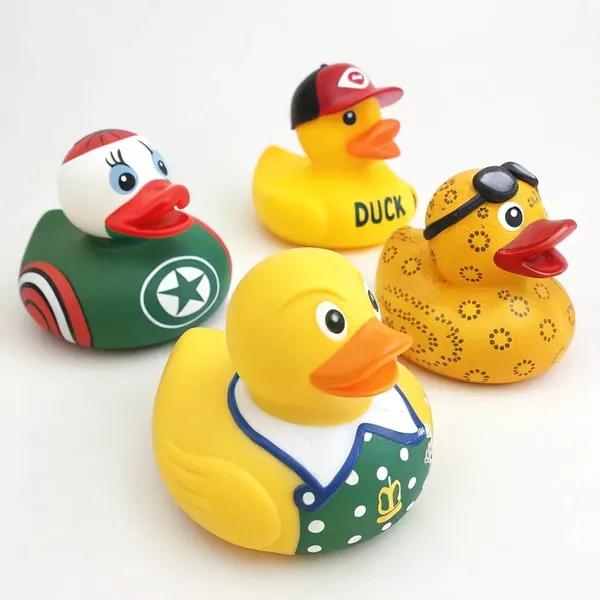
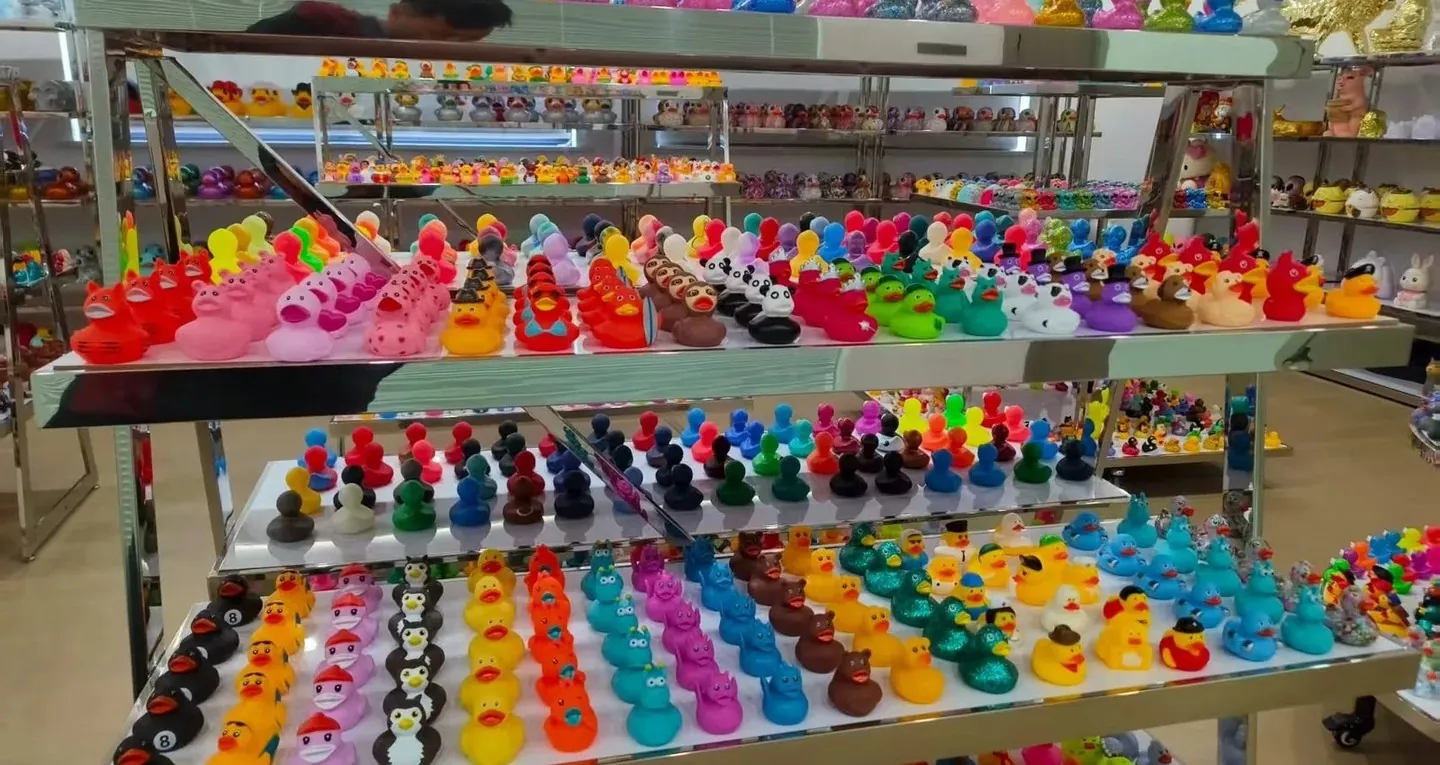
An open house duck is direct mail with a face, and the realtor list decides whether it works. One duck per realtor, one mark that reads from a doorway, and a carton packed by office.
The realtor list, the doorway mark and the per-office carton decide the run.
The same buyer question keeps arriving: a brokerage wants one duck for twelve realtors, each realtor wants their own name, and nobody has decided which part of the design is fixed. That decision is the whole project. Once it is made, the run is simple.
In short: An open house duck is one run with two print layers: a brokerage mark that every duck carries and a realtor layer that changes per name. The mark has to read from a doorway, the roster is a production input rather than an afterthought, the card carries the follow-up, and the cartons are packed by office so each realtor receives their own ducks.
One Run, Two Print Layers
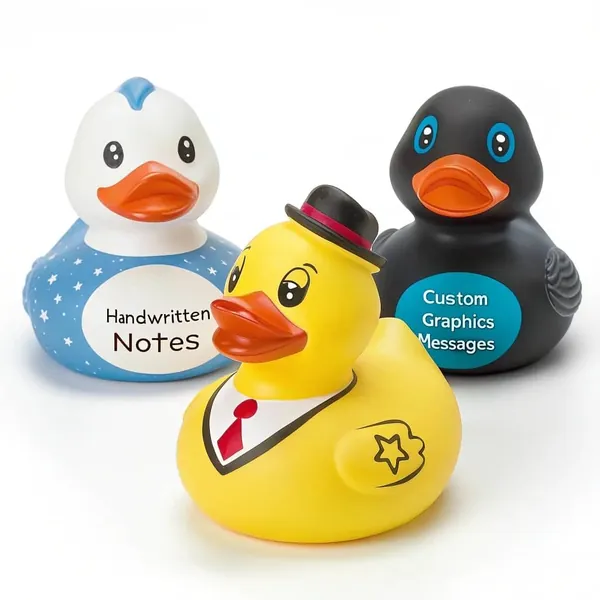
Two layers solve the twelve-realtor problem without twelve tools. The first layer is the brokerage or team mark, printed or moulded once and identical on every duck. The second layer is the realtor detail: a name, a licence line, a phone number or a short code that changes between people. The duck body stays the same, the first layer stays the same, and only the second layer is rewritten per person.
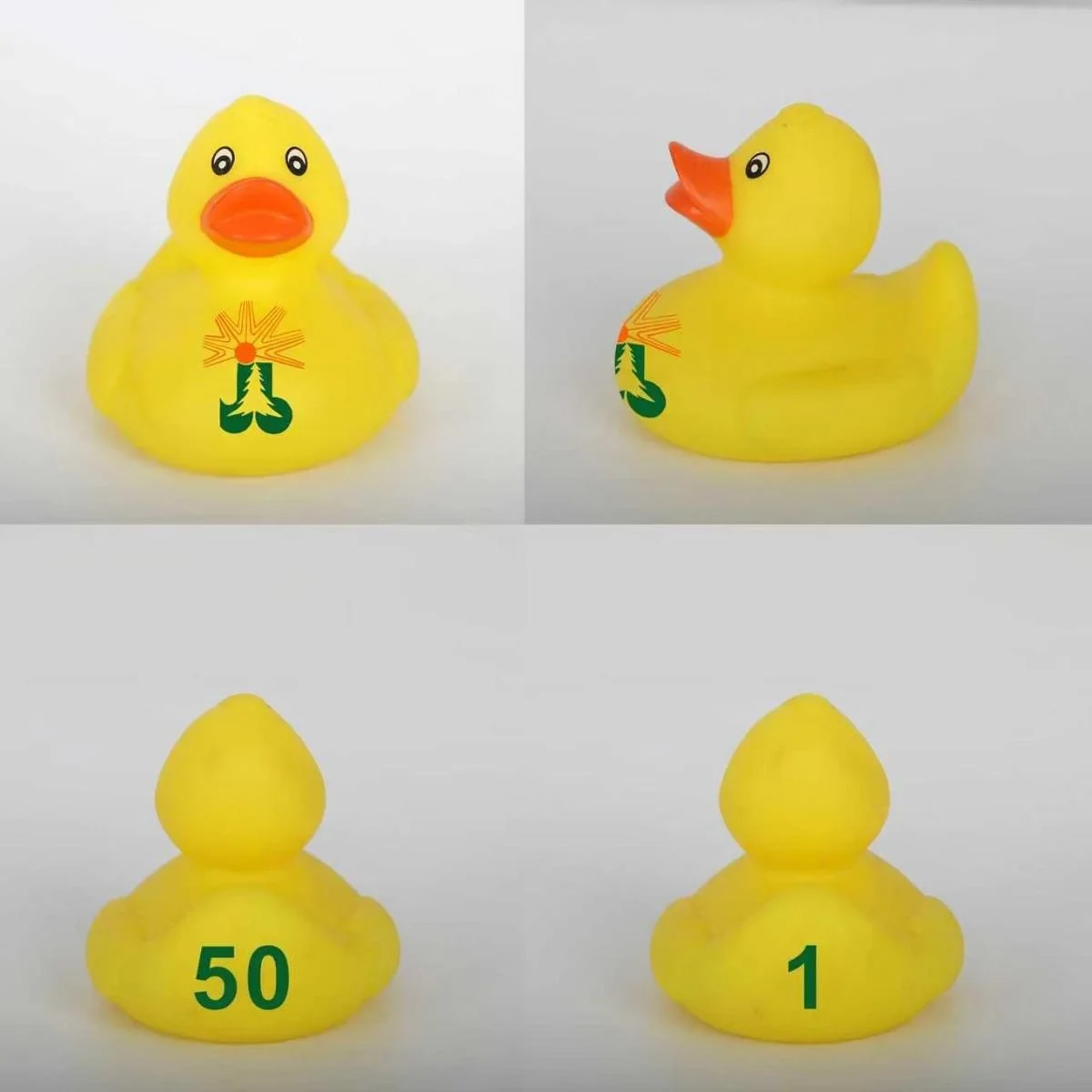
That split is what makes a multi-realtor order possible at all. A separate tool per realtor would be a separate programme, and no brokerage needs twelve moulds. A separate print file per realtor is a normal data job, and it is the part that has to be tested before the whole run is printed. The logo placement note covers which face of the body takes the fixed mark and which take the variable one.
The layer split also decides what the buyer approves. The fixed layer is approved once, on a sample. The variable layer is approved as a data proof, one page showing the name field against a printed duck, because a typo in a name is not a mould problem and cannot be fixed after the run.
The Mark Has to Read from a Doorway
An open house duck is seen at two distances. In the hand it can carry a name, a code and a small line of text. From a doorway, across a kitchen, only the largest and darkest shape survives. A mark that depends on thin lines or light colour on yellow disappears at that distance, which is why the fixed layer should be built as a solid shape first and a wordmark second.
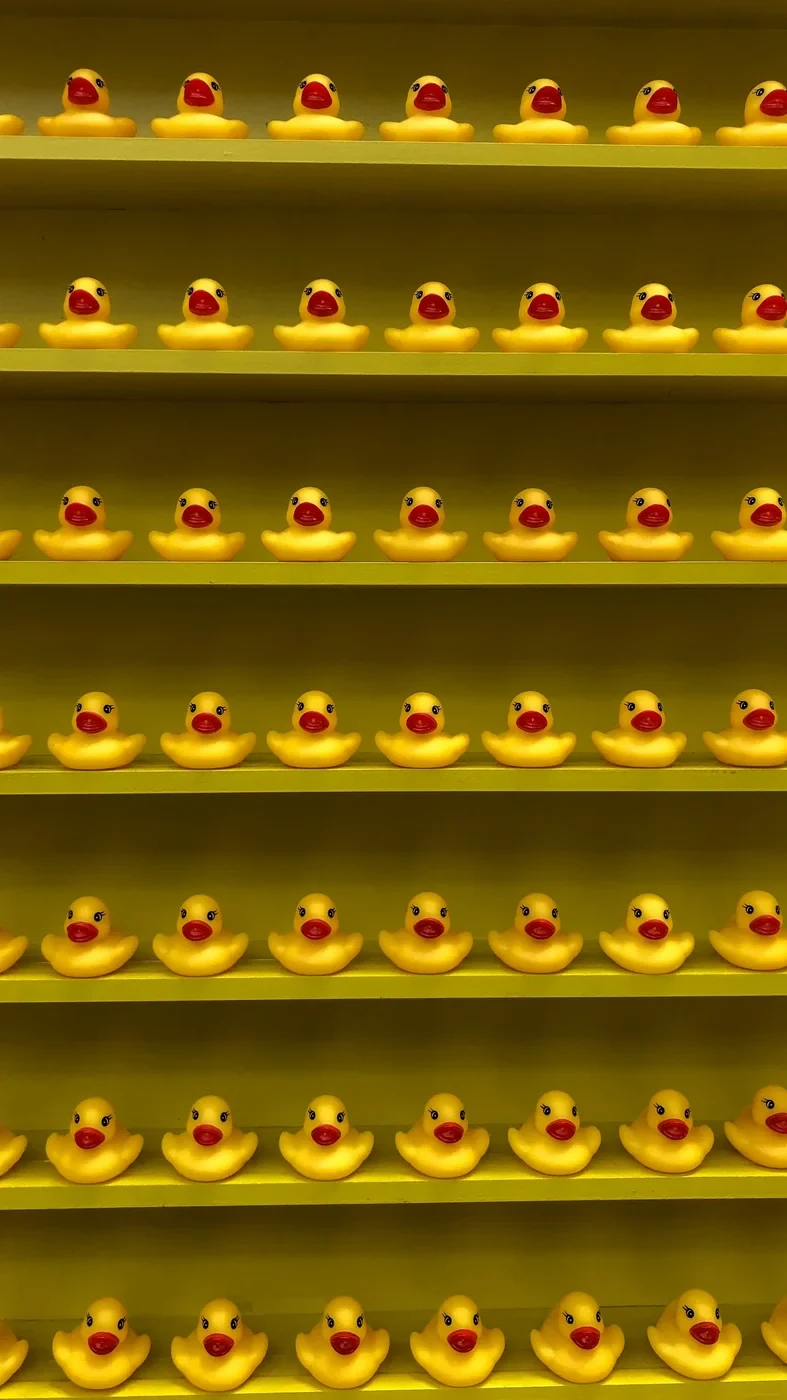
Contrast is the useful test. A dark mark on a yellow body reads further than a pale mark, and a mark placed on the chest reads better than one placed on the side, where the body curves away from the viewer. The colour matching note covers how the mark colour is agreed against the body colour, and it is worth agreeing both before the artwork is final.
The permanent marks are a separate question from the design. If the duck is intended for children, the product and its packaging have to carry the identifying marks, to the extent practicable, and a card tucked into the bag is not a substitute, as the CPSC tracking label guidance explains. A duck that is correct in the hand can still be wrong at the packing table.
The Roster Is a Production Input
A roster is not a mailing list. It is the file that decides how many of each name are printed, how the ducks are grouped and which carton goes to which office. The earlier the roster arrives, the fewer times the run has to stop.
| Field | Why the run needs it | Who supplies it |
|---|---|---|
| Realtor name | The variable print layer | The brokerage |
| Office or ship to | The carton split and the label | The brokerage |
| Quantity per name | The print count and the spare allowance | The brokerage |
| Licence or team line | The wording that has to appear with the mark | The brokerage or the realtor |
| Approval contact | The person who signs the data proof | The brokerage |
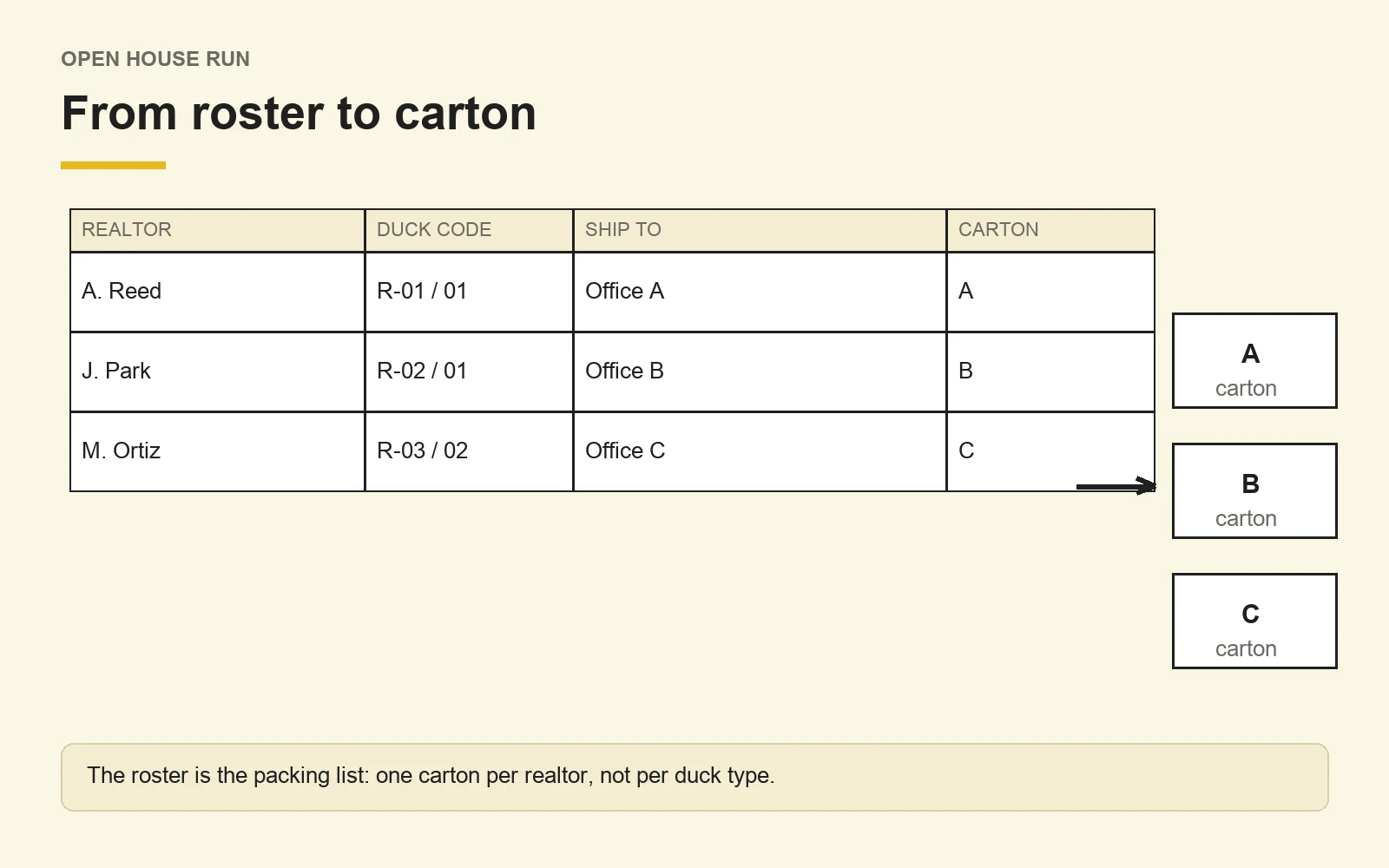
The roster and the purchase order should describe the same thing in the same words. If the roster says twelve names and the order says twelve cartons, the packing table will produce twelve cartons. If the roster says twelve names and the order says one carton, the packing table has to guess, and the guess is always the one that adds a week.
The Card Carries the Follow-Up
The duck is the object that stays. The card is the part that asks for the next action, and it should carry the action that cannot be moulded: a link, a QR code, a phone number or a short sentence from the realtor. A QR code printed on the duck itself looks clever on a sample and fails in the hand, because the code has to be scanned at an angle and the body is curved and glossy.
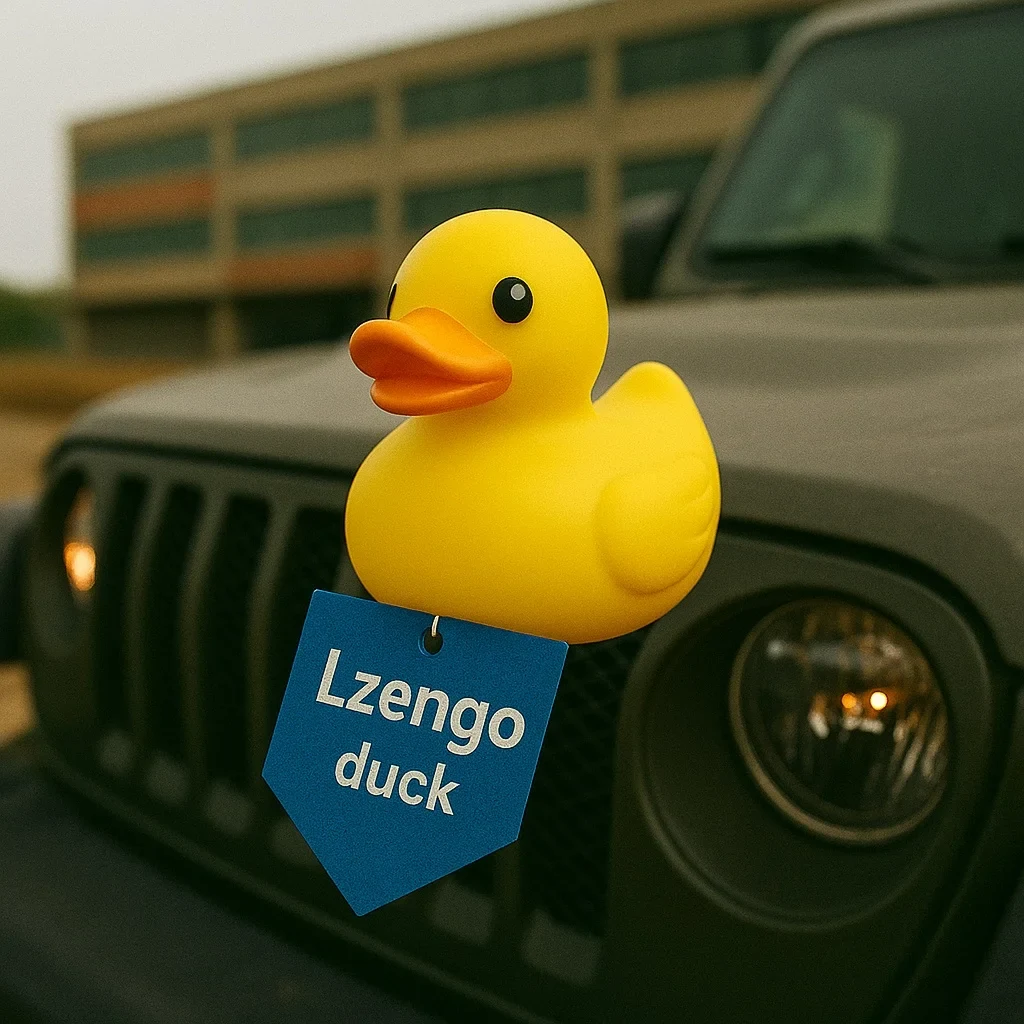
Keeping the follow-up on the card also keeps the duck reusable. A card can be reprinted for a new realtor without touching the duck run, and a card that is dated can be replaced at the start of a new season while the ducks stay in the cupboard. The hang tag note covers how the tag attaches and what it can carry, and the QR code note covers how a code is placed so it scans on the first attempt.
One line should stay off the card: the permanent product marking. If the duck is a children's product, the identifying mark belongs on the product and its packaging, and the card can repeat the code but cannot be the only place it exists.
Pack by Realtor, Not by Carton Count
The packing table is where a multi-realtor order succeeds or fails. A carton that holds a mix of names is a carton that has to be unpacked and sorted at the office, and the sorting is done by someone who did not order the ducks. A carton per realtor, labelled with the name and the office, turns the delivery into a handover.
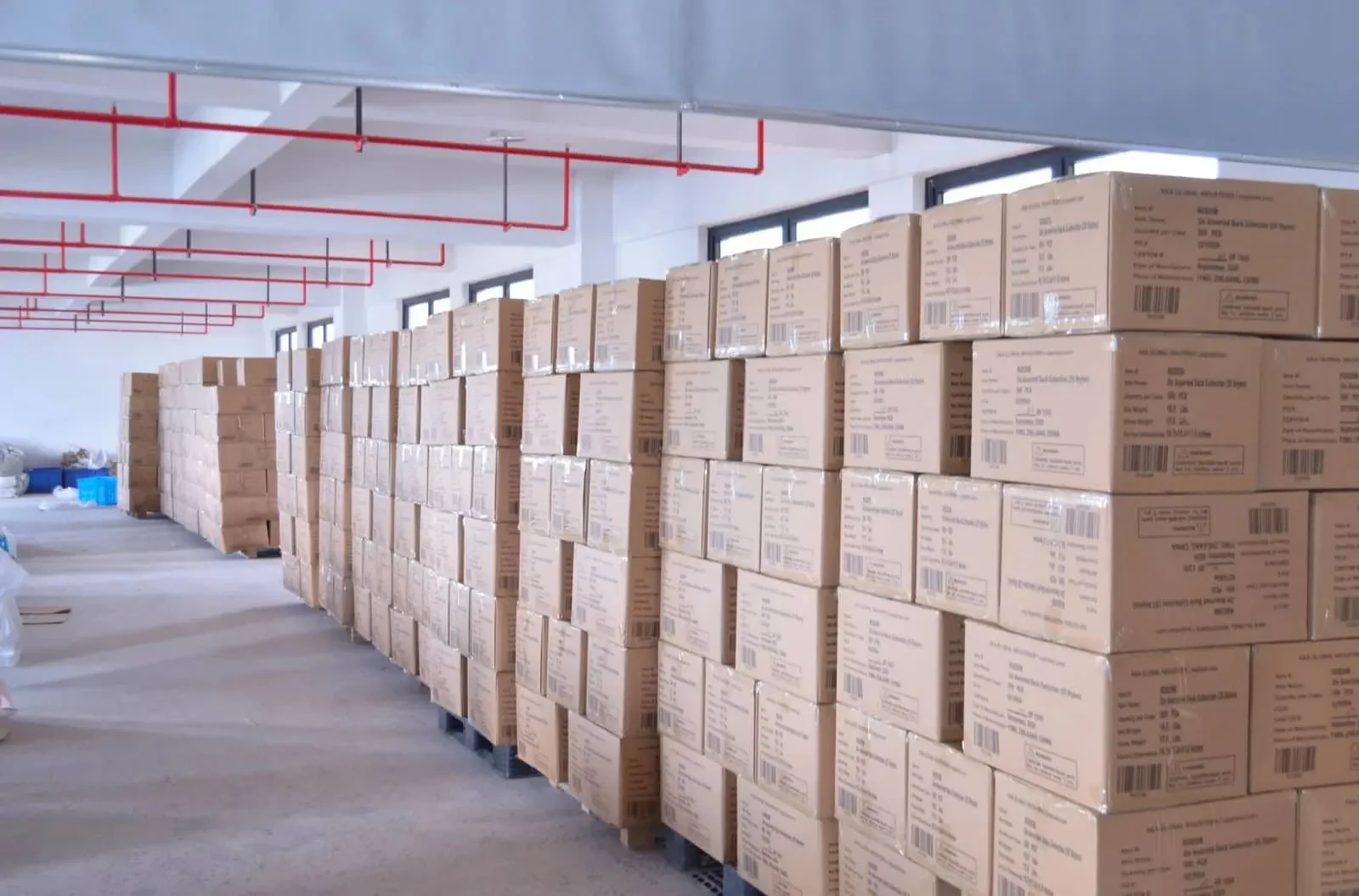
The split is paid for in cartons, and that trade belongs in the open. Fewer, larger cartons are easier to ship; more, smaller cartons are easier to deliver. The carton specification note covers the carton sizes and the label fields, and the packing list that goes with the cartons should repeat the same name as the label.
Spares are the other decision. A roster of twelve names with no spare means one damaged duck becomes one missing realtor, and the replacement is a second print run. A small overprint of the variable layer is the usual answer, and it should be decided with the roster rather than after the first carton is opened.
Count What Came Back
The reason to print a code on the card is that it turns a giveaway into a countable event. A code that is unique per realtor, or per office, lets the brokerage see which card was opened and which office is actually handing ducks out. Without a code, the only measurement is the number of ducks that left the warehouse.
That measurement is not the same as the number of conversations. It is still the only number a promo buyer can defend at the next planning meeting, and it should be set before the run: what counts as a response, who reads it, and when the count is reviewed. A duck run with no count is a run that gets repeated on memory.
Four questions settle an open house duck before the roster is signed:
- Which part of the design is the fixed brokerage layer, and which part changes per realtor?
- Does the mark still read from the doorway, or only in the hand?
- Is the follow-up on the card, and does the code scan on a curved glossy body?
- Does every roster row have a carton, a label and an approval contact?
Frequently Asked Questions
Can each realtor have their own name on the duck?
Yes, if the name sits in the variable print layer and the fixed layer is approved once. The practical limit is the data proof, not the duck: every name has to be checked against the roster before the run, and the names have to fit the print zone without shrinking below a readable size.
Should the QR code go on the duck or on a card?
On a card. A curved, glossy duck body is a poor surface for a code that has to be scanned at an angle, and a code printed on the duck cannot be changed when an realtor leaves. A card can be reprinted at short notice and can carry the code, the name and the sentence together.
Is a promotional duck a children's product?
It depends on who the duck is intended for. A duck handed to families at an open house is likely to reach children, and a product intended for children carries the marking and testing obligations of that market. For a duck that may reach a child under three, the small parts question is the one to settle first, and 16 CFR part 1501 sets out how toys for that age are identified and tested. The safety label guide sets out what the product and the pack have to state.
How should a multi-realtor order be packed?
By realtor and by office, with a label that repeats the roster name. A mixed carton saves a little carton board and takes sorting time from the office, and the sorting is usually done by the person with the least context. One carton per name is the default, and the spares travel separately.
Final Note: Five Decisions Before the Roster Is Signed
- Split the design into a fixed brokerage layer and a variable realtor layer.
- Test the fixed mark at doorway distance, not on a screen.
- Turn the roster into a packing list with one row per name and one carton per row.
- Put the follow-up and the code on the card, and the permanent mark on the product and pack.
- Decide the spare allowance and the response count before the first carton is opened.
An open house duck is not a harder product than a flyer. It is a product with more than one owner, and the work is to make the owners agree on the layers before the run starts. When the roster, the proof and the carton split are one set, the delivery to twelve realtors looks like a single order.
Key takeaways
- One run carries a fixed brokerage mark and a variable realtor layer, covered under the two print layers.
- The fixed mark is chosen at doorway distance and agreed against the body colour, covered under the doorway mark.
- The roster is a production input that becomes the packing list, covered under the roster.
- The card carries the code and the follow-up; the permanent mark stays on the product, covered under the follow-up card.
- Cartons are packed by realtor and office, with spares decided in advance, covered under the realtor pack.
EOF