A souvenir duck has two jobs and both of them are written on the surface: it has to say where the duck came from, and it has to say when, because a souvenir is bought on a trip or at an event. A duck that carries neither is a promotional duck with a shop name on it. The line sheet is what separates the two products.
The difference between a souvenir and a giveaway is the place and the date, both printed on the duck.
The same confusion keeps coming up in briefs: a city gift shop asks for a duck in the city colours and calls it a souvenir line, while the shop down the street asks for the same duck with a year printed on it. Those are different products with different reorder lives, and the line sheet is what separates them.
In short: A souvenir duck is a place, a date and a body that can carry both. A souvenir line is sized to a season rather than to a pipeline, one body usually serves several place names, and the reorder is protected by logging the colour reference and the pack on the same line sheet as the first run.
What Makes a Duck a Souvenir, Not a Giveaway
A giveaway is bought to be handed out, and its job ends when it leaves the hand. A souvenir is bought to be kept, and its job starts when the buyer takes it home. That difference decides almost everything downstream: how much surface the design gets, how the duck is packed, how many designs a shop can carry and whether a second season is possible.
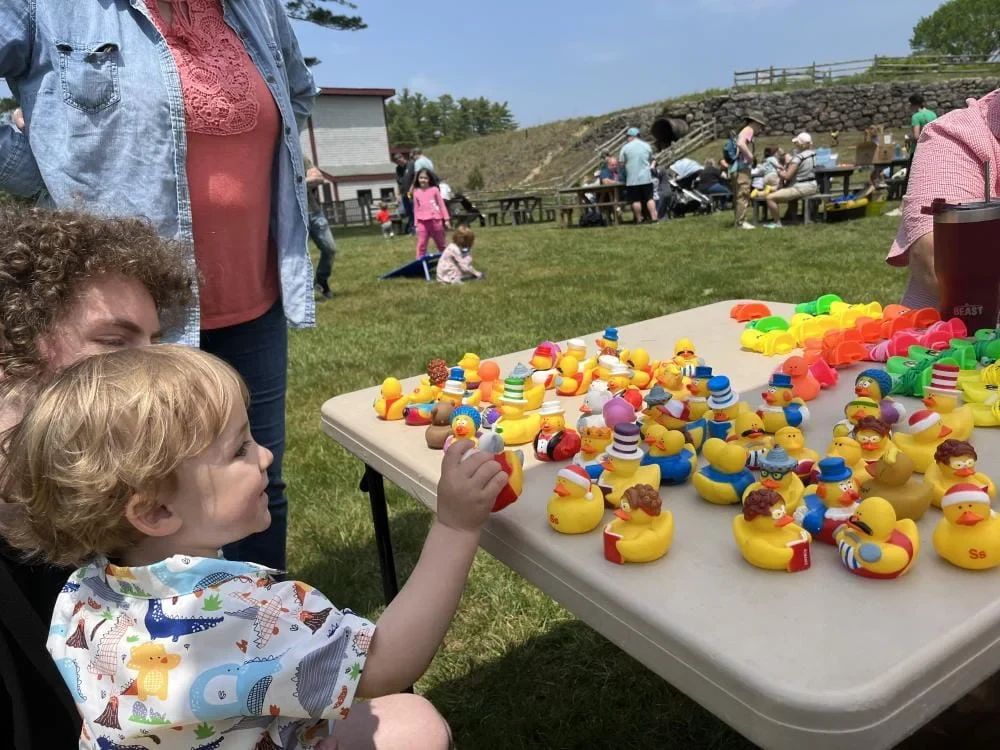
The souvenir buyer is also a different person inside the shop. A giveaway is chosen by the marketing team, often against a campaign date. A souvenir is chosen by a buyer who is watching what visitors pick up, put down and carry to the counter. That buyer needs a line, not a single duck, because the shelf has to offer a choice at more than one point.
The object itself does not change. A souvenir duck is still a moulded body, a print or a moulded mark and a pack. What changes is the amount of information the duck has to carry, and the standard of consistency the shop needs between the first season and the next.
The Place and the Date Are the Two Facts the Duck Carries
Every souvenir duck answers two questions, and the answers have different lives. The place is permanent: a city name, a landmark, an animal, a park or a museum. The date is temporary: a year, an anniversary, an event or a season. Putting both on the same surface at the same time creates the reorder problem before the first run is over.
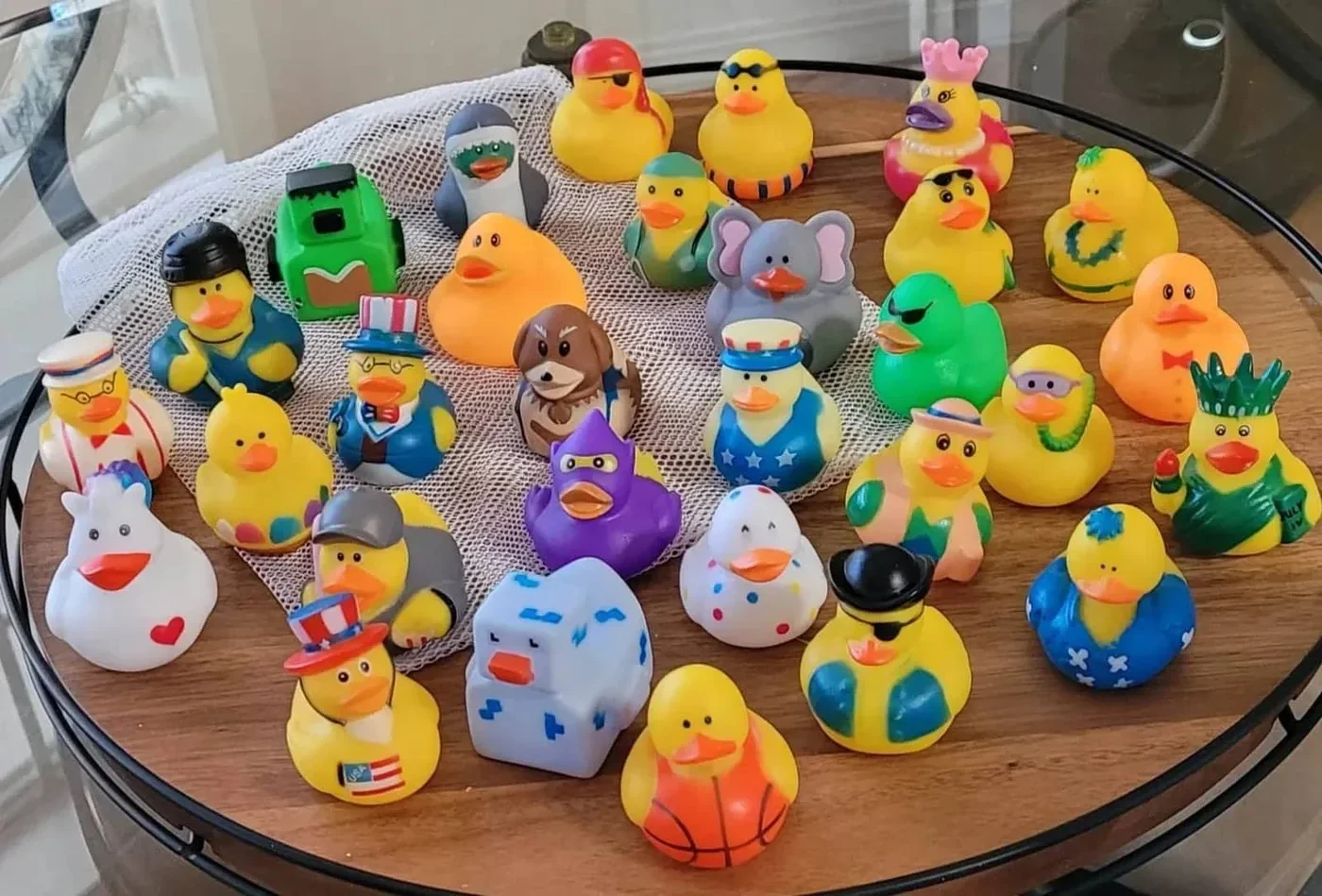
The useful split is to mould or print the place into the body and keep the date on a part that can change. A year printed on a body means the body is dated stock the moment the year turns. A year on a hang tag, a card or a base sticker can be replaced for the next season while the ducks stay in the cupboard. The hang tag note covers how a tag attaches without changing the duck, and the size chart covers how much surface a place name needs at each body size.
The place itself has a limit. A city is not one icon, and a shop that tries to carry every landmark on one duck ends with a mark that reads as a collage. A shop that picks one strong shape is easier to read from the door and easier to reissue next year. The colour matching note covers how the place colour is agreed with the body colour, which is the second half of the same decision.
A Souvenir Line Is Sized to a Season
A souvenir line is not a pipeline. It is a shelf that has to be full for a season, with enough choice to sell and not so much choice that half the line is left in the stockroom when the season ends. The useful way to size it is to decide the slots before the designs, then let each slot say what it has to do.
| Line slot | What it does on the shelf | How it is packed |
|---|---|---|
| The entry duck | The simplest thing a visitor picks up | A simple bag, a counter box |
| The place duck | The strong landmark or city shape | A bag or a small box |
| The animal or character duck | The family choice | A bag with a header |
| The dated duck | The year or event keepsake | A tag or a card with the date |
| The gift set | Two ducks or a duck with a card | A box that survives a carry on |
The slot table also decides the pack. A line that is sold from a counter box does not need the same board as a line that hangs on a peg, and a gift set needs a box that closes. The packaging note covers the bag, the header and the carton as one system, and the carton specification note covers what the shop needs when the line is delivered to more than one site.
One Body, Several Names
A souvenir line usually sells in more than one place, and the temptation is to make a new body for every name. That is the wrong use of a tool. One body can carry several place names through the print layer, and a shop group can order one run with a split of names inside it, as long as the file is built for it from the start.
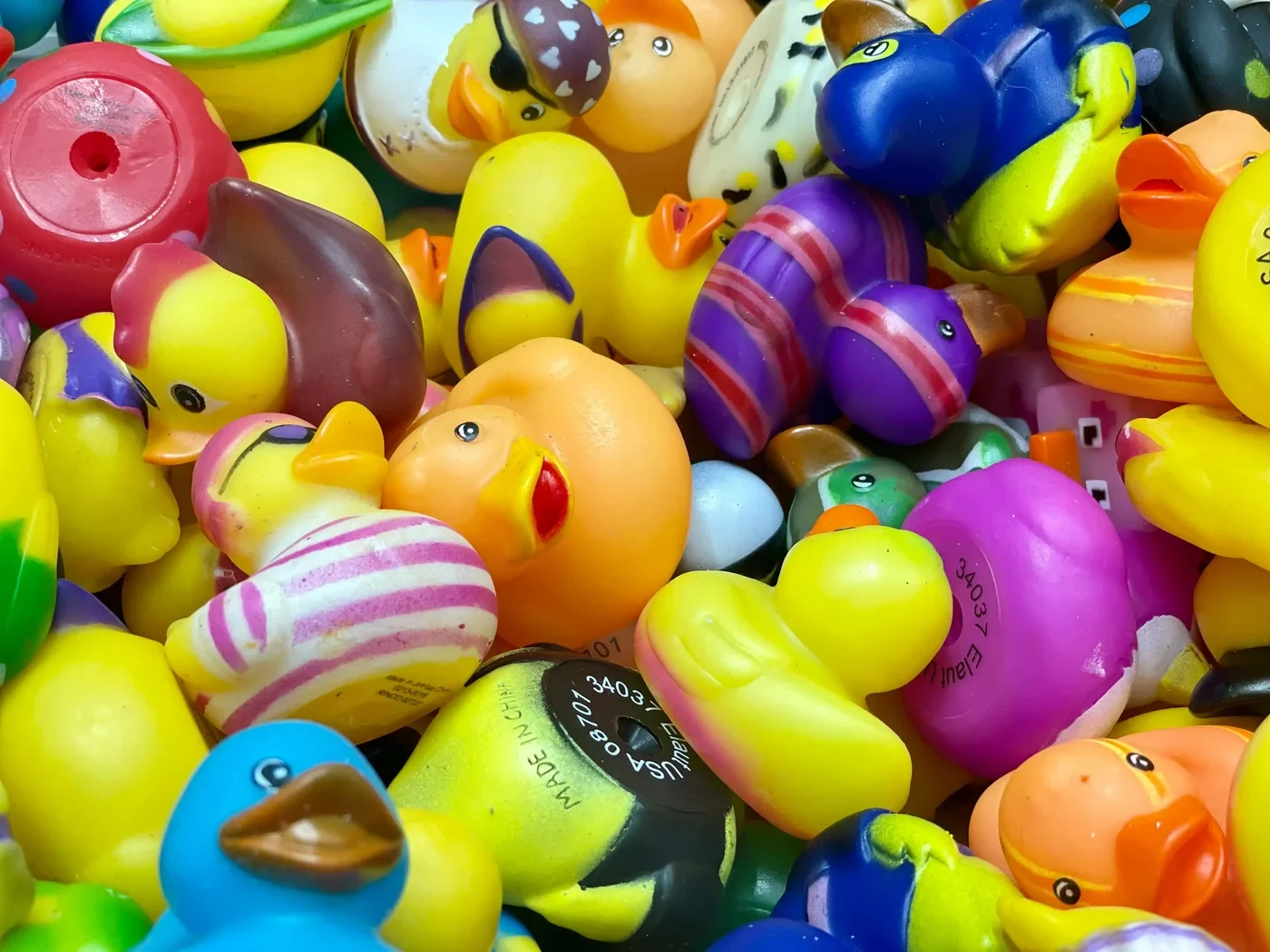
The split works when the constant part of the design is truly constant. The body, the base, the eye and the beak stay the same; the place name, the colour block and the small date change. If the body itself has to change for each place, the line has become several products and the order has to be planned as several runs. The colour routes note covers how a colour is held across a split, and the two tone note covers what changes when a second colour becomes part of the body.
The pack has to follow the split as well. A carton that mixes names is a carton that has to be sorted at the shop, and a shop that receives the wrong mix has stock it cannot sell. A split by name, labelled on the outside, is the version that survives a multi site order.
Where Souvenir Orders Go Wrong
The failures in a souvenir line are rarely about the duck. They are about the line sheet, the date and the pack. The first failure is a body that carries the year, which turns the whole run into dated stock on the first day of January. The second is a colour reference that was agreed on a screen and never recorded, so the second season arrives a shade away from the first.
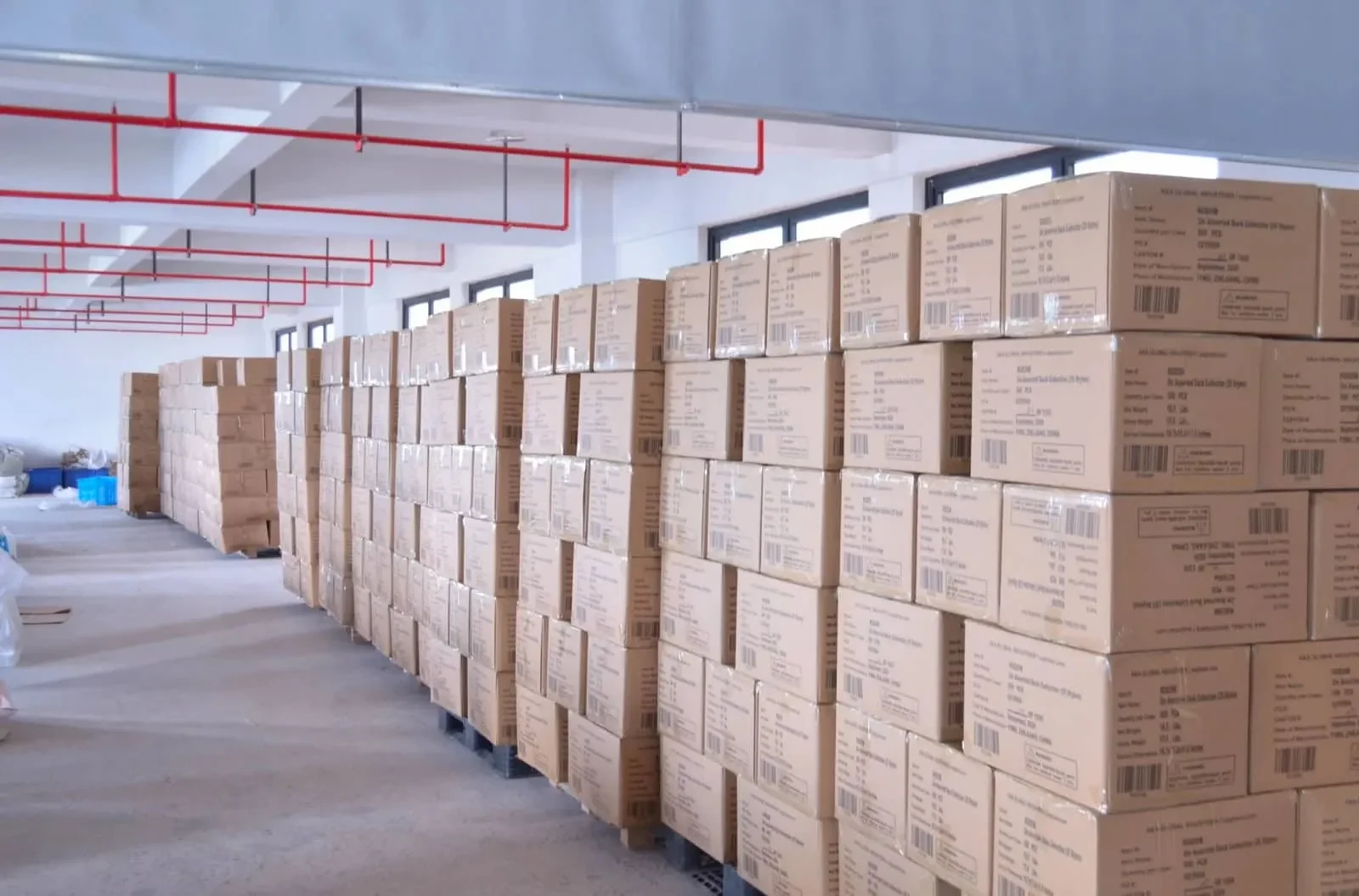
The third is a pack chosen for the warehouse rather than the shelf, which leaves the shop with cartons it cannot display. The fourth is a claim that the duck is a toy for a child without the file that supports it. A souvenir duck sold to a family is a children's product in many markets, and a painted surface is judged on its own lead limit under 16 CFR 1303.1, so the paint route belongs in the product record and not only in the design file.
The permanent product marks are the other part that cannot be left to the shop. The identifying mark belongs on the product and its packaging, to the extent practicable, and a shop sticker is not a substitute, as the CPSC tracking label guidance sets out. A souvenir that is correct on the shelf can still be wrong in the file.
Reordering Next Season Without a Colour Shift
A reorder is a colour test before it is a production event. The body colour, the print colour and the pack colour all have to be compared with the retained sample from the first run, in the light the shop will use. A screen comparison is not enough, because the same file looks different on every screen in the chain.
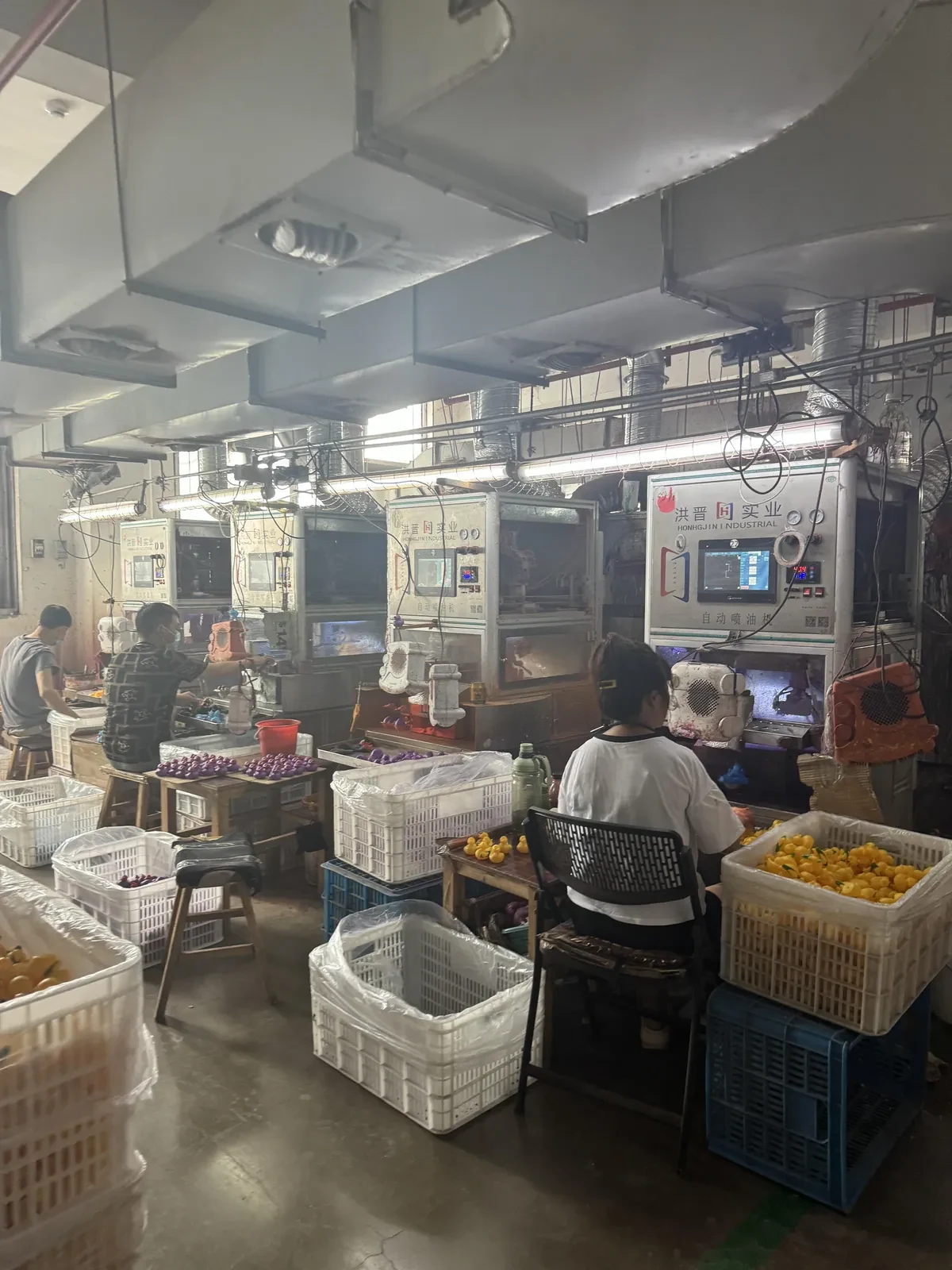
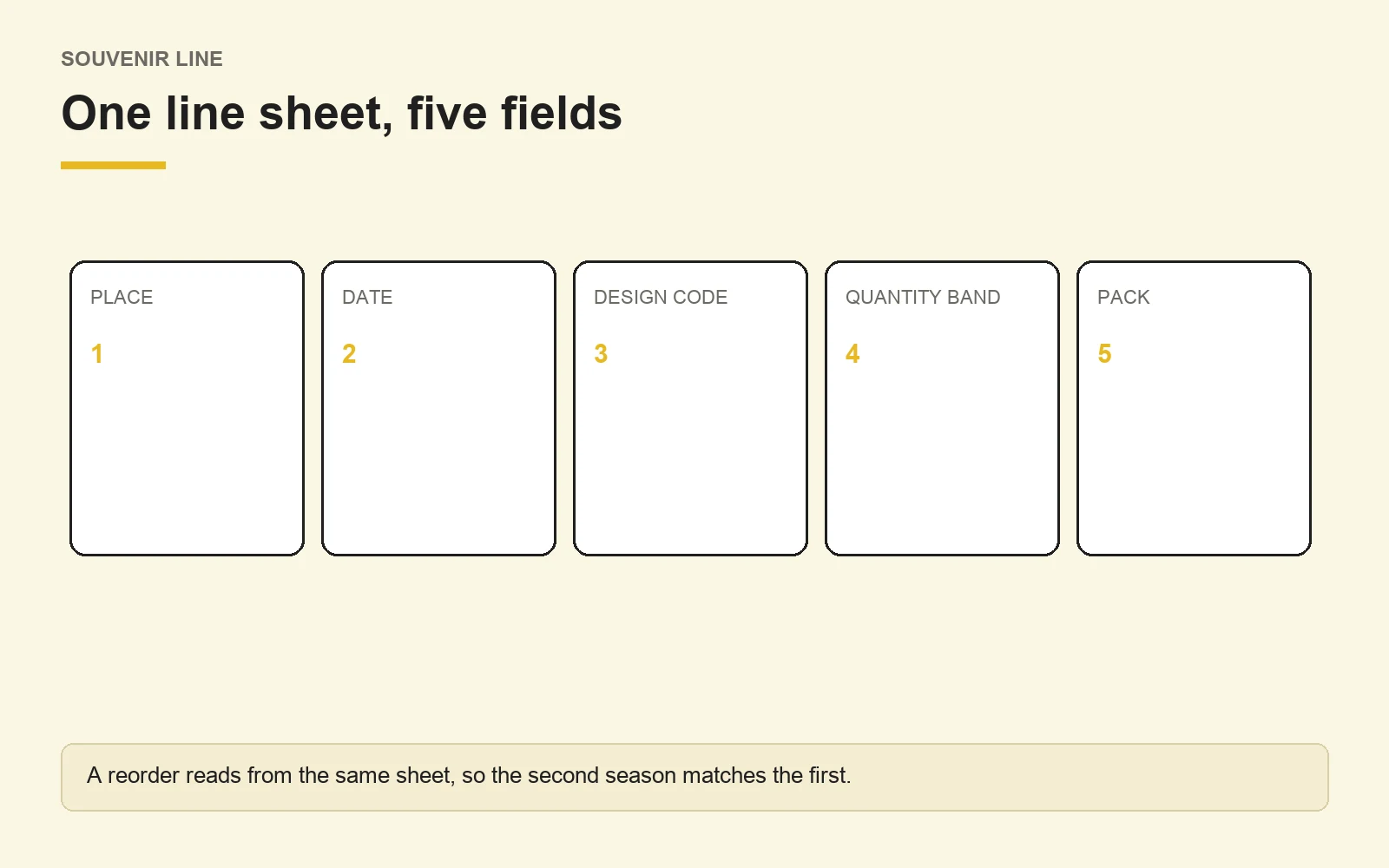
The line sheet is what makes that comparison possible. It should record the body colour reference, the print colour reference, the pack colour reference, the size, the base mark and the carton label for each slot. When the sheet is complete, the second season is a repeat rather than a redesign, and the shop gets the same duck it sold last year.
The other reorder decision is the date. A dated part should be the simplest part to replace, which is usually the tag or the card. A dated body is a body that has to be sold through before the date turns, and that pressure is what turns a souvenir line into a clearance problem.
Four questions settle a souvenir line before the first tool is cut:
- Which fact is permanent (the place) and which is dated (the year or event)?
- How many slots does the shelf need, and what does each slot do?
- Does one body carry every name, or does the line need more than one?
- What is recorded on the line sheet so the next season can repeat it?
Frequently Asked Questions
How is a souvenir duck different from a promo duck?
A promo duck is bought to be handed out and its job ends at the handover. A souvenir duck is bought to be kept, so it carries a place and often a date, and it is sold through a shop rather than given away. The object can be the same body; the design brief and the pack are not.
Should the year be printed on the duck or added on a tag?
On a tag or a card, in most cases. A printed year makes the body dated stock, while a tag can be replaced for the next season without a new run. A moulded year is the most permanent version and should only be used when the duck is an anniversary object that will not be reissued.
Can one order cover several shops or several sites?
Yes, if the split is built into the file and the cartons are labelled by name. The body stays constant, the place layer changes, and each site receives its own cartons. A split that is decided after the run is a sorting job at the shop, not a line.
What does the line sheet need to record?
The place and date treatment, the body and print colour references, the size, the base mark, the pack and the carton label for each slot. The sheet is the only document that lets a second season match the first, and it should live with the retained sample.
Final Note: Five Decisions Before the Line Sheet
- Decide the place and the date treatment first, and keep the date on the part that can change.
- Size the line by shelf slots, not by the number of designs that seem interesting.
- Keep one body for every name the line needs, and build the split into the file.
- Record the colour references, the base mark and the pack on one line sheet.
- Keep a retained sample of each slot, so the reorder is compared with an object rather than a screen.
A souvenir line is a small catalogue with a short life. The work is to make the catalogue easy to repeat, because the second season is where a souvenir programme either becomes a shelf fixture or stays a one off.
Key takeaways
- A souvenir is bought to be kept, so the design and the pack carry more than a giveaway, covered under souvenir and giveaway.
- The place is permanent and the date is temporary, so they belong on different surfaces, covered under place and date.
- A line is sized by shelf slots and packed for the way each slot is sold, covered under sizing the line.
- One body can carry several place names when the constant part is truly constant, covered under one body, several names.
- A reorder is a colour test, and the line sheet is what makes the second season match the first, covered under the reorder.
EOF