Skip to content
Every promotional buyer meets the same wall: the campaign needs six duck designs, the minimum order covers two. The usual compromise – dropping designs or overstocking one – loses either variety or cash. The better answer is a multiple-designs-per-order structure, which most factories support quietly but few buyers ask for explicitly. Here is how the mixing works and where the limits sit.

Which mixing is cheap and which is not
Body colour changes are the cheapest variety: the same mold runs different pigments in sequence, so a 5,000-piece minimum can split into five colours of a thousand without new tooling. Printed or pad-printed faces mix nearly as cheaply, since the print station changes between runs. New sculpted designs are where cost lives – each new sculpt needs a mold, and the mold fee is why factories quote minimums in the first place. The practical mixing structure: one sculpt, many colourways, several print faces. Three sculpts at a 1,000-piece minimum usually costs more than five colourways of one sculpt at the same total, and the retail shelf cannot tell the difference if the sculpt is right.
How factories actually price a mixed order
The quote breaks into three parts: mold amortization, per-unit production, and changeover time. Mixing colours adds changeover minutes; mixing print designs adds setup per design; mixing sculpts adds molds. When we price a mixed program at product development stage, the buyer sees each part separately, which is why a mixed order from a factory that itemizes beats a flat quote from one that does not – you can see exactly which variety costs money and which is nearly free. Global sourcing platforms such as Global Sources list mixed-SKU orders as a standard procurement pattern for exactly this reason.

How mixing interacts with reorder timing
Mixed orders change the reorder math in the buyer’s favour. Because colourways share a sculpt, a mid-season top-up can run any single colourway without touching the others, which means slow designs stop consuming production slots. The buyer who tracks sell-through per SKU – rather than per order – can send a top-up for the two fast colours while the four slow colours finish their season, and the factory prices that top-up against the original tooling instead of a new development. The structure rewards whoever plans it: the mixing decision at order time is what keeps every later reorder decision cheap.
A worked example of a mixed order
Consider a tourism board that wants six duck styles on a 6,000-piece budget. The uneconomic version: six sculpts at 1,000 each, six mold fees, a quote that doubles the plan. The economic version: two sculpts – a classic duck and a regional character – run in three colourways each, with two printed faces per sculpt carrying the campaign artwork. The mold count drops from six to two, the 6,000 pieces split across twelve SKUs for the shelf, and every SKU stays inside the factory’s minimum-per-run math. The tourism board gets a display that looks like six designs because the print faces carry the variety, and the budget holds. That is the mixing structure in one paragraph, and it is how most professional promotional buyers actually write the order.
The pitfalls to write into the PO
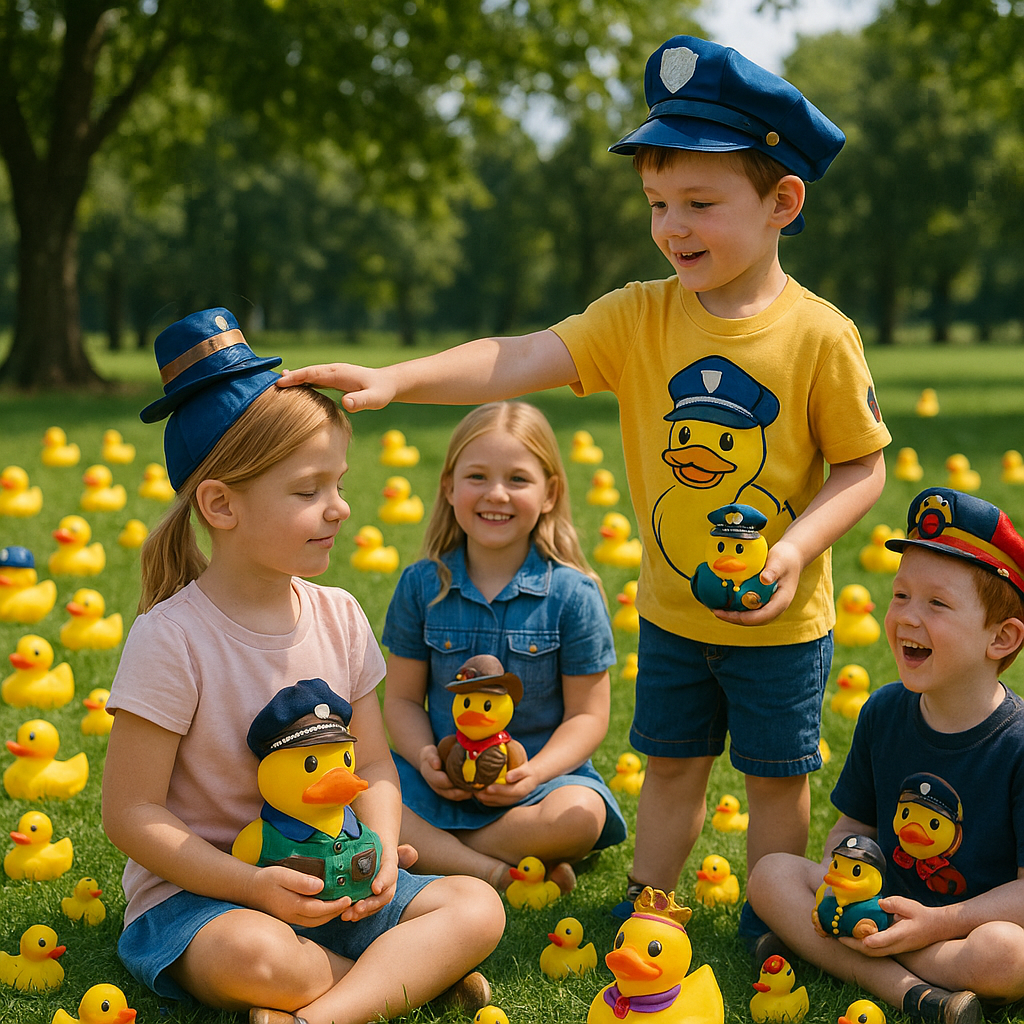
Mixed orders need three lines in the purchase order that single-design orders skip. Colour codes per design get named, because “assorted pastels” is how colour-mismatch disputes start – our photo guide to colour mismatch in samples shows how far approved samples and random stock can drift. Quantity splits get stated per SKU, not as a total, so the packing list and the claim terms stay unambiguous. And first-article approval gets defined per design rather than per order, because the discipline behind first-article versus bulk consistency applies to every SKU in the mix independently. Accessories mix the same way – our overview of molded-in accessories shows how hats and props multiply a line without new body molds.
Video: rubber duck multiple designs order
Mixing designs inside a minimum order is a structure, not a favour: one sculpt, many colours, printed faces, itemized pricing, per-SKU quantities on the PO. Send us your campaign’s design list, and we will return a mixed-order quotation that shows exactly which variety costs what.
Related reading: MOQ 1,000 vs 5,000 Costs