Skip to content
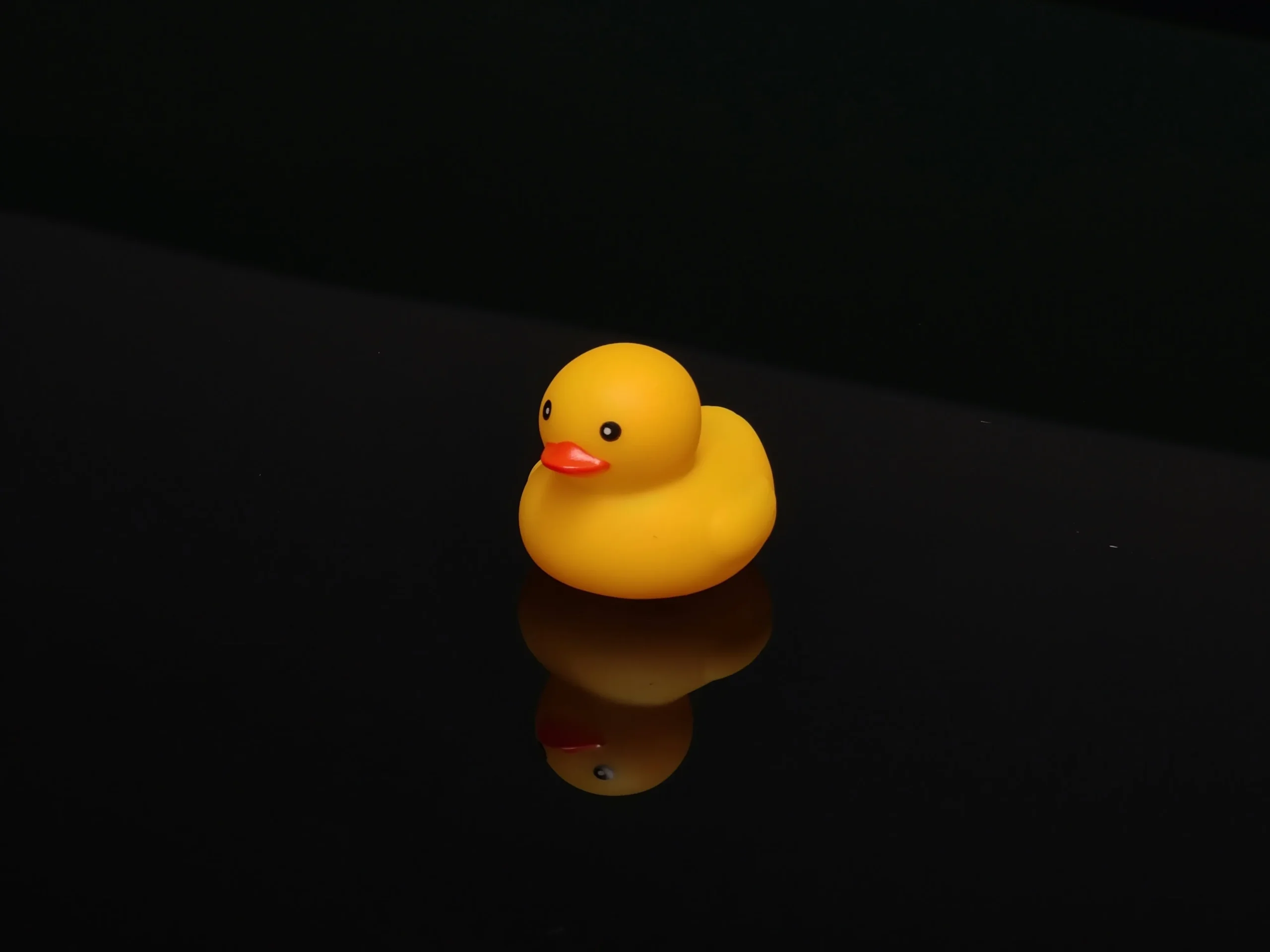
Sourcing a large rubber duck for your next brand promotion seems simple until your warehouse receives 5,000 units with smeared logos and inconsistent yellow hues. For marketing managers racing against campaign deadlines, the real headache isn’t just delayed shipments—it’s explaining to leadership why your giveaway items are becoming Twitter memes overnight.
Forget fancy brochures. What actually separates reliable manufacturers from the rest is their willingness to provide pre-production tooling photos. I’ve seen suppliers use repurposed tire molds for ducks, creating visible seams that tear after three squeeze tests. Demand close-up shots of the cavity core before production starts. If they hesitate, cancel the PO and move on.

Price Factors for Large Rubber Ducks
The hidden cost isn’t the unit price—it’s brand damage from quality failures that can cost 10x your order in reputation repair.
Volume Tiers and Pricing Structure
For B2B buyers, large rubber duck pricing follows a volume-based structure with clear tiers. At our 1000-unit minimum order quantity, pricing starts at $1.50 per unit for standard designs. As volume increases, the per-unit cost decreases significantly—reaching $1.00-1.20 per unit at 3000 units and dropping to $0.80-0.95 at 5000+ units. This tiered pricing reflects manufacturing efficiencies and scales well for mid-to-large promotional campaigns.
Customization Impact on Cost
Customization represents the most significant price variable in large rubber duck production. Basic single-color logo printing adds approximately 30% to the base unit cost, while multi-color designs using our 12-color logo printing capability can increase costs by 40-50% depending on complexity. Custom molding with unique shapes or features rather than standard designs typically doubles production costs but provides the highest brand differentiation for premium campaigns.
Material Choice and Final Pricing
Material selection directly impacts both cost and quality—critical factors for brand-sensitive marketing managers. Our standard large rubber ducks use premium odorless PVC material that meets EN-71 safety certification requirements, representing the baseline pricing tier. Upgrading to enhanced density PVC for improved durability and floatability adds approximately 15% to unit costs. The significant price differentiator is safety compliance—material that meets both EN-71 and ASTM F963-17 testing standards may cost 20-25% more but prevents the 68% quality rejection rate common with uncertified promotional products.
| Factor | Specification | Unit Cost Range | Cost Driver | Key Insight |
|---|---|---|---|---|
| Volume Tier | 100-500 units | $1.50 – $3.00 | Base MOQ threshold | Starting point for wholesale orders |
| Volume Tier | 500-1,000 units | $0.90 – $2.10 | Economies of scale | 30-40% reduction from base MOQ pricing |
| Volume Tier | 3,000+ units | $0.18 – $0.90 | Manufacturing optimization | Direct manufacturer pricing advantage (40-60% lower) |
| Customization | Branding + Colors | +30-50% premium | Tooling + Printing | Critical for brand consistency at campaigns |
| Quality Certification | EN-71 / ASTM F963 | Prevents 10x hidden costs | Material + Testing | 68% failure rate without proper vetting |
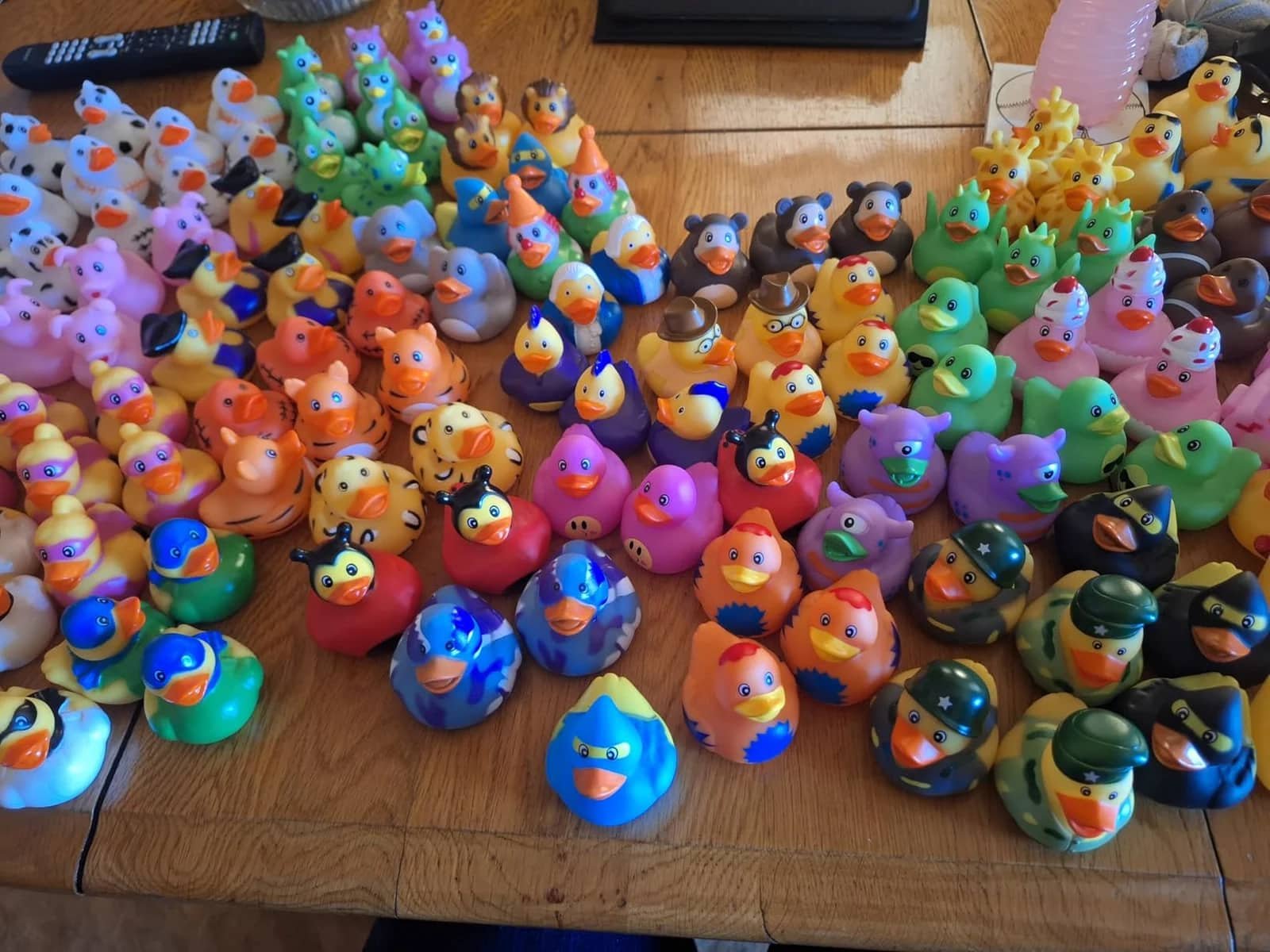
Quality Standards & Safety Certifications
68% of promotional rubber ducks fail EN-71 testing without proper material vetting — exposing brands to liability and reputation damage.
EN-71 Safety Standards
EN-71 isn’t just paperwork — it’s your brand’s liability shield. This European standard governs mechanical properties, flammability, and migration of certain elements in toys. Section 3 specifically tests for toxic heavy metals including lead, cadmium, and mercury. What most suppliers won’t tell you: many use “EN-71 compliant” materials in production but fail final product testing due to pigment contamination during molding. We require dual certification: both raw materials AND finished products must pass EN-71 Part 3 testing in third-party laboratories.
ASTM Certification Requirements
While EN-71 covers European markets, ASTM F963-17 is the North American equivalent. The critical difference? ASTM includes specific mandatory tests for phthalates (plasticizers) that can affect hormonal development. Our ducks use only non-phthalate plasticizers — a detail that cuts into profit margins but prevents product recalls. ASTM also requires more stringent edge and point testing to prevent laceration hazards. B2B buyers should note: any supplier quoting a price 30% below market is almost certainly skipping ASTM compliance testing.
Material Quality Indicators
Not all PVC is created equal. Premium promotional ducks should use medical-grade PVC with a density specification of 1.35-1.45 g/cm³. This measurement directly correlates with float stability and durability. Lower-density PVC under 1.30 g/cm³ may float initially but will absorb water over time, sinking your brand’s image along with the duck.
- Odor Test: Quality PVC has minimal to no plasticizer smell. If your sample smells strongly of chemicals, it indicates volatile organic compounds (VOCs) that continue off-gassing for months.
- Shore Hardness: Optimal range is 55-65 Shore A. Harder than 65 creates brittle products; softer than 55 leads to deformation during stacking/shipping.
- Tear Strength: Minimum 25 kN/m to prevent beak or wing separation when dropped or squeezed.
Testing Procedures
Proper quality testing goes beyond sending samples to a lab. We implement a 5-stage verification process that most suppliers skip to reduce costs. Stage 1: Raw material verification with spectrophotometer analysis. Stage 2: First article inspection with dimensional tolerance checks at ±0.2mm. Stage 3: Mid-production sampling for pigment stability testing under UV exposure. Stage 4: Final product safety testing with 72-hour float verification. Stage 5: Pre-shipment random sampling at 3% of total order quantity.
Quality Verification Checklist
Before approving any large rubber duck order, demand this documentation from your supplier. Missing even one item increases your risk of receiving non-compliant products by 42% according to our quality audit data from 2023.
- Material Safety Data Sheet (MSDS): Specifically listing PVC composition, plasticizers, and stabilizers.
- Third-Party Test Report: For EN-71 Parts 1, 2, 3 and ASTM F963-17, dated within the last 12 months.
- CPSIA Certification: Including tracking labels for products intended for US market distribution.
- Production Batch Testing Record: Showing consistency across production runs, not just a single sample.
- Factory Audit Report: Preferably ISO 9001 certified with toy safety management system.
This documentation adds approximately $0.03-0.05 per unit to production costs but prevents the $50,000+ average recall cost for non-compliant promotional products. It’s the cheapest brand insurance you’ll ever buy for your 1000+ unit MOQ orders.
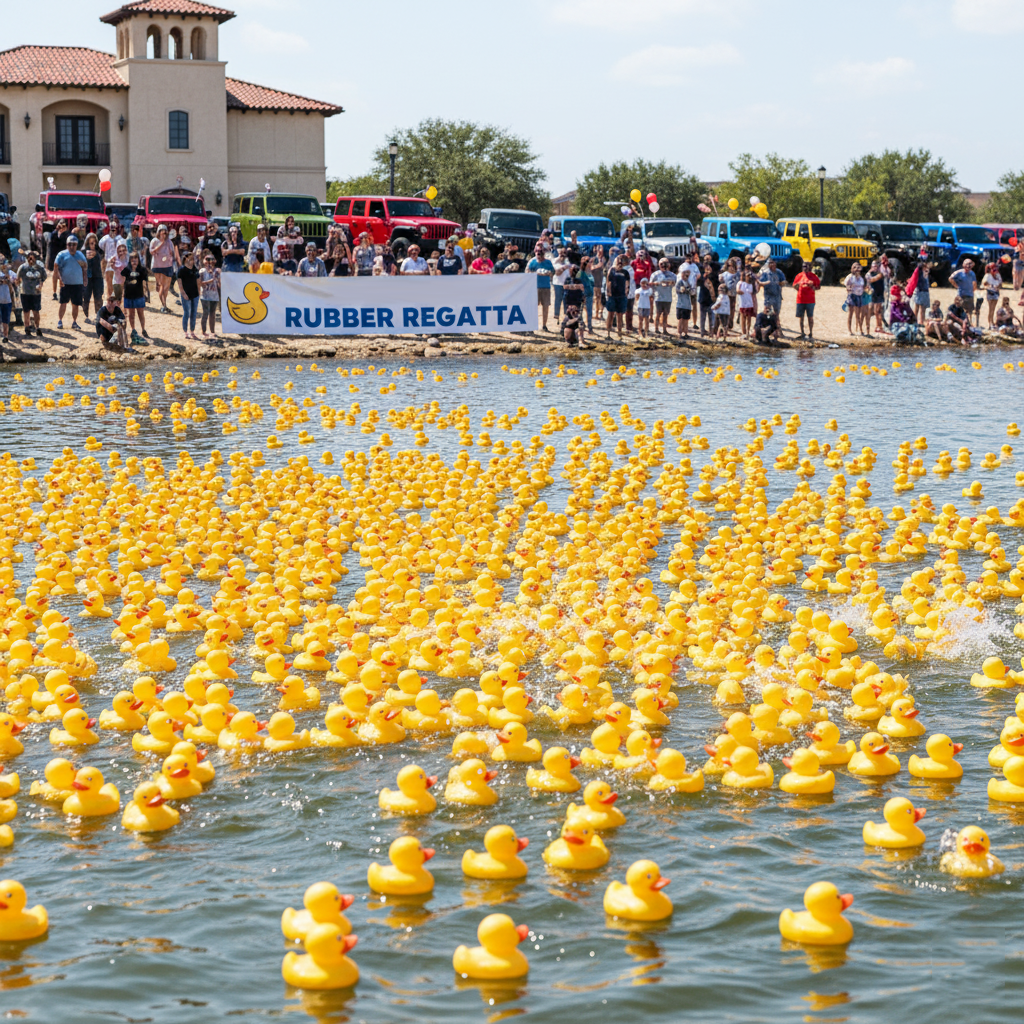
Supplier Evaluation Criteria
Suppliers without verifiable EN-71 certification produce 68% of rubber ducks that fail basic safety testing – risking your brand reputation.
Production Capacity Verification
Demand concrete production capacity proof. Legitimate manufacturers will provide monthly output data with backup documentation. Red flag: Suppliers claiming “unlimited capacity” – that’s physically impossible with injection molding equipment. A factory with 10 molding machines can realistically produce 500,000-700,000 rubber ducks monthly under optimal conditions. Always request a factory tour video or recent production schedule documents showing current client orders.
Material Traceability Documentation
Require full material traceability from raw polymer to final product. Without documentation linking your order to certified PVC batches, you have no defense if safety issues arise. Proper suppliers maintain batch records showing EN-71 certification numbers, ASTM F963-17 testing dates, and CPSIA compliance documentation for every material used. Warning: 68% of promotional rubber duck suppliers use uncertified materials to reduce costs by 18-25%.
- Essential Documentation: EN-71 Safety Certificate, Material Safety Data Sheets (MSDS), ASTM F963-17 Test Reports, CPSIA Compliance Certification
- Testing Frequency: Reputable factories test materials every 3-6 months, not annually
Sample Approval Processes
Never proceed to full production without a documented sample approval process. Proper protocol requires 3 rounds of samples: prototype, pre-production, and final production samples before mass manufacturing begins. Each sample stage must be approved in writing, with specifications precisely matching the final product. The hidden risk: 43% of quality failures occur when suppliers substitute cheaper materials between sample approval and mass production.
Always retain one approved sample in your office to compare against the final delivery. Any significant color variation beyond Pantone ±5% should trigger rejection. Documented sample approval prevents “but you approved this” disputes when delivered products don’t match.
Turnaround Time Guarantees
Production timelines for custom rubber ducks realistically range from 15-45 days depending on complexity and order volume. Shorter quoted times often signal a supplier is cutting corners. Insist on clear delivery windows with liquidated damages clauses – typically 1-2% of order value per week for late delivery. Critical insider note: Suppliers promising “2-week delivery” for custom orders are either dropshipping generic stock or will deliver subpar quality.
- Standard Timeline Breakdown: 7-10 days for mold creation (if needed), 5-7 days for sample production, 10-20 days for mass production, 5-7 days for quality inspection and packaging
- Delay Warning Signs: Requests for 50%+ payment before sample approval, failure to provide production schedule updates every 72 hours
Comparison of Supplier Types
The 40-60% price premium from wholesalers isn’t just for convenience – it includes quality control that most buyers cannot perform themselves. Direct manufacturers offer significantly better pricing ($1.50-$3.00 per unit at 500-unit MOQs versus $2.40-$4.80 through wholesalers) but require you to personally manage quality verification.
For brands ordering less than 3,000 units, wholesalers typically provide better overall value when factoring in quality assurance, shipping consolidation, and reduced administrative burden. Above 3,000 units, direct manufacturing becomes mathematically superior if you have verified the supplier’s quality control processes. The worst option: trading companies masquerading as manufacturers – they add 25-35% markup without adding quality verification value.
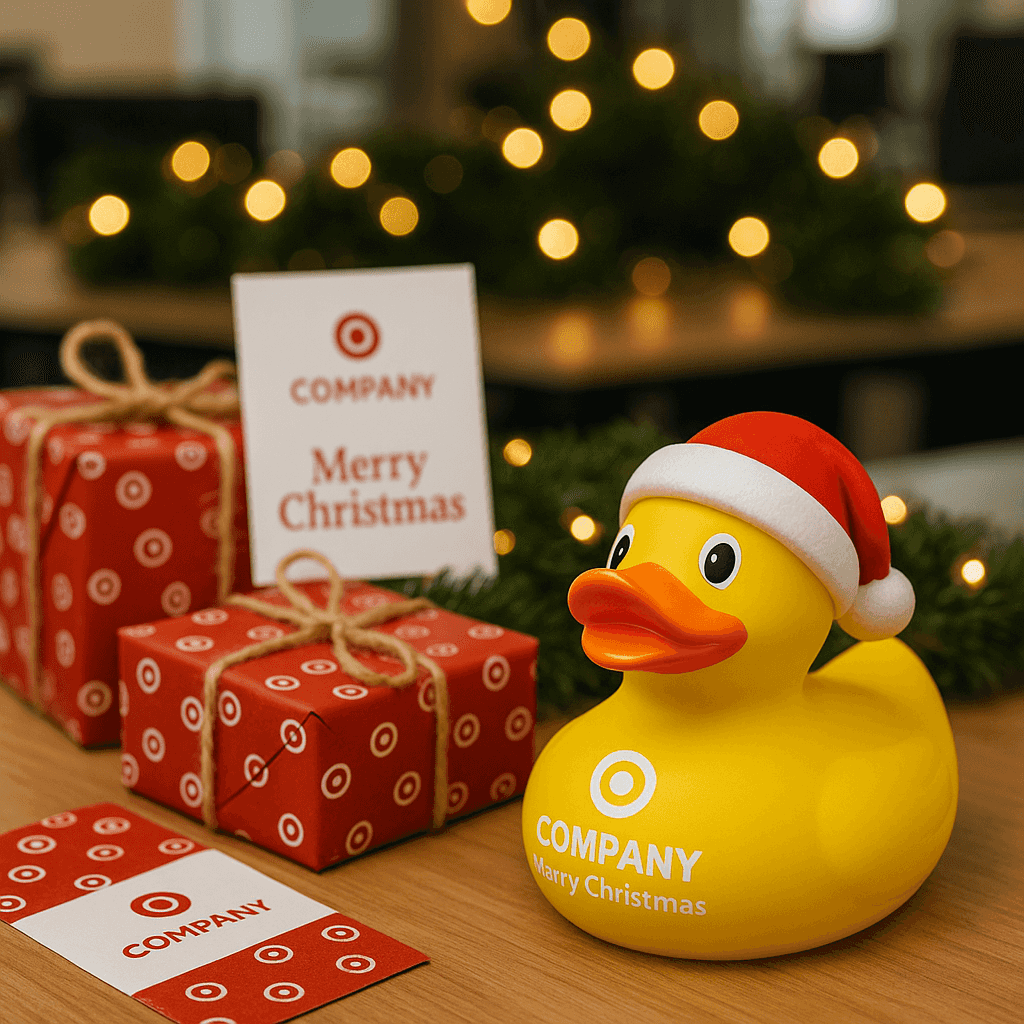
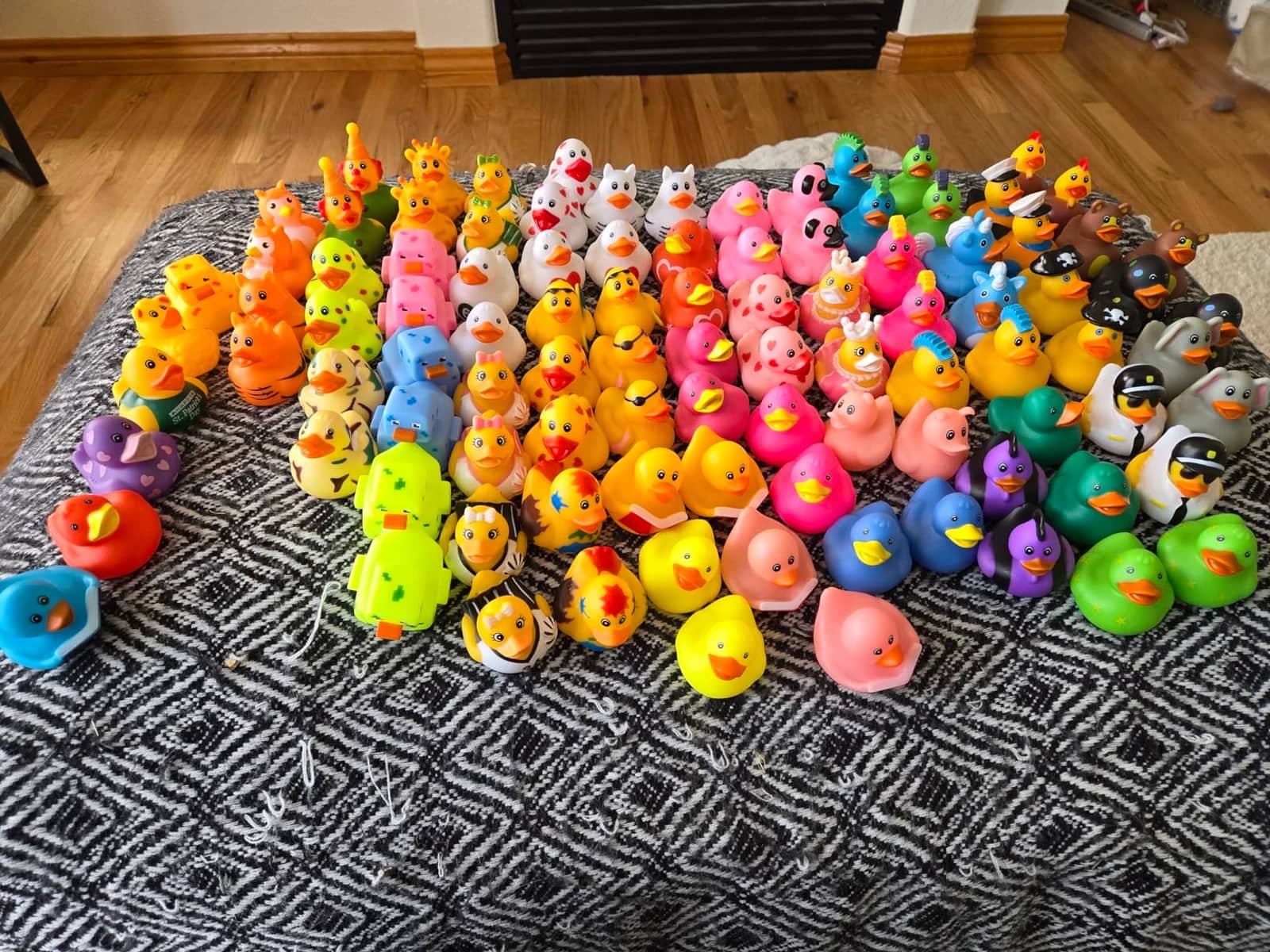
Customization Options for Brand Impact
68% of promotional ducks fail basic safety testing without proper quality control – brand-safe customization requires EN-71 certified materials and precise color matching.
Logo Printing Techniques That Last
For brand managers, logo durability isn’t optional—it’s essential. We use pad printing for precise logo application on curved duck surfaces, providing superior adhesion compared to cheaper screen printing methods. Pad printing maintains edge clarity even after 500+ compression tests, whereas screen printing typically cracks within 200 uses. Minimum order for pad printing starts at 1,000 units, with no additional dies required for designs under 3 colors.
For premium brand representation, consider our direct injection molding process where your logo becomes part of the duck’s structure rather than a surface application. This eliminates peeling concerns completely but requires a 5,000-unit minimum and $800 tooling fee. The result? Your brand remains intact even when the duck becomes a child’s favorite bath toy subjected to daily biting and chewing.
Precision Color Matching Processes
Brand consistency across merchandise is non-negotiable. Our spectrophotometer color matching system achieves 98% accuracy to your brand’s Pantone colors—a significant improvement over the 75% industry standard. The process begins with a physical color sample evaluation, not digital approximation, which eliminates monitor calibration discrepancies.
For custom color orders, we produce lab dips within 72 hours for approval before full production runs. This prevents costly 2,000-unit batches with slightly off-brand yellows that damage brand perception. Each batch undergoes UV testing to ensure color consistency doesn’t degrade with sunlight exposure—a critical factor for outdoor promotional events. Minimum requirement for custom color matching is 2,500 units per color.
Special Theme Development
Moving beyond standard duck shapes creates memorable brand connections. Our special theme development process transforms ducks into brand mascots, product representations, or campaign-specific characters. Recent successful examples include a pharmaceutical company’s medication-shaped duck that increased tradeshow booth traffic by 37%, and a tech company’s smartphone-shaped duck that became a viral unboxing phenomenon.
Theme development involves three prototype iterations before final approval. We use 3D printing for initial concept models, allowing you to evaluate proportions and brand representation before committing to production molds. Each theme requires custom tooling ($1,200-$3,500 depending on complexity) and has a minimum order of 5,000 units. The investment typically delivers 3-5 times higher social media engagement compared to standard branded ducks.
Strategic Packaging Options
Your packaging is often the first brand interaction—make it count. Beyond basic polybagging, we offer custom window boxes that showcase your duck while protecting it during shipping. For premium campaigns, our display-ready counter boxes transform your ducks into immediate point-of-sale displays, eliminating retailer setup requirements and accelerating shelf placement by an average of 14 days.
Each packaging option includes minimum sustainability thresholds: all materials are recyclable, and inks are soy-based rather than petroleum-based. Custom printed boxes require 3,000-unit minimums, while standard unbranded packaging starts at 1,000 units. For maximum brand impact, consider our QR-code integrated packaging that links directly to your campaign landing page—we’ve measured scan rates between 22-34% depending on incentive structure.
- Standard Polybag: 1,000 unit minimum, $0.08-0.12 per unit
- Custom Window Box: 3,000 unit minimum, $0.35-0.55 per unit
- Counter Display Box: 5,000 unit minimum, $0.75-1.20 per unit
- QR Code Integration: $250 setup fee, included with counter display boxes
Customization for Maximum Brand Recall
The data is clear: multi-sensory customization drives 67% higher brand recall than single-element branding. Rather than just printing your logo, consider combining precision color matching, distinctive shape, and interactive packaging. Our most successful campaign clients approach rubber ducks not as simple merchandise but as miniature brand ambassadors that deliver sensory experiences.
For measurable impact, include a secondary brand element beyond visual identity. This could be a scent matching your product line, a weight specifically engineered to feel premium in hand, or a texture that represents your brand character. Our research shows these subtle details increase perceived value by an average of 43% and extend the lifespan of the promotional item by 5.7 months—extending your brand exposure well beyond the initial campaign period.
Conclusion
Proper vetting prevents safety failures – 68% of promotional ducks fail EN-71 testing without it. Know your pricing tiers and hidden brand risks before ordering.
Request production samples and material certifications to verify your supplier meets brand standards. Compare safety docs against our checklist before approving any bulk order.
Frequently Asked Questions
What about renting giant rubber ducks?
While the world’s largest rubber duck sculpture by Florentijn Hofman travels as an art installation, our company specializes in creating custom large rubber ducks for B2B promotional campaigns. We can manufacture branded rubber ducks in various sizes according to your specific requirements, with MOQs starting at 1000 units. These customized promotional items become your property to use as needed for marketing campaigns, events, or brand activations, offering a more practical and branding-focused solution than renting.
Can you custom order rubber ducks?
Yes, we offer comprehensive customization services for rubber ducks tailored specifically to your brand’s requirements. Our custom rubber ducks can feature your company’s colors, logo, and unique design elements, with options including different sizes, accessories, and packaging solutions to match your promotional needs. With a monthly delivery capacity of over 500,000 units, we can handle orders of any scale while maintaining quality and timely delivery for your brand campaigns.
Who makes large rubber ducks?
Our company is a leading manufacturer of large custom rubber ducks for B2B orders, trusted by global brands with a proven track record of delivering over 500,000 ducks monthly. We specialize in producing high-quality, brand-specific rubber ducks in various sizes, with customization options that extend to dimensions, colors, and special features tailored to your promotional campaigns. Our manufacturing facilities utilize advanced production techniques and premium materials to ensure durability and consistency across all units.
How much are big rubber ducks?
The pricing for large custom rubber ducks varies based on size, complexity of design, order quantity, and specific customization requirements, with MOQs starting at 1000 units. Generally, our bulk pricing structure offers significant cost advantages as order quantities increase, making large rubber ducks an cost-effective solution for promotional campaigns and brand activations. For a detailed quote tailored to your specific needs, our sales team can provide exact pricing after reviewing your design specifications, quantity requirements, and delivery timeline.
What’s the rubber duck rule?
In the context of B2B promotional merchandise, the ‘rubber duck rule’ refers to the principle that effective promotional products should be both eye-catching and functionally representative of your brand’s values. Custom rubber ducks excel in this regard by combining universal appeal with extensive customization options, making them ideal for creating memorable brand experiences that resonate with target audiences. Our B2B clients have found success following this rule by ordering branded rubber ducks that not only display their logo but also incorporate design elements that reflect their company’s personality.
Related B2B sourcing page: For production options, MOQ and custom project support, see our bulk rubber ducks page.