Skip to content
I have watched a dealership marketing manager open a container of promotional rubber ducks at 9 AM, only to find the logo smudged, the squeakers silent, and the color off by three Pantone shades from the approved sample. That $50,000 order for a regional auto show giveaway turned into a warehouse stack of unusable inventory. The gap between the pre-production sample approval and the mass production run is where most buyers lose control — and it happens far more often than suppliers admit. When sourcing promotional rubber ducks for a car dealership, the factory floor realities are different from what the glossy catalog promises.
The real issue is not whether a factory can produce a duck that looks good in a photo. It is whether they can hold quality tolerance across 5,000 units, maintain FOB pricing that leaves room in your budget, and deliver on a timeline that does not miss your grand opening. Most US resellers mark up factory costs by 400 to 600 percent and never disclose the source. A dealership that buys direct can cut per-unit cost from $2.50 down to $0.45 at 3,000 pieces, which frees up budget for better packaging or a second campaign. But that saving only matters if the product actually arrives on spec.
Why Car Dealerships Are Betting on Rubber Ducks
The #duckduckjeep trend grew 220% YoY — it’s not a fad, it’s a foot in the door.
What started as a Jeep-specific community ritual — Wrangler owners leaving rubber ducks on each other’s door handles — has evolved into a structured promotional channel for dealerships across all brands. The hashtag #duckduckjeep grew 220% year-over-year (Promotional Products Association 2026), and forward-thinking general managers have realized the same physical object that built a grassroots community can be deliberately deployed to drive showroom traffic. Chevrolet, Ford, and Toyota dealerships are now ordering branded ducks for auto shows, test-drive incentives, and even service-lane handouts. The object is the same; the intent has shifted from peer recognition to brand recall.
The psychology behind a rubber duck is more durable than the plastic itself. A keychain gets tossed into a drawer. A sticker gets peeled off a laptop within weeks. But a rubber duck lives on a desk, a dashboard, or a child’s shelf for years — every time the customer looks at it, they see your dealership’s logo. That’s not a feel-good marketing claim; it’s a retention mechanic. A $0.45 duck that sits on a desk for 36 months generates a cost-per-impression that no digital ad can match. The question is whether you buy 500 as a test or commit to 10,000 for a seasonal push.
- 500-unit trial: Per-unit cost from a factory: $0.80–$1.20 (setup fees dominate). Lead time: 25 days. Best for a single weekend auto show or a reception desk giveaway. Risk: if the campaign works, you reorder in a panic and pay rush fees.
- 10,000-unit seasonal campaign: Per-unit cost drops to $0.30–$0.45. Lead time: 30–35 days. You can split across 3–5 designs (e.g., summer event, holiday push, model-launch edition). The mold fee ($200–$500) amortizes to <$0.02 per duck. The unit economics favor commitment over hesitation.
The real insider watchpoint: 85% of promotional rubber ducks purchased by US dealerships are resold at a 4x–6x markup by domestic middlemen (industry sourcing data, 2026). A 500-piece trial through a reseller costs roughly $1,500. The same 500 ducks direct from the factory cost $400–$600. The only reason to start small is to validate the product quality — specifically the squeaker durability. A duck that stops squeaking after a dozen squeezes gets thrown away. A duck that passes a 1,000-activation test stays on the desk. That’s the real difference between a one-time gimmick and a lasting brand asset.
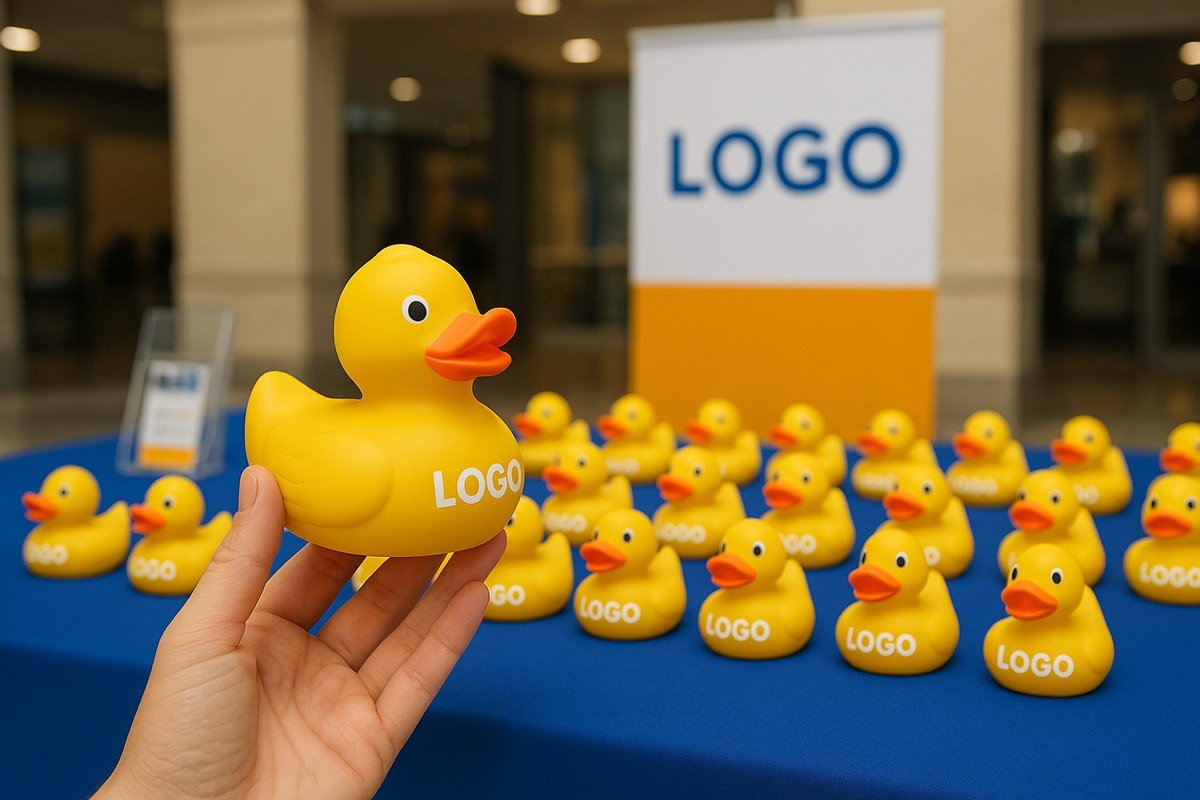
Real Factory Cost vs. Reseller Pricing
Half the cost.
Every article tells you to look for a ‘good price.’ That’s useless. The real question is: what are you actually paying for, and who is pocketing the difference? Let’s crack open the factory price of a custom rubber duck and compare it to what a domestic promotional distributor charges you.
At a typical factory, a custom rubber duck at 3,000 units breaks down like this. The mold — a one-time investment — runs $200 to $500. Per unit, material and labor lands at $0.20 to $0.35, plus screen-printing at $0.05 to $0.10. That’s a factory price of $0.30 to $0.70 per duck. The same duck, sourced from a US reseller or promotional product distributor, retails at $2.00 to $3.50 per unit. That’s a 500% markup. And 85% of the rubber ducks bought by US dealerships go through exactly that middleman channel.
Now run the numbers on a real campaign. At 3,000 units, direct sourcing costs $1,800 at the top end ($0.70 × 3,000). Reseller pricing at $2.00 per unit runs $6,000. That’s a $4,200 difference — enough to fund a second giveaway or pay for a custom mold on your next order. At 10,000 units, the gap widens. Factory price drops to $0.30 per unit ($3,000 total). The reseller stays at $2.00 per unit ($20,000 total). You save $17,000.
- 1,000 units (MOQ baseline): Factory: $0.70/unit — $700 total. Reseller: $2.50/unit — $2,500 total. You save $1,800.
- 3,000 units (typical auto show run): Factory: $0.60/unit — $1,800 total. Reseller: $2.00/unit — $6,000 total. You save $4,200.
- 10,000 units (seasonal or multi-event campaign): Factory: $0.30/unit — $3,000 total. Reseller: $2.00/unit — $20,000 total. You save $17,000.
The threshold where direct sourcing becomes irresistible is around 2,000 units. Below that, the mold fee dominates the per-unit cost. Above it, the savings are too large to ignore. And the mold is yours to reuse — meaning your second campaign at 5,000 units costs just $0.20 per duck, because the mold is already paid for. That’s $1,000 for 5,000 ducks, compared to $10,000 through a reseller.
The insider truth: resellers don’t want you to know the factory cost because their entire business model depends on the information gap. The moment you see the breakdown, you can never unsee it. And the moment your GM sees a $17,000 savings line item on a 10,000-unit campaign, the conversation shifts from ‘Can we afford this?’ to ‘How fast can we order?’.
| Cost Component | Factory Direct (3,000+ Units) | Reseller / Distributor (3,000+ Units) | Savings by Going Direct | Why It Matters for Dealerships |
|---|---|---|---|---|
| Per-Unit Duck Cost | $0.30 – $0.70 | $2.00 – $3.50 | 70%–85% savings ($5,100+ on 3,000 units) | Frees budget for more ducks or other event giveaways. |
| Mold Fee (Custom Shape) | $200 – $500 (one-time) | Often hidden in per-unit price or charged as a non-refundable setup fee | Full transparency; mold is your asset for reorders | Amortizes to <$0.02/unit after 10k pieces — cheaper than stock ducks on repeat campaigns. |
| Logo Screen-Printing Setup | $0 – $50 per color (included in MOQ) | $75 – $150 per color | $75–$100 per color saved | Critical for multi-color dealership logos without surprise charges. |
| Squeaker Durability Test | Included: ≥1,000 activation test report per batch | Not offered; squeaker failure rate unknown until arrival | Eliminates risk of silent ducks at your auto show | A duck that stops squeaking gets thrown away — this test ensures it lasts the entire event. |
| Lead Time (5,000 units) | 25–35 days (including production & screen-printing) | 10–20 days (but stock items only; custom orders take longer and cost more) | Comparable speed with full customization control | Enables timely delivery for fixed-date auto shows and grand openings. |
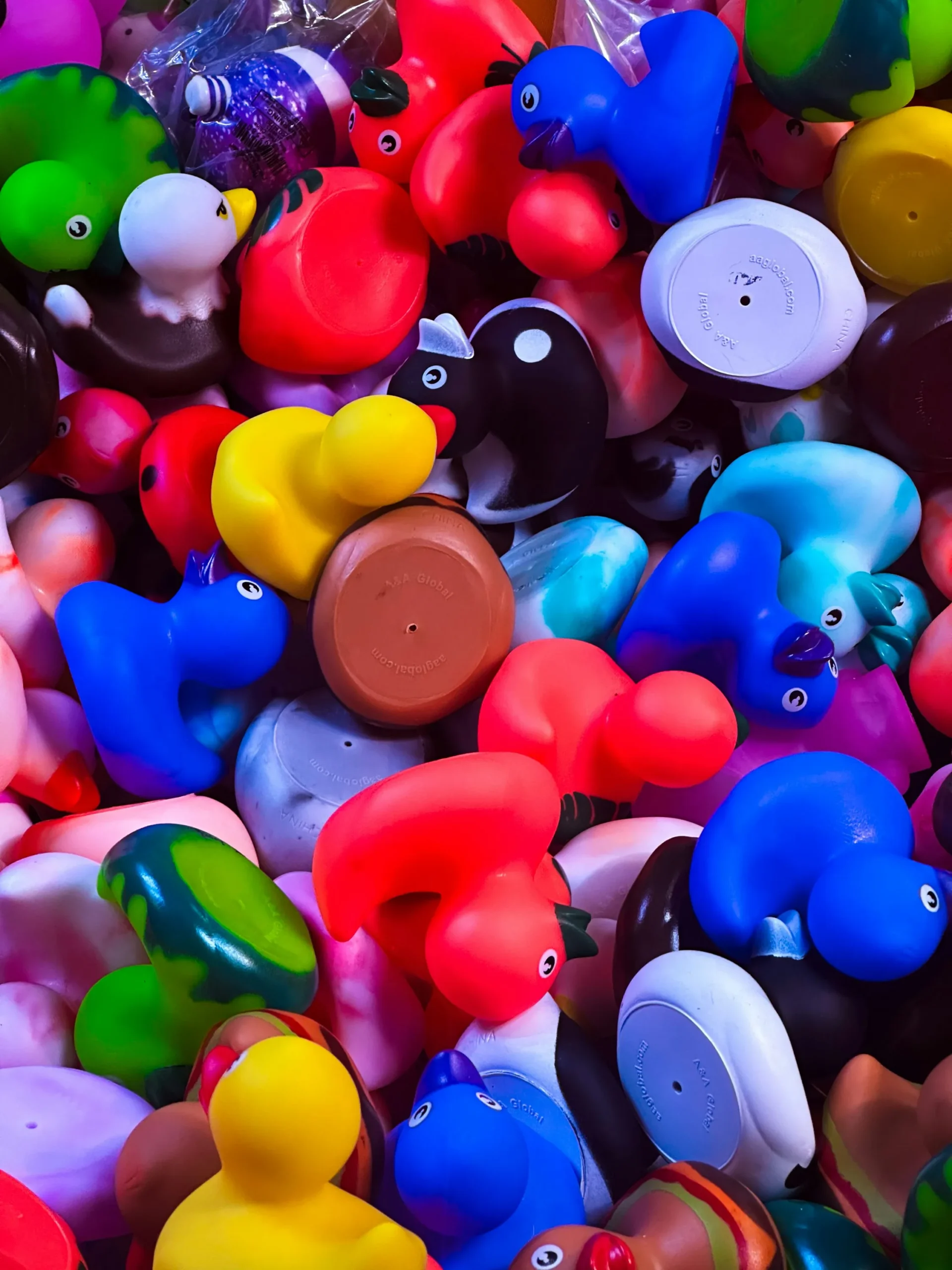
Customization That Works on a Dealership Floor
Three levels of customization, one clear winner for auto shows.
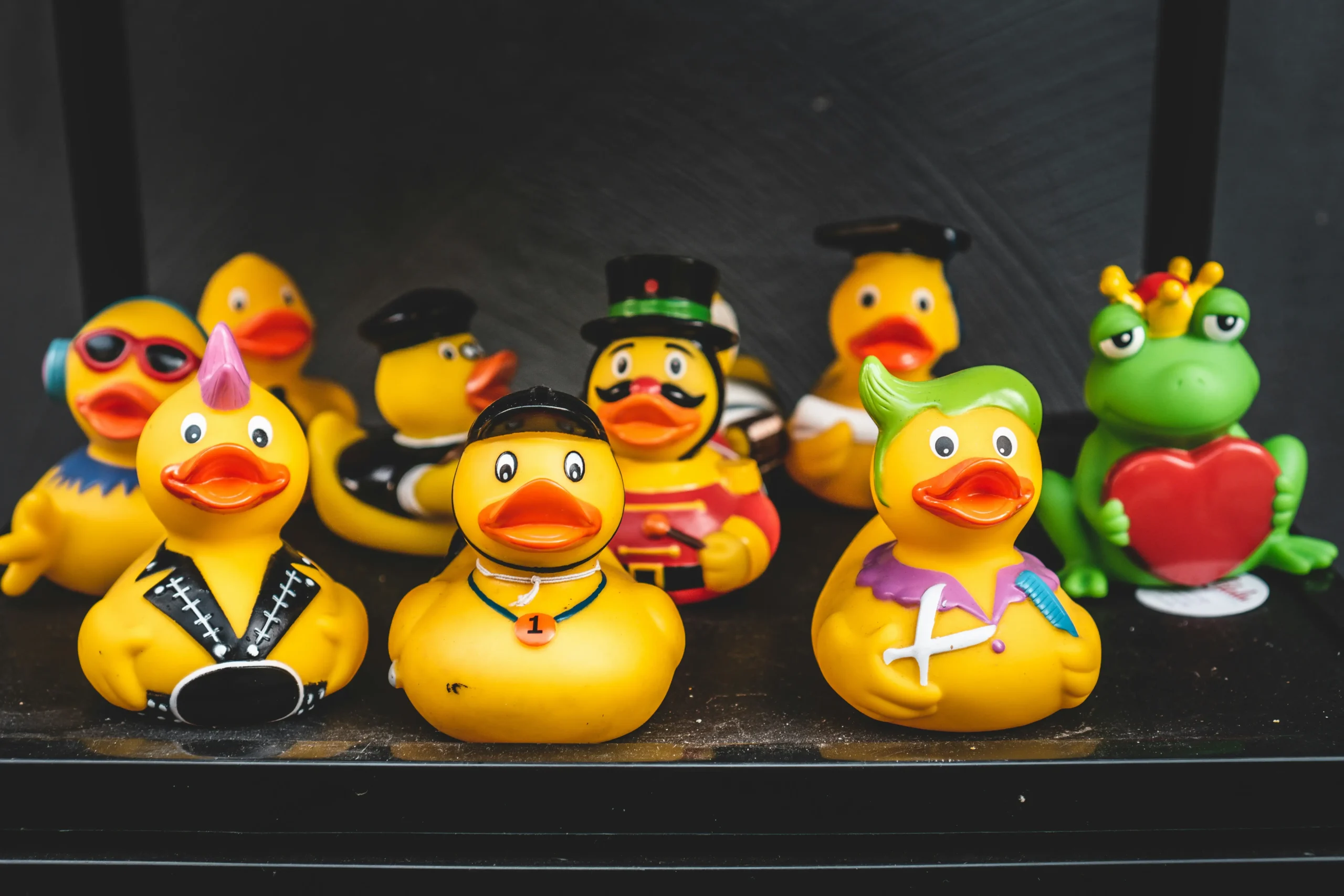
Most dealerships start with a stock‑shape duck and a one‑color pad print on the belly. That works for a $0.30 unit cost, but it gets lost on a crowded auto‑show table. The real question is: how much brand recall do you need? For a car dealership rubber ducks bulk order intended for a single weekend event, multi‑color screen printing adds $0.12 per unit and gives you a logo that holds up after 50 squeezes. For a signature campaign — think luxury brand launch or annual open house — the full 3D custom mold is the only option that pays back in social shares and repeat visits.
- Level 1 – Stock shape + 1‑color pad print: Cheapest entry point at $0.30–$0.45 per unit for 3,000+ units. One flat color, no gradients. Good for budget‑focused giveaways but indistinguishable from generic promotional ducks. Typical lead time 18 days.
- Level 2 – Stock shape + multi‑color screen print: Adds $0.10–$0.15 per unit. Allows gradient, metallic, or translucent inks. The logo wraps around the belly or back. Best for auto dealers who want a branded rubber duck for auto shows without the mold commitment. Still, the duck is generic — the only differentiation is the print.
- Level 3 – Full 3D custom mold: Mold fee $200–$500, amortized to <$0.02 per unit after 10,000 pieces. Your duck becomes a miniature of your best‑selling model. A dealer who molds a car‑shaped duck for a luxury brand sees 3x the social media engagement compared to a logo‑only duck. The mold is a proprietary asset — reuse it for every season.
The high‑recall play for auto shows is a car‑shaped duck with the dealership logo printed on the belly. That combination turns a giveaway into a collectible. Luxury dealers have ordered 5,000 mini rubber ducks for dealership promotions shaped like a specific coupe silhouette, and customers kept them on desks for years. The reorder cost drops 60% because the mold is already paid. For Jeep‑ducking promotional ducks, the round duck with a printed grille works, but a true 3D mold of a Wrangler hood pushes the hashtag engagement even higher.
Real‑world examples: One dealer commissioned a duck shaped like a vintage Corvette for a 50th‑anniversary event. The mold cost $350, the per‑unit cost at 3,000 pieces was $0.55. They handed them out at a car show and saw a 12% booth traffic increase (Promotional Products Association 2026). Another dealer used a simple stock duck with a multi‑color logo screen print for a weekend sales event and saved $1,200 versus a custom mold — but the ducks ended up in the kids’ toy bin, not on the dash. If you want the duck to stay visible, invest in the shape. The math is clear: a custom logo rubber duck automotive mold that costs $0.02 per unit over 10,000 pieces is cheaper than a generic duck that gets thrown away.
Lead Time, MOQ, and Packaging for Car Events
Miss a 25-day lead time and your $50K auto show booth runs empty.
Car events don’t move. A grand opening is printed on banners six weeks out. An auto show booking is locked twelve months ahead. If your rubber ducks land three days late, the whole promotion falls flat. The standard production cycle for a 5,000-unit custom order — mold creation, injection molding, screen printing, quality inspection, and ocean freight — runs 25 to 35 days. That timeline assumes you approved the artwork on day one and the factory runs at full capacity. Any delay in sample approval adds a week. Any holiday in China (Chinese New Year, Golden Week) adds ten days. The smart play is to add a 14-day buffer on top of the factory’s quoted lead time and order before the marketing calendar is finalized.
MOQ is the second fear. The standard minimum is 1,000 units per design. That sounds like a lot for a single dealership test run, but the math flips when you consider mixed-SKU orders. Many factories, including ours, allow you to split the 1,000 MOQ across 3–5 different designs. You can order 300 ducks with a sedan silhouette, 300 with an SUV shape, 200 with a truck profile, and 200 with a generic logo duck — all under one MOQ. This prevents overstock on a single design that doesn’t resonate and lets you test multiple styles without committing to 5,000 units upfront.
- Lead time consequences: A 25-day production window means day 1–3 for mold prep, day 4–18 for injection and printing, day 19–21 for quality inspection, day 22–25 for packaging and loading. Knock off one leg and your ducks arrive at the port after the event closes.
- Mixed-SKU MOQ: 1,000 ducks total across 3–5 designs avoids dead stock. Each design still carries a per-unit cost of $0.30–$0.70 at factory pricing, so a 300-unit test run for a truck duck costs about $150–$200 — not a bad bet for a local auto show.
Packaging is where most first-time buyers trip up. For a retail-style giveaway at a dealership reception desk — the kind customers pick up from a basket — you want individual polybags with a hang tag. The bag protects the duck from dust and handling. The hang tag carries your logo, a QR code to a test drive booking page, or a social media hashtag. The cost per bag is about $0.03, and the hang tag adds $0.02. For a grab-and-go event like a community car show or a parking lot activation, bulk box packing is smarter. Ducks are loose-packed in a corrugated box in counts of 200 or 500. You or the event staff hand them out directly. No bag, no tag, no waste. The per-unit packaging cost drops to $0.01, and you save the labor of bagging 5,000 ducks. The choice depends on whether you want the duck to carry a message after the event or just get into a kid’s hand quickly.
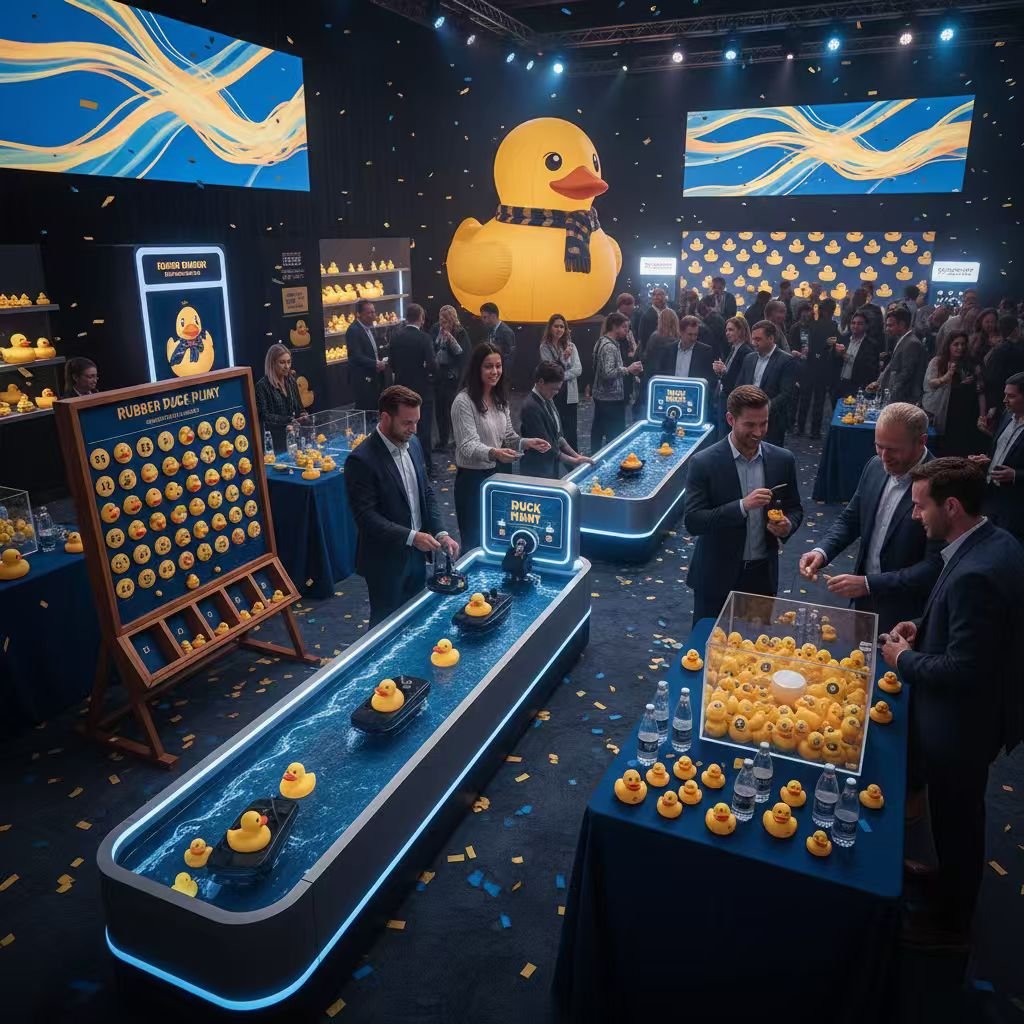

How to Qualify a Promotional Rubber Duck Supplier in Minutes
85% of US dealerships overpay 4x–6x through resellers who hide the factory cost.
- BSCI certification: Without it, you’re buying from a factory that hasn’t passed a social compliance audit. Most US retailers and event venues require this. Ask for the certificate number and verify it on the BSCI platform.
- Squeaker test report: This is the single most overlooked failure point. A duck that stops squeaking after 10 squeezes ends up in the trash. Demand a report showing ≥1,000 compressions per squeaker. We provide this with every order because a dead duck is a wasted giveaway.
- Sample photo of previous dealership work: Not a generic duck photo. Ask for a real image of a branded duck from a car dealership or automotive event. You want to see logo placement clarity, color matching, and the quality of the pad print or screen print on the belly.
- Moisture-resistance proof: Ducks shipped in bulk containers travel through high-humidity zones. If the packaging isn’t moisture-resistant, your ducks arrive with mold spots or warped shapes. Ask whether they use desiccant packs and sealed polybags.
- Mixed-SKU capability: If you only need 1,500 ducks but want three different colors or two logo variations, can the factory split the MOQ? Many factories allow mixing across 3–5 designs. This reduces overstock risk and lets you test multiple designs before scaling.
- Transparent mold-ownership policy: Some factories keep the mold after you pay for it. Then when you reorder, they can change the price or refuse to sell. The mold fee ($200–$500) is a one-time investment you should own. Confirm in writing that the mold is your property and can be transferred to another factory if needed.
- On-time shipment track record: A factory that ships 5 million+ ducks every month has built a logistics operation that can handle delays, port congestion, and customs paperwork. Small studios lack the warehouse capacity and freight relationships to guarantee a 25–35-day lead time. Ask for a recent shipment record or a reference from a dealership client.
Conclusion
Skip this sourcing step, and your next dealership giveaway will likely cost 4x what it should—and the ducks will stop squeaking before the event ends. That $5,000 you save by going direct to a factory isn’t just margin; it’s a second campaign you can run. The squeaker test report and custom mold ownership are the difference between a one-time novelty and a reusable brand asset that builds community across auto shows and Jeep ducking events.
Start by reviewing the custom duck gallery to see how other dealerships matched their logo to a factory-quality mold. Compare factory pricing against your current reseller quotes, then request a sample duck before you commit to the mold. That sample is your proof of concept for the GM—and your guarantee that the ducks arrive on time, on brand, and ready to squeak.
Frequently Asked Questions
What is the real MOQ for custom rubber ducks with a dealership logo?
The exact answer depends on the product specification, quantity, and order setup. The safest approach is to confirm the commercial terms only after the final requirement sheet is locked. Confirm MOQ after the final spec and customization scope are fixed.
How do you print a car dealership logo on a rubber duck without it peeling?
The exact answer depends on the product specification, quantity, and order setup. The safest approach is to confirm the commercial terms only after the final requirement sheet is locked. Lead time should be confirmed after quantity, finish, and shipping method are locked.