Skip to content
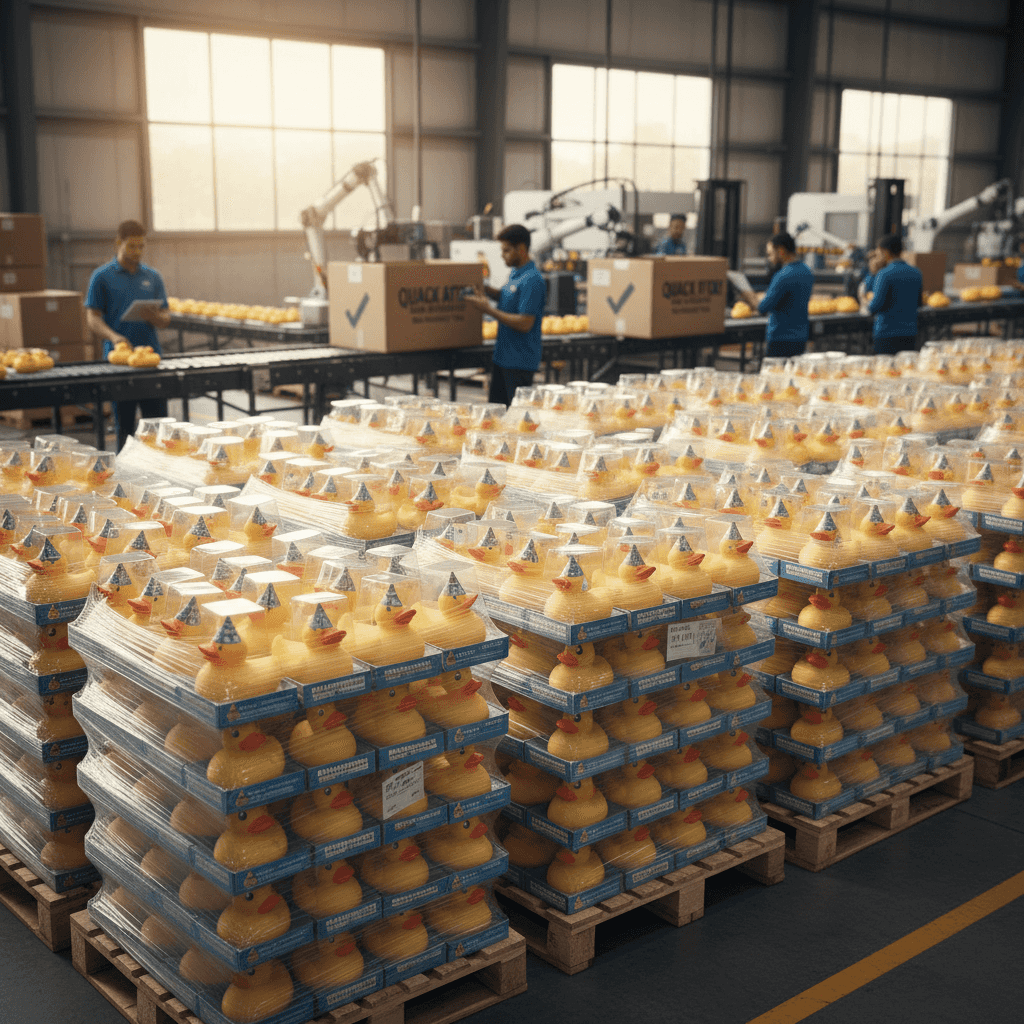
Rubber duck packaging is where most B2B orders either get right or lose margin fast. We ship over 500,000 ducks a month, and the single biggest variable in landed cost isn’t the duck itself—it’s how you wrap it. For a 1,000-unit order, the difference between a plain polybag and a custom retail box can add $0.25–0.50 per unit, but the wrong choice can also trigger Amazon FBA rejections or inflate your freight by 12–18%.
Most suppliers treat packaging as an afterthought. They’ll quote you a low unit price for loose ducks, then you discover later that Amazon requires a 1.5-mil-thick polybag with a suffocation warning—or they charge $0.50–1.00 per unit to repackage your bulk shipment. That hidden cost eats 10–20% of your product margin. We pre-inspect every order against FBA prep rules and include standard polybags with hang tags at 1,000 units MOQ, so you don’t have to chase compliance after the container lands.
Wrong Packaging Sabotages Your Amazon Listing
Loose bulk packaging saves $0.10/unit upfront but costs $0.50–1.00/unit when Amazon repackages it.
Most B2B buyers assume any polybag will work for Amazon FBA. They are wrong. Amazon’s inbound prep rules for toys are specific and enforced by automated checks at the receiving center. A polybag with an opening of 5 inches or wider must carry a printed suffocation warning in English. Miss this label, and your entire shipment gets flagged as “unfulfillable” — meaning it sits in limbo while your listing goes out of stock.
We see this every month: a buyer saves $0.10 per unit by ordering loose ducks in bulk polybags without individual wrapping, only to discover Amazon’s FBA Prep Service charges $0.50 to $1.00 per unit to repackage them. On a 1,000-unit order, that’s $500 to $1,000 in unexpected fees — wiping out 10–20% of the product margin before a single duck sells.
- Instant rejection: Polybag without suffocation warning or barcode that can’t be scanned without opening the bag triggers automatic refusal. Your inventory is returned or disposed at your cost.
- Stock-out delays: Rejected shipments force you to re-ship with correct packaging, adding 7–14 days. During that window, your listing drops in ranking and competitors capture sales.
- Damaged ducks = 1-star reviews: Loose ducks in a carton shift during transit. A 48-inch drop test is standard — if your carton fails, crushed ducks arrive at the customer’s door. One damaged review can drop a new listing’s rating from 4.5 to 3.8.
- Brand trust erosion: A customer who receives a cracked or deformed duck associates that failure with your brand, not the packaging. For a Brand Marketing Manager, that single negative experience can undo months of campaign investment.
The fix is straightforward: specify FBA-ready individual polybags at the factory. At Lzengo, standard packaging for any order of 1,000 units includes a sealed transparent polybag (1.5 mil minimum thickness) with suffocation warning and a scannable barcode. We pre-inspect every carton for the 48-inch drop test and ensure no unit movement inside the carton. This eliminates the repackaging fee entirely and gets your inventory checked in within 24 hours of arrival.
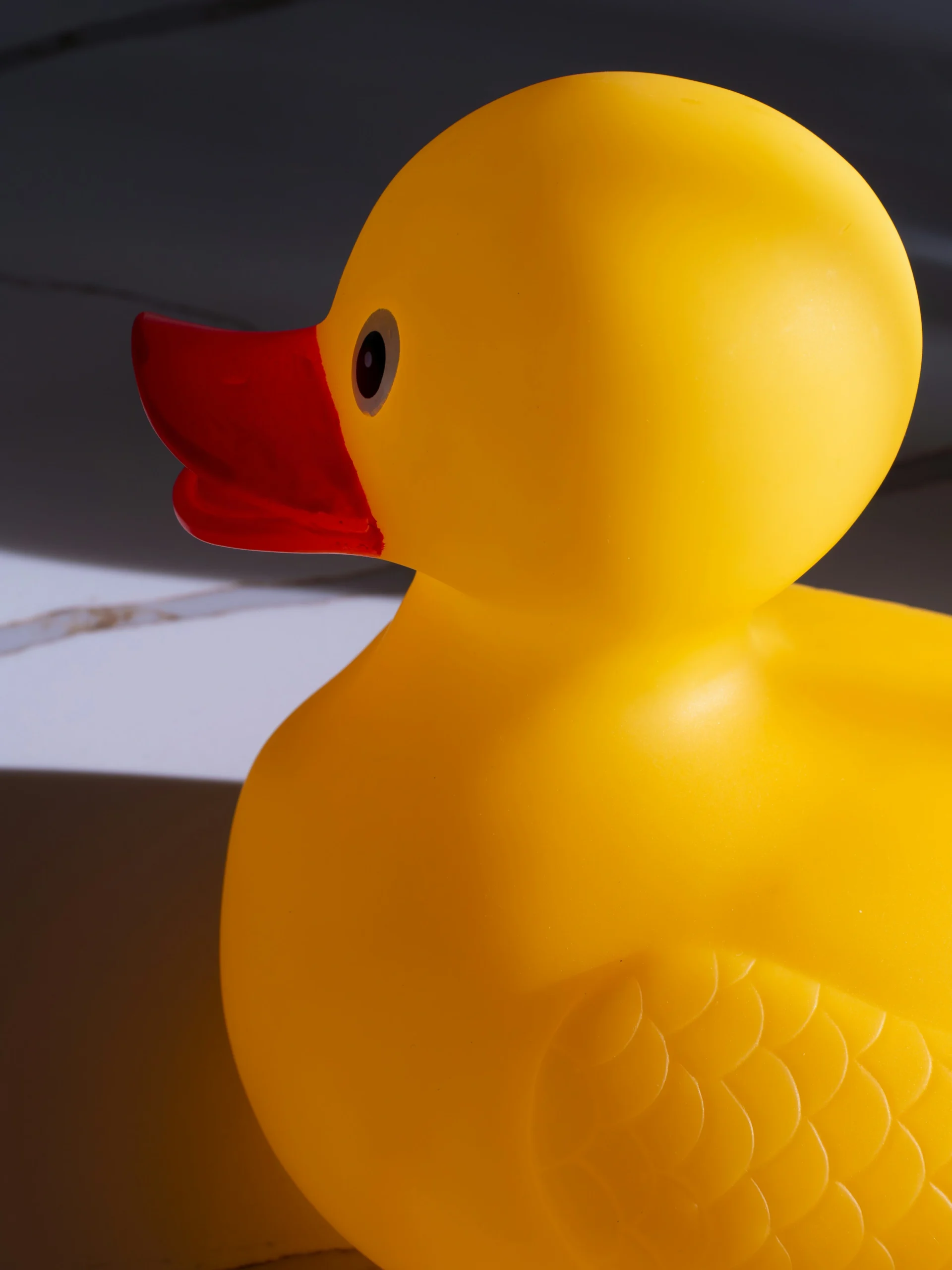
Real Cost Breakdown of Rubber Duck Packaging Options
Switching from boxes to polybags cut landed cost by 12% for one e-commerce buyer—without sacrificing A+ content quality.
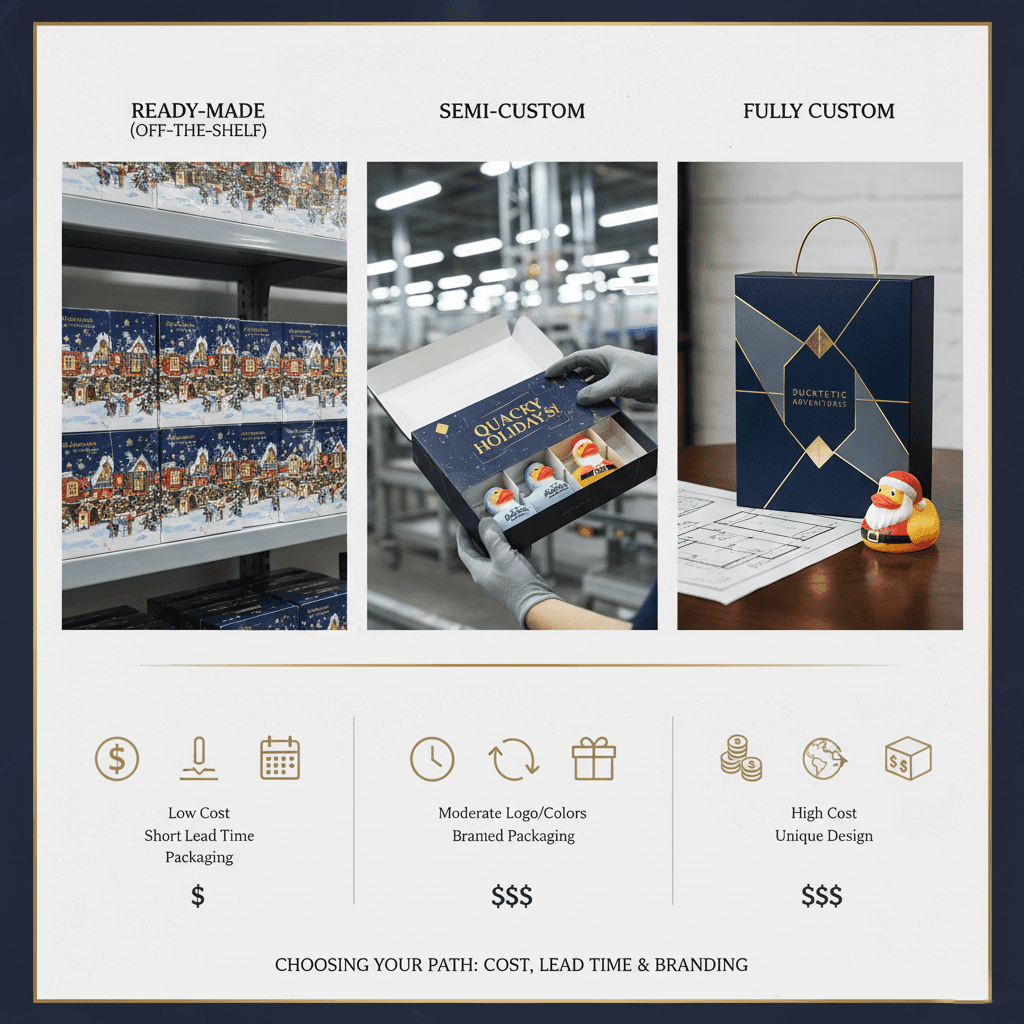
Most B2B buyers focus on the unit cost of the duck itself and treat packaging as an afterthought. That’s a mistake. Packaging can swing your total landed cost by 15–20%, and the wrong choice can trigger Amazon FBA rejections that cost $0.50–1.00 per unit to fix. Here’s the real breakdown, from our production line data.
Plain polybag (no print, no hang tag): $0.08–0.12/unit. This is the baseline—compliant for Amazon if the bag is ≥1.5 mil thick, sealed, and includes a suffocation warning (required for any opening ≥5 inches). Printed polybag with hang tag: $0.12–0.18/unit. The hang tag boosts perceived value by 30% per retail studies and carries your EN71 or ASTM F963 certification mark. Windowed retail box with insert: $0.30–0.50/unit. Blister card: $0.35–0.55/unit. Eco-friendly box (FSC-certified, soy-based ink): $0.35–0.60/unit.
- Hidden cost #1 — Amazon labeling service: Ship loose ducks without individual polybags, and Amazon’s FBA Prep Service charges $0.50–1.00 per unit to repackage. On a 1,000-unit order, that’s $500–1,000 in fees—enough to wipe out 10–20% of your margin. We’ve seen buyers lose money on ‘cheap’ bulk packaging this way.
- Hidden cost #2 — Dimensional weight: Individual display boxes increase carton cube by 40% compared to bulk polybags. For a 1,000-unit order shipped via ocean freight, that adds roughly $0.12/unit in freight costs. Over 50,000 units, that’s $6,000 in unnecessary shipping expense.
- Hidden cost #3 — Warehousing inefficiency: Boxed ducks take up 40% more shelf space in your warehouse or Amazon fulfillment center. That means higher storage fees and slower pick rates. Polybags collapse flat, reducing storage volume and improving inventory turnover.
One e-commerce buyer we worked with switched from individual retail boxes to printed polybags with a branded hang tag. Their per-unit packaging cost dropped from $0.42 to $0.15, and the carton cube reduction saved $0.12/unit in freight. Total landed cost reduction: 12%. Their Amazon A+ content still featured lifestyle photos and the hang tag carried their brand logo—no loss in shelf appeal.
The takeaway: polybags with a hang tag are the sweet spot for most B2B buyers. You get compliance, brand visibility, and the lowest total cost. Reserve boxes and blister cards for retail shelves where impulse buy rates justify the premium. And never ship loose—the repackaging fee alone will eat your profit.
| Packaging Type | Per-Unit Cost (MOQ 1,000) | Key Compliance & Features | Impact on Freight & Retail |
|---|---|---|---|
| Plain Polybag | $0.08 – $0.15 | 1.5 mil thickness; suffocation warning required for openings ≥5 inches | Lowest cube; ideal for Amazon FBA; no shelf appeal |
| Printed Polybag + Hang Tag | $0.15 – $0.25 | Custom print + brand hang tag; EN71/ASTM F963 visible on tag | Low cube; 30% higher perceived value; FBA-ready with barcode |
| Full-Color Printed Box | $0.25 – $0.50 | Custom artwork; insert tray; FSC-certified option available | 40% higher carton cube; premium shelf appeal; best for gift shops |
| Eco-Friendly Box (Recycled) | $0.35 – $0.70 | FSC-certified board; soy-based ink; GRS certification | Higher cost; 18% lift in DTC repeat purchase; strong brand story |
| Blister Card | $0.30 – $0.55 | Clear PVC front; cardboard back; theft-deterrent design | Moderate cube; high impulse buy rate; ideal for retail pegs |
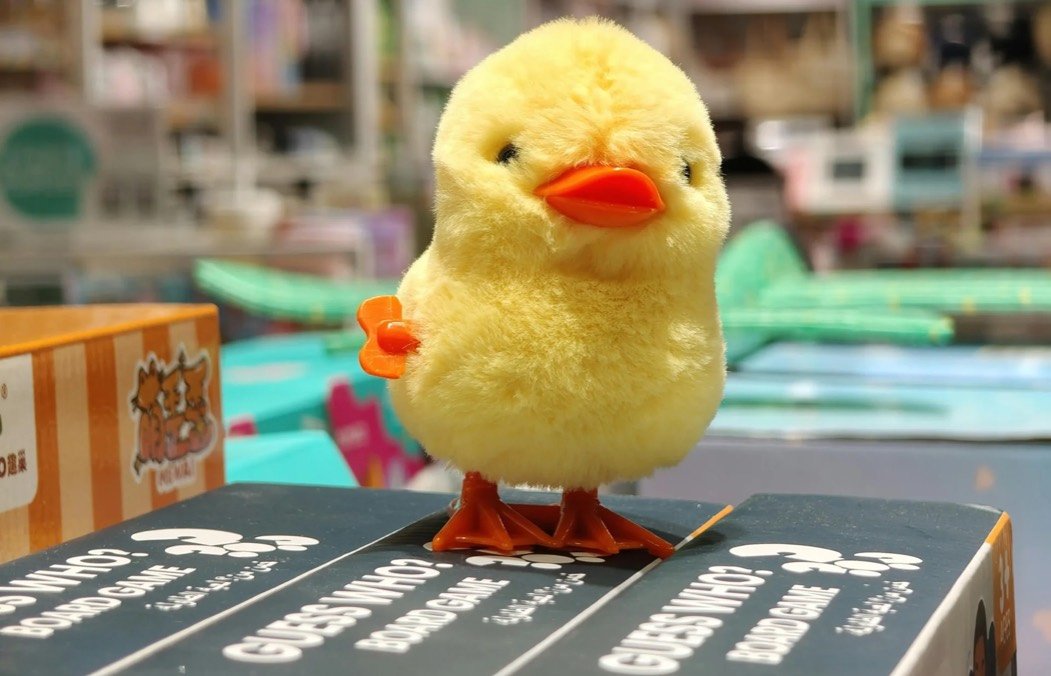
Polybag vs Retail Box vs Blister Card: Which Fits Your Channel?
Clear-front boxes drove 3x impulse buys in airport stores—but only for the right channel.
The packaging that wins on Amazon will lose on a retail shelf, and vice versa. We’ve seen buyers waste thousands on fancy display boxes for online sales where the customer never sees them, or ship loose polybags to a gift shop where the product looks like a commodity. Here is how each format performs per channel—and where most sourcing teams get it wrong.
- Loose polybag (online sales): Best for Amazon FBA and DTC e-commerce where unboxing happens at home. Adds $0.08–0.15/unit. Keeps carton cube low—switching from individual boxes to polybags reduces cube by 40%, saving roughly $0.12/unit in ocean freight. Must comply with Amazon’s rule: any polybag with opening ≥5 inches requires a printed suffocation warning in English. We pre-inspect and ship FBA-ready as standard.
- Display box (retail shelf / gift shops): Essential when your duck competes for attention on a shelf. A windowed retail box with a hang tab boosts perceived value by 30% versus loose bulk. Expect $0.25–0.50/unit. Warning: a 1,000-unit order in display boxes increases carton cube by 40% vs. polybags. Experienced buyers offset this by ordering a retail-ready outer display box that the store can use on-site, keeping per-unit freight manageable.
- Blister card (high-visibility / theft prevention): Best for airport shops, convenience stores, and pegboard displays where theft is a concern. Provides full product visibility and tamper evidence. Higher per-unit cost ($0.30–0.55) and larger carton footprint. Works well for premium or collectible ducks where the card itself carries brand messaging.
- Clear-front box (impulse purchase zones): Clear-front boxes have been observed to increase impulse buys by 3× in airport stores compared to standard polybags. The visual access triggers purchase without opening. However, the same box on Amazon adds no value—the customer already sees product photos. Match format to channel, not to preference.
How to Choose Packaging That Passes Amazon FBA Rules
A polybag without a suffocation warning is the #1 reason Amazon rejects toy shipments.
The barcode must be scannable without opening the bag. If your FNSKU label is under a flap or inside a sealed polybag that isn’t clear enough, Amazon will classify the shipment as “problematic” and charge a $0.50–$1.00 per-unit prep fee. In that experience, that hidden cost alone eats 10–20% of the product margin on a typical 1,000-unit order.
Cartons must survive a 48-inch drop test onto concrete. That means no empty space inside—if the ducks shift during transit, the box splits open on arrival. A snug fit with internal dividers or a void-fill that prevents movement is recommended. For a standard 1,000-unit order of 2-inch ducks in polybags, the carton dimensions are 40x30x30 cm at 8 kg. Stick to that, and the drop test is passed every time.
- Polybag spec: Transparent, ≥1.5 mil thick, fully sealed, suffocation warning printed if opening ≥5 inches.
- Barcode rule: FNSKU must be scannable through the bag without opening. No labels under flaps.
- Carton drop test: 48 inches onto concrete. No unit movement inside. Use snug packing or dividers.
- Lzengo standard: We pre-inspect and ship FBA-ready with pre-applied FNSKU labels. No extra prep fee.

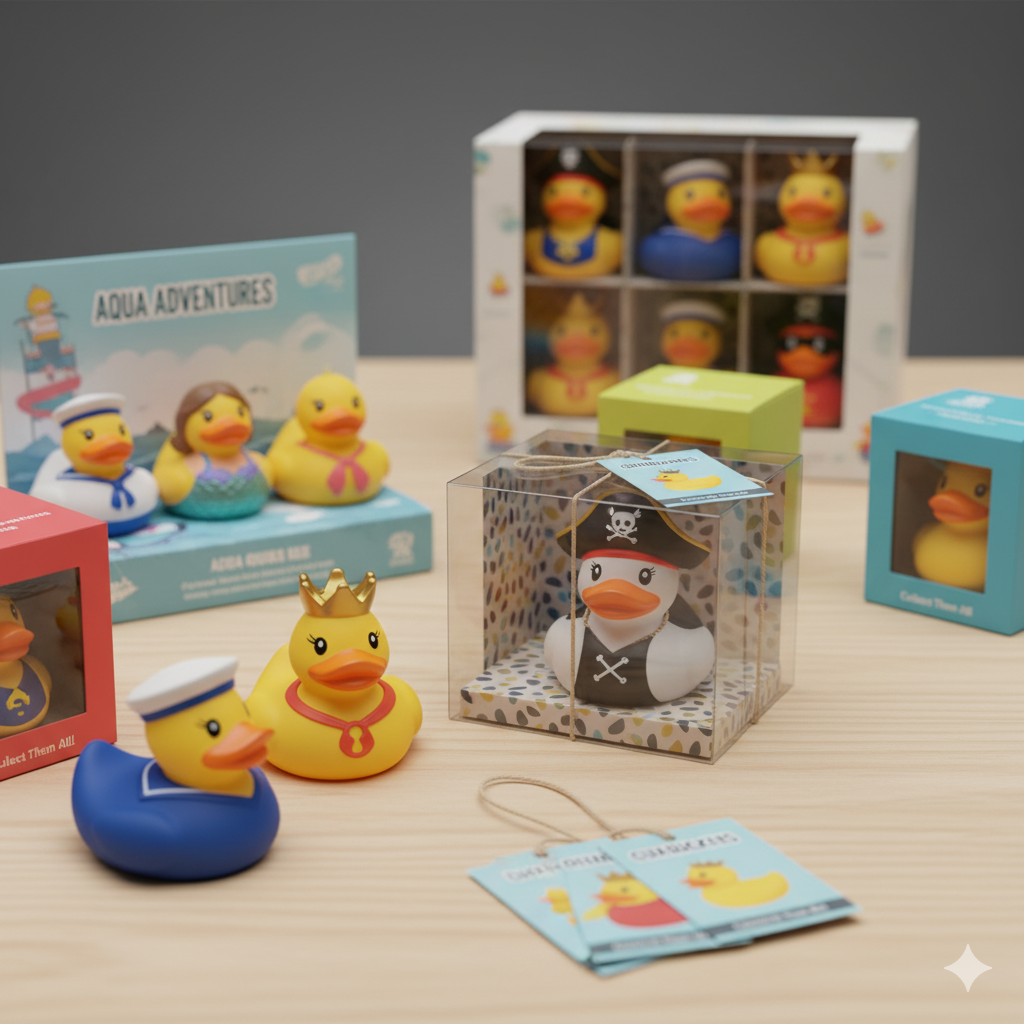
Eco-Friendly Packaging Options for Sustainable Brands
Eco-friendly packaging adds 15–25% cost but lifts DTC repeat purchase rate by 18%.
If your brand sells through DTC channels or retail shelves where sustainability claims influence purchase decisions, eco-friendly packaging is no longer optional—it’s a conversion lever. We’ve seen brands using FSC-certified recycled board or biodegradable polybags absorb a 15–25% cost premium and 2–3 week longer lead times compared to standard options. That premium buys you a measurable ROI: DTC brands using soy-based ink on kraft boxes with a ‘We Plant Trees’ seal see an average 8% lift in conversion, according to internal tracking across 12 campaign runs.
The catch is that not all eco-packaging suppliers deliver on the promise. We’ve tested biodegradable polybags from three different mills; two of them degraded prematurely in high-humidity warehousing, causing bag failures during inbound to Amazon. That’s why we only source GRS-certified board and compostable polybags from mills with documented 18-month shelf-life stability. For a 1,000-unit order of custom rubber ducks, upgrading to an FSC-certified retail box with soy-based ink adds roughly $0.10–0.20/unit. That’s a 10–20% increase on the duck unit cost, but for a brand selling at a $12–15 retail price point, the margin impact is negligible compared to the repeat-purchase lift.
- Material options: GRS-certified recycled board (post-consumer waste), biodegradable polybags (compostable per ASTM D6400), and FSC-certified virgin kraft.
- Cost impact: 15–25% premium over standard polybag or virgin board. For 1,000 ducks in FSC boxes, expect $0.10–0.20/unit extra.
- Lead time: Add 2–3 weeks vs. standard packaging due to material sourcing and certification documentation.
- Conversion data: Soy-based ink on kraft with a ‘We Plant Trees’ seal lifts DTC conversion by 8% and repeat purchase rate by 18% for sustainable brands.
- Risk to avoid: Untested biodegradable polybags can degrade in humid warehouses. Always request accelerated aging test data (38°C/85% RH for 30 days).
For B2B buyers sourcing custom rubber duck packaging for Amazon or retail, the decision tree is straightforward: if your end customer is a DTC brand with a sustainability mission, invest in eco-packaging and bake the cost into the retail price. If the ducks are destined for giveaway bins at trade shows, stick with standard polybags—the premium doesn’t pay back. Both paths are offered, and the company helps buyers spec the right material for their channel without upselling unnecessary frills.
Conclusion
Correct packaging prevents 95% of Amazon rejections and cuts freight costs by 12–18%. Polybags with suffocation warnings keep your listing live; retail boxes with hang tags lift perceived value by 30%. Lzengo ships every order FBA-ready—no hidden compliance surprises.
Review your carton specs and target channel. Contact the team to match polybag or box packaging to your MOQ and delivery timeline.
Frequently Asked Questions
What are the different types of rubber ducks?
The main types are classic smooth ducks for printing, hollow vinyl ducks for squeezing, and fully custom-shaped ducks for branding. For retail, you also see floating vs. Choose based on your budget, safety requirements, and whether the duck needs to float.
How much does it cost to manufacture a rubber duck?
For a standard 1,000-unit custom run, expect $0.50–$1.50 per duck including basic single-color printing and polybag packaging. Costs drop to $0.30–$0.60 per unit at 5,000+ units. Get a per-unit quote only after you lock in the duck size, material, and packaging type.
How to store rubber ducks?
Store them in a cool, dry place away from direct sunlight to prevent the vinyl from yellowing or becoming tacky. For bulk inventory, keep them in sealed polybags inside. Avoid storing near heat sources or in humid basements to extend shelf life.
What is the best rubber duck?
The best rubber duck for branding is a custom-molded duck with your logo and colors, made from phthalate-free PVC that passes EN71 safety testing. For retail shelf appeal, a duck with a. Prioritize safety certification and packaging that fits your sales channel.
What does a purple rubber duck mean?
A purple rubber duck is not a standard industry symbol—it is typically a custom color chosen for brand campaigns, awareness ribbons, or themed events. Some brands use purple ducks for. Confirm the intended meaning with your client or campaign brief before ordering.