Skip to content
Float Testing 101: Why Some Custom Ducks Sink and How Factories Fix It
A rubber duck that does not float is not doing its job. Whether it is a bath toy, a jeep duck, or a promotional give-away, the float is part of the product. Yet some custom ducks sink, tip over, or dive nose-first. Understanding why is the difference between a fun product and one that disappoints every buyer.
LZENGO is a custom rubber duck factory with a 1,000-piece MOQ and over 5 million ducks of monthly capacity, and it has a production process that controls material and weight — the two things that decide whether a duck floats.
Why a Duck Floats at All
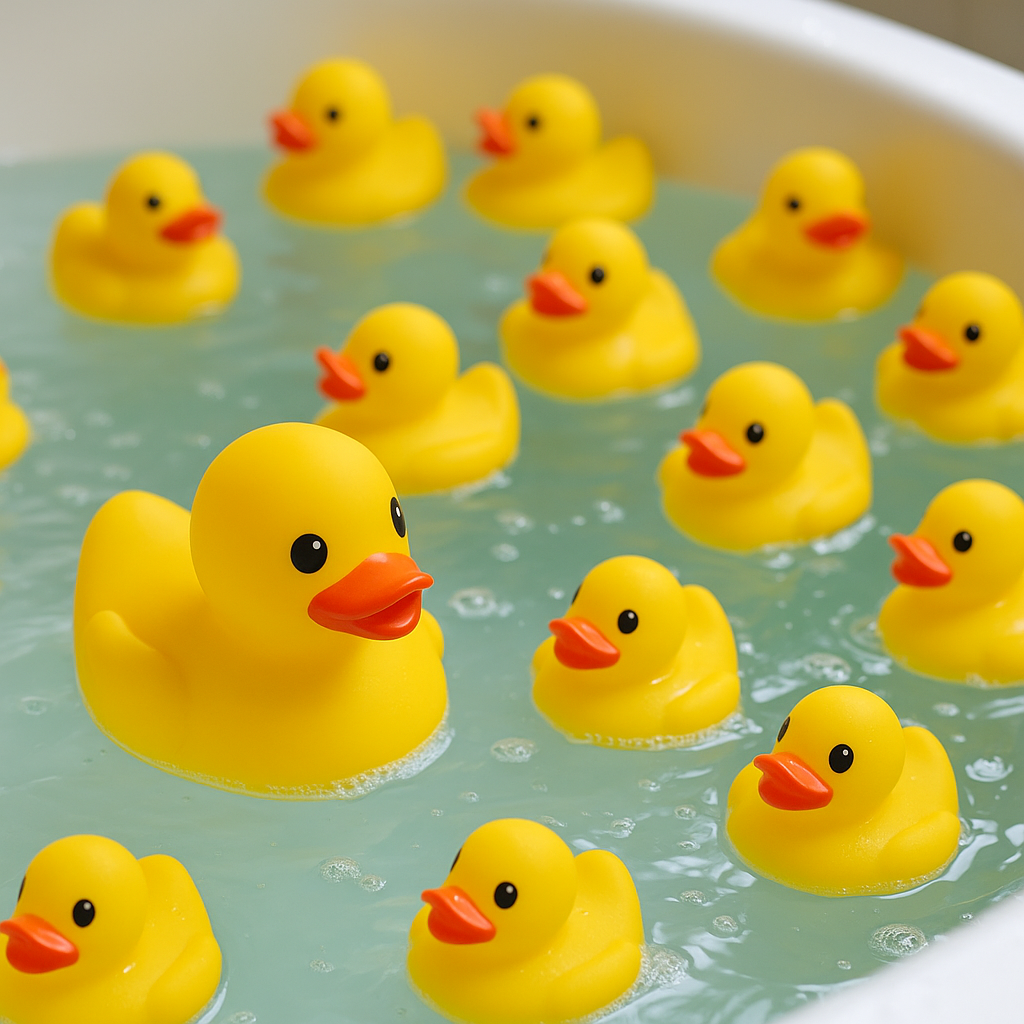
Buoyancy comes from the air pocket trapped inside the duck. The duck is moulded hollow and sealed, so the trapped air makes it lighter than water, and it floats. That air pocket is the whole secret. If the duck is not sealed properly, water gets in, the air is displaced, and the duck sinks or sits low.
Why Some Custom Ducks Sink
There are three common reasons a custom duck sinks or tips. First, a poor seal: if the duck is not fully sealed, water leaks in and it goes down. Second, weight distribution: a duck with extra material on one side, or a heavy moulding ridge, sits off-balance and tips. Third, design: a duck with a large head and a small base is top-heavy and falls forward. Each of these is a manufacturing or design fix.
How a Factory Fixes It
A factory corrects a sinking duck by fixing the seal and rebalancing the weight. A test float is run on a sample: the duck is floated and watched to confirm it sits upright and level, not listing or diving. This is why a physical sample matters before bulk — a floating test on the sample catches a buoyancy problem before it is multiplied across thousands of units.
Float Test and Material Choice
The material also affects float. A denser material sits lower in the water; a lighter material rides higher. Knowing what the duck is made of helps you predict the float, which is why what rubber ducks are made of is the first place to look. A durable material and a good seal are the two sides of a duck that floats and lasts.
Safety and Compliance
A bath duck is a children’s product in many markets, so it has to meet the relevant safety rules and, in the U.S., the children’s product safety framework. Make sure the material and any changes are compliant, as a change can trigger re-testing. The U.S. Environmental Protection Agency frames durable, safe products and materials management, which EPA material guidance supports.


To source a custom rubber duck for your campaign, start with the custom rubber duck manufacturer page.
See also: what rubber ducks are made of.
See also: rubber duck safety testing.
See also: how rubber ducks are manufactured.
Common Questions
Why does my rubber duck sink instead of float?
Likely a poor seal letting water in, or a weight distribution that tips it over. A duck floats because of the trapped air inside a sealed mould. If the seal fails or the duck is unbalanced, it sinks or lists. Check the seal and run a float test on the sample.
How do I make sure my custom duck floats?
Spec the float test on a physical sample before bulk. Confirm the duck is sealed and balanced so it sits upright and level in the water. A factory that floats its samples before production — like LZENGO — catches a buoyancy problem before it reaches the container.