Skip to content

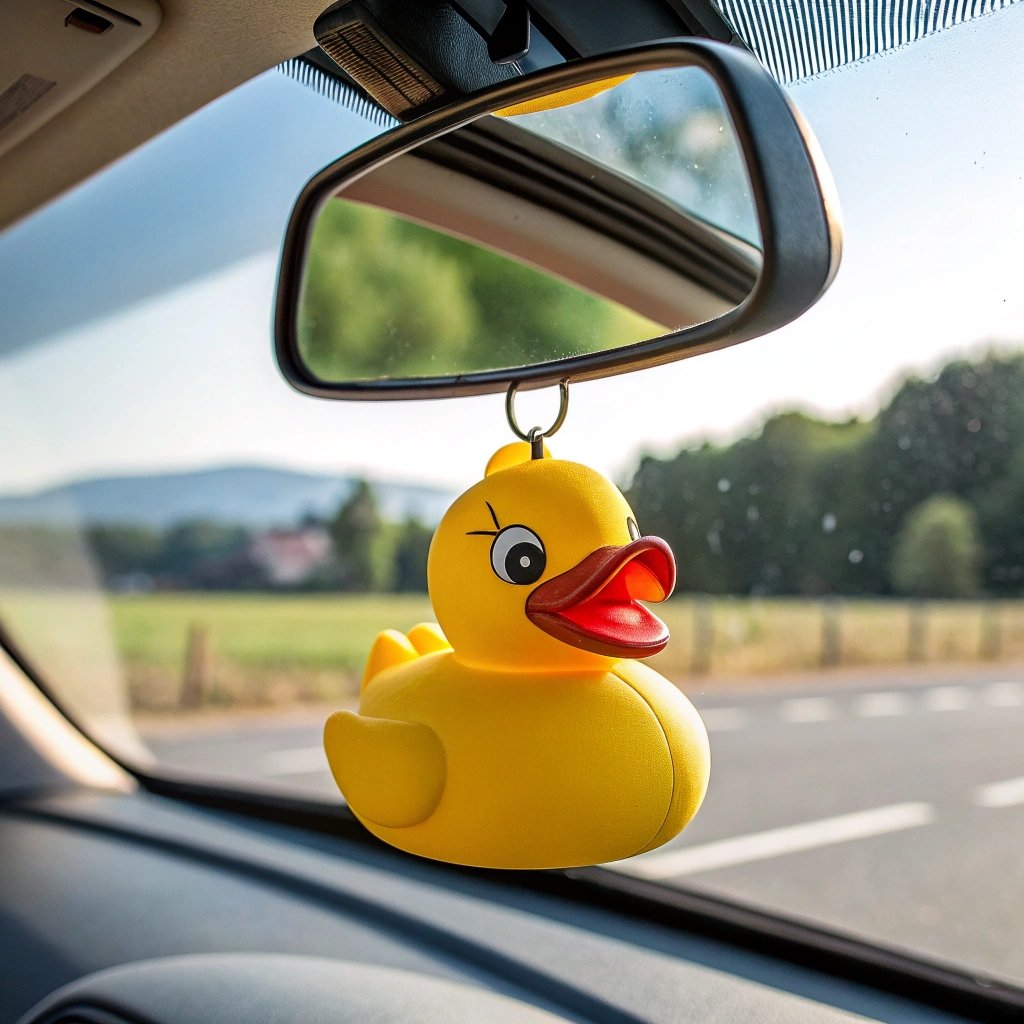
Car wash economics run on repeat visits, and repeat visits run on habit. Discounts buy visits but teach customers to wait for the next coupon; a small physical giveaway builds a different kind of habit, because it gives the customer something to collect and the wash something to talk about. A branded duck on the dashboard does this job unusually well, since the car is the customer’s space and the dashboard is the most visible part of it.
This guide covers how wash and detailing brands use duck programmes: campaign structures, the designs that work, and the operational details that keep a giveaway from becoming clutter.
Why the Dashboard Is the Right Place
A giveaway competes for space in a customer’s life. Dashboards win that competition for a simple reason: the customer is in the car every day, and the dashboard is where small objects stay. A duck that represents the wash becomes a recurring reminder at exactly the moment the car is being driven, which is when the next wash decision is made.
The dashboard duck is already a recognised object in car culture. The jeep ducking movement normalised the idea that a small duck on a dashboard is a friendly signal rather than a toy, and the practice and its etiquette are described in our notes on jeep ducking etiquette. For a wash brand, borrowing that cultural slot costs nothing and does not require explaining the concept to customers who already know it.
Detailing customers are the strongest fit: they already spend on the car as an object of care, and they display that care. A duck that matches the brand’s colours sits naturally next to the air freshener and the parking ticket, and it is a far better ambassador than a keyring that disappears into a bag.
Campaign Structures That Fit a Wash
The simplest structure is a threshold gift: spend a certain amount or buy the top wash and take a duck. It needs no tracking system, and it lifts average ticket size because customers add one upgrade to reach the threshold. The counter staff can run it with a box of ducks and a sign.
The second structure is a loyalty set. Wash number three earns duck number two, and the set completes at six. This is a punch-card programme with a better reward, and it pairs naturally with the membership models that unlimited wash clubs already run, since the membership card is the tracking mechanism. The set design should be planned as a family of six before the first order, so tooling and colour decisions are made once.
The third structure is seasonal: a limited duck for a holiday weekend, a charity wash or a new site opening. Limited runs create urgency and give the brand something to post about, and the merchandising logic is the same one used for holiday ducks in other retail settings.

Designing a Duck for the Bay
Design for visibility from the driver’s seat and from outside the car. Bold single-colour bodies with a clean logo print read best; fine detail disappears at arm’s length. The water theme is a natural fit, and a duck in a towel, with a sponge, or in a bucket motif does the storytelling without a caption.
Consider the environment the duck will live in. Dashboards reach high temperatures in summer, and a duck that will sit in direct sun should be specified with a UV-stable pigment system and a suitable stabiliser loading, so that the colour on the dashboard still matches the brand in September. The material side of that specification is covered in our notes on masterbatch and UV stabilisers.
Size is the last design decision and it should follow use. A duck that is too large becomes a distraction on the dash and a hazard to the driver’s line of sight; a duck that is too small disappears in the footwell. The size bands used across promo programmes are set out in the duck size chart, and a mid-size body on a small base is the usual answer for dashboards.
Operations and Compliance for a Wash Giveaway
Giveaways fail operationally far more often than they fail creatively. The ducks need to reach each site before the campaign starts, with pack counts that match the site’s traffic, and staff need one sentence of scripting so the offer is consistent. A printed shelf-talker at the till and a dashboard duck visible on the counter do more for uptake than a posted price list.
Track the effect simply: measure average ticket and visit frequency for customers who took a duck against those who did not, over the campaign window. The comparison does not need to be perfect to be useful, and it is the difference between running the campaign again and guessing.
On the paperwork side, promotional plastics import with standard commercial documentation, and the basics of entry paperwork are outlined in the CBP import guidance if the programme imports directly. Where ducks are given to children, choose an age-appropriate design and confirm the destination market’s toy labelling rules with the supplier; where they are dash accessories for adults, keep the messaging about the car, not the bath. Our promotional duck programme ships counter-ready cartons with site-level pack plans for multi-location campaigns.
Making the Second Campaign Easier
Every decision made in the first campaign should reduce the cost of the second. Reuse the mould, keep the brand colours as masterbatch lots, and design the set so year two adds a new duck rather than redesigning the family. Tooling amortised across campaigns is what makes the unit cost small enough to hand out freely.
Keep a campaign file: artwork, approved samples, pack plans, site counts and results. When a new site joins or a franchise asks to run the promotion, the file is the answer, and the ducks can be reordered against it in days rather than weeks.
Finally, treat the duck as a marketing asset rather than a consumable. Photograph it in situ on real dashboards, collect the customer pictures, and use them in the next campaign. The programme’s value grows with the stories it generates, and the ducks that generate stories are the ones designed for the place they will live: a dashboard, in the line of sight of someone about to decide where to wash the car.
FAQ
Why use ducks for a car wash instead of discounts?
Discounts teach customers to wait for the next coupon. A collectible builds habit and stays visible on the dashboard between visits.
What is the simplest campaign structure?
A threshold gift: buy the top wash or spend a set amount and take a duck. No tracking system required.
Will a duck sit in dashboard heat?
Specify a UV-stable pigment and adequate stabiliser loading so the colour survives summer exposure.
How large should a dashboard duck be?
Mid-size. Large ducks distract the driver; small ones disappear in the footwell.
How do we measure the campaign?
Compare average ticket and visit frequency for customers who took a duck against those who did not, over the campaign window.
Video: Car Wash Marketing Ideas from Owners
If a wash or detailing brand is planning its first giveaway, start with one mould and a set plan. The promotional duck programme supplies counter-ready cartons, site pack plans and samples so a multi-location campaign can launch without a warehouse operation.
Related reading: Hotel and Resort Duck Giveaways: Guest Room Gifts That Travel