Skip to content
Corporate year-end gift kits work when the object inside survives the second look: a rubber duck kit earns desk time because it is personal, brandable and quietly funny, which is more than most year-end swag manages. The kit format, duck plus a card plus a small accessory in one box, is what turns a giveaway into something an employee or client actually keeps.
LZENGO builds corporate kits on the custom duck line, and this guide covers the kit architecture, the branding decisions that keep it classy, and the order calendar that beats the December freight crunch.
The kit architecture: three layers in one box
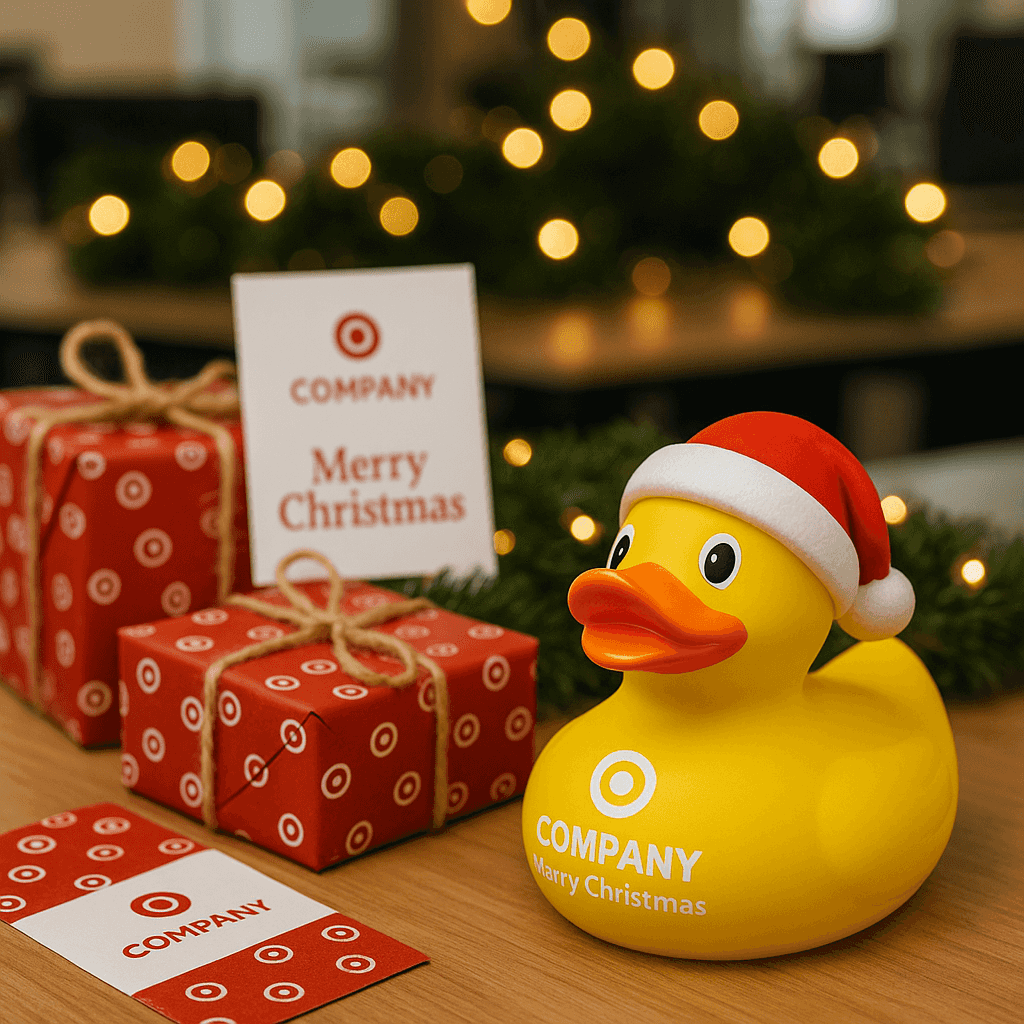
Layer one is the duck itself: a themed body, a Pantone-matched color and a printed or debossed logo sized to the chest plate area. Layer two is the card: a folded message card that carries the brand story, because the duck carries the smile and the card carries the meaning. Layer three is the accessory: a mini duck, a lanyard, a car clip for the ducking ritual, or nothing at all, depending on the budget line. Kits pack as one retail-style box, which means the unboxing photo does the marketing after the event.
| Kit layer | Options | Decision rule | Typical add-on | Brand element |
|---|---|---|---|---|
| Duck body | Stock mold print or full custom | Calendar drives the choice | Seasonal hat or scarf mold | Logo print, 1-2 colors |
| Message card | Folded card, 300gsm class stock | Story beats slogan for year-end | QR to a thank-you page | Both sides printed |
| Accessory | Mini duck, car clip, lanyard | One accessory keeps the box tidy | Car clip for ducking fans | Debossed mini logo |
| Box | Retail-style gift box | Unboxing is the second impression | Window or full print | Logo on lid, brand line inside |
Branding decisions that keep it classy
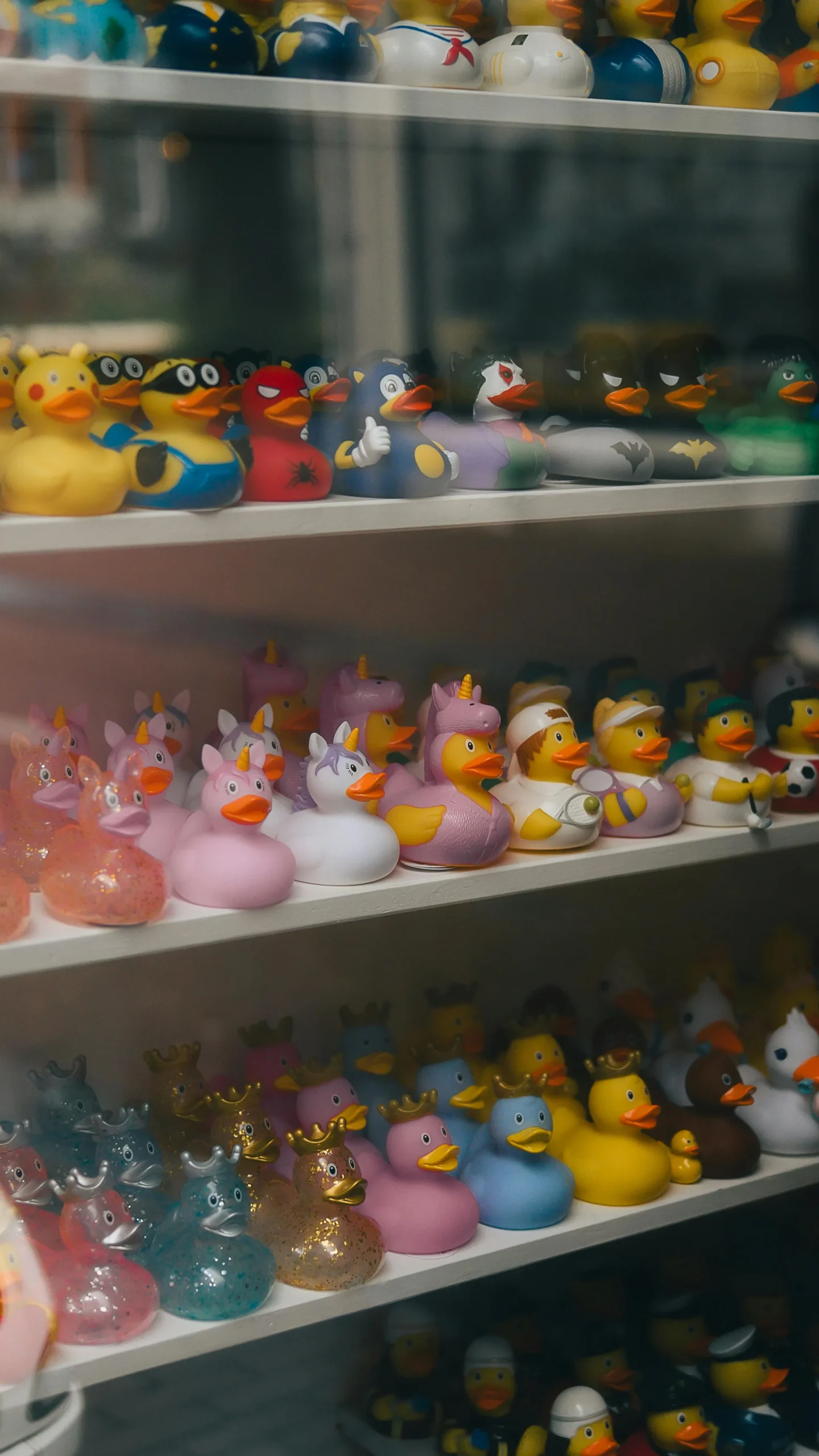
Two restraint rules separate a corporate kit from a tradeshow bin. One brand color: the duck carries the company color, not every color the brand owns, and Pantone matching is signed off on a physical sample. One placement: a single logo on the chest plate reads confident; five logo placements read like a sponsorship. The card carries the tone, and the box carries the logo line, and that is the whole identity system. Program terms start at 1,000 pieces per design with mockups inside 12 hours and samples in about 7 days; a kit with a card and one accessory adds roughly 2 to 3 days to sampling, and corporate buyers comparing the full envelope can start from the custom rubber ducks page; holiday-adjacent variants live on the holiday ducks page.
The order calendar: beat the December freight
Year-end kits ship against a hard date, and the calendar is the same math every year: mockup 12 hours, samples about 7 days, bulk production after approval, then ocean freight plus destination handling. Kits ordered after the freight window compress to air freight, which is a budget decision, not a logistics miracle. Corporate buyers who lock artwork by early Q4 hold the ocean option; buyers who lock in November are buying plane tickets for ducks. The promotional-industry calendar context is tracked by PPAI, whose channel data shows Q4 as the peak load for exactly this reason.
Video: the branding process from mockup to kit
Frequently asked questions
What is the minimum for corporate kits?
Custom programs start at 1,000 pieces per design, and kits pack as a single retail-style box per recipient.
Can each kit carry a personal name?
Personalization runs on the card rather than the duck, which keeps the duck mold and print standard while the card carries names.
When should artwork be locked?
Early Q4 keeps the ocean freight option; later orders move to air freight, which is a budget line, not a logistics fix.
What belongs in the box besides the duck?
A folded message card and at most one accessory; the tidy kit is the one that survives on a desk.