Skip to content

A rubber duck MOQ is the smallest order a factory will accept for custom production, and at LZENGO that number is 1,000 pieces. Most buyers hear “1,000” and think it means “1,000 ducks,” which is true but dangerously incomplete. The minimum buys you far more than ducks: it buys a production slot, a printing setup, packaging materials, and the factory’s attention. What it does not buy, and what it cannot include, is where first-time buyers get surprised.
Understanding what sits inside the 1,000-piece minimum changes how you negotiate, how you budget, and whether your first order makes money or quietly bleeds it. This guide breaks the number down line by line, shows how unit cost moves from 1,000 to 50,000 pieces, and lists the costs that hide outside the MOQ entirely.
What MOQ Means Inside a Factory
A factory sets a MOQ because every order consumes fixed setup time that the unit price must absorb. Mixing the compound, calibrating the molding machine, mounting printing plates, and running a quality check take the same hours whether you order 1,000 or 10,000 ducks. Below a certain volume, the setup cost swamps the material cost and the order stops making sense for the factory.
LZENGO’s 1,000-piece minimum exists because it is the lowest volume where a printed duck order still fits a standard production slot with consistent quality. That is why the minimum is a floor, not a gate: volume above 1,000 is welcome at better prices, and the factory’s 5M+ ducks per month capacity means the floor rarely causes scheduling pressure.
What the 1,000-Piece Minimum Includes
The headline item is obvious: 1,000 finished ducks in your specified color and shape. Below the headline sit the items that actually determine whether the order runs smoothly: logo printing setup, color matching, standard packaging, and the quality inspection pass. These are the same elements buyers price when they compare bulk rubber duck quotes, so verify they are itemized in yours.
At LZENGO the standard custom workflow bundles the design phase into the minimum. You get a 12-hour mockup so the artwork direction is locked before anything is produced, and a 7-day sample cycle so the physical sample is approved before bulk molding starts. The mockup and sample are the most valuable parts of the MOQ, because they convert a gamble into a specification. The full production timeline from artwork to shipment is worth mapping before you pick a launch date.

Standard packaging is inside the minimum in most cases: a polybag per duck or loose packing in cartons, depending on the product type. Retail-ready packaging like display boxes or hang cards is an upgrade and is priced separately. If your channel needs shelf-ready packaging, ask for that quote line before you compare suppliers, because it changes the per-unit picture more than the duck body does.
What the MOQ Does Not Include
Custom molds sit outside the MOQ. A logo-printed duck uses an existing standard mold, which is why it qualifies for the 1,000-piece floor; a custom shape requires new tooling, and the mold fee is a one-time line item regardless of quantity. Mold fees are amortized across your total order volume, so the same mold gets cheaper per unit as you grow.
Freight is always separate. Air freight versus sea freight can differ by several times in cost, and the difference often exceeds the duck savings gained from a higher volume. The same applies to customs duties and any warehousing step; these belong in your landed-cost model, not in the factory unit price. U.S. buyers can check current import guidance from the U.S. International Trade Administration, and anyone budgeting a first order should review the hidden costs beyond the unit price before signing.
Certification documentation follows the product line, not the order. BSCI, GRS, REACH, and CPSIA compliance via Intertek testing applies to what the factory can legally produce, and a reputable supplier confirms coverage before quoting. Ask for the certificate list with your first RFQ, not after production, because retrofitting compliance to a finished batch is expensive or impossible.
How Unit Cost Drops From 1K to 100K
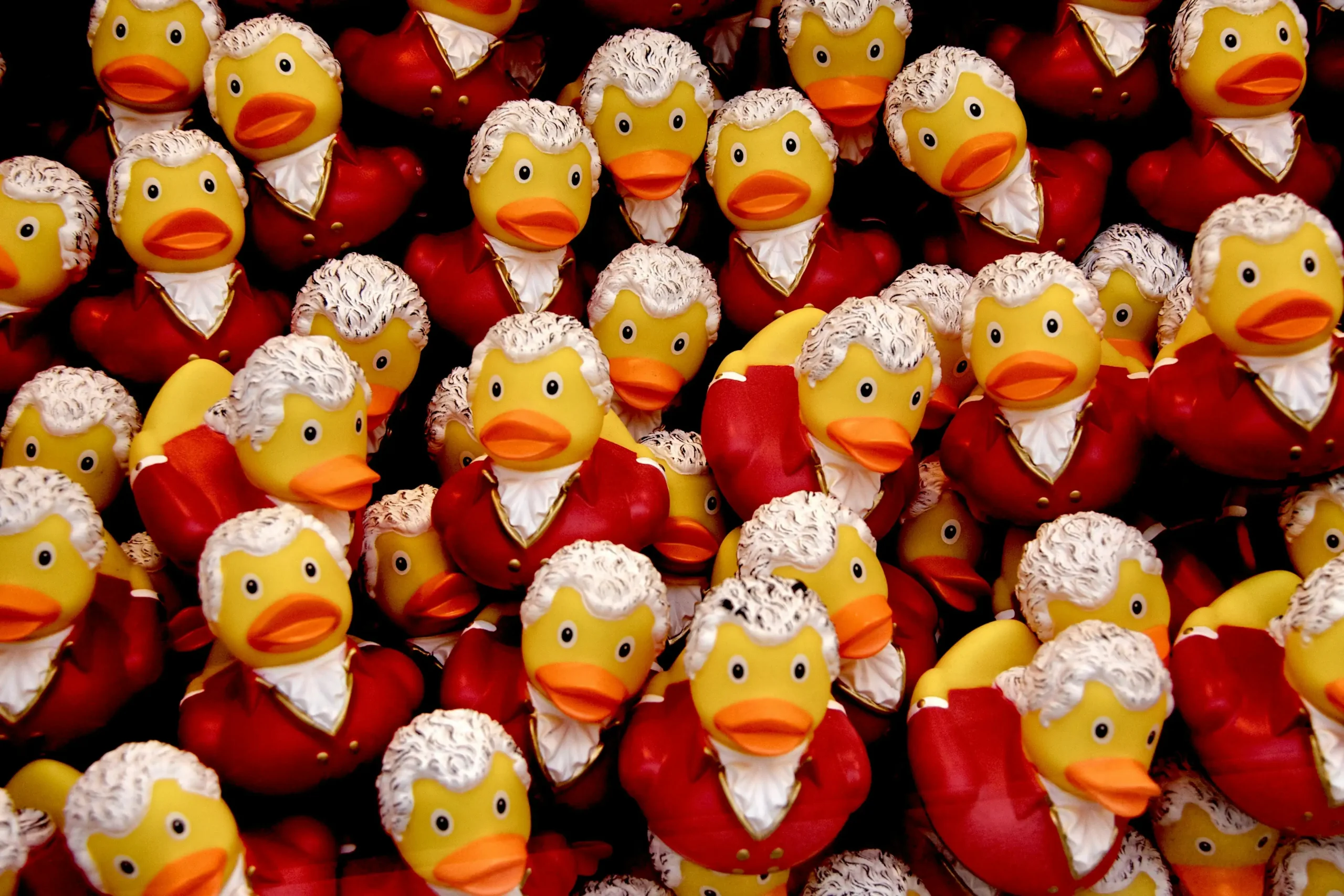
Price scales follow production logic, not charity. Fixed setup is spread across more units, material purchasing improves at higher volumes, and machine runs become continuous instead of interrupted. The result is a predictable downward curve, with the biggest relative jump usually appearing between 1,000 and 5,000 pieces.
| Order Size | What Changes | Buyer Note |
|---|---|---|
| 1,000 pieces | Full setup cost on the smallest run | Best for first tests and event pilots |
| 5,000 pieces | Setup cost spreads, material price improves | Largest single price step per unit |
| 10,000-20,000 pieces | Continuous machine runs | Sweet spot for multi-city campaigns |
| 50,000+ pieces | Container-scale logistics apply | Optimize freight, not just unit price |
Ask any supplier for the price at 1,000, 5,000, and 10,000 before you commit to a quantity. The three-point curve tells you more about the factory than the single MOQ price ever will, and it exposes whether the supplier’s cost structure actually improves with your growth or just moves the goalposts.
Multiple Designs in One MOQ
Buyers often ask whether 1,000 pieces can be split across two or three designs. The answer depends on how different the designs are. Two logo colors on the same duck body usually share one production run with a small setup surcharge; two different duck shapes require two mold setups and behave like two separate minimums.
LZENGO quotes mixed design orders per variant so you can see the real cost of variety. The pattern is consistent across factories: every additional variant adds setup time, and the total setup is spread across fewer pieces per design. If your goal is low cost per unit, fewer variants win; if your goal is a themed collection, accept the setup cost as a product development expense.
Ordering Below the MOQ
Reorders below the original MOQ are a different conversation from a first order. Once the artwork, color recipe, and packaging spec are locked, a factory can often accept 500-piece replenishments because the setup cost per unit stays manageable on an established line. The lever is not magic; it is the fact that your first order already paid the learning cost.
Never assume the lower reorder floor. Put it in writing during the first negotiation: “What is the reorder minimum after the initial 1,000?” A supplier who commits to a 500-piece reorder floor on paper is worth more than one who quotes a lower first-order price, because the reorder floor determines your inventory risk for every campaign after the first.
Get a Three-Point MOQ Quote Before You Decide
Send LZENGO your quantity range and logo, and receive pricing at 1,000, 5,000, and 10,000 pieces plus the full list of what each tier includes and excludes.
MOQ 1,000 | 12-hour mockup | 7-day samples | BSCI, GRS, REACH, CPSIA certified
The MOQ decision happens before payment, but the rubber duck payment terms guide covers the deposit and balance structure that follows.
FAQ
What does MOQ mean for rubber ducks?
MOQ is the minimum order quantity a factory accepts for custom production. For logo-printed rubber ducks, 1,000 pieces is a common starting floor that includes the ducks, printing setup, and standard packaging.
Can I order less than 1,000 rubber ducks?
For a first custom order, no; the 1,000-piece floor covers setup costs. After an initial order, many factories accept lower reorder minimums because the mold, artwork, and color spec already exist.
Does the MOQ include the mold cost?
No. A logo-printed duck uses an existing standard mold; a custom shape adds a one-time mold fee quoted separately. The fee is amortized across your total volume.
Why does the unit price drop at higher quantities?
Fixed setup cost spreads over more units and material purchasing improves at volume. The biggest relative price step usually appears between 1,000 and 5,000 pieces.
Can one 1,000-piece order carry two designs?
Sometimes. Two colors on the same duck body can share a run with a small surcharge; two different shapes require separate mold setups and behave like two minimums.
Related: custom rubber duck mold cost breakdown
Related: auto show rubber duck giveaways.