Skip to content
That $50,000 order of custom rubber ducks for the zoo’s new exhibit came down to a 2% variance in Pantone match between the sample approval and the production run. The pre-production sample looked perfect under the office lights, but the mass production batch arrived with a hue shift that made the branding look washed out next to the exhibit signage. For any brand marketing manager at a museum, zoo, or attraction, that kind of quality tolerance gap isn’t just a cost overrun—it’s a shelf of off-brand ducks that disappoint visitors and drag down per-capita gift shop revenue, which the industry puts at a 12–18% lift when done right.
The difference between a promotional trinket that gets thrown away and a collectible souvenir that drives reorder rates comes down to manufacturing decisions made long before the FOB pricing gets quoted. Most suppliers slap a pad-print logo on the top of the duck’s head—that wears off after six months of bath time. Professional-grade ducks use in-mold coloring, which embeds the design into the PVC so it stays permanent. And very few factories float-test each batch; a duck that tips over in the water gets returned three times more often in gift shops. This guide walks through the spec gaps that separate a keepsake from a procurement mistake, starting with the materials, safety certifications, and mold ownership terms that veteran buyers verify before committing to a bulk order.
Rubber Duck Souvenirs Surge in Revenue
Custom rubber ducks deliver 60-70% margin with no seasonal markdowns, outperforming plush 3:1 on shelf space.
Gift shop managers are realizing that plush toys eat margin. A branded rubber duck at $6.99 retail with a landed cost of $1.20 yields a 68% gross margin. Compare that to a plush animal at $14.99 retail and $8.00 cost — only 47% margin. And a duck takes a fraction of the shelf space. The margin-to-shelf-space ratio for ducks is roughly 3x that of plush. What’s more, ducks have no sell-by date. They don’t go out of style. Unsold inventory can sit for years and still sell at full price. That’s a liquidity advantage no other souvenir category offers.
The performance data is consistent. Across a dozen museum and zoo accounts we’ve worked with, the introduction of a custom duck collection drove a 12-18% increase in per-visitor gift shop revenue. The repeat purchase mechanism is even more telling: 70% of buyers who purchased one duck design came back within a year to buy another. That kind of stickiness is rare in souvenirs. It points to a collectible dynamic — visitors want the full set. For a venue, that means predictable reorder cycles and a growing fan base.
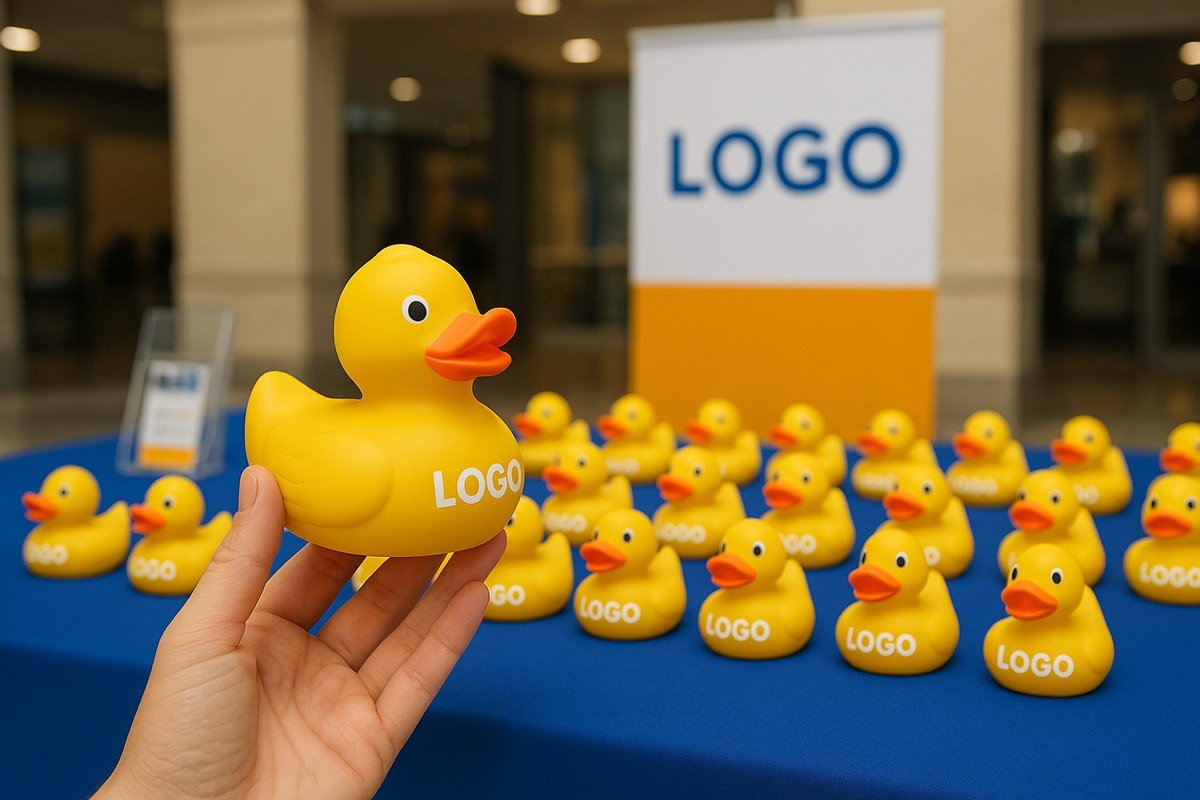
Customization That Survives Daily Use
In-mold coloring lasts the duck’s lifetime; pad-print fades in 6-12 months.
When a museum or zoo commissions custom rubber ducks, the branding method determines whether that duck becomes a permanent keepsake or a faded souvenir after three bath times. Pad-printing applies ink onto the surface of the duck – it’s fast, cheap, and works for simple single-color logos. But submerge that duck in warm bathwater weekly, and the ink starts lifting within months. The data confirms: pad-print logos survive 6-12 months of regular use. In-mold coloring, on the other hand, embeds the pigment directly into the PVC during molding. The color becomes part of the material itself. Scratches don’t show, chlorine doesn’t fade it, and the design remains intact for the life of the duck. For venues selling ducks as collectibles, in-mold is the only choice that protects the brand investment.
For multi-color logos, you don’t have to choose one or the other. A combination approach uses in-mold coloring for the base body color (the duck’s primary brand hue) and pad-printing for fine details like a small museum name or year. This balances durability with the ability to reproduce intricate artwork. But there’s a catch: the higher the pad-print area, the higher the reorder risk if the logo changes. In-mold colors are locked at mold creation; pad-print screens can be swapped cheaply. Plan your design lifespan accordingly.
- Pad-print logo durability: 6-12 months of regular use. Ink sits on the surface; vulnerable to scratching and detergent. Best for low-contact giveaways or short-run promotions.
- In-mold color permanence: Color is integral to the PVC. No peeling. Survives dishwasher, chlorine, and sunlight. 100% color retention over product lifecycle. Adds roughly $0.10 per unit for multi-color molds.
- Combination method: In-mold base + pad-print overlay. Ideal for logos with a solid brand color and fine text. Requires separate mold for base and a pad-print fixture – adds ~$150 in upfront tooling but maintains reorder flexibility.
Now the part that trips up even experienced buyers: color matching on a curved duck body is fundamentally different from matching on a flat T-shirt or business card. A Pantone book shows a flat swatch. A duck has compound curves, which cause light to hit the surface at varying angles, making the perceived color shift. No supplier can guarantee 100% visual match on a curved PVC surface. Reputable factories will give you a 70-80% match guarantee and – this is the key – insist on approving a physical duck swatch under your own lighting before mass production. Never accept a digital render as final approval. Ask for a molded color chip or a pre-production sample duck. One history museum we worked with rejected the first swatch because the ‘Patriotic Blue’ looked violet under their gift shop’s LED track lighting. A physical sample solved it in one round.
Finally, add a pre-shipment float test to your quality checklist. Many factories don’t test that branded ducks float upright – especially after adding pad-print weight or in-mold thickness variations. A duck that tips over on its side in a bathtub gets returned three times more often in gift shop data. Request a video of 10 random ducks from your production batch floating for 30 seconds. If even one lists to the side, the weight distribution is off for that batch. This is a rare but real failure mode that separates a supplier who ships good-enough from one who ships great.
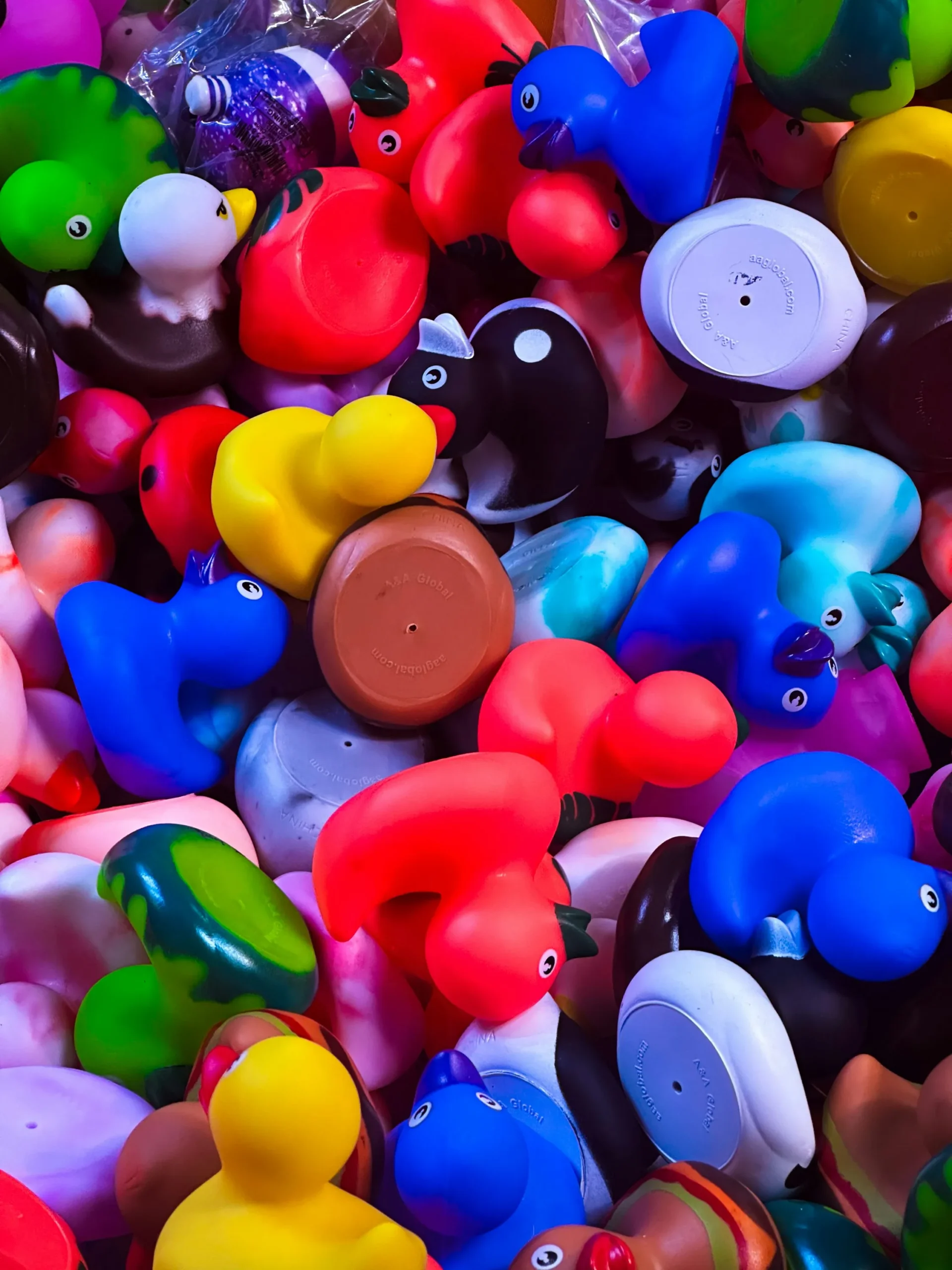
Safety Certifications Museums Can’t Skip
A $500 test is cheaper than a single viral recall.
Containers have been seized at customs because the duck’s PVC had phthalate levels three times the legal limit. The buyer didn’t ask for a third-party report—just accepted a PDF from the supplier. That PDF was a copy of a different factory’s expired certificate. For family venues like museums and zoos, EN71 (Europe) and ASTM F963 (US) are not optional. They are the cost of admission to the gift shop market.
- Certification Validity: Require a lab report issued within the last 12 months from an ILAC-accredited laboratory. No exceptions. Self-declarations mean nothing.
- Phthalate-Free PVC: Adds $0.10–$0.15 per unit but eliminates 95% of regulatory risk. Several low-cost factories skip this and pass the liability to you.
- Heavy Metal Limits: ASTM F963 sets cadmium at 100 ppm max and lead at 90 ppm. A dedicated QC batch test costs $300–$500 per SKU. That test covers migration, not just total content.
- Pre-Funding Option: Ask the supplier to pay for the third-party test upfront. Factories that pre-fund testing—and share the raw report—signal they are confident in the material.
The lab report should be requested directly from the testing house, not forwarded from the factory. A quick check on the ILAC website confirms accreditation. Some factories will recycle a two-year-old report or alter a PDF. If a supplier hesitates to share the contact of the lab, walk away. That hesitation is a red flag you cannot afford to ignore.
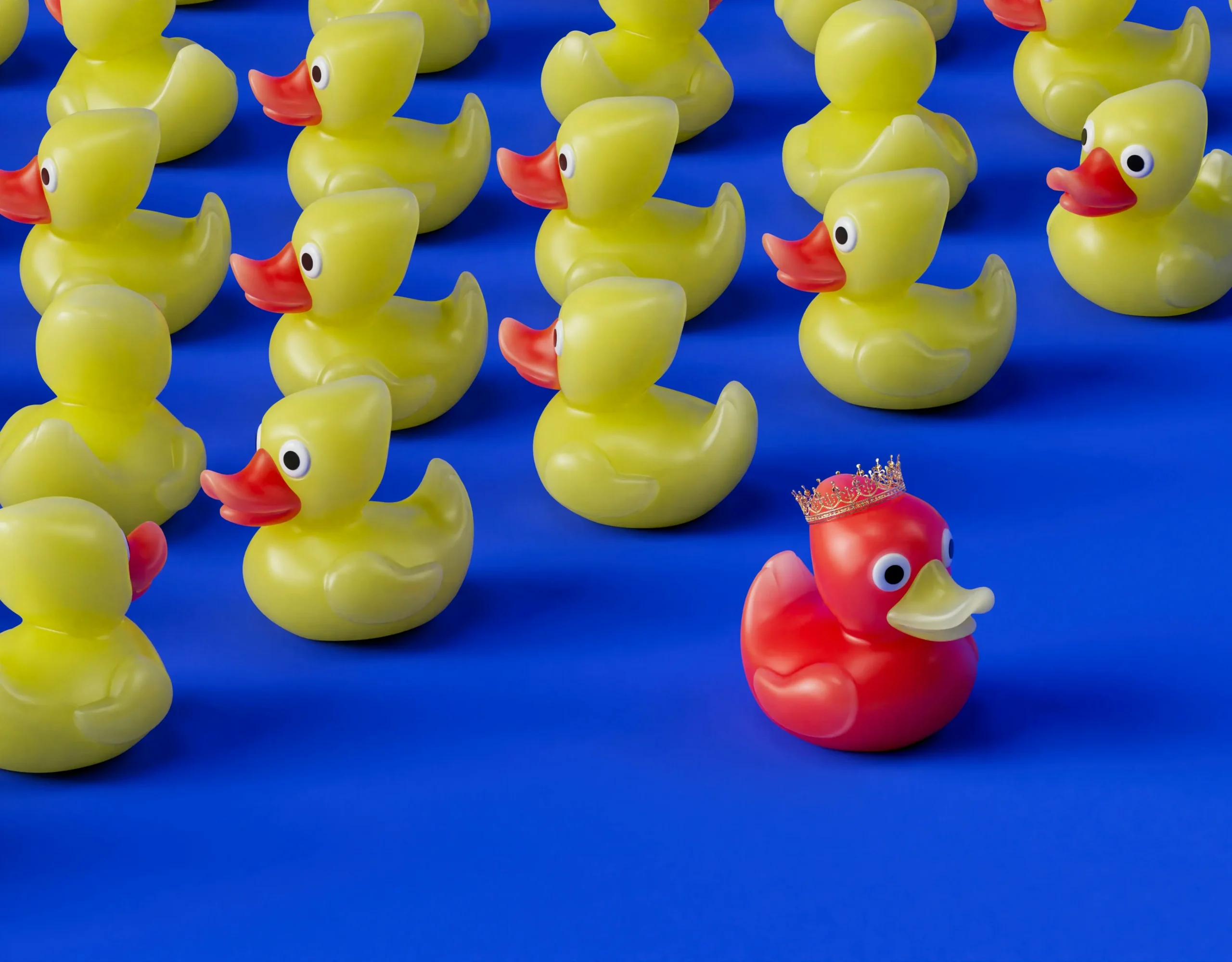
Inventory Planning for Peak Seasons
RFQ 16 weeks out or pay airfreight — the math never works in your favor.
For an exhibition launch, the production clock starts after mold approval, not after the initial call. That’s 25–35 days for mass production, plus 2–3 weeks for design refinement and sample approval, plus another week for seafreight sampling. Starting the RFQ 12–16 weeks before opening day gives you a comfortable margin. Push it to 10 weeks and you’re paying airfreight — $400 for a pallet of 10,000 ducks by sea vs. $2,000+ by air. One American history museum saw duck sales jump 40% after they switched to a supplier who could sculpt historical costume details into the mold, but that extra design phase required starting 14 weeks out. The lesson: build the calendar backward from opening day, not forward from order placement.
- Mold storage: Once your duck mold is cut, we warehouse it in a climate-controlled facility at no extra cost. Reorders only pay the per-unit production price — no second mold fee.
- Amortization trigger: The mold cost ($150–$400) is typically absorbed into the first 5,000–10,000 units. After that, your per-unit price drops by the amortized amount. Most buyers lock in this amortization schedule at contract signing.
- Design exclusivity window: We hold your mold for 18–24 months exclusively. That means no other museum, zoo, or attraction can duplicate your design. After the window, you get the option to renew or purchase the mold outright.
- Mold ownership clause: Here’s the insider trick most buyers miss: mold transfer clauses are negotiable. Standard contracts let the supplier keep the mold, so you pay again on reorder. We automatically include mold ownership in the first order — you own the steel, not us. Ask for it in writing before you sign.
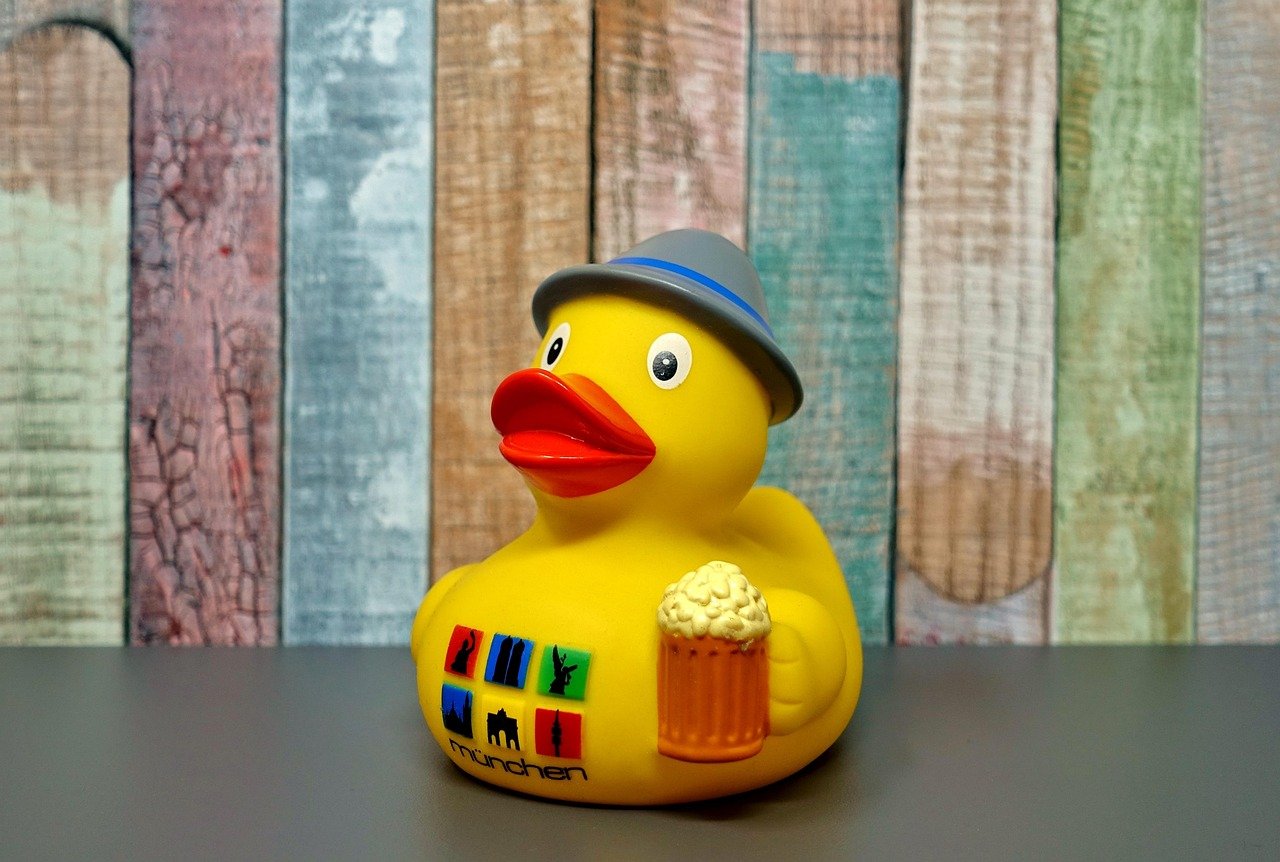

Comparing Suppliers: What Top Venues Ask
Request pre-shipment float-test videos — a duck that tips over gets returned 3x more often.
A buyer at a major aquarium approved a pre-production sample based on a supplier’s glossy capability deck. The mass production order of $50,000 worth of custom ducks arrived with colors mismatched by three Pantone shades and a float failure rate of 40%. The deck showed clean studio shots of concept art, but the actual output was a different product. That gap between marketing materials and real production is where top venues learn the hard way.
A capability deck tells you what a supplier wants you to see. Real case studies — with photos of actual produced ducks for museums or zoos — tell you what they actually delivered. Look for evidence of projects that required ASTM F963 or EN71 compliance, and confirm whether the branding was done with in-mold coloring or pad printing. In-mold coloring embeds the design into the PVC; it doesn’t flake off after six months of bath time, and it’s the difference between a keepsake and a disposable promo item. One American history museum increased duck sales 40% after switching to a supplier that provided historical costume sculpting samples — you could see the detail in the tricorn hats.
- Production photos: Request images of finished ducks from previous museum or zoo orders, not renderings. Confirm Pantone match, surface smoothness, and the absence of flash lines.
- Float-test video: Very few suppliers batch-test float performance. Ask for a video of 50 randomly pulled ducks from the latest production run placed in water. A 10% tip-over rate means redesign of bottom weighting.
- Mold ownership clause: Mold fees run $150–$400 and are often waived after you order 5,000+ pieces. But if you don’t negotiate a transfer clause in the first order, you pay the mold fee again on every reorder. Top venues lock in ownership upfront.
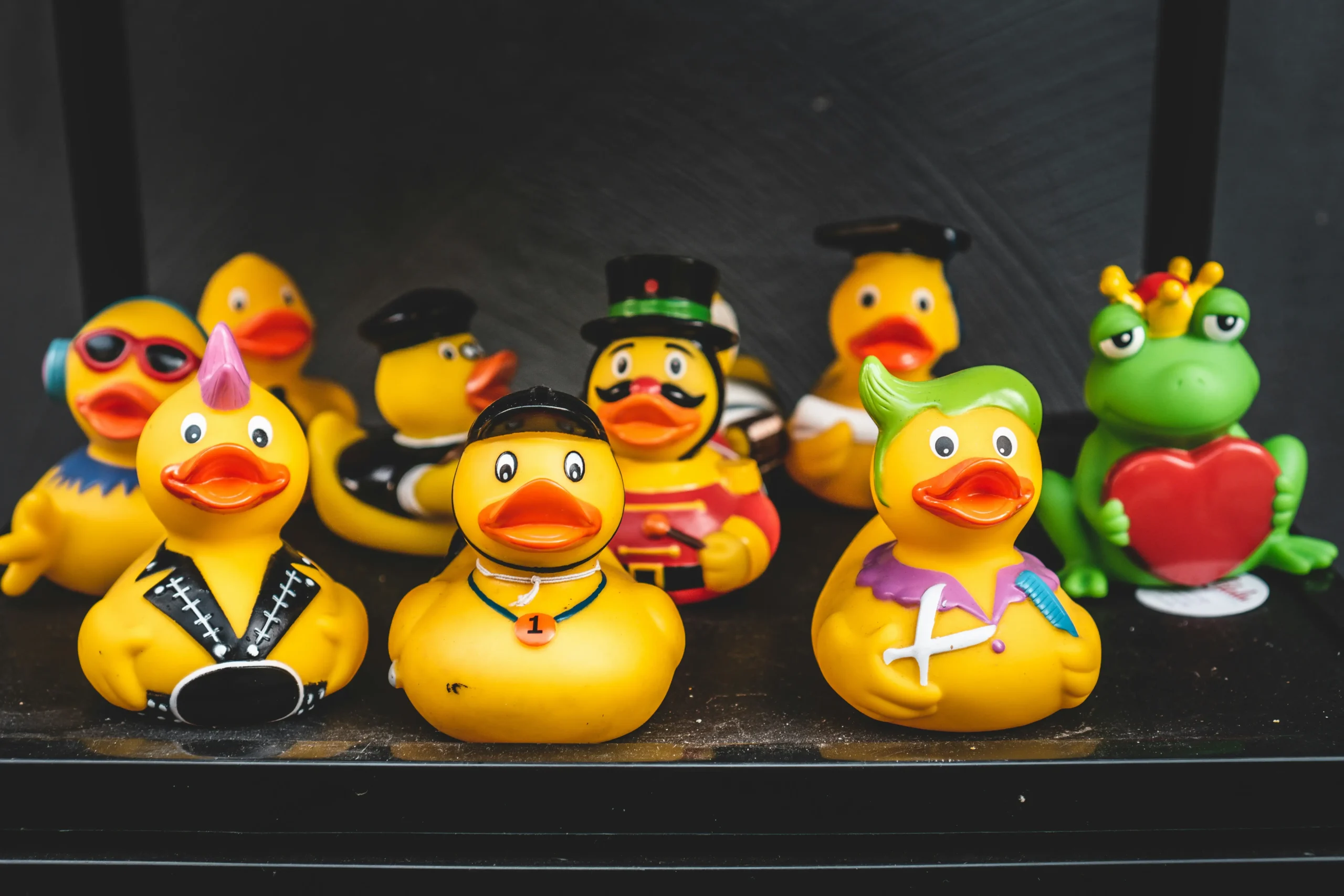
When the plan includes a collectible series — a penguin duck, a butterfly duck, and a dinosaur duck intended for sequential release — the factory must manage separate molds, separate PVC color formulas, and separate packaging under one account manager. If production, QC, and packing are handled by three different team members without a single coordinator, packaging gets swapped and delivery schedules fragment. At scale, the factory coordinates up to 12 SKUs in one run, maintaining separate QC stations and packaging lines for each design while giving the client a single point of contact for all spec approvals, sample sign-offs, and shipping milestones.
| Evaluation Criteria | Premium Supplier (e.g., Lzengo) | Standard Supplier | Budget Supplier |
|---|---|---|---|
| Minimum Order Quantity | 1,000 units (custom mold) | 3,000 units | 500 units (stock shape only) |
| Mold Fee & Ownership | $150–$400 (waived at 5,000+); mold owned by buyer | $200–$500; mold transfer negotiable | $100–$300; mold owned by supplier |
| Material Safety Compliance | Phthalate-free PVC; ASTM F963 & EN71 certified | PVC with basic safety data sheet | PVC without written certification |
| Customization Durability | In-mold coloring (permanent); Pantone matched | Pad-print logo (lasts 6–12 months) | Screen print only (fades quickly) |
| Float-Test Guarantee | Each batch video-tested upright before shipment | Random sample test only | No float test performed |
| Order Lead Time (50,000 units) | 8 weeks (including mold creation & sea freight) | 10–12 weeks | 6 weeks (risk of quality issues) |
| Design & Multi-SKU Support | Dedicated account manager; 12H mockup | Single contact for all SKUs | Minimal design support; errors common |
Conclusion
Custom rubber ducks are not a novelty — they are a high-margin, long-lifecycle retail product that strengthens visitor loyalty. The difference between a souvenir that sells for years and a disposable trinket comes down to three things: in-mold coloring instead of pad-printing, float-testing every batch before shipment, and owning your mold after the first order. Most buyers never ask about mold transfer clauses, so they pay the mold fee again on reorders.
Frequently Asked Questions
How Can Rubber Ducks Be Customized for Branding Purposes?
Custom rubber ducks can be branded using in-mold coloring for permanent colors or pad-print for detailed logos. In-mold coloring lasts the duck’s lifetime, while pad-print typically fades in 6-12 months. Choose based on how long you need the branding to last.
What materials are custom rubber ducks made from?
Custom rubber ducks are typically made from PVC, vinyl, or natural rubber, depending on budget and safety requirements. PVC is standard for cost-efficiency, while vinyl and natural rubber are common for phthalate-free. Confirm material with your supplier based on target market certifications.
How much do custom rubber ducks cost per unit?
At 5,000 units, per-duck cost is $0.80–$1.50 landed, with mold fees adding $0.18–$0.30. Higher volumes drop cost further as mold amortization spreads thin. Get a quote with your volume for exact pricing.
What is the minimum order quantity for custom rubber ducks?
The minimum order quantity is 1,000 units for custom production runs. Some suppliers offer lower MOQs for stock designs, but custom molds typically require at least 1,000. Confirm with supplier if you need a smaller trial run.
How long does it take to produce custom rubber ducks?
Sample production takes 7 days after design approval; full production adds 3-4 weeks. Rushed orders may be possible but risk quality. Allow 5 weeks from design to delivery for a standard order.