Skip to content
A structured rubber ducks calendar transforms a chaotic series of last-minute promotional orders into a predictable, cost-effective supply chain operation. As a B2B manufacturer trusted by global brands to deliver over 500,000 units monthly, the same pattern is observed: marketing managers who wait until Q3 to plan Q4 campaigns end up paying premium air freight rates and compromising on quality. Building a year-round rubber duck product calendar B2B allows businesses to sync their seasonal themes with 4–6 week mold creation and 3–4 week print production windows, eliminating the rush fees that eat into campaign budgets.
Aggregating your seasonal needs into a single contract unlocks significant margins, driving per-unit costs down to $0.25–$0.50 for orders of 10,000+ units, compared to $0.80+ for fragmented small runs. We also maintain a strategic inventory of neutral base ducks, allowing us to rush holiday prints in just 10 days via air freight when unexpected demand spikes occur. This approach ensures your Valentine’s, Easter, and Christmas promotions land on time, meeting strict EN71 safety compliance while maximizing brand recall.

Seasonal Demand Forecasting
Aligning your seasonal rubber duck campaign with a 12-month production calendar prevents costly rush fees and secures optimal bulk pricing.
Predicting demand for branded promotional items is the difference between a viral campaign and a warehouse full of expired stock. Brands that treat rubber ducks as a year-round asset rather than a seasonal afterthought see significantly higher recipient recall and lower per-unit costs. By mapping your promotional calendar backward from the launch date, you can synchronize mold creation, printing, and logistics to avoid the 30% to 50% surcharges associated with last-minute air freight.
Seasonal Demand Spikes and Unit Targets
Promotional rubber duck demand follows a distinct seasonal curve. The first quarter (January to March) experiences a massive spike driven by Valentine’s Day and Easter campaigns. During this window, brands typically order between 5,000 and 10,000 units per design to meet retail and event giveaways. Following a slight dip in April, demand surges again in May through August for summer festivals, corporate team-building events, and back-to-school promotions. This period requires a production capacity of at least 500,000 ducks monthly to prevent bottlenecks.
The final quarter is the most critical for B2B planners. Halloween (October) and Christmas (November to December) drive the highest volume orders globally. Many brands fail to plan for Q4 until September, resulting in delayed shipments and compromised quality. To mitigate this, prepping a 20% extra neutral duck stock in October is recommended. This allows for rushing holiday prints in just 10 days via air freight, ensuring Christmas campaigns land safely in warehouses before the holiday rush.
- Q1 (Jan–Mar): Valentine’s and Easter themes. Target 5,000–10,000 units per design. Order by November.
- Q2 (Apr–Jun): Summer festivals and back-to-school. Target 10,000–20,000 units. Order by February.
- Q3 (Jul–Sep): Halloween prep and early holiday stock. Target 20,000+ units. Order by July.
- Q4 (Oct–Dec): Christmas and year-end corporate gifting. Target 50,000+ units. Order by August.
- Design & Approval: 2 weeks. Finalize Pantone colors and file formats.
- Mold Fabrication: 4 to 6 weeks. CNC precision tooling with ±0.1 mm tolerance.
- Production & Printing: 3 to 4 weeks. Includes safety testing (EN71-3) and packaging.
- Shipping: 2 to 5 weeks. Depends on the freight method selected.
- Sea Freight: 30 days. Cost: ~$2,500/FCL. Best for: Bulk Q4 and Q1 planning.
- Air Freight: 5 days. Cost: ~$7,500. Best for: Emergency restocks and Q4 holiday rushes.
- Cost Efficiency: Sea freight reduces per-unit logistics costs by over 60% compared to air.
Backward Mapping Lead Times
A reliable custom rubber duck production timeline requires strict backward mapping. If your campaign launches on October 1st for Halloween, you cannot wait until August to finalize your order. Standard lead times dictate that you must initiate the process at least 10 to 12 weeks in advance. This accounts for 4 to 6 weeks of mold creation, 3 to 4 weeks of printing and quality control, and 2 to 3 weeks of shipping.
For brands requiring branded rubber duck MOQ lead time flexibility, we utilize multi-cavity molds for high-volume orders (5,000+ units) to slash production time. This engineering choice ensures that even during peak seasonal demand, your order meets the original deadline. Sample production turnaround typically takes 2 weeks for printed logos and 4 weeks for new custom molds. Adding 2 weeks for shipping ensures your merchandise arrives ready for distribution.
30-Day Sea vs. 5-Day Air Shipping Trade-Off
Choosing the correct shipping method is a direct financial decision that impacts your campaign’s ROI. Sea freight from Shenzhen takes approximately 30 days and costs around $2,500 per Full Container Load (FCL). This is the most cost-effective option for bulk rubber duck holiday themes orders, significantly lowering your per-unit logistics cost. However, it requires precise calendar planning; if you miss the window, your stock will not arrive in time for the seasonal spike.
Conversely, air freight takes only 5 days but costs approximately $7,500 for equivalent volume. This premium is necessary for emergency restocks, last-minute event giveaways, or when sea freight delays threaten your launch date. While air freight increases immediate logistics expenses, it prevents the far greater cost of a failed campaign. For maximum efficiency, use sea freight for 80% of your annual volume and reserve air freight for the remaining 20% of urgent seasonal needs.
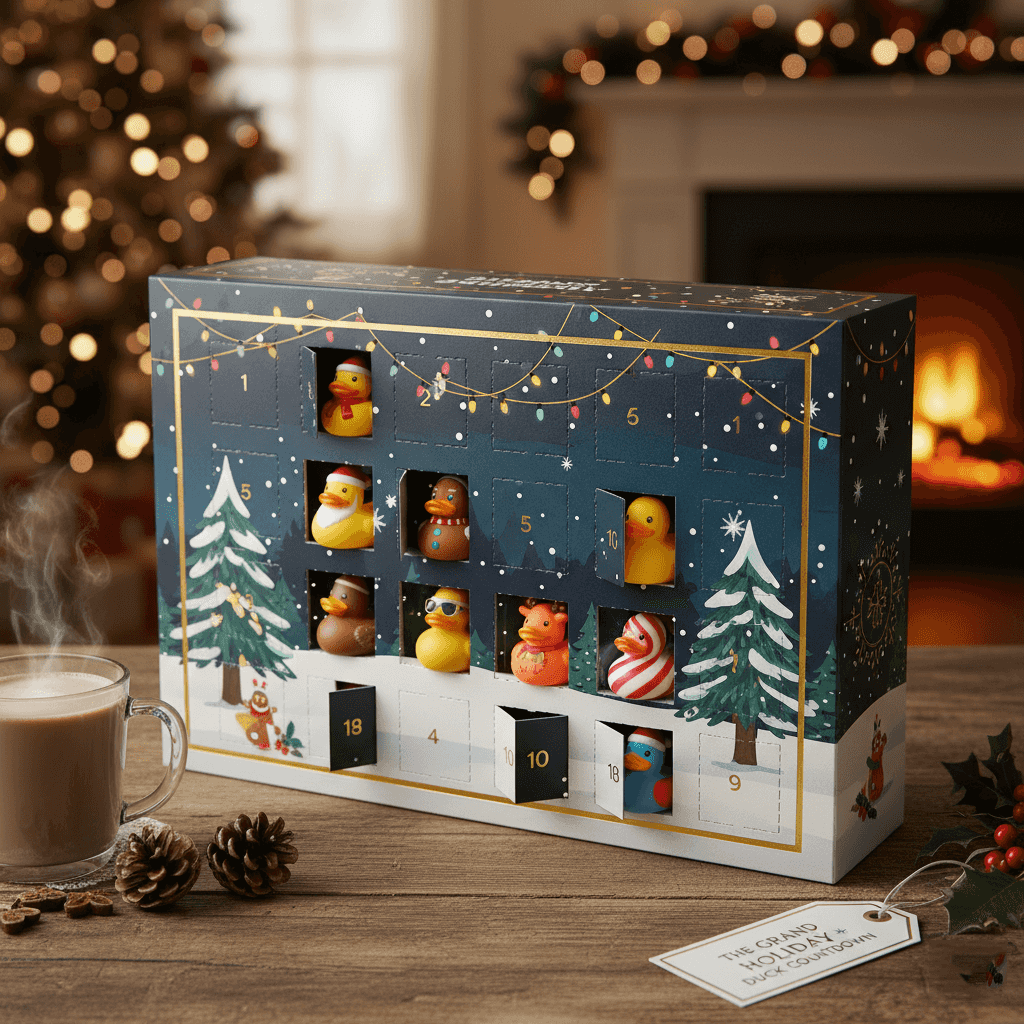
Designing Themed Ducks by Holiday
Aligning design with the production calendar is the single most effective way to slash per-unit costs and avoid holiday rush fees.
Creating a seasonal promotional rubber ducks calendar requires a rigid timeline that bridges creative concept art and physical mold fabrication. Most brands fail because they treat design as a marketing afterthought rather than a supply chain milestone. To secure your holiday placement, you must initiate the design phase exactly 8 weeks before mold production begins. This buffer is non-negotiable; it provides the necessary time for CNC precision tooling (tolerance ±0.1 mm) and prevents the 30-day sea freight bottleneck from derailing your campaign.
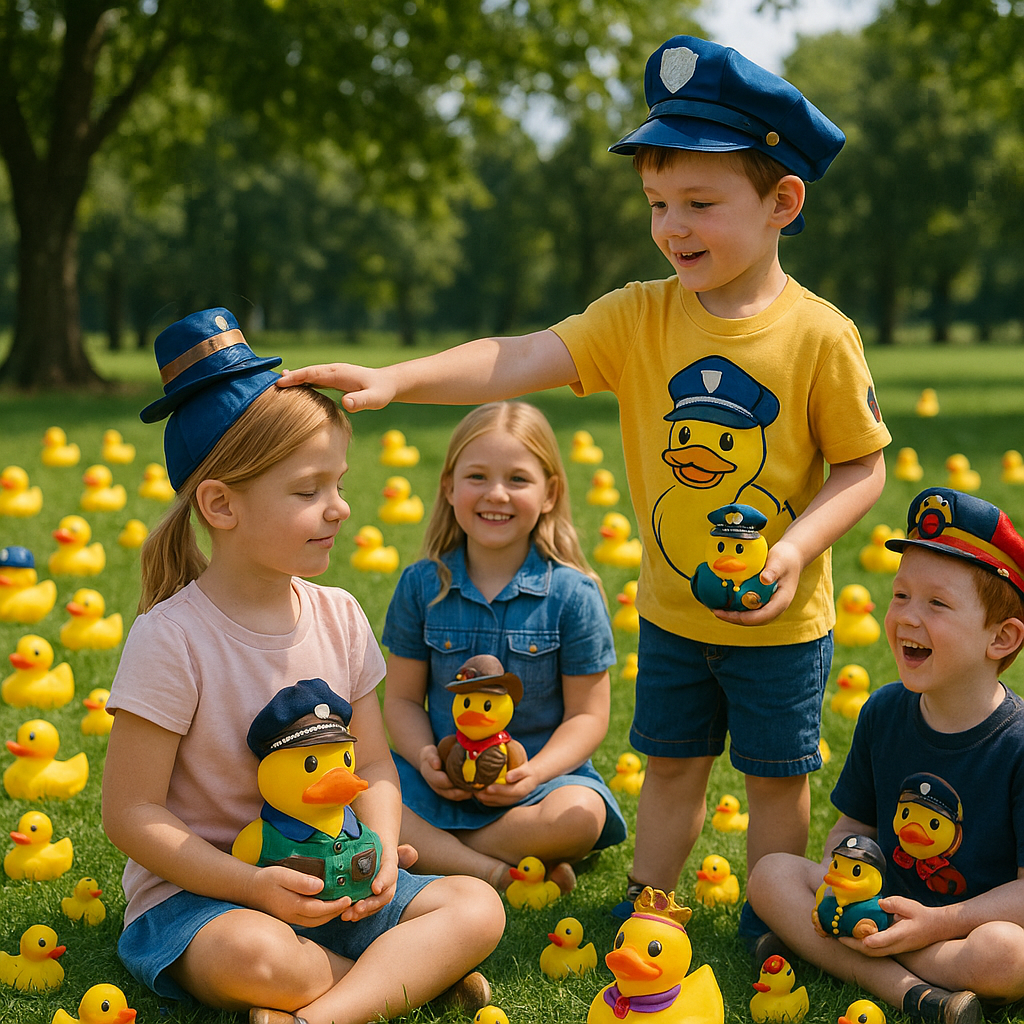
The creative process for themed ducks—ranging from heart-shaped designs for Valentine’s Day to Santa motifs for Christmas—demands strict adherence to brand consistency. We utilize Pantone color matching to ensure that your specific brand colors translate accurately to the final PVC product. File formats must be provided as high-resolution vector graphics to support the intricate detailing required for multi-cavity molds, which are essential for high-volume orders exceeding 5,000 units.
- Valentine’s & Easter: Requires early conceptualization (January) to align with Jan–Mar demand spikes and secure 4–6 week mold creation slots.
- Summer & Patriotic: July 4th and summer festival themes must be finalized by April to avoid the peak May–August production backlog.
- Halloween & Christmas: These high-impact themes require the earliest intervention; order deadlines are typically June 1 for Halloween and August 1 for Christmas.
- File & Color Specs: Submit vector files for logo placement and exact Pantone codes to guarantee brand alignment across 500,000 monthly production units.
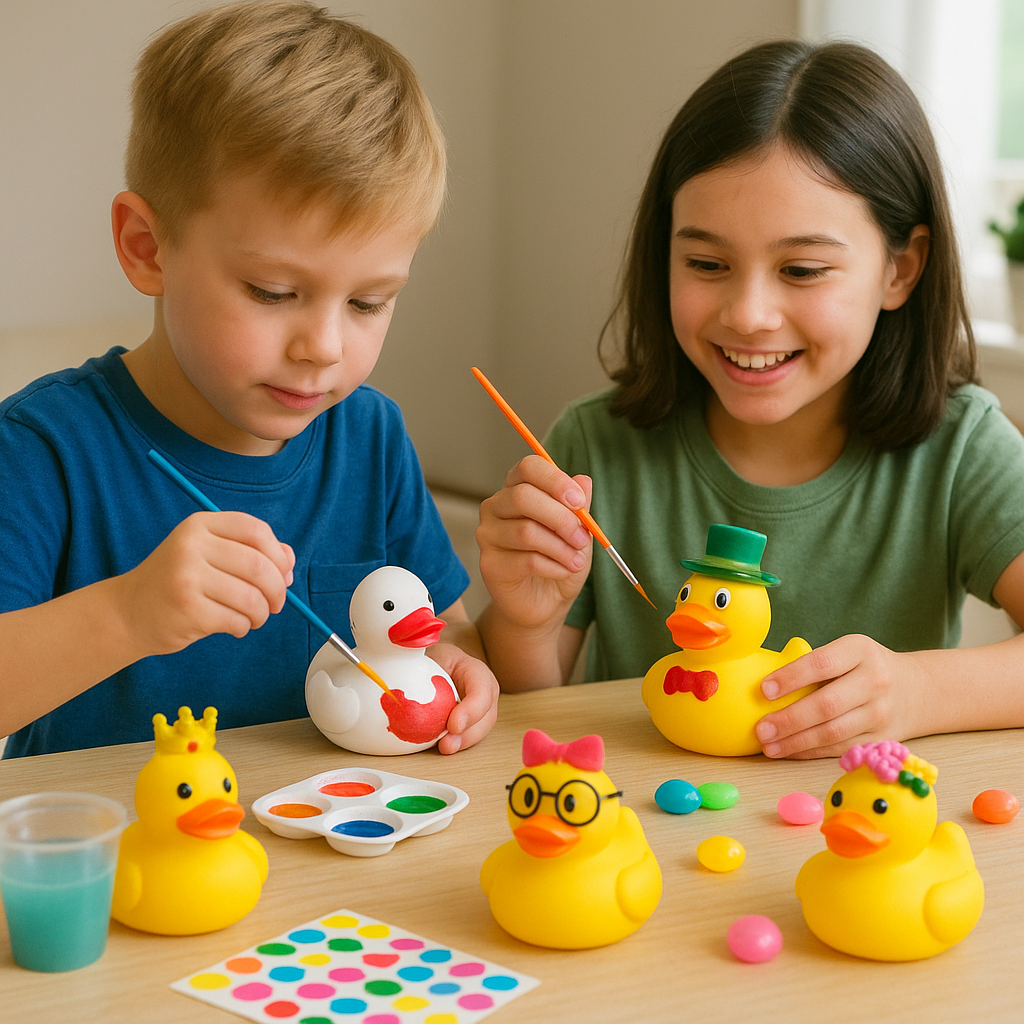
A hidden ROI hack for your rubber duck product calendar B2B strategy is utilizing a reusable, non-seasonal base design—such as the classic yellow duck—paired with interchangeable accessories like tiny hats or stickers. This approach allows the base mold to stay in production year-round, drastically slashing new mold costs while keeping your seasonal promotional rubber ducks planning fresh and exciting for recipients. By pooling these seasonal orders into a single contract, you can drive per-unit costs down to $0.25–$0.50, compared to $0.80+ for fragmented small runs.
How far in advance should I start designing holiday-themed rubber ducks?
You should start the design process 8 weeks before your target mold production date. This timeline accounts for concept art, Pantone color matching, and CNC mold fabrication, ensuring your bulk rubber duck holiday themes order ships on time for peak seasonal demand.

What file formats and color standards do you require for custom branding?
We require high-resolution vector files for logo placement to ensure precision during the printing process. For color accuracy, please provide specific Pantone codes; this guarantees that your brand colors are perfectly matched across the entire production run of up to 500,000 ducks monthly.

Can I use a standard duck base with different holiday accessories?
Yes, this is a highly recommended strategy for cost optimization. By keeping a classic base mold in production year-round and only changing accessories or printing for specific holidays, you avoid the $500–$1,000 one-time fee for new molds on every seasonal run.
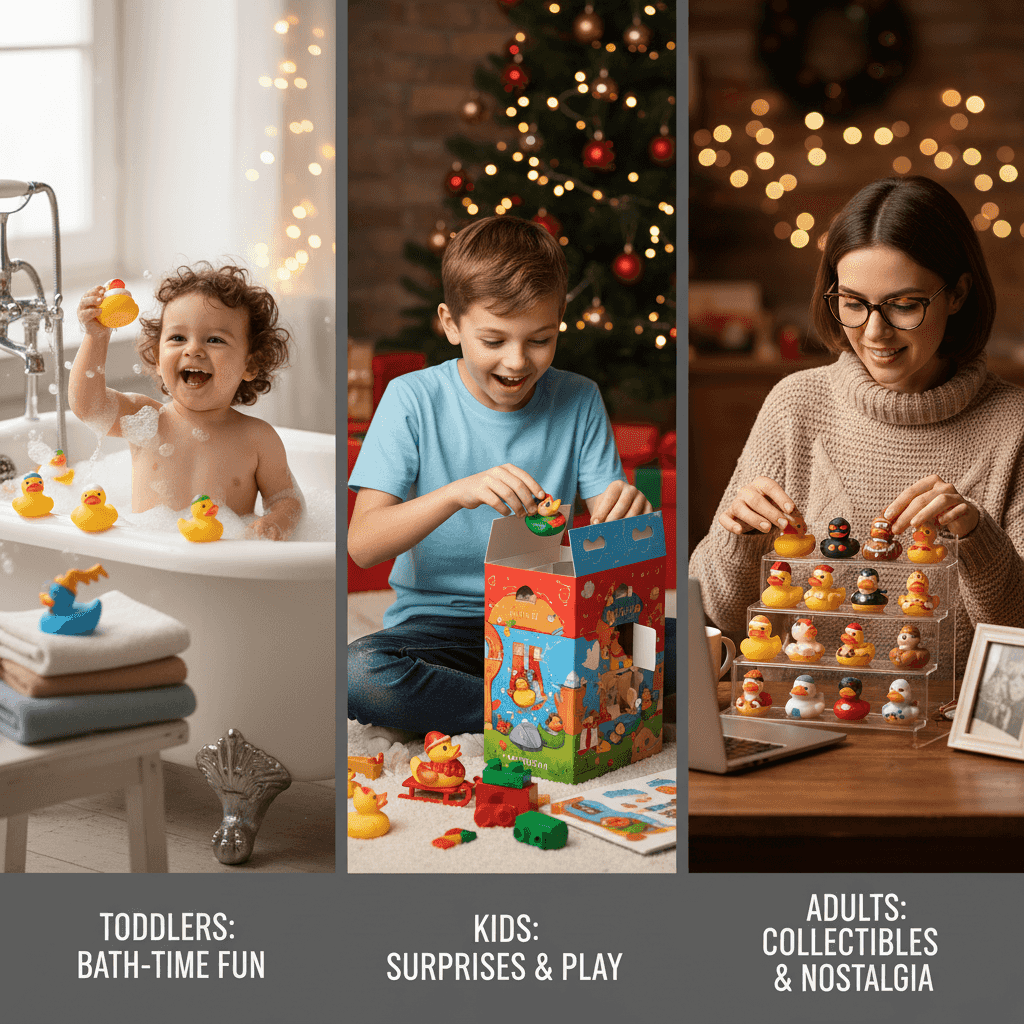
Managing MOQ & Production Timelines
Aggregating seasonal orders into a single annual contract is the most effective way to slash per-unit costs below $0.50 while eliminating rush.
Most brand managers treat promotional merchandise as a series of disconnected transactions, which is the primary reason they pay premium rates for fragmented production runs. A standard custom rubber duck production timeline requires a minimum order quantity (MOQ) of 1,000 units per unique design. While this volume is sufficient for a single holiday campaign, it fails to leverage the economies of scale necessary for a year-round promotional strategy. When you split your annual budget across four separate 1,000-unit orders, you trigger four separate mold fabrication fees and four separate setup costs for printing and packaging.
The industry standard approach for high-volume B2B buyers is to aggregate these seasonal demands into a single annual contract. By committing to a bulk rubber duck holiday themes order—such as 10,000 units distributed across Valentine’s, Easter, Summer, and Christmas—you gain the leverage to negotiate a significantly lower per-unit price. This strategy shifts the production from a high-cost, low-volume model to a streamlined manufacturing process where the fixed costs are amortized across a much larger quantity of inventory.

Mold Amortization and Cost Breakdown
The most significant hidden cost in custom promotional merchandise is the initial mold fabrication. A custom rubber duck mold typically costs between $500 and $1,000 as a one-time fee. If you produce only 1,000 units, this fee adds $0.50 to $1.00 to the cost of every single duck, destroying your profit margin or promotional ROI. To make the numbers work, you must utilize mold amortization strategies.
- Amortization Math: Spreading a $1,000 mold fee across 5,000 units reduces the mold cost to just $0.20 per duck, bringing the total unit cost below $0.50.
- Multi-Cavity Molds: For orders exceeding 5,000 units, we utilize multi-cavity molds that slash production time and cost compared to low-run molds.
- Base Design Strategy: A reusable, non-seasonal base duck design with interchangeable accessories is recommended to slash new mold costs for subsequent holiday themes.

Production Timeline and Logistics
A typical custom rubber duck production timeline involves sample approval, mold fabrication, printing, and shipping. For a new design, sample production turnaround takes 4 weeks for a new mold, plus 2 weeks for shipping. Once the mold is established, printing a standard logo takes only 2 weeks. However, the shipping phase introduces the biggest variable in your branded rubber duck MOQ lead time.
Sea freight from Shenzhen takes 30 days at approximately $2,500 per full container load (FCL), while air freight takes 5 days at roughly $7,500. The cost difference is massive, but air freight is often necessary to catch last-minute seasonal spikes. To mitigate this risk, we maintain a stock of 20% extra neutral duck inventory in October, allowing us to rush holiday prints in just 10 days via air shipment if a brand misses their initial calendar deadline.

Strategic Inventory Management
The most successful year-round rubber duck campaign schedules do not wait for orders to be placed before manufacturing begins. Instead, they utilize a hybrid model where the base product is manufactured in bulk during low-demand periods. This approach ensures that when a seasonal event arrives, the product is either already in stock or requires only minimal customization. This method not only reduces the risk of supply chain delays but also allows for more flexible fulfillment options, including direct-to-consumer shipping for e-commerce brands.
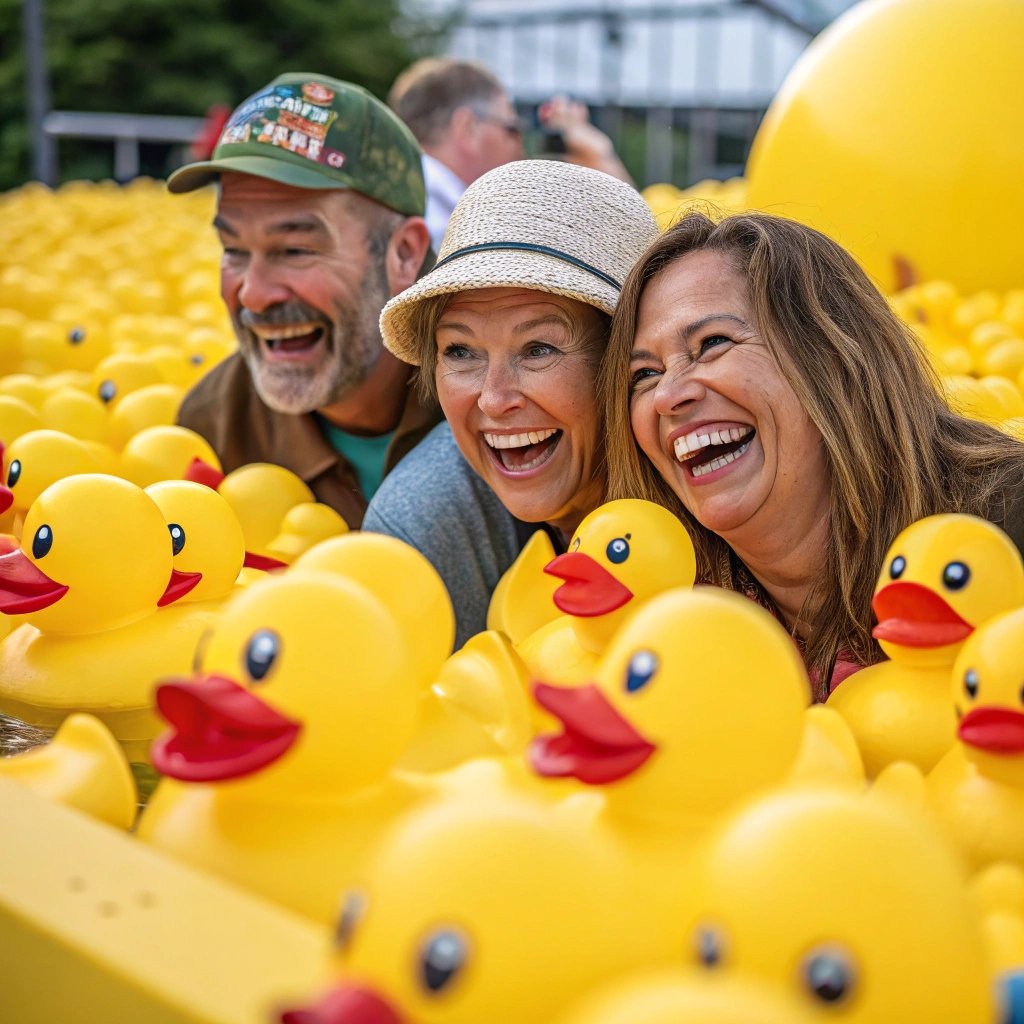
Packaging for Retail & Giveaways
Retail-ready packaging transforms a $0.30 promotional item into a perceived $1.00+ brand asset.
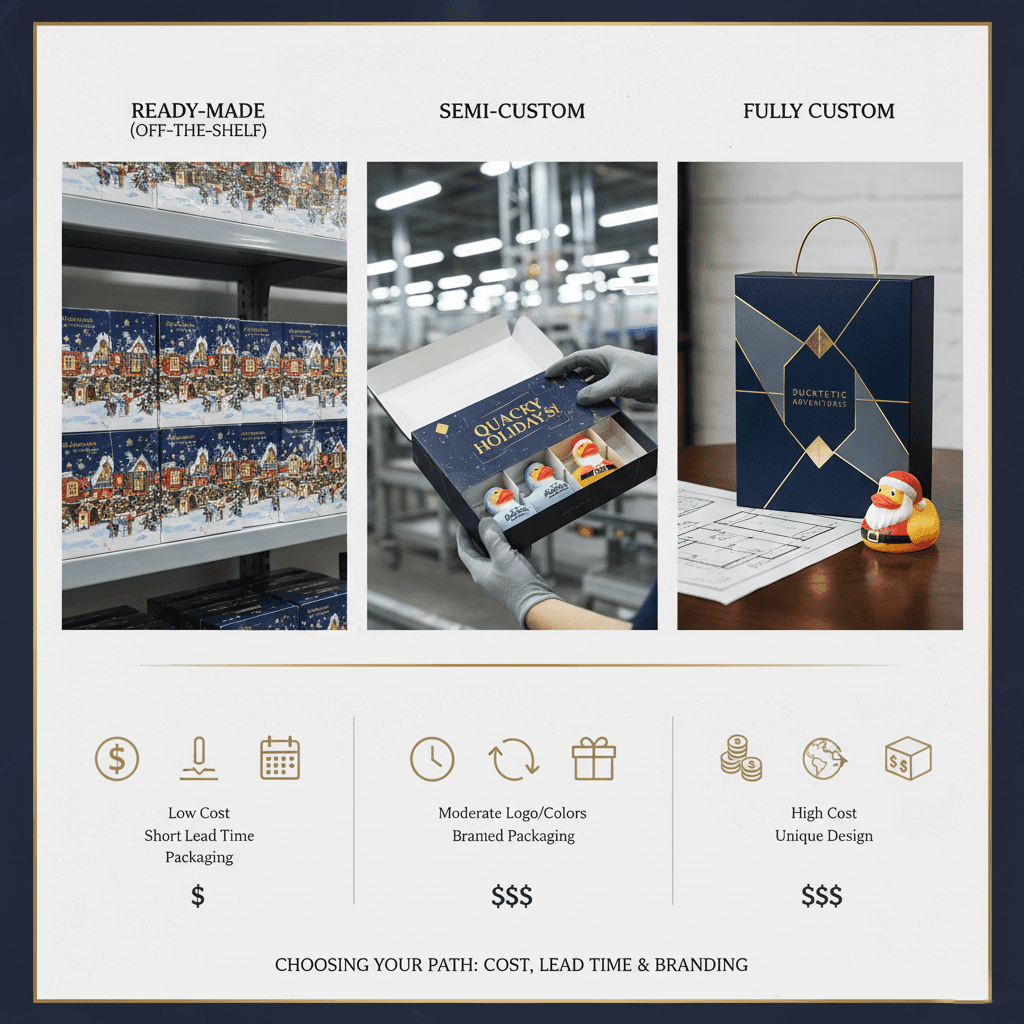
In the world of promotional merchandise, packaging is the only touchpoint between your brand and the recipient before the product is used. For a rubber duck, which is inherently a simple molded item, the packaging dictates the perceived value. When a brand marketing manager allocates budget for a campaign, the unboxing experience is the first tangible proof of quality. Brands utilizing rigid display boxes or custom gift packaging see a 30% increase in social media shares and recipient retention compared to those using basic OPP bags. This is not about aesthetics alone; it is about protecting the product integrity and elevating the brand narrative.
Selecting the right packaging format requires aligning the physical protection needs of the PVC duck with the specific distribution channel. Retail environments demand visibility and shelf stability, while large-scale giveaways prioritize speed of assembly and cost efficiency. Understanding these distinctions ensures that your promotional calendar delivers the right presentation for the right audience without inflating logistics costs unnecessarily.

Retail Packaging: Display Boxes and Blister Cards
For brands targeting retail shelves, impulse buys, or premium corporate gifting, standard poly bags are insufficient. They offer no structural support and fail to convey brand prestige. The industry standard for high-impact retail presentation is the window display box or the blister card. These formats allow the product to be seen while providing a rigid canvas for your branding, seasonal themes, and safety compliance information.
- Window Display Box: This is the gold standard for seasonal retail campaigns. It features a clear PVC window that showcases the duck, allowing for full-color printing on the exterior. This format is ideal for holiday themes like Valentine’s Day or Christmas, where the box art itself becomes part of the campaign. It offers the highest perceived value, often justifying a higher price point or perceived worth for the recipient.
- Blister Card: A cost-effective alternative for high-volume retail distribution. The duck is sealed to a cardboard backing with a clear plastic bubble. This format is excellent for hanging on peg hooks in retail stores, maximizing shelf space efficiency. It is particularly effective for back-to-school or summer festival campaigns where visibility at eye level is critical.
- Bulk Zipper Bags: These clear poly bags with a resealable zipper are ideal for protecting the ducks from dust and moisture during storage and distribution. They are cost-effective and allow for easy inspection of the product quality before distribution.
- Header Cards: A printed cardboard header attached to the top of the zipper bag provides a branded touchpoint. This is where you can display your logo, campaign message, or QR code linking to a digital experience. This format is particularly effective for giveaways where the brand exposure is the primary goal, rather than the product itself.
When designing retail packaging, consider the structural integrity of the box during shipping. Our production line uses multi-cavity molds to ensure consistent duck dimensions, which allows for precise box sizing. This reduces empty space and minimizes the risk of damage during transit. For brands running a year-round campaign schedule, using a consistent box size across different seasonal designs can simplify logistics and reduce packaging waste.
Giveaway Packaging: Bulk Bags and Header Cards
Not all promotional campaigns require retail-ready presentation. For large-scale events, trade shows, or mass email campaigns, the priority shifts to speed of assembly and cost minimization. In these scenarios, bulk zipper bags with header cards are the most efficient solution. This packaging method allows for rapid packing by your internal team or a fulfillment partner, significantly reducing labor costs per unit.
For brands managing a rubber duck product calendar B2B, using bulk packaging for non-seasonal or lower-priority campaigns can free up budget for high-impact retail packaging during peak seasons. This tiered approach to packaging allows you to maximize ROI across your entire promotional portfolio.

Impact on Perceived Value and Brand Consistency
The choice of packaging directly influences how the recipient perceives your brand. A duck in a flimsy bag may be viewed as a disposable trinket, while one in a well-designed display box is seen as a thoughtful gift. This perception gap can be as high as 30% in terms of perceived value, according to industry benchmarks for promotional products. For brand marketing managers, this means that packaging is not just a logistical necessity; it is a critical component of the campaign strategy.
To maintain brand consistency, ensure that your packaging design aligns with your overall campaign visuals. Use Pantone color matching for your packaging prints to match your brand guidelines exactly. This attention to detail reinforces brand recognition and trust. Additionally, consider the environmental impact of your packaging choices. Many consumers and corporate clients are increasingly sensitive to sustainability. Using recyclable materials for your boxes and bags can enhance your brand’s reputation and align with corporate social responsibility goals.
Ultimately, the right packaging strategy depends on your specific campaign goals. Whether you are targeting retail shelves with premium display boxes or distributing mass giveaways with bulk bags, the key is to align your packaging choice with your brand message and budget. By doing so, you ensure that your promotional rubber ducks not only reach their audience but also make a lasting impression.
Conclusion
A structured rubber ducks calendar eliminates last-minute shipping costs and ensures seasonal campaigns align with production timelines. Aggregating orders across quarters reduces per-unit costs below $0.50 while maintaining safety compliance and brand consistency.
Frequently Asked Questions
How much does it cost to manufacture a rubber duck?
Typical custom duck production cost at 1,000 units is $0.60–$1.20 per unit, including mold, material, and printing. Costs drop significantly to $0.25–$0.50 per unit when ordering 10,000+ units across a full-year contract. Request a quote based on your specific annual volume.
How to organize a rubber duck race?
Plan four months ahead to order numbered ducks (minimum 1,000 pieces) and arrange waterway permits. Sell entry tickets for the ducks to generate revenue while ensuring the event aligns with your. Secure permits and order ducks at least four months in advance.
What do Jeep owners think about being ducked?
Jeep owners generally view ducking as a positive community gesture and enjoy collecting themed ducks. For calendar planning, target this niche with durable, weather-resistant designs that appeal to outdoor enthusiasts. Design durable ducks specifically for outdoor vehicle use.
How much is the most expensive rubber duck?
The world’s largest inflatable rubber duck by Florentijn Hofman cost over $200,000 to produce. For promotional use, giant mascot-sized ducks typically cost between $500 and $2,000 depending on material and size. Budget $500–$2,000 for large promotional mascot ducks.
What does a purple rubber duck mean?
Purple ducks are often associated with epilepsy awareness or domestic violence campaigns. Brands can adopt a purple duck for cause-related marketing to demonstrate social responsibility and align with specific charity events. Use purple ducks for specific charity or awareness campaigns.
Related reading: Rubber Duck Trends 2027: What B2B Buyers Should Prepare Now