Skip to content
rubber ducks fundraising is the first checkpoint buyers should lock before they approve a supplier, budget, or production slot. I’ve seen it happen more times than I care to count: a buyer signs off on a pre-production sample, gets a $50,000 container of rubber ducks for fundraising, and discovers half of them float sideways when dumped into the race lane. The spec sheet said “standard duck shape” without mentioning bottom weighting. The actual product skipped it. That gap between what the factory quotes and what ships is where first-time buyers get burned, especially when the order is tied to a fixed-date event where there’s no time for a redo.
Why Rubber Ducks Work for Fundraising
Low cost per duck, high emotional impact.
Fundraising rubber ducks work because they turn a small expense into a memorable event. At $1.20–$1.80 per duck (1,000 units, one-color print), you get a physical token that supporters can see, hold, and race. That physical connection drives ticket sales better than a generic donation link.
- Emotional Hook: A branded duck transforms a raffle into a spectacle. Supporters remember the duck race, not a boring ask. Schools and nonprofits use custom logo rubber ducks for nonprofits to build campaign identity.
- Scalability: JustDucks supplies races from 100 to 10,000 ducks. Lzengo’s monthly output of 500,000+ ducks means zero capacity risk — you can start with 1,000 and reorder 10,000 without changing suppliers.
- Revenue Math: At $2 per ticket for a 2,000-duck race, you gross $4,000. After $1.50 per-duck cost, net profit exceeds $1,000 before sponsorships. For bulk rubber ducks for charity races, the ROI compounds when local businesses sponsor each duck.
The catch no one tells you: most cheap rubber ducks for school fundraisers lack bottom weighting. Without 15–25g of weight in the base, ducks float sideways and races become a mess. Always request weighted rubber ducks for duck races. Lzengo can produce weighted versions on request — just specify it in your RFQ.
Cost Breakdown: Mold Fees, Unit Price & MOQ
That $0.99 duck from PromotionChoice?
Here’s the real cost of a custom fundraising duck. Three line items make up the total: mold fee, unit price, and packaging. Skip any of these and you’ll eat surprise costs or delay your event.
- Mold fee: One-time, $150–$500 per shape. You own it after full payment — negotiate transfer rights in the contract so you can reuse it for annual races. Standard duck shapes (no custom mold) avoid this cost but limit branding to surface printing.
- Unit price at 1,000 units: Expect $1.20–$1.80 per duck for a standard shape with one-color logo printing. That’s FOB factory. Compare to PromotionChoice’s $0.99 standard duck (no mold) — their duck lacks bottom weighting, so it’s not suitable for races.
- Volume discount: Jump to 5,000 units and your unit price drops 15–25%. At 10,000 units the discount deepens further. The savings can offset the cost of a custom mold if you plan multiple events.
- Packaging: Polybag per duck: $0.05–$0.15. If you need individual polybags (required for gift-with-purchase or retail), factor this in. Bulk packing (50 ducks per bag) halves that cost.
The hidden trap most first-time buyers miss: bottom weighting. Standard production $0.99 ducks float sideways — useless for a duck race. A weighted bottom adds roughly $0.10–$0.15 per duck, but ensures upright, consistent floating. Always request this spec and ask for a sample approval photo of the duck floating in water before production.
Custom shapes (school mascot, charity logo) raise the mold cost to $400–$500 but eliminate the need for pad printing — the detail is molded into the PVC. The ink never wears off. If you run an annual event, amortize the mold over multiple years and lower your unit price on reorders (typically MOQ drops to 500 units).
For numbered ducks (ticket sales), pad printing adds $0.10–$0.30 per duck. Confirm ink adhesion with a paint adhesion test — cheap ink peels after a week in chlorinated water. Your ducks will look terrible on race day.
| Cost Component | Specification | Amount/Range | Additional Notes |
|---|---|---|---|
| Mold Fee | One-time, per design | $150 – $500 | Ownership transferable upon full payment |
| Unit Price (1,000 units) | Standard shape + 1-color print | $1.20 – $1.80 per duck | Price per piece |
| Volume Discount | Orders of 5,000+ units | 15% – 25% savings | Applied to unit price |
| Initial MOQ | First order per design | 1,000 units | Minimum order quantity |
| Reorder MOQ | Subsequent orders | 500 units | Lower minimum for repeat orders |
| Lead Time | Sample production | 10 – 15 days | Bulk production 20 – 30 days |
Customization Options: Printing vs Molded Details
Molded details outlast printing but require upfront mold investment.
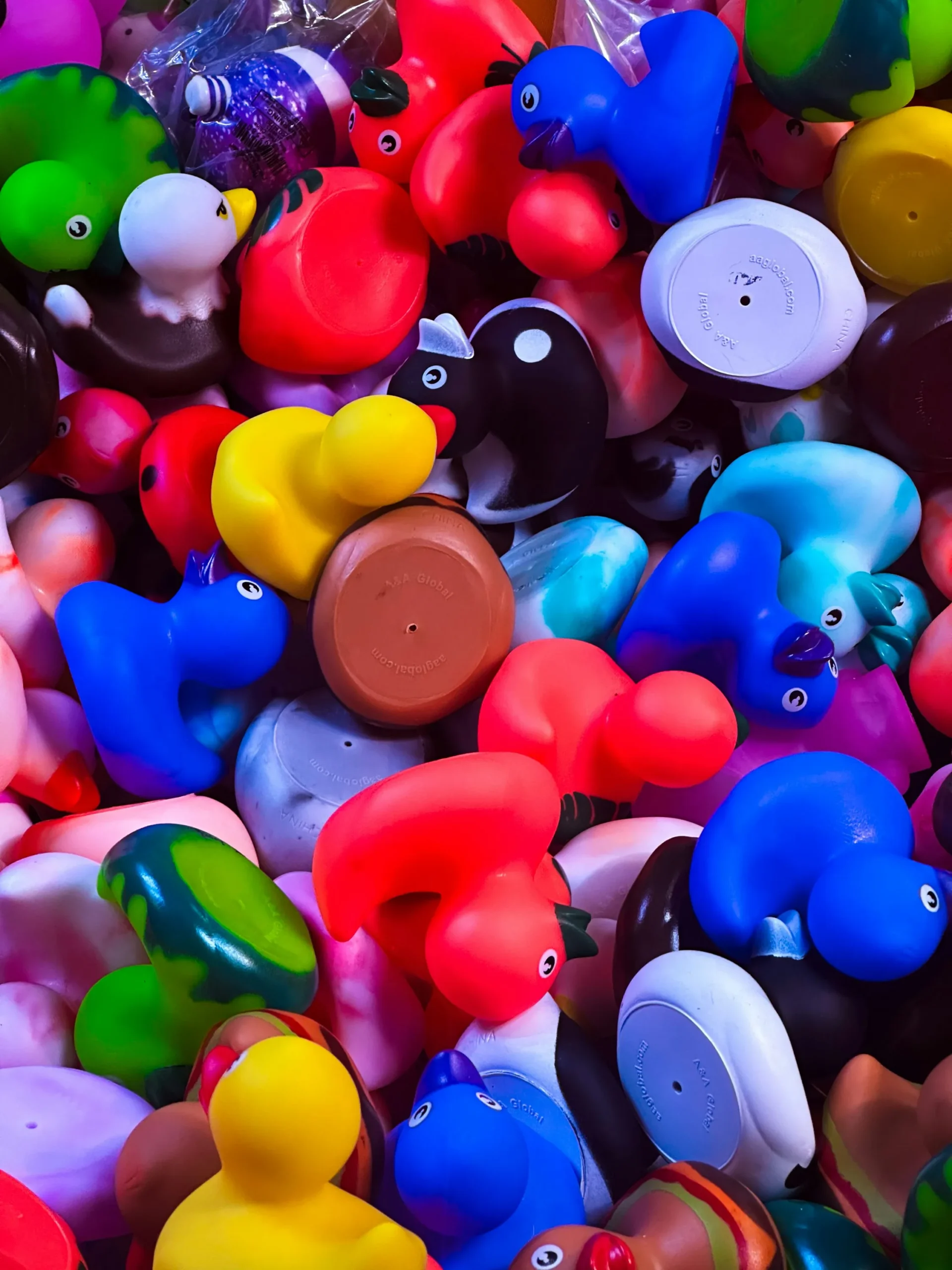
For fundraising ducks, the customization method directly affects both your upfront cost and the longevity of your branding. Pad printing and screen printing apply ink onto the finished duck’s surface. This method carries no mold fee, so it’s the default choice for orders under 2,000 units. But here’s the catch: PVC’s non-porous surface resists ink adhesion. A standard pad-printed logo will hold up for light handling, but after repeated water exposure — the exact condition of a duck race — the ink can chip or fade. For a one-time giveaway, printing is fine. For a numbered race duck that needs to survive the event and later serve as a souvenir, you’ll want to upgrade.
Molded customization integrates the logo and colors directly into the duck’s vinyl during the rotocasting process. The design becomes part of the material — it cannot peel, fade, or wash off. The trade-off is upfront: a one-time mold fee of $150 to $500 (transferable to you upon full payment) and a minimum order of 1,000 units per design. For organizations running annual duck races, that mold cost is easily amortized over multiple years. At Lzengo, the company sees nonprofits reorder 1,000 to 5,000 ducks each year using the same mold, which drops their effective per-unit cost below $1.00 after the first run.
- Ink adhesion test: Before approving production on numbered ducks, request a paint adhesion test on a pre-production sample. Apply standard Scotch tape to the printed number and pull. If any ink transfers to the tape, the factory needs to adjust their ink formulation or pre-treatment process.
- Mold ownership clause: Negotiate mold ownership into your contract. If you own the mold, you can switch suppliers or reorder from any factory that accepts transfer molds. This is standard practice for custom shapes but often overlooked on simple logo molds.
Weighted vs Non-Weighted: Which for Duck Races?
Weighted ducks float upright; unweighted ones tip and lose races.
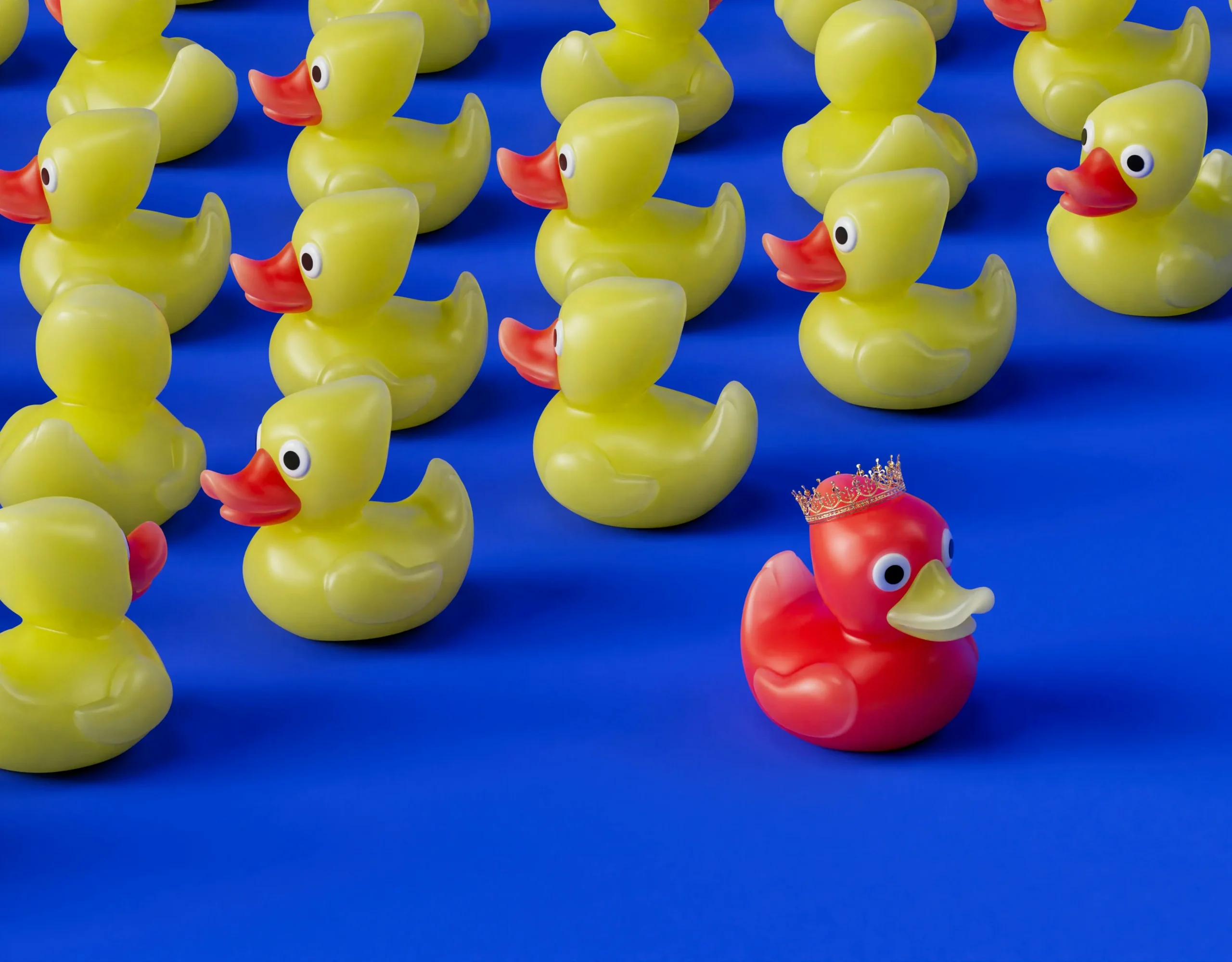
For a duck race, bottom weighting isn’t optional. Without it, the duck floats sideways or capsizes as soon as it hits the water. That means inconsistent travel, tangled ducks, and a messy race outcome. Every serious duck race supplier—JustDucks, PromotionChoice, Lzengo—uses a weighted base, typically 15 to 25 grams of material molded into the bottom.
Here’s the problem: most generic duck factories skip this step to save a few cents per unit. They’ll ship you a standard hollow duck that looks fine in a photo but flops over mid-race. I’ve seen first-time buyers order 3,000 non-weighted ducks for a charity race and spend the morning fishing them off the bank. One local organizer lost $12,000 in ticket revenue because the ducks refused to float upright.
- Weighted duck: 15–25g base ensures upright float, consistent drift, and fair racing. Request this explicitly from your supplier. Lzengo can produce weighted versions on any order.
- Non-weighted duck: Hollow body causes tipping, spinning, and sinking. Avoid for any fundraising event where race fairness matters. Even if the sample floats in a bucket, test in moving water.
When you submit your RFQ, include a line: ‘All ducks must have a bottom weight of minimum 15g.’ If the supplier hesitates or adds a surprise surcharge, that’s a red flag. A reputable manufacturer builds weighting into the tooling from the start—it’s not an extra; it’s the standard for race-grade ducks. To confirm weighting, request a sample and drop it in a bathtub. A properly weighted duck will right itself within two seconds.

How to Choose a Reliable Fundraising Duck Supplier
Most duck suppliers skip bottom weighting—your ducks will tip over mid-race without it.
Start your supplier vetting by requesting physical samples. No PDF or photo replaces holding the duck in your hand. Drop it in water. If it floats sideways rather than upright, the supplier omitted bottom weighting. That’s a dealbreaker for any duck race.
While the sample is in hand, demand material safety certifications. For fundraising giveaways involving children, look for ASTM F963 (US) and EN71 (EU) compliance. A generic supplier that cannot provide these within 48 hours likely uses unregulated PVC. Lzengo holds both certifications and can share them upon request.
- Sample lead time: 10–15 days. If a supplier quotes 7 days, ask how the mold was prepared—rushed tooling often means poor mold alignment and off-center weighting.
- Bulk production lead time: 20–30 days from sample approval. For numbered ducks, add 3–5 days for sequential pad printing. Always add a 2-week buffer before your event date.
Finally, request a paint adhesion test for numbered ducks. Pad-printed numbers rub off if not properly cured. A supplier that can’t demonstrate ink durability on a sample is likely to ship numbers that fade before the first splash. For deep comparison, read our guides on supplier vetting and safety standards.
Conclusion
The detail most buyers miss is mold ownership. If your fundraising event repeats annually—school mascot, charity run, corporate campaign—negotiate a mold ownership clause in your contract. That $300 one-time fee becomes an asset you can reuse or transfer. Good sample approval and clear quality tolerances on FOB pricing protect you on reorders. Without that clause, you pay the mold fee again every year.
You’ve now covered the full procurement cycle. Next step: review the product catalog for shapes and price breaks that fit your event size, then request a quote with your specific timeline and customization needs.
Frequently Asked Questions
How many ducks do I need for a duck race?
For a typical duck race, plan on 1,000 to 5,000 ducks for a mid-size event. JustDucks supplies races from 100 to 10,000 ducks, so scale based on ticket sales and lane length. Confirm lane capacity and expected entries before ordering.
What is the best material for fundraising rubber ducks?
Phthalate-free PVC is the industry standard for durability and safety compliance. Always request weighted bottoms to ensure ducks float upright during races. Verify material certifications like REACH or FDA for your region.
Can I get numbered rubber ducks for my fundraiser?
Yes, most custom duck manufacturers offer numbered printing on the ducks. You can order sequential numbers from 001 to 5000+ as a screen-printed add-on. Confirm numbering method and ink durability for water exposure.
How long does it take to produce custom rubber ducks for a fundraiser?
Sample production takes 10–15 days, and bulk production takes 20–30 days from sample approval. Rush options may be available but often at an extra cost. Factor in shipping time and customs clearance for international orders.
What is the MOQ for custom fundraiser rubber ducks?
The standard MOQ is 1,000 units per design, with a reorder MOQ as low as 500 units. First-time orders typically require full payment upfront. If you need fewer than 1,000, ask about stock ducks with print-on-demand options.
Related reading: Employee Appreciation Gifts: Why Custom Ducks Earn Their Keep in Q4