Skip to content
A turndown gift is one of the few touches a hotel controls completely: the guest is already in the room, the moment is quiet, and anything left on the pillow gets noticed. Rubber ducks work in that slot because they are small, washable, and cheap enough to leave behind, yet unusual enough to be photographed and remembered. This guide covers the selection, customization, compliance, and ordering math that make a turndown duck program a signature amenity instead of an afterthought.
1. Why the turndown slot rewards an unexpected item
Standard turndown treats—chocolates, mints, a card—are consumed or discarded within minutes, and guests rarely remember which brand left them. A duck has a different lifecycle: it rides home in a bag, lands on a shelf or a kid’s bath ledge, and the name printed on its chest keeps working after checkout. For independent hotels competing with chains on experience rather than price, that repeat visibility is the entire argument for the format. The American Hotel & Lodging Association tracks guest-experience trends across the industry, and amenity differentiation is a recurring theme in its guidance for independent operators; the American Hotel & Lodging Association keeps the operational standards that cover guest-room amenities and safety. A duck also photographs well, and guests posting the room photo carries the property name to an audience that never booked a night.
2. Choosing the right duck for a guest room
Guest-room ducks should be standard-size bath ducks, not novelty shapes: roughly palm-sized, smooth, with no small detachable parts, because the same duck may end up in a toddler’s bath. Our standard duck line is molded in one piece with the squeaker chamber sealed inside, which removes the parts-and-pieces risk that room staff would otherwise have to screen for. Material matters for the same reason—PVC is the classic bath-duck material, and our production runs are available in TPR and other options for properties that prefer a softer, more flexible feel. The practical selection rule for a first order: one shape, two or three colors, and the property logo or name printed on one side, which keeps the program simple enough to reorder without a new approval cycle.
3. Customization that makes the duck property-specific
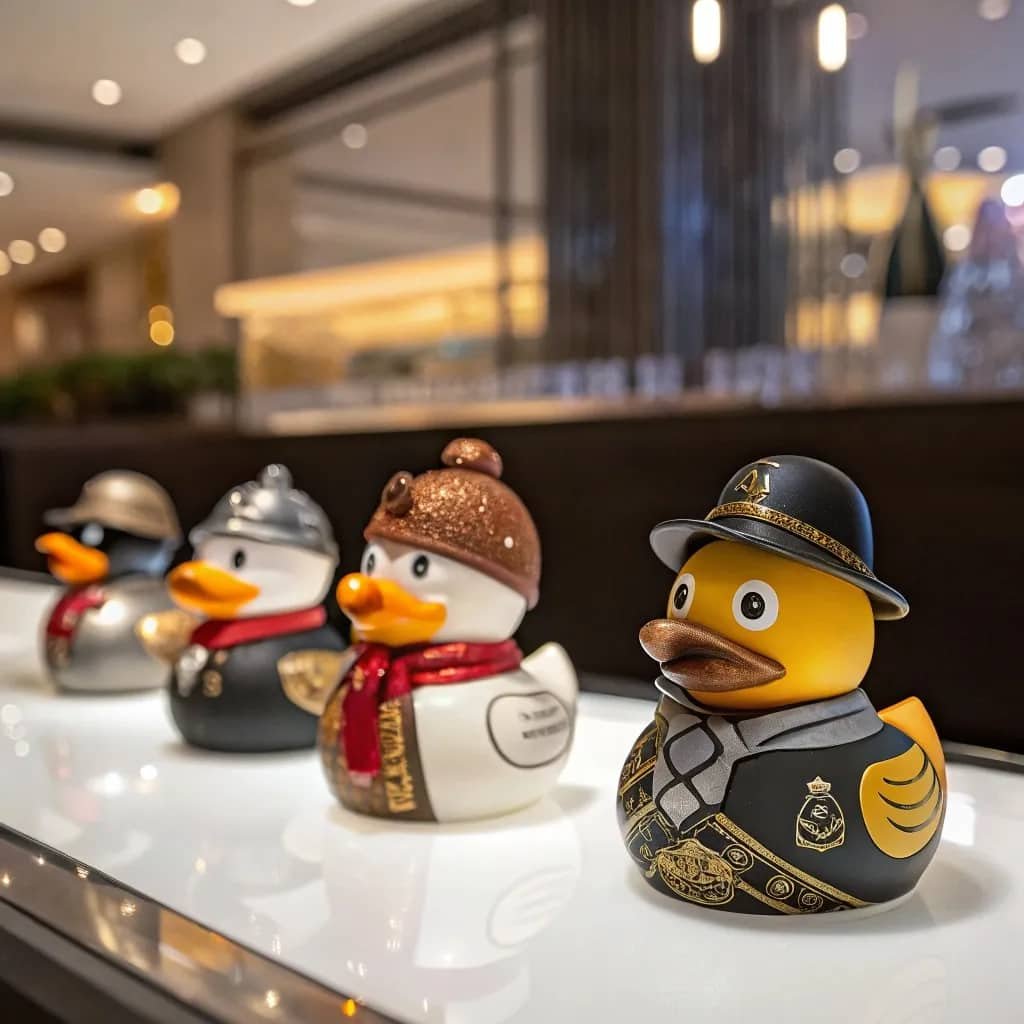
The amenity becomes a signature when it could only come from that property. The three formats that hold up in practice are the logo duck, the city duck, and the room-number duck. A logo duck carries the property mark on the chest; a city duck replaces the mark with a skyline or landmark motif, which works well for resort and destination properties; a room-number duck is a numbered series that guests can collect across return visits, using the same repeat-collector mechanics documented in our collectible duck lines guide. Pantone-matched printing keeps the colors exact, and our mockup service returns a digital preview within 12 hours, so the amenity design is approved visually before production starts. Samples ship within 7 days, which matters for a property that wants to test the duck with a pilot floor before committing to a full program.
4. Ordering math for a turndown program
Turndown programs consume ducks at a predictable rate: one per occupied room night if the duck is a takeaway, or one per stay if the property recycles them through laundry. For a 120-room property at 70 percent occupancy with takeaway ducks, that is roughly 30,000 ducks a year, which means a single 1,000-unit order—our factory MOQ—covers about two weeks of that volume, and quarterly programs order in 2,000- to 3,000-unit lots. LZENGO’s monthly production capacity exceeds 5 million ducks, so even a late-season reorder lands on schedule. Packaging is worth deciding early: loose ducks for staff to place directly on pillows, polybagged ducks for hygiene-sensitive properties, or retail boxes if the duck doubles as a gift-shop item. The cost structure for those packaging decisions is covered in our bulk rubber ducks page, which is the right entry point for program-level quantities.
| Turndown program factor | Recommendation | Why |
|---|---|---|
| Size | Standard palm-size bath duck | Fits a pillow display and a toddler’s bath safely |
| Material | PVC standard; TPR for softer feel | Washable, durable, one-piece construction |
| Customization | Logo, city motif, or room-number series | Makes the amenity property-specific and collectible |
| Quantity | 1,000-unit MOQ; 2,000-3,000-unit quarterly lots | Covers about two weeks of takeaway volume at mid-size occupancy |
| Packaging | Loose, polybag, or retail box | Matches hygiene policy and gift-shop cross-sell |
5. Compliance: the amenity still has to be a toy-safe product
A guest-room duck is a gift, but it is also a product that children will handle, which puts it under toy-safety expectations even when the hotel never intended it as a toy. Buyers should confirm that the factory’s testing covers the relevant markets—our ducks are tested through Intertek against REACH and CPSIA requirements, and EN71 testing is available for European properties. Certificate copies should be requested with the quotation, not after production, and the duck’s label should carry the manufacturer identification and any age-grading notes the target market requires. Hotels that run family programs should also confirm the material is phthalate- and BPA-free before the first order, since those claims are what parents search for when the duck comes home; our label-claims explainer walks through what each claim actually means.
6. Launching the program: pilot floor to full rollout
The low-risk path is a 30-day pilot: 1,000 ducks on one floor, with housekeeping placing them at turndown and the front desk tracking mentions in reviews and social tags. If the pilot shows lift in review language—guests naming the duck in their comments—the rollout is a straight reorder plus a print confirmation, because the mold and artwork are already on file. Properties that want the duck in the gift shop at the same time can split the order between pillow stock and retail stock, and the retail packaging options we offer make the transition straightforward. For properties that want a themed collection rather than a single duck, the same sourcing path used for souvenir-shop duck lines applies, with one duck per theme and the property mark on every unit.
Frequently asked questions
How many rubber ducks does a hotel turndown program need?
A 120-room property at 70 percent occupancy with takeaway ducks uses roughly 30,000 ducks a year; a 1,000-unit MOQ order covers about two weeks of that volume, so quarterly programs order in 2,000- to 3,000-unit lots.
Are turndown rubber ducks safe for children?
Standard one-piece bath ducks with the squeaker sealed inside have no small detachable parts, and buyers should request REACH/CPSIA test reports through Intertek plus phthalate- and BPA-free confirmation before the first order.
How fast can a hotel get custom ducks?
Digital mockups return within 12 hours and samples ship within 7 days; production for logo-printed ducks on stock molds runs about four weeks, with custom-mold ducks at six to eight weeks.
What makes a turndown duck memorable instead of disposable?
Property-specific design—logo, city motif, or a numbered room series—turns the duck into a keepsake that guests photograph and carry home, keeping the property name visible after checkout.
For the specs, branding and MOQ behind an Airbnb welcome gift duck, see our Airbnb welcome gift duck guide.