Skip to content
Brands no longer wait for a factory sketch to see their duck. A marketing manager can now mock up a mascot duck with an AI image tool over lunch, walk into the factory conversation with a visual, and cut days off the design loop. Used well, AI mock-ups speed everything before the mould. Used carelessly, they create expectations and ownership questions that cost more than the weeks they saved. This guide shows how brands use AI in custom duck design and where the factory conversation still decides quality.

Where AI fits in the design loop
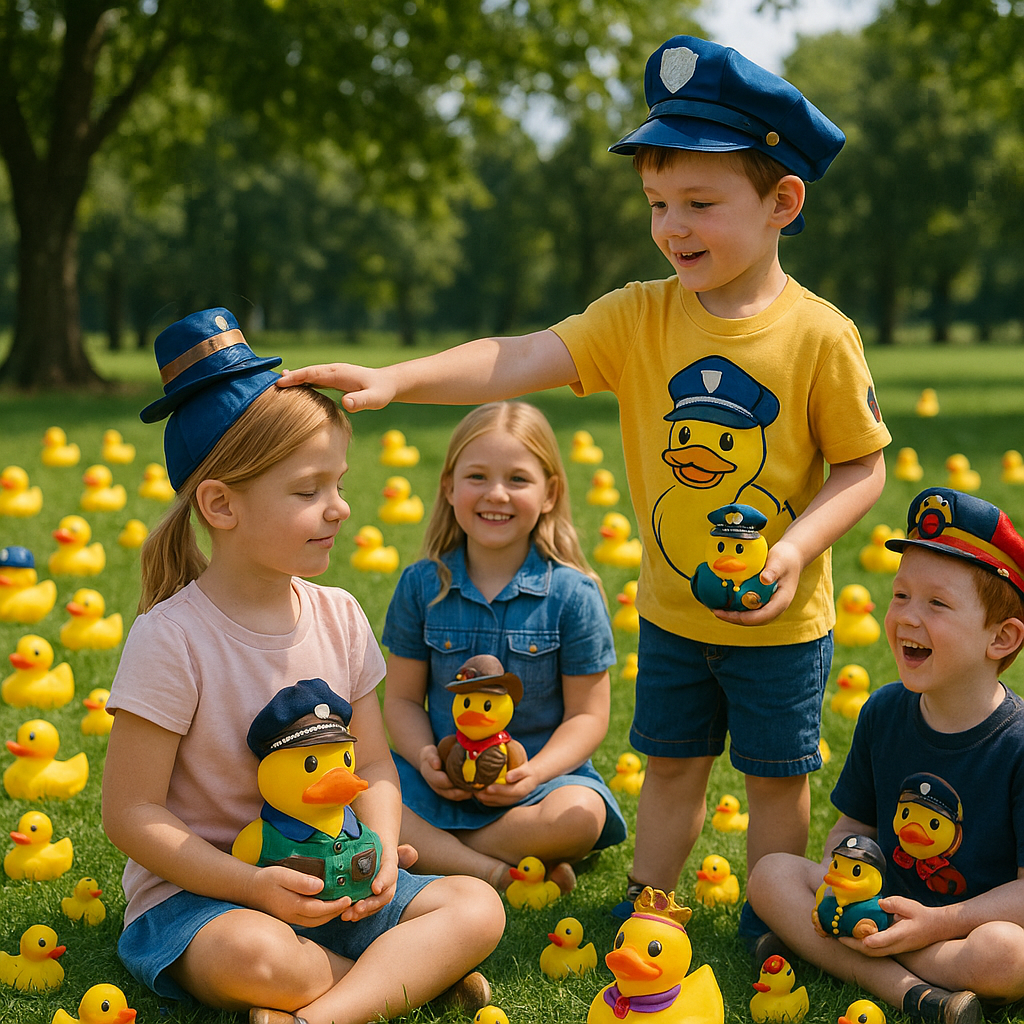
AI tools are strongest at the front of the loop: exploring directions, dressing a mascot in the right outfit, testing colour moods and generating the variant matrix, sport duck, beach duck, holiday duck, without commissioning each one. A brand can walk into the first factory call with three confident directions instead of a blank page, and the conversation starts from taste rather than vocabulary. That is real time saved, because the slowest part of any custom project is usually the round trip between what a client imagines and what a designer draws. The same logic applies to accessories and props, which our guide to custom duck accessories treats as design decisions of their own.
What the AI picture cannot tell the factory
The mock-up is a picture of a duck, not a specification of one. It does not say where the wall thickness supports the hat, whether the beak undercuts the mould direction, how the prop attaches, or which details survive pad printing at logo size. Those are tooling questions, and they are decided in the factory conversation between the AI visual and the engineering drawing. The brands that get fast results treat the AI image as intent and let the factory respond with a manufacturable interpretation, then converge through a physical sample. Our comparison of mould carving versus printing shows how the same idea becomes a different product depending on which decoration route carries it.

Ownership: the question AI raises and brands must answer
AI-generated designs carry unsettled questions about copyright and ownership of the output, and regulators are still writing the rules; the US Copyright Office publishes its current registration guidance for material generated by artificial intelligence, and it is worth reading before a brand invests in tooling around an AI asset. The practical playbook is simple: treat purely AI-generated art as a design reference, add human design work on top, keep records of the process, and put ownership and originality warranties into the purchase contract. Brands adapting well-known characters should be extra careful, because fan-themed ducks raise the same intellectual property questions whether the artwork came from AI or a human.
The workflow that actually ships
The pattern our fastest clients follow looks like this. Mock up three to five directions with AI and pick one internally, against the range of bodies our custom rubber ducks program can tool. Send the chosen visual plus the intent, not just the picture, to the factory. Receive the engineered interpretation with dimensions and decoration plan. Approve a physical sample, because the sample is the truth the mould will copy. Then scale. Teams that skip the sample step to save a week usually spend a season explaining a compromise to customers, a theme our guide to inspecting rubber duck samples turns into a checklist, and the same discipline backs the product development service behind custom programs.
Video: from concept to duck
AI has earned its place in duck design: it compresses the exploration phase and turns brand conversations visual. The factory loop, tooling judgment and the sample approval remain human and physical, and ownership questions deserve a contract line before tooling starts. Brands that respect that division get the speed of AI and the quality of a factory, not the failures of either.
See also our personalized duck swag guide.