Skip to content
Yes, new rubber ducks smell, and the cause is chemistry, not dirt. Fresh PVC releases small amounts of volatile compounds as it finishes curing, and inside a sealed carton those compounds have nowhere to go. The smell is normal, it fades, and for giveaway programs there is a simple airing routine that makes it a non-event. Here is what causes it, when it matters, and what to do before a duck lands in someone’s hands.
Where the smell comes from
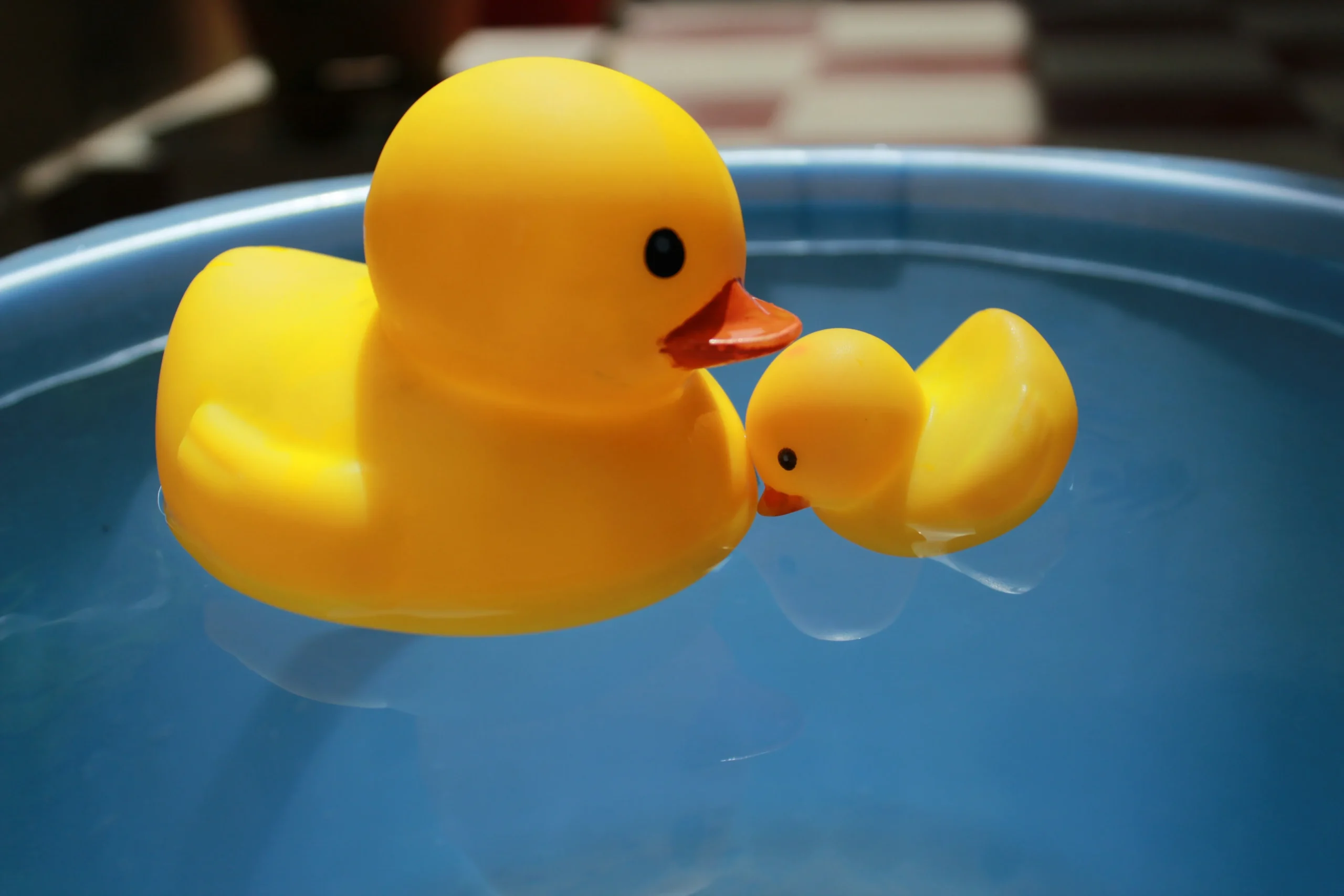
PVC ducks are moulded from plasticised PVC, and the plasticisers plus trace residues from the moulding process keep releasing tiny amounts of volatile organic compounds until they fully off-gas. Sealed polybags and export cartons trap that release right against the surface, which is why the first breath on opening a carton is stronger than the same duck an hour later. The intensity depends on the formulation and how recently the batch ran: pieces packed days after moulding smell more than pieces that sat in ventilated storage. Reputable factories formulate against regulated limits; indoor air guidance from authorities such as the US Environmental Protection Agency treats these volatile compounds as a ventilation question, which is exactly what the airing routine provides.
When the smell matters, and when it does not
For giveaways dropped into a goody bag at an event, a faint PVC note is part of the experience and disappears within days of the bag opening. It matters more in three cases: enclosed premium packaging, where a guest or customer opens the box face-to-face with the brand; baby and toddler products, where mouthing toys should meet the applicable toy safety standards in addition to airing; and long-distance shipping in hot containers, where heat accelerates the release. Brands selling into those cases should spec low-odour formulations up front and plan an airing window into the delivery timeline, not discover the issue at the venue.
The airing routine before giveaways
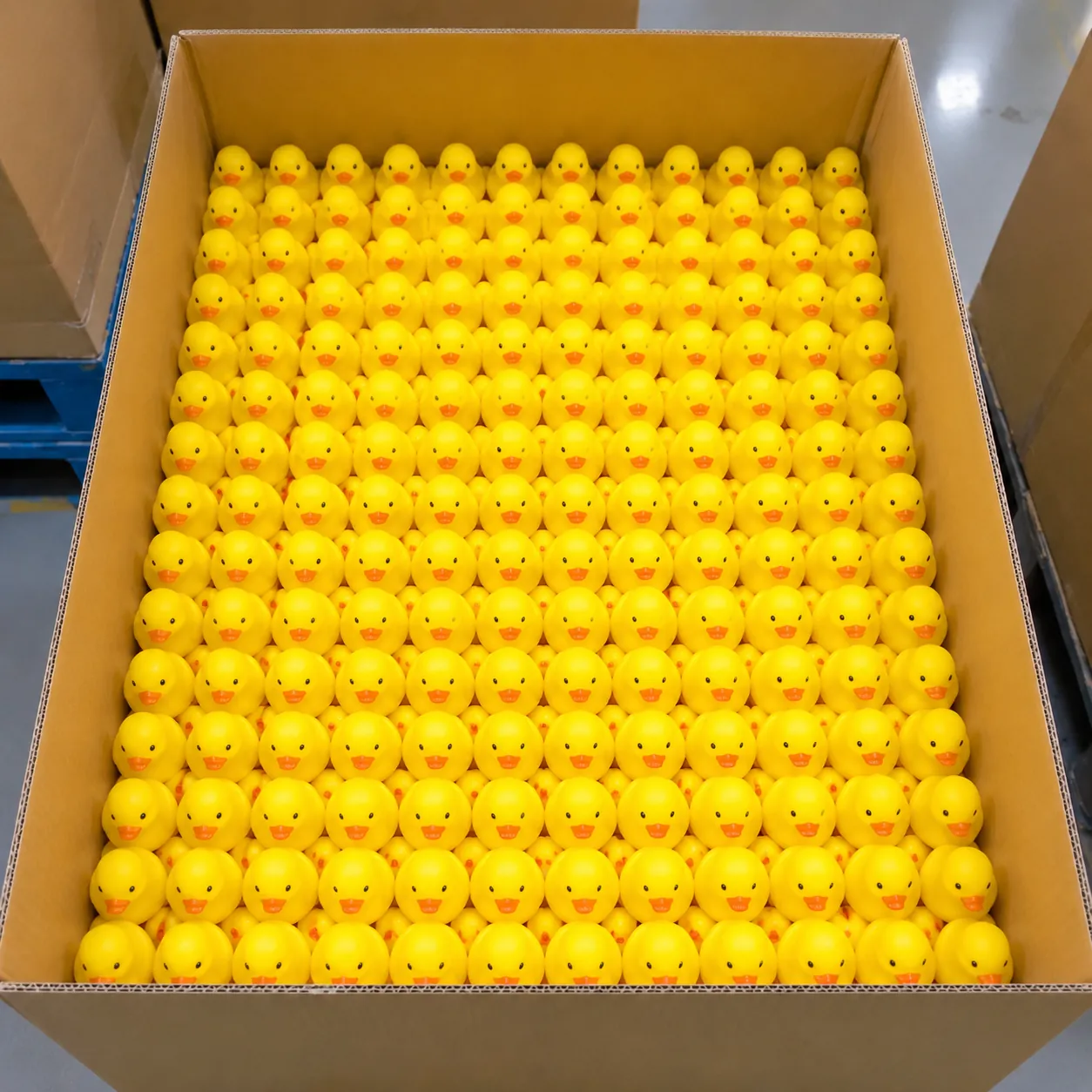
Simple steps, in order. Unbox the cartons into a ventilated space rather than a closed storeroom. Cut the polybags open or remove them, since the bag is what traps the release. Spread the ducks in a single layer for a day or two, longer in hot weather, and keep them out of direct sun, which can discolour some finishes. If a premium box is part of the program, air the boxes open alongside the ducks, because the packaging holds odour too. After airing, repack with the bags open or bagged loose, and the smell conversation is over before it starts. Buyers who want this handled at the factory simply add an airing-and-ventilated-packing step to the order, a service line our custom rubber ducks production supports for giveaway programs.
Spec language that prevents the complaint
Two lines in the purchase order do the work. First, formulation: low-odour, compliant with the toy safety standard your market requires, with the test report referenced. Second, packing: ventilated curing time before bagging, or bagging with vent holes, for programs that need it. For related construction details that affect off-gassing and quality, our guides to drain holes and squeaker vents and duck wall thickness cover the design side of the same coin.
Video: from mould to giveaway
New ducks smell because fresh PVC is still finishing its chemistry, and trapped air makes it obvious. Air the batch, ventilate the packing, and write both into the spec for programs where it matters. The complaint costs nothing to prevent and something to explain, so prevention wins.