Skip to content

A brand manager sourcing from a rubber duck manufacturer doesn’t just need a product page. They need a site that answers the three questions that keep them up at night: can you nail my brand color, will the ducks arrive on time, and are you actually the factory building them. Most supplier sites fail on all three counts, burying MOQs in fine print and showing stock photos instead of mold engineering shots.
The difference between a factory and a middleman often shows up in the URL structure. A site with directories like /custom-shape/ or /oem-vs-odm/ signals true custom manufacturing depth. Sites that only list generic catalog items without production details? You are likely looking at a trading company that marks up prices 20-40% and has zero control over delivery dates. That is the gap this article closes.
Understand Your Needs
A standard duck and a giant inflatable are built by completely different supply chains.
Most novice brand managers start their search by typing “rubber duck manufacturer” into Google. The results are a blur of websites that all look the same. The first mistake is treating every type of duck as if it comes from the same production line. They don’t. Your first job is to categorize your project into one of three buckets: standard ducks, custom-shaped ducks, or giant inflatables. Each bucket has a different mold process, a different material density, and a different supplier profile. A factory that excels at churning out 2-inch standard ducks for trade shows is not the same factory you want building a 5-meter inflatable for a hotel pool launch. If a supplier’s website shows all three categories without clearly separating the manufacturing processes, they are likely a trading company aggregating from multiple workshops — not a single factory controlling quality.
Here is how you align your project specs with the right supplier type:
- Standard ducks (1.5″ to 3″): These are rotocast PVC with a Shore hardness of A60–A65. The mold fee is $300–$800 depending on cavity count. MOQ for custom printing on an existing shape can drop to 500 units, but you pay a 20–40% unit price penalty compared to the 1000-unit threshold. Ideal for trade show giveaways and hotel welcome kits where brand recall lift is the KPI.
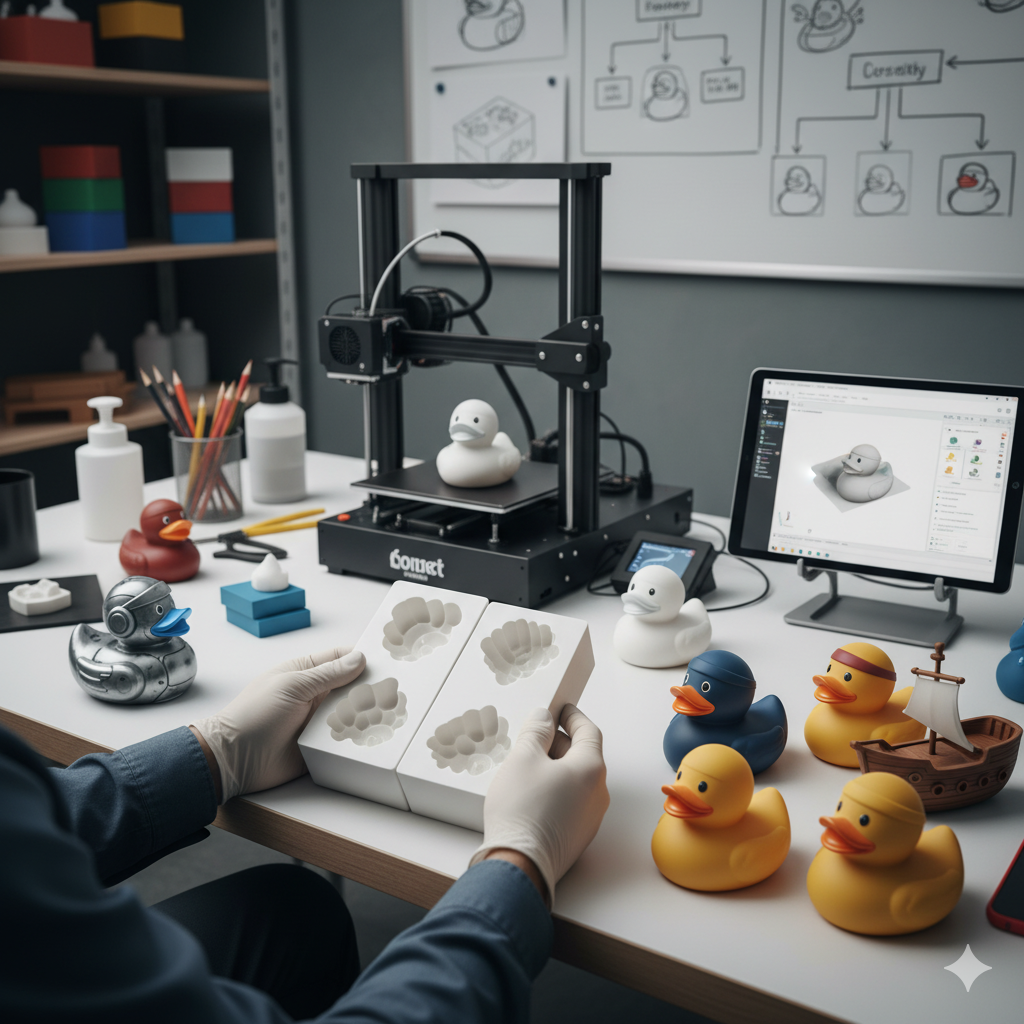
- Custom-shaped ducks (3″ to 12″): This requires a new mold from scratch. Expect a direct mold fee of $300–$800 and an MOQ of 1000 units. The supplier must show engineering drawings and mold photos on their site. If they don’t, you are likely dealing with an agent who will subcontract the mold to an unknown workshop — and you lose control over the BOM tolerance of ±5% on coloration.
- Giant inflatables (up to 5 meters): These are not rotocast. They are high-frequency welded PVC fabric, often with internal blower systems. The lead time jumps to 35–45 days. The supplier must have a dedicated warehouse for inflation testing. If a standard duck manufacturer claims they can also build a 5-meter inflatable without showing a separate production gallery, ask for proof of past projects.
The critical trust signal here is whether the supplier’s website has a dedicated URL directory like /custom-shape/ or /oem-vs-odm/. These directories indicate that the manufacturer has built a technical resource library around custom work. Competitors like Luna Bella lack these resources entirely. If you see a flat site with no sub-directories for mold engineering or color-matching controls, expect your brand purple to arrive as magenta. That is a $300–$800 mold fee down the drain, plus a missed campaign deadline.
Manufacturing Capabilities
If you cannot see the mold, you are not talking to the factory.
The single fastest way to separate a real rubber duck manufacturer from a middleman is to demand one thing: raw production evidence. A trading company can write a paragraph about “advanced manufacturing.” Only a factory can show the tooling. When landing on a supplier site, the first question should be: Can I see the actual mold?
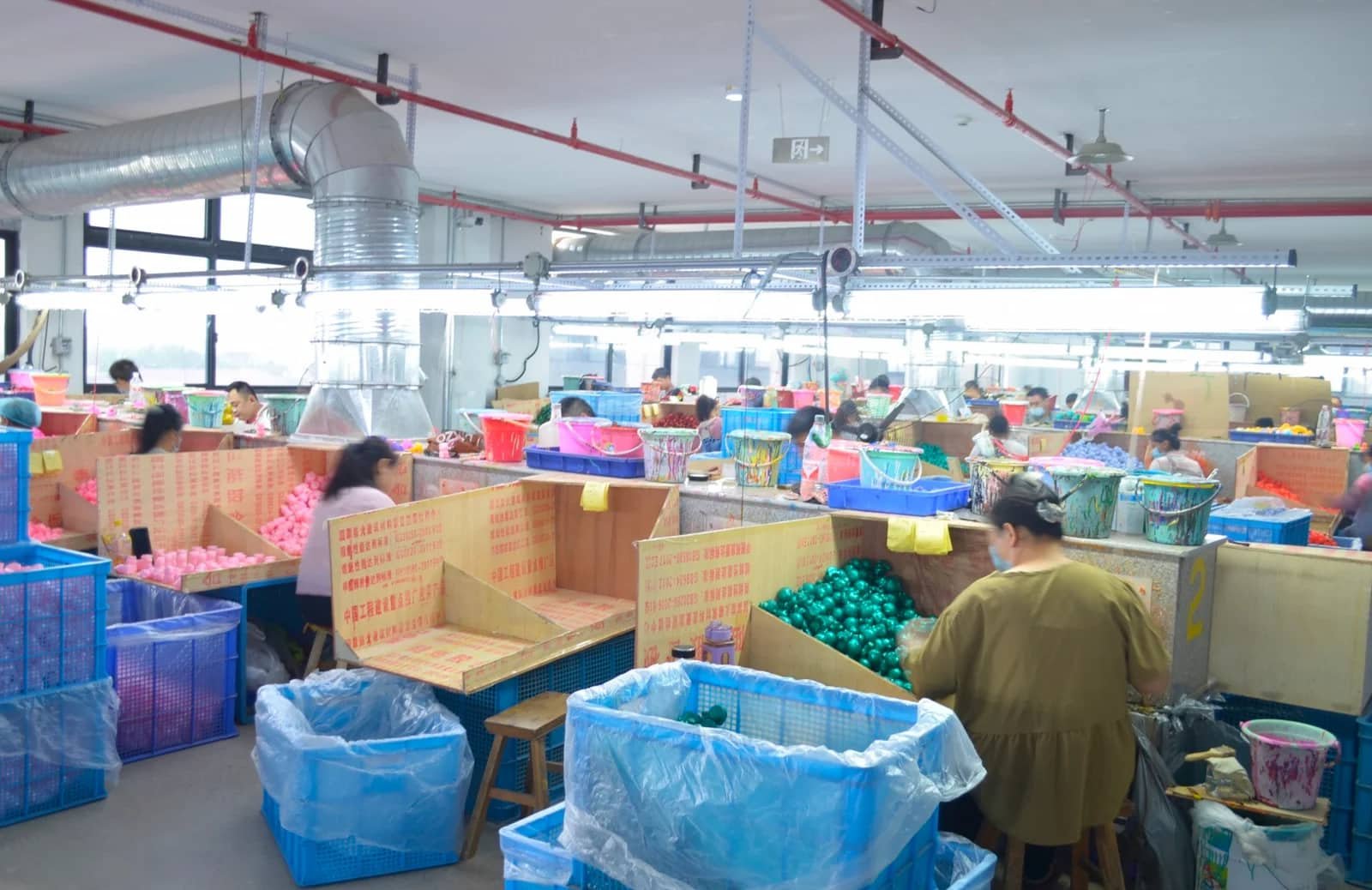
A legitimate direct from factory rubber ducks wholesale operation will display engineering drawings, die-cutting stations, and injection machines in their media library. Look for photos of steel molds sitting on a press — not renders, not stock photography from a catalog. The presence of a dedicated /custom-shape/ or /oem-vs-odm/ directory in the URL structure is a technical signal that the site is built around genuine custom manufacturing, not just reselling standard SKUs.
What Real Manufacturing Capability Looks Like
The core process for a custom shape involves three physical stages, and a rubber duck manufacturer website checklist should document each one:
- Die-Cutting & Mold Fabrication: The mold is cut from steel or aluminum based on your 3D file. A factory that handles this in-house can quote a mold fee between $300 and $800 depending on complexity. If the site only talks about “mold development” without showing a workshop floor, you are likely paying a 20–40% middleman markup.
- PVC Injection or Rotocasting: The material is PVC with a Shore hardness of A60–A65. This is the industry standard for bath toys and promotional giveaways. Look for references to BPA-free and phthalate-free compounds — these are non-negotiable for any BPA-free rubber duck manufacturer targeting consumer-facing brands.
- Finishing & Decoration: Pad printing adds $0.08–$0.15 per color per duck. Full-color transfer printing runs up to $0.30+ but delivers photographic detail. A factory site should explain these options with real sample photos, not just a price list.
The Mold Photo Test
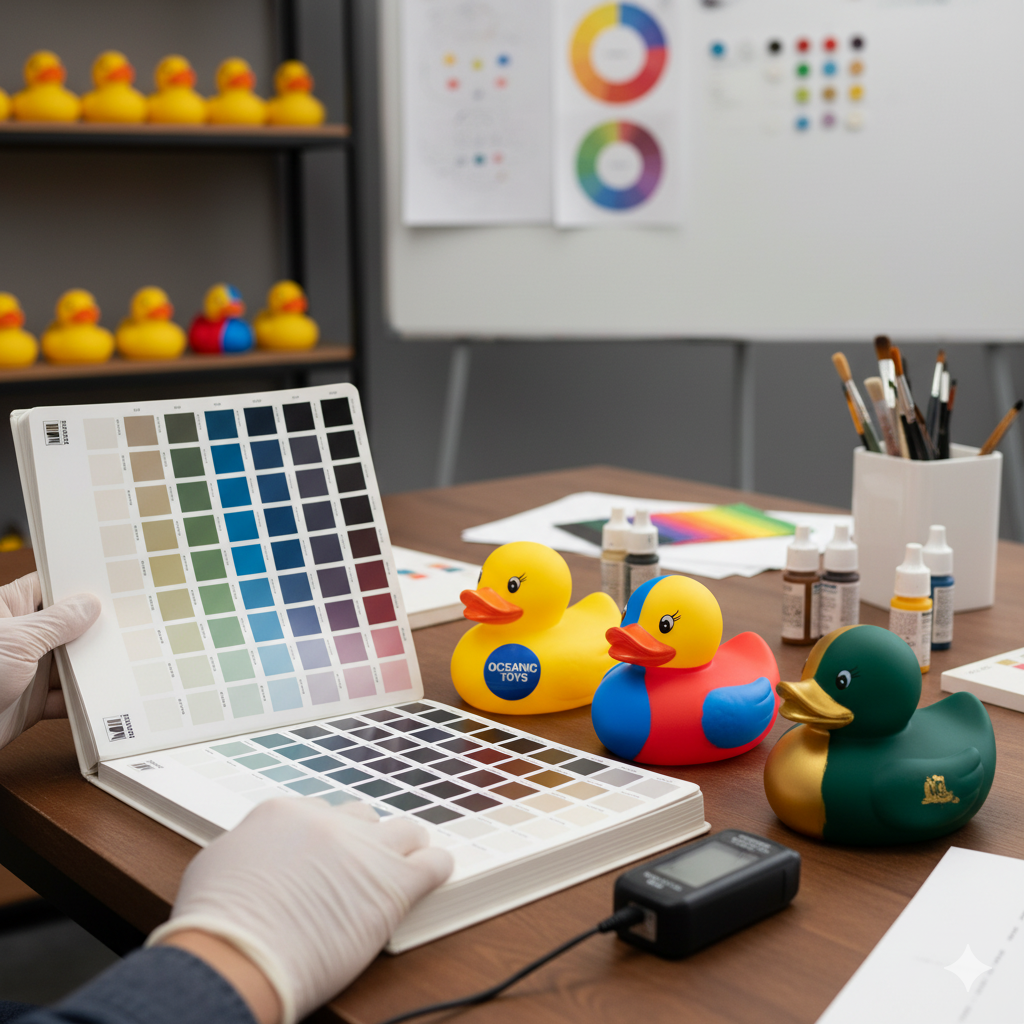
Most competitor guides ignore this entirely: a manufacturer’s website should openly display engineering drawings and mold photos. This is the single biggest trust signal. Without it, you are likely dealing with an agent. When evaluating a bulk rubber ducks for promotions supplier, ask for a photo of the mold with a ruler next to it. If they cannot produce that within 24 hours, move on. Our site includes a color-mismatch sample gallery specifically to set realistic expectations — because if a supplier offers “any color” but never mentions Pantone matching controls, your brand purple will arrive as magenta.
Material Samples & Certifications
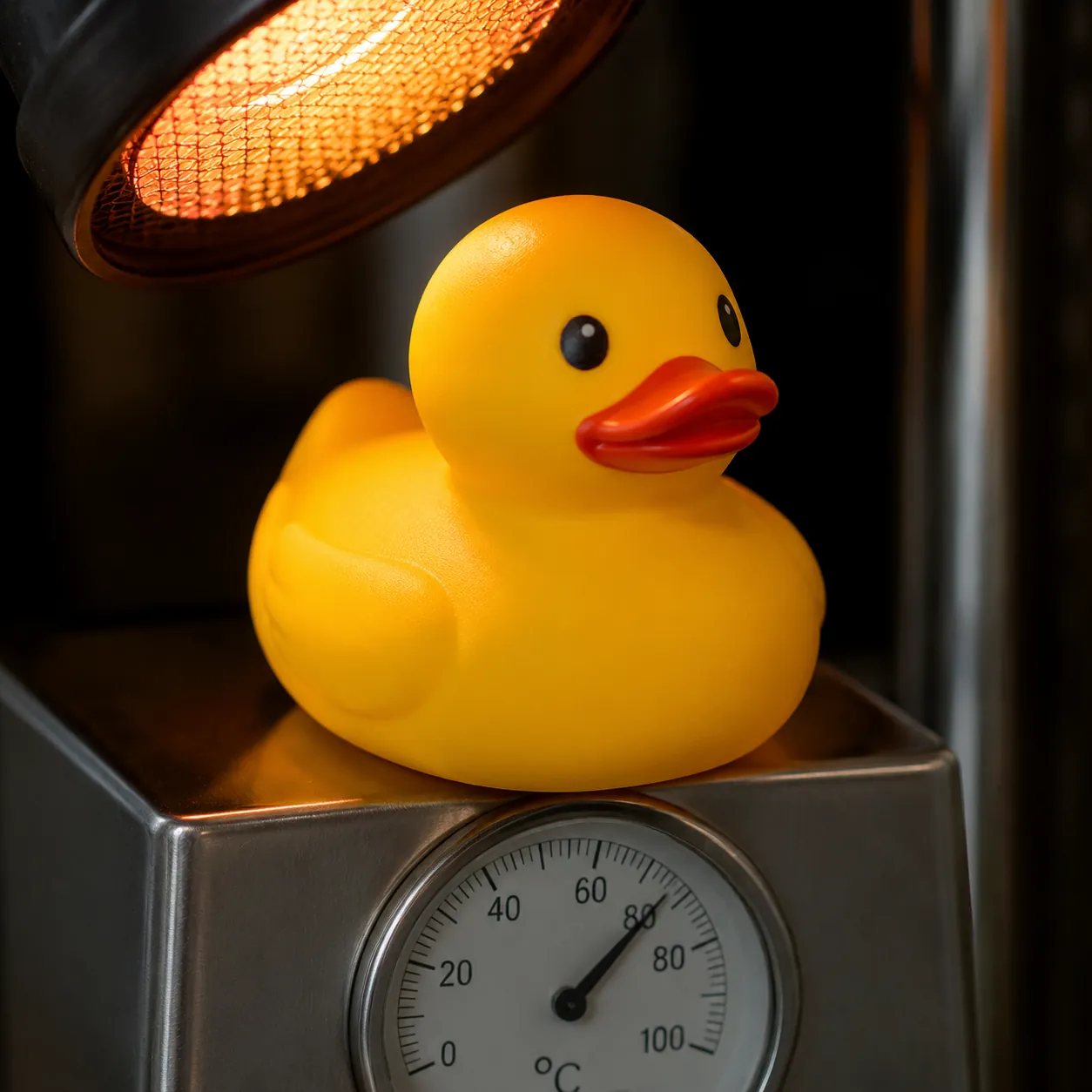
A factory that controls its own production line will have material sample cards and certificate images readily available on the site. For a rubber duck manufacturer MOQ 1000, the standard material spec includes BPA-free and phthalate-free PVC, with CE and ASTM compliance documentation. If the safety certs are buried behind a contact form or missing entirely, that is a red flag. You should be able to download or view the certificate directly from the product page.

Production Scale & Lead Time
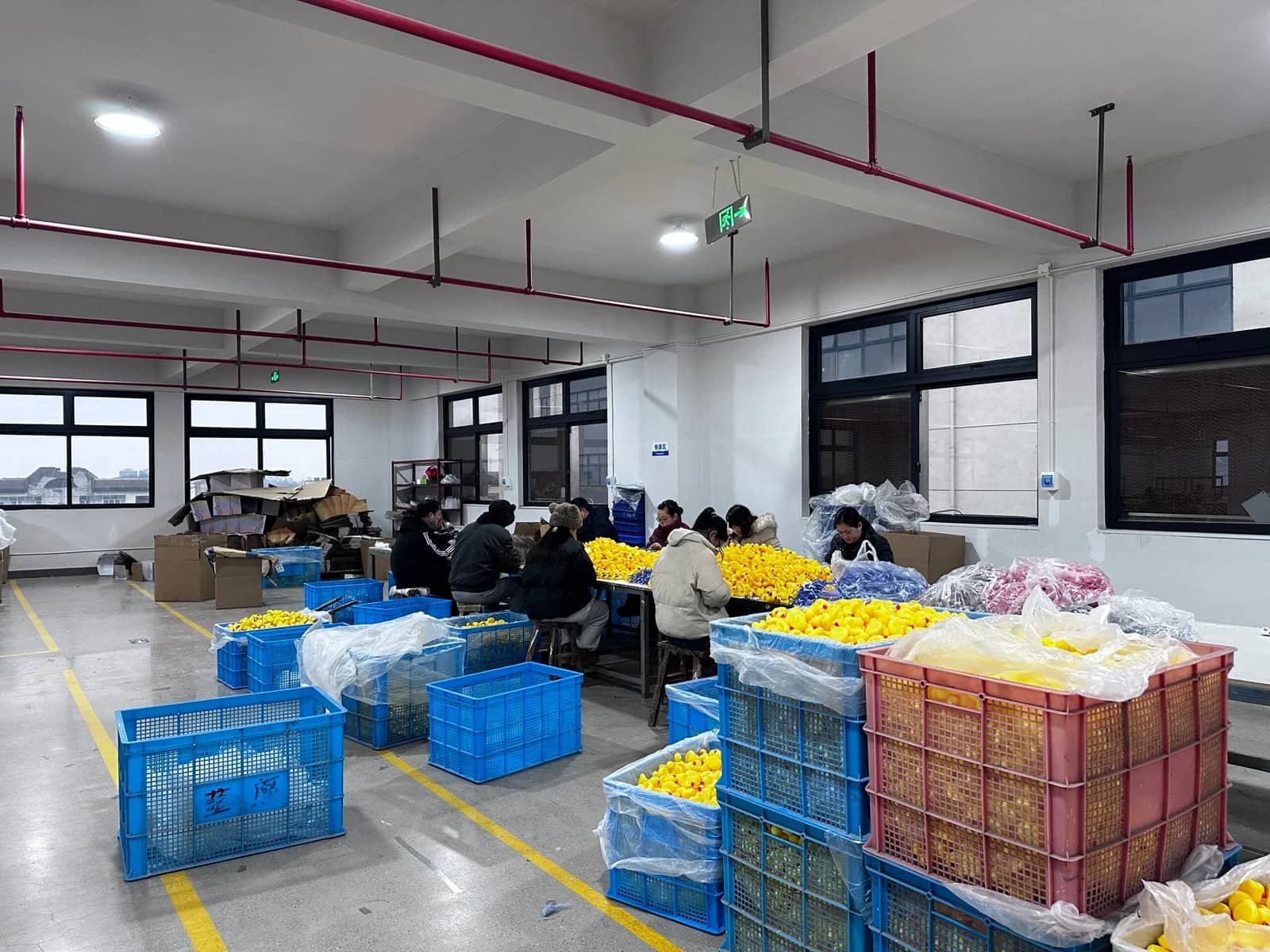
Typical production lead time for a custom mold run is 25–35 days from approval. A site that lists this openly — alongside carton weight specs for FCL vs LCL shipping — is run by people who understand logistics, not just sales. The catalog should include standard ducks starting at 2 inches for giveaways, custom shape ducks with a mold gallery, and large ducks up to 5 meters for events. Each product card should link to detailed specs, allowing a brand manager to visualize quality and estimate scale without picking up the phone.

Safety Certifications
If you cannot find a certification image on the site, assume the product is not certified.
For any custom rubber duck that will reach a child under 12, BPA-free and phthalate-free PVC is not a premium upgrade — it is a baseline legal requirement in most developed markets. The two global standards to look for are CPSIA (U.S. Consumer Product Safety Improvement Act) and EN71 (European Toy Safety Directive). A legitimate manufacturer will display their certificate images publicly, not bury them behind a contact form or mention them only in a sales pitch. When you are evaluating a rubber duck supplier site, scan for actual document scans — not just text claims — showing laboratory test results for lead content (threshold: 90 ppm under CPSIA), phthalate content (threshold: 0.1% by weight for eight restricted phthalates), and small parts testing (16 CFR 1501).
- CPSIA compliance: Mandatory for distribution in the U.S. Requires third-party lab testing by a CPSC-accredited lab. Without this, your shipment can be held at customs or seized entirely.
- EN71 compliance: Required for the EU market. Covers mechanical, physical, flammability, and chemical properties. A CE mark alone is not enough — verify the EN71 test report number.
- ASTM F963: The U.S. standard for toy safety. Often bundled with CPSIA testing. Look for both on the same certificate.
- Phthalate-free certification: Specifically for PVC toys. The test should cover DINP, DIDP, DnHP, DBP, BBP, DEHP, DIBP, and DPENP. A generic “phthalate-free” claim without a lab report is marketing, not evidence.
Here is the practical test: when you are on a rubber duck manufacturer website, can you immediately find the certs, or do you have to email to request them? If a BPA-free rubber duck manufacturer hides their safety documentation behind a password gate or a “contact us for details” button, treat that as a hard red flag. The reason is simple: third-party testing costs money and exposes production lapses. A factory that has clean test results has every incentive to put them front and center. A factory that does not display them is either not testing, testing but failing, or importing from an unverified subcontractor and hoping nobody asks.
One real scenario observed repeatedly: a brand marketing manager places a 5,000-unit order for a hospital gift shop promotion. The ducks arrive, but the receiving retailer demands a CPSIA certificate before accepting the shipment. The supplier cannot produce one. The entire lot sits in a warehouse while the brand scrambles for a rush re-test, costing two weeks and $3,000 in expedited lab fees. Meanwhile, the hospital promotion window closes. That is the cost of skipping thehow to verify rubber duck safety certificationsstep before ordering.
A note on what you are actually looking at when you find a cert image: the lab should be ISO 17025-accredited (look for the accreditation mark from ILAC, A2LA, or DAkkS). The test report date should be within the last 12 months — annual renewal is standard. The report should reference the specific model or product line you are ordering, not a generic “rubber duck series” with no photo or SKU match. If the duck is intended for use by children under 3 years old, verify that the report includes small parts cylinder testing (16 CFR 1501 / EN71-1 8.2). A duck that passes for a 5-year-old may still fail for a toddler, and the liability does not sit with the factory — it sits with the brand whose logo is on the product.
Transparent Pricing & MOQs
If a site hides its MOQ, you’re not talking to a factory.
Transparency on pricing and minimum order quantities is the single fastest way to separate a manufacturer from a middleman. Most supplier sites bury their MOQ in a “Contact Us” form or hide mold fees until you’re three emails deep. That’s a deliberate tactic to lock you into a conversation before you have a benchmark. A factory that controls its own production has no reason to hide these numbers.
Here is what honest disclosure looks like for a rubber duck manufacturer MOQ 1000 program:
- Custom Mold MOQ: 1,000 units. This is the standard threshold for opening a new aluminum mold. Below this, the tooling cost per unit becomes uneconomical for both sides.
- Standard Duck MOQ (No New Mold): 500 units. If you choose an existing duck shape from the catalog, the MOQ drops. Expect a slight per-unit price penalty for running a smaller batch—usually 10–15% higher than the 1,000-unit tier.
- Direct Mold Fee: $300–$800 depending on complexity (number of undercuts, texture detail, size). Amortized over 10,000 units, that fee becomes $0.03–$0.08 per duck—negligible in the total cost of goods.
- Printing Cost Per Duck: Pad printing runs $0.08–$0.15 per color per duck. Full-color transfer printing reaches $0.30+ but delivers photographic detail. If a site quotes a flat “printing included” price without breaking out color count, ask for the line-item.
When you see a site offering “any MOQ” or “no mold fee,” that usually means the cost is baked into a higher unit price—or you’re dealing with a trading company that aggregates orders from multiple factories. The difference shows up in the URL structure: a real manufacturer has directories like /custom-shape/ and /oem-vs-odm/, while a reseller site lists everything under a single /products/ page. Scan for that before you send an RFQ.
Real Case Study Evidence
Past client photos are the only proof that a factory can actually deliver on its promises.
Sourcing a custom rubber duck is a leap of faith if you can’t see what the manufacturer has already produced. A website that only shows generic product shots or renders is hiding something. The real test is whether they can show you finished projects with other brands’ logos on them. That requires the client’s permission, which a legitimate manufacturer will have. If you don’t see any branded duck images from past clients, you are likely looking at a trading company that has never touched a mold or a PVC injection machine.
When you evaluate a rubber duck manufacturer website, look for photos that show the actual production outcome, not just the design mockup. A direct from factory rubber ducks wholesale supplier will have a gallery of completed orders, including close-ups of the pad printing alignment and color accuracy. For example, a school mascot duck we produced required a precise Pantone 282 Blue match on a 3-inch duck body. The final photo in our case study library shows the color consistency across a run of 5,000 units, with no bleeding or misregistration on the logo. That kind of evidence validates what to look for in a rubber duck supplier site before you commit to a purchase order.
The absence of real case studies is a red flag. A rubber duck factory vs trading company distinction often comes down to this: a factory can show you the mold die-cutting process, the rotocasting line, and the finished product with a client’s branding. A trading company can only show you a catalog of what they think you want. Our site includes a color-mismatch sample gallery specifically to set realistic expectations about Pantone matching. If a supplier offers “any color” but never shows a side-by-side comparison of the requested Pantone versus the production result, expect your brand purple to arrive as magenta. That is not a risk worth taking for a campaign with a zero-defect mandate.
For a BPA-free rubber duck manufacturer, case study photos should also include the safety certification labels on the packaging. We always photograph the final carton with the CE and ASTM compliance marks visible, because that is what your compliance team will ask for before distribution. If the supplier’s case studies only show the duck floating in a bathtub and never the packaging or the certification sticker, you are missing half the proof. The same logic applies to bulk rubber ducks for promotions supplier verification: ask to see a photo of the palletized cartons with the shipping labels. That confirms the supplier can handle the logistics of a 10,000-unit order without damaging the stock.
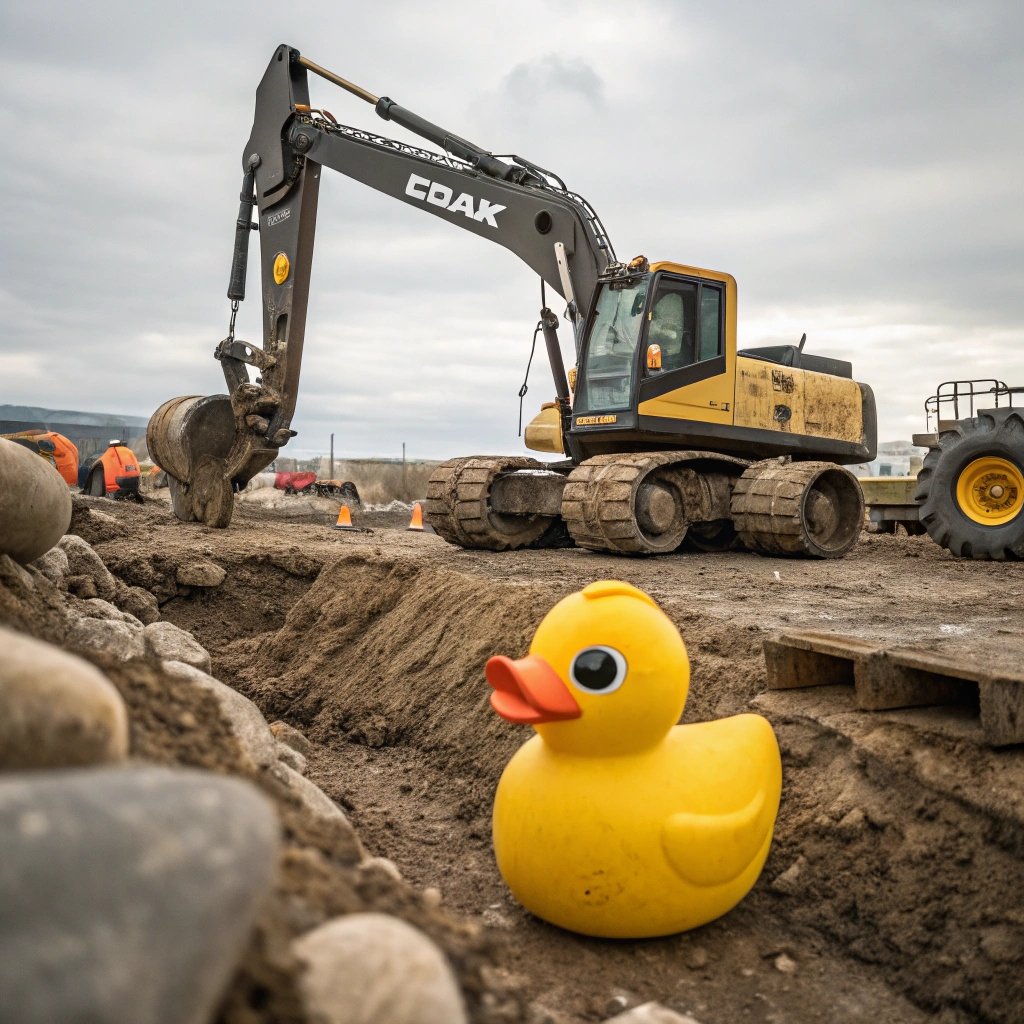
Finally, check whether the manufacturer’s case studies include dimensional context. Agiant rubber duck manufacturer for eventsshould show the duck next to a person or a vehicle to establish scale. A case study exists of a 5-meter duck deployed at a waterfront festival, photographed alongside a delivery truck. That image answers the question “Will this fit the event space?” better than any specification sheet. Without that visual evidence, you are guessing. And guessing with a six-figure event budget is not a strategy.

Packaging & Logistics Support
If you can’t find packaging specs on the site, expect your ducks to arrive crushed in a generic polybag.
This is where novice buyers lose the most money. You spend weeks perfecting the mold and nailing the Pantone color, only to have the final product arrive looking like it was shipped from a garage sale. The manufacturer’s website should tell you exactly how your order gets boxed before you even ask. If it doesn’t, you’re walking into a negotiation blind.
There are two distinct paths here, and the wrong choice for your distribution channel will eat your margin.
- Retail-Ready Packaging: This means branded display boxes, hang tags, barcodes, and polybags with your logo. It’s what you need if your ducks are going onto store shelves or into hotel gift bags. The cost adder is roughly $0.12–$0.25 per unit depending on print complexity and box structure. A legitimate manufacturer will show you examples of their retail-ready box die-lines on the site.
- Bulk Packaging: This is standard export cartons (typically 50–100 ducks per carton depending on size) with no branding. The carton weight for a standard 2″ duck is about 8–10 kg per carton, which directly affects your FCL vs. LCL shipping math. If the site doesn’t list carton dimensions and weight, you can’t accurately calculate container utilization.
The second check is harder but more critical for anyone shipping to a warehouse or 3PL: Does the manufacturer provide an ASN (Advanced Shipping Notice)? Most trading companies don’t even know what an ASN is. A factory that manages its own logistics will send you an EDI-compatible ASN or at minimum a detailed packing list with GS1-128 barcode labels on every carton. Without this, your warehouse receiving team will spend hours manually counting cartons, and you’ll pay for that labor. Our standard practice is to generate a digital packing manifest with carton-level serial numbers for every order over 5000 units, which cuts receiving time by roughly 60%.
If the website has a dedicated /packaging or /logistics page showing filled containers, pallet layouts, and label samples, that’s a strong signal they handle this in-house. If the only mention of shipping is a generic “we ship worldwide” button, you are likely dealing with an agent who will subcontract the packing to a third-party warehouse—adding 7–14 days of handling time and zero quality control on the box condition.
Conclusion
A manufacturer’s website that displays mold photos, safety certifications, and transparent MOQ data signals in-house production control. That transparency helps you skip trading companies and avoid color mismatches or late deliveries. It protects your brand budget and campaign timeline.
Frequently Asked Questions
How much does it cost to manufacture a rubber duck?
Pricing depends on volume, customization, and whether you source direct from a manufacturer. For custom designs with a 1,000-unit MOQ, expect $1–$5 per duck, but per-unit cost drops significantly. Submit your design for a precise quote based on your specs and quantity.
Are rubber ducks worth anything?
Yes, as a promotional tool, custom rubber ducks deliver strong brand recall and engagement at a low cost per impression. Their value is measured in campaign ROI, not resale, especially. Track social shares and audience feedback to measure your duck campaign’s worth.
What are some popular rubber duck brands?
PromotionChoice, CelebriDucks, and GarrettSpecialties are well‑known for promotional and custom rubber ducks. Each offers different MOQ levels and certification standards, so compare them based on your campaign needs. Check each brand’s certifications and sample policy before ordering.
Why are people buying rubber ducks?
Brand managers and event planners buy custom rubber ducks for low‑cost, high‑engagement giveaways at trade shows, hotel lobbies, and fundraising events. Their novel design and collectibility boost brand recall and social. Align your purchase with a specific campaign goal to maximize impact.
How much do custom molds cost?
A custom rubber duck mold typically ranges from $500 to $3,000, depending on size, detail, and number of cavities. This one‑time tooling fee is required before production and covers. Request a mold quotation with your design file to get an exact figure.