Skip to content
Every year, exhibitors spend an average of $5.80 per lead on trade show swag — and most of it ends up in the hotel trash can within 48 hours. Branded pens get left behind, stress balls lose their shape, and cheap stickers peel off within a week. If your booth giveaway does not survive the walk back to the attendee’s car, the cost-per-impression math stops working.
Rubber ducks have quietly become one of the highest-retention items on the trade show floor. They are light, durable, and visually distinctive enough to sit on a desk for months without looking out of place. For B2B brands that exhibit at two or more shows per year, switching from disposable swag to a custom rubber duck can cut cost-per-impression in half while lifting post-show recall by a measurable margin.

The Problem with Traditional Trade Show Swag
Industry data from the Promotional Products Association International shows that the average attendee receives between 3 and 7 promotional items at a single event. When every booth hands out the same pen or tote bag, the marginal value of each additional item drops to near zero. Attendees sort through their haul at the end of the day and keep only what stands out.
Traditional swag fails on three fronts. First, it blends in — a white-imprinted pen looks the same regardless of which company handed it out. Second, it breaks quickly — cheap materials do not survive the return flight. Third, it carries no emotional weight — nobody forms a brand attachment to a ballpoint pen.
Why Rubber Ducks Break the Pattern
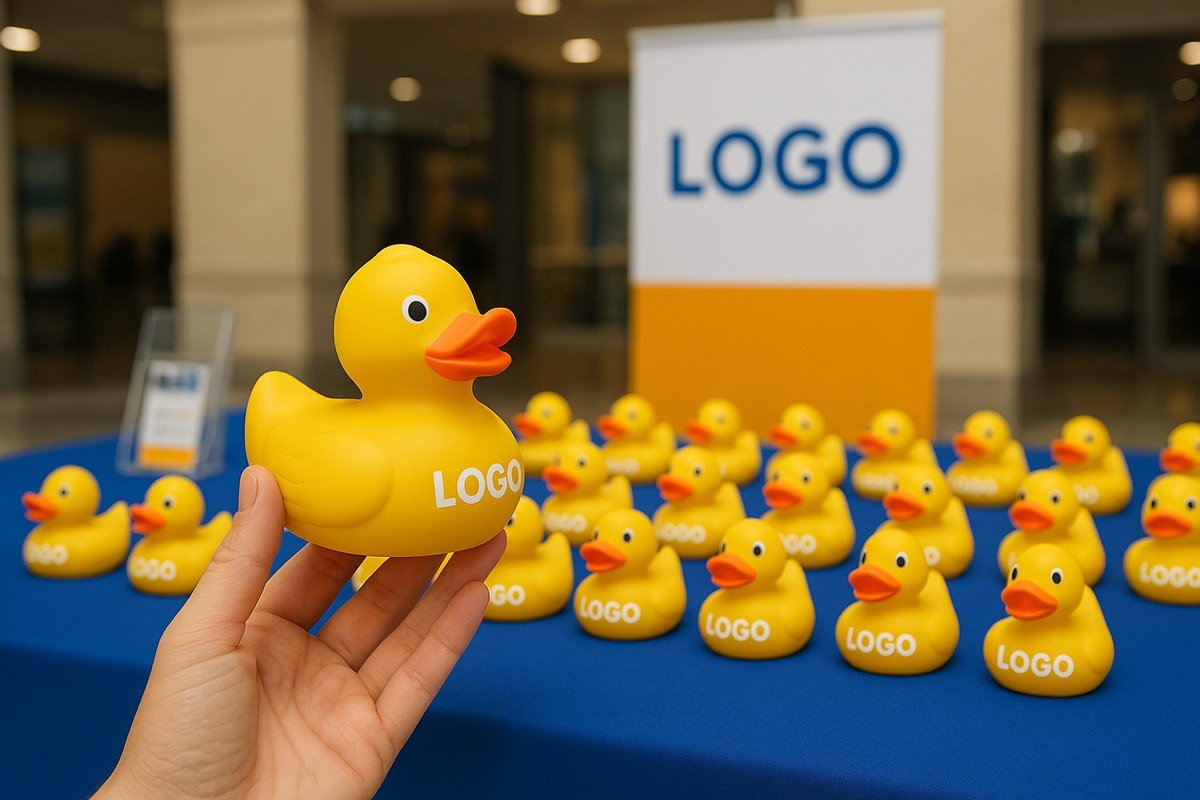
A custom rubber duck is unexpected in a B2B context, and that surprise is the entire point. When a software company, a logistics provider, or a financial services firm hands a prospect a bright yellow duck with a logo on its chest, the item gets remembered. Studies on promotional product recall show that unusual-shaped items generate 30–50 % higher brand recall than conventional shapes.
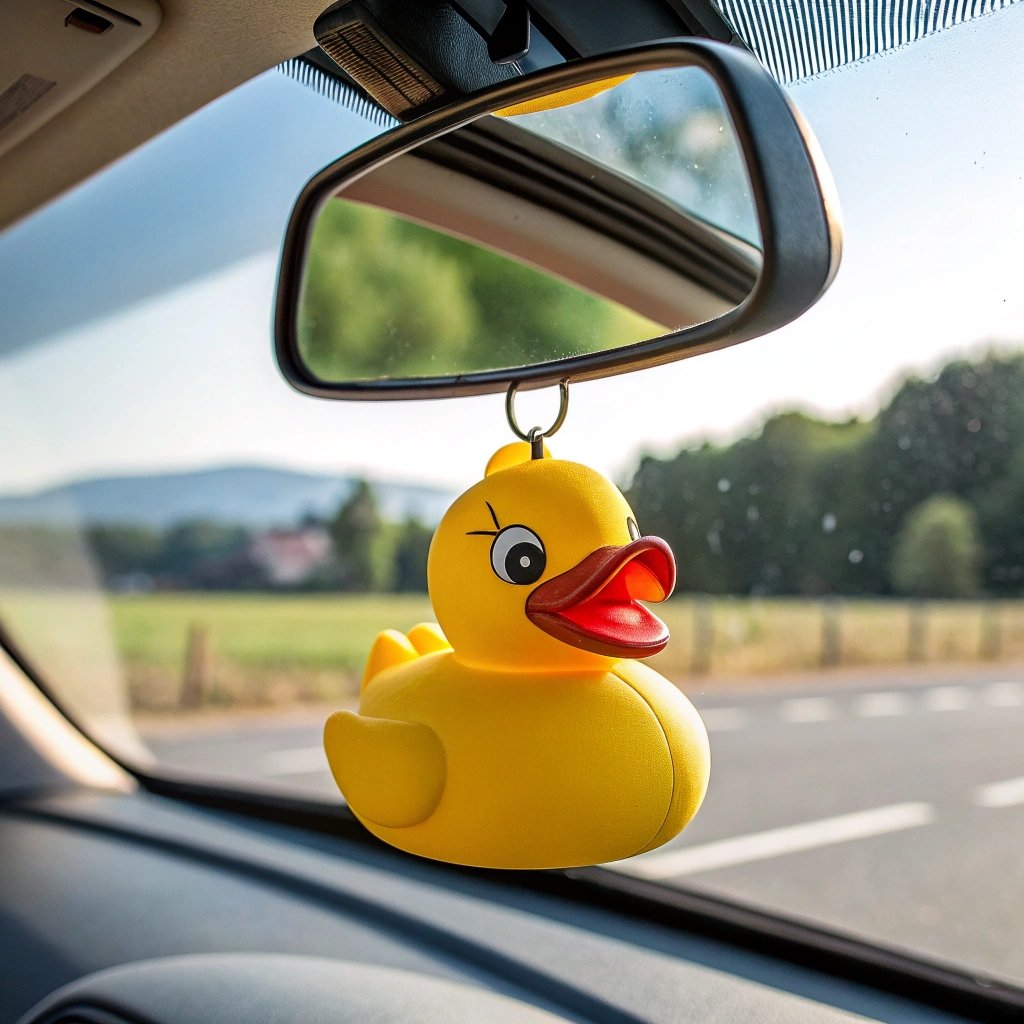
Rubber ducks also pass the desk test. A recipient places them on a monitor shelf, a bookshelf, or the dashboard of a car. Each sighting is a free impression. Over a 12-month period, a single duck placed on a desk can generate 1,200+ visual impressions — far more than a pen that gets used twice and discarded.
Cost-Per-Impression Breakdown
At order quantities above 5,000 units, a custom-molded rubber duck with a single-color logo lands at roughly $0.35–$0.60 per unit, including packaging. Compare that to a mid-range branded power bank at $4–$8 or a custom tote bag at $2–$3. On a pure cost basis, the duck wins. On a cost-per-impression basis, the gap widens further because the duck stays visible far longer.
For a 5,000-attendee show, 5,000 ducks at $0.45 each equals $2,250 total. If 60 % of recipients keep the duck on a desk for a year, that is 3,000 units × 1,200 impressions = 3.6 million impressions for $2,250. The cost-per-thousand-impressions (CPM) works out to about $0.63 — a figure that rivals digital display ads while delivering a physical touchpoint.
Choosing the Right Duck for Your Booth
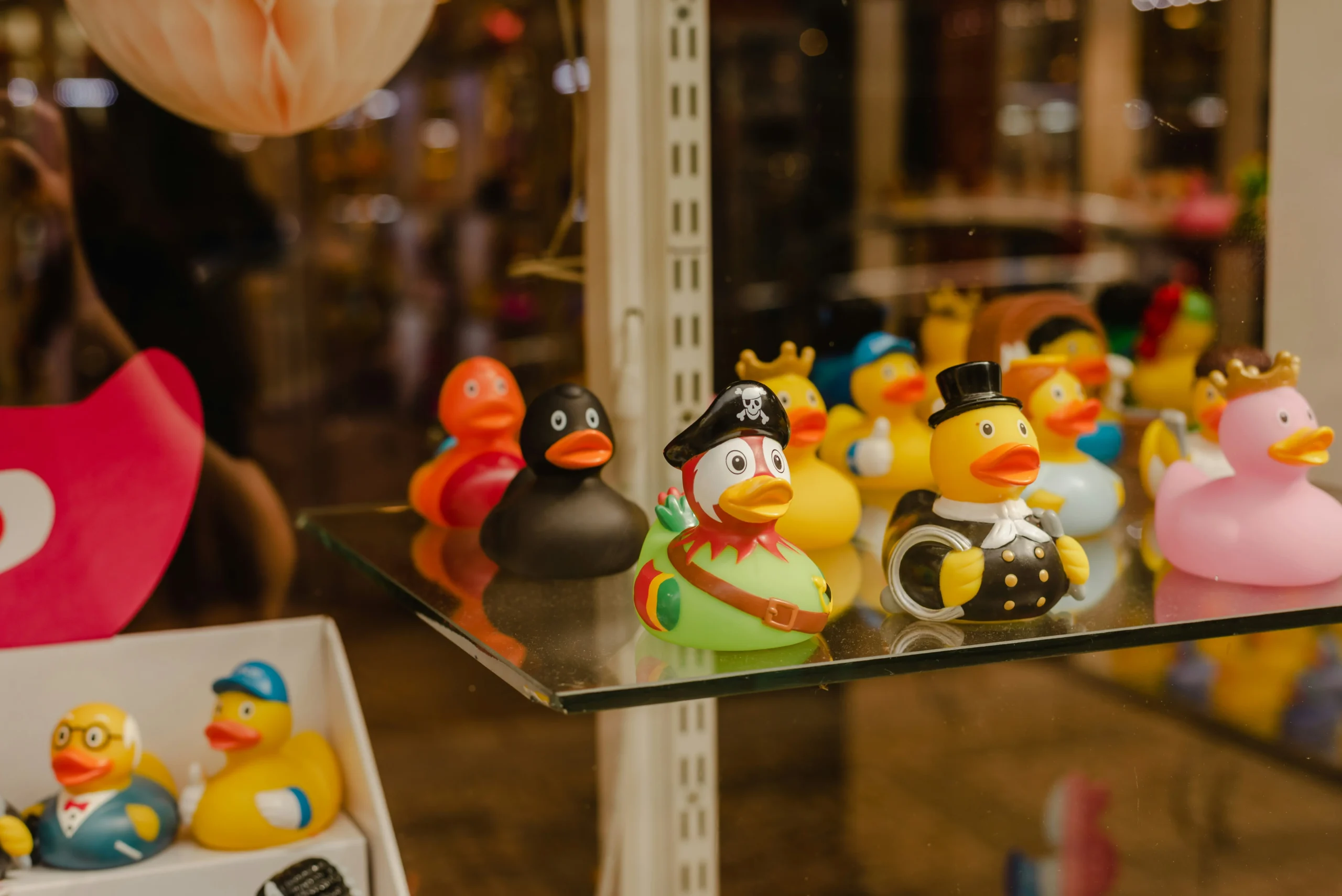
The duck you pick should reflect your brand personality. A fintech company might choose a duck in its corporate blue with a minimalist logo. A children’s education brand might go for a multi-color duck with a playful hat. The custom rubber duck collection at LZENGO covers everything from classic yellow to fully custom Pantone-matched designs, with MOQs starting at 1,000 units for standard shapes and 5,000 for custom molds.
Logistics: Shipping to the Show Floor
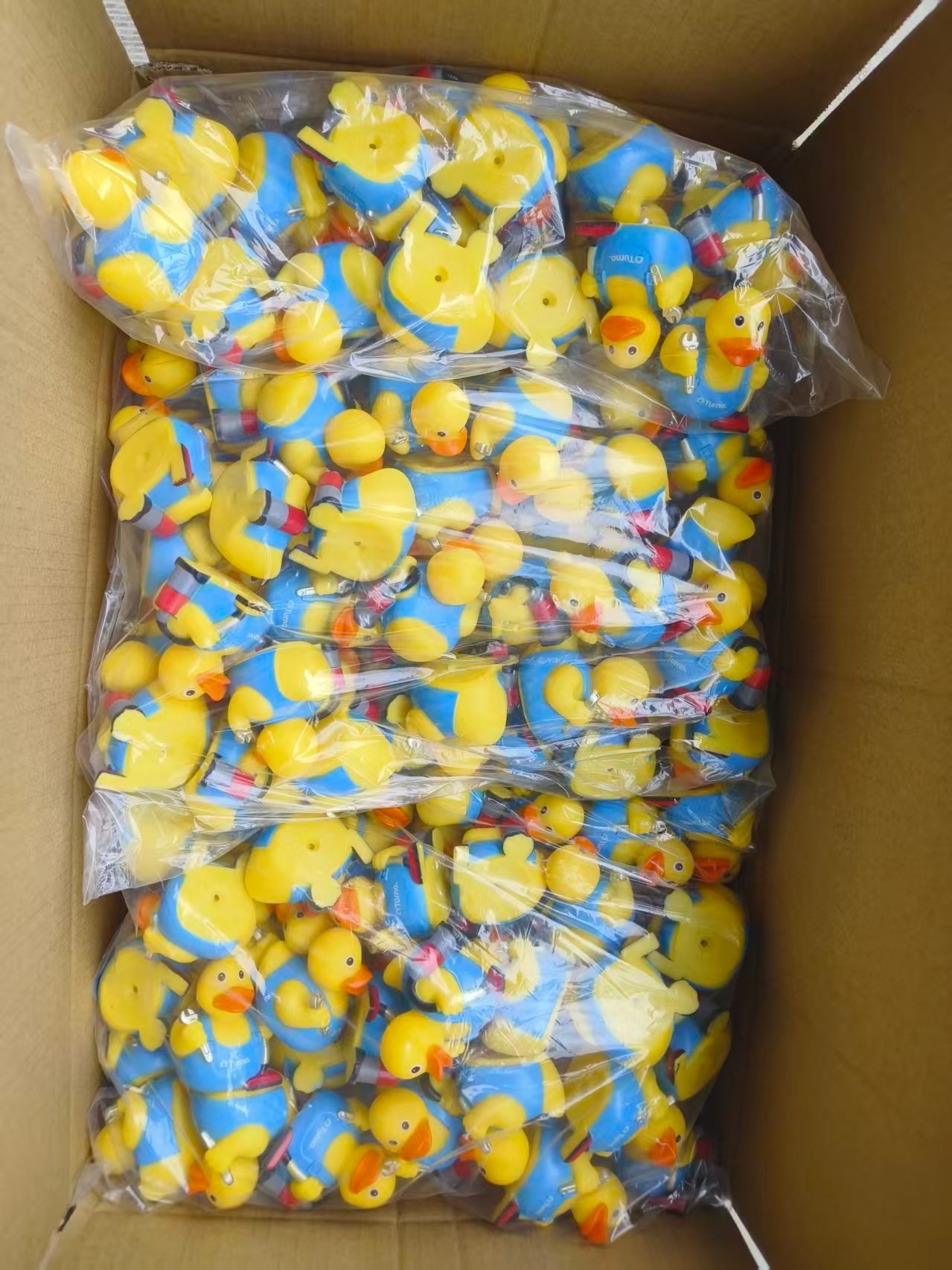
Timing matters. Ducks should arrive at the convention center at least 48 hours before doors open. Most exhibitors ship via the show’s official decorator or use a freight forwarder familiar with venue loading docks. Rubber ducks are lightweight and nest inside each other, so a carton of 500 ducks fits in a box roughly the size of a microwave — far easier to handle than 500 branded tote bags.
Maximizing Engagement at the Booth
Handing a duck to every walk-in is the simplest approach, but there are higher-engagement options. Some exhibitors run a duck-themed scavenger hunt: attendees find a hidden duck QR code on the show floor, scan it at the booth, and receive a premium duck. Others use the duck as a conversation opener — “Tell us your biggest pain point and the duck is yours.” Either way, the duck becomes a reason to stop, talk, and remember.
Post-Show Follow-Up with a Duck Hook
The duck does not stop working when the show ends. In follow-up emails, reference the duck: “Hope your new desk companion is settling in.” This small touch lifts email open rates and response rates because the physical item creates a shared reference point between your sales rep and the prospect.

Summary
Trade show swag only works if people keep it. Rubber ducks survive the trip home, sit in visible locations, and trigger brand recall every time someone glances at them. At $0.35–$0.60 per unit at scale, they deliver a cost-per-impression that few other promotional items can match. For B2B brands serious about trade show ROI, a custom rubber duck is no longer a novelty — it is a calculated marketing investment.
Related reading: Social Media Duck Drops: How Brands Run Flash Giveaways.
For openings specifically, the drop formats and quantity math are laid out in our guide to ribbon-cutting duck drop formats.
For organizer teams buying at event scale, the tier, MOQ, and packing decisions are covered in our conference-scale duck buying guide.
Pop-up operators running short-window campaigns can copy the quantity math and drop mechanics from our guide to pop-up shop rubber duck giveaway guide.