Skip to content

Why Rubber Ducks Sell in Campus Stores
College rubber duck merchandise has quietly become a staple of campus retail. Walk the shelves of any established bookstore chain and you will find school-branded ducks from Bates College to Texas A&M sitting next to keychains and pennants. The product earns its shelf space because it is a low-risk impulse buy with outsized emotional pull: alumni buy them for dorm rooms, parents buy them for graduates, and students buy them as joke gifts that become permanent desk fixtures.
For a campus store buyer, the category is attractive for a simpler reason. A custom duck costs under $0.85 per unit at the 1,000-piece minimum order, retails at a multiple of that, and does not expire, go stale, or need restocking decisions every season. The margin structure is forgiving enough that even a small college store can carry a school-mascot duck line without betting the seasonal budget.
The demand is not confined to undergraduate life. Alumni associations use ducks in reunion gift bags, homecoming giveaways, and fundraising thank-you boxes, and the same factory order can serve both the store and the association office. That dual channel is what makes college rubber duck merchandise worth planning properly rather than picking up wherever.
Licensing Basics for Mascot-Themed Ducks
The first question is not which duck design to order. It is whether you have the right to use the marks on it. University names, logos, mascots, and fight songs are trademarked property, and any product carrying them must come from a licensed manufacturer or through the university’s licensing program.
Brand licensing, as explained in the U.S. Patent and Trademark Office’s trademark basics guide, is the practice of renting a brand’s intellectual property for use in products, with quality control and royalty terms attached. Campus stores and alumni offices usually sit on one of two paths: they order through the university’s licensed vendor list, or they commission original mascot-style ducks that evoke the school without using its protected marks. The second path needs careful design review, because a duck wearing a jersey in school colors can still be close enough to a mascot to create a legal headache.
Practical rule for buyers: confirm your licensing status in writing before you invest in a custom mold. A mold costs real money, 20 to 25 days of tooling time for a slush vinyl shape, and if the school’s trademark office rejects the design, that cost is sunk. Licensed programs typically require the manufacturer to be approved or the artwork to be submitted for approval, so build a design-approval step into your timeline rather than discovering the issue after production.
Design Options: Logo Ducks to Full Mascot Shapes
Three design levels map to three retail price points. The entry level is a standard duck with the school logo pad-printed or UV-printed on the chest. Logo printing handles one or two colors cleanly, and Pantone color matching makes the print land on your exact school color rather than a close guess.
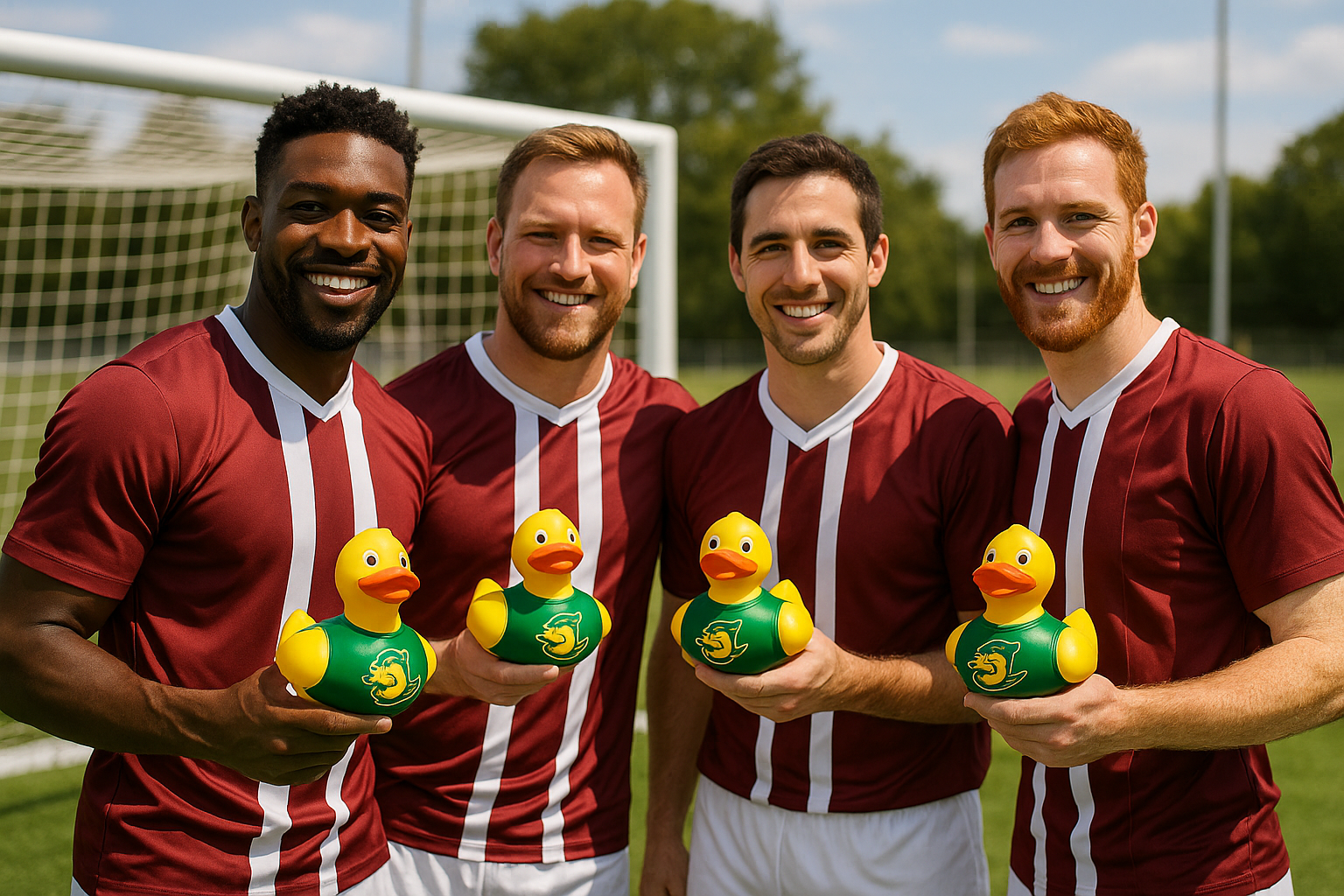
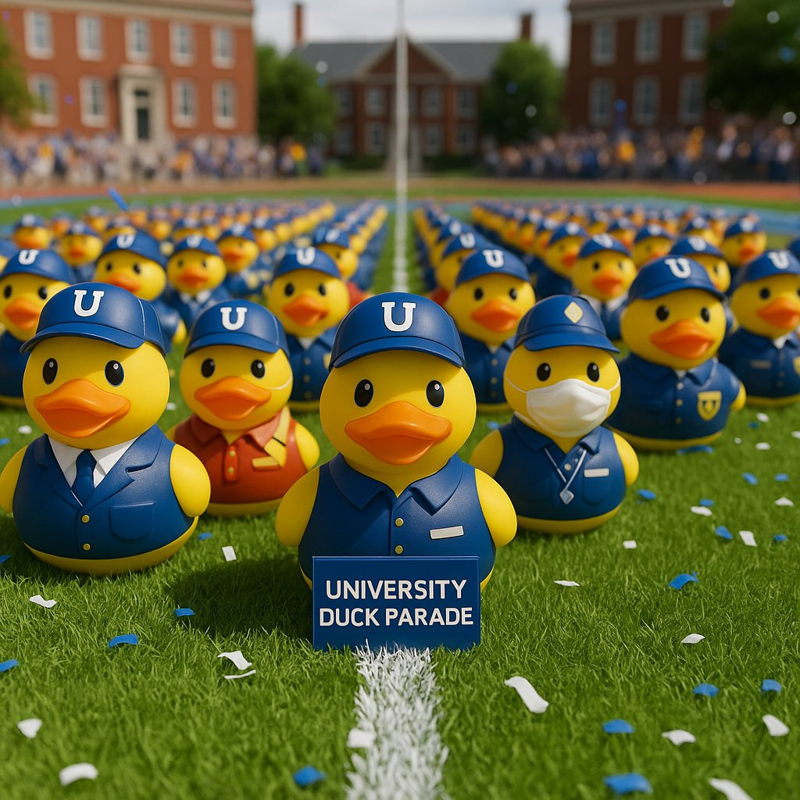
The mid level adds themed dressing: a graduation cap, a football helmet, a jersey with the school’s colors and number. These accessories are either printed or molded depending on the detail, and they are what make the duck read as merchandise rather than a generic bath toy. LZENGO’s team duck range includes jersey details and color-matched options built exactly for this.
The top level is a full custom mascot shape: a duck modeled on the school’s mascot, with a custom mold. This is the flagship SKU and the one that needs the licensing check first. The school mascot ducks product line at LZENGO covers logo, colors, jersey details, and full shape customization, with mockups in 12 hours and physical samples in 7 days, so the design loop is fast enough to fit a semester’s merchandising calendar.

Order Sizing and Bulk Pricing for Store Stock
The 1,000-piece MOQ shapes every ordering decision. A small college store that wants 300 ducks cannot order 300; it either commits to a 1,000-piece run with a longer sell-through window, or it shares a production slot with the alumni office, the bookstore, and the student union so each buyer takes a slice of one minimum order.
Within one 1,000-piece order you can carry multiple printed designs without extra tooling, since printing changes do not require new molds. That means one run can cover a graduation duck, a homecoming duck, and a plain logo duck, as long as they share a base body from the wholesale rubber duck product range. Custom shapes are the exception: each new mascot mold is a separate tooling investment with its own 20 to 25 day slush vinyl timeline, or 40 to 45 days if rigid parts such as a squeaker mechanism are involved.
Capacity is not a constraint at campus quantities. The factory runs more than 5 million ducks per month, so a 1,000 to 5,000 piece campus order sits in standard production. Pricing at the 1,000-piece level runs about $0.80 to $0.85 per unit for a printed duck, with the one-time mold fee for new shapes broken out separately, and volume steps above 5,000 pieces improve the per-unit number further.
Retail Pricing and Margin Math for Resale
The margin story is what keeps the category alive in campus retail. At a landed cost near $1.00 to $1.30 per unit once packaging and freight are included, a typical retail price between $6.99 and $9.99 for a themed duck leaves a store margin in the 75% to 85% range before markdowns. That is generous compared with most apparel SKUs, and it is why ducks survive on shelves where other novelties get culled.
Two pricing decisions matter more than the absolute retail price. First, keep the entry duck cheap enough to be an add-on at checkout. A $6.99 logo duck sells as an impulse item; a $14.99 deluxe mascot duck sells as a gift. Second, plan the markdown lane: themed ducks are seasonal, and the leftover graduation stock from May should be sellable at a small discount in August without eating the margin of the whole line. A 1,000-piece order at $0.85 with a 70% sell-through at full price and 30% at 25% off still clears a healthy gross profit.
School fundraisers run a different math: the custom bulk ducks for school programs guide shows how the same sub-$0.85 unit price supports fundraising price points, so a student group can buy at wholesale and sell at retail to fund activities while the store keeps its own margin structure separate.
Packaging and Display for Fan Shops
Retail-ready packaging is a separate decision from the duck itself. Polybags keep cost down and work for bins and dump displays. Retail boxes give each duck a front-facing card that carries the logo, the school colors, and a barcode, which is what most campus stores want for shelf fixtures. Gift boxes belong on the premium mascot SKUs and on the alumni gift-bag channel, where the unboxing is part of the product.
LZENGO quotes polybag, retail box, and gift box options as part of the order, so the packaging is priced against the same MOQ instead of being sourced as an afterthought. If the store uses retail boxes, confirm the barcode and product-identification requirements with your point-of-sale setup before production, because reprinting packaging after the fact adds weeks to the timeline. A display unit or shelf tray is worth requesting at the quote stage too; stores that can set up a duck fixture in under a minute reorder more often.
Quality and Compliance for Retail Merchandise
Retail merchandise raises the compliance bar above giveaway-grade products. The duck will sit on a shelf, be handled by students, and often end up with children, so the factory’s certification set matters. LZENGO’s production is certified to REACH and CCC safety standards, and the factory holds BSCI and GRS certification with CPSIA testing done through Intertek for the U.S. market.
Ask for the test reports, not just the certificate names, and file them with your compliance paperwork. Retail chains and licensing programs both audit this on reorder, and a store that cannot produce a phthalate test report when asked will lose the SKU slot even if the duck sells. If the alumni association ships ducks as gifts across state lines, the same reports cover you there.
Seasonal Planning: Graduation, Homecoming, and Alumni Events
Campus merchandise runs on four selling peaks: graduation in spring, orientation in late summer, homecoming in fall, and the holiday gifting window in December. Each peak has a production deadline about six to ten weeks before the event when any custom shape is involved, because tooling alone takes 20 to 25 days before bulk production starts.
The practical calendar: order logo-only ducks for orientation and homecoming eight weeks out; order graduation ducks with themed caps in January or February; and place the mascot-shape order at the start of the academic year so it is ready for the following spring’s peak. Alumni associations should coordinate with the store’s order so both channels ride the same MOQ. The bulk duck ordering patterns used in education campaigns follow the same lead-time logic and show how one production slot serves several audiences.
Frequently Asked Questions
Can we sell rubber ducks with our college mascot on them?
Only through the university’s licensing program or licensed vendor list. Mascot and logo marks are trademarked, so confirm approval in writing before ordering a custom mold. Original mascot-style designs that avoid protected marks are the alternative path.
What is the minimum order for college rubber duck merchandise?
The minimum is 1,000 pieces per design at LZENGO. One order can carry several printed designs, so the bookstore, alumni office, and student groups can share a production slot.
How much does a campus-store duck cost?
About $0.80 to $0.85 per unit at the 1,000-piece MOQ for a printed duck, with a one-time mold fee for new mascot shapes. Packaging adds roughly $0.10 to $0.40 per unit depending on the box style.
How long does a mascot duck order take?
Mockups arrive within 12 hours and samples within 7 days. A new slush vinyl mascot mold takes 20 to 25 days of tooling, so plan six to ten weeks for a full custom-shape order.
Are rubber ducks safe for retail sale?
Yes, with the right paperwork. LZENGO production is REACH and CCC certified, holds BSCI and GRS, and tests to CPSIA through Intertek. Request the test reports and keep them on file for retailer audits.