Skip to content

Every spring, PTA boards and school administrators face the same question: what do you give forty teachers who already own enough mugs? Teacher appreciation campaigns need something small enough to fit a budget line, safe enough to sit on a classroom desk, and memorable enough to justify the whole exercise. Bulk custom rubber ducks have become a standard answer, and the reason is not nostalgia. A duck carries school colors, a mascot, or a thank-you message, costs under a dollar at volume, and stays visible in a classroom long after the gift cards are spent.
This guide walks through what a teacher appreciation rubber duck order actually involves: classroom safety requirements, design directions that work, real per-unit costs, sensible order sizes, and a timeline that protects your May date. It is written for the people who run these campaigns, not for the factory sales desk.

Why Rubber Ducks Fit Teacher Appreciation Campaigns
Teacher appreciation sits at the intersection of a small budget and a big audience. A district with 200 teachers cannot spend $50 per person and stay within the PTA line item. A custom duck at roughly $0.85 per unit at the 1,000-piece minimum lets a committee cover the staff, the aides, and a few substitutes for under $850, leaving room for the actual appreciation event. That arithmetic is why schools keep coming back to the category.
The keep-rate argument matters just as much as the price. Notebooks get used up, water bottles get lost, and gift cards vanish into wallets. A duck with the school mascot printed on it sits on a desk or a shelf for years. Every visitor who asks about it becomes a small advertisement for the school community. For a campaign whose entire purpose is recognition, an object that stays visible is worth more than one that gets consumed.
Rubber ducks also carry a built-in emotional shortcut. Teachers connect the object to the reason it was given, not to the price paid. The same logic that made ducks a fixture of corporate onboarding boxes and hospital appreciation programs applies to the classroom, only with a lower budget threshold.
The Safety Baseline for Classroom Ducks
Here is the part that separates a school order from a generic giveaway purchase. The U.S. Consumer Product Safety Commission treats a children’s product differently from a novelty item, and a duck handed to a child in a classroom is closer to the first category than the second. The U.S. small parts regulation (16 CFR 1501) sets the cylinder test that keeps toy parts out of a young child’s airway, and CPSIA adds third-party testing and certification requirements for products intended for children under 12.
The practical translation: order ducks built and documented as children’s products, not retail novelty packs. Retail packs labeled “teacher themed” on Amazon or Oriental Trading typically cost more per unit, around $1.25, while carrying no CPSIA or ASTM F963 paperwork. A school that hands one to a five-year-old assumes the liability that the pack avoided. A PTA coordinator who ordered 3,000 novelty ducks for a school carnival and received a batch with a chemical odor and bleeding colors learned that lesson at the cost of the whole $4,000 budget.
LZENGO treats every school order as a children’s product: phthalate-free PVC, documented compliance, and quality tolerance that holds across the entire batch. The certification stack covers BSCI, GRS, REACH, and CPSIA, with testing routed through Intertek. When you brief a factory, ask for the certificate numbers and the test lab, and ask which standard applies to the age group you are serving. If the answer is vague, the sample is the only proof you will ever get.
Design Ideas Schools Actually Use
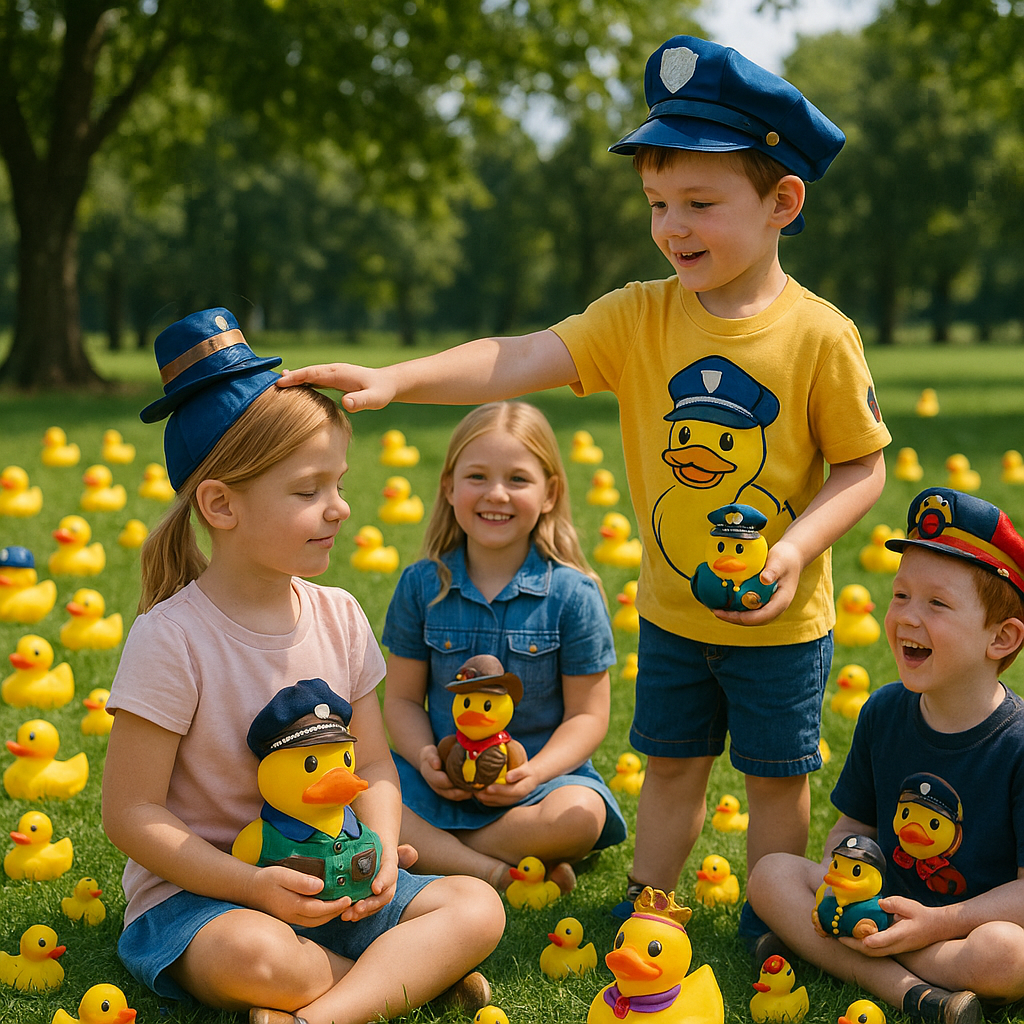
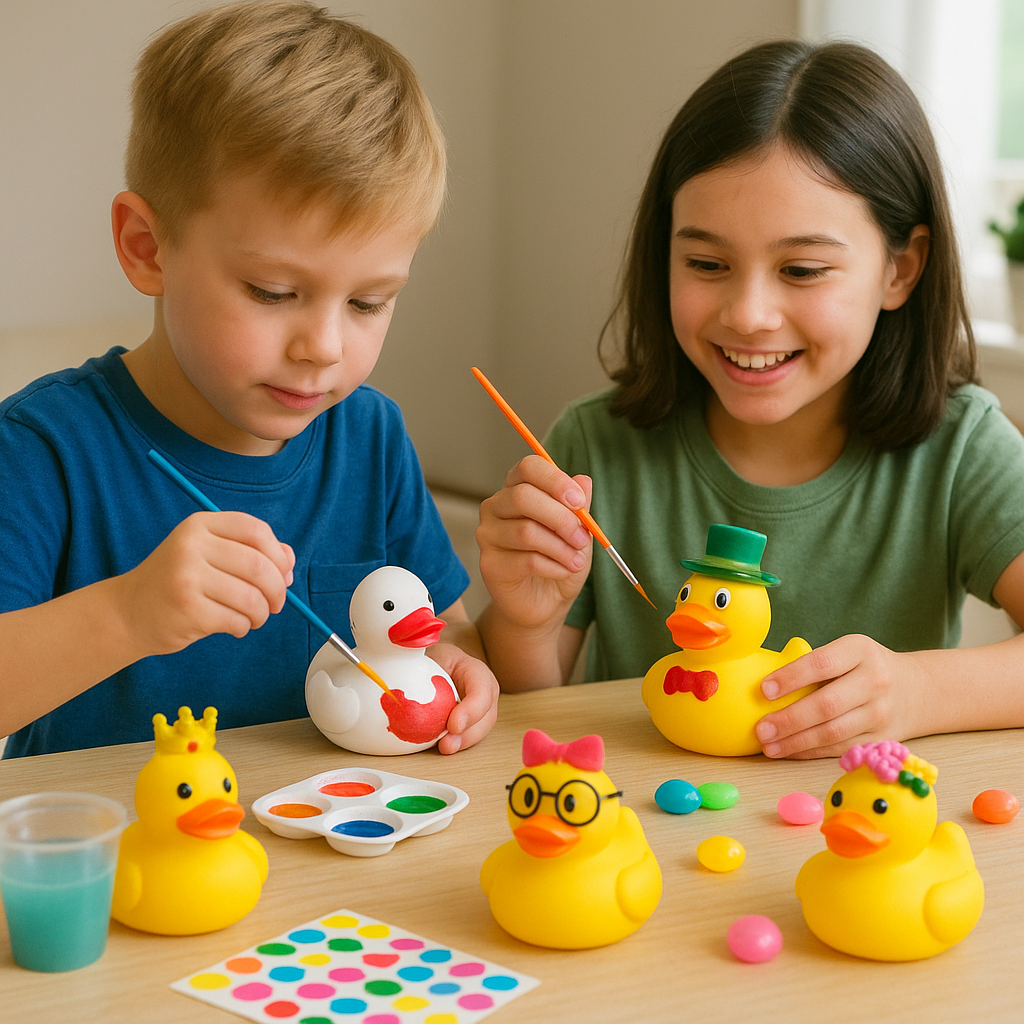
The fastest design path is a stock or semi-custom duck with a teacher theme: a duck in glasses with a book, a mortarboard for graduation season, or a tiny apple accessory. These molds already exist, which keeps the one-time tooling cost off the invoice and shortens the timeline. The teacher duck with glasses and bow tie, for instance, needs no new mold, only your printing.
School-specific designs beat generic ones when the campaign has a mascot. A panther, an eagle, or a bulldog mascot printed on the duck’s chest, paired with school colors matched to Pantone codes, turns the gift from a cute object into a school artifact. Pad printing handles single-color and spot-color logos cleanly on PVC. UV printing adds full-color detail when the artwork has gradients or photographic elements.
For the small number of schools that want a fully custom shape, factories like LZENGO’s custom rubber duck program offer mold development with 3D modeling before tooling. That route adds roughly two to four weeks of front-end time, so it belongs in a district-wide campaign with a long runway, not a last-minute staff gift.

What a Bulk Order Costs
Unit price is the first number every committee asks for, and the honest answer depends on volume. A bulk custom order of 1,000 ducks runs under $0.85 per unit including a printed logo. That price includes the printing setup, color matching, standard packaging, and the inspection pass, which is what the 1,000-piece minimum actually buys. By comparison, retail novelty packs run closer to $1.25 per unit with no branding and no school-grade safety file.
The cost curve keeps dropping above the minimum. The rubber duck price tier breakdown shows how unit cost compresses from 1,000 to 100,000 pieces: mold setup amortizes across more units, the production line runs at steady state, and material purchasing power improves. A district that orders 5,000 ducks for multiple schools, or a gift company that runs teacher appreciation programs for several clients, lands meaningfully below the entry price.
One caution on budget math: the unit price does not include freight, customs, or any retail packaging upgrade. A polybag is standard. A retail box or gift box adds cost per unit but changes how the gift lands, which matters for a program that wants the duck to feel like a present rather than a handout.
Sizing the Order to the Campaign
Campaign size drives quantity, and quantity drives the price. A single elementary school with 60 teachers plus support staff fits comfortably in a 1,000-duck order, leaving inventory for substitutes, aides, and a few spares. A district-wide campaign across five schools can justify 5,000 ducks, where the per-unit price drops enough to matter on a $4,000 budget.
The 1,000-piece floor is not a barrier; it is a planning number. Committees should count teachers, aides, office staff, substitutes, and a 5 to 10 percent buffer for damaged units and late additions, then round up to the nearest sensible tier. Over-ordering by a few hundred ducks at under a dollar each is cheaper than a reorder, which carries its own setup and freight costs.
Multiple designs inside one order are possible. The MOQ applies per design line, so a school that wants a mascot duck for staff and a plain school-color duck for student prizes can mix them within the same order rather than placing two separate orders with two freight bills.
Timing the Order Around Teacher Appreciation Week
Teacher Appreciation Week lands in the first full week of May, and the calendar drives the order date. A first-time custom duck order runs on three clocks: a 12-hour mockup to lock the artwork direction, a 7-day sample cycle so the committee can approve the physical duck, and 15 to 25 days of bulk production after approval. Add freight time to the destination state and the safe window is six to eight weeks before the event.
Schools that order in March get the full process without rush fees. Schools that order in mid-April still fit, but only with a standard design, an approved sample on the first pass, and air freight on the last leg. Schools that order in late April are playing roulette with a deadline that will not move.
For committees running an annual program, a standing reorder arrangement removes the calendar risk entirely. The factory keeps the artwork, the Pantone codes, and the mold configuration on file, so next year’s order is a quantity and a ship date. Some districts order a buffer of 200 to 300 ducks with the main batch and top up between years, which costs roughly $170 to $255 and eliminates the single most common failure mode: the empty shelf on the day of the event.

Building the Full Appreciation Kit
A duck alone reads as a trinket; a duck inside a coordinated kit reads as a program. The standard move is a polybag with a printed thank-you card, which keeps the unit cost near the base price. Gift companies serving school districts often upgrade to a small retail box with tissue and a printed insert; the box adds a modest per-unit cost and changes how the gift lands, which matters for a program that wants the duck to feel like a present rather than a handout.
The contents around the duck do the heavy lifting. A short handwritten-style note from the principal, a small gift card, and the duck together cost under $10 per teacher while feeling deliberate. The duck is the object that gets photographed and posted; the note is what gets read; the card is what gets spent. Each element plays a different role, and the campaign lands better with all three.
Hang tags add another layer for resale programs. Gift shops and school stores that stock teacher-themed ducks as retail items can carry the same mold with a branded hang tag and a suggested retail price, turning a giveaway line into a revenue line without a second production run.
How to Brief the Factory
The briefing determines whether the sample passes on the first round. Send the logo as a vector file (AI or PDF), list the Pantone codes for school colors, state the quantity and the target arrival date, and specify whether the order is a children’s product for classroom use. That last point changes the material, the documentation, and the testing, so it belongs in the first message, not the eleventh.
Review the mockup against the rubber duck mockup approval checklist: logo placement, color match, size, and print method all need an explicit sign-off before tooling starts. A school committee that approves a mockup without checking the color against the actual school swatch is the one that later discovers the mascot is the wrong shade of blue.
Ask for the sample, test it physically, and hold the factory to the documented standards. The sample reveals smell, weight, print durability, and squeaker behavior that no mockup can show. On a classroom order, the sample is also the proof that the children’s product documentation is real.
Campus stores and alumni associations follow a similar sourcing path, detailed in the college rubber duck merchandise guide for mascot-style ducks.
Frequently Asked Questions
What is the MOQ for custom teacher appreciation ducks?
The standard MOQ is 1,000 pieces. That minimum covers logo printing setup, color matching, standard packaging, and the quality inspection pass, so the per-unit price holds quality rather than cutting corners.
How much do bulk teacher ducks cost per unit?
A bulk custom order of 1,000 ducks runs under $0.85 per unit including a printed logo. Retail novelty packs cost closer to $1.25 per unit without branding or school-grade safety documentation.
Are rubber ducks safe for classroom giveaways?
Yes, when the order is treated as a children’s product: phthalate-free PVC, documented CPSIA and ASTM F963 compliance, and small parts rules such as 16 CFR 1501. Generic novelty packs do not meet that bar for school settings.
How far ahead should schools order for Teacher Appreciation Week?
Place the order six to eight weeks before the first full week of May. The typical timeline is a 12-hour mockup, a 7-day sample cycle, and 15 to 25 days of bulk production after approval.
Final Thoughts
Teacher appreciation campaigns succeed when the gift matches the audience and the logistics hold. A custom rubber duck at under $0.85 per unit gives a committee the headroom to build a proper kit, the school identity to make the gift feel specific, and the safety documentation to keep a classroom order defensible. The order timing is the part committees underestimate; start six to eight weeks before the first full week of May and the rest of the process runs on rails.
If you are planning a school campaign, brief the factory with your logo file, Pantone codes, quantity, and the classroom-use flag up front. That single paragraph in the first email decides whether the sample passes on round one or costs you two extra weeks.
Related: Jeep Ducking community guidelines