Skip to content

Why Physical Tier Gifts Keep Loyalty Members Engaged
A loyalty program rubber duck rewards strategy works because it inverts the usual reward problem. Points sit in an app until they expire. Discount codes get screenshotted once and forgotten. A physical item with your logo sits on a desk, a dashboard, or a shelf where the member sees it every working day. That daily repetition is the entire point of a loyalty tier gift, and it is why brands keep moving part of their rewards budget from digital credits to custom merchandise.
The unit economics make the shift painless. At the 1,000-piece minimum order that LZENGO runs, a printed custom duck costs under $0.85 per unit. Compare that with a $25 gift card per reward, and the duck costs roughly 3% of the card. The member who would have spent that card in one checkout instead carries a branded object that produces an impression every time it is seen. Industry research on promotional products effectiveness is compiled by the Advertising Specialty Institute’s research hub, and the consistent finding across its studies is that physical branded items generate far more exposure per dollar than digital alternatives.
This guide walks through the structure that works: how to build a tier ladder around ducks, what the order math looks like at real quantities, how to customize each tier without wrecking your budget, and where most physical reward programs break.
Build a Duck Tier Ladder Members Chase
The reward ladder does the heavy lifting, not the duck. Members need to see the next tier, understand what it costs them to reach it, and believe the upgrade is worth the extra spend. A three-tier structure keeps that tension simple.
Entry tier, one duck: any member who completes a qualifying action, such as a first repeat order or a profile completion, earns a standard duck with the brand logo. Cost lands around $0.80 to $0.85 per unit at the 1,000-piece MOQ, so this tier is cheap enough to give away at scale.
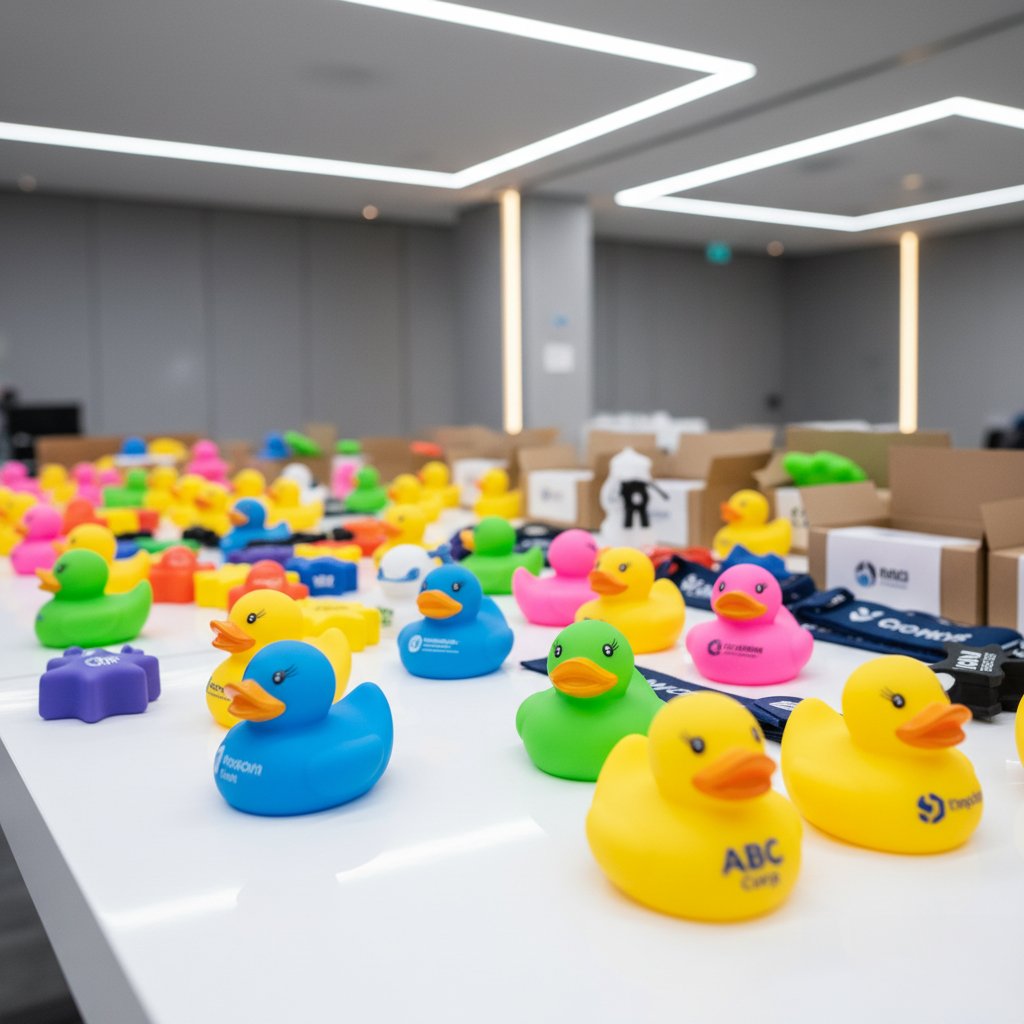
Mid tier, a set: members who reach a spend threshold receive a set of three to five ducks in different colors or themes. This tier creates the social moment. The set goes on a shelf, gets photographed, and becomes a talking point in the office, which is exactly what a loyalty program should produce.
Top tier, the trophy: the highest spend band earns a limited-edition duck with a custom shape, a personalized name, or a special finish. Because custom shape tooling is a real investment, 20 to 25 days for a slush vinyl production mold and a one-time mold fee in the hundreds of dollars, this tier should be reserved for your top 1% to 5% of members. The scarcity is part of the reward.
Keep the tiers readable. If a member cannot say in one sentence what the next tier unlocks, the ladder is too complex. Three tiers with clear spend thresholds beat six tiers that nobody remembers.
The Cost Math for a Duck-Based Loyalty Program
Run the numbers before you design the artwork. A worked example at 500 rewarded members shows the shape of the budget.
Assume 70% of rewarded members sit in the entry tier, 25% in the mid tier, and 5% in the top tier. That is 350 entry ducks, 125 sets of four ducks (500 ducks), and 25 trophy ducks with custom molds. At the grounded sub-$0.85 per unit price for printed ducks, the standard duck volume of 850 pieces runs about $720, and the 25 trophy units with premium finishing add roughly $125 to $250 depending on decoration. Total reward goods land near $900 to $1,000 for 500 members. The same program handing out $25 gift cards spends $12,500 before a single card is redeemed.
Two caveats keep this honest. First, the $0.85 figure assumes a standard existing design or logo-only printing; a new custom shape adds the mold fee, which at LZENGO is a one-time cost broken out separately from unit price. Second, shipping and packaging are real line items. Polybag packaging is minimal, while retail boxes and gift boxes add cost per unit. Budget $0.10 to $0.40 per unit for packaging depending on the tier, and get a landed-cost view before you commit, the way the rubber duck landed cost breakdown lays out.
Choose Duck Designs That Match Each Tier’s Job
Every tier has a different job, and the decoration should follow the job. The entry duck needs instant brand recognition: a strong logo placement and one brand color. Pad printing and UV printing both handle logo work at volume, and Pantone color matching makes the duck match your brand guidelines rather than approximating them.
The mid-tier set earns its keep through variety. Members photograph sets more often than singles, so give them a color story: three shades of your palette, or a theme line like occupations or holidays. A mixed collection of themed ducks gives the set a reason to exist beyond the logo.
The top tier justifies a custom shape. A duck wearing your product, a mascot shape, or an oversized variant with a squeaker and premium matte or gloss finish turns a reward into a collectible. This is where the custom rubber ducks route at LZENGO earns its keep: mockups come back within 12 hours, physical samples within 7 days, and the design revision loop is tight enough that you can approve a trophy duck in a week without stalling the whole program.

Order Sizing: MOQ, Tooling, and Lead Time
Physical rewards fail quietly when the quantities do not line up with the manufacturing minimums. The LZENGO MOQ is 1,000 pieces per design, which shapes how you buy each tier. Start the plan by reviewing the wholesale rubber duck product range so the tier designs you sketch can actually share a base body and a production slot.
If your program rewards fewer than 1,000 members in the first cycle, order a combined design run: the entry and mid tiers can share a production slot when they use the same base duck with different printing, since printing changes do not require new tooling. Custom shapes are the constraint. A new slush vinyl mold takes 20 to 25 days of tooling, and an injection mold for rigid parts like a squeaker mechanism runs 40 to 45 days. Plan tooling against your program launch date, not against the reward ship date.
Capacity is rarely the blocker. The factory runs over 5 million ducks per month, so a loyalty order of 1,000 to 10,000 pieces slots into standard production without pushing your launch. The timeline that matters is yours: design mockup in 12 hours, sample in 7 days, tooling where needed, then bulk production. Start the process six to eight weeks before you want ducks in members’ hands if any tier uses a new shape.
Packaging and Unboxing Decide Whether the Reward Gets Kept
The unboxing moment is the peak emotional point of a physical reward, and packaging is what makes or breaks it. Entry-tier ducks ship fine in polybags with a printed insert card. Mid-tier sets deserve a retail box that can sit on a shelf without looking like a shipping carton. Top-tier trophies warrant a gift box with foam or insert padding, because a member who reaches the top tier is telling your brand story for you.
LZENGO offers polybag, retail box, and gift box packaging options, so the packaging can be quoted together with the duck rather than sourced separately. One practical note: if you ship rewards directly to member addresses, add a card that names the action that earned the reward. A duck with no explanation is a toy; a duck with a card that says “for your 10th order” is a loyalty artifact.
Safety and Compliance for Customer-Facing Gifts
A reward duck is a gift, and in most markets a gift to consumers is a toy for regulatory purposes. That matters more than most marketing teams expect. If your members include families, the duck can end up with children, so compliance should be treated as a design input rather than an afterthought.
Ask your factory which standards the product meets before you commit. LZENGO’s certifications cover BSCI for social compliance, GRS for recycled content claims, and REACH and CPSIA tested through Intertek. The CPSIA point is the one to verify in writing for U.S. programs, since it covers phthalates and lead content in children’s products. Ask for the test report, not just the certificate name, and keep it on file for your compliance team.
Measure the Program Like a Campaign, Not a Perk
The metrics that matter are redemption rate, keep rate, and repeat purchase. Redemption rate tells you whether the reward was worth claiming: a duck program should hold up against the redemption baseline of your previous rewards, and physical rewards typically beat digital credits because members claim them eagerly. Keep rate is visible indirectly through photos, tags, and member posts. Repeat purchase is the business metric: compare the 90-day repurchase rate of members who claimed a duck against members who skipped the claim.
Add a light tracking layer without making the reward feel transactional. A printed QR code on the base of mid-tier and top-tier ducks can route to a landing page that captures the claim, and the same page can ask for a photo. Some brands tie a small bonus, like a sticker pack or a digital badge, to the photo submission. The data from that loop feeds next year’s promotional products planning with numbers instead of guesses.
Mistakes That Make Members Ignore Their Reward
The failure modes are predictable, and they are all avoidable. Generic ducks with a tiny logo kill the program: if the duck does not look like your brand, it reads as a bath toy, not a reward. Fix it with Pantone-matched colors, a full logo treatment, or a custom shape on the top tier.
Slow fulfillment kills the emotional timing. A member who hits a tier and waits eight weeks for the reward has already forgotten why they earned it. Keep safety stock of your most popular designs or schedule tier drops in production batches. Incomplete follow-through kills the loop: no explanation card, no claim tracking, no thank-you touch after delivery. The rubber duck referral campaign structure uses the same tier logic for referrals, and it shows how a physical incentive loop keeps working long after the digital confirmation email lands in a spam folder.
One more mistake shows up in budgets: ignoring MOQ implications until the quote arrives. A program designed for 400 members cannot order 400 custom-shape ducks, because the 1,000-piece MOQ forces either a bigger first run or a different design strategy. Solve the quantity question in the planning spreadsheet, not at the factory gate. Teams that already run customer appreciation swag programs often extend the same order to cover loyalty tiers, which keeps both programs above the minimum without extra tooling.
Frequently Asked Questions
What is the MOQ for loyalty program rubber duck rewards?
The minimum order is 1,000 pieces per design at LZENGO. Multiple tiers can share a production slot when they use the same base duck with different printed logos, so a 1,000-piece order can cover two or three reward tiers.
How much does a loyalty reward duck cost?
A printed custom duck runs under $0.85 per unit at the 1,000-piece MOQ. A new custom shape adds a one-time mold fee of a few hundred dollars, and packaging adds roughly $0.10 to $0.40 per unit depending on whether you use polybags, retail boxes, or gift boxes.
How long does a duck reward order take?
Design mockups arrive within 12 hours and physical samples within 7 days. If a tier uses a new custom mold, tooling takes 20 to 25 days for slush vinyl or 40 to 45 days for injection molds, so start tooling designs six to eight weeks before the first reward ship date.
Are reward ducks safe to send to members?
Yes, when the factory holds the right certifications. LZENGO’s ducks are tested through Intertek against REACH and CPSIA requirements and the factory holds BSCI and GRS certification. Request the test report in writing and keep it for your compliance file.
Can we put a member’s name on a tier duck?
Yes. Personalized text works with pad printing and UV printing, and top-tier trophies can carry a name or member number. Discuss personalization during the mockup stage so the 12-hour mockup cycle includes the personalization layout.
Related reading: Esports Team Giveaways: Rubber Ducks at Tournaments and Streams.