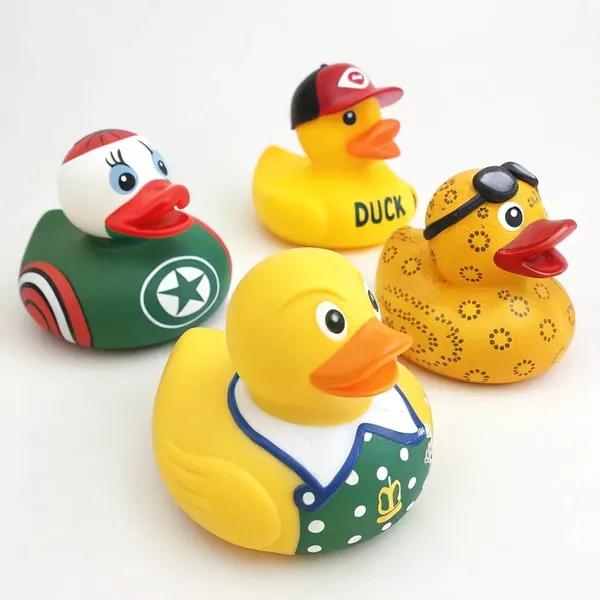
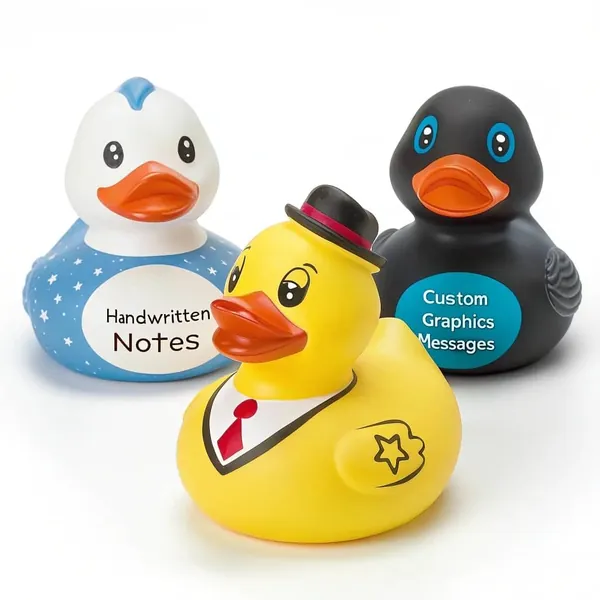
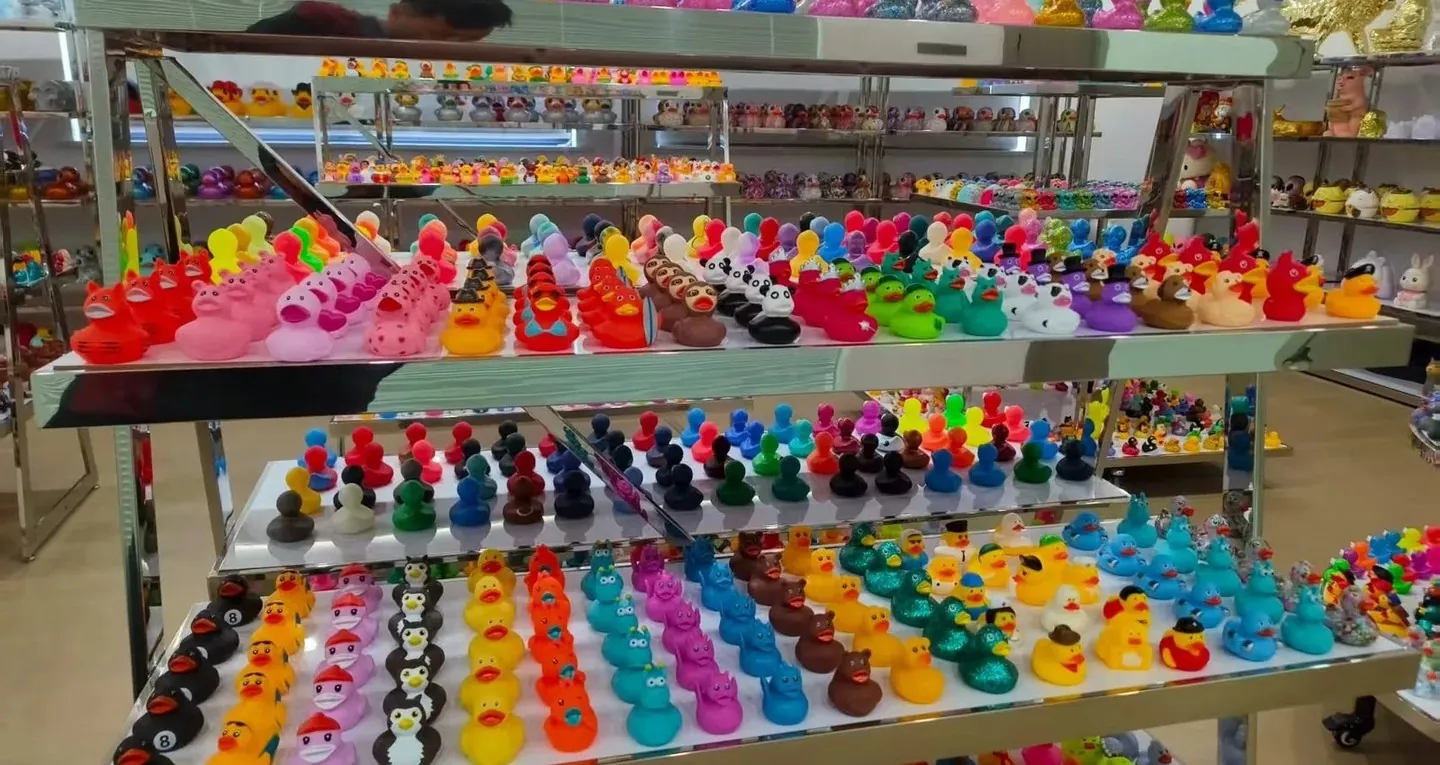
A toy safety label starts as a location problem rather than a wording problem, because a perfectly written warning does nothing if it sits on a hang tag the shop removes before the duck reaches the shelf. The wording can be argued about; the location cannot. The label has to be settled while the pack is still a drawing, not after the artwork is approved.
Written from LZENGO's label and packing work, plus public toy safety guidance from the CPSC and the European Commission.
In short: a custom duck has five surfaces that can carry a mark, and each duty belongs on a different one. The producer marking can sit on the product or its packaging. The tracking label has to be on both. The age grade and the warnings belong where a buyer will read them, and the poly bag carries a film clause of its own. None of it is checked by the laboratory, so the pack is the buyer's job.
Five surfaces, and what each one can carry
A duck can be marked on the body, on a hang tag, on the poly bag, on the inner box and on the shipping carton, and each surface has a different life. The body survives everything except wear. The hang tag survives the factory and usually nothing after that. The bag survives until it is opened. The inner box survives until the shop shelves the product. The carton survives only as far as the stockroom.
That ranking decides where each duty goes. Something that has to be present at the moment of sale cannot live only on a carton, and something that has to be present after the sale cannot live only on a tag. A buyer does not need to memorise the rules to apply this test, only to ask where the object will be when the person who needs the information picks it up.
The other half is room. A flat panel on the underside of a duck holds a small amount of type, and a curved body distorts a line of print near the edges. A hang tag gives the most room and the least permanence. A retail box gives enough room for the age grade, the warnings and the importer details that a shop needs to see without opening anything.
| Surface | What it can carry | What fails there |
|---|---|---|
| Body | A moulded or printed panel and the producer mark | Print wears at a curved edge, and a small panel runs out of room before the wording is complete |
| Hang tag | The longest wording, the size and the care notes | The tag is removed before sale, and the warning leaves with it |
| Poly bag | The film clause and a first read warning | A bag under the film thickness fails before the print is read |
| Inner box | The age grade, the warnings and the importer details | The artwork is printed before the report is final |
| Shipping carton | The tracking and batch marks a stockroom needs | A consumer warning is printed where no shopper will ever see it |
The producer marking can sit on the product or the pack
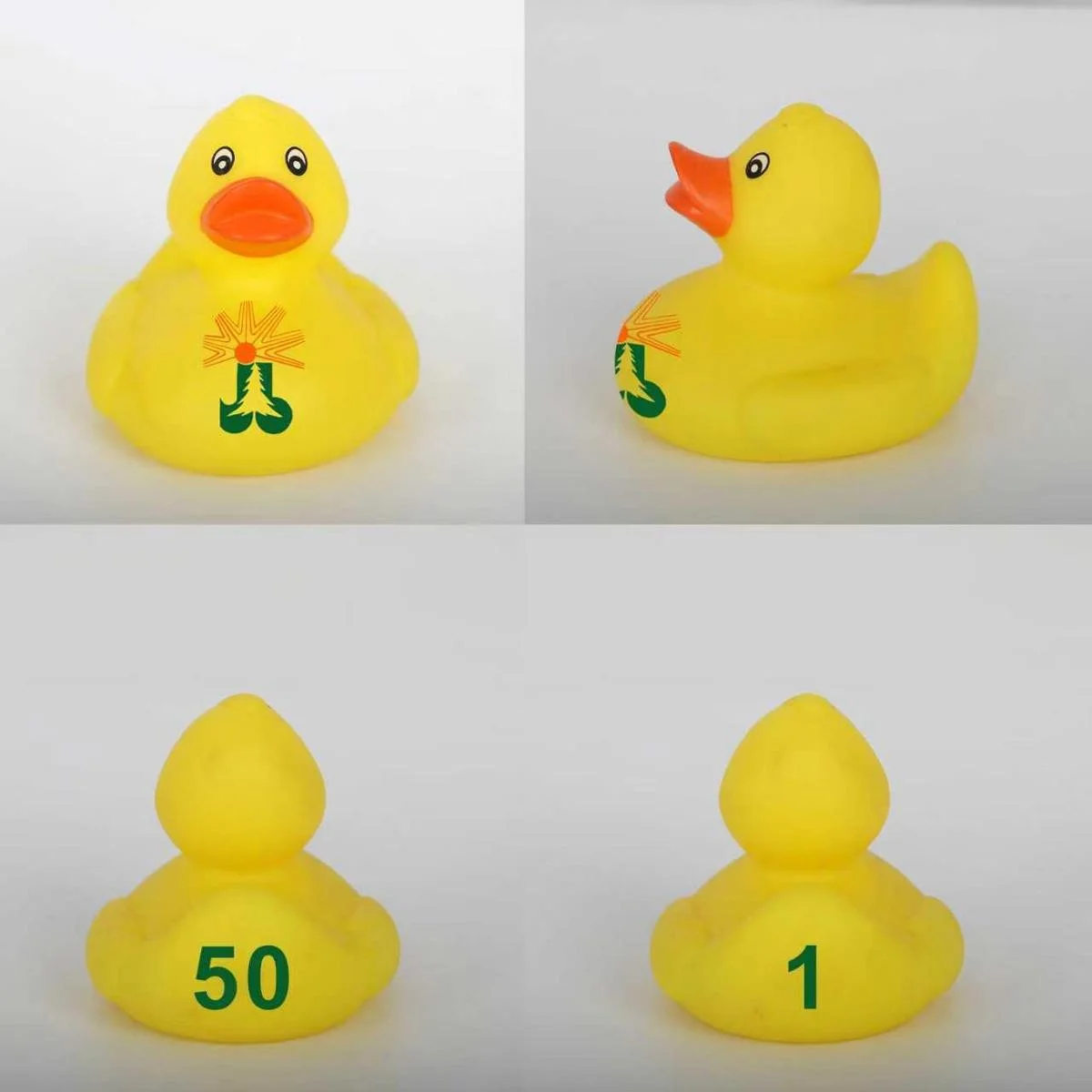
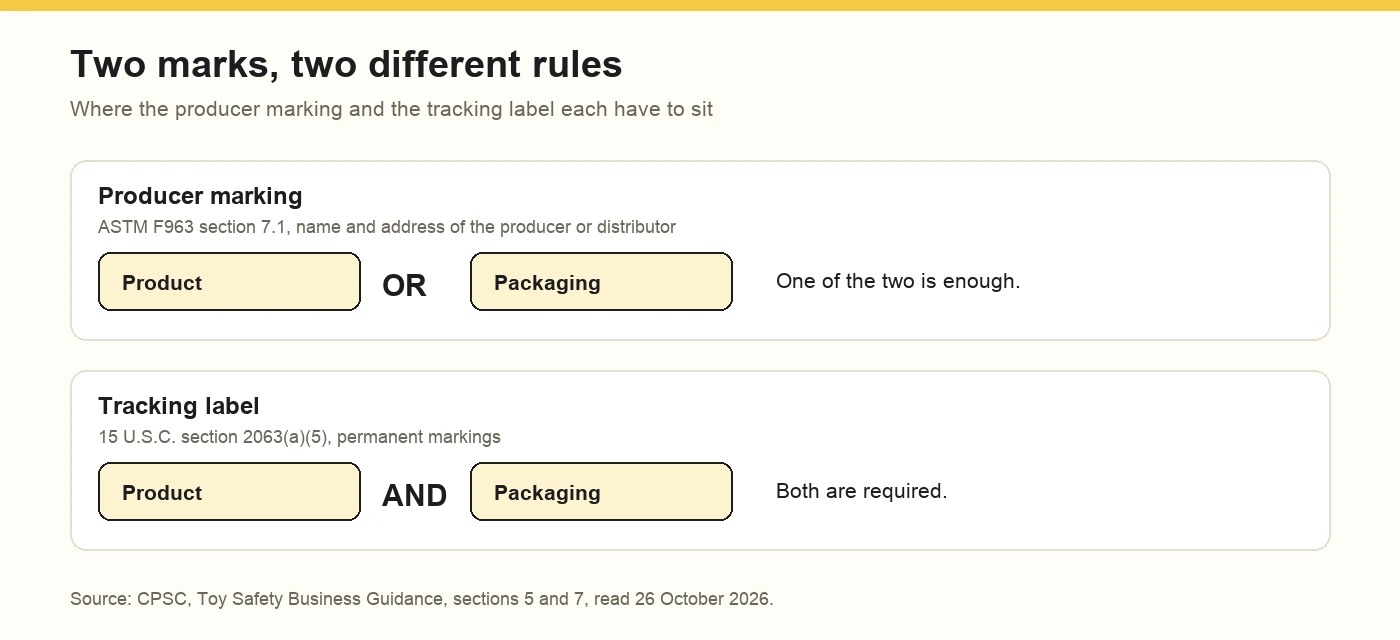
The producer marking is the lightest of the duties and the one most often missed by a first order. The CPSC toy safety guidance sets it out in the toy standard: the product or its packaging has to be marked with the name and address of the producer or distributor of the product, and for this rule an address can include a digital address such as a website. That is a helpful amount of flexibility, because it means one mark and two possible homes.
Choose the home by durability rather than by artwork. If the duck ships loose in a display carton, the carton is the surface that will still be there when the product is unpacked in a stockroom. If the duck ships in a printed retail box that stays with it to the shelf, the box is the better home. A mark printed on both is not wrong, but it is one more thing that has to be checked on every run.
The failure to avoid is a mark that lives only on a temporary surface. A producer mark on a hang tag that a retailer removes has not disappeared because nobody cared. It has disappeared because the label plan put a permanent duty on a disposable object.
The tracking label has to be in two places
The tracking label is a different rule with a stricter address, and buyers often treat the two as if they were the same thing. The CPSC notes that the tracking label requirement, which sits at 15 U.S.C. § 2063(a)(5), differs from the producer marking in one decisive way: the permanent markings have to be on the product and its packaging, not on either one. Both surfaces, every batch.
That single word, and, is why a sticker on the bag does not settle the question and a code printed on the carton does not either. The tracking label is also not a decoration. It is the mark that lets a batch be identified after the fact, which is exactly what a recall or a retailer audit asks for, and its content has to be permanent rather than printed on something that peels.
For a promotional duck the tracking label is the mark most likely to be absent, because the buyer is thinking about the artwork and the factory is thinking about the mould. Putting it on the specification sheet as two separate line items, one for the product and one for the pack, is the simplest way to make it survive a handover.

Age grading is decided before the artwork
Age grading is a labeling requirement in its own right, and the CPSC lists it alongside the statements a toy carries on promotional material. It is also the label decision with the longest reach, because the age on the pack decides which route the product takes before a single test is booked.
The line to hold in mind is drawn in two places. A toy is an object designed, manufactured or marketed as a plaything for children under 14, while the CPSC testing and certification requirements apply to products intended primarily for children 12 or younger. A duck marked for a young child sits on one side of that line. A duck marketed as a collectible for adults sits on the other, and its label has to say so consistently, because a promotional duck with a child's age mark is making a claim about itself.
The European Union keeps its own version of this decision, and the European Commission's toys page describes rules and guidance aimed at manufacturers, importers and distributors who place toys on that market, so a pack printed for one market is not automatically a pack for the other. This is why the age grade belongs in the brief and not in the artwork file. Once the mould, the print and the pack are approved, moving the age mark means reopening the question of which documents apply, and that conversation is much shorter before the first carton than after.

Small parts, aquatic toys and the warnings that attach to a duck
The CPSC keeps a list of toys that carry specific labeling requirements, and a duck can touch several entries on it. The list includes toys containing hazardous substances, aquatic toys, toys with functional sharp edges or points, toys intended to be assembled by an adult, simulated protective devices, battery operated toys and magnets, alongside crib toys, mobiles and stroller toys that a duck programme rarely meets.
Two of those entries matter most for a bath duck. An aquatic toy is named on the list, which is the entry that catches a duck sold for water play. A duck with a detachable eye or a squeaker that can be pulled free also touches the small parts rule, whose labeling requirement already exists at 16 C.F.R. § 1500.19(b)(1), as the CPSC notes in its section summary. The same note says that a certificate does not need to cite that labeling requirement, which is worth reading twice, because it separates the safety rule from the label that explains it.
The practical consequence is that a warning can be required on a duck whose report says nothing about warnings. The label and the report are two documents with two different jobs, and a file is only complete when both have been read.
The bag carries its own clause
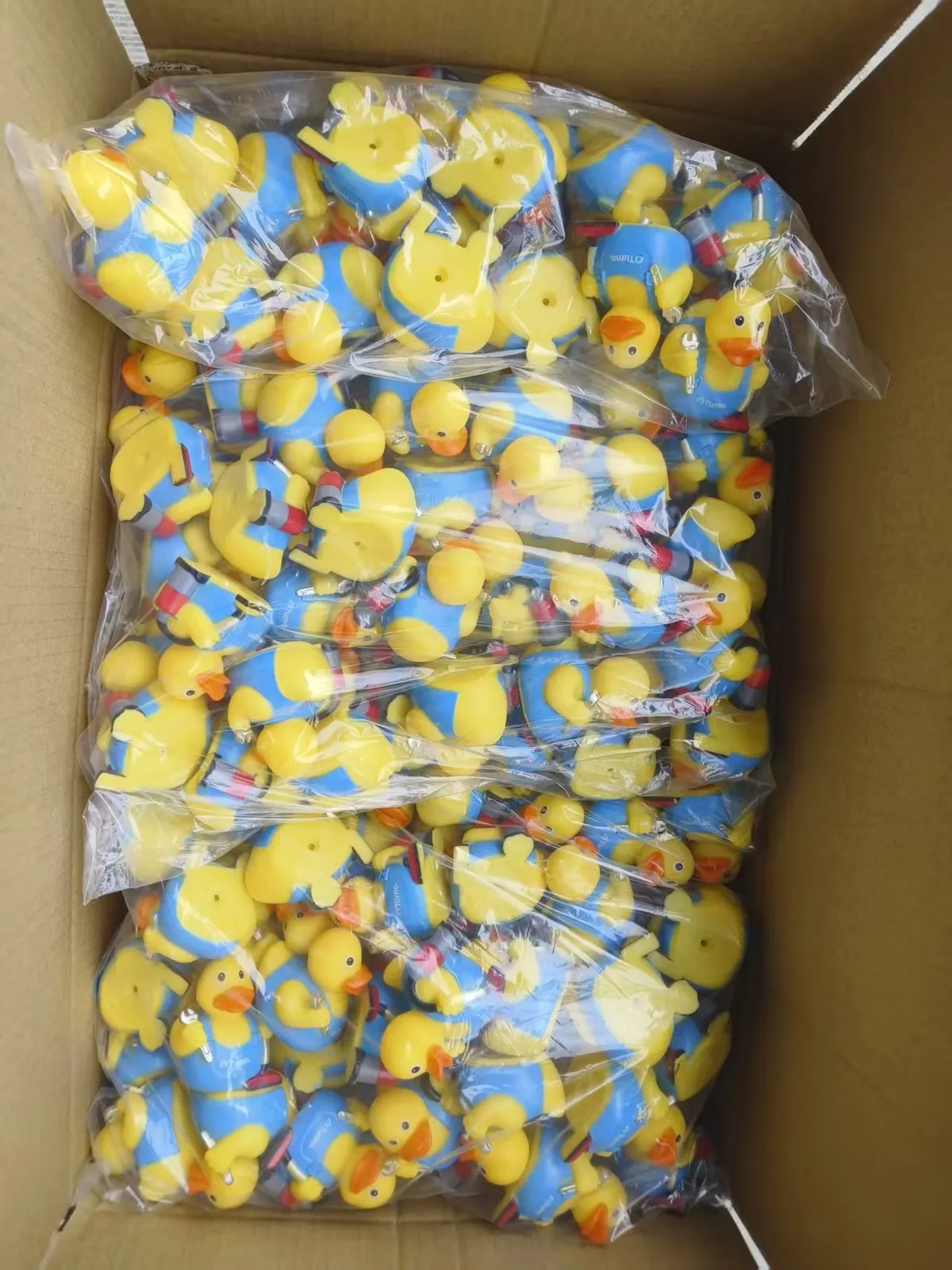
Poly bags are treated as part of the product as sold, and they have a clause of their own rather than a warning. The CPSC summarises it: certain plastic film, including packaging, must have an average thickness greater than 0.00150 in, or be perforated such that one percent of the surface is removed. That is a measurable specification, not a preference, and it is the one label related field a factory can check with a gauge on the packing line.
The reason it belongs in a page about labels is that the bag is often the surface chosen for a warning. When that happens, the warning and the film clause share a home, and both have to be right at the same time. A bag thin enough to fail the clause does not become acceptable because the print on it is clear.
Add the film thickness to the specification sheet as a number, decide whether the bag or the retail box carries the age grade, and keep the two decisions separate. A duck that passes every mechanical clause and fails on its bag is a packing problem that a buyer can catch before the cartons are sealed.
What the laboratory never checks
Every mark on this page sits outside the test report, and the CPSC says so in one line. That line is the reason a buyer cannot delegate the pack to the test house, however complete the file looks.
Note that labeling requirements do not require compliance assessment by a CPSC-accepted, third-party laboratory.
A certificate does not close the gap either. As the CPSC guidance on the Children's Product Certificate sets out, its seven required elements cover the product, the rules, the certifying firm, the records contact, the manufacture date and place, the test dates and places, and the laboratory. None of them is a label clause, and none of them will tell a buyer whether the age mark on the box matches the duck inside it.
So the label check has to be written into the packing process, with a named person on each side and a photograph of the approved pack kept beside the approved sample. That is the only mechanism that catches a wrong mark before the cartons leave, and it takes a minute per style. It also belongs in the inspection plan rather than in a label document, because the check happens on the packing line.
The five questions I ask about a duck label
- Which surface carries the age grade, and will that surface still be there when the product is sold?
- Is the producer marking on the product or on the pack, and does the address still resolve?
- Is the tracking label on both the product and its packaging, or only on one?
- Does the pack name the aquatic toy or small parts warning that the product actually needs?
- Is the poly bag thickness written on the specification sheet as a number?
The order matters less than the habit. Ask the five questions once at the brief stage, then ask them again at the first pack approval, because the answers change when a tag is dropped, a box is redesigned or a bag supplier changes. A label is not a document that gets signed and filed. It is a set of physical decisions that have to hold on the packing line.
The label fields themselves belong in the duck supplier RFQ, where they are asked for once instead of remembered later. If the wording itself is the open question, the toy safety report guide covers what the laboratory will and will not test, and the phthalate and REACH guide covers the chemical claims that so often end up printed on a pack. For the pack itself, the sample bag versus production consistency page explains why the approved bag and the delivered bag drift apart.
Frequently Asked Questions
Who is responsible for the label content on a custom duck?
The importer who puts the product on the market is the party who has to answer for the label, and the factory builds the pack to that instruction. Practically, both sides sign the approved pack artwork, because the factory is the only party who can see what the print actually looks like on the line.
Can a sticker on the poly bag carry the warning?
It can carry print, but it cannot carry a duty that has to be present on the product and its packaging, and it cannot be permanent in the way the tracking label has to be. A sticker also disappears with the bag, so a warning that a buyer needs after opening should live on the product or on the retail box.
Does the age grade have to match the test report?
The age grade and the report have to describe the same product, and they are read together rather than separately. A pack that prints an age the report does not support is a mismatch a retailer can see without opening the carton, which makes it one of the quickest failures to catch and one of the slowest to explain.
What has to be on the shipping carton?
The carton carries what the supply chain needs to move and identify the batch, including the marks that let a stockroom match a box to a record. Consumer warnings belong on the retail pack, not on the carton, because the carton is usually gone before the product reaches the person who needs the warning.
Final Note
A mark on a duck is not proof that anything was checked. It is a decision about where information will be when somebody needs it, and most of the mistakes I see are location mistakes rather than wording mistakes. A warning on a bag that opens before the product is used has been placed for the trip, not for the shelf.
The wording takes an afternoon with a standards summary and a lawyer's patience. The location takes a drawing of the pack with a name written against each surface, and that drawing is the thing I would ask a new supplier to send back before the artwork is released. Once it exists, the label stops being an opinion in an email and becomes a packing instruction that somebody can follow or fail.
Key takeaways
- Five surfaces, and what each one can carry: body, hang tag, poly bag, inner box and carton each survive a different amount of the product life.
- The producer marking can sit on the product or the pack: one mark, two allowed homes, and the address may include a website.
- The tracking label has to be in two places: 15 U.S.C. § 2063(a)(5) puts the permanent marking on the product and on its packaging.
- Age grading is decided before the artwork: the under 14 definition and the twelve year certification line decide which route the duck takes.
- What the laboratory never checks: labeling sits outside third party assessment, so the pack check belongs in the packing process.