Why a size chart is a description of a band, and a caliper is the only thing that turns it into a spec.
Size charts work as ranges with a purpose attached, not as tables of truth, and the band has to match the hand or the display it is going to before a single dimension matters. A chart tells a buyer which family of duck they are in. It does not tell them what will arrive, and the gap between those two things is where a size dispute begins.
In short: A size chart gives bands, not measurements. Pick the band from the use, then write three numbers on the drawing: body length, body height and the base. Prove them with calipers on a sample, and check that the carton still matches before the order is confirmed.
A size chart is a band, not a measurement
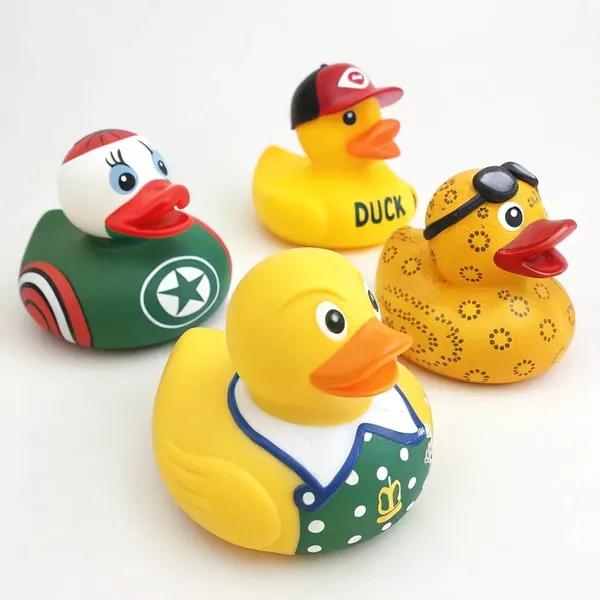
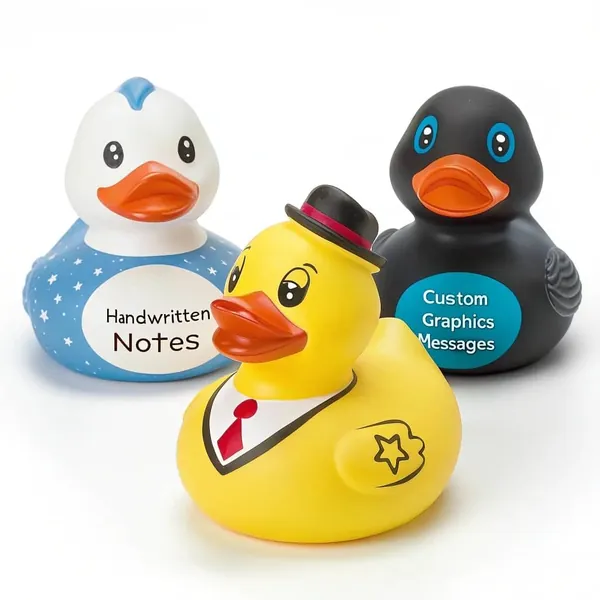
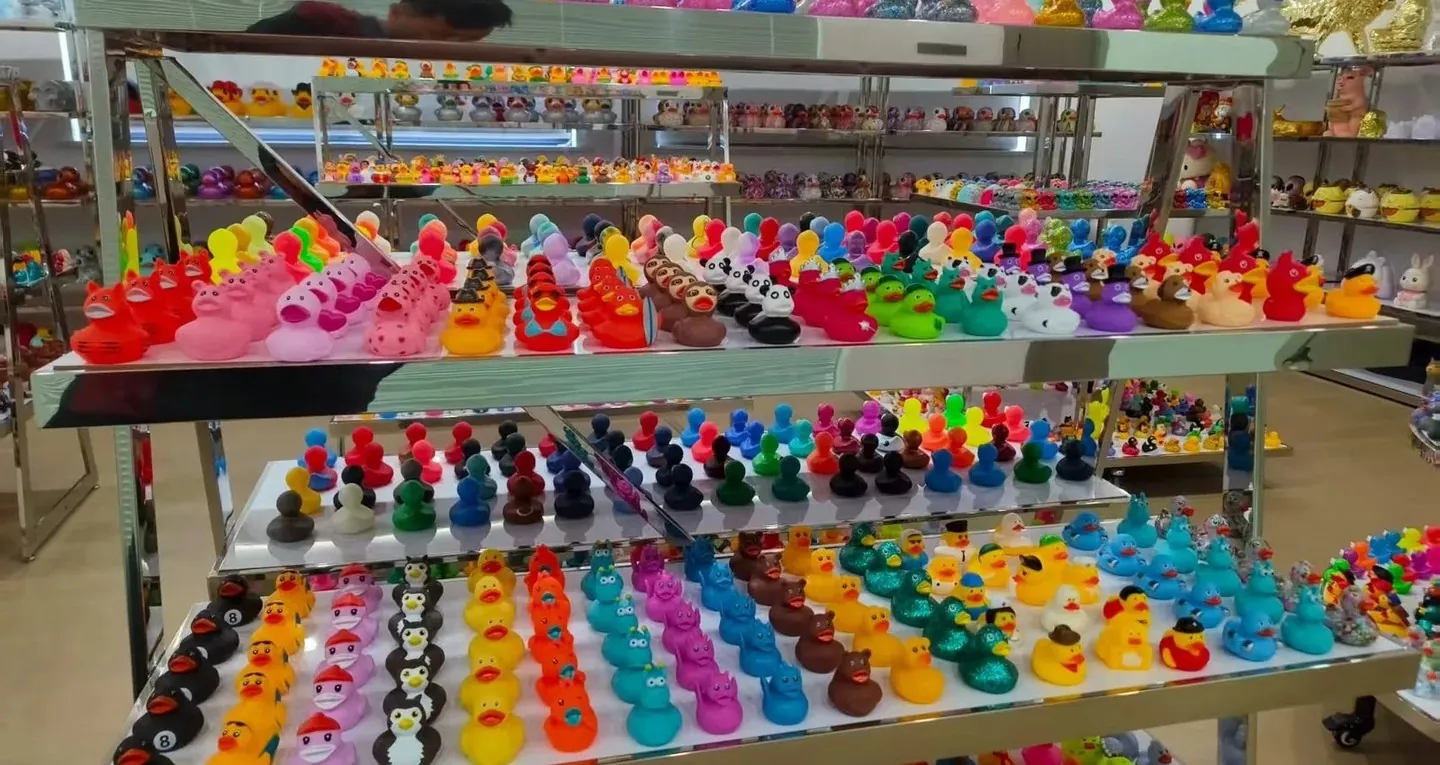
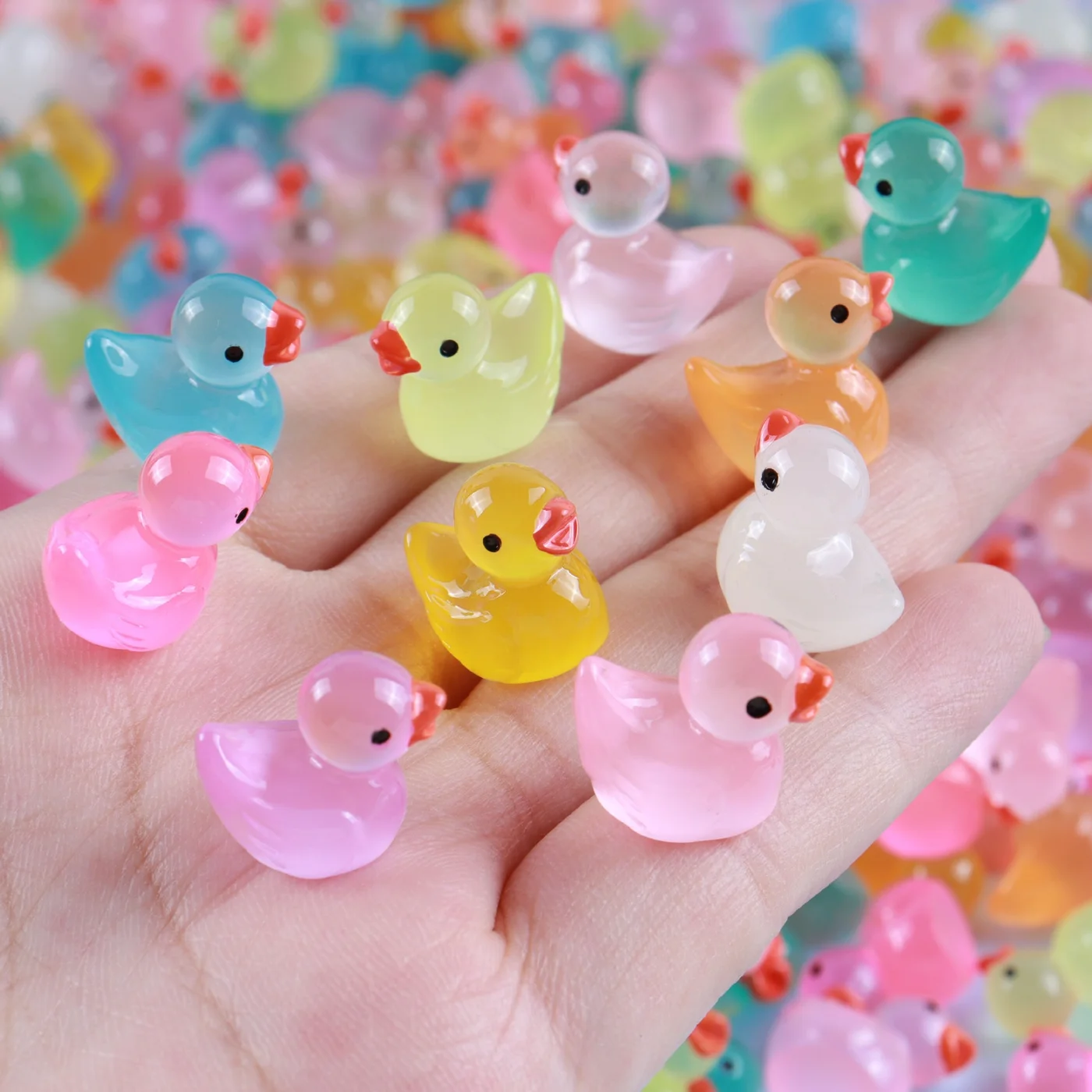
Charts are organised the way a trade talks, in families: mini ducks that sit in a palm, standard ducks that sit on a desk, large ducks that sit on a shelf, and giant ducks that are an object rather than a toy. Those families are useful because each one is bought for a purpose, and the purpose is what the buyer is really choosing.
The same chart becomes useless the moment it is treated as a promise. Two suppliers can both say "standard" and mean bodies that differ by a visible amount, because the word describes a place in a range rather than a number on a drawing. A buyer who chooses the band and then specifies the number gets both the purpose and the product, and the same logic runs through a reorder where the bands sit side by side.

What the band decides before the drawing does
The band decides more than the length. It decides whether the duck stands or sits, whether it floats upright or tips, whether a squeaker is practical, and how many fit in a carton. Those are design consequences of size, and they are much harder to change later than a millimetre of length.
| Band | What it is bought for | What it decides in the design | What it does to the carton |
|---|---|---|---|
| Mini | Keychains, table scatter, party favours | Light body, simple print, no squeaker | High count per carton |
| Standard | Promotional giveaways, desk gifts | The usual balance of print and hand feel | A middle count, easy to split |
| Large | Retail display, mascot gifts | Standing base and a bigger print face | Low count, bulky carton |
| Giant | Display and events | Not a toy for a child; a prop | One or two per carton |
A buyer who starts from the band gets a design that fits its purpose. A buyer who starts from a length and works backwards often ends up with a duck that cannot stand on the shelf it was bought for.

The three numbers a size claim needs
A length alone is not a size. The three numbers that make a claim checkable are the body length from beak to tail, the body height from the base to the top of the head, and the base footprint or diameter. Each answers a different question: the length decides the shelf and the carton, the height decides whether it fits a cubby, and the base decides whether it stands.
The order matters, because the three interact with the wall. A longer duck with the same wall has more surface to print and more air inside, so it floats differently and feels lighter in the hand than a shorter duck of the same compound. That interaction is why a size chart and a wall thickness line belong on the same sheet rather than in two different documents, and why a stock shape is measured before it is offered in a new band.
How to prove a size with calipers
The check is not complicated, and it is rarely done. Put the duck on a flat surface, close the caliper jaws gently at the beak and the tail without compressing the body, read the number, then repeat on five ducks from the same carton. The spread across those five is as important as the average, because a spread that is wider than the tolerance means the tool or the process is moving.
Two habits make the measurement worth recording. Mark the points on the drawing so the next person measures the same place, and write the number to the same precision every time. A measurement taken beak to tail on one duck and body to tail on another is not a comparison, and it is how a batch gets rejected for a reason nobody can reproduce.
What changes in the carton when the band changes
Size changes the carton before it changes anything else. A band that doubles the body volume roughly halves the count in a carton, and that change moves the freight, the pallet and the number of cartons a buyer has to receive. A size decision made after the packing is set is a packing decision that has to be redone.
The carton specification should carry the count per carton, the inner pack and the packed weight, and all three should be checked against the new band before the order is placed. A buyer who keeps the same carton and simply changes the duck is usually the buyer who discovers the mismatch at the loading dock.

Where the bands stop being interchangeable
The bands are not interchangeable at the small end, and the reason is regulatory rather than commercial. A duck small enough to fit entirely inside the small parts cylinder is a different product from one that cannot, and the test is a physical one: 16 CFR 1501.4 describes a toy that fits entirely within the cylinder as failing, and the procedure is to place the article, without compressing it, into the cylinder and see whether it disappears inside.
That is why the smallest band in a chart should never be chosen casually for a child's gift. If the duck is intended for a child under three, the size has to be read against the age grading question before the sample is approved, and the answer may be that the mini band is not available for that programme at all. The labelling side is separate and just as specific: 16 CFR 1500.19 sets the cautionary statement for a toy intended for children of at least three and under six when it includes a small part, so the age grade on the pack is a decision the size has already taken part in.
Small-parts duties under 16 CFR 1501 are summarised in our toy safety guide.
How the size becomes a drawing, a sample and a batch
The size becomes real in three steps, and each one has a document. The drawing carries the three numbers and the tolerance. The sample proves that the tool can hit them. The batch record shows that the run stayed inside them. A buyer who receives only the sample has one of the three.
The batch step is where most size disputes are settled, because a sample that measures correctly proves the tool and not the run. Ask for the inspection record, not just the sample photograph, and make the sample check part of the same document. The rest of the file, from the age grade to the label, follows the decision the size already made.
Four questions settle the band before the drawing:
- Which hand or which shelf is the duck going to, and what has to fit around it?
- Does the duck need to stand on its own base, or sit flat?
- Which band keeps the duck out of the small parts question for this audience?
- Does the carton still hold the count the programme needs at that band?
Frequently Asked Questions
What size is a standard rubber duck?
Standard is a family rather than a figure, so the honest answer is that it covers the desk sized range and should be pinned down with three numbers before an order. Two suppliers using the same word can be a visible distance apart.
Should length or height be measured first?
Length first, because it drives the carton and the shelf, then height and base to catch the fits that the length misses. All three belong on the drawing with a tolerance.
Does a bigger duck change the freight per duck?
Not automatically. A bigger body means fewer per carton, so the carton count falls and the freight per duck usually rises. The comparison has to be made on the packed carton with its count and weight, not on the duck alone.
Can the mini band be used for a young child's gift?
Only after the small parts question is answered. A duck that fits entirely inside the small parts cylinder fails the rule for children under three, so the size and the age grade have to be decided together.
Final Note
Choose the band from the hand or the display, then write three numbers and a tolerance and prove them with calipers. The chart is the beginning of the conversation, not the end of it, and a buyer who treats it as the end will spend the sample round discovering what the word standard meant to someone else. A duck whose length, height and base are on the drawing is a duck that can be reordered, and a reorder is where the size chart finally earns its place. That is the point where a chart stops being a leaflet and becomes a working document: the band tells you what family you are in, and the three numbers tell the next person exactly what to make.
Key takeaways
- A size chart is a band, not a measurement: Charts are organised the way a trade talks, in families: mini ducks that sit in a palm, standard ducks that sit on a desk, large ducks that sit on a shelf, and giant ducks that are an object rather than a toy.
- What the band decides before the drawing does: The band decides more than the length.
- The three numbers a size claim needs: A length alone is not a size.
- How to prove a size with calipers: The check is not complicated, and it is rarely done.
- What changes in the carton when the band changes: Size changes the carton before it changes anything else.
- Where the bands stop being interchangeable: The bands are not interchangeable at the small end, and the reason is regulatory rather than commercial.
- How the size becomes a drawing, a sample and a batch: The size becomes real in three steps, and each one has a document.