The wall decides the squeeze, the drop and the carton, and most drawings leave it out.
A duck can pass every colour check and still feel wrong in the hand, in a drop or in a carton, and the usual cause is a wall that was never written on the drawing. I would put a wall figure, a zone and a tolerance on the sheet before the colour is approved, because the wall is what the hand feels and what the print sits on. The body route changes the numbers too, since a hollow body and a solid one fail in different ways.
The wall decides behaviour, so it belongs on the drawing: wall thickness is the body measurement that decides squeeze, bounce, drop survival and carton weight. It has to be specified by zone with a tolerance, checked on the sample with calipers, and kept on the same sheet as the size and the compound. In short, the wall is a measurement to write down and record, not a feel to describe.
The wall is a number the drawing usually leaves out
A duck drawing usually carries the length, the height, the print position and the colours. The wall is often missing, not because it does not matter, but because it is harder to draw than to say. A single wall figure is also misleading on a duck, since the body is not uniform: the base, the flank, the neck and the tail are shaped differently and cannot be made at the same thickness by the same process step.
The consequence is a specification with a gap in the middle. A factory can meet every number on the drawing and still produce a body that feels wrong, because the drawing never said how thick the flank should be. The fix is unglamorous and effective: put the wall on the drawing by zone, with a tolerance for each zone.
Where the wall is measured, and why the point moves
The wall is measured where the customer's hand goes, and that is the flank first, then the neck, then the base. The flank is where the squeeze happens and where the print sits. The neck is where the seam is, and it is the most common place for a wall to run thin. The base is where the duck stands, and its wall decides whether the body holds its shape on a shelf.
| Zone | Where it is | What the wall decides there |
|---|---|---|
| Base | The foot and the ring it stands on | Whether the duck stands and whether the base holds shape |
| Flank | The side, where the hand squeezes | The squeeze, the bounce back and the print surface |
| Neck | Around the seam under the head | The seam strength and where a split starts |
| Tail | The back tip | The last place to fill, and often the thinnest |
Measuring one zone and calling it the wall is the most common mistake in a duck spec, and it is the reason two batches can both meet a number and still feel different. Each zone answers a different question, so each zone gets its own line.

What a thin wall fails first
A thin flank fails the squeeze first: the body collapses under the thumb, and the return is slow or partial. A thin neck fails at the seam, where a split can start and where a squeeze can open a gap. A thin base fails on the shelf, where the duck leans or dents under its own weight and the print sits crooked.
None of those failures is a safety failure by itself, and the safety question is separate. A wall that cracks can release whatever is inside it, and the toy safety testing note covers the small-parts and toy-file rules that follow a duck which can come apart. A wall that holds is the first defence against that piece existing at all, which makes the wall a design decision with a compliance consequence rather than only a feel decision.
Wall, weight and the freight line
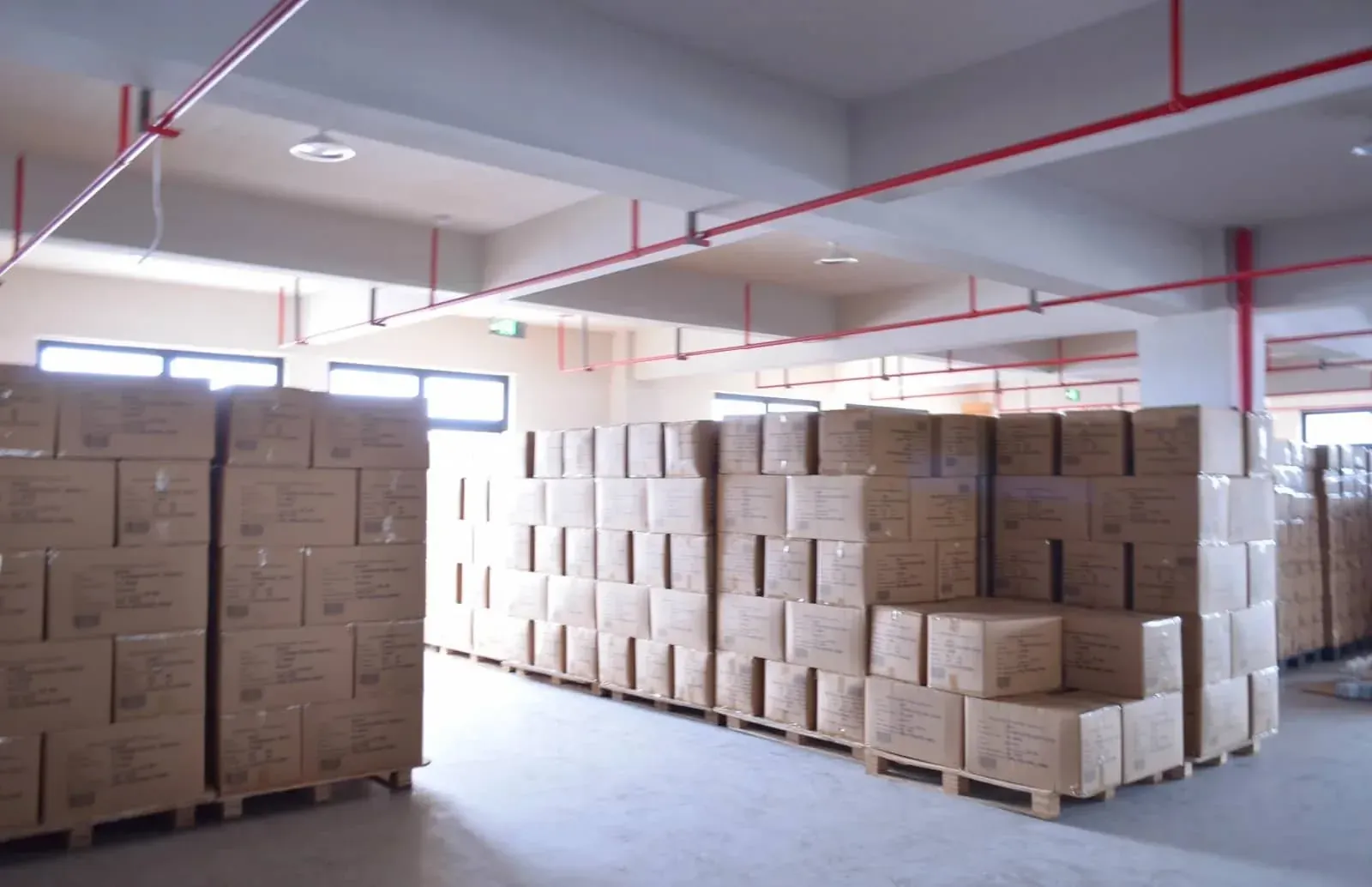
The wall is also the weight, and the weight is the carton. A thicker wall across a whole body adds mass per duck, which changes the packed weight and the freight line, while a wall that is thick in one zone and thin in another can hold the feel without adding much mass. That is why the wall line belongs next to the carton specification and not in a separate document.
The practical approach is to specify the zones that the customer touches and let the rest follow the tool. A uniform number across every zone is easy to write and hard to make, and it usually pushes the factory to a heavier body than the design needed. A zoned line is more work at the drawing stage and less work at the sample stage.
The three figures to keep on one sheet are the wall at each zone, the weight of a single duck and the packed carton weight, because a wall change shows up in that order. None of them needs to be guessed in advance: weigh the approved sample, measure its wall at the four zones, and write down the carton weight the packing line reports, then use those records as the reference for the next delivery.

What a thick wall does not fix
A thicker wall does not make a duck safer, and it does not make a bad seam good. It adds weight, it can make the body feel stiff, and on a rotocast body it can slow the fill so the tail runs thin while the flank runs thick. A thick wall also changes how the duck floats, because the body sits lower and rights itself differently.
The other thing a thick wall cannot fix is the compound. A soft compound with a thick wall can still sag, and a hard compound with a thin wall can still crack. Wall and hardness are two lines of one behaviour, which is why a spec that fixes one and leaves the other free is a spec that will be argued about at the sample bench.

Writing the wall line with a tolerance
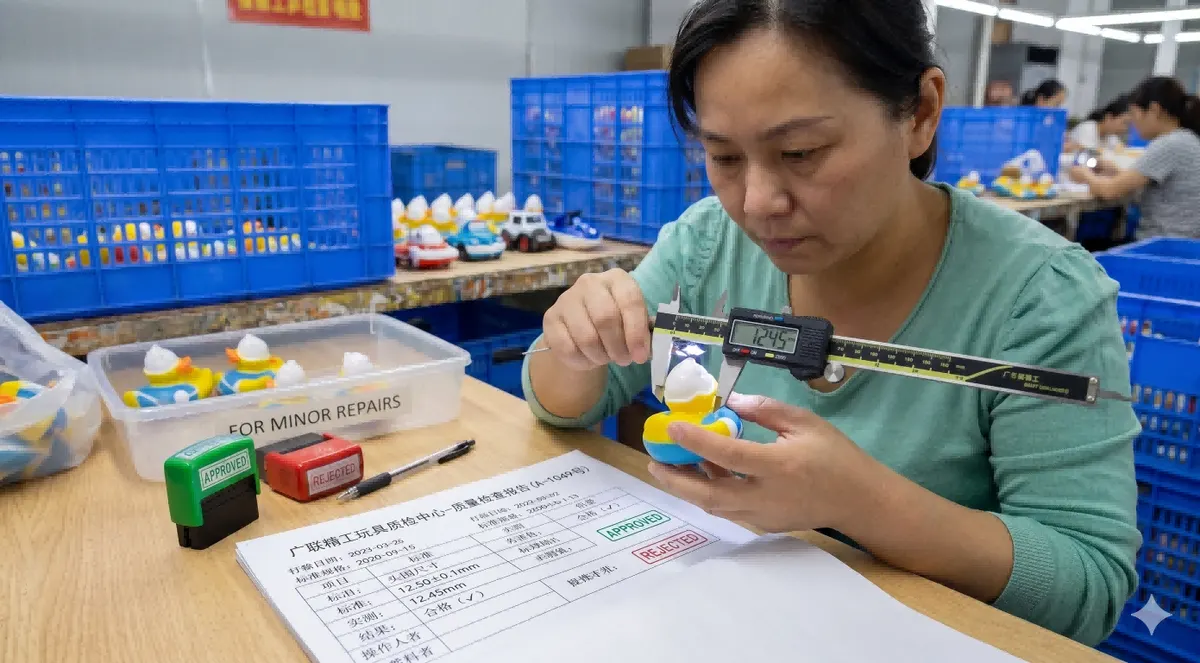
The line has four parts: zone, target, tolerance and method. The zone names where the measurement is taken. The target is the wall to hit. The tolerance says how far it may move. The method says how it is checked, which on a duck means a caliper or a sectioned sample rather than a guess. Without the method, the other three are a wish.
Two habits keep the line alive. The first is putting the same zones on the drawing, the sample record and the inspection sheet, so the three documents describe one object. The second is checking the wall at the start and the end of the batch, because a tool that is drifting shows up at the neck or the tail long before it shows up at the flank. A sample inspection that includes the wall is worth more than one that only checks colour.
Four questions belong beside the wall line:
- Which zones does the customer actually touch, and are all four on the drawing?
- What does the base wall have to be for the duck to stand on a shelf?
- Does the packed weight still fit the carton and the freight plan?
- Which zone will the sample check measure first, and with what instrument?
Frequently Asked Questions
Why does my duck dent and stay dented?
A dent that stays is usually a thin flank or a body that was packed under pressure before it cooled. Check the wall at the flank and the packing method before changing the compound.
Can I specify one wall thickness for the whole duck?
You can write it, and the factory will struggle to make it. The base, flank, neck and tail are formed differently, so a zoned line with a tolerance per zone is both easier to make and easier to check.
Does a thicker wall make a duck last longer?
It can make the body more resistant to a squeeze, and it does not fix a seam or a print. Durability comes from the wall, the compound and the seam together, and the seam is usually the first of the three to fail.
How is the wall measured on a finished duck?
With a caliper at an accessible zone, or on a sectioned sample when the interior matters. Record the zone, the exact point inside the zone, the instrument and the tolerance band the reading is being compared against, and use the same method on the sample and on the batch, or the numbers cannot be compared.
Final Note
I would put the wall on the drawing by zone before the first sample is made, because it is the easiest moment to decide it and the most expensive one to discover. A duck whose base, flank, neck and tail each carry a target and a tolerance is a duck that can be argued about with numbers rather than adjectives, and that is what a specification is for. The wall does not make a duck beautiful, and it decides whether the beauty survives the carton, the hand and the drop. Get the zones right and the rest of the spec has something to stand on; leave them out and every later argument is about taste.
Key takeaways
- A duck drawing usually carries the length, the height, the print position and the colours, and leaves the wall out.
- The wall is measured where the hand goes, which is the flank first, then the neck, then the base.
- A thin flank collapses under the thumb and returns slowly or partially, while a thin neck fails at the seam.
- The wall is also the weight and the weight is the carton, so the wall line belongs beside the carton specification.
- A thicker wall adds weight and can slow the fill, and it fixes neither a bad seam nor a soft compound.
- A wall line that can be checked carries the zone, the target, the tolerance and the method, and all four travel onto the sample record.