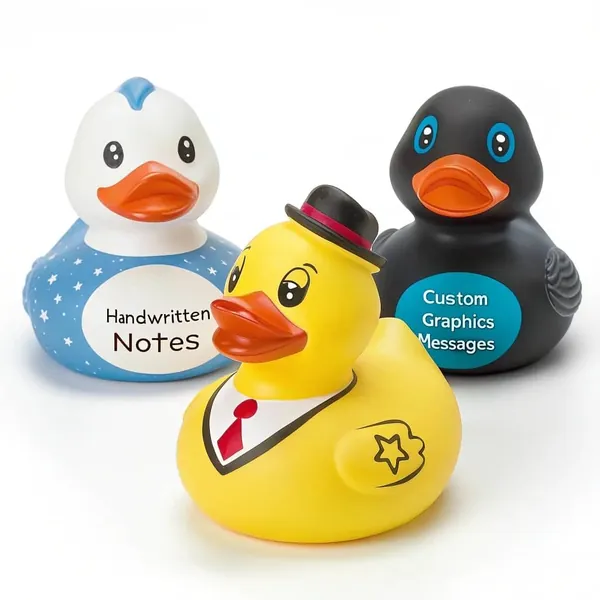
A hollow duck and a solid duck can look identical on a shelf and behave nothing alike in water, in a hand or in a carton. The hollow body is the classic bath duck: rotationally moulded, sealed, light and able to squeak. The solid body is a different object for a different job, and the choice changes float, feel, durability and freight.
In short: a duck that has to float, squeeze or squeak is hollow, and a duck that has to sit on a desk and feel heavy is solid. A solid body only floats when the tool traps air, so float is decided at the tool rather than at the sample.

How do they differ?
Hollow is the bath duck: a thin wall, a sealed air pocket and a squeeze. It floats, it squeaks with a vent, and it is light to ship.
Solid is a rigid body, usually injection moulded. It does not squeeze, it is heavier, and it floats only if the design includes a trapped air pocket. It is the choice for a display, a paperweight or a premium desk object.
Which floats?
Hollow, structurally: the air pocket provides buoyancy. A solid duck sinks unless the design includes an air chamber, which has to be engineered into the tool rather than added later.
If float is the product, the construction is the first decision.
What about durability and shipping?
A solid duck resists squeezing damage and feels substantial, but it is heavier to ship. Test the seal, add a drain hole and test it in water. A hollow duck can be punctured or take water through a failed seal, and it needs a drain hole if it is a bath toy.
Our standard duck body wall is about 1.5 mm, thin enough that the duck gives when you squeeze it. Go thinner and the body feels hollow in the hand and is easier to damage in production; go thicker and the duck turns stiff and plastic-feeling. The wall is set from your brief, and if you want a firmer squeeze we can adjust the compound as well as the wall.
Bulk shipping favours hollow: lighter, easier to pack and gentler on freight.

Which should a buyer choose?
A bath toy, a race duck or a giveaway: hollow. A display, a trophy or a desk piece: solid. A product that must float: hollow or a solid with a designed air pocket.
Final Note
The body is the one decision a buyer cannot fix later: a hollow duck can be weighted, printed and boxed, but a solid duck cannot be made to float once the tool is cut. I would settle the use first and let the body follow, because every other line on the order is written around it.
What should a buyer decide about the body?
- Does the duck have to float, or only look like a duck?
- Will it be squeezed, dropped or handled by a child?
- Does it end up on a desk, a display or in a bath?
- Does the carton weight matter for the freight?
Frequently Asked Questions
Do solid rubber ducks float?
Usually not, unless the design includes a trapped air pocket. A solid body is heavier than water; a hollow body floats on its air chamber. If float matters, specify the construction. Ask for a float test and check the tool.
Is a hollow duck less durable?
It can be punctured or take water if the seal fails, but a well-made hollow duck lasts for years in a bath. A solid duck resists squeezing damage but is heavier to ship. Test the seal, add a drain hole and test it in water.
Why are solid ducks more expensive to ship?
Because they are heavier and denser, and freight follows weight. A hollow duck is light and packs efficiently. For a bulk giveaway, hollow is the practical construction. Weigh the sample and compare the carton before deciding.