
Route A — Start from a stock mold
We already own stock molds that are shared across buyers and ready to run. Pick a style and add a logo or message; recolouring or printing a stock duck usually avoids new tooling.
Fundraising guide
A duck race is one of the simplest fundraisers to run: sell numbered ducks, release them at once, and let the water decide. The planning is in the details.
Before the race
A duck race fundraiser works the same way almost anywhere: supporters adopt a numbered duck, the ducks go into the water together, and the first ones across win prizes. Charities, community groups and schools use the format because it is easy to explain, fun to watch and tied to a good cause.
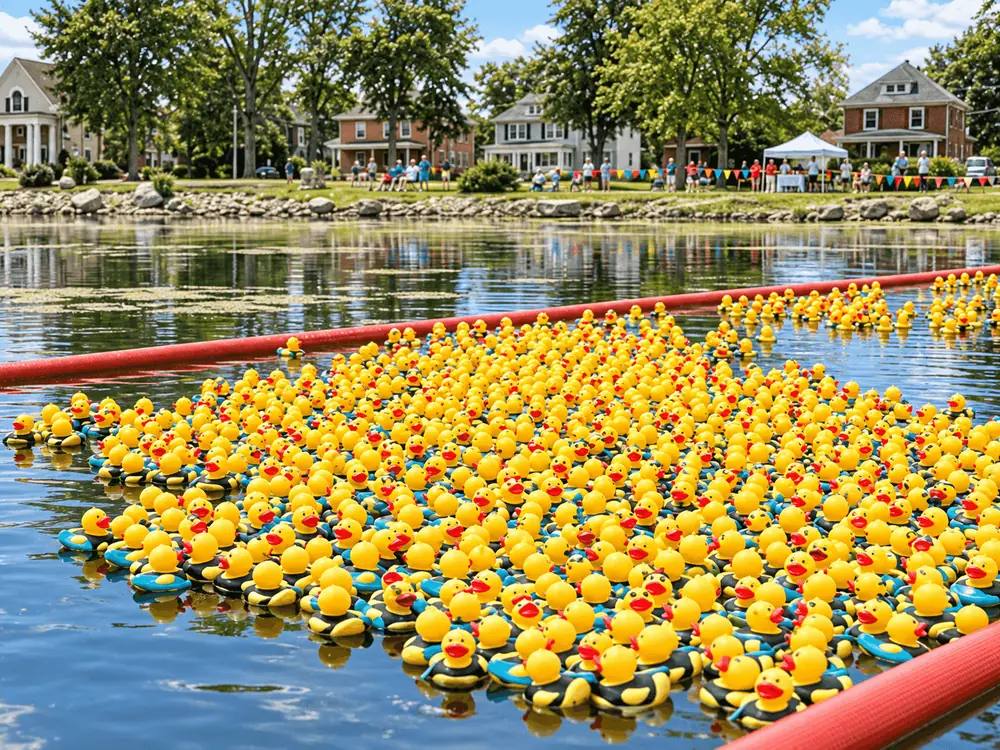
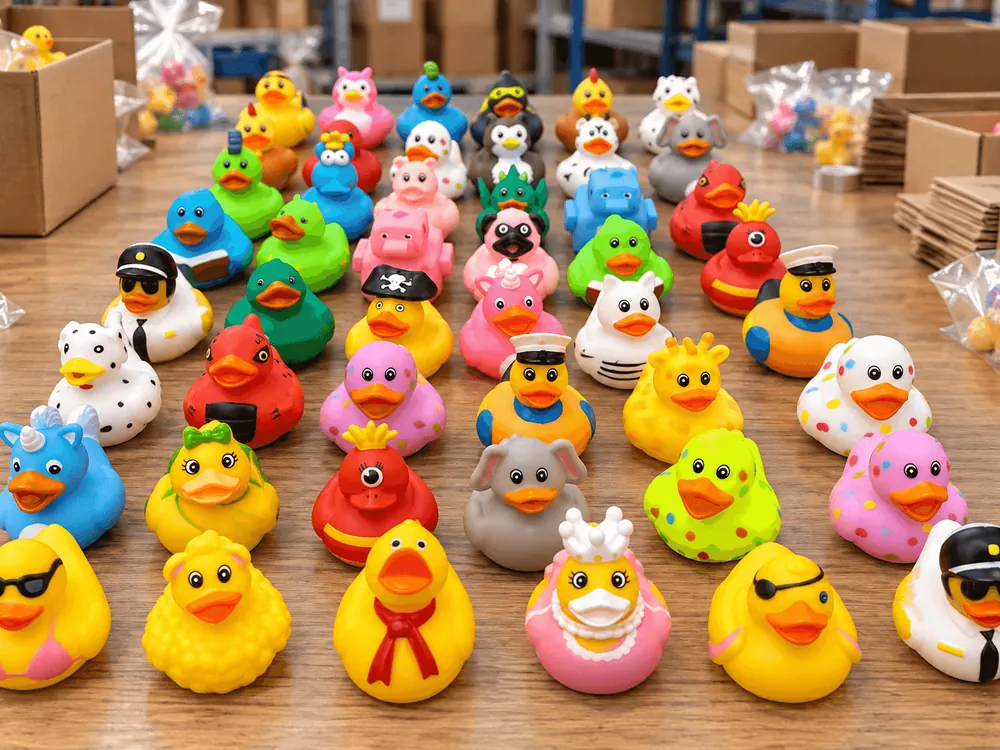
There are two ways to supply the ducks. Most organisers start with a stock style we already make; if the event needs its own shape, we cut a new mold from the design.
We already own stock molds that are shared across buyers and ready to run. Pick a style and add a logo or message; recolouring or printing a stock duck usually avoids new tooling.
If no stock style fits, start from the design or sketch. A 3D print locks the shape first and runs about 3% to 5% larger than the molded part; then a vinyl sample in the colour, then a production sample sprayed and printed. A mold you commission belongs to you and is never run for another customer without your approval; a mold we develop belongs to us and can serve several buyers.
Count backwards from the event date through artwork, samples, production, packing, pickup, customs and last-mile delivery; transit time alone does not tell you whether the ducks arrive in time. As a packing reference, 1,000 of our 6 cm ducks ship as two cartons of 45 × 37 × 40 cm, around 13 kg gross each, while the same count in the 8 cm duck needs the 45 × 37 × 45 cm carton. For hand-out, an OPP bag protects and counts each duck; a printed colour box carries brand and product copy for retail.
01
A duck race needs moving water, a start point, a finish line and a place for a crowd. Shallow streams with a gentle current work best. Check the current with the landowner or the local authority before you promise a date, and walk the finish line so you know where ducks will collect.

02
Ticket sales set the duck count, but the count also sets the scale of the event. Decide a target number first: it determines the launch method, the number of volunteers and the storage you need on the day. Number each duck in sequence and keep that number range tied to the tickets, so every duck in the water belongs to a supporter.

03
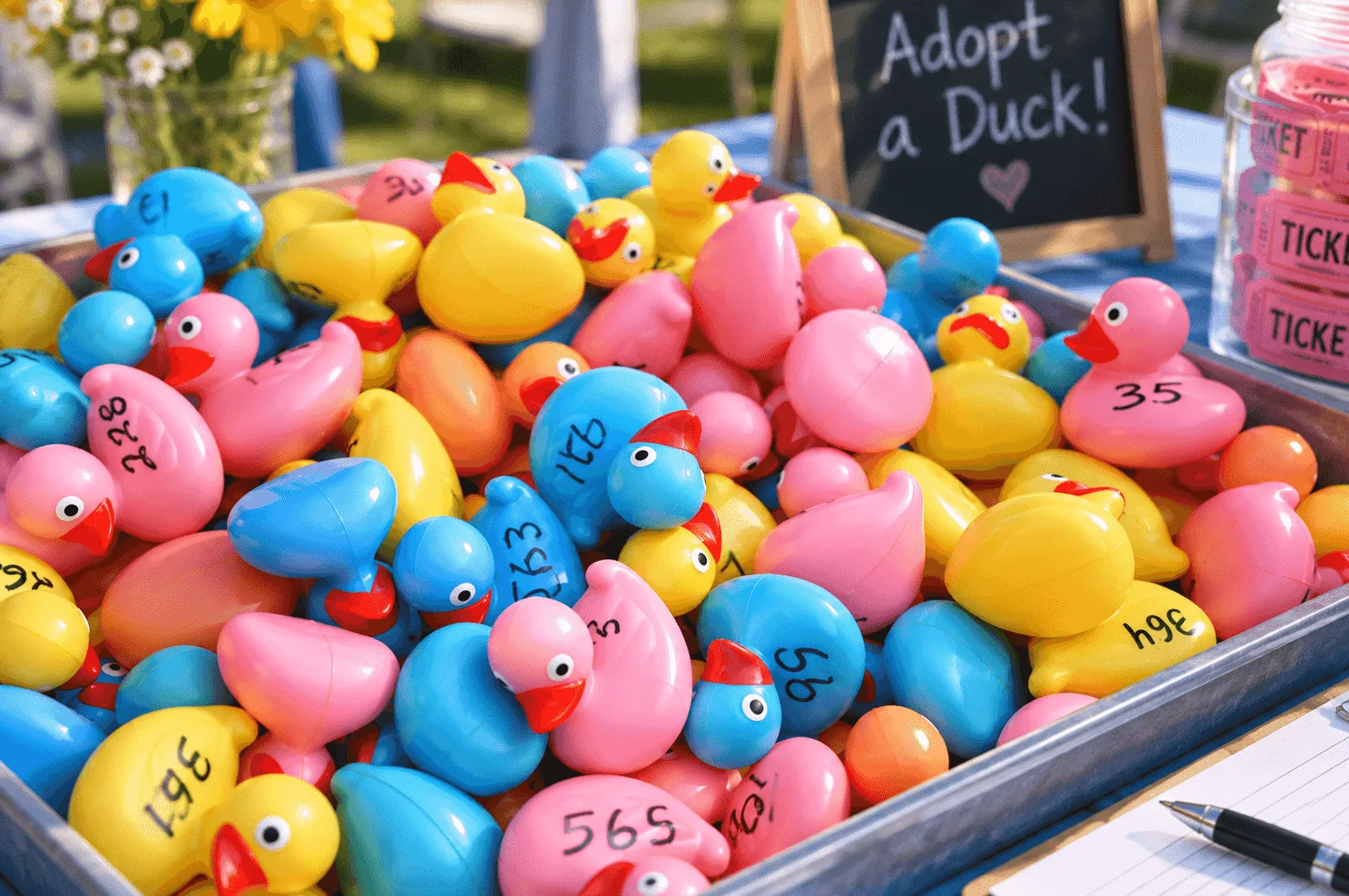
Fundraiser rubber ducks should be the same shape and the same color so the water reads as one race. Number them in sequence and put the number in the same place on every duck, so the finish line can read it and match it back to a ticket. A sponsor logo can sit on the body as long as it does not make the numbering hard to read.
Buoyancy is the next check. Organisers usually ask for a duck that floats well and rides steadily in moving water. Some choose a weighted duck with an iron plate in the base for stability; others prefer a smaller body that still floats and tracks straight. Test how the duck sits in water before you commit to the full run, especially if the course is fast or exposed.

04
Most duck race fundraisers open registration online, so supporters can sign up and adopt a numbered duck before race day. Before sales open, line up the event sponsors: businesses that can back the race, put their name on the event and adopt ducks of their own.

05
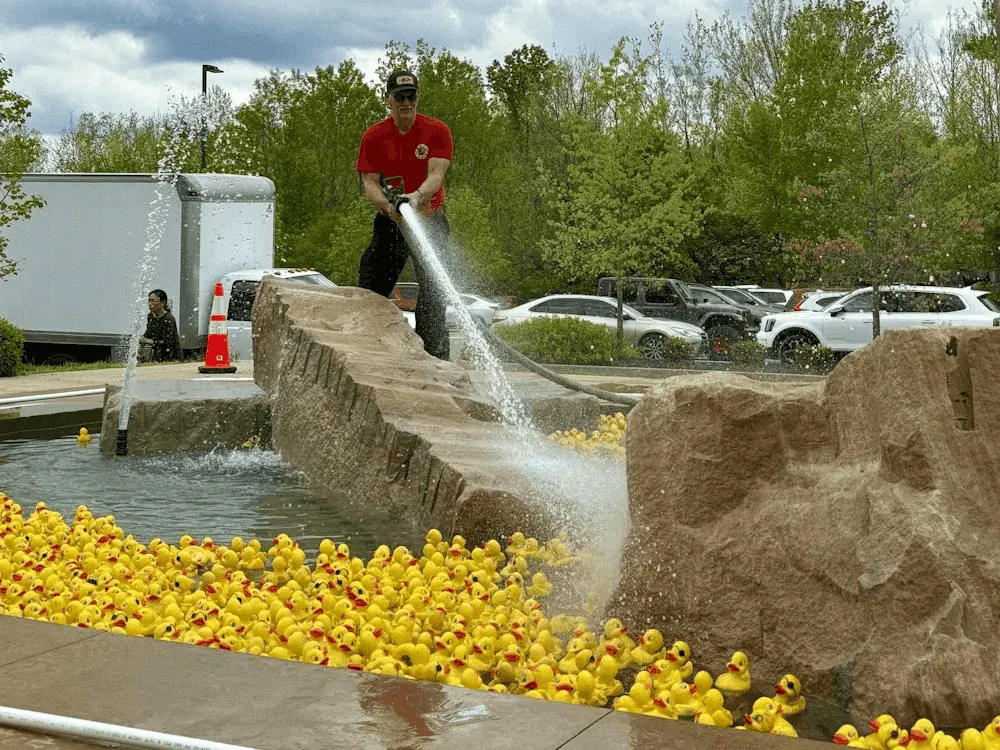
Have the ducks in numbered order before the crowd arrives. Release them in one go, keep the finish line staffed and photograph the first ducks across. Record the winning numbers as the ducks come out, because the number on the duck is what links the winner back to their ticket. Have a plan for ducks that drift into the bank: a reach pole and two people on the water's edge are usually enough.
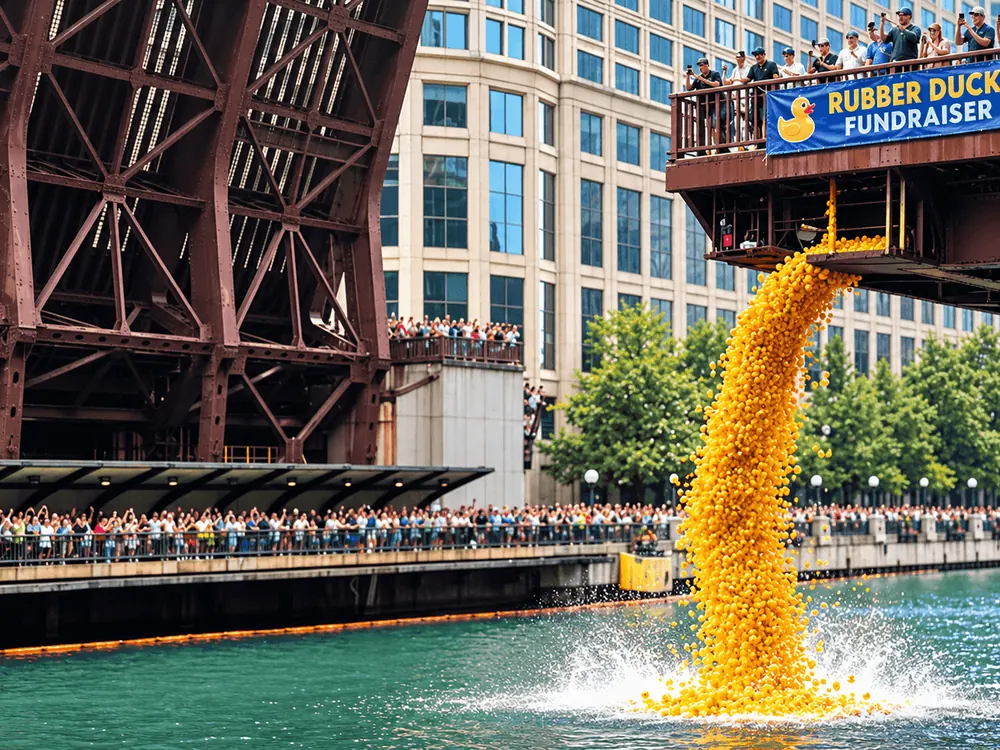
Fundraising inspiration
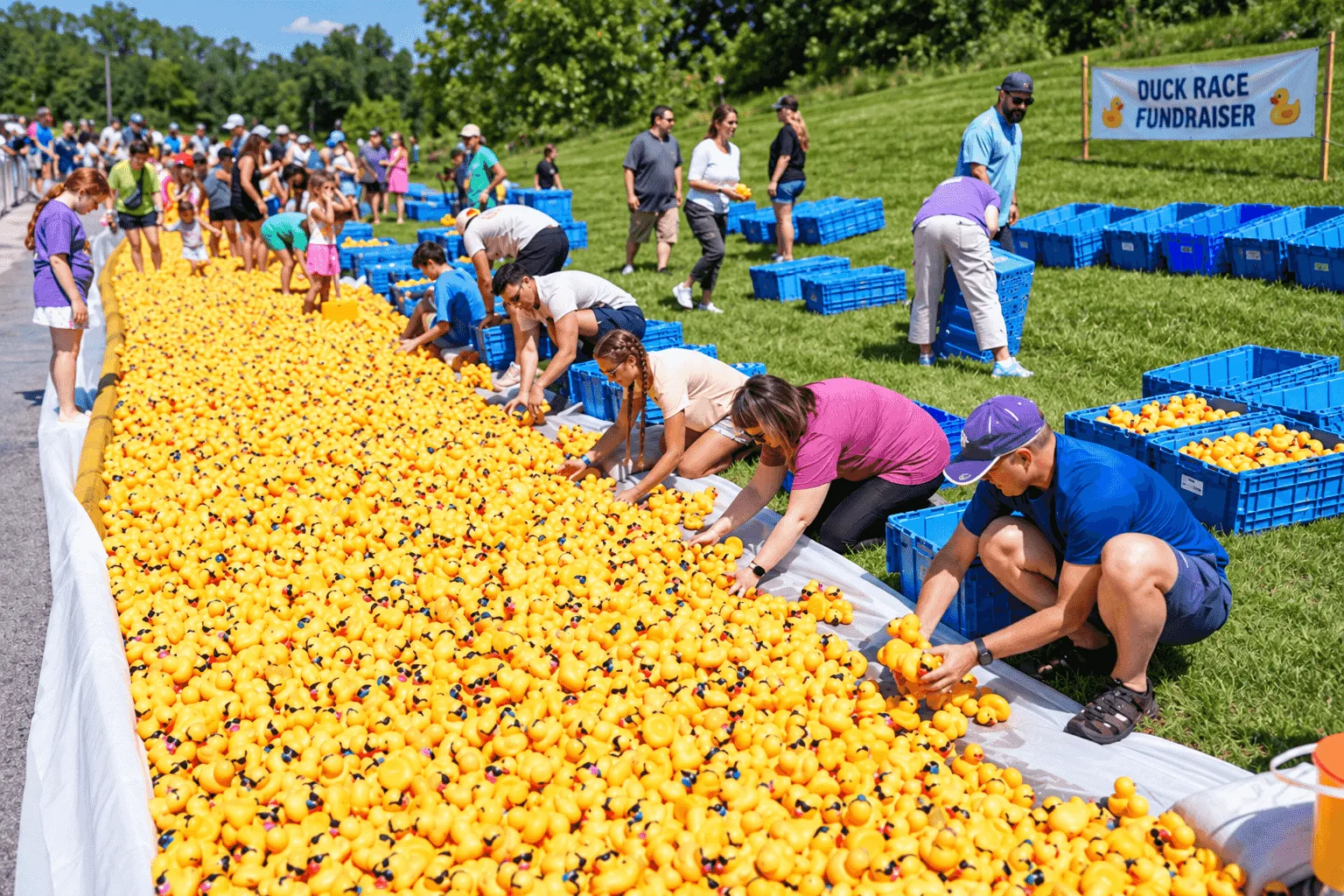
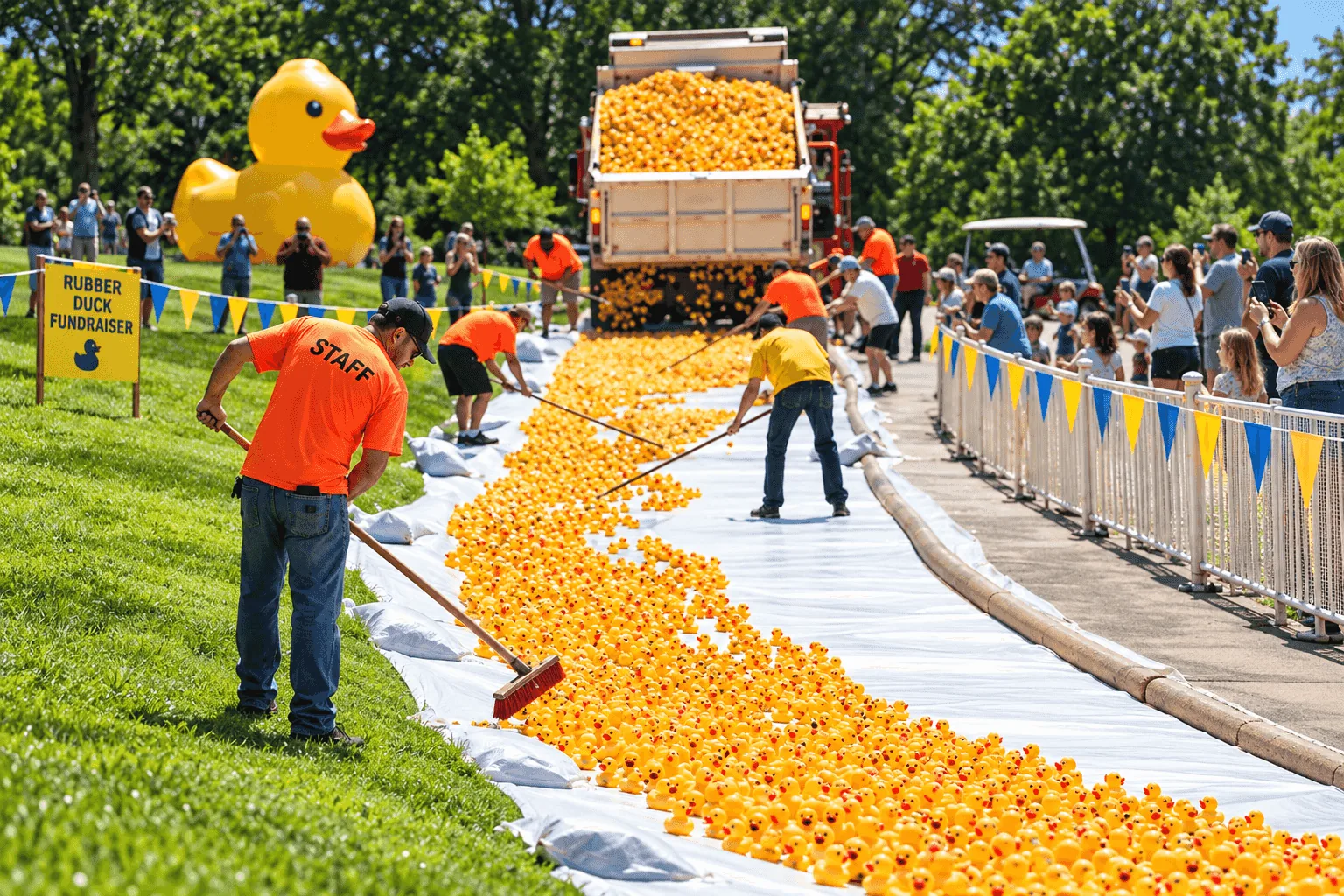
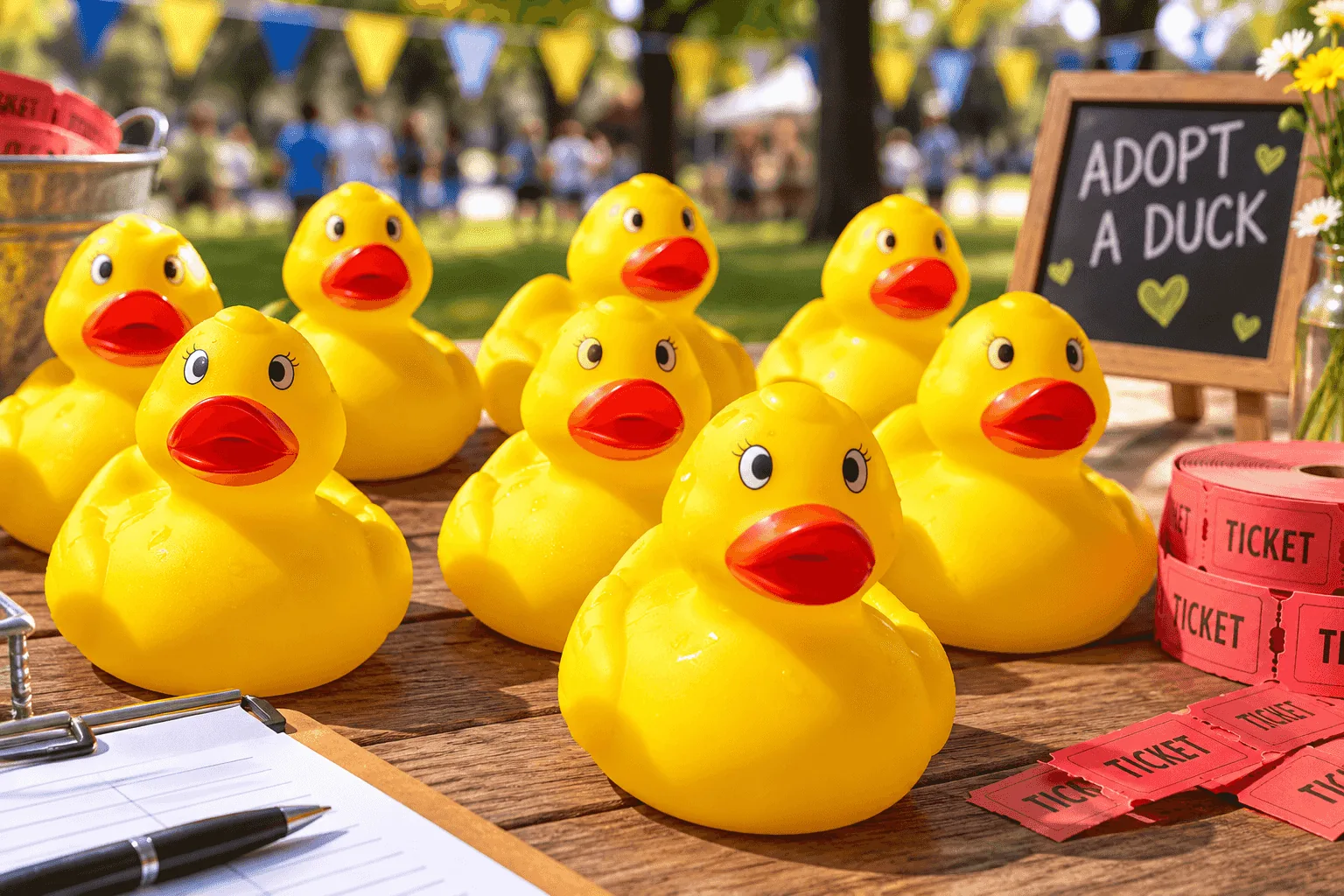
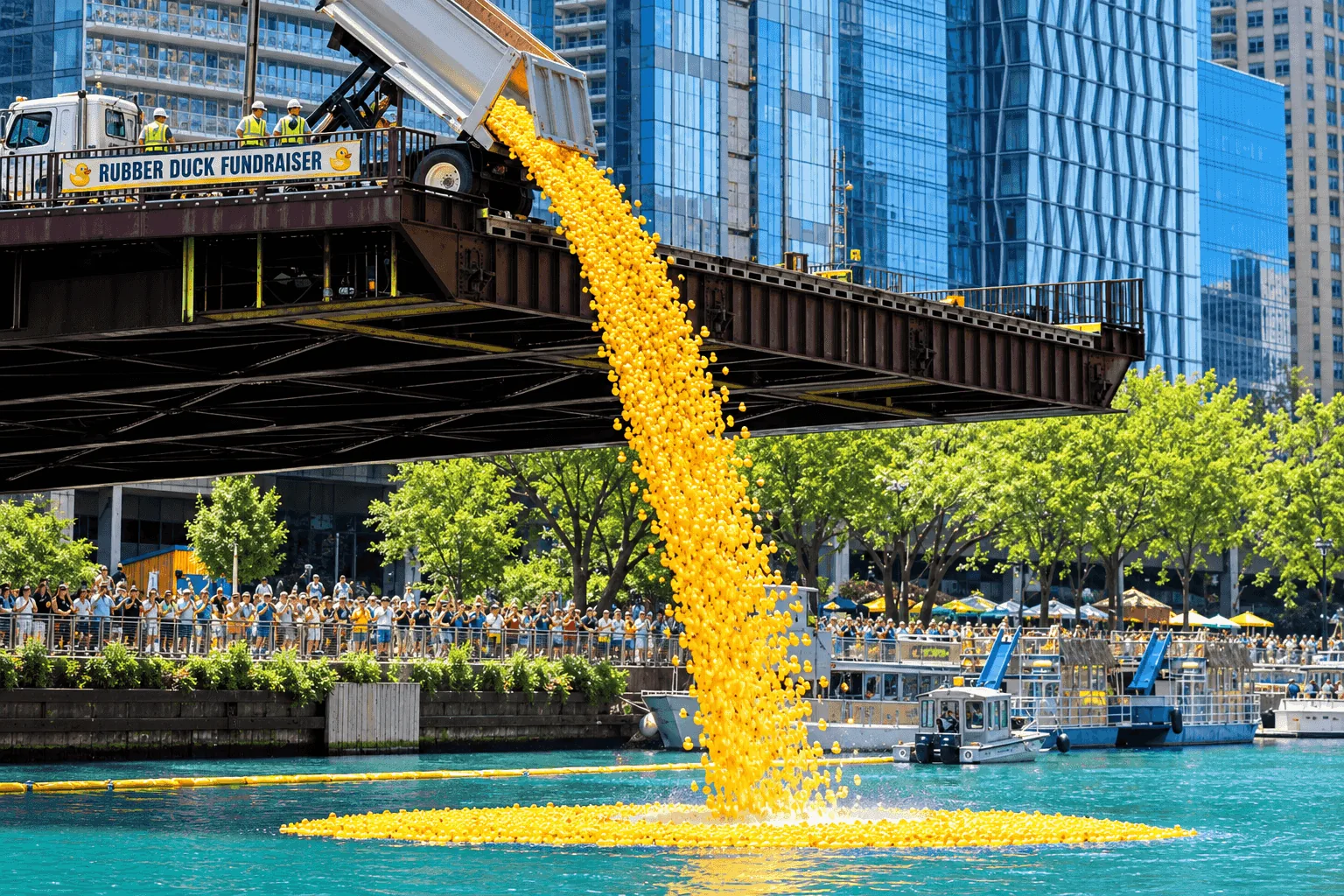
Real race-day moments and display ideas for charity duck races and fundraising events.
06
Publish the winning numbers the same day, hand out the prizes by number and place, thank the sponsors and collect the ducks. Most organisers reuse the ducks the next year, which is another reason to keep the same shape and numbering.




Send the venue and the date and we will tell you what the ducks need to look like.
Request a quote
Send the style, the quantity, the colors and your logo. We come back with a price and a sample plan.
Prefer email? info@lzengo.com WhatsApp +86 139 2625 5665

Quote form
Two minutes. No account needed.