Four records settle a repeat before it is discussed, because a second run is always judged against something and that something has to be physical. The signed standard duck, the spec card, the first article and the batch record each answer a different question, and none of them can be replaced by a photograph.
A second run is a reproduction job, and it is only as good as the duck and the card that were signed and put away after the first one.
In short: a reorder is a reproduction, not a repeat conversation. Four records make it possible — a signed standard duck kept out of circulation, a spec card with the mould number, material, colour reference, print method and dimensions, the first article from the original tool, and a batch record that ties a carton to a run. With those four, a repeat is a comparison. Without them, the factory is re-creating your duck from a picture.
A reorder is a reproduction, not a repeat order
A first order is a design project, and it goes wrong when the brief is thin. A reorder is a manufacturing project, and it goes wrong when the standard is thin. The second failure is worse, because by then everybody involved believes the hard part is finished. Nobody re-opens the design, nobody re-checks the standard, and the repeat quietly becomes a fresh job with the same drawing attached to it.
European toy rules make the point unusually literally. Manufacturers have to ensure that their manufacturing processes produce toys compliant with the approved type, keep technical documentation and draw up an EC Declaration of Conformity for that product (European Commission). An approved type is not an adjective and not a drawing. It is a product plus the file that describes it, and a reorder is the moment that sentence stops being a formality.
The four records that make a second run possible
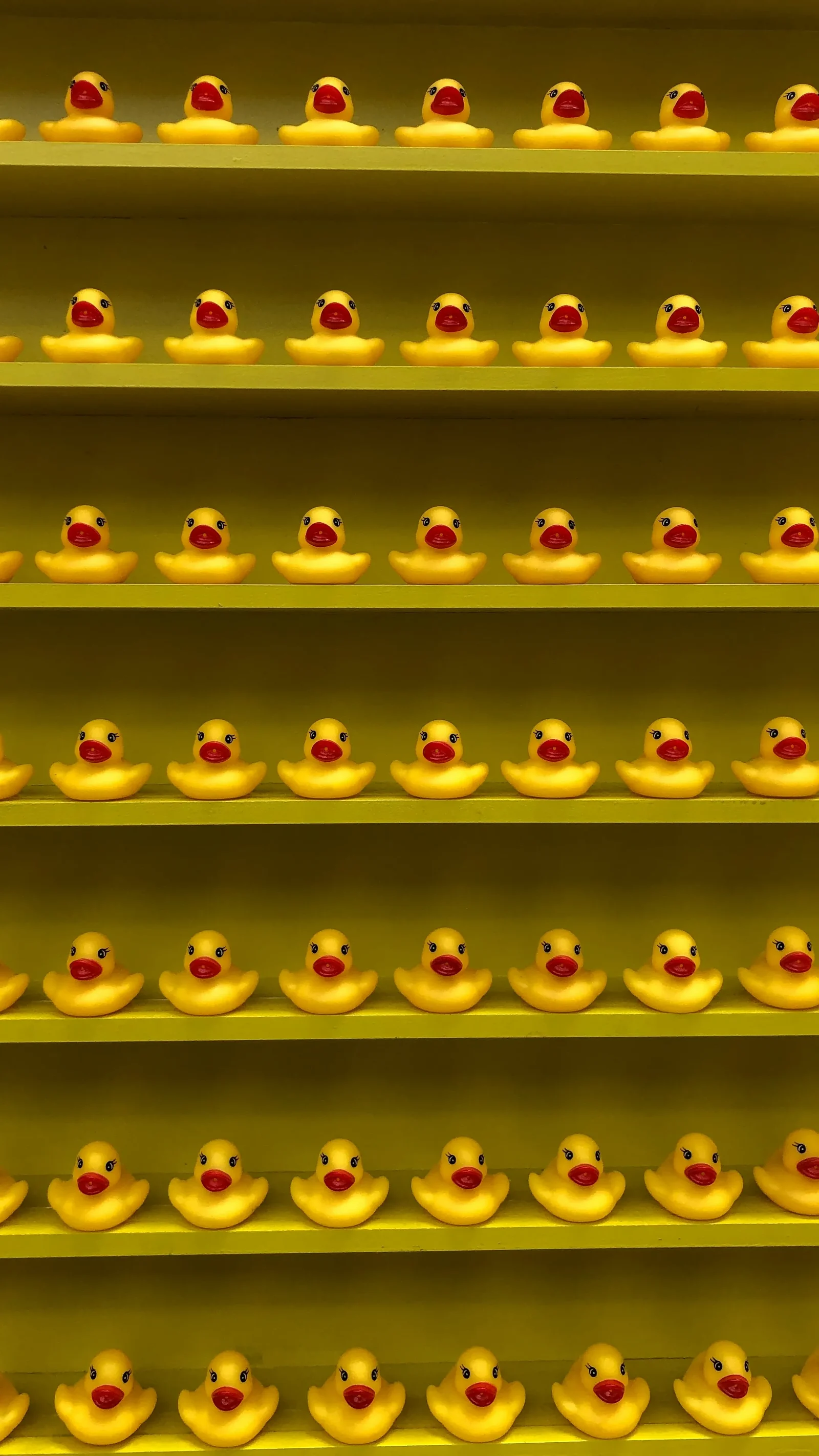
Four objects carry a duck across the gap between orders, and each one settles a different argument.
| Record | What it settles | What happens without it |
|---|---|---|
| The signed standard duck | Colour, print position, size and feel, on one object everybody signed | A photograph becomes the standard, and a photograph has no tolerance |
| The spec card | Mould number, material, colour reference, print method, dimensions | The factory rebuilds the specification from memory and a drawing |
| The first article | What the tool made when it was new, before any wear | Nobody can tell drift from a design that was always like that |
| The batch record | Which run a carton came from, and therefore which file covers it | A claim has no batch to attach to |
The order of that table matters less than the fact that all four are physical. A signed, dated and bagged standard duck kept out of circulation is the only object that can settle an argument about colour or print position, and the spec card belongs beside it with the tolerances written down rather than implied. A shelf of sample ducks is not a record unless one of them is marked as the standard and kept out of handling. The order terms page covers where that obligation belongs in a contract.

The tool is the part that does not change
The mould is the one element of a duck programme that is supposed to be identical between runs, and it is also the element that changes slowly without anybody noticing. A tool wears at its edges, and the first place wear shows is the parting line where the two halves meet. Wear there becomes flash, and flash changes both the look of the seam and the way the seam behaves under load.
The machine is not the tool. Clamping force, temperature and cycle settings are re-established by whoever sets the press, and they can be set differently on a second run without anyone intending a change. That is why the first article from the original tool matters: it is the only object that shows what the tool produced before the settings and the wear had any history. Tool ownership and storage carry their own questions, which the mould ownership page covers, and the effect of cavity count and tool wear on a programme is set out in the stock mould and custom tooling note.

What drifts first, and what it looks like
Colour moves first, because colour is a batch of pigment rather than a property of the tool. A new masterbatch lot can land a shade away from the retained duck without anyone making a mistake, and the change stays invisible until the two objects sit side by side under the same light. Print moves second: a plate wears, a screen stretches, and a printed panel that was centred creeps off position over several runs.
Dimensions and feel move last, and they move slowly. A tool that has run for years may sit a fraction outside the dimension it was cut to, and a compound from a different supplier can feel different in the hand at the same hardness. This is why the comparison has to be against the retained duck and not against a memory, a photograph or the last batch that happened to pass. A photograph flattens colour and hides the surface, and a buyer's memory does the same thing more slowly. The sample inspection guide applies the same checklist at goods in, and the inspection note covers where in the run the comparison belongs.

The carton is the batch record
Every carton that leaves a factory should be traceable to the run that made it, because the alternative is a claim with nothing to attach to. A carton label that carries the design, the run reference and the date turns a box into a record. A carton that says assorted turns a delivery into a lucky dip, which is fine for a giveaway and useless for a buyer who has to answer a question about one duck. Where a single delivery carries several designs, the carton specification note covers how to keep each design traceable inside one consignment.
The paperwork follows the same logic. Under the CPSC's testing and certification rules, the manufacturer or importer certifies a product on the basis of passing test results, and the certificate has to accompany the product or the shipment, with a copy available to retailers and distributors (CPSC testing and certification). A certificate that covered the first shipment is a document about that shipment. A reorder needs its own file, and the batch record is what ties the new cartons to it.

A reorder made after the standard moved
A reorder is also the moment to check whether the rules moved underneath the product. The CPSC identifies the mandatory version of ASTM F963 in force through 16 CFR 1250.2, which makes the version a report was written against a fact worth confirming rather than assuming (CPSC toy safety). A file that was complete two years ago can be complete and out of date at the same time.
A retailer's own requirements work the same way, and they can change between seasons without any public announcement. The practical move is to read the file before the repeat is agreed rather than after the cartons land: which version, which report, which date, and whether anything in the design changed since the last signature. The RFQ page covers what to put into the request so the answer comes back in one round.
What the second run has to prove
The five questions below are the ones worth answering with objects rather than assurances, because a reorder is easier to get right than to argue about afterwards. They also make a usable checklist for the file that travels with the repeat.
- Is there a signed standard duck kept out of circulation, and can the factory put the new first article beside it?
- Does the spec card carry the mould number, material, colour reference, print method and dimensions, or is part of it still in an email thread?
- Was the first article from the original tool retained, or is the sample shelf the only reference left?
- Does the carton label name the run, and does the current file cover the product as it will actually ship?
- Has the standard or the retailer requirement changed since the last file was signed?

Final Note
A reorder is the least dramatic test of whether a duck programme has a memory. If the second run matches, the records were real. If it does not, the buyer learns that the first run was a conversation rather than a specification, and the fix is not a different factory but a better file.
An hour spent assembling four objects is cheaper than a season negotiating about a shade of yellow. The standard duck, the spec card, the first article and the carton label are unglamorous, and they are the reason a repeat can be boring.
Frequently Asked Questions
Why does a reorder come back different from the first order?
Usually because the comparison was made against a memory or a photograph rather than a retained object. Colour is a pigment lot, print position is a plate, dimensions are a tool that wears, and each one can move without anyone intending a change. A signed standard duck and a spec card with written tolerances turn the repeat into a comparison.
Does a second run need new test reports?
The file has to cover the product as it ships, and standards are revised, so the version and the date in the existing report are worth confirming before the repeat is agreed. Checking the version first avoids discovering the gap after the cartons have landed.
Who should keep the standard duck?
Whoever holds the relationship with the factory, and it belongs in the order terms rather than in an assumption. If the tool ever moves, the standard duck and the spec card travel with it, or the next factory is starting again from a photograph.
Can a reorder be made from the original sample?
Only if that sample was marked as the standard, dated, bagged and kept out of handling. A sample that has been passed around a team for two years has picked up marks that make it a poor reference, which is why the retained standard is stored apart from the sample shelf.
Key takeaways
- A reorder is a reproduction, not a repeat order: the approved type is a product plus its file.
- The four records that make a second run possible: all four have to be physical.
- The tool is the part that does not change: wear shows at the parting line first.
- What drifts first, and what it looks like: colour, then print, then dimensions.
- What the second run has to prove: five questions answered with objects.