A licensed campus duck has to survive a student, an alumnus and a parent, and it is reordered by the year, which is a different brief from a giveaway with a logo on it. The store that sells it is buying a product that has to sit beside a sweatshirt and a mug. That is why the licence and the mark are settled before the design.
A campus duck sits on a store shelf beside a sweatshirt and a mug, not in a goodie bag.
The question that keeps coming up is where to stop. A bookstore wants a duck in the school colours, the alumni office wants a duck for a reunion, and the athletics department wants a mascot. Those are three different products at three different levels of tooling, and treating them as one order is the usual way a campus line goes wrong.
In short: University rubber duck merchandise is licensed merchandise. Settle the mark and the licence first, choose one of three design levels, put the year on a printed part rather than in the tool, and pack the duck for a campus shelf. A shared order between the bookstore and the alumni office works when the split is planned before the run.
A Campus Duck Is Merchandising, Not a Giveaway
A giveaway is bought to be handed out at an event and its life ends when the event does. Campus merchandise is bought to be sold, and it has to hold its place on a shelf beside apparel, drinkware and stationery. That changes the standard for the design, the pack and the consistency of the mark.

The buyer is also a store, not a marketing department. A campus store buys a range and watches what sells through a term, and it needs the duck to fit a band the store can sell and a shelf position rather than a campaign. A duck that is too large, too small or packed in a way that cannot hang or stand is a duck the store will not reorder.
The audience is three groups at once: students buying for themselves, parents buying a souvenir and alumni buying a memory. The same body can serve all three, but the message on the pack has to pick one at a time, which is why a campus line usually carries more than one design rather than one duck with a long description.
Settle the Mark Before the Tool
A university mark is a trademark, and a trademark identifies the source of the goods. The USPTO trademark basics set out that the mark is tied to the goods and services named in the application, which is why a campus licence lists the product categories it covers and the artwork it approves. A duck sold by the bookstore is one category; a duck given to alumni at a reunion is another.
The practical work is to get the mark file before the design starts. A school mark is usually supplied as a vector file with a colour reference and a clear space rule, and both have to be respected on a curved body. A mark that is redrawn by the factory to fit the space is a mark that will not match the version the licensing office approved, and the mismatch is found after the first run.
The other part of the mark is the licence itself. A campus store or alumni office usually buys through a licence that names the approved products, the artwork and the market. The duck run is inside that scope or it is not, and the factory cannot decide which. The logo placement note covers where a mark can sit on the body without distorting it.
Three Design Levels and What Each Changes
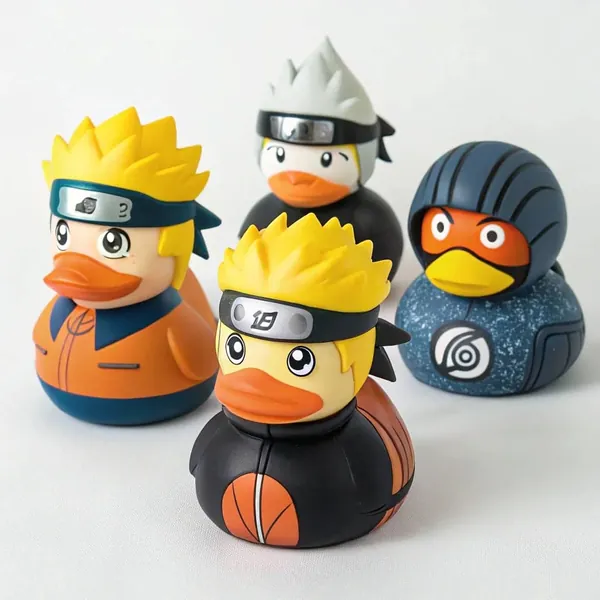
Most campus duck arguments are really a design level argument. The same word, "mascot", can mean a printed logo on a stock duck or a new body shaped like the school's mascot, and the difference in tooling, approval and timing is large.
| Level | What is made | What it changes | Where it fits |
|---|---|---|---|
| Logo only | A stock body with a printed or moulded mark | A print file and a colour match | The entry point and the first order |
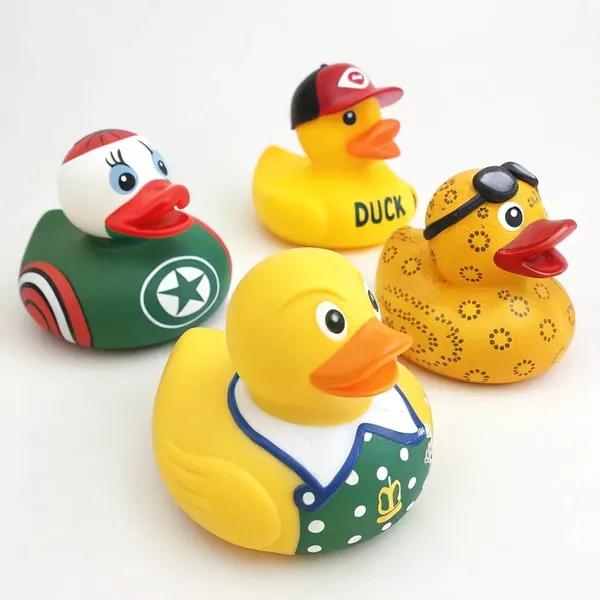
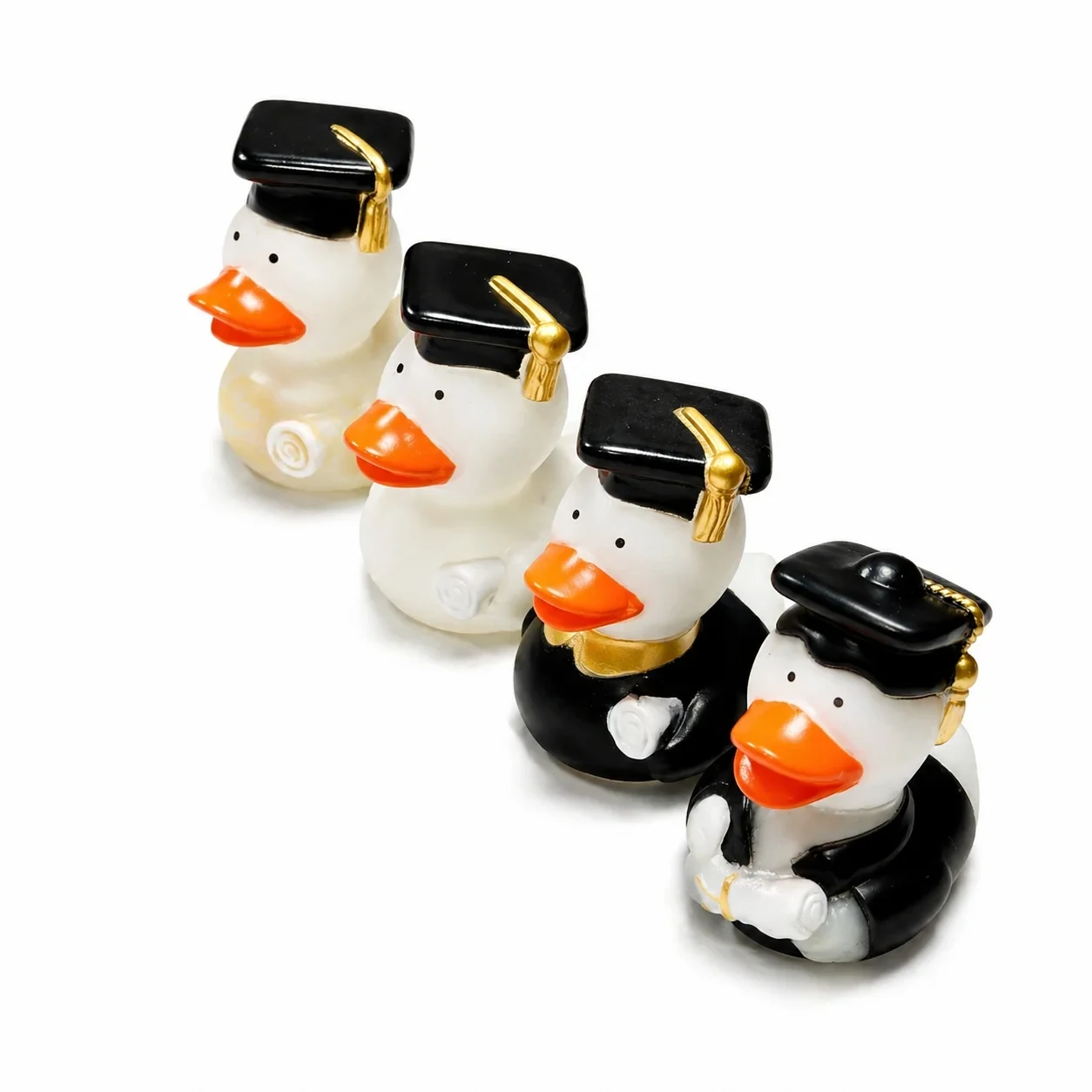
| Dressed body | A stock body plus moulded parts such as a cap, a gown or a scarf | Additional parts and an extra approval | Graduation, reunions and the gift shelf |
| Full mascot | A new body shaped as the school mascot | A new tool and a full approval file | The flagship duck and the alumni range |
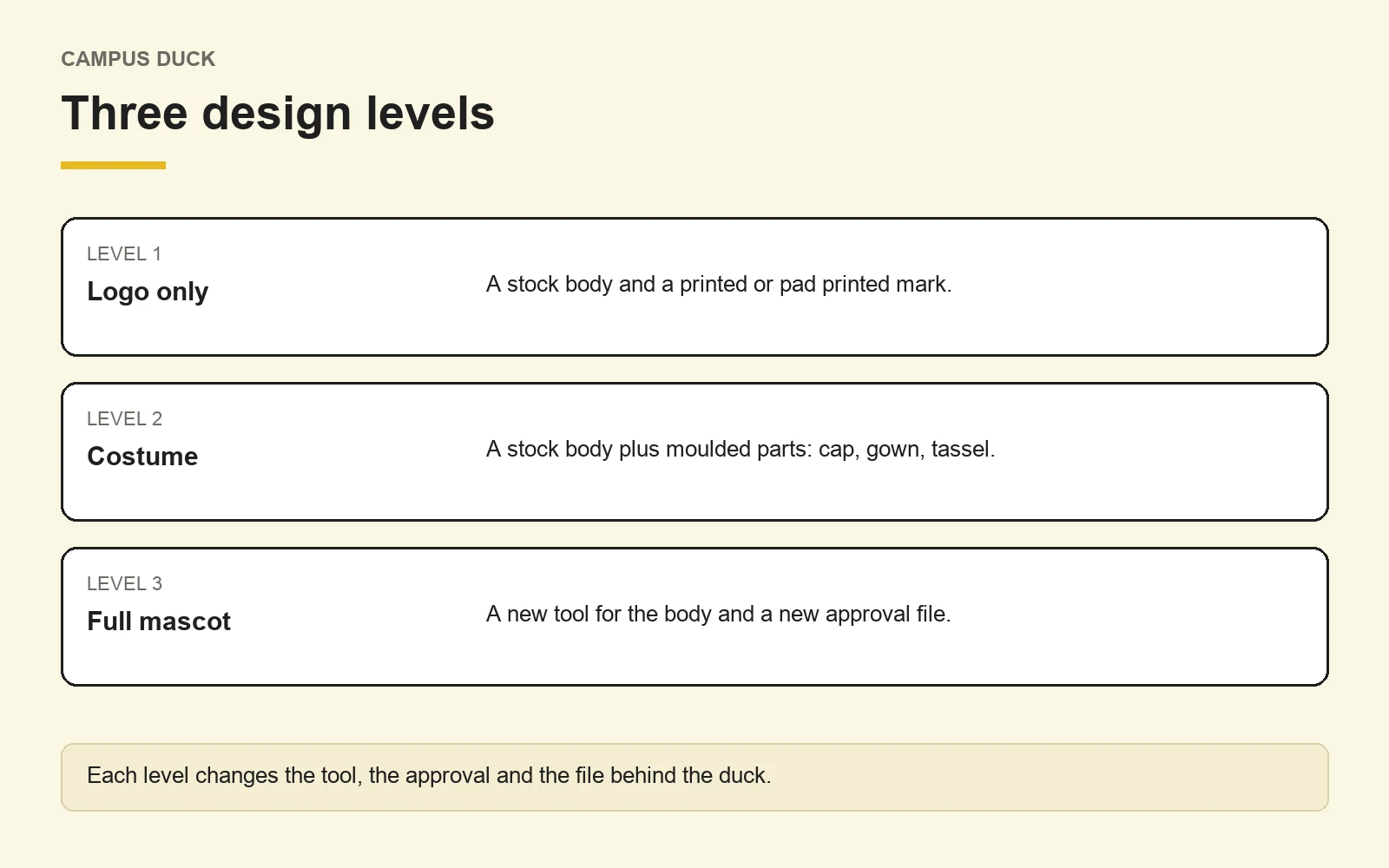
The levels are not a ladder of quality. A logo-only duck is the right product for a store that needs a low entry point and a fast turnaround, and a full mascot is the right product for a flagship that carries the school's identity. The mistake is to start at the flagship level for a first order and discover that the approval file and the tool both have to be built before a single duck can be sold.
The stock mould and custom tooling note covers what changes when a stock body becomes a new tool, and the product line note covers how a small range is built around one body.
The Year Is a Print Decision
The year is the most common campus design element and the one most likely to turn a duck into dead stock. A graduation year is a fact with a short life. Printed on the body, it dates every piece in the carton. Printed on a tag or added on a card, it can change without touching the duck.
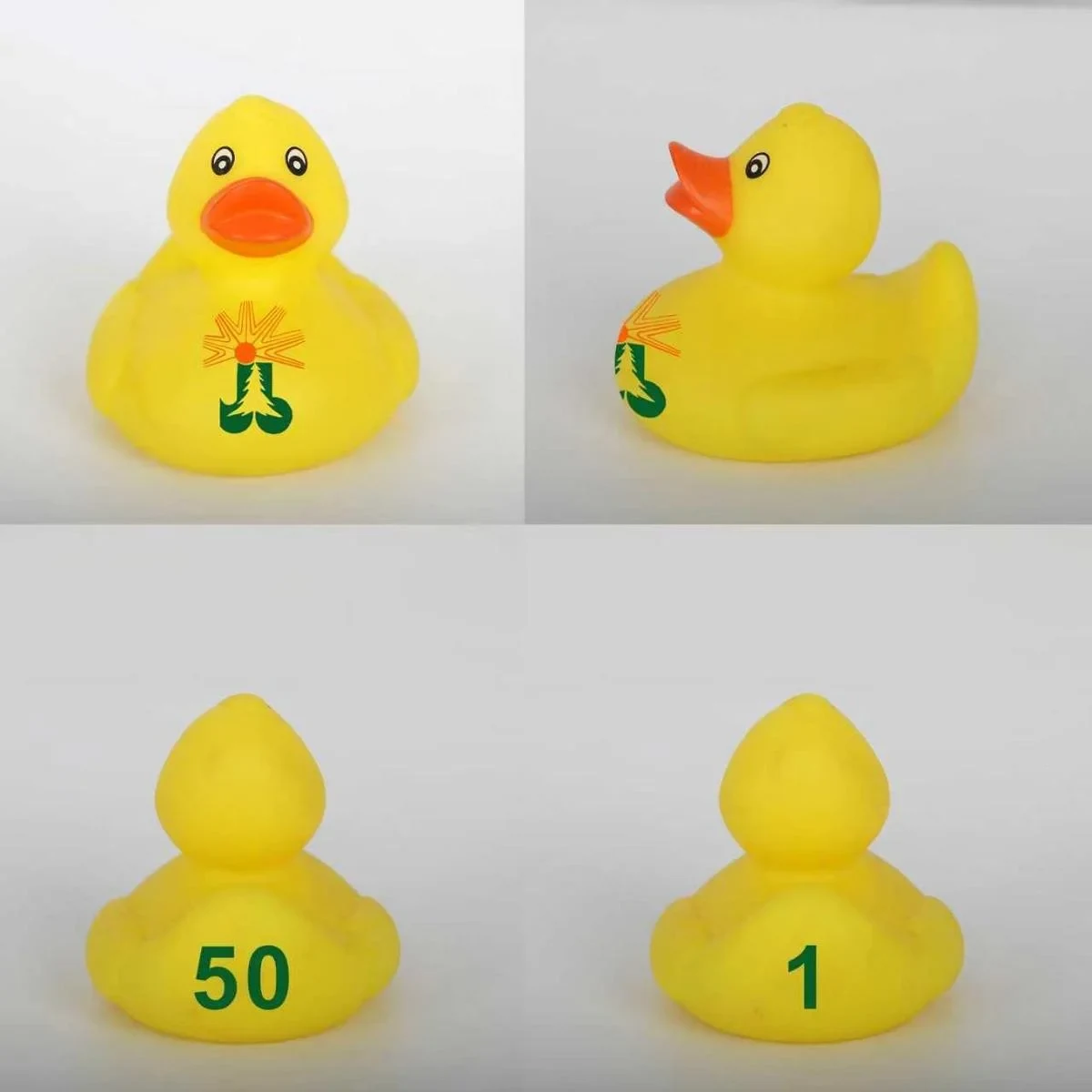
The same logic applies to class names, reunion years and homecoming themes. Anything that changes every twelve months belongs on the part of the product that is simplest to reprint, and anything that stays for the life of the mark belongs on the body. The hang tag note covers how a printed tag attaches and what it can carry, and the colour matching note covers how the school colour is held across a body and a tag.
A printed year also gives the store a reason to reorder. The duck body stays on the shelf, the tag changes, and the store has a new unit for the new class without a new tool. That is a merchandising rhythm, not a design trick.
The Store and the Alumni Office Can Share One Order
Two campus buyers can share one run when the split is planned. The store needs shelf-ready units with a barcode and a pack; the alumni office needs gifts for an event, often bagged or boxed with a card. The body, the mark and the colour can be shared, while the pack and the add-on differ.
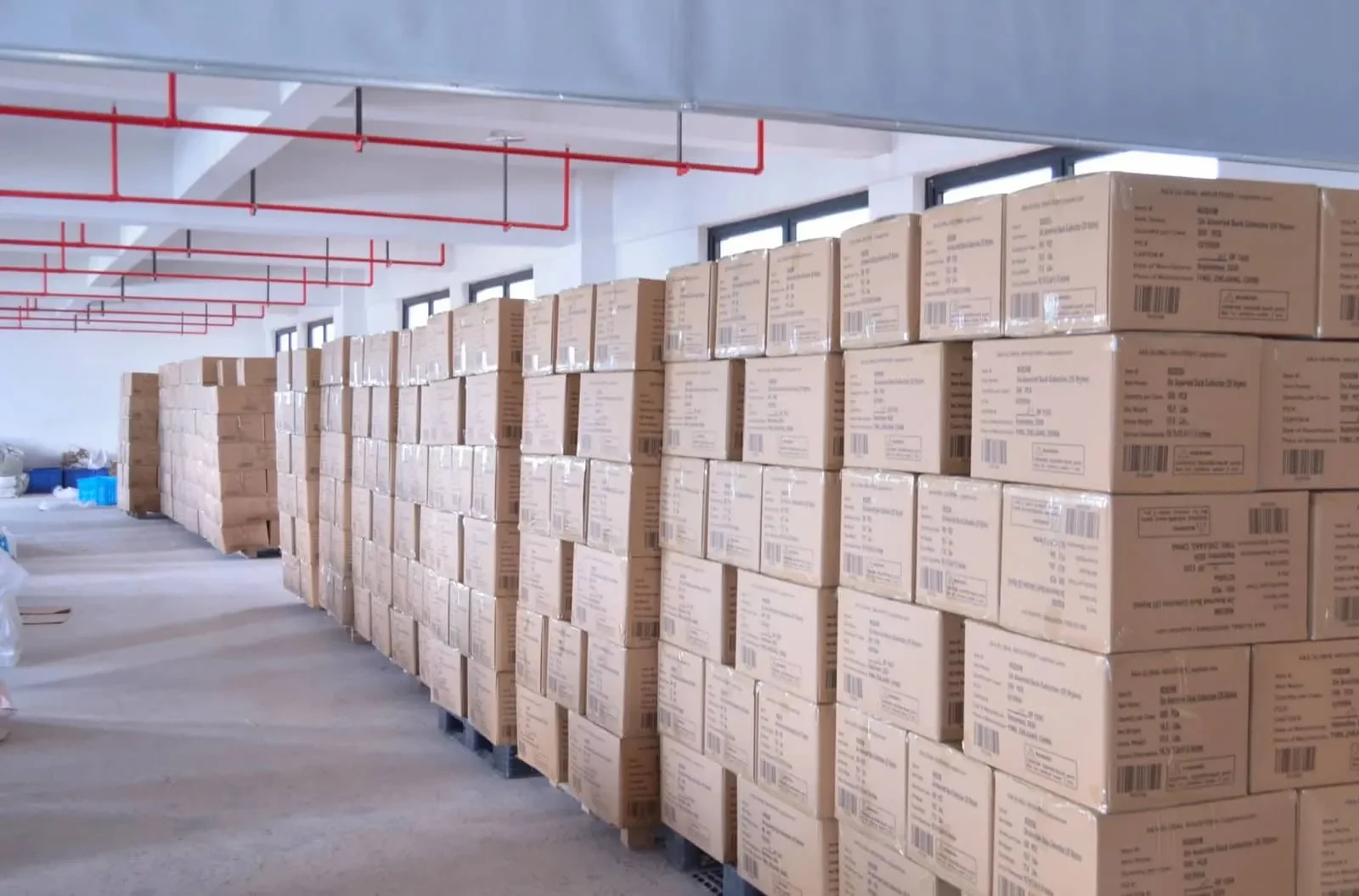
The split has to be written down as two ship-to addresses and two pack specifications, not as one order with a note. The cartons are labelled by destination and the pack line is recorded per destination, so the store receives shelf units and the alumni office receives gift units from the same run. The carton specification note covers the label fields, and the gift set note covers the boxed version.
A shared order also shares the risk. If one destination changes its quantity late, the other destination absorbs the change unless the split was fixed in the purchase order. Writing both quantities into the order, with the pack per destination, is the protection.
Pack the Duck for a Campus Shelf
A campus store shelf is a crowded place, and the pack is the part that gets the duck onto it. A bag with a header can hang; a small box can stand; a counter box can hold a pile beside the register. The pack has to match the fixture the store actually has, and that fixture is a question for the store, not a guess for the factory.
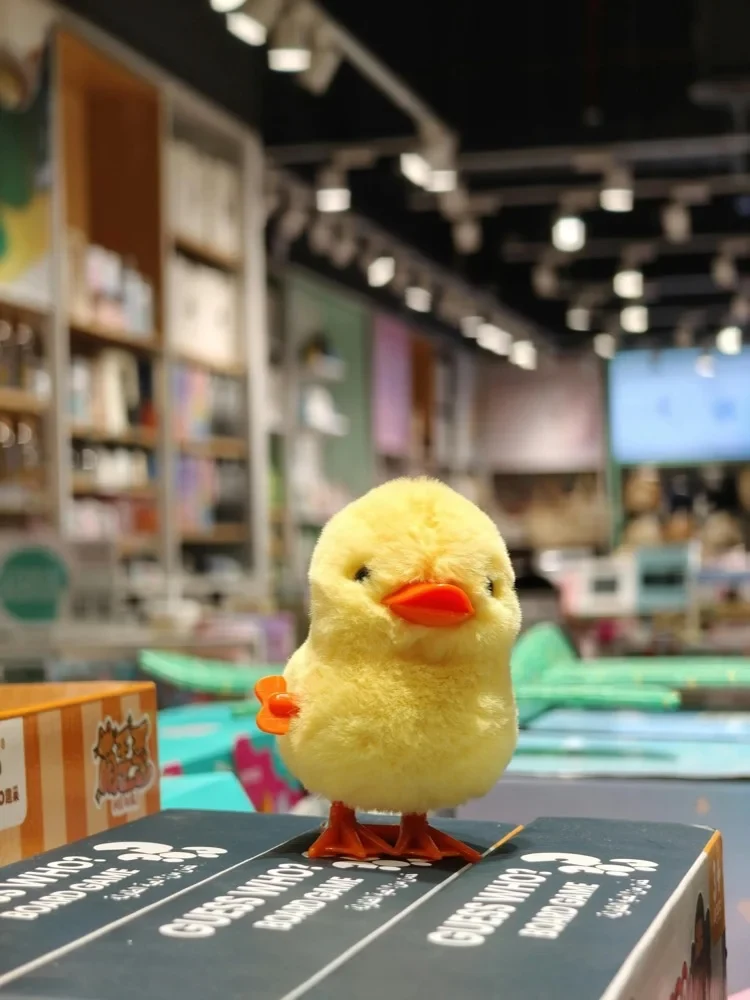
The pack also carries the mark, the product name and the barcode, and those have to be approved with the duck. A pack that is designed after the duck is approved is a pack that can hold up the delivery, because the store cannot receive a unit without a scannable code. The packaging note covers the bag, the header and the box as one system, and the size chart covers how the duck's size decides the pack.
The shelf test is simple: put the packed duck on a table at the height of a store shelf and look at it from three paces. If the mark is not readable and the product is not identifiable, the pack is doing the wrong job, whatever it looks like on a screen.
The Safety File Follows the Duck Home
A campus duck sold to a student or an alumnus can end up in a home with a child, and that possibility is what makes the safety file part of the product rather than an afterthought. The file should travel with the run: the age guidance, the test reports that apply to the market, and the permanent marks on the product and the pack.
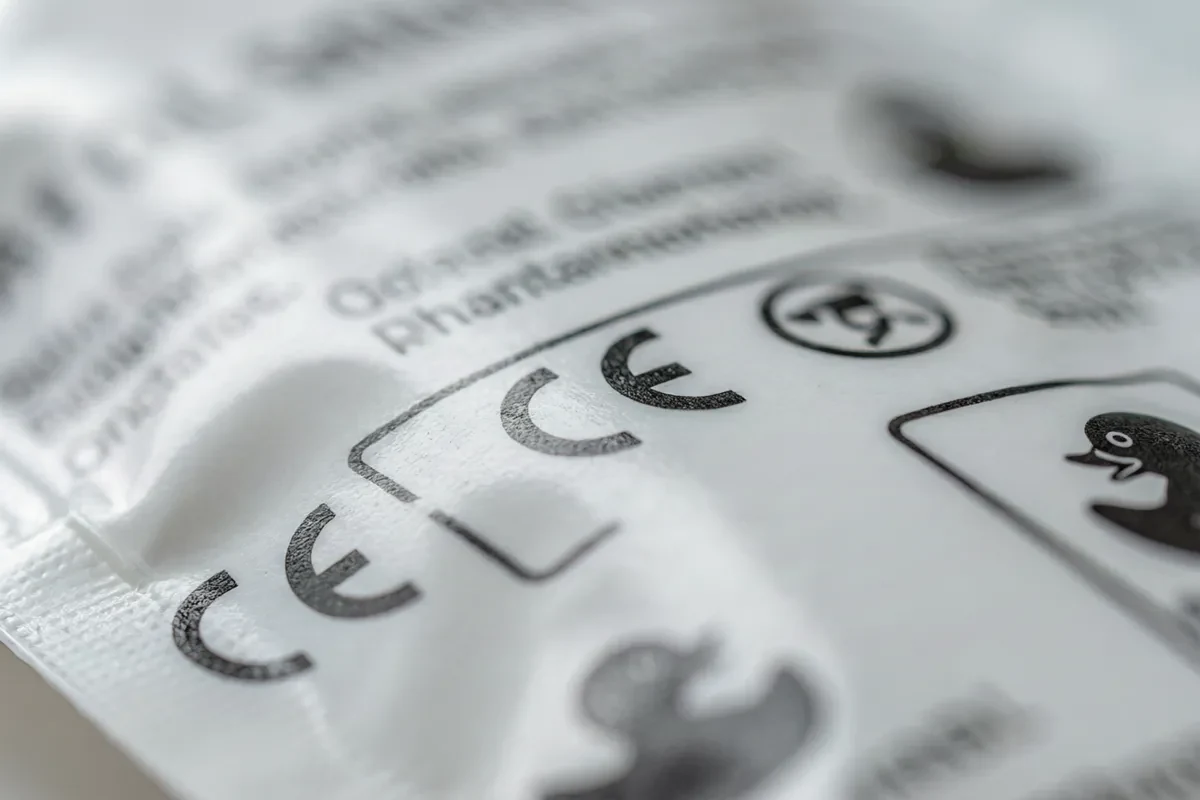
The permanent marks are the part a store cannot add later. The identifying mark belongs on the product and its packaging, to the extent practicable, and a store sticker is not a substitute, as the CPSC tracking label guidance sets out. The toy safety label guide covers what the label has to state for the market the duck is sold in.
The file is also what protects the licence. A campus licensing office can ask for the test documents and the label artwork before it approves the product, and a run that cannot produce them is a run that stalls at the approval step rather than at the tool.
Five questions settle a campus order before the design starts:
- Which mark and which licence cover this duck, and which product category does it sit in?
- Which design level does the shelf need: logo only, dressed body or full mascot?
- Which elements change every year, and are they on a printed part?
- Does the order have two destinations, and is each pack specified?
- Does the safety file travel with the run, and who holds it?
Frequently Asked Questions
Do campus stores need a licence to sell a duck with the school logo?
Yes. A school mark is a trademark, and merchandise that carries it is sold under a licence from the school or its licensing representative. The licence names the approved products, the artwork and the market, and the duck run has to sit inside that scope.
What is the simplest way to start a campus duck line?
Start with a logo-only duck on a stock body, in the school colour, with a printed or moulded mark and a pack the store can hang or stand. That level needs no new tool, and it gives the store a product to test before a dressed body or a full mascot is approved.
Can a bookstore and the alumni office order together?
Yes, if the order is written as two destinations with two pack specifications. The body, the mark and the colour are shared, while the store gets shelf units and the alumni office gets gift units. Both quantities belong in the purchase order so a late change does not fall on the other destination.
How long does a custom mascot duck take?
That depends on the tool and the approval file, and no honest answer can be given before both are scoped. A logo-only duck is a print and pack job; a full mascot is a new body, a new approval and a new sample. The level should be chosen before a date is promised to the store.
Final Note: Five Decisions Before the Campus Order
- Get the mark file and the licence scope before the design starts.
- Choose the design level the shelf needs, not the level the mascot deserves.
- Put the year and every dated element on a printed part.
- Write a shared order as two destinations with two pack specifications.
- Send the safety file with the run and keep the approval record with it.
A campus duck is a small product with a long chain behind it: a licensing office, a store buyer, a tool room and a safety file. When those four are aligned before the design starts, the duck is a simple product. When they are not, the duck becomes the thing that exposes the gap.
Key takeaways
- A campus duck is licensed merchandise with a store, a season and a mark, covered under campus merchandising.
- The mark file and the licence scope come before the design, covered under settling the mark.
- Three design levels change the tool, the approval and the timing, covered under the design levels.
- The year belongs on a printed part, not in the tool, covered under the year.
- A shared order is two destinations and two pack specifications, and the safety file travels with the run, covered under the shared order.
EOF