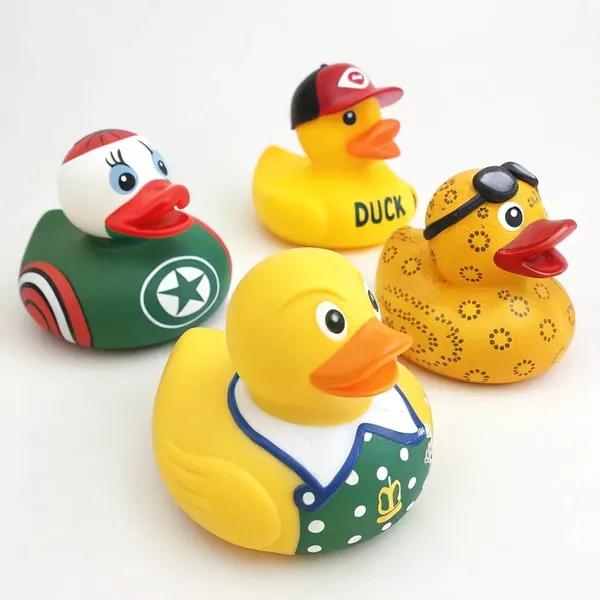
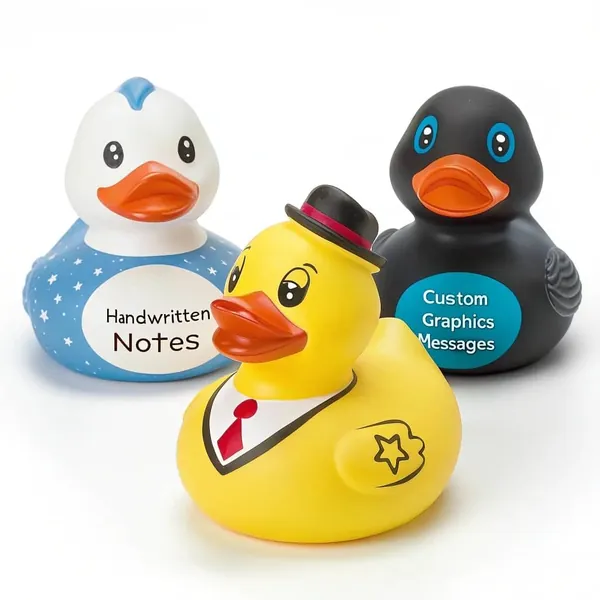
A gift set is approved as one object: duck, insert, card and box. Approve the duck alone and the failure shows up in a component nobody checked.
The insert, the card and the box are the components a duck-only approval never checks.
In short: a custom gift set is approved as a whole, because the duck, the insert, the card and the box are seen and judged together. That means four approvals rather than one, a colour standard agreed before the mould is cut, a print position that works on a curved body, and a pack drawing that is tested as a packed product rather than as a box. A set that fails on the shelf almost always failed at one of those four surfaces, not at the duck.
A gift set fails where a single duck passes

A single duck is forgiving. If the paint is a shade off or the print sits two millimetres to the left, the buyer still has a duck, and the duck still works. A set is not forgiving, because the components are compared with each other in one glance: four ducks in a row, an insert that is slightly too tight, a card that is a shade whiter than the box. The eye reads a set as a whole long before it reads any single item.
That is why the approval has to be designed rather than inherited. A factory can approve a duck against a sample; a set has to be approved against a layout, with every component in its final position, under the light the buyer expects. The buyer who signs off four separate samples and hopes they combine has skipped the only step that a gift set actually needs.
What goes in the box, and what the sample must show

The contents list is the brief, and it is usually longer than the buyer expects. A gift set carries the duck or ducks, an insert that holds them, a card or a leaflet, the box itself with its window or sleeve, a closure and, where the set is sold as a gift, a tag. Each of those is a separate approval surface with its own tolerances, and each one can change the way the set reads.
The sample that proves a set has to show all of them together. That means a physical pack with the final insert, the final card and the final closure, filled with the final ducks, photographed from the front and the top. The mockup approval checklist covers the digital side of the same decision, and the distinction matters: a render can prove a layout, but only a packed sample proves the fit.
| Component | Who approves it | What kills the set in the end |
|---|---|---|
| Duck body and paint | the buyer, against the colour standard | a second body that is a fraction off the first |
| Print or marking | the buyer, against the placement drawing | a mark that disappears into the curve of the body |
| Insert and fit | the buyer, with the packer | a cavity that grips too tight or lets the duck rattle |
| Card, tag and box | the buyer, with the printer | a card stock that reads grey beside the box |
Put a number on every line of the approval
An approval sheet without numbers is a conversation, and a conversation is what a supplier remembers differently six months later. Every line in a set should carry a value the buyer and the factory both accept: the duck's colour reference, the print position in millimetres from a named datum, the card stock, the box board, the insert material and the closure type. None of those numbers needs to be invented; they are all decisions the buyer is already making, just written down.
Two lines deserve special attention because they are the ones that drift. The colour reference has to be a physical standard held by both sides, not a screen value, and the print position has to be measured from a feature on the body rather than from the artwork file's own edge. The design revision note covers what happens when those two lines are left open across a revision.
Colour is decided before molding, not at the approval table

The most expensive moment to discover a colour problem is at the approval table, because by then the compound is mixed and the paint is matched. Colour in a moulded duck has two sources, the material itself and the coating on top of it, and a set can require both: a body moulded in the target colour and a print or paint sitting on it in a second colour. Both have to be settled before the tool is cut.
That is why the standard is agreed as part of the design, not as part of the inspection. A buyer who approves a body colour and a print colour separately can still end up with a set whose two elements fight under a shop light, because the surface of a moulded body and the surface of a printed area reflect light differently. The colour matching note explains how a physical reference is used, and the packaging note covers what the box colour does to the same judgement.
Print and paint on a curved body

A duck is a curved surface with a seam, a taper and a beak, and print behaves differently on each part of it. A mark that reads cleanly on the chest can distort as it wraps toward the side, and a mark placed too high can disappear into the curve where the head meets the body. That is a placement problem before it is a printing problem, and it is solved with a placement drawing rather than with a better machine.
The practical rule for a gift set is to keep the mark inside the area the body can hold without distortion and to let the card carry the detail. A set that needs a long message, a web address or a fine crest is asking a curved painted surface to do a printer's job, and the result is usually a mark that is either too small to read or visibly distorted at the edges. The hang tag note shows how the card takes that load, and the print method comparison covers which process suits which mark.
Packing is part of the approval
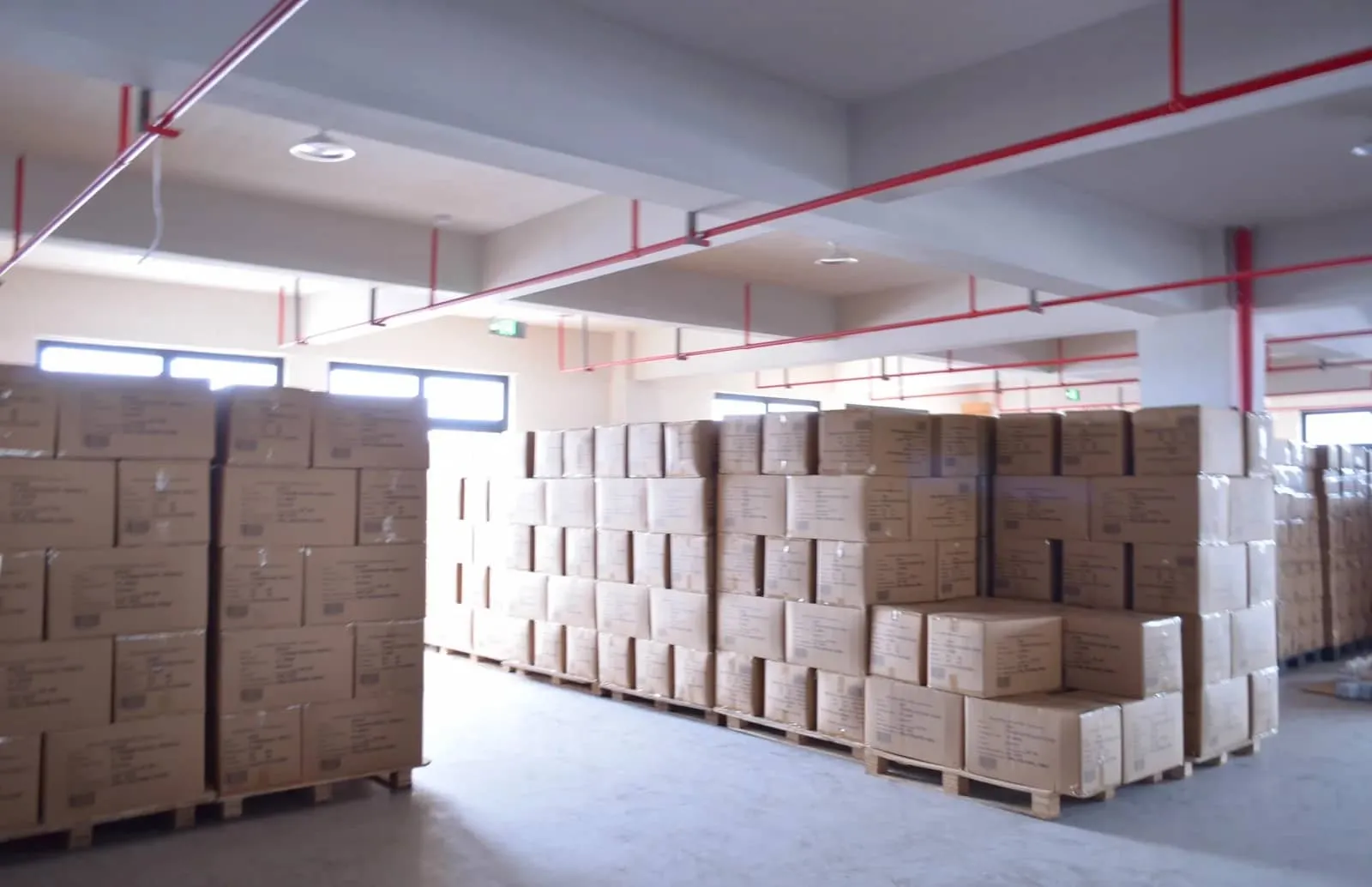
The box is approved twice: once as a gift object and once as a shipping pack. A window carton that looks right on a shelf still has to survive a carton, a pallet and a final leg, and the test that matters is the packed product rather than the box on its own. The International Safe Transit Association publishes test procedures built on exactly that idea, a packaged product tested as one specimen, which is why a pack change resets the test.
Two set-specific failures show up here. The first is an insert that holds the duck in the sample room and lets it move in a full carton, because the cartons compress slightly under stacking. The second is a card that sits loose inside the box and marks the duck's paint in transit. Both are solved at the pack drawing stage, and both are invisible in a photograph of the set.
When children will hold the set
A gift set is often handed to an adult and opened by a child, so the age question has to be answered for the youngest realistic holder rather than for the buyer. In the United States, the small parts rule at 16 CFR Part 1501 is the one that catches a set most often, because a set can contain a component that a single duck never had: a charm, a cap, a loose card fastener or a small moulded prop.
That changes the design brief rather than the paperwork. A component that is small enough to be a hazard has to be eliminated, captive or excluded by the age grading, and the decision has to be taken while the set is being drawn. The toy safety label guide covers the marks that follow, and the party favour note covers the same question for the smallest sets.
Four questions to settle before a set is approved
- Which components does the buyer actually see in one glance, and are they all in the sample?
- Which colour reference is physical, and does it cover the body, the print and the box?
- Where is the print datum on the body, and what is the maximum mark the curve can hold?
- Which component decides the age grade, and can it be removed rather than labelled?
Four answers make the approval a single event rather than four parallel ones. They also make the pack drawing possible in one pass, because the insert, the card and the box are decided with the duck instead of after it.
Frequently Asked Questions
Do I need to approve the box as well as the duck?
Yes, and the box has to be approved twice. Once as a gift object, in the light the buyer expects, and once as a shipping pack inside a carton, filled with the real insert and the real ducks. A box that passes the first test can still fail the second if the insert lets the duck move under stacking.
What does a colour standard have to cover in a set?
Every surface the buyer sees together: the moulded body, any printed or painted area, the card and the box. A standard that covers only the duck leaves the card and the box free to drift, and a card that reads grey beside a warm box is the failure that makes a set look assembled rather than designed.
Can one run hold several duck styles for a set?
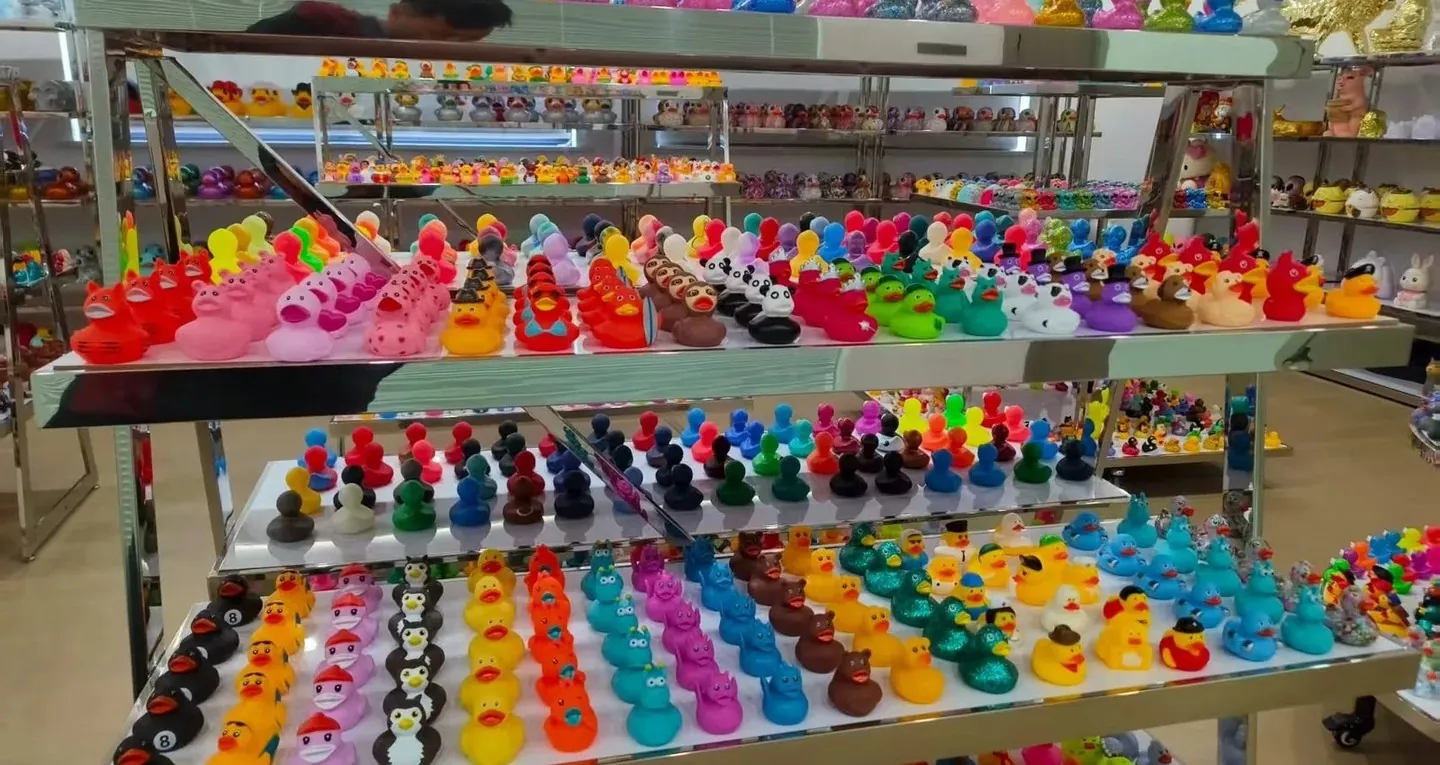
It can, and most sets need it, because a set often mixes bodies or paint schemes. The constraint is the colour standard and the approval sheet: several styles in one run is a packing question as long as every style is approved against the same reference. It becomes a re-approval question the moment one style changes body.
What should I keep after the approval is signed?
The approved sample itself, the placement drawing, the colour standard and the pack drawing. The sample is the reference for the next run, and the drawings are what tell a new batch what the sample cannot: where the print datum sits, which board was used and how the insert is assembled.
Final Note
A gift set is a small piece of product design, and it is approved the way product design is approved: as a whole, against a physical sample, with every component in its final place. The duck is the part that gets admired, and the insert, the card and the box are the parts that decide whether it arrives as a set or as a collection of parts.
The approval order is contents, colour standard, print datum, then pack drawing. It is the order that keeps the four approval surfaces from being signed off in four different weeks.
Key takeaways
- A gift set fails where a single duck passes: A single duck is forgiving.
- What goes in the box, and what the sample must show: The contents list is the brief, and it is usually longer than the buyer expects.
- Put a number on every line of the approval: An approval sheet without numbers is a conversation, and a conversation is what a supplier remembers differently six months later.
- Colour is decided before molding, not at the approval table: The most expensive moment to discover a colour problem is at the approval table, because by then the compound is mixed and the paint is matched.
- Print and paint on a curved body: A duck is a curved surface with a seam, a taper and a beak, and print behaves differently on each part of it.
- Packing is part of the approval: The box is approved twice: once as a gift object and once as a shipping pack.
- When children will hold the set: A gift set is often handed to an adult and opened by a child, so the age question has to be answered for the youngest realistic holder rather than for the buyer.
- Four questions to settle before a set is approved: The section on "four questions to settle before a set is approved" sets out the checks that answer it.