A revision round exists when a change moves the mould or the print file; everything else is a conversation. That definition is stricter than the one a design thread uses, and it is the only one that predicts what the sample and the invoice will do. By that count, most projects that feel like six rounds turn out to be two rounds and four clarifications.
In short: two rounds cover most custom ducks, one on the drawing and the 3D print, and one on the first moulded unit. A third round is normal when an outfit piece or a second colour is added after the first unit. Beyond that, the change is usually a new duck rather than a revision of this one, and it is better to say so early than to keep editing a drawing that no longer matches the tool.
What counts as a revision round
A round has a start and an end. It starts when the buyer sends a marked change against a specific document, and it ends when a new version of that document exists and both sides have looked at it. That is it. A comment that says the beak feels long is not a round until it lands on the drawing as a measurement. A colour note is not a round until it has a reference. Measuring rounds this way does two useful things: it stops a project from being described as six rounds when only two documents ever changed, and it makes the end of each round visible, so the next step has something to stand on.
The changes that actually come up
The same five requests arrive in almost every project, and each one touches a different piece of the work. Knowing which piece a request touches is what tells you which round it belongs to.

| Change | What it moves | Round it belongs to | What it restarts |
|---|---|---|---|
| Line and expression on the face | The drawing and the 3D file | Drawing round | The 3D print only |
| Colour swap on an approved shape | The colour list and the print file | Either round | A paint or ink approval |
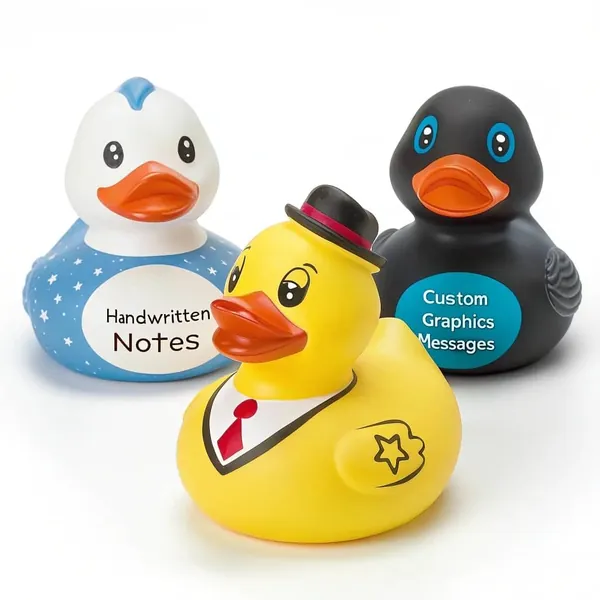
| Added outfit piece | The 3D file, then the tool | Drawing round, or a new tool | Fit and a small parts review |
| Logo position and size | The print file | Print round | Artwork approval only |
| Body size change | The tool and the print area | A new duck | Everything, including the file |
The table is the reason a single "revision" number is misleading. Two requests can arrive on the same day, take no work to agree and land in different rounds, while a third request looks small and reopens the tool.
Why the drawing round decides the rest
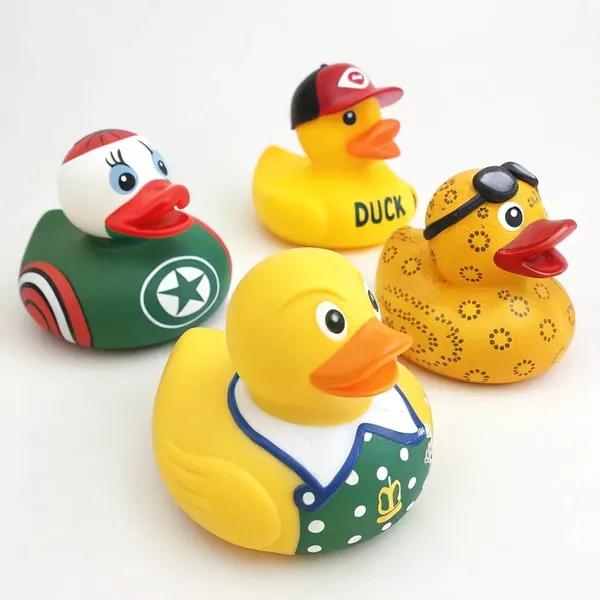
Almost every disagreement that surfaces late was available in the drawing and was not looked at. A duck is a small object with a large visual payload: the eye line, the angle of the beak and the eye treatment, the height of the body and the width of the base all read at a glance, and a change of a few millimetres in any of them changes the character. That is why I want the drawing round to be slow and the later rounds to be fast. Slow means printing the drawing at the size it will be moulded, putting it next to a reference duck on a table, and marking the change on the sheet rather than describing it in a message. A buyer who does that once usually saves two rounds.

The first moulded unit is a different decision
The first unit out of the tool answers questions the drawing cannot: how the surface reads under light, whether the paint sits evenly in a corner, whether the printed logo wraps where the body curves, and how the duck sits when it is placed down. This is the round where a buyer should hold the object, not look at a photo, because a photo flattens exactly the properties under review. When this round is skipped, the same notes come back later attached to a batch that already exists, and fixing them is no longer a design task.

Where a revision turns into a new duck
Three changes end the revision ladder. A different body size needs a new tool, because the wall and the base scale with the body, not with the drawing. A different material needs its own approval route, since the same shape in a different compound behaves differently in the mould and in a child's hands. A change that creates a new small part, an eye that can come loose or a hat that can be pulled off, reopens a safety question that the earlier approval never asked, and the federal small parts rule at 16 CFR part 1501 is the place to start. Any of those three is a new project with a new drawing, and saying so is kinder than quoting a revision number for work that no longer matches the file.

How to hold a project to two rounds
Four habits do most of the work. Send one marked document per round rather than a thread, so the change set cannot grow while it is being read. Name the reference for every colour, because the word teal has never matched anything. Decide the print method before the drawing closes, since pad printing, UV printing and a moulded-in colour each allow a different level of detail, and the method comparison is the decision to make at that point. Finally, agree in writing that a new outfit piece counts as a new element rather than a tweak, so the round count does not surprise anyone at the end. A project run this way closes in two rounds with a clean record of what changed and why.
Questions to settle before you approve
- Which document is this comment attached to, and which round does that make it?
- Does the change touch the tool, the print file, or only the way the change is described?
- Has the colour got a reference, or is it still a word?
- If this is the second round, what would a third one actually fix?
Frequently Asked Questions
How many design revisions are normal for a custom duck?
Two. The first covers the drawing and the 3D print, the second covers the first moulded unit. A third appears when an outfit piece, a second colour or a new print method joins after that unit, and it is treated as a new element rather than a correction.
Does a colour change count as a revision?
Only if it moves something. Swapping a colour on an approved shape changes the colour list and the ink approval, which is a real step, but it does not redraw the duck. The Pantone matching notes explain why the reference matters more than the name.
Can the tool be changed after the first unit is moulded?
It can, and it is a new tool, not a revision. Steel removal is not reversible, so a body change after the first unit means cutting again and re-approving the shape, the print area and the fit of any outfit piece. That is why the drawing round is the one worth slowing down.
Does a new outfit piece need its own approval?
Yes. An attached piece adds a fit question and, if it can be pulled off, a small parts question. Under 16 CFR part 1110 the certification behind the duck also has to describe the product as it ships, so a piece added after certification needs the file updated rather than a note in an email.
Final Note
The number of rounds is a symptom, not a target. A project that needs one round usually had a careful buyer who marked a printed drawing; a project that needs five usually had a clear idea that was never written down in the same place twice. If you want the sequence after the drawing, the production run timeline shows where the tool, the print file and the first unit sit in the run, and the size ladder explains why a size change is the clearest example of a new duck rather than a revision.
Key takeaways
- A revision round is a changed document, not a message; agree the definition before the first drawing goes out.
- Two rounds cover most ducks: the drawing round and the first moulded unit.
- A colour swap moves the colour list and the ink approval, not the tool.
- A new body size, a new material or a new small part ends the ladder and starts a new duck.
- Mark the change on a printed drawing at moulded size, and hold the first unit rather than judging it from a photo.
- A third round is normal when an outfit piece arrives late; a fourth usually means the drawing was never approved.