Treat a size change as a new drawing rather than a percentage, because a duck enlarged on a screen stops reading as the same duck almost immediately. The head grows faster than the eye expects, the tail thins, the print area changes shape, and the tool that produced the first size cannot produce the second. A second size is a design decision with a tooling consequence, and the drawing is where it is either made well or deferred.
In short: a new size redraws the proportion, the wall, the tool plate, the print placement and the pack. The body, the head and the tail have to be rebalanced by eye before the measurements are set, the wall has to be chosen for the new size rather than scaled from the old one, and the plate is cut once for the new size. Approve the drawing first, then the tool, then the first unit.
A second size is a second drawing
Scaling a 3D model by a percentage is a five second operation and a bad first step. The result keeps every wall, every curve and every feature in the same relative position, and that is not how a duck reads. A body that is twice as long needs a head that is not twice as large to stay in proportion, and a duck that is half the size needs a thicker relative neck to survive handling. The numbers follow the drawing; they do not replace it.
The practical consequence is that a size move has two stages, and mixing them is the usual mistake. The first stage is the drawing: shape, proportion, features and the placement of every mark. The second is the tool: plate, cavity, gate and the steel that holds the shape. Skipping the drawing stage and going straight to a scaled file means the tool is cut for a shape nobody has looked at. The size chart notes show how much the classes differ before any drawing is opened.

Proportion is read before it is measured
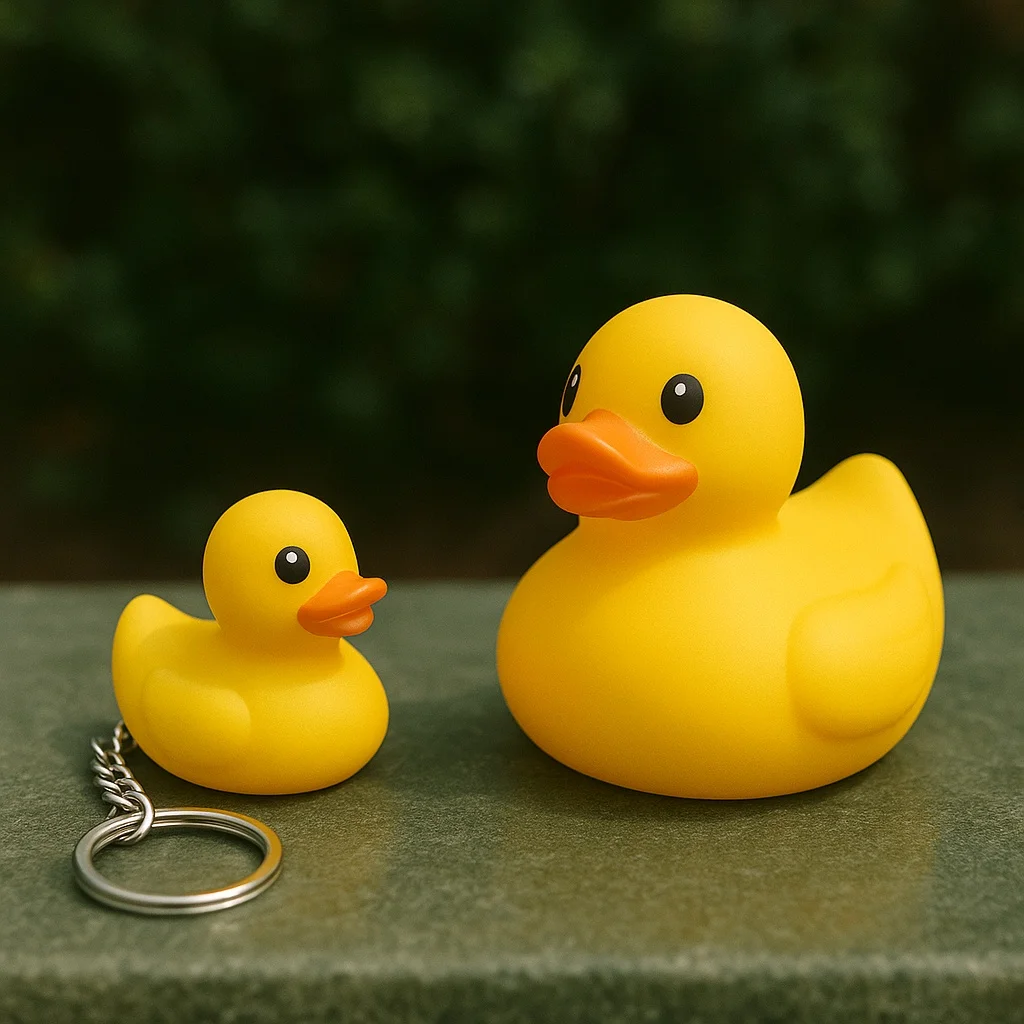
A duck is judged as a duck in the first second, and that judgement is about proportion rather than about millimetres. The head to body ratio, the length of the neck, the angle of the tail and the width of the base all contribute, and none of them scale at the same rate in the eye. A large duck can carry a smaller relative head and still read as friendly; a small duck with the same relative head can look like a bobblehead.
The fix is to redraw the silhouette at the new size and compare it with the old one side by side, at the same viewing distance. If the small version looks like a different character, the drawing is not finished.

The tool plate is cut for the size
A new size needs a new tool, and there is no way around it. The plate is cut to the body, the cavity is cut to the plate, and the gate and ejector positions are set for the shape that will be moulded. An enlarged file does not fit an existing plate, and a plate that was cut for a 3 inch duck cannot be shimmed into a 5 inch duck. The tool is where a size move stops being a drawing exercise.

That is why the tool decision should follow the drawing rather than run beside it. A plate cut from a settled drawing is one round and one wait; a plate cut from a drawing that is still moving is rework, and rework on steel is the expensive kind. The stock and custom tooling notes explain when an existing body can be reused and when a new plate is the only honest answer.
Wall thickness does not scale with the body
The wall is the part of a duck that buyers assume scales and it is the part that must not. A wall that is scaled up with the body becomes heavy, slow to cool and prone to sink marks on the visible side; a wall that is scaled down becomes thin, weak at the neck and difficult to demould without distortion. The wall has to be chosen for the new size, in absolute terms, and then checked on the first unit.
The wall also carries the features. The squeaker seat, the base and the tail all depend on enough material to hold their shape, and a thin wall around a squeaker seat is where a leak or a loose fit starts. The wall thickness notes set out what changes when the wall moves and which defects point back at it, which is the conversation to have before the plate is cut rather than after.
What stops working at the small end
Shrinking a duck removes space, and the first things to lose are the details that made it work. Eyes that were moulded in become too small to read, an attached part becomes a handling risk, and a printed mark loses the line weight that kept it legible. The small end is also where the safety file changes, because a smaller duck is closer to the size where parts matter.
The small parts rule is the reference point. The regulation for toys intended for children under three exists because a part that fits the test cylinder can be swallowed or inhaled, and the method for identifying those toys is set out in 16 CFR part 1501. A size move does not by itself create a small parts problem, and it can move a duck into a zone where one has to be checked. The design answer is usually to enlarge the feature rather than to remove it, which is a drawing change made at the small end, not a note added to the pack.
Marks and print placements move
Print area does not survive a size change intact. The available face on the chest shrinks in two directions at once, the curve under the print head changes, and a logo that filled the old area has to be redrawn to fill the new one without losing the detail that made it readable. A mark that was placed by eye on the old duck will sit in a different place on the new one even when the artwork is identical.
The method matters as much as the size. A pad print that worked on a large flat chest may need a different pad on a small curved one, and a UV print that held detail on a large area may be the wrong route for a small mark. Settle the placement and the method together, then approve them on the first unit at the size that will ship rather than on a photograph of the old size.
The pack changes with the size
A new size is a new carton before it is a new pallet. The count per carton, the bag or insert that holds each duck, the carton dimensions and the weight all move with the body, and a pack that was built for the old size will either crush the new ducks or leave them loose. The carton rule is worth settling with the drawing rather than after the first batch is boxed.
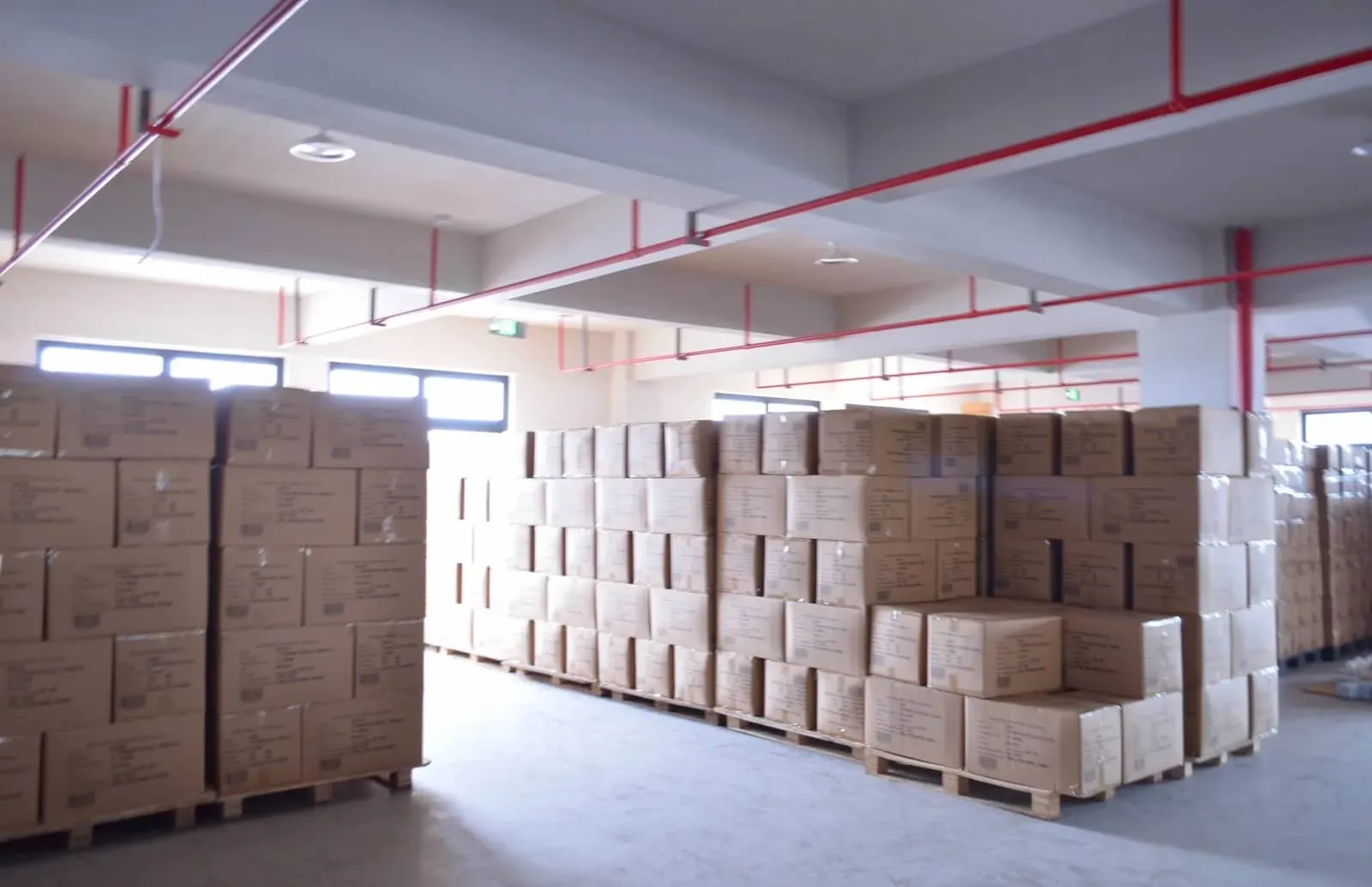
Transit performance is the part that cannot be assumed. A pack that protected the old size has not been tested for the new one, and a distribution test against a recognised procedure such as the ones published by ISTA is how a pack claim becomes a measurement rather than an opinion. The packaging notes cover the bag and carton choices, and the point for a size move is that the pack is part of the redraw rather than an afterthought.
Beyond display size it becomes a display object
At some point the duck stops being a hand object and becomes a display object, and the rules change with it. A giant duck has to stand, has to survive wind and handling, and has to be joined where the mould cannot reach. Seams become a visible design element, the base becomes a structural decision, and the wall has to carry a weight that no hand held duck ever carries.
That is why a giant duck is not the same project as a large duck with a bigger number attached. The drawing has to answer how the body is supported, where the seams sit and how the pieces join, and the tooling question becomes several tools rather than one. The giant duck cracking notes cover what happens when those decisions are left to the moulding stage, which is the expensive place to discover them.
What a size brief has to say
A size brief is short, and every line in it prevents a round of rework. It states the old size and the new size in inches, the parts of the design that must stay recognisable, the parts that are allowed to change, and the marks that have to survive. It also states which size will be approved first and what the approval will be judged against.
| Element | What changes with the size | What to confirm before the plate is cut |
|---|---|---|
| Proportion | Head to body ratio, neck length, tail angle, base width | The silhouette still reads as the same duck at the new size |
| Wall | Absolute thickness, cooling, sink marks, squeaker seat | The wall is chosen for the size rather than scaled from it |
| Tool | Plate, cavity, gate, ejector positions | A new plate is cut from a settled drawing |
| Area, curvature, line weight, placement | The mark is legible and the method suits the new surface | |
| Pack | Count per carton, bag, dimensions, weight | The pack is tested for the new size rather than assumed |
| Approval | The first unit at the new size | The unit is judged against the brief, not against a photo |
Four questions before you approve a new size
- Does the new silhouette read as the same duck when both sizes are seen together?
- Was the wall chosen for the new size, or copied from the old one?
- Is the plate being cut from a drawing that has stopped moving?
- Has the pack been tested at the new size rather than assumed from the old one?
A size move that answers all four is a project. One that answers two is a scaled file with a tool attached. The answers also decide the order of work: proportion first, then the drawing, then the plate, then the first unit, then the pack. Any step taken out of that order is paid for later, and the payment is usually steel.
Frequently Asked Questions
Can I just scale my existing duck file to a new size?
You can scale the file, and you should not cut a tool from it. A scaled file keeps the walls and the features in the same relative position, which changes how the duck reads and how it moulds. Use the scaled file as a starting point for a redraw, then settle the proportion and the wall at the new size before the plate is cut.
Does a new size always need a new mould?
Yes, when the body size changes. The plate is cut for the body, the cavity follows the plate, and the gate and ejector positions are set for the shape. A colour change or a print change does not need a new tool, and a size change does, which is the distinction that decides whether a second size is a drawing job or a tooling project.
How much does the print area change on a smaller duck?
More than the size ratio suggests, because the printable face shrinks in two directions and the curve tightens. A mark that filled the chest of a large duck may need to be simplified to stay legible on a small one, and the method may need to change with it. Approve the mark on the first unit at the shipping size rather than on the old duck.
When does a duck become a display object rather than a toy?
When the size and the weight make it something that stands in a space rather than something a hand picks up. At that point the drawing has to answer support, seams and joining, and the tooling question becomes several tools. The change is not only about size; it is about what the object has to do once it is standing there.
Final Note
A size move is a design project with a tooling bill attached, and the drawing is where the project is won or lost. Rebalance the silhouette first, choose the wall for the new size, cut the plate from a settled drawing, move the marks onto the new surface, and test the pack at the size that will ship. None of that is glamorous, and each step removes a round of rework from the next one.
The buyers who get a second size right are usually the ones who treated it as a new duck rather than a copy. The ones who get it wrong are usually the ones who approved a scaled file and discovered the proportion problem on the first unit. The size classes notes are the next place to look if the new size is a large one, because the questions change again at that end.
Key takeaways
- A second size is a second drawing, not a scaled file.
- Proportion is judged by eye before it is measured in inches.
- The plate is cut for the size, so the drawing has to settle first.
- Wall thickness is chosen for the new size rather than scaled with it.
- The small end changes what features and marks can survive.
- The pack belongs to the redraw, not to the end of the project.
- Approve the new size on a real unit, never on a scaled render.