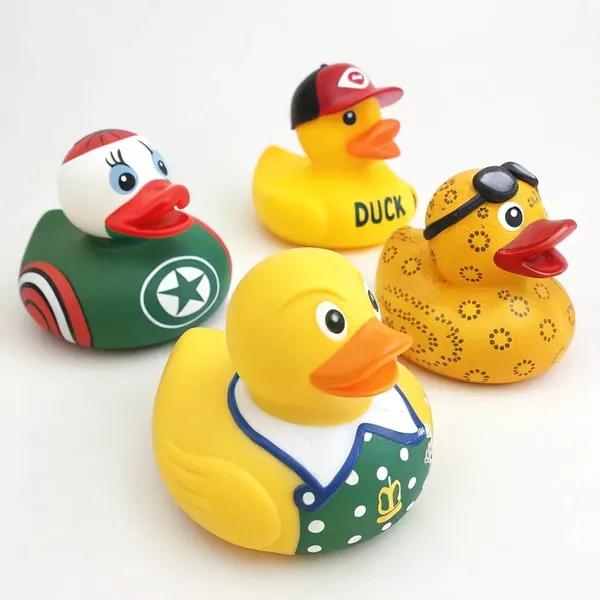
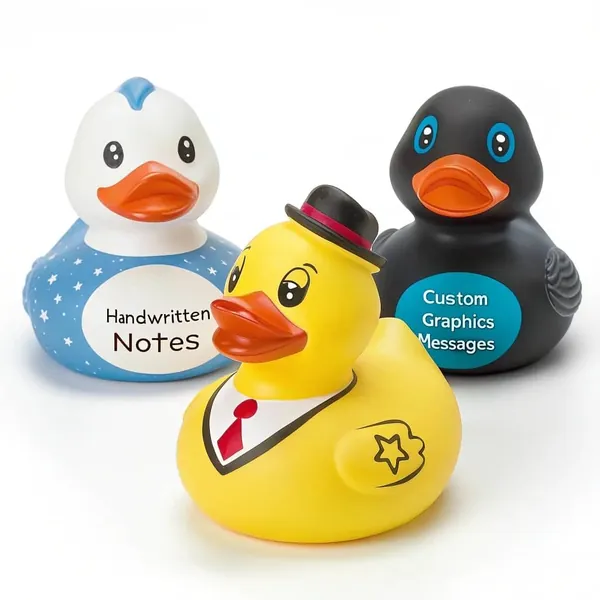
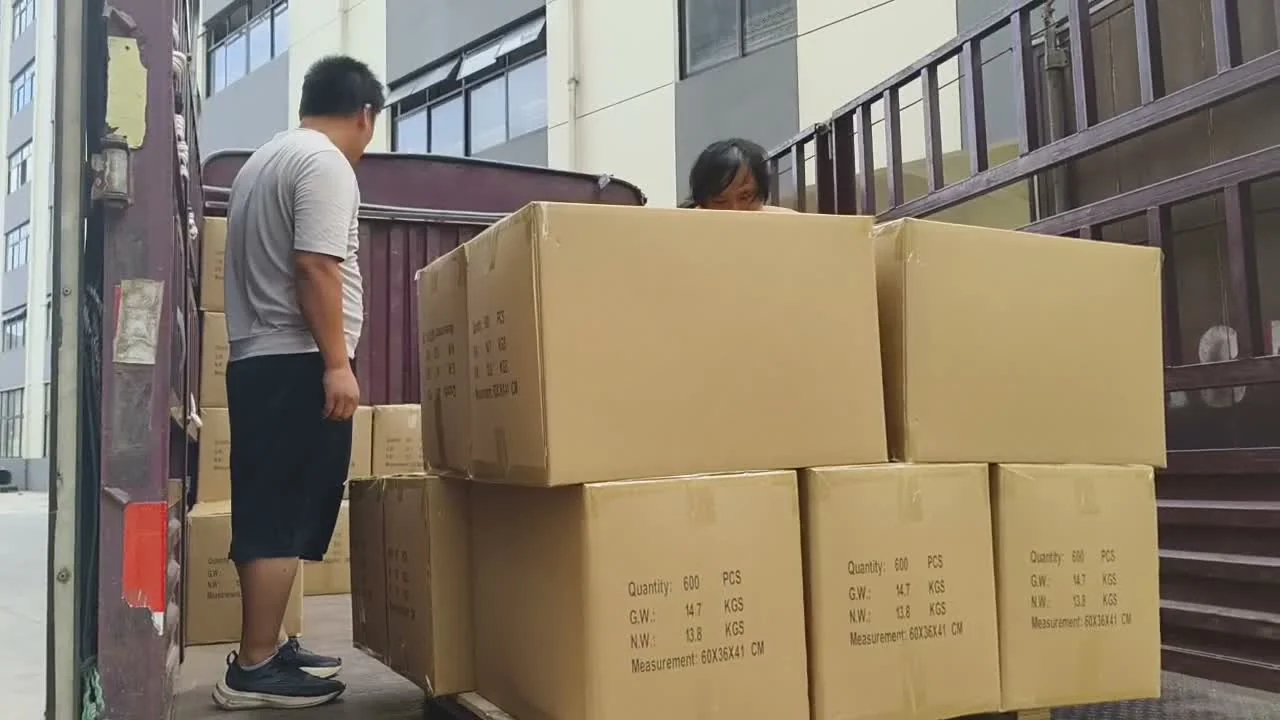
Scan tests settle a marketplace pack long before looks do, because on an Amazon order the duck meets machines and scanners before it meets a customer. Amazon rubber duck packaging is usually argued about as a looks question, and it is really three separate jobs stacked on one another: the bag has to seal one unit, the label has to let a scanner read that unit, and the carton has to carry the whole batch without the first two jobs coming apart.
The short answer: Amazon rubber duck packaging falls into three decisions that must be made in order. The bag decides whether one duck is a sealed sellable unit. The label decides whether a scanner can identify that unit without opening it. The carton decides whether the sealed units arrive with their labels readable and their film intact. A pack that solves the third job while fumbling the first two arrives as a carton of good ducks that cannot be listed.
What the receiving bay asks before it sees the duck
A fulfilment centre receives a carton, not a duck. Before anything is shelved, a carton is checked against its own paperwork, then opened, then its contents are scanned. Each of those steps asks a different question of the packaging, and a pack designed only for the customer's hand tends to fail at the earliest one.
The first question is identity: does the carton say what the paperwork says it says. The second is condition: did the carton survive the trip with its units sealed inside. The third is readability: can one unit be picked up and scanned without unwrapping it. A duck that is beautiful, bagged in a way that creases over the barcode, and packed in a carton marked with the wrong count will fail all three while being perfectly made.
This is why the pack sheet has to exist before the cartons are bought. The three jobs share one set of dimensions and one set of marks, and changing the bag after the carton is printed is the most common way a batch is delayed. The carton specification notes cover the outer box in more detail; this page stays on the unit inside it.
The bag is a sealed unit, not a wrapper
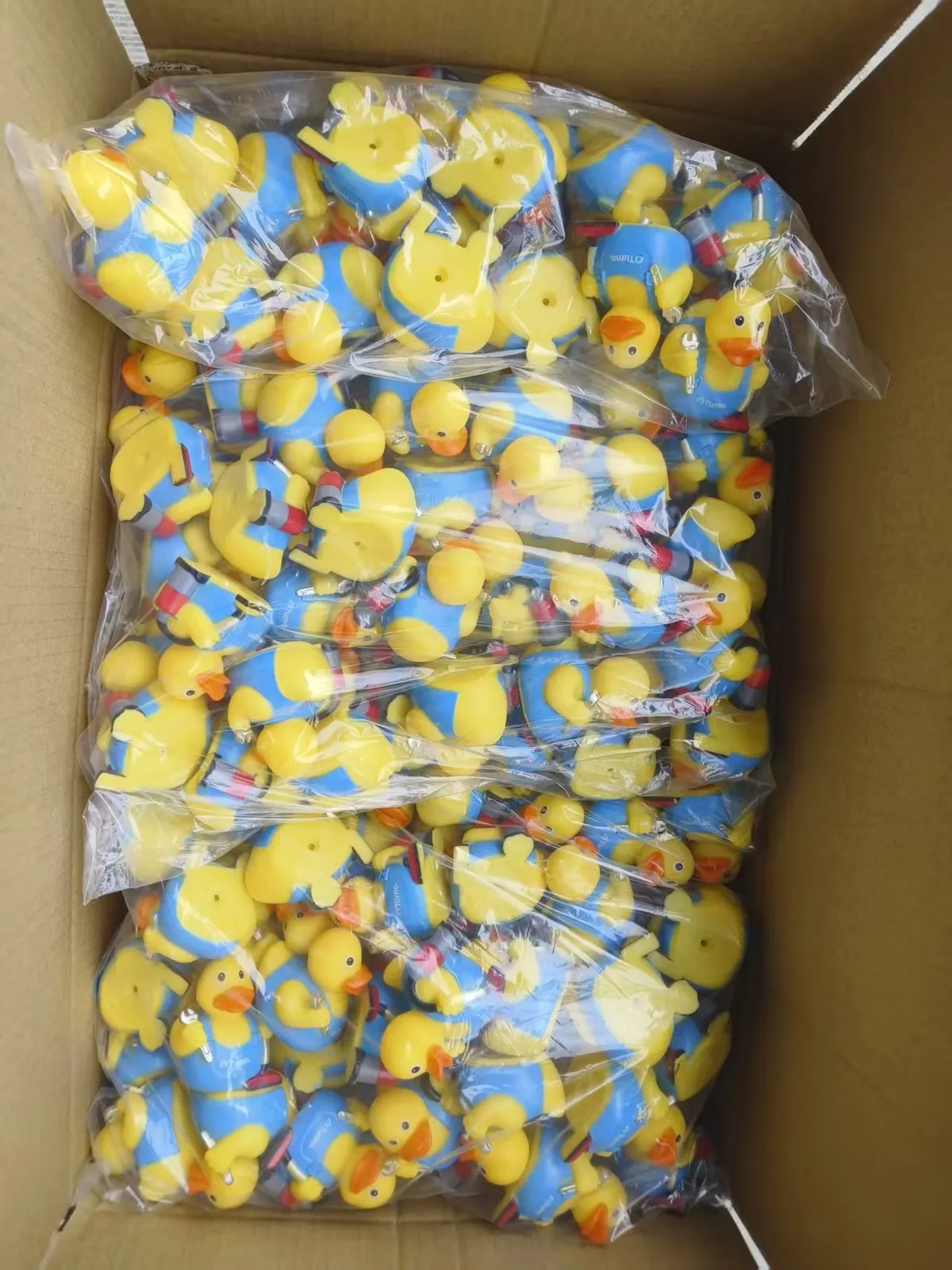
A polybag on a marketplace order is not packaging in the gift sense. It is the boundary that turns a loose duck into one count. That boundary has to hold from the sealing line to the customer's hand, and it has to hold in a way that a picker can see is intact.
That means the bag is designed around three failure points. The seal is the first: a seal that is too narrow, too cool or too fast can look closed and open in the carton. The film is the second: a film thin enough to tear at the duck's beak or tail turns one unit into two loose items in transit. The third is the air inside. A bag that is filled like a balloon takes up volume the carton did not budget for, and a bag that is pulled tight creases across the face where the label sits.
The practical way to specify a bag is to name the duck, not the film. State the size, the weight, the number of units per bag and whether the bag is a single unit or a set. Then name the seal, the film and the venting as three separate lines, so the factory and the buyer are arguing about the same item. A sealed unit with an intact seal is also the object that a later condition complaint is measured against, which is the chain described in the sample to bulk notes.
Why the barcode has to read through the bag
A barcode is read through a film, at an angle, under a light that is not the light of the room where the label was designed. Most scan failures described as a printer problem are really a pack problem: the film wrinkled, the label turned, the print too close to a seam or a reflection sitting exactly where the scanner looks.
Three things make a bagged barcode readable. The label sits on a flat area of the bag, not over the duck's head or beak. The film over that area is tight but not stretched, because stretched film bends light. And the print is high enough in contrast to survive a slightly dirty scanner window and a slightly imperfect angle.
The duck's own shape is part of this. A duck with a tall head and a wide tail is harder to bag flat than a squat body, and the size chart notes explain how the envelope of a duck is measured. A buyer choosing between two sizes for the same campaign should choose the one that bags flat before choosing the one that looks best on a sketch, because the flat one scans.
The scan test itself is quick and does not need a laboratory. Print the real label, bag the real duck, and scan it ten times from the angles a picker would use. If one in ten needs the bag pressed flat by hand, the label placement is wrong, not the printer.
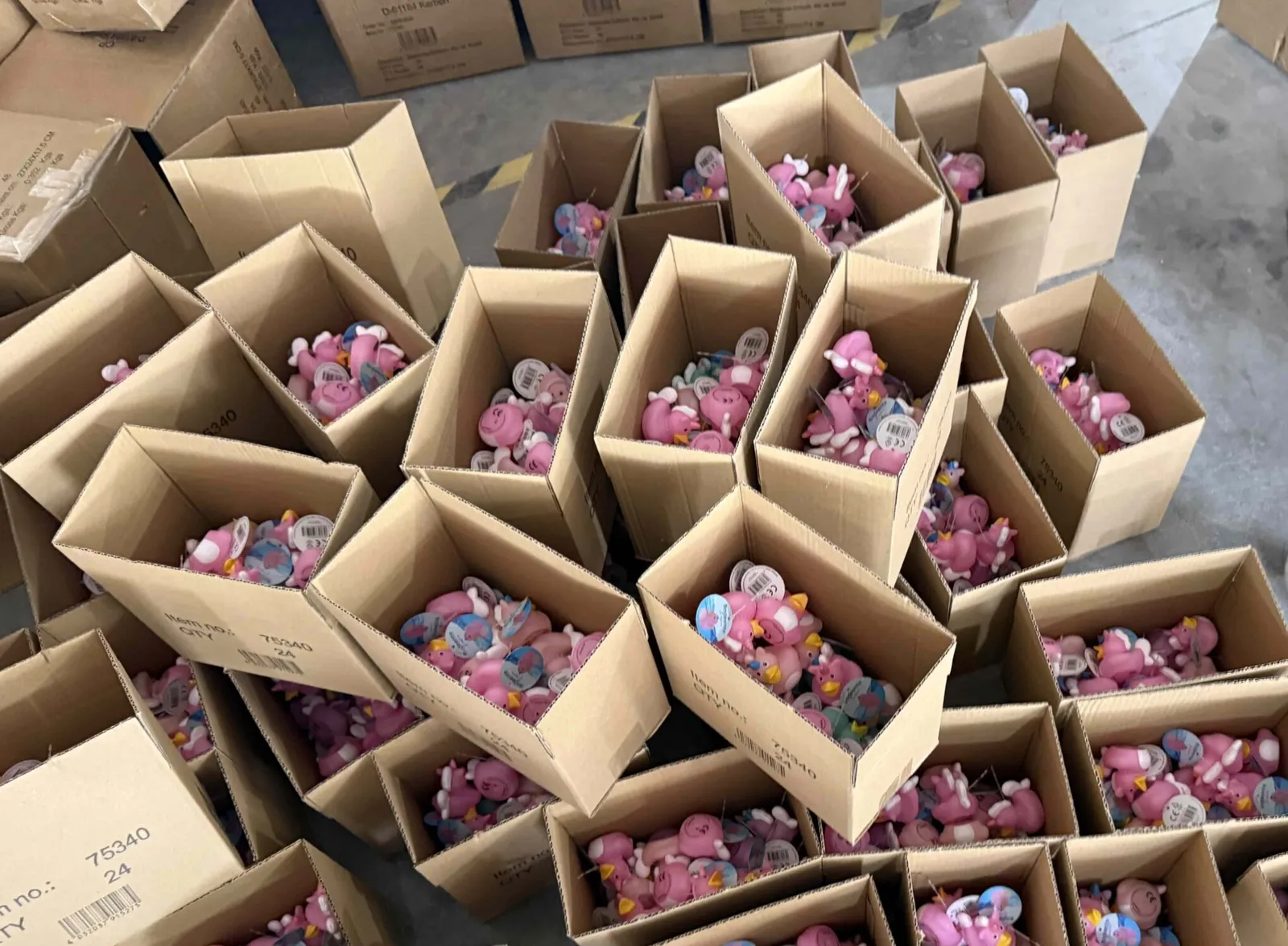
The label on the bag is a separate duty
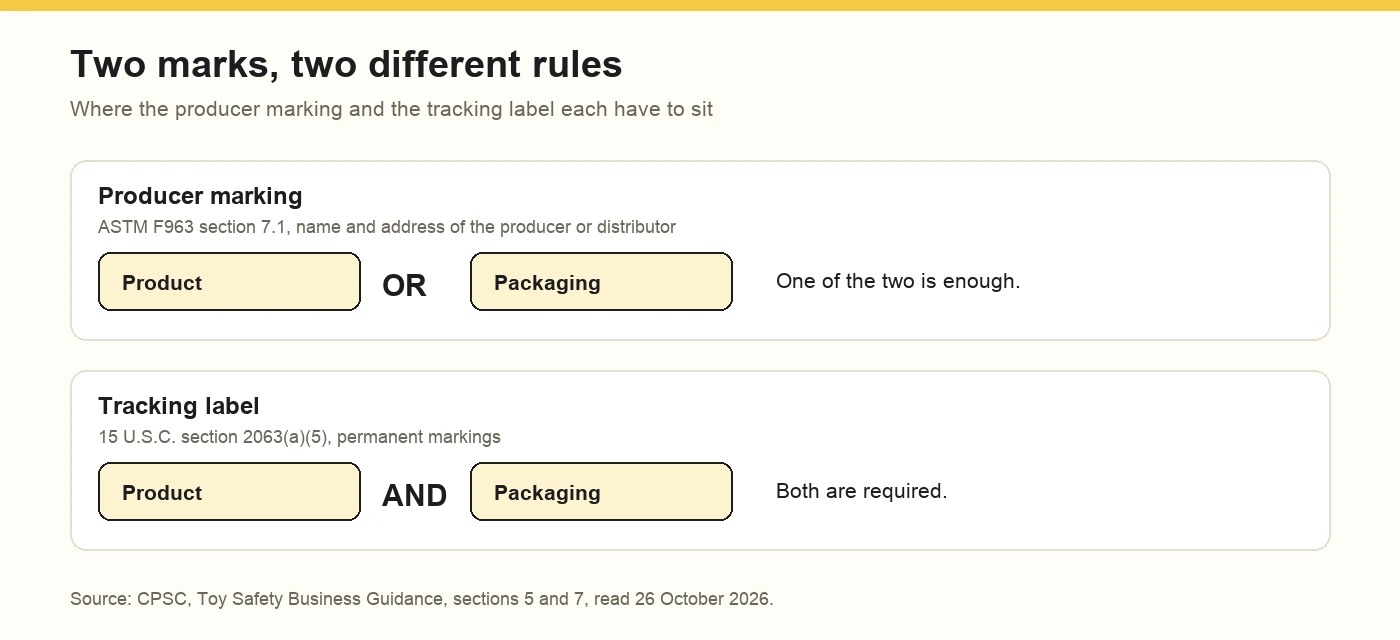
A label on a bagged duck is doing two jobs that are easy to conflate. One is commercial tracking: the code that ties this unit to this listing and this batch. The other is a permanent mark that identifies the producer, and that second duty is a regulatory one rather than a marketplace one.
In the United States, a children's product carries a permanent distinguishing mark that lets it be traced to the producer and the batch. The CPSC guidance on tracking labels sets out what that mark has to contain and where it has to be, and the important detail for a duck is that it has to be permanent. A sticker on a polybag is not permanent in the sense the rule means, and a mark that rubs off the bag is worse than no mark because it suggests a claim that cannot be checked.
That is why the safety label and the barcode should be designed on the same sheet. The toy safety label notes cover the content of the permanent mark; the pack question is only where it goes so that it survives the bag, the carton and the handling between them. Print it on the bag itself, or mould it into the duck, or print it on a card that cannot fall out of the bag. A loose card inside a bag is not a permanent mark.
Carton marks and the carton itself
The outer carton carries two kinds of information and they are often designed by different people. The first is the mark a human reads: count, size, design code, destination. The second is the carton's behaviour under load, which is a board question rather than a printing question.
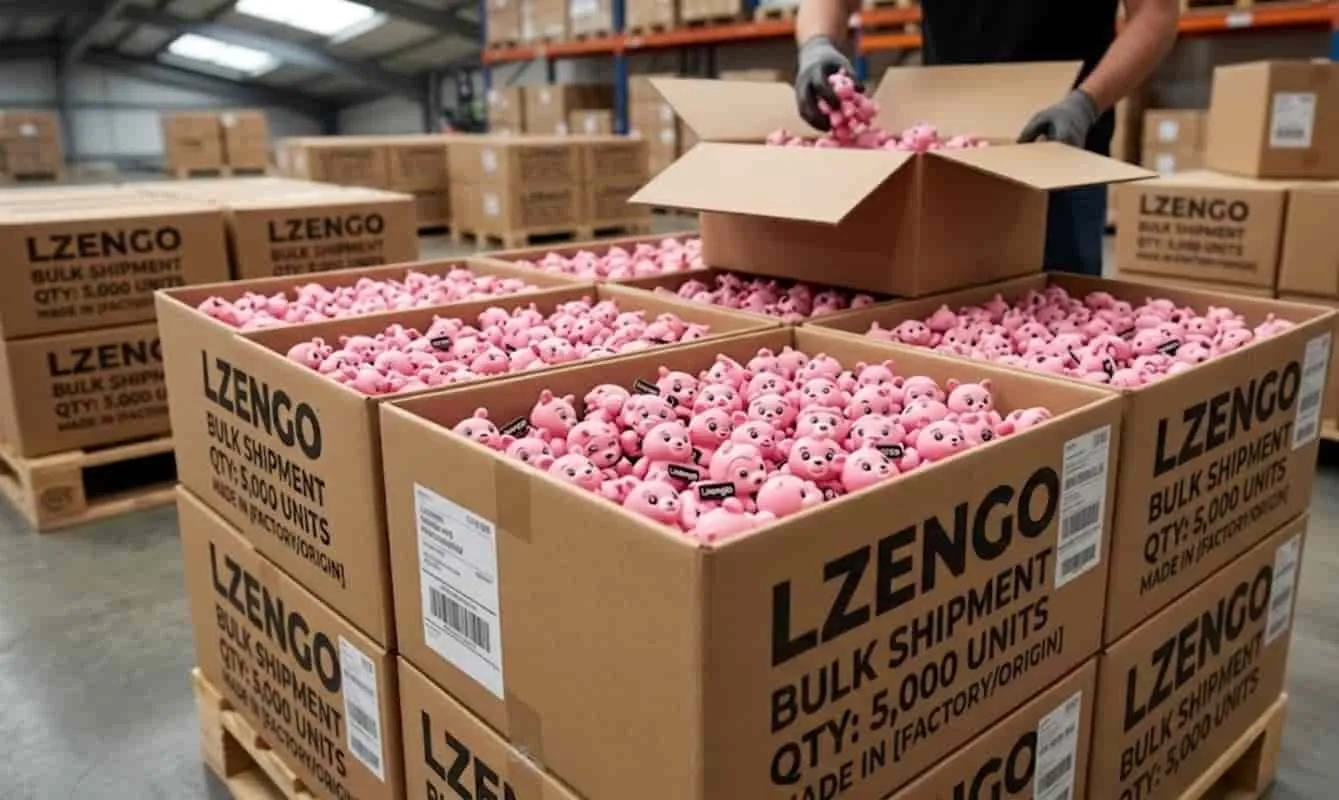
The carton is sized from the duck’s real dimensions, not from the unit count alone. A 1,000-piece run of our 6 cm duck ships as two cartons of 45 × 37 × 40 cm, about 13 kg gross each; the 8 cm duck needs the 45 × 37 × 45 cm carton, while a 2-inch duck fits 1,000 pieces into one 45 × 37 × 52 cm box. Check every combination against the size and weight limits the fulfillment centre applies.
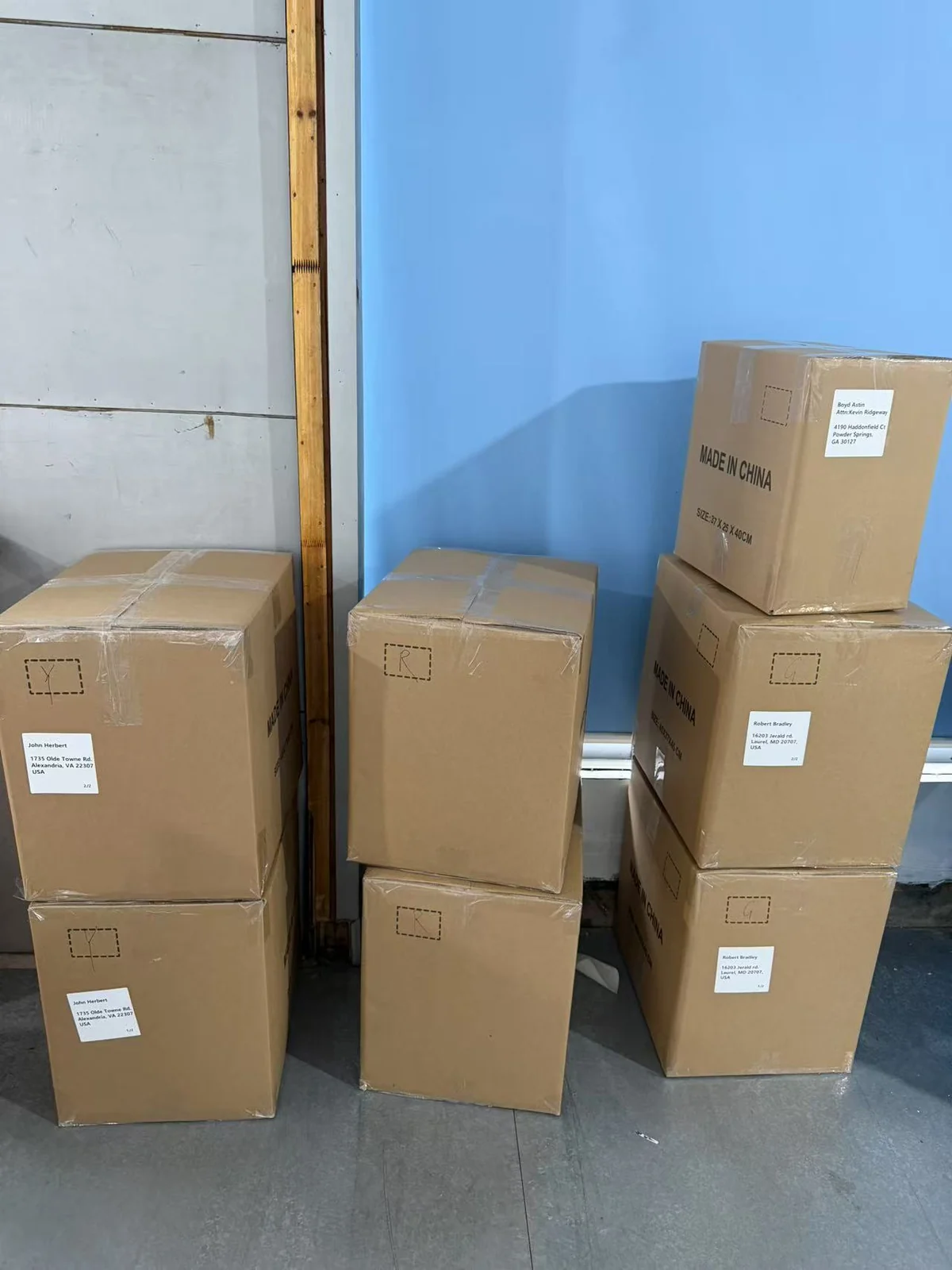
A carton mark that names the count and the design is doing the receiving bay a favour, because the alternative is opening a carton to find out what is inside. That mark has to match the packing list exactly, and it has to be placed where a person stacking a pallet can read it without moving the box. Marks printed on the wrong panel are the same as no marks.
The board question is settled by the trip, not by the duck. Distribution testing bodies publish procedures that reproduce the handling a parcel sees, and the ISTA test procedure library describes the family of tests used for packaged products in distribution. A buyer who knows the route can ask for a carton tested to a named procedure instead of a carton that feels strong in the hand. For the freight side of the same decision, the sea and air freight notes describe what each route does to a carton.
Where the retail box still wins
Not every order should end in a polybag, and the distinction is channel rather than quality. A marketplace unit is scanned and shelved; a gift shop unit is picked up, turned over and compared with the box beside it. The same duck can need two different packs, and neither pack is wrong.
A printed retail box does three things a bag cannot. It holds a shape on a shelf, it carries copy the buyer wants read, and it makes the unit feel like a gift rather than a unit. What those three things take is board, print and space, and the space is the one buyers forget: a boxed duck takes more carton volume than a bagged duck, which changes how many units fit a pallet.
The decision is easiest when the buyer states the channel first. A campaign that ships directly to attendees, a marketplace listing, a shop shelf and a corporate gift box are four different packs, and the large packaging notes cover the display end of that range. Choosing the box before choosing the channel is how a good duck ends up in a pack that suits nobody.
The pack sheet that travels with the order
The pack sheet is one page, and its job is to stop the bag, the label and the carton from being decided by three different people at three different times. Every field on it should answer a question that someone downstream will otherwise ask by opening a carton.
| Field | What it fixes | What goes wrong without it |
|---|---|---|
| Unit count per bag | Whether one duck or one set is scanned | Two units scanned as one, or one unit as two |
| Bag film and seal | Whether the unit survives the carton | Creased film, split seal, loose ducks |
| Label position | Whether the scanner reads first time | Hand pressing at the pick station |
| Permanent mark position | Whether the toy can be traced | A sticker that peels off the bag |
| Carton count and code | What the receiving bay reads | Cartons opened to find out |
| Carton test reference | What the board has to survive | A box chosen by feel |
Two lines on that sheet do more work than the rest: the unit count and the label position. A pack where those two agree will usually pass a receiving bay, because the scanner reads what the sheet says is inside.
Two checks before the carton is sealed
The first check is a scan check on the packed unit, done with the real label and the real bag, at the angles a picker uses. It takes a few minutes and it catches the class of failure that no drawing review catches, because a flat drawing always looks readable.
The second check is a seal and film check on a filled bag: press the bag, look at the seal line, and hold it up to a light. A seal that opens under a light press will open in a carton. A film that whitens at the fold will tear at the fold. Neither check needs equipment, and both are worth doing on the first carton rather than on the last one.
These checks belong in the inspection sequence, not in the design file. The inspection order notes explain where a pack check sits relative to the duck's own checks, and the rule is the same in both places: check the thing you are about to seal, not the drawing of it.
Where this page stops
This page covers the bag, the label and the carton as one system. It is not the page for the duck's safety file, the carton's print design or the freight choice, and those pages already exist. The safety side belongs to the toy safety label notes, the carton itself to the carton specification notes, and the marketplace listing side to the Amazon selling notes.
What is left here is the order in which the three decisions are made. Bag first, label second, carton third. A buyer who reverses that order is not wrong about any single part, and is still likely to rebuild the pack.
The questions to settle before the bag is chosen
- Does one unit mean one duck or one set, and who decides that at the pick station?
- Where will the label sit when the duck is inside the bag, and is that area flat?
- Is the permanent mark on the bag, on the duck, or on a card that cannot fall out?
- How many units fit one carton, and does the carton mark say the same number?
- Which route will the carton take, and what test reference does that route imply?
A film should not be chosen until the first two have answers, and a carton should not be printed until the fourth does. Changing a bag means a new roll of film; changing a carton means a new print run of boxes, which is why the carton is last on the list even though it is the largest object in the pack.
Frequently Asked Questions
Does a rubber duck need a bag for a marketplace order?
It needs a sealed unit, and a bag is the usual way to make one. The bag protects the duck from handling and dust, but its more important job is to make the unit countable and scannable. A duck shipped loose in a carton is hard to count and easy to damage, and a picker cannot tell whether it has been handled before it reaches the customer.
What thickness does the bag film have to be?
Thick enough that the seal holds and the film does not split at the duck's beak or tail, which is a question about the duck's shape as much as the film. A bag that is right for a flat body can be wrong for a tall head. The practical test is a filled bag pressed by hand and held to the light: a film that whitens at the fold is too thin for that duck.
Where should the label go on a bagged duck?
On a flat area that the film crosses without a wrinkle, and away from the beak, the tail and the seal line. The label should be readable when the bag lies flat in a carton, because that is the position it will be in when a scanner reaches it. A label placed over a curved part of the duck bends with the film and reads badly at an angle.
Can one carton hold two duck designs?
It can, if the carton mark says so and the units inside can still be told apart at the pick station. Mixing designs in one carton saves volume and makes counting harder, and the trade is usually settled by the number of designs per order. A carton with two designs and one mark is a carton that will be opened to find out what it holds.
Final Note
The three parts of a marketplace pack fail in a fixed order. The bag fails first, because it is handled most. The label fails second, because it is read under the worst light. The carton fails last, because it is only asked to survive one trip. Designing in that order is the surest way to build a pack that works, and reversing it is the most common way to build one that has to be redone.
One page of pack sheet prevents more delay than any correction made after the cartons are printed. The duck is the part everyone remembers, and the pack is the part that decides whether the duck ever gets scanned, shelved and handed over.
Key takeaways
- A marketplace pack is three jobs: seal one unit, let a scanner read it, survive the carton.
- Specify the bag by the duck and the unit count, not by the film alone.
- The barcode reads through film, so flat placement and tight film matter more than print quality.
- The permanent tracking mark is a regulatory duty and a sticker on a bag does not meet it.
- A carton is chosen by the route it travels, not by how strong it feels.
- Put the unit count and the label position on the pack sheet; most pack failures are a disagreement between those two lines.
- Retail boxes win on shelves and lose on volume, which is a channel decision rather than a quality one.
- Test the scan and the seal on the first carton, not the last.