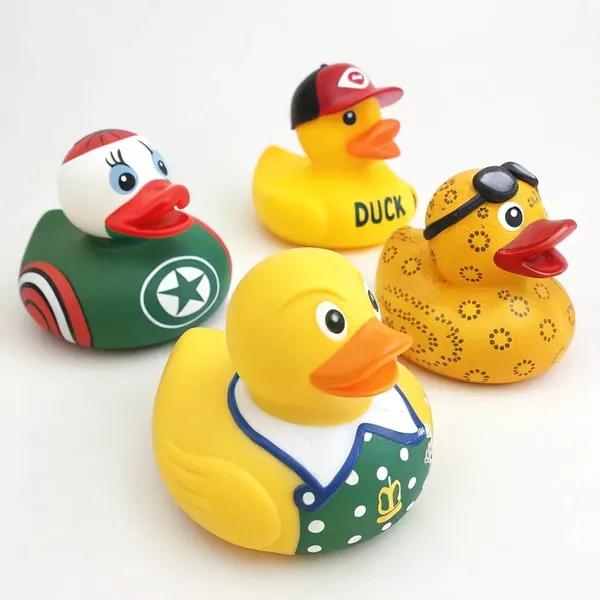
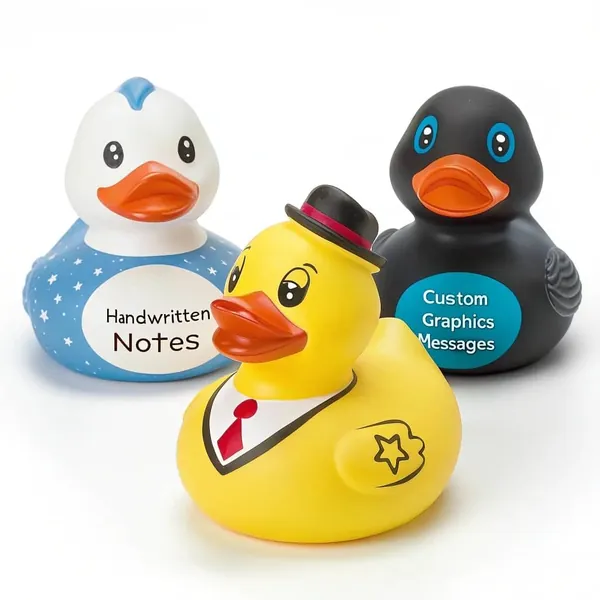
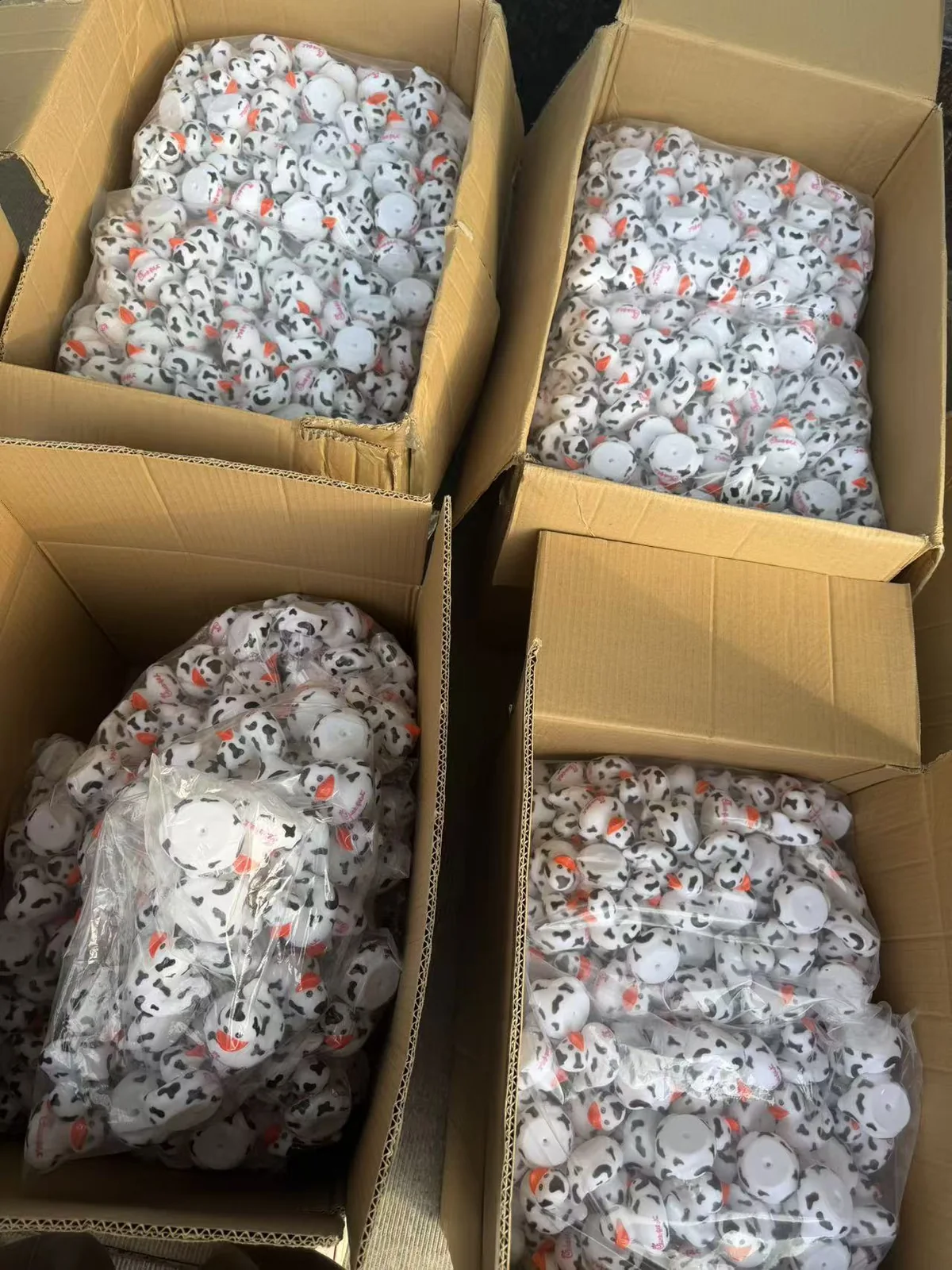
A carton is part of the product, not the wrapper that gets thrown away before anybody judges it. A large duck is awkward to pack: it is light for its size, it has a painted face that shows every scuff, and it usually travels to a place where somebody will lift it out in front of an audience. That is why the pack gets a sheet of its own rather than a wish.
Written as a working note on large duck packaging, with public distribution and toy safety guidance cited where a rule applies.
In short: A large duck's box has to do five jobs at once: protect the paint through handling, present the unit before it is opened, carry the marks a warehouse reads, split one order into the several parcels the buyer actually needs, and survive the way back if a unit is returned. Each job has its own test. A pack that does four of them is a pack that fails on the fifth.
The five jobs one box must do
Most packaging arguments are really about which job is being optimised. A buyer asks for a lighter carton and gets less protection. A buyer asks for a retail box and gets a unit that cannot be stacked. The answer is not to pick a favourite job. It is to list all five on one sheet and decide the trade-off in the open.
| Job | What fails when it is skipped | What the pack has to do |
|---|---|---|
| Protect | Paint scuffs, beaks bent, a split seam | Hold the body off the carton wall and stop movement |
| Present | A plain unit where a counter display was expected | Put the duck and the message in the same frame |
| Identify | A carton the warehouse has to open to understand | Carry the marks, contents and quantity outside |
| Split | One parcel where the order needed several | Divide the run into the packs the buyer will hand out |
| Return | A repack that destroys the unit it is meant to save | Allow a unit to come back without a second pack |
Protect: the paint is the part that travels badly
A moulded body is tough. The painted face is not. Paint sits as a thin layer on the surface, and a hard edge rubbing against it for a few hundred miles will mark it before the shell ever dents. The same is true of a printed logo on the chest: the print is a film, and film abrades.
A large duck cannot be packed like a small one. The beak, tail and wings take the load first, so the carton is sized from the real dimensions with room to spare, never crammed to save a few centimetres. If the duck can shift inside, an inner tray or cushioning is added and tested, because a fixing that rubs leaves a mark; every large size gets a trial pack before the run.
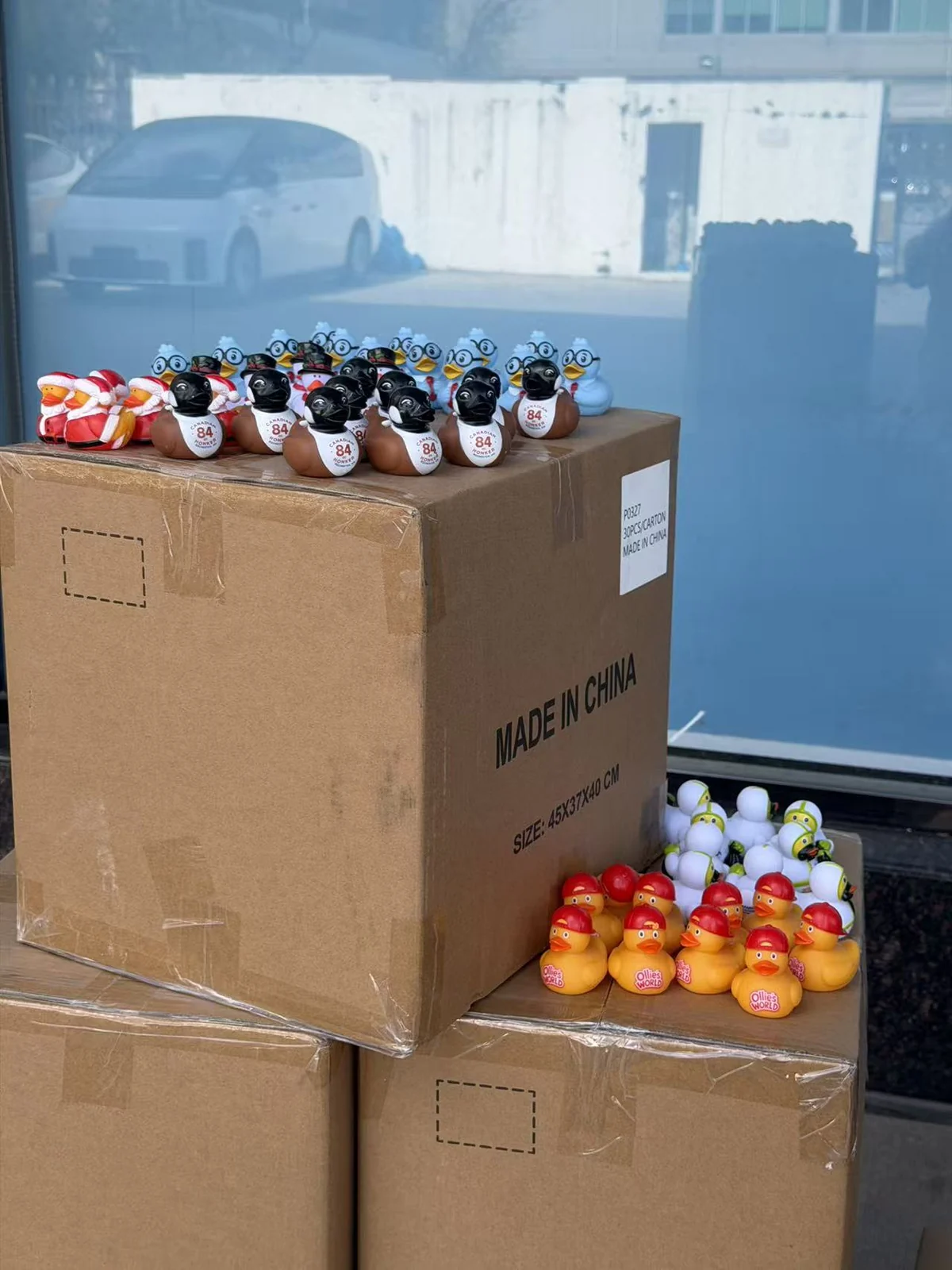
Protection therefore starts with separation, not with thickness. The unit needs to be held away from the carton wall, held away from its neighbour, and held so it cannot rotate. A bag does the first job and a divider does the second. The size and specification note explains why a large duck's centre of gravity makes rotation more likely than a small duck's, and why the pack has to account for it.
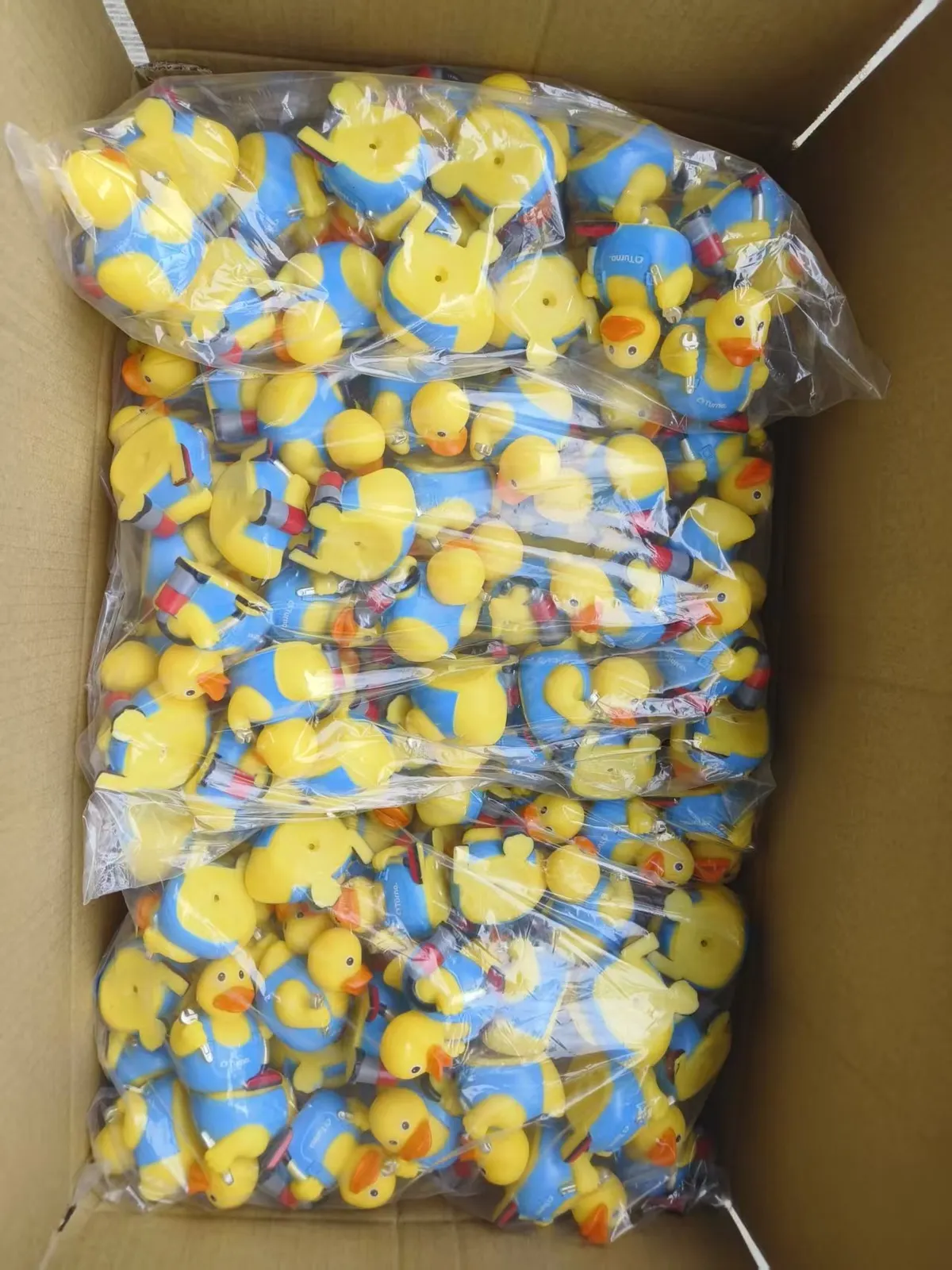
Distribution testing exists because this is a measured problem, not a matter of opinion. The International Safe Transit Association describes pre-shipment distribution testing as the tool that confirms packaged-product performance before the goods move, and its stated mission is to minimise product damage throughout distribution through effective package design. A drop, a compression stack and a vibration run answer different questions, and a large duck needs all three answered on the pack sheet rather than on the loading dock.
Present: the pack is read before the duck is
A large duck is often bought as a visible object: a counter display, a raffle table, a hotel room amenity. In those settings the pack is the first thing a stranger reads, and it has to explain the object in about two seconds. A clear bag with a printed header does that on a shelf. A plain polybag does not.
Presentation is also a stacking decision. A rigid retail box with a printed face stacks, faces the aisle and protects the paint in the same move. A soft bag hangs, ships light and shows the duck through the film. Neither is better in general. The question is whether the unit will be seen on a shelf, handed to a person, or taken out of a carton by staff before the event, because each of those settings reads the pack differently.

Identify: the marks a warehouse needs
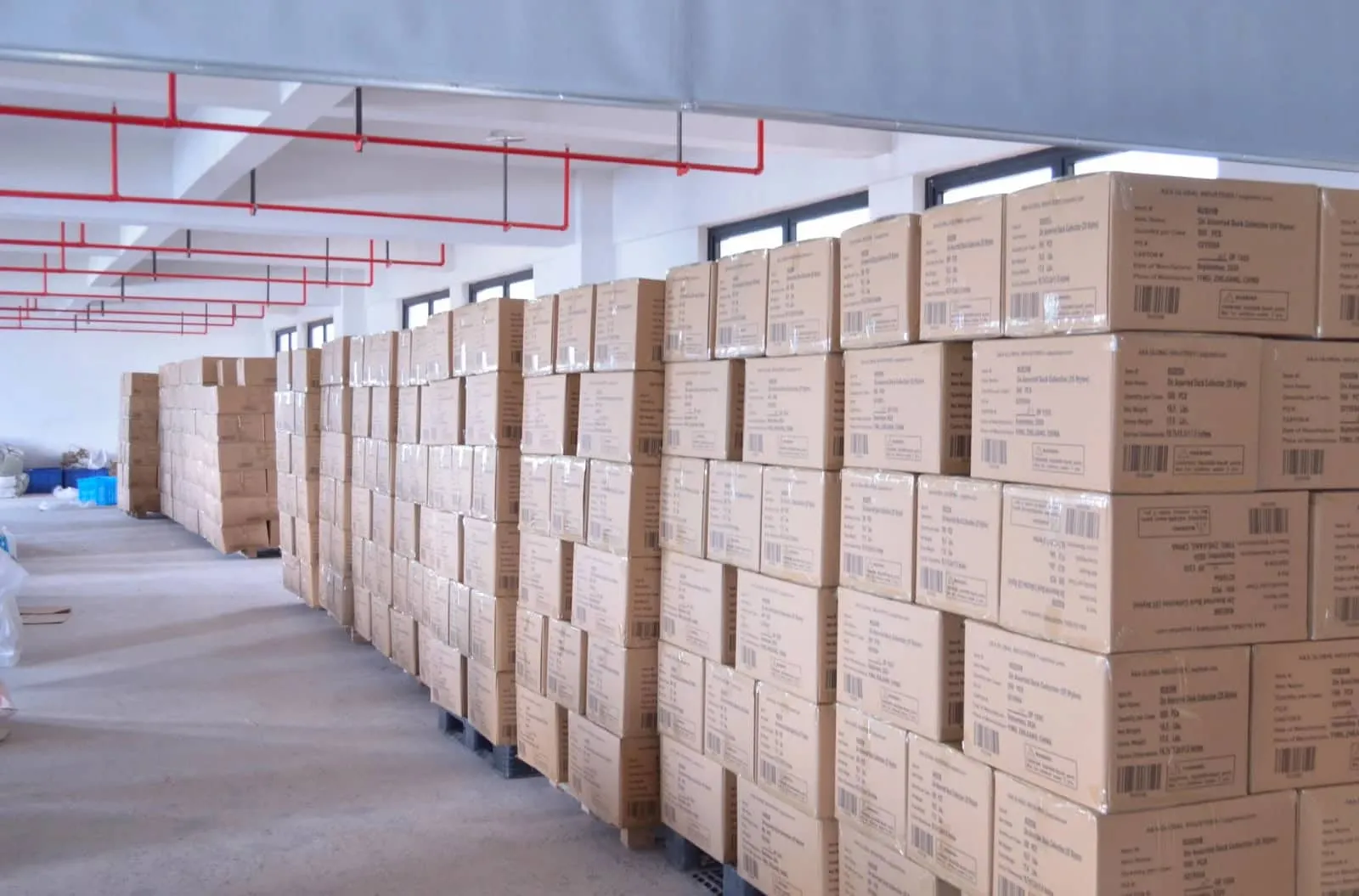
Identification is the job buyers notice last and warehouses notice first. A carton that carries the style, the quantity, the carton number and the destination on the outside can be received without opening it. A carton that carries a shipping label and nothing else has to be opened, counted and reclosed, and every one of those steps is a chance to scuff a duck.
Toy labelling sits on top of that. The label guide covers the marks that belong to the product rather than to the carton, and the two sets are not the same list. On the packaging side, the European Commission lists material identification as part of its packaging rules, pointing to the decision that sets the identification system for packaging materials, and the packaging waste page is the place to start when a destination market asks what the material code means.
Split: one order that arrives as several
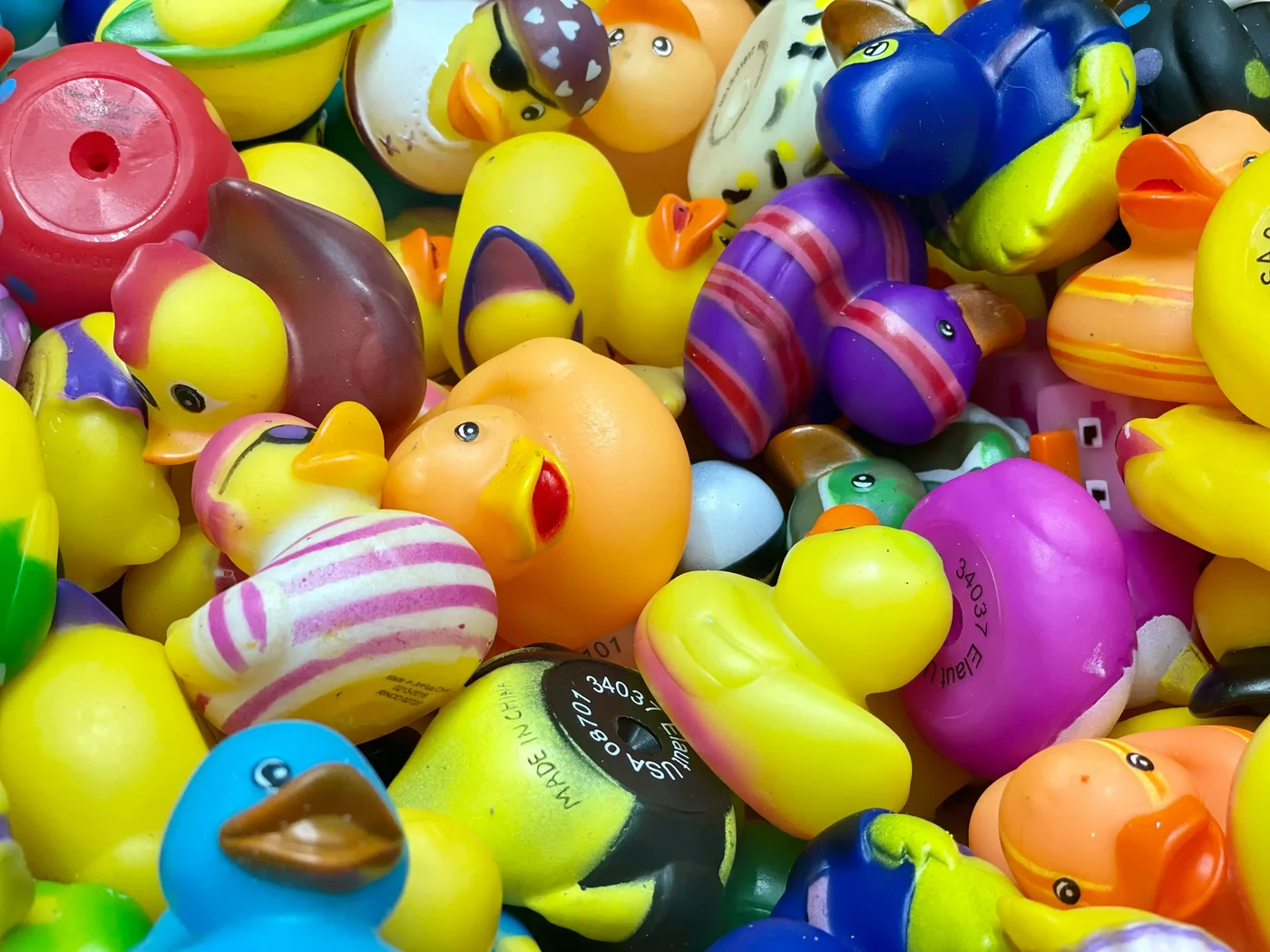
A bulk order is rarely one delivery. It is a warehouse drop, a handful of store parcels and often a set of event boxes that have to arrive separately with their own quantities. The pack sheet has to say how the run divides, because the division is decided at the packing table and rarely afterwards.
The split also fixes the inner pack. If forty units go to one venue, an inner pack of ten makes four lifts instead of forty. If the same units go to four stores, an inner pack of ten is a shelf-ready case. The carton specification note covers the outer side of that decision, and the customs note covers why the parcels and the paperwork have to describe the same thing.
Return: the pack that survives the way back
Returns are the job most packs fail, because the pack was designed to go out and never to come back. A unit that arrives in a bag and leaves the buyer's store in the same bag has nothing to protect it on the return leg: the bag is open, the header is creased, and the duck sits loose against whatever else is in the parcel.
A pack that handles returns has a resealable closure, a place for the unit to sit without rotating, and a carton that can be closed again without tape destroying the print. It is a small design change and a large difference in how a complaint ends. There is a boundary worth stating here: if the unit breaks in transit, the piece that comes off is not only a damage question. Under 16 CFR 1501.4, a toy for a child under three must not be small enough to fit entirely inside the Commission's test cylinder, and a detached beak or eye is tested the same way. That is why the pack's job includes keeping the unit whole, not only keeping it pretty.
Write the pack sheet, not the pack wish
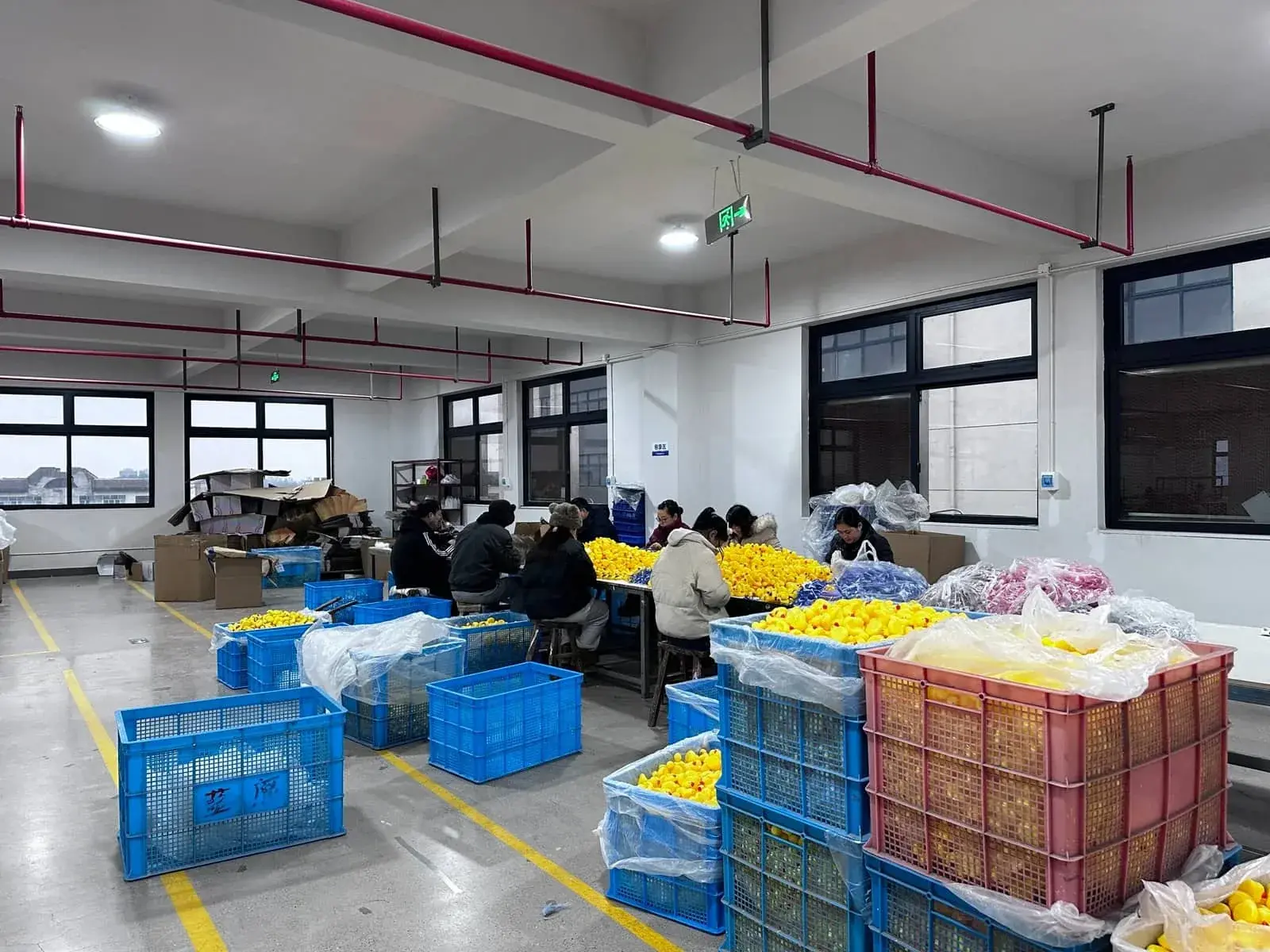
A pack sheet is one page and five lines. The first line is the unit: size, weight and finish, because a painted unit and a plain one need different protection. The second is the primary pack, meaning bag, box, header card or none. The third is the inner pack, meaning how many units sit in one lift. The fourth is the carton, meaning dimensions, count and marks. The fifth is the destination and the handling it implies, because a pallet to a distribution centre and a parcel to a hotel are two different journeys.
Those five lines settle most of the argument before a carton is bought. Without them, the packing table makes the decision on the day, usually in favour of whatever is closest. The packaging options note goes deeper on the bag and box choices themselves, and the storage note covers what happens to a packed carton that then sits in a warm stockroom for a season.
Where each pack fits
Four pack types cover most large duck orders, and each one has a condition where it is the right answer. A polybag with a printed header is the lightest way to present a unit that will be handed to a person. A rigid retail box is the answer when the unit has to stand on a shelf and be read. A plain carton with an inner divider is the workhorse for bulk deliveries where the pack is opened and discarded. A display-ready carton is the compromise when a store wants a shelf presence without unpacking each unit.
The failure mode is the same in all four cases: a pack chosen for the wrong reading environment. A display-ready carton sent to a warehouse adds volume for a shelf that does not exist. A plain carton sent to a gift counter arrives with nothing to show. Matching the pack to the place where it is opened is the whole decision.
- Will the unit be seen on a shelf, handed to a person, or unpacked by staff?
- Does the pack have to survive a return leg as well as the outbound one?
- Who reads the carton marks, and what do they need to know without opening it?
- How does the order split, and does the inner pack match that split?
Frequently Asked Questions
Is a bag enough for a large duck?
For a unit that travels inside an outer carton and is handed out by staff, a bag plus a divider is enough, because the carton does the protection work. For a unit that stands on a shelf or ships as its own parcel, a bag is not enough, because the bag offers no structure and no printed face.
Who decides the carton marks?
The buyer decides what the marks have to say and the factory decides where they fit. Practically, the buyer supplies the style code, quantity, destination and any internal reference, and the factory lays them out so the carton can be read without opening. Both sides should sign the layout before the cartons are printed.
Can the same carton serve a promotion and a retail order?
It can, but only if both readings were designed in from the start. A carton with a clean front panel, a printed mark block and a resealable closure works in both settings. A carton designed only for bulk delivery has nothing to show, and a carton designed only for retail wastes volume in a warehouse.
What has to be on the pack sheet before the run starts?
Five lines: the unit with its size, weight and finish; the primary pack; the inner pack count; the carton with dimensions, count and marks; and the destination with the handling it implies. If any of the five is missing, the packing table will decide it on the day.
Final Note
I would rather see a pack sheet with five boring lines on it than a beautiful carton that nobody specified. The five jobs are not marketing language. They are the tests a carton passes or fails between the packing table and the moment somebody lifts the lid. A large duck is unforgiving on that journey because its paint is exposed and its shape is awkward, and a pack that was designed for one job will be judged on all five.
Key takeaways
- The five jobs one box must do: protect, present, identify, split and return, each with its own test.
- Protect: the paint is the part that travels badly: separation matters more than wall thickness.
- Identify: the marks a warehouse needs: if the carton has to be opened to be understood, the pack has failed.
- Write the pack sheet, not the pack wish: five lines settle the argument before a carton is bought.
- Where each pack fits: match the pack to the place where it will be opened.