A duck order runs as four queues rather than one schedule, because the queues move at different speeds and a buyer can only push on two of them. Artwork, tooling, first unit approval and packing each have their own gate, and the whole batch waits on the slowest one at any moment. The buyer who understands which queue the order is in stops asking for a single finish date and starts removing the thing that is actually holding the run.
In short: the artwork, colour list and packaging files can move before anything is moulded, the tool is the stage that cannot be compressed quietly, the first unit is the last low risk place to change the duck, and print and packing close the run where the buyer signs. A batch is never waiting on all four at once. It is waiting on one, and naming that one is the whole management task.
The run has four queues, not one clock
The four queues are drawing, tool, decoration and pack. The drawing queue holds the shape, the colour list and the print file; the tool queue holds the steel; the decoration queue holds the paint and the print; the pack queue holds the bag, the label and the carton. They are not sequential in a simple line, because artwork review can overlap with tool cutting and label design can overlap with both. What they share is a set of gates, and a gate that has not been passed stops the batch even if every other queue is empty.
What starts before the tool is cut
More than buyers expect. The colour list, the artwork revision, the print method and the packaging files can all be decided and approved while the tool is still a drawing, and doing that early is what keeps the later stages short. A logo that is still being revised after the first unit goes back to the print file, which is the one queue that could have been closed. The same logic applies to the color reference: a physical standard approved on the material removes a whole round of argument later, which is why the color approval notes sit inside the drawing queue rather than after it.

The tool is the stage nobody can compress quietly
Tool work has a physical sequence that does not negotiate: cut, fit, try, adjust. A buyer can shorten the queue by having a clean drawing, and a buyer cannot shorten the steel by asking for it sooner. This is the stage where a schedule promise made early becomes a quality problem later, because the only way to move faster is to skip a trial that would have caught something. When a batch is in this queue, the useful questions are about the drawing being settled rather than the calendar.
The first unit is the last low risk place to change a duck
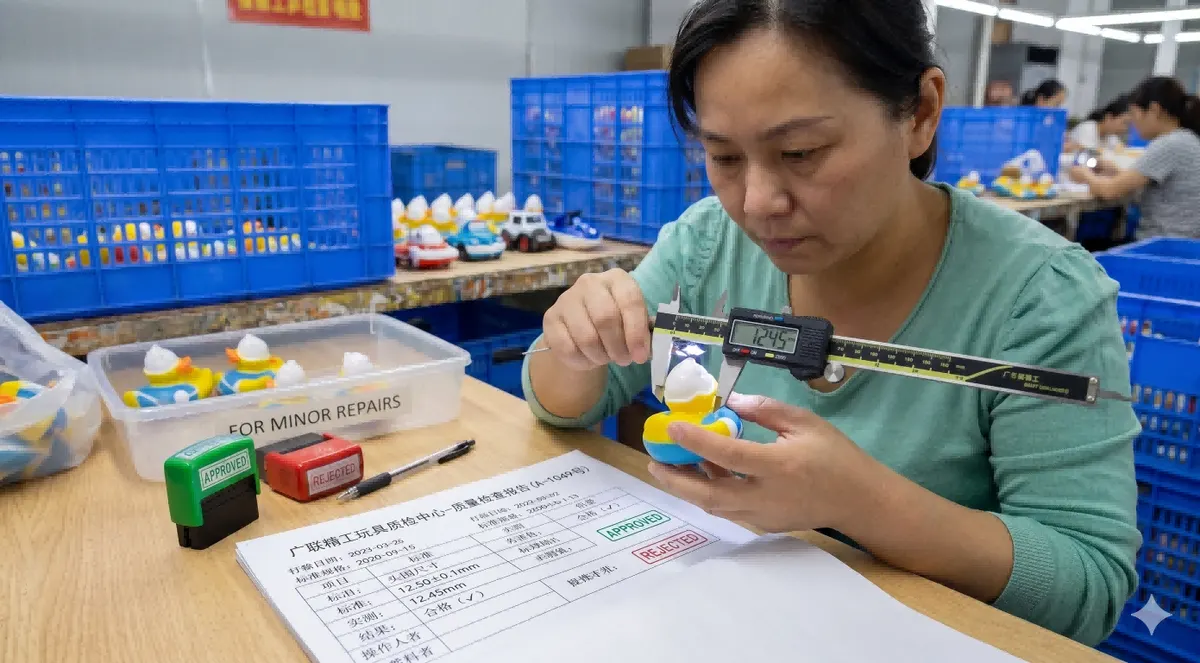
Once the tool is cut and the first unit exists, every change has a route back through steel, print file or both. That makes the first unit the last place where a change is still a design decision rather than a rework decision. It is also the only place where the object can be judged as an object: how the surface catches light, whether the print wraps where the body curves, whether the duck sits level. A photo cannot replace that check, and a buyer who skips it usually pays for the skip at the end of the run. The design revision ladder explains which changes belong to this step and which start a new duck.

Print and pack close the run where the buyer signs
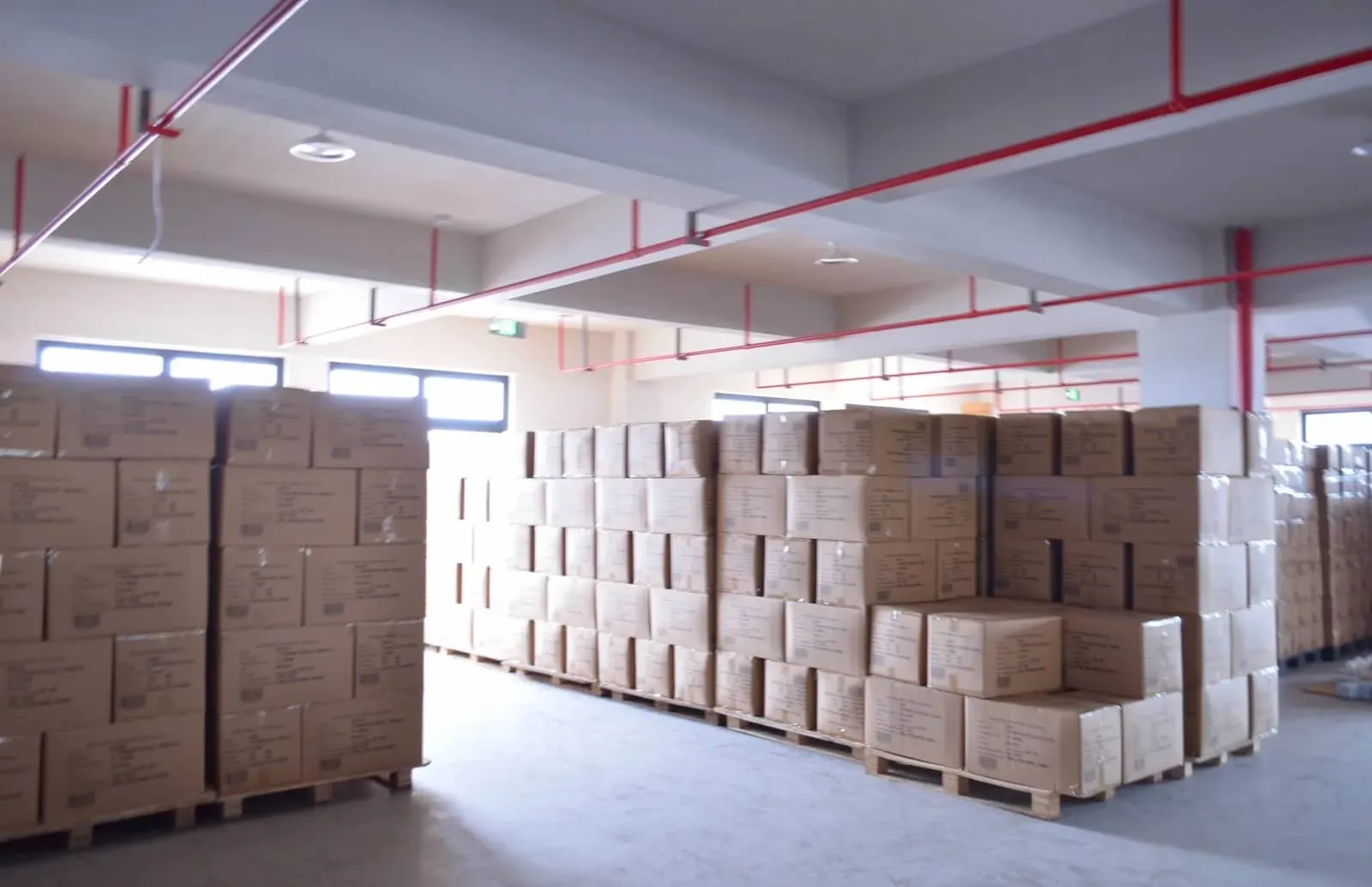
The last queue is the one that most often surprises a buyer, because it contains decisions that looked administrative. A bag, a hang tag, a carton mark or a retail label each need an approved file, and a label that arrives late holds a finished batch on the floor. Transit testing sits here too, which is why a pack specification is worth settling with the same care as the duck: the packaging notes cover the bag and carton choices, and a distribution test against a recognised transit standard such as ISTA is the point where a pack claim stops being an opinion. Certification also belongs to this stage, because under 16 CFR part 1110 the product has to be certified as it ships, not as it was drawn.
What a buyer actually controls
| Stage | What it waits for | What the buyer controls | What cannot be shortened |
|---|---|---|---|
| Drawing | A clean marked revision | How fast a change is marked and returned | The number of rounds needed |
| Tool | Steel cutting and fitting | Nothing once the drawing is signed | Cut, fit and trial |
| First unit | An approved unit | Whether a decision is made or deferred | The judgment itself |
| An approved decoration file | The file, the color and the ink | The physical print step | |
| Pack | Bag, label and carton files | The label copy and the marks | Transit testing |

Questions to settle before you approve
- Which of the four queues is the batch in today, and who owns the gate?
- Is the artwork final, or is it still being revised while the tool is cut?
- Has a physical unit been approved, or only a drawing and a photo?
- Are the bag, label and carton files approved before the batch reaches packing?
Frequently Asked Questions
Does a new duck always need a new tool?
It needs a new tool whenever the shape or the size changes, because the wall and the base scale with the body rather than with the drawing. A colour change does not need one, and a printed logo does not need one. The size and scaling notes explain why a size change is the clearest case of a new tool rather than a revision.
What should a first unit approval cover?
The surface under real light, the print position on the curved body, the fit of any outfit piece and the way the duck sits when placed down. It should also record the colour reference and the route, so the approval describes the thing that will be produced. Approving from a photograph covers none of those four checks.
Why does a colour change sit at a different gate from a shape change?
Because it moves a different queue. A colour change touches the colour list and the ink approval, both of which live in the drawing and decoration queues, and it never touches steel. A shape change touches the tool, which is the one queue that has no shortcut, so the two arrive at different gates even when they are requested on the same day.
What can a buyer decide early to keep the print stage clean?
The print method, the ink family and the final artwork revision. Deciding the method before the drawing closes stops a late switch of process, and freezing the artwork stops the print file reopening after the first unit. The print method comparison is the decision to make at that point rather than at the press.
Final Note
A batch is late for one reason at a time, and the reason is almost always a gate that nobody named. Buyers who track the four queues stop paying for speed they cannot use, and they stop speeding up the stage that was already finished. Close the artwork early, settle the colour on a real unit, approve the first unit as an object, and have the pack files ready before the batch arrives. The storage and shelf life notes are the natural next step once the batch is packed, because where it sits afterwards is its own queue.
Key takeaways
- A duck batch waits in four queues: drawing, tool, print and pack.
- Artwork, colour and packaging files can all move before the tool is cut.
- The tool stage has no shortcut, so a rushed tool becomes a quality problem later.
- The first unit is the last place where a change is still a design decision.
- Pack files and transit testing close the run, and a late label can hold a finished batch.
- Name the gate that is holding the batch before asking for a faster finish.