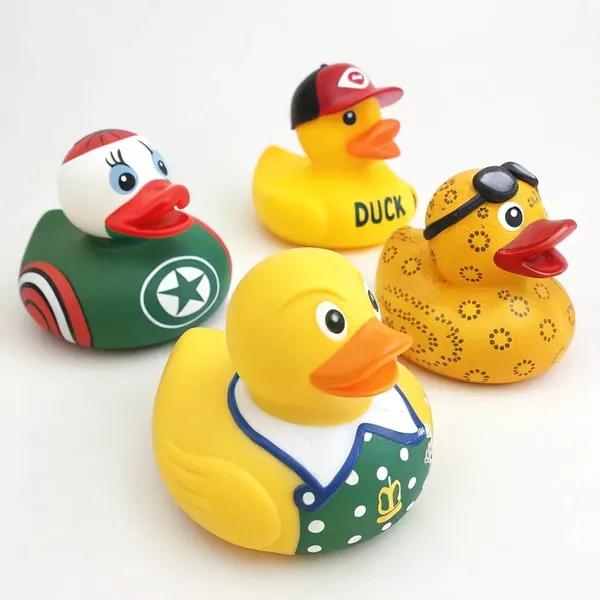
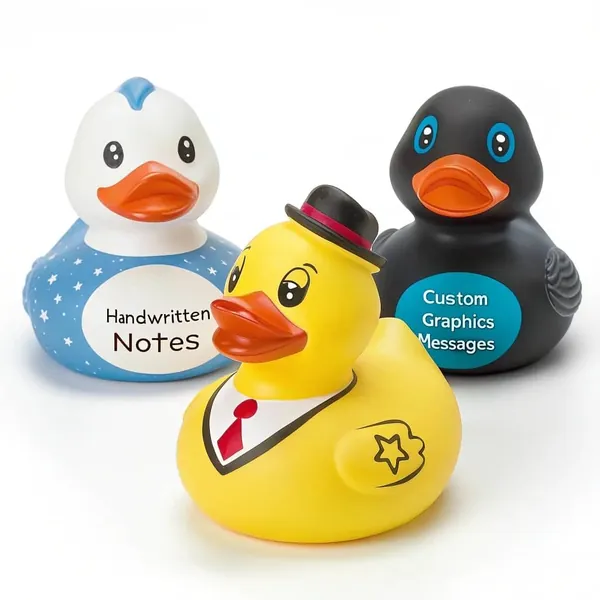
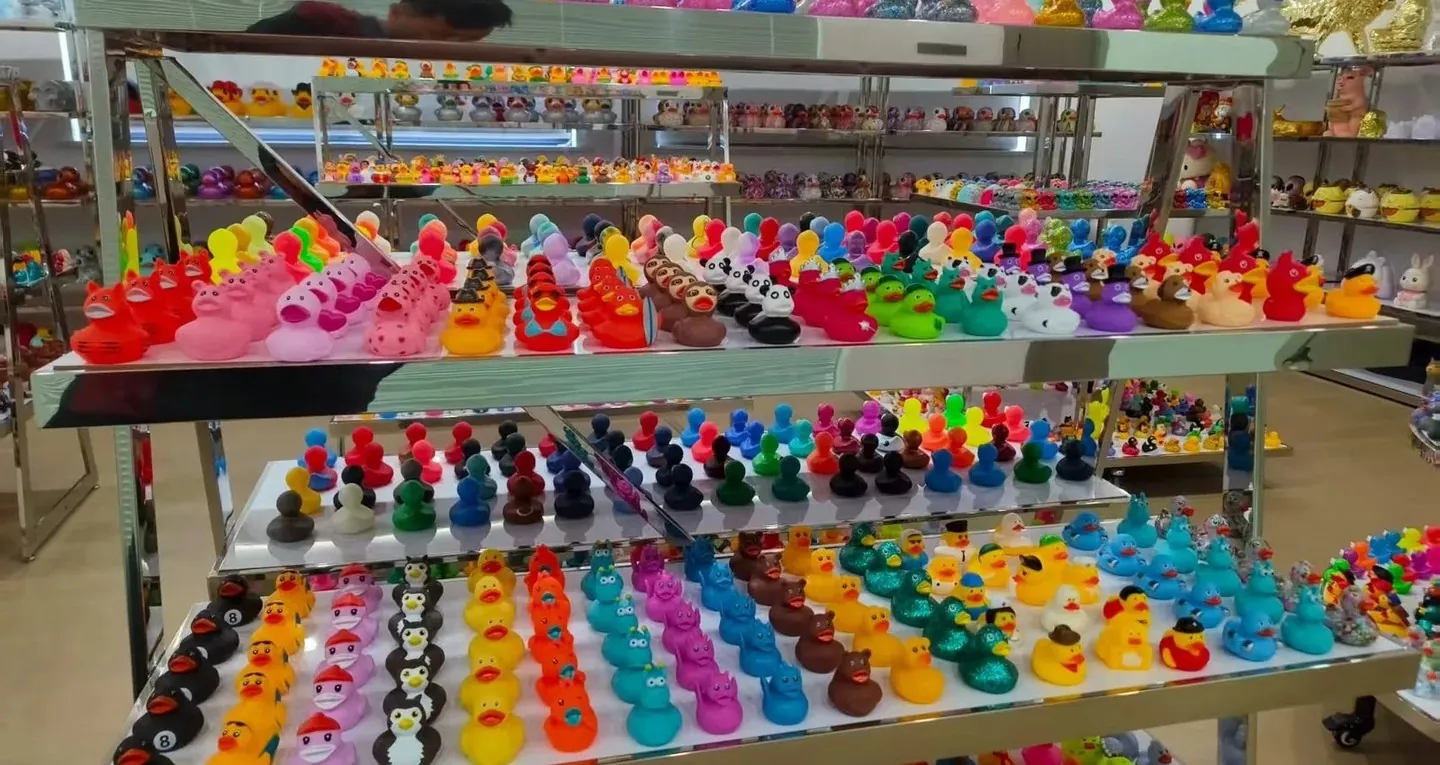
A two-tone duck is decided by its colour boundary rather than by the pair, because the line where the two colours meet is what moves in production. Where that boundary sits decides which features it can follow and how much drift a buyer is agreeing to. Naming the process for each colour comes before naming the feature, and the feature comes before the sample.
Two colours are two process decisions, and the interesting part is where the boundary sits.
In short: A two-tone duck is two decisions. The first is which colour lives in the material and which one is applied. The second is where the boundary sits and how far it may drift. A boundary that is written on a feature, given an edge class and measured against that feature can be rejected at inspection. A boundary written as a picture cannot.
Two Colours Are Two Questions
The first question is about process: is the second colour in the body or on the body. A colour that is in the material is fixed when the duck is moulded, and a colour that is on the material is fixed later by paint, print or a second shot. The two answers pull the drawing in different directions, because one changes the tool and the other changes the finishing step.
The second question is about geometry: where do the two colours meet, and how precisely does that meeting point have to hold. A buyer usually answers the first question in the brief and leaves the second one to the sample, which is why the first sample is approved and the bulk run is questioned. The boundary is a specification, and a specification that was never written cannot be measured.
The commercial point is that the two questions have different owners. Process belongs to the material and the tool. Boundary belongs to the artwork, the finishing step and the inspector. A single sentence such as two-tone body hides both decisions, and the duck that arrives is whatever those two owners happened to build.
The Boundary Sits on a Feature, Not on a Coordinate
A boundary that is dimensioned in inches from an arbitrary datum looks precise on paper and is miserable in a factory. The body is curved, painted and handled, and a coordinate measured from a datum on a drawing has no physical partner on the finished duck. The inspector has nothing to measure to.
A boundary that follows a feature is self-locating. The edge of the beak, the line where the wing meets the flank, the seam where two moulded faces meet, the rim of the base: each of those is a physical edge that already exists on every duck, and the boundary can be specified as sitting on it, just above it, or just below it.
Features also absorb drift. A line that follows a moulded edge can move a little without reading as an error, because the eye reads the edge rather than the distance. A line that crosses a blank field has nothing to hide behind, so the same drift reads as a mistake. When a design demands a line across the chest, the drawing needs two references and a gauge, and the design revision page covers how that change is documented.
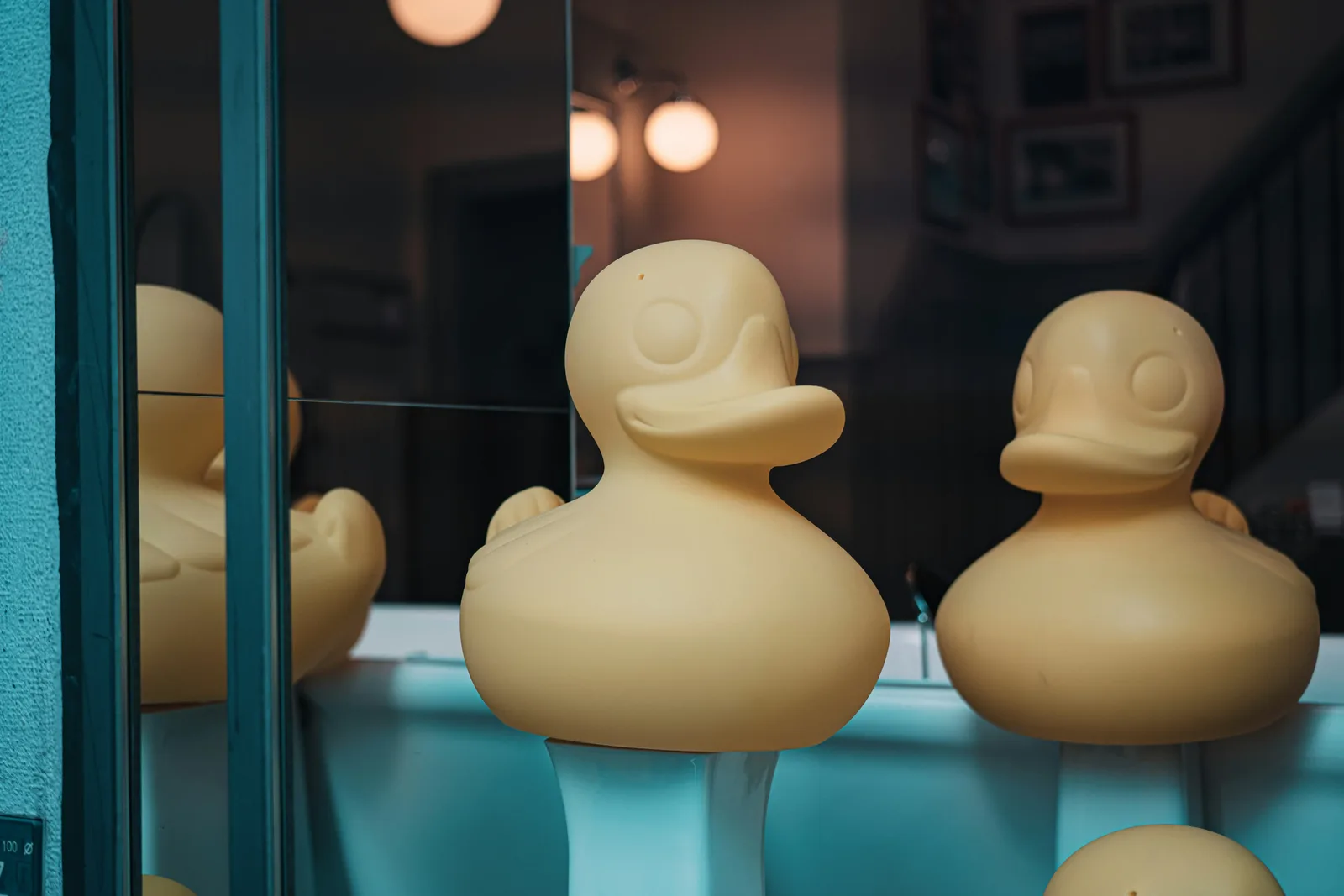
Three Edge Classes, Three Promises
An edge class is the promise a buyer is paying for, and there are three that cover most two-tone ducks. They differ in how the line is created, how sharp it can look, and what a change requires later.
| Class | How the line is made | What the buyer gets | What a change requires |
|---|---|---|---|
| Moulded | The line is cut in the tool and the second colour is a second shot | A hard edge set by steel, no coating to flake | A tool change, so decide before the cavity is cut |
| Masked and painted | The line is defined by a mask over the body | A softer edge and a quick line change | A new mask, and the coating enters the record |
| Printed | The line is a pad print or a printed graphic | Fine detail on small bodies and short runs | A new plate, with registration as the reject rule |
The moulded class is the one that is decided inside the tool, and the rotocasting and injection page covers how the two processes create a body. The classes are not grades of quality. A printed boundary can carry detail that a moulded one cannot, and a moulded boundary can hold an edge that no print will match. The mistake is choosing the class by the sample photograph rather than by the volume, the body and the way the duck will be handled.
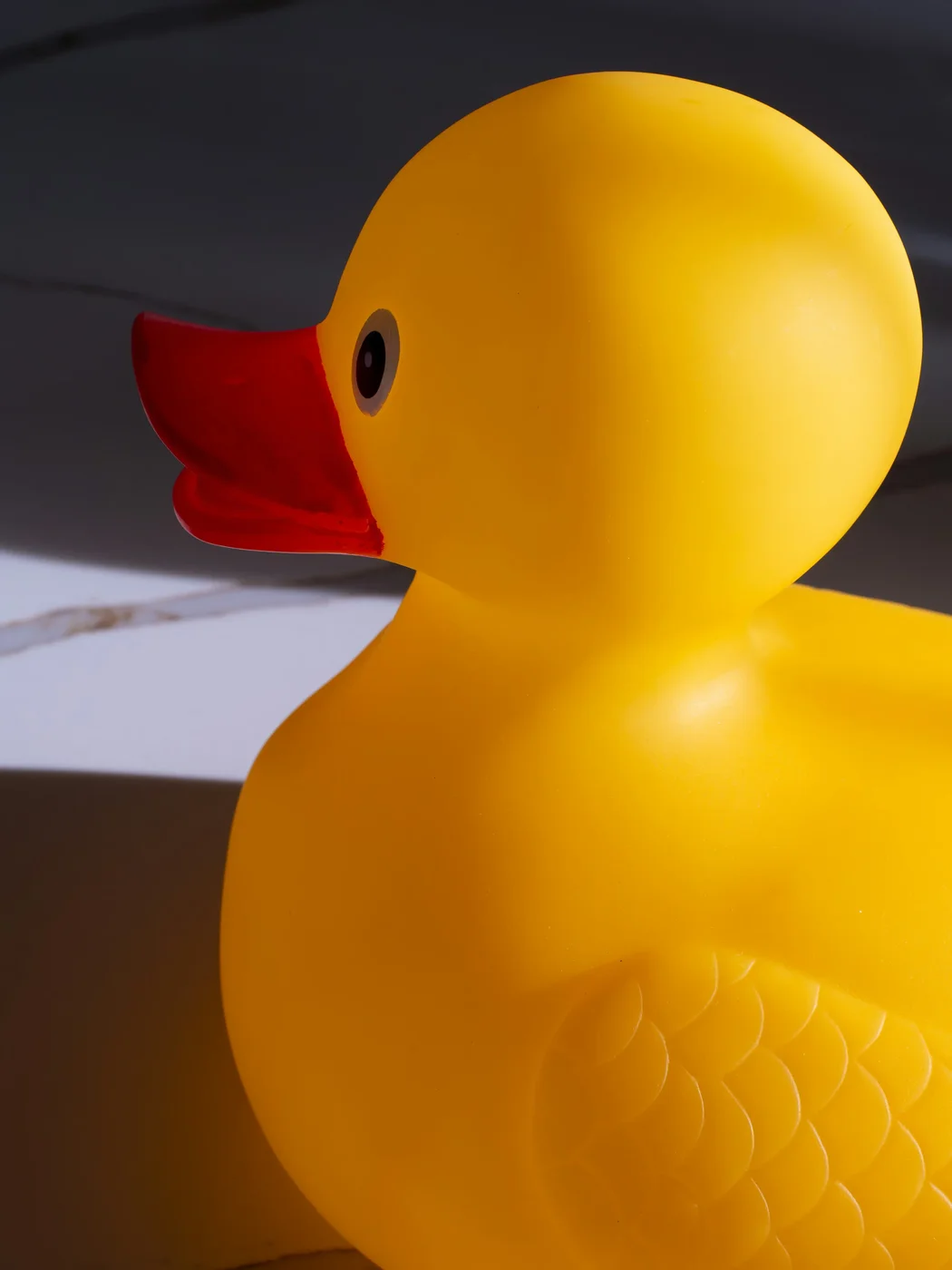
How the Drift Is Measured
Drift is the distance the boundary is allowed to sit from the feature it was assigned to. It is measured on the finished part, in a stated light, at agreed points, and it is recorded as a number rather than a feeling. Three points are enough on most ducks: the front where the line starts, the side where it runs, and the tail where it ends.
The measurement has to happen against the feature, not against the artwork. If the boundary follows the beak edge, the inspector measures the gap between the colour edge and the beak edge at the front and at both sides. If the boundary follows the wing line, the measurement is taken where the wing meets the flank. The gauge or the vision check is chosen to match that gap, and the Pantone matching page covers the colour side of the same sample review.
Colour and boundary are two separate measurements, which is where a sample review usually goes wrong. A duck can hold the right colour and the wrong line, or the right line and a colour that reads differently on a moulded face than on a painted one. Both have to be signed, and they have to be signed against the same unit.

What the Class Makes Rejectable
A class turns taste into a reject rule. Without one, every inspector invents a standard, and the same duck passes on Monday and fails on Friday.
On a moulded boundary the line is fixed by steel, so a bleed, a short shot at the boundary or a visible step is a reject, and drift beyond the agreed gap is a tool conversation rather than a finishing conversation. On a masked and painted boundary a soft edge is expected, so the rejects are a bleed past the feature, a paint edge that has crept, and any flake or chip at the line. On a printed boundary the rejects are registration, a missing or doubled mark, and a print that has shifted off its feature.
The reject list is worth writing into the order because it decides who pays for the sorting. A duck that fails a rule nobody wrote is a duck the buyer argues about, and the argument takes longer than the boundary ever did.
Where the Second Colour Changes the Paper
An applied colour is a coating, and a coating on a toy is regulated separately from the body it sits on. In the United States the ban on lead-containing paint covers paint and similar surface-coating materials for consumer use where lead content exceeds the limit, which is why the second colour changes the record rather than only the look. The scope and the limit are set out in 16 CFR 1303.1.
The handling rule is the other half. A duck sold for a young child is dropped, pulled and twisted, and the colour has to be judged on the unit that has been through that sequence rather than on a fresh sample. The use and abuse method for children over 18 and not over 36 months in 16 CFR 1500.52 includes four drops from 3 ft, a torque test and a tension test, which is exactly the sequence that finds a coating that was never designed to stay on a curved edge.
That is why the paper changes when the boundary is applied rather than moulded. The record has to name the process, the coating and the class, and the label may have to change with it. The label page covers what the pack has to carry, and this page owns the line that the label is describing.
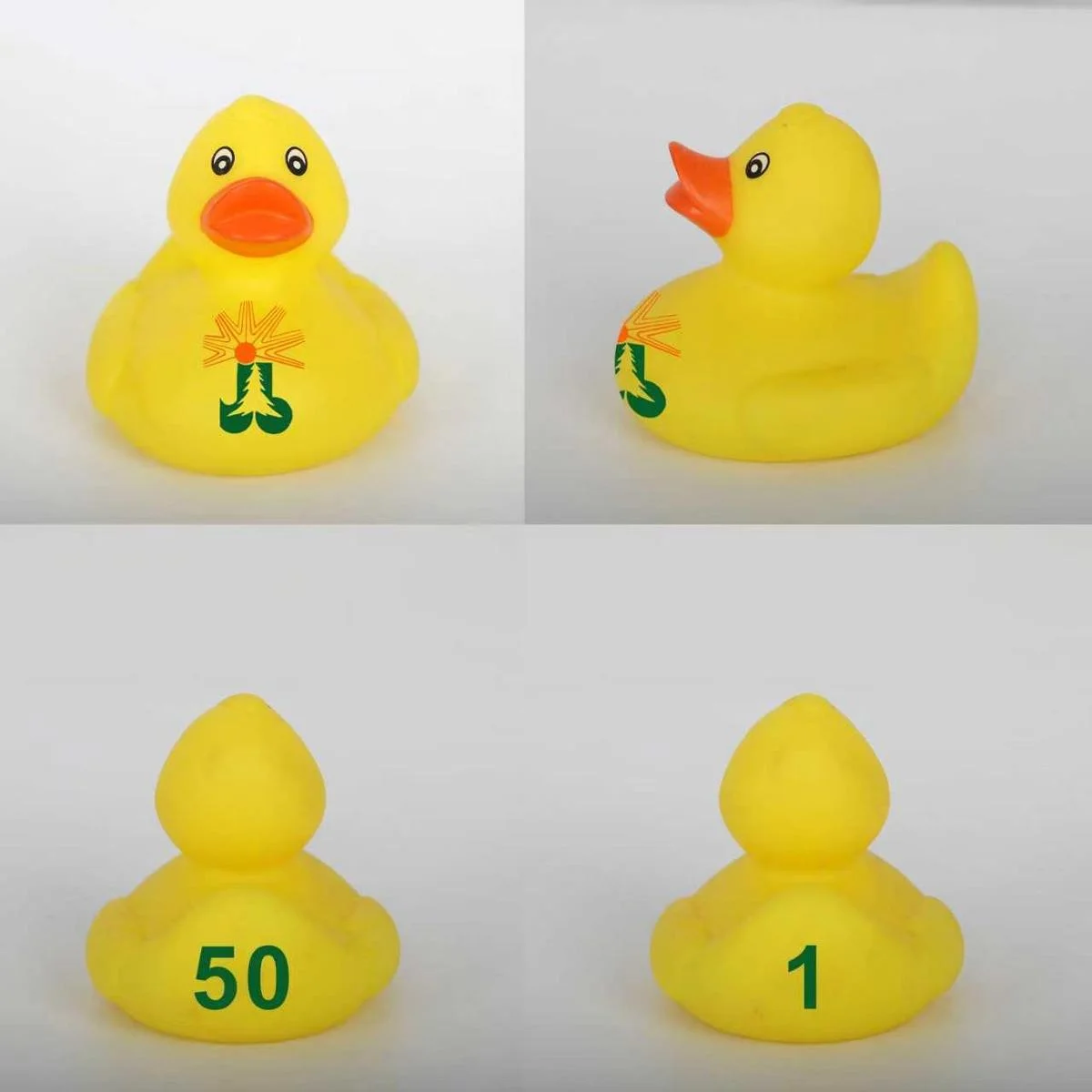
The Reorder Inherits the Class, Not the Screenshot
A reorder is judged against the class and the approved sample, not against a photograph. A photo flattens the drift, changes the colour with the light, and hides the place where the line actually sits on a curved body. A buyer who approves on a photo has approved the picture, not the duck.
The approved sample is the reference because it is physical. It can be put next to the next run under the same light, measured against the same feature, and held to the same drift. The sample versus production page covers how that pair is kept and compared, and the class line is what makes the comparison an inspection rather than a memory.
The reorder also inherits the process. A duck that moved from a moulded boundary to a painted one is not the same product, even if the colours look identical, because the boundary now depends on a mask and a coating. Any change of process should reopen the class, the drift and the record, and that is a sentence worth writing into the order.
The Five-Line Boundary Spec
Five lines settle a two-tone duck, and each one closes a different argument.
- Name the process for each colour: in the material or on the material.
- Name the feature the boundary follows, and what it sits next to.
- Name the edge class: moulded, masked and painted, or printed.
- Name the drift, the points where it is measured and the light it is measured in.
- Name the rejects, and the person who signs the sample that becomes the reference.
A spec written this way is short enough to fit on a drawing and complete enough to inspect. It also protects the buyer at the reorder, because every sentence has a physical partner that can be found on a duck.
Five Questions Before the Second Colour
Five questions are worth answering before the second colour is approved, and each one changes the tool or the paper:
- Is the second colour in the tool or on the surface, and does the order say which?
- Which feature does the boundary follow, and can an inspector measure the gap there?
- Which edge class is being paid for, and what does that class make rejectable?
- Does the applied colour change the record, the grade or the label?
- What is the reference for the reorder, the approved sample or a photograph?
A two-tone duck is not difficult because it has two colours. It is difficult because the line between them is the only part of the product that two processes have to agree on.
Frequently Asked Questions
Can a two-tone duck have a perfectly sharp colour line?
Sharpness depends on the class. A moulded boundary set by steel gives the hardest edge, a printed boundary can look sharp at a distance but carries registration error, and a masked and painted boundary is soft by nature. The useful question is which class the duck was specified for, not whether the line looks sharp in a photo.
Where should the colour boundary sit on a duck?
On a feature that already exists: a beak edge, a wing line, a seam or a base rim. A boundary on a blank field has nothing to measure against and no way to absorb drift, so it reads as an error sooner. The drawing should name the feature, not a distance from an arbitrary point.
How much can the boundary move between ducks?
As much as the class and the feature can hold, and no more than the written drift allows. The number belongs in the spec and is measured against the feature at agreed points. Without that number there is no reject rule, only an opinion, and opinions differ between inspectors.
Is a two-tone duck a toy?
It is a toy if it is sold as one, whatever the colour process. The second colour can add a coating to the record and can change what the pack has to say, but it does not move the duck out of the toy rules. Treat the colour as part of the product, not as decoration added after the product was defined.
Final Note: Five Lines Before the Second Colour Is Approved
- Decide whether each colour is moulded into the body or applied over it.
- Put the boundary on a feature an inspector can find and measure.
- Choose the edge class by volume and handling, not by a photograph.
- Write the drift, the measurement points and the light into the spec.
- Keep the approved sample as the reference for every reorder.
Two colours look like a decoration decision. They are a tool decision, a finishing decision and an inspection decision, and the line where they meet is the only part of the duck that all three have to agree on.
Key takeaways
- Two colours are two decisions: which colour is in the material and which is applied, covered under two questions.
- A boundary belongs on a feature, not on a coordinate from a drawing, covered under where the line sits.
- The edge class decides what a buyer gets and what a change requires later, covered under the edge classes.
- Drift is measured against the feature at stated points and in a stated light, covered under measuring drift.
- An applied colour is a coating, so it changes the record and not only the look, covered under the paper.