Skip to content

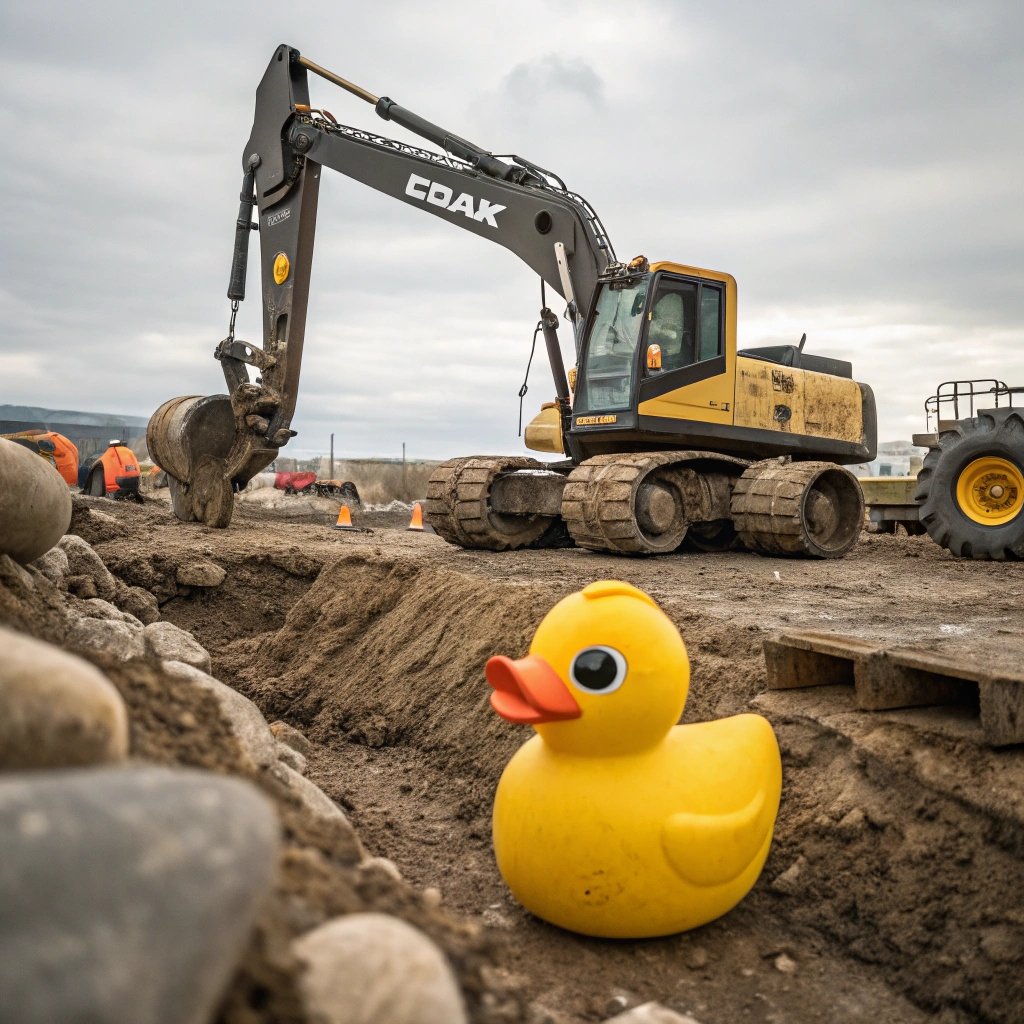
I watched a PR team panic last summer when their centerpiece—a large rubber duck meant for a lake installation—slumped into the water halfway through a live broadcast. The supplier sold them the piece but never mentioned it required three industrial blowers running constantly, which the park’s electrical grid couldn’t handle. That is the trap most event planners walk into when sourcing these spectacles. You think you’re buying a visual prop. You are actually committing to a temporary structural engineering project where the physics of rotational molding and cavity volume dictate whether your activation goes viral or gets canceled on site.
We pulled our factory defect logs from the last three years to map out exactly what happens when you scale a duck past six inches. The math is unforgiving. This breakdown covers custom mold fees, the 5-8% air-bubble defect rate you should expect on oversized solid PVC units, and the hidden costs of continuously powering inflatables at remote venues. You will walk away knowing exactly which material physics make sense for your site constraints, so you can justify the budget to your client before signing a purchase order.

Large Rubber Duck Sizing Definitions
Google returns $0.10 mini ducks and $350 event inflatables for the same search. They share a name, not material physics. Mixing them up is how event budgets get destroyed.
The Four Industry Size Categories
When an event planner types “large rubber duck” into a search bar, the factory floor reads that query as four completely distinct engineering problems. Our production lines handle all four, but the material science, tooling costs, and defect profiles between them have almost nothing in common.
- Mini (Under 3 inches): Single-cavity PVC injection, $500-$1,000 mold cost, 1-2% defect rate. Bulk commodity pricing territory. Irrelevant for event spectacle.
- Standard (3-5 inches): The promotional baseline. Rotational molding, squeakers optional. Most competitors like A&A Global stop their catalog here at 6 inches maximum.
- Oversized Solid (6-12 inches): This is the category most factories refuse to quote honestly. A 10-inch custom mold jumps to $2,500-$4,000 due to increased cavity volume and 40% longer cooling cycles. Solid PVC structurally cannot scale past 12 inches without collapsing under its own weight.
- Giant Inflatables (1-5 meters): 0.9mm PVC tarpaulin, not solid PVC. A 3-meter unit weighs 35-45kg and requires 2-3 industrial blowers running 24/7. Different certification chain entirely—CE for blowers, not CPSIA or EN71.
Why Search Engine Results Conflate Two Different Products
Alibaba and Google SERPs dump mini bath ducks, oversized solid PVC units, and giant inflatables into a single results page because they share a keyword cluster, not because they share a manufacturing process. For a procurement lead or event planner, this creates a dangerous false equivalence. You see a $0.18 unit price on a 2-inch duck and a $350 price tag on a 3-meter inflatable in the same viewport, and the human brain tries to anchor a mental price curve between them.
That curve does not exist. The cost jump from a 6-inch solid duck to a 10-inch solid duck is not linear—it is exponential, driven by rotational molding physics. Meanwhile, the jump from a 10-inch solid duck to a 3-meter inflatable is not a size increase at all. It is a complete material substitution from rigid PVC to air-supported PVC tarpaulin, with an entirely different logistics chain attached.
Our engineers routinely receive initial briefs from event agencies requesting a “large rubber duck” with a per-unit budget of $3-$5, referencing Alibaba search results. What they actually need—based on the event photos in their mood board—is a 3-meter inflatable with a $2,800-$4,500 total project cost including blowers and rigging. The budget gap is not 20%. It is 1,000%.
The Three Budget Traps That Kill Event Installations
Most event budget overruns on oversized ducks trace back to three specific miscalculations that no supplier pricing table on page one will warn you about.
- Mold fee shock on oversized solids: Planners budget for standard mold costs ($500-$1,000) then receive a quote for $2,500-$4,000 on a 10-inch or 12-inch sculpt. The larger cavity volume and 40% extended cooling cycle per unit make this non-negotiable. This line item alone has derailed client approvals we have seen internally.
- First-run defect rate blindness: Standard 3-inch ducks run a 1-2% defect rate. Oversized solid PVC ducks over 8 inches face a 5-8% air-bubble defect rate during rotational molding. First-run orders must account for this in unit counts, or you end up short at the event with no time for a reorder. Our QC team flags this explicitly on every 8-inch-plus order.
- Inflatable power and freight reality: A 3-meter giant inflatable rubber duck for events demands continuous electrical power for 2-3 industrial blowers. For remote lakeside activations or unpowered water venues, this means renting generator rigs—an additional $500-$1,500 per day that planners almost never budget for. On the freight side, volumetric shipping constraints add 7-10 days to ocean transit versus standard solid duck shipments.
The fix is straightforward: define your category before you request a quote. If your activation requires a photo-op centerpiece that holds its shape on a podium, you need an oversized solid PVC duck in the 8-12 inch range, and you must budget mold costs and QC reject rates accordingly. If you need something visible from 200 meters away on open water, you need a PVC tarpaulin inflatable, and your site survey must include a power audit before any PO is issued.
Solid PVC vs Giant Inflatables
A “large rubber duck” is not one product. It is two completely different engineering systems that require opposite logistics, budgets, and power infrastructure.
Solid PVC Ducks: The 6-12 Inch Engineering Ceiling
Most suppliers like A&A Global stop at 6 inches because rotational molding physics get hostile past that point. Our engineers push into the 8-12 inch range for oversized solid PVC rubber duck manufacturing, but every centimeter up costs you in defect risk and mold investment.
A standard 3-inch duck mold runs $500-$1,000. A 10-inch custom oversized mold jumps to $2,500-$4,000 because cavity volume increases disproportionately and cooling cycles extend by roughly 40%. That is not a supplier markup—that is thermodynamics.
The real problem is internal air bubbles. Solid PVC ducks over 8 inches face a 5-8% air-bubble defect rate during rotational molding, compared to 1-2% for standard sizes. We run rigorous pre-shipment QC on every bulk order 12 inch rubber duck run from our China facility, and we set the first-run defect threshold at under 5%. If a factory quotes you a 12-inch solid duck with a “zero defect” guarantee, they are either lying or have not actually produced one at scale.
Floating balance degrades significantly above 8 inches. The weight distribution shifts as cavity volume increases, and without precise wall-thickness control, the duck lists to one side in water. For photo-worthy event activations, that tilt kills the shot. Lead time runs 35-45 days for custom oversized solid ducks—build that into your project timeline from day one.
PVC Inflatable Ducks: The 1-5 Meter Harbor Installation
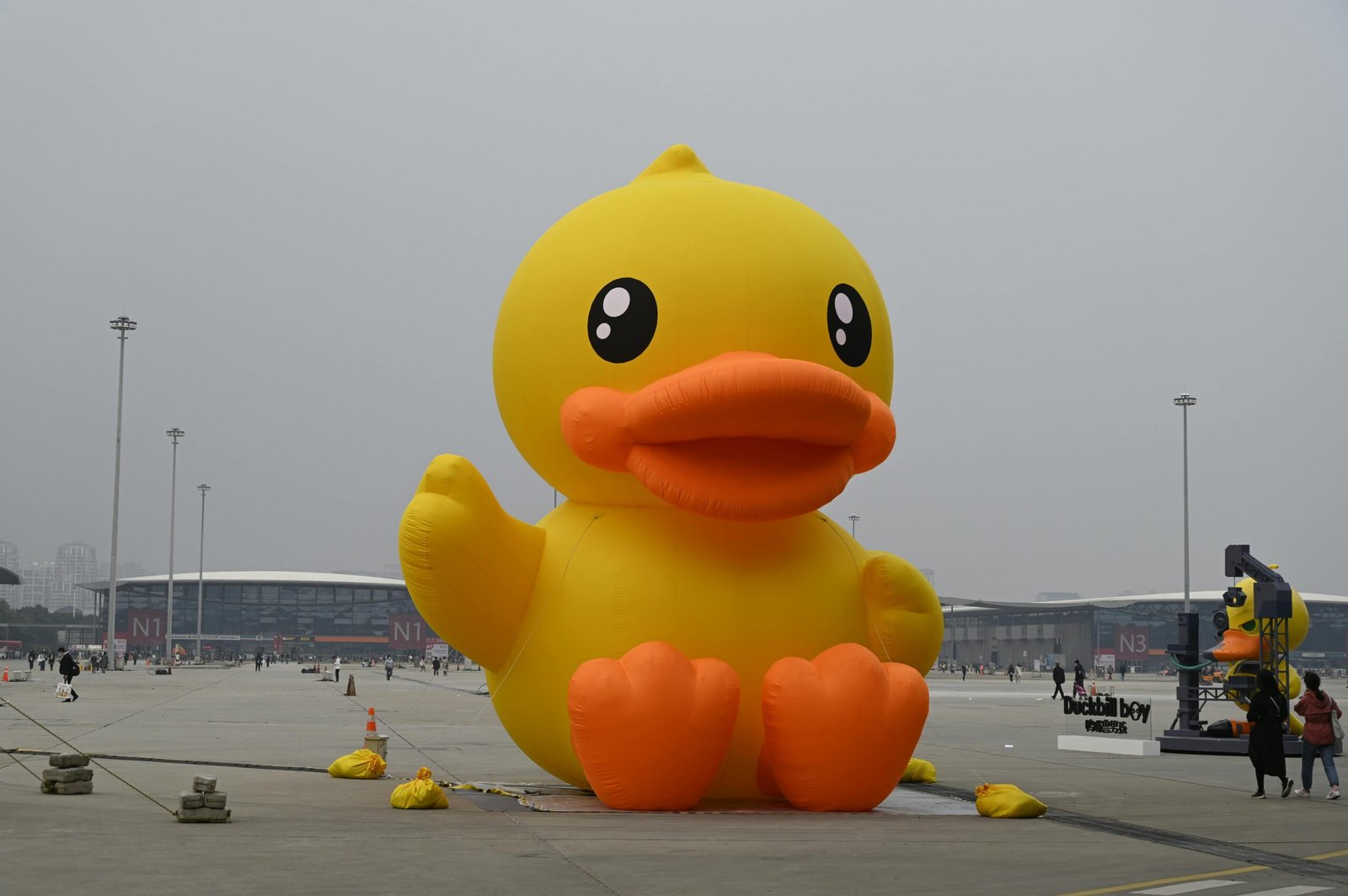
Giant inflatable rubber duck for events is an entirely different category. These use 0.9mm PVC tarpaulin with welded seam construction, not rotational molding. A 3-meter duck weighs 35-45kg and requires 2-3 industrial blowers running continuously—24 hours a day, 7 days a week—for the duration of the installation.
This is the detail that sinks event budgets: most planners do not realize that continuous electrical power is non-negotiable. No blowers, no duck. For remote water-based activations or harbor installations without grid access, you need specialized generator rigs, which adds $800-$2,000 per day to your large rubber duck event installation cost. If your site cannot deliver stable 220V power, an inflatable is the wrong choice.
Production is faster—20-25 days versus 35-45 for solid—but shipping is where you lose the time advantage. A 3-meter inflatable packs into roughly 1.2 cubic meters, hitting volumetric weight penalties hard. Add 7-10 extra days for ocean freight compared to solid units of equivalent unit count. For a custom large rubber duck wholesale MOQ order, the split between solid and inflatable comes down to one question: does your activation site have reliable power, or does it not?

Mold Complexity & Cost Analysis
A 10-inch duck mold costs 3-4x more than a 3-inch mold because rotational molding physics penalize cavity volume, not linear dimensions.
Mold Cost Scaling: 3-Inch vs. 10-Inch
A standard 3-inch duck mold runs $500 to $1,000. Jump to a 10-inch custom oversized mold and you are looking at $2,500 to $4,000. Most event planners assume the cost scales linearly with height — it does not. Rotational molding costs are driven by cavity volume. A 10-inch duck holds roughly 37 times the material volume of a 3-inch duck, and the tooling must be engineered to distribute that PVC mass uniformly without thin-wall sections that collapse under the duck’s own weight during cooling.
Our engineers have found that most competitors like A&A Global only list ducks up to 6 inches, effectively dodging the 8-to-12 inch engineering zone entirely. When a planner requests a 10-inch solid duck, factories unfamiliar with oversized cavity dynamics often underquote the mold, then hit you with change orders mid-production when the first prototypes warp or crack. At our MOQ of 1000 units, the per-unit mold amortization for a 10-inch duck sits at $2.50 to $4.00 — manageable only if the factory quoted the mold correctly on day one.
Cavity Volume and Extended Cooling Cycles
Larger cavity volume directly translates to longer cooling times. A standard 3-inch duck completes its cooling cycle in 45 to 60 seconds. A 10-inch oversized duck requires 40% longer cooling cycles — roughly 70 to 85 seconds per cavity. This is not a minor efficiency tweak; it reshapes your entire production timeline.
For an event planner staring down a fixed activation date, those extra seconds per unit compound fast. On a single-cavity mold running 1000 units, the difference between a 60-second and an 85-second cycle adds roughly 7 hours of additional machine time. Factories that do not account for this upfront will either rush the cooling (producing structurally compromised ducks) or miss your delivery window. Our production planning builds the 40% cycle extension into the lead time from the quote stage — 35 to 45 days for oversized solid ducks — so there are no surprises three weeks out.
Air-Bubble Defect Risks During Production
This is where most event activations go sideways. Solid PVC ducks under 8 inches maintain a 1-2% air-bubble defect rate during rotational molding — well within acceptable tolerances. Once you cross the 8-inch threshold, that defect rate jumps to 5-8% on first production runs. The larger the cavity, the harder it is for trapped air to escape before the PVC sets, resulting in subsurface bubbles that can rupture during transport or, worse, visibly deflate on camera at a live media event.
Our internal standard accepts a defect threshold below 5% for first-run oversized solid ducks, but we hold the line at below 2% for reorders once the mold parameters are dialed in. The critical variable is vent placement in the mold — an engineering decision that most suppliers treat as an afterthought. If your factory cannot explain exactly where and how many vents are engineered into your oversized mold, you are gambling with your event budget. For any bulk order of 1000 units or more in the 8-to-12 inch range, insist on pre-shipment QC reports that include bubble-defect counts per batch, not just visual surface checks.
| Duck Category | Mold / Engineering Cost | Technical Constraints | Production Lead Time | Event Planner Risk Mitigation |
|---|---|---|---|---|
| Standard Solid (3-inch) | $500 – $1,000 | Standard cavity volume; 1-2% air-bubble defect rate in rotational molding | 15 – 20 days | Low structural failure risk; reliable for high-volume budget giveaways |
| Oversized Solid (8-12 inch) | $2,500 – $4,000 | Increased cavity volume; 40% longer cooling cycles; 5-8% defect rate; max 12-inch weight-bearing limit | 35 – 45 days | Requires rigorous pre-shipment QC to prevent structural collapse during live media events |
| Giant Inflatable (3-meter) | N/A (Seam-welded 0.9mm PVC Tarpaulin) | Weighs 35-45kg; demands 2-3 industrial blowers running 24/7 for continuous inflation | 20 – 25 days (+ 7-10 days volumetric ocean freight) | Eliminates mold fee budget overruns, but strictly requires specialized generator rigs for unpowered water events |

Event Logistics & Installation Factors
A 3-meter inflatable duck ships at 1,500-2,000 kg chargeable weight despite weighing only 35-45 kg actual. Your freight quote will be a surprise if you don’t calculate volumetric penalties before quoting your client.
Shipping Realities: Dense Cartons vs. Flat-Packed Inflatables
Oversized solid PVC ducks (8-12 inches) and giant inflatables occupy completely different freight profiles. Solid ducks pack dense—a 12-inch unit weighs roughly 180-220g and stacks efficiently in standard 5-ply corrugated cartons. Actual weight and chargeable weight stay nearly identical, so your forwarder’s quote matches reality.
Giant inflatables flip that equation. A 3-meter duck built from 0.9mm PVC tarpaulin weighs only 35-45 kg deflated, but it folds into a packed volume of roughly 1.5-2.0 CBM. That’s where the problem starts.
Volumetric Weight Freight Penalties
Ocean freight uses a dimensional weight (DIM) factor of 1 CBM = 1,000 kg. Multiply that 1.5-2.0 CBM packed volume by the DIM factor, and your chargeable weight jumps to 1,500-2,000 kg. You are paying freight for two metric tons of air. Our logistics team builds this into every quote upfront, but if you’re sourcing from a factory that only quotes FOB on actual weight, your client’s budget will break at the freight stage.
This volumetric penalty also adds 7-10 extra days to ocean freight transit compared to dense solid-duck shipments of equivalent actual weight, because volumetric-heavy containers face lower priority in carrier allocation. If your event date is locked, that 10-day buffer is not optional padding—it is a hard requirement you must build into your production timeline from day one.
On-Site Power Requirements for Continuous Blowers
A 3-meter inflatable duck demands 2-3 CE-certified industrial blowers running 24/7 to maintain structural integrity. Each blower draws 1.1-1.5 kW, putting total continuous power demand at 3.3-4.5 kW. That translates to roughly 30-40 amps on a 110V North American circuit, or 15-20 amps on 220V. This requires a dedicated power run—not a shared convention center outlet daisy-chained to your AV rig.
We see event planners get caught on this specifically with waterfront activations. If your duck is floating on a lake, a marina dock, or a public beach, permanent power infrastructure is rarely available at the waterline. You will need a portable generator rated for continuous duty (not a standby unit), and that generator must be placed where exhaust noise doesn’t bleed into your event footprint. Factor in generator rental, fuel logistics for multi-day activations, and a backup unit if your brand’s CMO is attending. Most planners do not realize this until their electrical contractor walks the site two weeks out, and by then the rental premium has already doubled.
Conclusion
If your activation is on unpowered water, skip the 3-meter inflatables entirely. Those industrial blowers require 24/7 power, and renting generator rigs will destroy your budget. Spec a 10-inch solid PVC duck instead—it handles media photos perfectly and avoids the 5-8% air-bubble defect rate of rushed rotational molding.
Demand a defect report from their last three 8-inch+ runs before signing off on an oversized mold. Most suppliers hide that 5-8% air-bubble rate until two weeks before your media debut. Send us your event date—we will map the 35-day production window backward to guarantee delivery.
Frequently Asked Questions
Who owns the largest rubber duck?
The mama and baby inflatable rubber ducks are owned by Big Duck LLC. City installation and event costs for these public art displays typically run around $60,000, funded by Downtown Development Boards and corporate sponsors.
How much does the world’s largest rubber duck cost?
A 3-meter custom inflatable rubber duck costs $350-$600 from manufacturers, while a 5-meter commercial-grade version ranges from $1,500-$3,000. This excludes international freight, rigging, and on-site installation costs.
What does it mean when someone puts a rubber duck on your car door?
This is the ‘Jeep Ducking’ trend, where Jeep Wrangler owners leave small rubber ducks on each other’s vehicles as a sign of community appreciation and positive interaction.
What is the rubber duck rule?
In software engineering, ‘rubber duck debugging’ is the practice of explaining your code line-by-line to an inanimate object (like a rubber duck) to isolate logic errors and find bugs.
What is the rubber ducky strategy?
In cybersecurity, the ‘Rubber Ducky’ strategy refers to using a malicious USB device disguised as a rubber duck to execute automated keystroke injection attacks the moment it is plugged into a computer.
For a closer look, see our guide on what free vs paid duck samples tell you.
Related B2B sourcing page: For production options, MOQ and custom project support, see our bulk rubber ducks page.