Skip to content
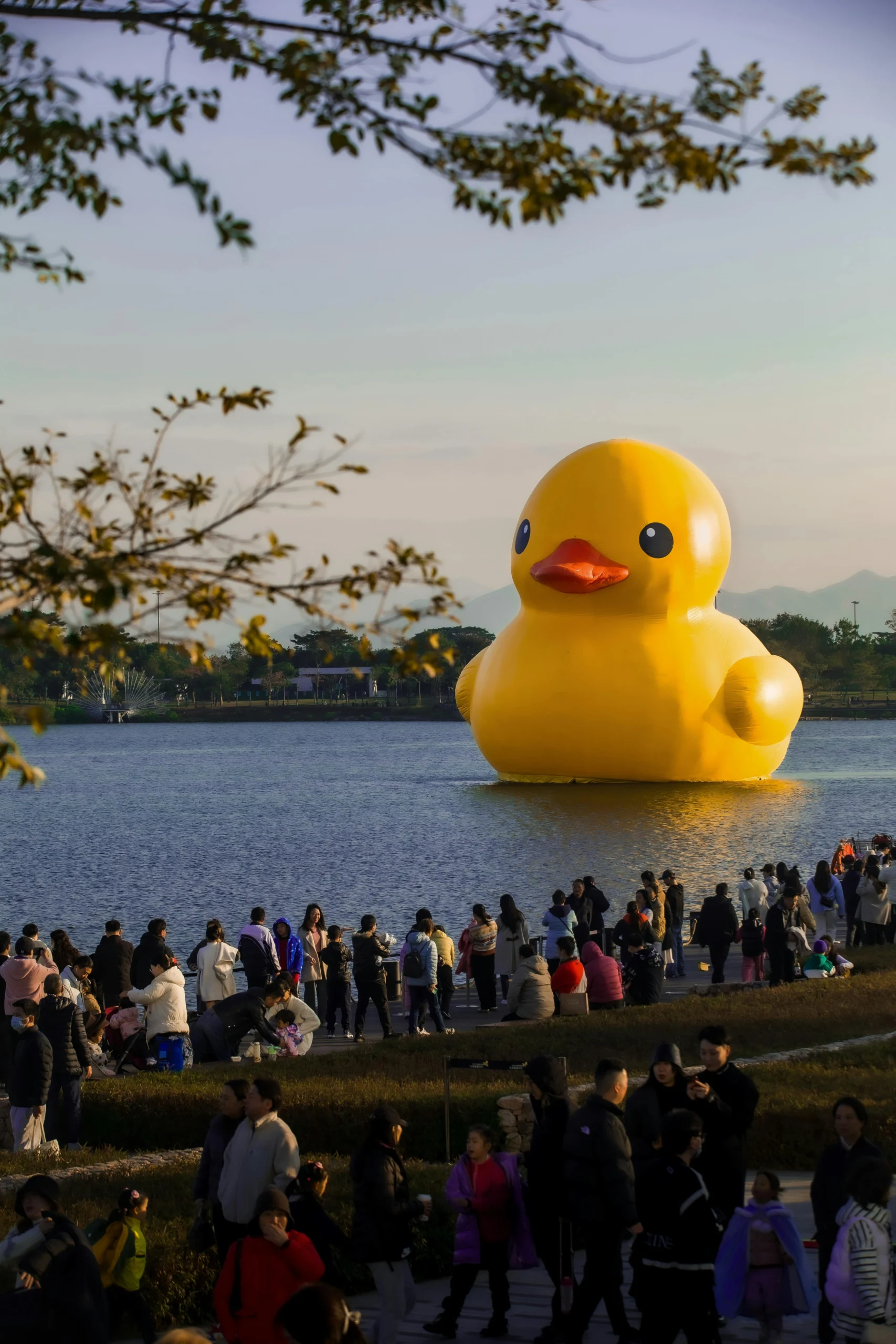
An event planner in Chicago ordered a large rubber duck for a lakefront brand activation last summer and received 3,000 solid PVC desk toys instead of the 5-meter visual anchor they needed. That mix-up cost them the live media window. The problem is a vocabulary gap. Retail promotional catalogs list a 4-inch vinyl item as “large,” but event planners need harbor-scale installations. If you use their terminology in your request for quote, you either get a product that physically cannot float at scale, or you get hit with an omitted line item for the 1-ton steel pontoon required to keep a giant inflatable from flipping on camera.
We pulled our factory engineering data from the last three years to map exactly where solid PVC stops and PVC-coated nylon inflatables begin. You will walk away knowing the exact material specifications—down to the 18-22 oz fabric weight and 1-2 HP blower requirements—to put in your next quote. We also cover the hidden phthalate substitution risk that triggers brand boycotts. Demanding a third-party lab report for DINCH compliance is the only way to keep your activation safe from a toxic material PR disaster.
Large Rubber Duck Material Definitions
“Large rubber duck” refers to three distinct material systems with hard size ceilings. Specifying the wrong one is the primary cause of event RFQ failures.
Solid PVC (Rotocast)
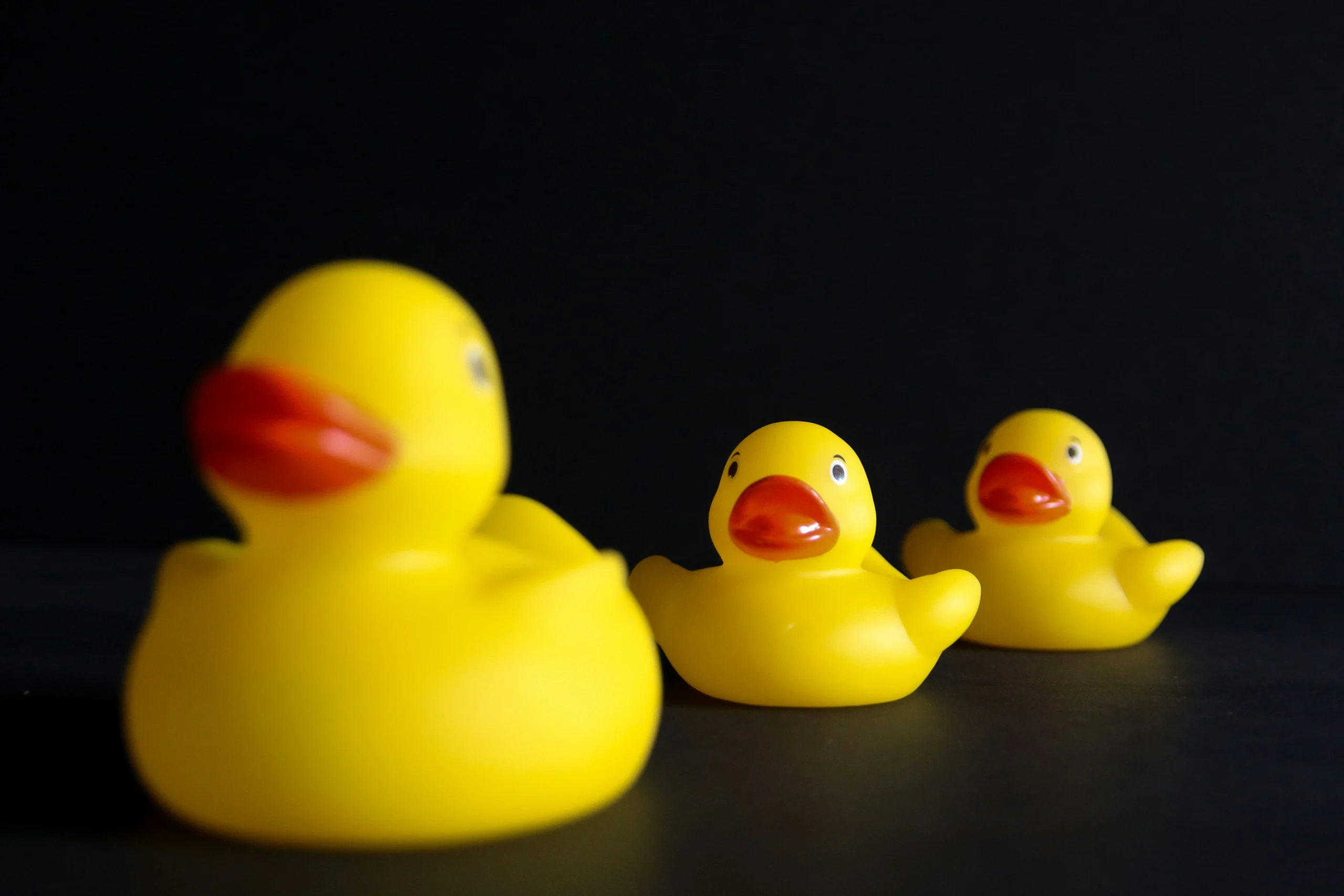
Rotocast solid PVC is the manufacturing standard for custom ducks under 30cm. Liquid PVC slurry is poured into a rotating steel mold, producing a dense, seamless wall capable of holding sharp logo detail down to 0.5mm line widths. At PVC’s natural density of 1.3–1.4 g/cm³, weight scales aggressively with volume. A 20cm solid duck weighs roughly 250g, but at 40cm the same material exceeds 1.2kg — too heavy for comfortable crowd handling or reliable buoyant floating.
Hollow PVC
Hollow PVC uses identical rotocasting tooling but leaves an internal air cavity, cutting weight by 40-50% at the same exterior dimensions. This extends the practical display ceiling to roughly 40-50cm for static indoor placements. The thin cavity walls remain brittle under lateral stress, so we do not recommend hollow PVC for any interactive or outdoor-exposed event scenario where attendees could drop or lean on the piece.
PVC-coated Nylon Inflatables
This is where the vocabulary gap hits hardest. Event planners searching “large rubber duck” expect a scaled-up desk toy, but beyond 50cm the physics demand a completely different material system.
- Fabric: 18-22 oz PVC-coated nylon per square yard
- Weight: Approximately 500kg for a 5-meter unit
- Air supply: 1-2 HP continuous industrial blowers
- Ballast: 1-ton custom steel pontoon + water-ballast containers
This is not a sealed pool float — it is a permanent air-fed structural installation. Factories that quote a 5-meter duck without engineering the pontoon and ballast system are quoting an on-site failure. We include ballast engineering in every inflatable RFQ because skipping it is the fastest way to turn a brand activation into a viral clip for the wrong reasons.
The 30cm Structural Viability Threshold
We set the hard boundary for solid PVC at 30cm because that is where the material’s weight-to-volume ratio turns against event utility. Beyond this point, wall thickness must increase to prevent flex, driving unit mass up exponentially and destroying floating performance. For planners running crowd-distribution or pool-placement activations, anything over 30cm in solid PVC will either sink or fatigue attendees. If your creative brief calls for visual impact beyond tabletop scale, you have left solid PVC territory — that means a different engineering spec, a different compliance pathway, and a different logistics plan entirely.
| Size Threshold | Material Taxonomy | Engineering Specs | Safety Compliance | Event Application Risk |
|---|---|---|---|---|
| 10cm – 30cm (Desk/Handout) | Rotocast Solid PVC | Density: 1.3–1.4 g/cm³. Maxes out at 30-40cm before wall thickness makes handling and floating impractical. | EN71 (EU) & ASTM F963 (US). Must use DINCH plasticizer; demand third-party lab reports to avoid toxic material risks. | High-detail crowd distribution. Risk: Purchasing untested phthalates triggers brand boycotts. |
| 1m – 3m (Visual Anchor) | PVC-Coated Nylon | Fabric weight: 18 oz per square yard. Requires 1 HP continuous industrial blower to maintain structural integrity. | Lead-free inks. Fire retardant treatments available for strict indoor venue compliance. | Mid-size activation displays. Risk: On-site structural failure if standard retail fans are used instead of industrial blowers. |
| 3m – 5m+ (Harbor/Mega Install) | Heavy-Duty PVC-Coated Nylon | Fabric weight: 22 oz/yd² (weighs ~500kg alone). Requires 1-2 HP continuous blowers and custom steel pontoons. | Structural engineering certs required. For EU markets, explicitly mandate DINCH-exclusion testing for ultimate compliance. | PR/media spectacle centerpieces. Risk: Catastrophic on-site wind-flip without hidden 1-ton water-ballast systems. |
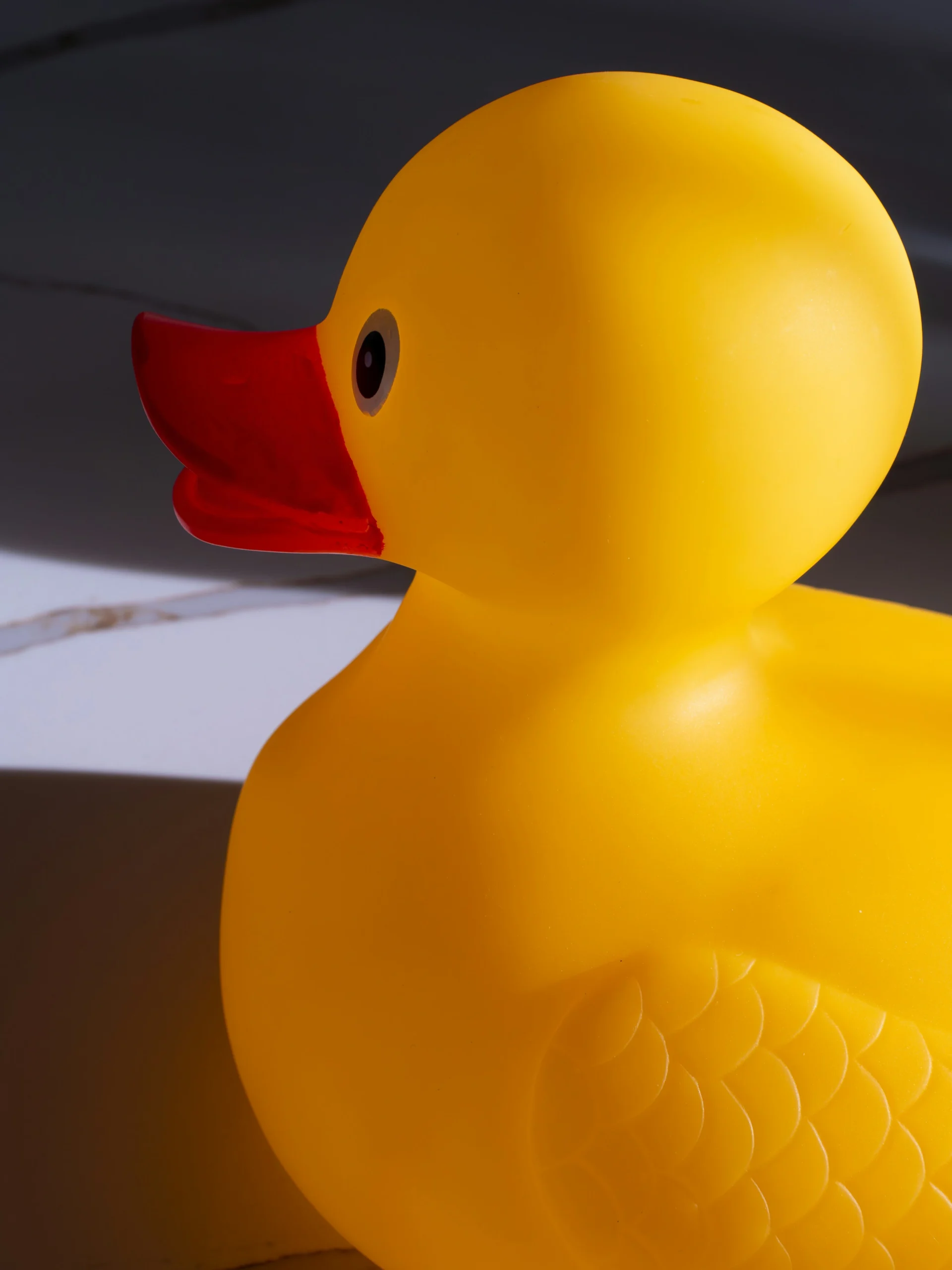
Solid PVC vs. Inflatable Material Specs
A “large rubber duck” at 30cm and one at 3 meters share nothing except shape. Material selection is a hard engineering boundary, not a creative preference.
PVC Density and Tensile Strength
Solid PVC used in rotocast ducks carries a density of 1.3–1.4 g/cm³. This is roughly 30% denser than water, which is precisely why solid ducks require an internal air cavity to float — they are not buoyant by material composition. Tensile strength in rotocast PVC typically sits between 10–15 MPa, sufficient for handling and short drops but not for structural load-bearing.
PVC-coated nylon inflatables operate on a completely different mechanical profile. The base nylon provides high tensile strength (often exceeding 200 MPa in the warp direction), while the PVC coating delivers tear resistance and airtight sealing. You are not comparing “better or worse” materials — you are comparing a molding compound against an engineered textile laminate.
Typical Size Ranges by Material
The size threshold is where most RFQs derail. Event planners Google “large rubber duck” and expect one search to cover both a desk giveaway and a harbor installation. Manufacturing does not work that way.
- Solid PVC (Rotocast): 5cm to 40cm maximum. Beyond 40cm, wall thickness and weight make the unit impractical to handle, package, or ship at promotional unit costs.
- PVC-Coated Nylon (Inflatable): 1 meter to 5+ meters. Below 1 meter, the labor cost of welding seams and installing blower ports makes inflatables more expensive than solid units with no structural advantage.
- Dead Zone (40cm–100cm): This is the gap. Neither material is cost-optimized here. Most suppliers will push you to a smaller solid unit or a larger inflatable — and they are correct to do so.
Floatation Mechanics
Solid PVC ducks float through displacement — the hollow rotocast shell traps air inside a sealed cavity. Our QC team pressure-tests these at 0.3 bar to verify seal integrity before packing. If the seal fails during molding, the duck sinks. There is no repair; it is scrap.
Inflatable ducks float through continuous positive pressure from 1–2 HP industrial blowers running non-stop. A 3-meter duck requires constant airflow to maintain shape and buoyancy. This is not a pool toy you inflate once and leave — it is a tethered pneumatic structure. If your event venue cannot provide stable power, or if wind exceeds 25 km/h without proper anchoring, the installation fails on-site in front of live media.
Rotocast PVC for B2B Giveaways
Rotocasting (rotational molding) is the only process that delivers the fine facial details, seamless finish, and color consistency that brand marketing managers demand at 1,000+ unit runs. The PVC compound flows into every cavity of the mold under centrifugal force, capturing beak definition, eye placement, and logo recesses that injection molding cannot replicate on curved surfaces.
For EU-bound campaigns, we formulate with DINCH (1,2-cyclohexane dicarboxylic acid diisononyl ester) rather than legacy phthalates like DEHP, which the EU banned in children’s toys in 2011. However, DINCH itself faces ongoing regulatory scrutiny. For brands with strict compliance thresholds, we recommend requesting third-party lab reports (EN71 and ASTM F963 certified) rather than accepting factory self-declarations — the gap between the two is where brand boycotts originate.
PVC-Coated Nylon for Oversized Installations
The fabric used in giant event ducks is PVC-coated nylon at 18–22 oz per square yard. For a 5-meter duck, fabric alone weighs nearly 500kg and costs upwards of $70,000 at world-record scales. This is heavy-duty vinyl engineered for constant wind load and UV exposure, not consumer-grade pool float material.
The critical detail that competitor spec sheets omit is the anchoring and ballast system. A 5-meter duck placed on open water is not self-stabilizing. It requires a custom steel pontoon system and water-ballast garbage cans to prevent wind flip. Factories that quote you only the duck and blower without specifying the ballast engineering are quoting a structural failure. We include the pontoon and anchoring specification in every installation quote above 3 meters because hiding that cost downstream destroys event budgets and reputations simultaneously.
| Specification | Solid PVC (Rotocast) | PVC-Coated Nylon Inflatable | Risk Mitigation |
|---|---|---|---|
| Size Threshold | 10cm – 40cm | 1m – 5m | Eliminates the ‘large rubber duck’ vocabulary gap that causes mismatched proposals. |
| Material Density / Weight | 1.3–1.4 g/cm³ (wall thickness limits handling past 40cm) | 18–22 oz per square yard (nearly 500kg for 5m+ sizes) | Prevents structural failure by matching material physics to scale. |
| Safety Compliance | DINCH plasticizers, EN71 (EU), ASTM F963 (US) | Third-party lab reports required (not factory self-declarations) | Guarantees against toxic material exposures that trigger brand boycotts. |
| Installation Engineering | None required (immediate deployment) | 1-2 HP industrial blowers; 1-ton steel pontoon + water-ballast for >3m | Removes hidden logistics costs and prevents on-site wind-flip disasters. |
| Event Application | High-detail crowd distribution, desk placement | Visual anchor points, spectacle installations | Aligns product choice directly with social media photo generation KPIs. |
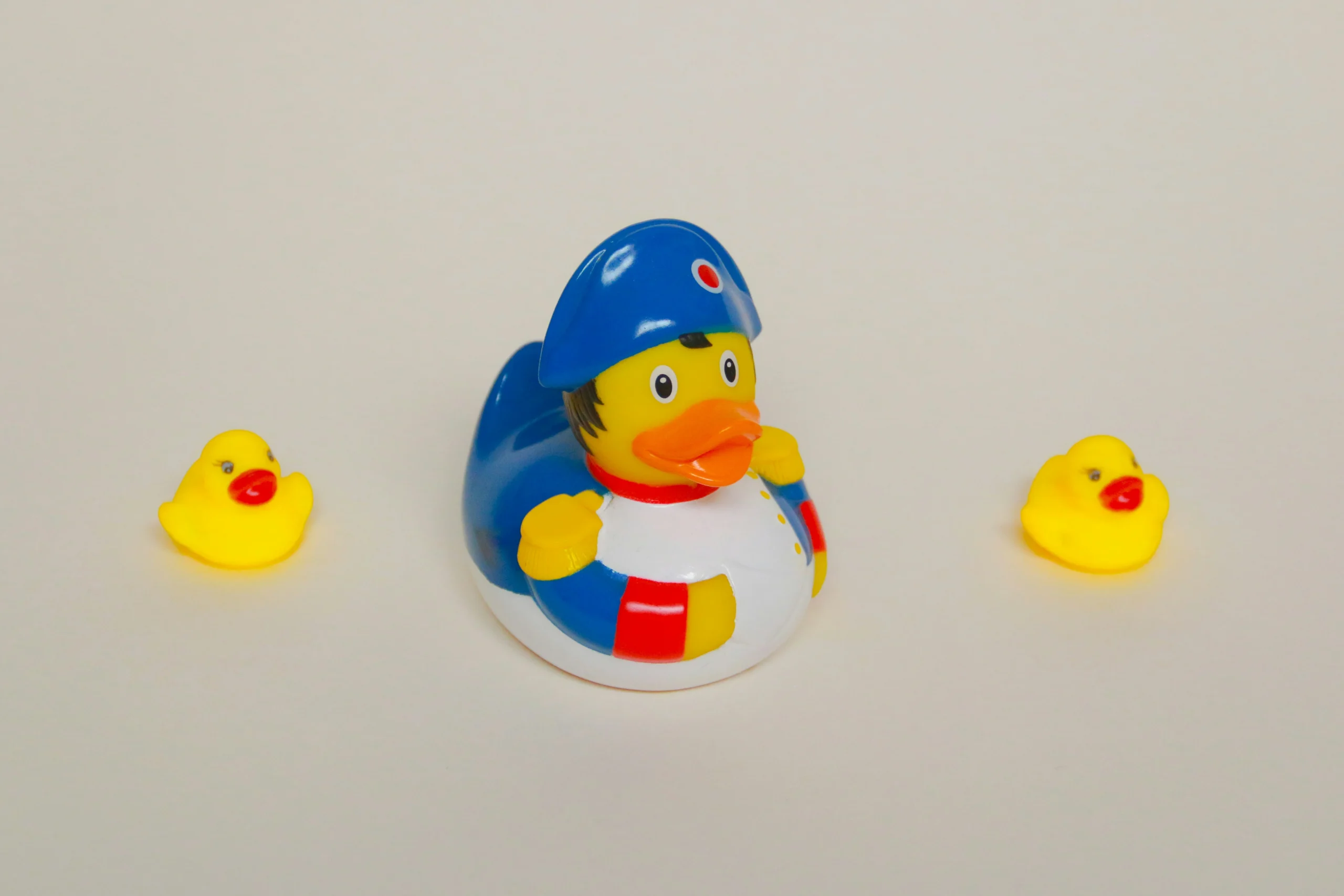
Phthalate-Free Compliance for B2B Events
Factory self-declarations of “phthalate-free” carry zero legal weight at a public activation. Without third-party lab reports verifying specific plasticizer chemistry, your brand absorbs the full liability.
The 2011 EU DEHP Ban and What It Actually Changed
In 2011, the European Union enforced REACH restrictions that banned DEHP (di-2-ethylhexyl phthalate) alongside DBP, BBP, and DIBP from all toys and child-care articles. The limit was not a guideline: 0.1% by mass of the plasticized material. For PVC ducks, which depend on plasticizers to achieve flexibility at a density of 1.3–1.4 g/cm³, this forced a complete reformulation of the raw compound—not a label change.
The detail most event planners miss: this ban triggers based on product accessibility, not marketing intent. A custom rubber duck distributed at a corporate activation falls under “child-care article” classification in EU jurisdictions if a minor could reasonably access it. We have seen brands assume that branding the item as “promotional” exempts it from toy safety standards. That assumption is wrong and has triggered mid-campaign recalls.
DINCH and Citrates: The Replacement Chemistry
After the ban, PVC suppliers migrated primarily to two plasticizer families: DINCH (1,2-cyclohexane dicarboxylic acid diisononyl ester) and acetyl tributyl citrate (ATBC). Both pass EN71 and ASTM F963 at the factory level, but they behave differently in production—and this divergence is where B2B buyers get exposed.
DINCH became the default because it mirrors DEHP’s processing characteristics, meaning existing rotocast lines required no retooling. Citrates like ATBC carry a fully clean REACH status but have a narrower processing window and lower migration resistance. The practical trade-offs break down as follows:
- DINCH: Approximately 15–20% lower material cost than citrates. Passes current EN71/ASTM F963 thresholds. However, DINCH faces growing scrutiny from EU regulatory bodies due to structural similarity to restricted cyclohexane diesters—making it a compliance risk for future reclassification.
- ATBC (Citrate): Higher material cost, zero pending restrictions under EU REACH. Slightly reduced flexibility in thin-wall rotocast molds below 2mm thickness, which can affect fine detail on small-scale ducks.
Our engineering position: for B2B event orders shipping into EU markets, we default to citrate-based plasticizers unless the client explicitly requests DINCH for budget reasons. We document the chosen chemistry on the lab report so the brand holds a defensible compliance paper trail.
PR Liability at Live Events
The financial exposure from non-compliant ducks at a branded activation is not theoretical. If an independent lab or a journalist tests a promotional duck post-event and detects restricted phthalates, the brand faces three simultaneous hits: product recall logistics, regulatory fines under REACH Article 56 (up to €50,000 per SKU in certain member states), and the unquantifiable cost of a social media toxicity boycott that no PR budget can contain.
The competitive reality on this point is damning. The top Google results for “custom rubber ducks”—Totally Promotional lists materials as “Vinyl” with zero safety documentation. Quality Logo Products lists “PVC” with no compliance badge. Neither references EN71 or ASTM F963 anywhere on the product page. For an event planner sourcing 5,000 units for a public activation, purchasing through these channels without demanding third-party lab reports is an unforced liability.
We require every PVC production run above 1,000 units to ship with a third-party lab report (SGS or Intertek) testing for the six restricted phthalates under EN71-3:2019. The report travels with the cargo documents. If a supplier cannot produce this before shipment, do not accept the goods. No event deadline justifies that risk.
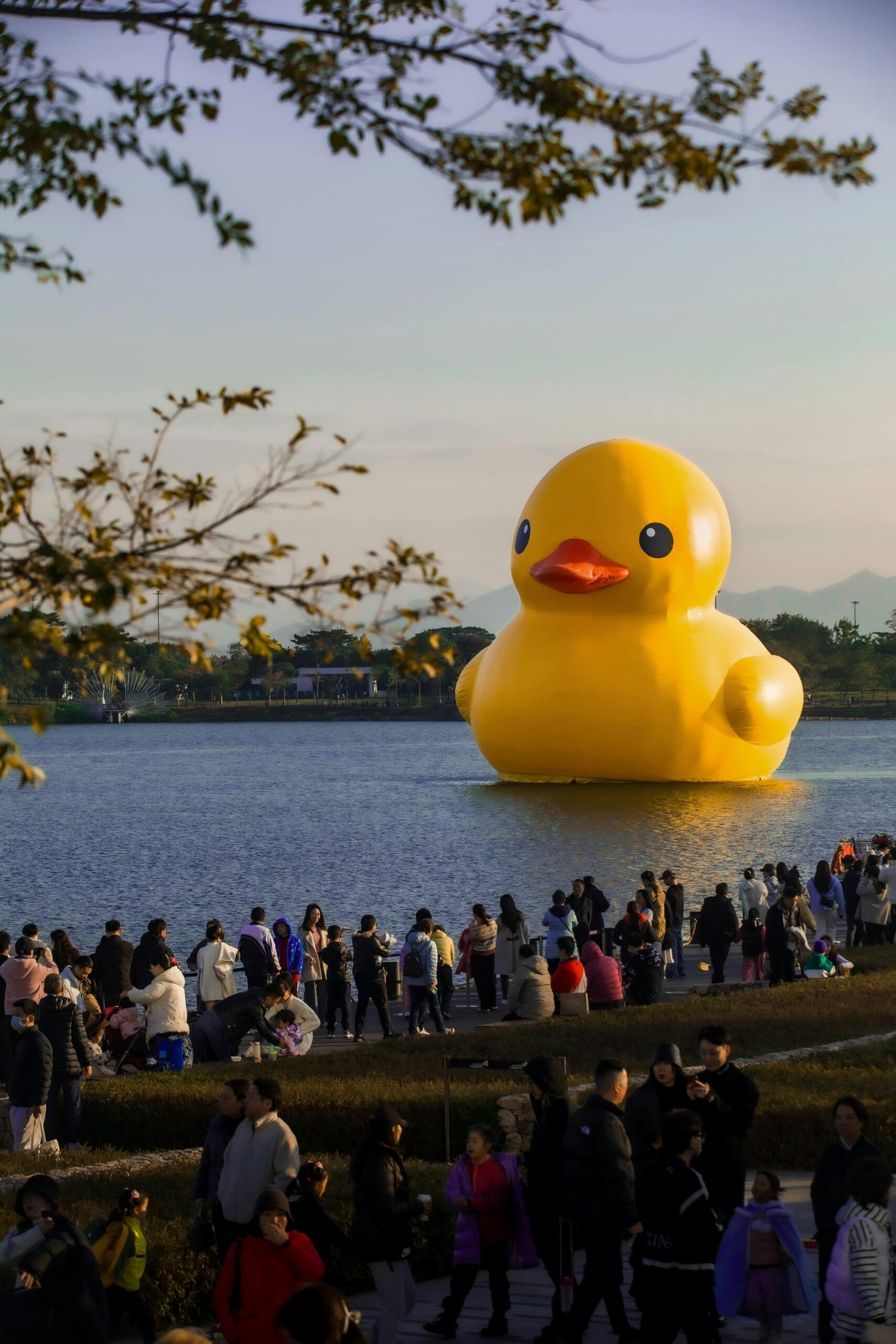
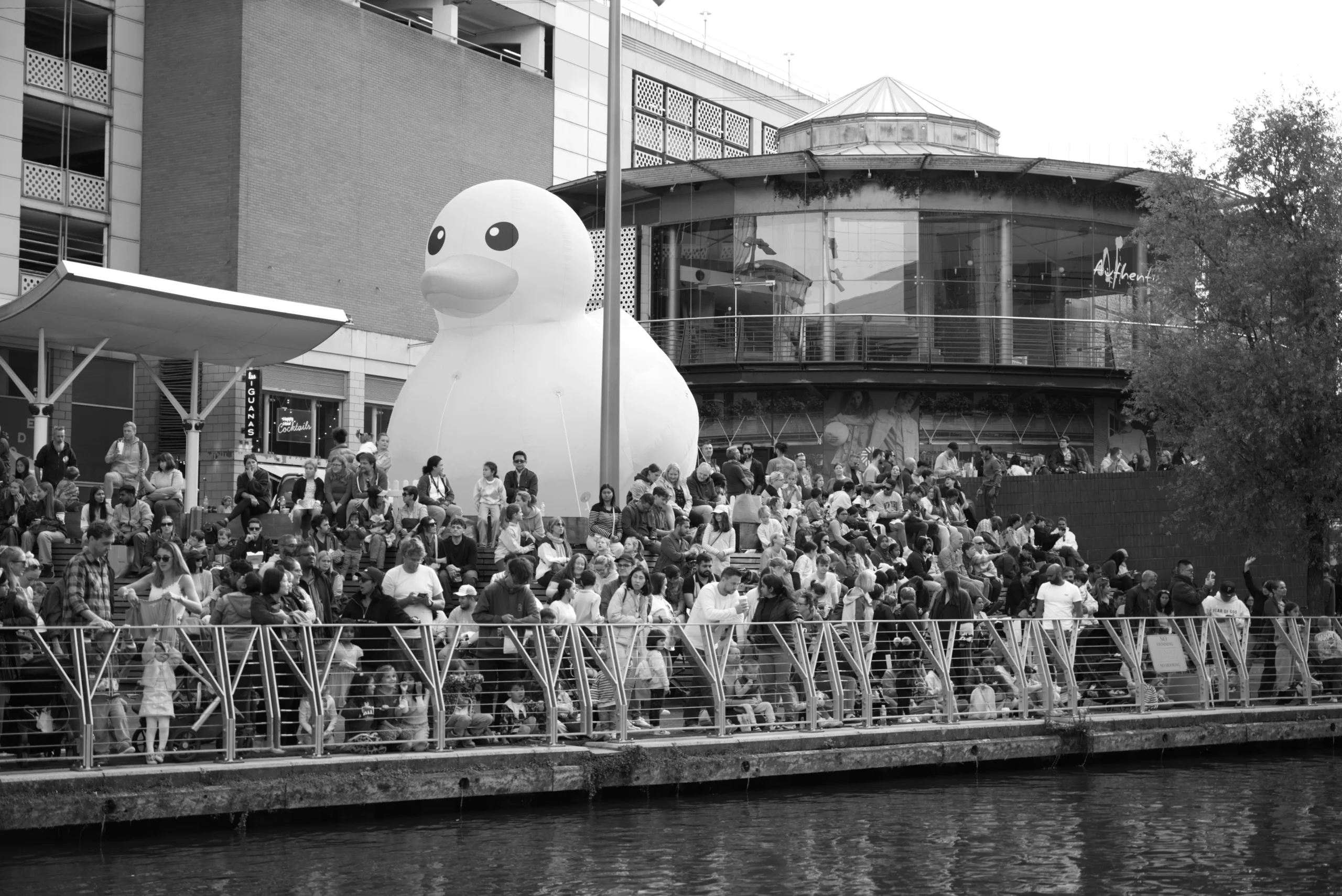
Giant Inflatable Duck Engineering Realities
A 5-meter duck is not a scaled-up pool toy. It demands continuous 1-2 HP industrial blowers, a 1-ton steel pontoon ballast, and roughly 500kg of PVC-coated nylon to prevent wind flip during a live media event.
The Sealed Pool Toy Misconception
Event planners searching “large rubber duck” often expect a sealed, self-contained inflatable you unbox and float. That product exists—it tops out at roughly 1.5 meters and uses thin, heat-sealed PVC. Anything beyond that threshold switches engineering categories entirely. A 5-meter duck cannot be sealed because the internal air volume (roughly 65 cubic meters) creates catastrophic burst-risk under thermal expansion in direct sunlight. We engineer these as open-system inflatables: constant positive pressure fed by external blowers, with relief valves managing overpressure. If a supplier quotes you a “sealed” duck above 2 meters without mentioning continuous blower power, they are quoting a structural failure on a live event day.
Heavy-Duty Fabric Realities
The PVC-coated nylon used on harbor-scale ducks bears zero resemblance to the material on a promotional desk duck. We spec 18-22 oz per square yard PVC-coated nylon for any duck exceeding 3 meters. For a standard 5-meter duck, the fabric alone weighs approximately 480-500kg. For world-record sizes approaching 10 meters, that figure pushes past 500kg and material cost alone exceeds $70,000. This is not a roll of vinyl you fold into a cargo van. Transport requires palletized freight, and on-site deployment demands a rigging crew. The sheer fabric mass is the primary reason these installations are anchored to steel pontoons rather than simply placed in open water.
Continuous Industrial Blower Requirements
Sealed pool toys hold air. Giant event ducks consume air continuously. A duck exceeding 3 meters requires 1-2 HP continuous-duty industrial blowers running for the entire duration of the event—not the intermittent inflator used for a birthday bounce house. These blowers draw significant power (roughly 750W to 1500W each) and must be placed onshore or on a stable platform with weatherproof electrical connections. We specify blowers with IP44 or higher ingress protection for outdoor harbor installations. If your event venue cannot guarantee a dedicated 15A circuit within 30 meters of the anchor point, your duck will not stay inflated. That logistics failure appears on social media before your brand does.
Steel Pontoon Ballast Systems
Wind flip is the number-one cause of on-site structural failure for giant duck installations. A 5-meter duck presents a sail area of roughly 15-18 square meters to crosswinds. Without ballast, a 25 km/h gust sends it rolling or drifting into camera frames for the wrong reasons. We engineer custom steel pontoon systems weighing approximately 1 ton for 5-meter ducks. These pontoons sit submerged, with the duck’s base frame bolted directly to them. Water-ballast containers (typically 4-6 units at 50L each) are added on-site to fine-tune stability based on real-time wind conditions. This system is not optional add-on pricing—it is the engineering difference between a viral brand moment and a salvage operation.
Giant Inflatable Duck Engineering Specifications
| Duck Size | Fabric Weight | Blower Spec | Ballast System | Power Draw | Crew Required |
|---|---|---|---|---|---|
| 3 meters | ~120 kg | 1 HP continuous | 300 kg steel pontoon | 750W (1x 15A circuit) | 2-3 people |
| 5 meters | ~500 kg | 1.5-2 HP continuous | 1-ton steel pontoon + water ballast | 1500W (1x 20A circuit) | 4-6 people |
| 10+ meters | 500+ kg | 2+ HP (multiple units) | Custom engineered, 2+ tons | 3000W+ (dedicated industrial) | 8+ people |
When we receive an RFQ for a “large rubber duck” intended as a visual anchor for a brand activation, these are the numbers our engineering team runs before issuing a quote. Any supplier who skips this calculation and returns a unit price without specifying blower class, pontoon tonnage, and circuit requirements is not quoting the same product you are imagining for your event.
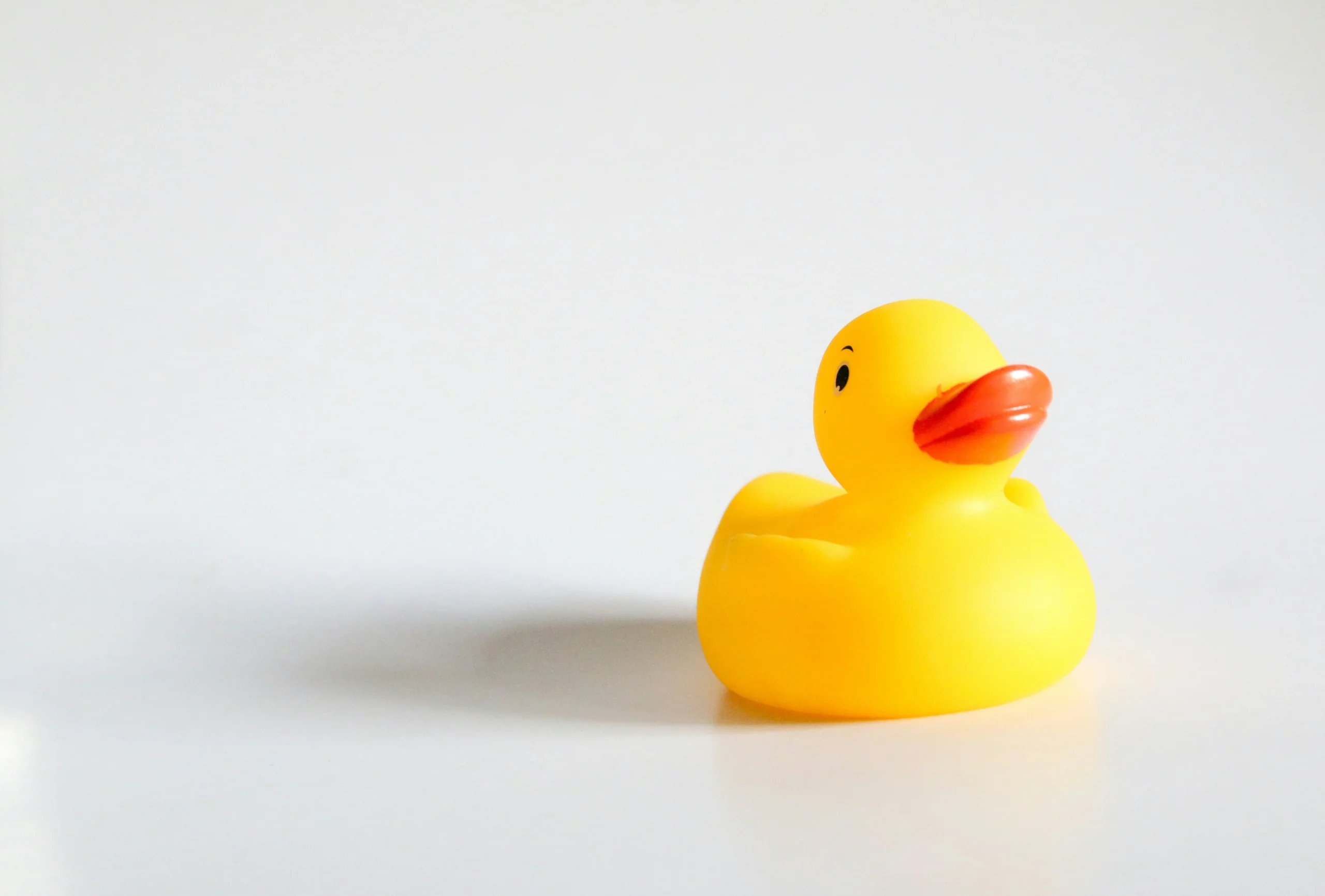
Natural Rubber vs. PVC Trade-offs
Over 1 billion rubber ducks ship globally each year. Fewer than 1% contain actual Hevea brasiliensis natural rubber — the rest are PVC, despite what competitor spec sheets claim.
Hevea brasiliensis Natural Rubber Properties
Natural rubber sourced from Hevea brasiliensis latex delivers genuine material advantages for niche applications: superior tear resistance, elongation at break exceeding 500%, and a lower density at approximately 0.92 g/cm³ compared to PVC’s 1.3–1.4 g/cm³. For event planners, that density difference means a duck that sits higher in water and feels substantially heavier in hand. The material is also inherently free from phthalate plasticizers — a compliance advantage for brands targeting EU markets under EN71 regulations without requiring third-party DINCH substitution lab reports.
Mold Inconsistency in Large-Scale Orders
This is where natural rubber breaks event-scale logistics. Hevea latex cures through vulcanization, a chemical process highly sensitive to ambient humidity and temperature fluctuations within the curing oven. In a production run of 1,000 units, our QC engineers routinely observe batch-to-batch color shifts of 5-10% in natural rubber — a variance virtually nonexistent in PVC rotocasting. For an event planner distributing ducks as photo props where visual uniformity drives social media engagement, that color drift means your Instagram grid shows three distinguishable shades of yellow from a single order.
Higher Unit Costs
Raw Hevea latex costs 2.5 to 3.5 times more per kilogram than PVC compound. Vulcanization tooling demands longer cycle times — roughly 8-12 minutes per mold cavity versus 2-4 minutes for PVC rotocasting. At a 1,000-unit MOQ, natural rubber ducks typically land at $3.80-$5.20 per unit compared to $0.90-$1.60 for an equivalent-size PVC duck. For event budgets where unit cost directly determines giveaway volume, that premium cuts your order quantity by 60-70% for the same spend ceiling.
Reduced Detail Fidelity
PVC rotocasting achieves sharp edge definition down to 0.3mm — critical for rendering a brand logo or a mascot’s beak contour with clarity. Natural rubber vulcanization produces softer edge transitions, with measurable detail loss of 0.8-1.2mm at mold parting lines. If your custom duck carries a brand logo smaller than 15mm across, natural rubber will render it as an illegible rounded shape. We have rejected client requests for natural rubber on this basis alone — the brand damage from a muddy, unreadable logo outweighs any perceived material prestige.
Conclusion
If your event needs a large rubber duck over 40cm, skip solid PVC entirely. It becomes too heavy to float. Spec heavy duty vinyl inflatables with a custom steel pontoon, because anything less will flip on camera.
Demand third-party lab reports proving DINCH exclusion before you sign any purchase order. Actual test data is the only way to shield your activation from a toxic material boycott. Ask your vendor to explicitly quote the industrial blower specs and anchoring weight for any installation over 3 meters.
Frequently Asked Questions
Are rubber ducks made of PVC?
Yes, over 90% of modern ‘rubber’ ducks use plasticized PVC. For large promotional ducks, this means flexible solid plastic, while oversized event ducks use PVC-coated nylon fabric rather than solid PVC.
What material are rubber ducks made of?
Despite the name, they are primarily plasticized polyvinyl chloride (PVC). Historically made from vulcanized natural rubber since the 1800s, the shift to PVC occurred in the 1940s for better moldability and lower costs.
What are the different types of rubber ducks?
In B2B manufacturing, they fall into three material categories: solid PVC (standard giveaways), hollow rotocast PVC (premium/collector), and PVC-coated nylon inflatables (giant event installations over 1 meter).
What is 100% natural rubber?
It is latex harvested from the Hevea brasiliensis tree, processed without synthetic polymers. It is rarely used in large-scale custom ducks due to high costs, long degradation cycles, and inconsistent mold detail compared to PVC.
What do rubber ducks mean in LGBTQ?
In public art installations, large rubber ducks symbolize inclusivity, unity, and resilience. For B2B buyers, this makes them highly effective, on-trend merchandise for Pride parades and diversity-focused corporate activations.
For a closer look, see our guide on why custom ducks sink and float tests.
Related B2B sourcing page: For production options, MOQ and custom project support, see our rubber duck manufacturing page.