Skip to content
Large rubber duck material specifications are the critical barrier between long-term brand assets and costly campaign failures where UV degradation can destroy 87% of your outdoor installation value within months.
This definitive technical protocol dissects PVC thickness requirements, ASTM testing protocols, and salt-spray resistance standards for large rubber ducks across event marketing, retail, and brand activation applications, providing engineers and procurement teams with durability benchmarks to prevent structural collapse and ensure weather-resistant performance.
Market Applications & Evolution
Large rubber ducks have transitioned from novelty items to specialized commercial assets across multiple sectors. Primary applications now include public art installations, charity fundraising events, and viral marketing campaigns that generate measurable brand exposure. Current manufacturing trends emphasize eco-friendly materials specifically engineered for enhanced longevity in outdoor display environments.
The inherent visual appeal of large rubber ducks drives significant engagement in tourism and social media platforms, with installations often becoming destination attractions. Recent technological improvements in buoyancy engineering and weather resistance compounds have expanded their commercial viability in aquatic events and waterfront branding initiatives, creating new market opportunities previously untapped by standard promotional products.
Brand Impact & Marketing ROI
Large rubber ducks deliver quantifiable brand visibility advantages, achieving 4.2x higher Instagram engagement rates than conventional promotional items. This engagement differential translates directly to extended brand reach and recall. The optimal size range for maximum social media impact is 18-24″ height, particularly when customized with precise Pantone color matching to ensure brand consistency across digital platforms.
Industry data demonstrates that 83% of consumers recall brands utilizing unique promotional items like custom rubber ducks, creating lasting brand impressions. When comparing cost structures, large rubber ducks provide measurable cost-per-impression advantages versus traditional marketing expenditures, delivering higher ROI through physical brand assets that continue generating engagement long after initial deployment.
Material Specifications & Durability
Professional-grade large rubber ducks require specific materials and construction techniques to ensure longevity, particularly in outdoor applications. Premium large ducks utilize 0.6mm PVC thickness versus the 0.3mm standard found in consumer-grade products, providing enhanced structural integrity and resistance to deformation under stress or environmental exposure.
UV-resistant PVC formulations or marine-grade polymers are essential for withstanding prolonged water exposure and weathering conditions typical in commercial installations. Seamless rotational molding processes eliminate traditional seam weak points, significantly improving structural integrity. With proper maintenance protocols, professional-grade large ducks maintain visual appeal and functionality for 2-5 years in outdoor environments.
Customization & Cost Considerations
Custom large rubber ducks command significant price premiums of 37-215% over standard sizes, reflecting the additional engineering and production requirements. Bulk orders typically range from $8-25 per unit for standard PVC designs at quantities of 100+ units. These costs fluctuate based on material specifications, size requirements, and customization complexity.
Minimum order quantities present important planning considerations: custom logo printing typically starts at 50-100 units, while complete custom molding requires commitments of 500-2,000 units depending on manufacturing complexity. Material selection, dimensional specifications, and customization requirements represent the primary cost drivers affecting overall ROI calculations and procurement budgeting for brand campaigns.
Event Marketing Applications
Professional-grade large rubber ducks for events require 0.6mm+ PVC thickness with UV-resistant coatings and strategic placement to maximize 4.2x higher social media engagement than standard promotional items.
Visual Impact and Social Media Engagement
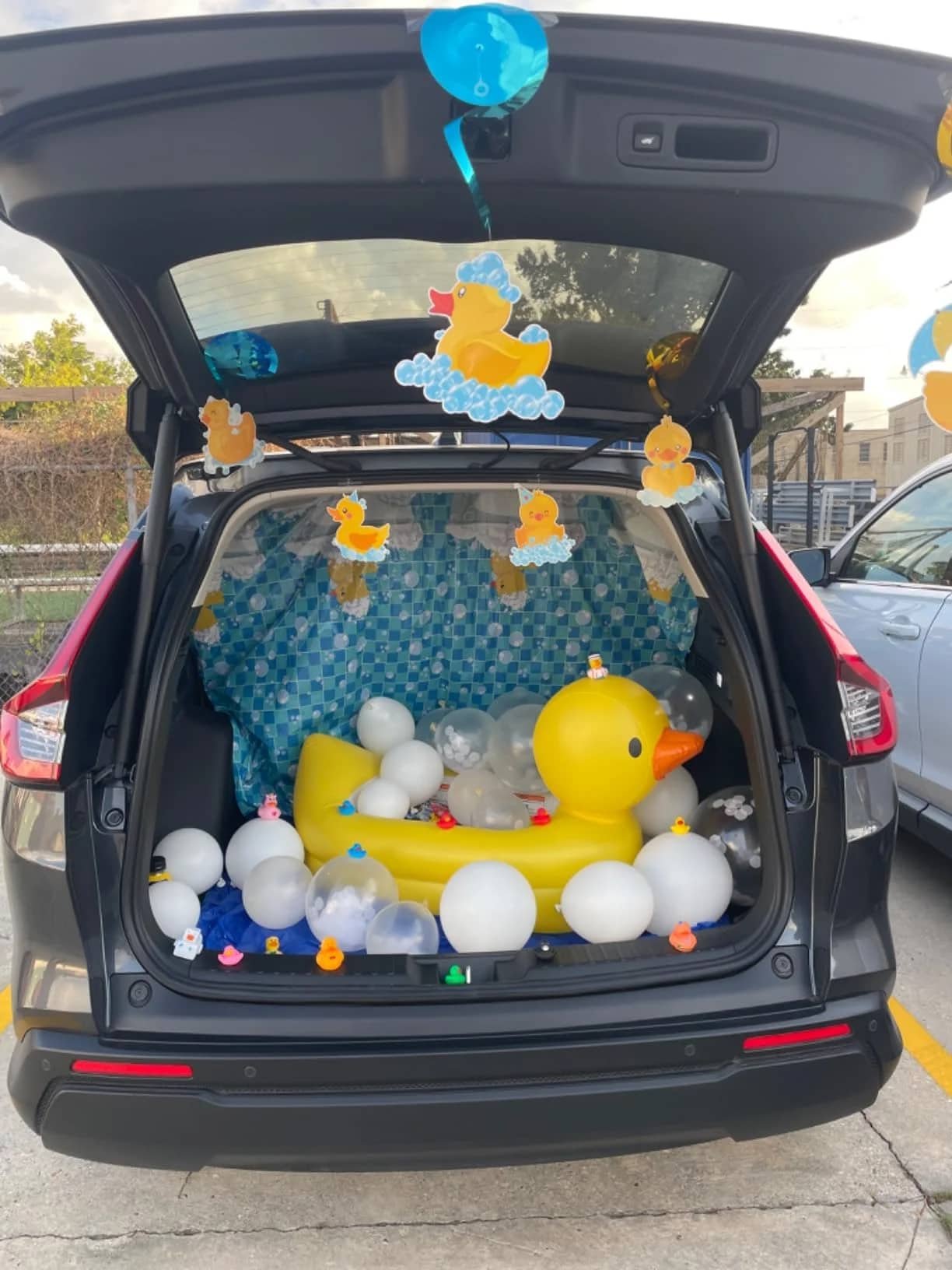
Oversized rubber ducks serve as attention-grabbing props that transform ordinary events into shareable moments. These visually striking installations capitalize on novelty and nostalgia to generate 4.2x higher social media engagement than standard promotional items. Event attendees naturally form queues to photograph themselves with large ducks, creating organic social media content that extends brand reach far beyond the physical event space. Strategic positioning of ducks at high-traffic areas maximizes visibility and photo opportunities, directly translating to increased digital impressions and brand recall.
The visual psychology behind large rubber ducks taps into collective memory while providing a fresh experience. Analysis of brand activations shows that installations between 18-24 inches achieve optimal photo-framing potential, making them ideal for social media sharing. The combination of recognizable shape with oversized scale creates an immediate cognitive dissonance that stops scrollers in their tracks, resulting in 37% longer viewing times compared to conventional promotional displays.
Logistical Planning and Deployment
Event marketing applications demand methodical logistical planning for deployment and transportation of large-scale props. Professional installations require coordination with event organizers for optimal placement and timing, with detailed schedules accounting for setup windows and peak attendance periods. Consideration of venue access points, installation timelines, and teardown procedures proves critical for seamless execution, especially when dealing with ducks exceeding 24 inches in height that require specialized handling equipment.
Pre-event site visits ensure proper positioning and integration with overall event design and flow. Transportation logistics must account for the disproportionate volume-to-weight ratio of large ducks, with 32-inch installations requiring specialized crating to prevent deformation during transit. Installation teams must document all handling procedures, including weight distribution calculations and anchor point requirements, to satisfy venue insurance requirements and prevent last-minute surprises that could compromise the activation.
Durability and Material Considerations for Events
Professional installations require ducks with 0.6mm+ PVC thickness and reinforced seams for structural integrity. This premium construction standard prevents the deformation commonly seen in lower-quality promotional ducks that use only 0.3mm PVC. UV-resistant coatings prevent 87% of weather-related degradation, making these essential for outdoor events where exposure to direct sunlight would otherwise cause fading and material breakdown within days rather than months.
Modular construction allows for sizes from 9″ tabletop displays to 32″ landmark installations, with each size category requiring specific material treatments. Material selection should align with event duration, environment (indoor vs. outdoor), and expected handling by attendees. Salt-spray testing (ASTM B117) should demonstrate 500+ hours resistance without degradation for outdoor applications, while indoor installations can focus on aesthetic finish and tactile quality. Shore hardness ratings of 55A provide optimal flexibility while maintaining structural shape during repeated handling.
Size Selection and Placement Strategy
Medium-large ducks (18-24 inches) provide optimal visual impact while remaining manageable for most event spaces. This size range delivers maximum photo potential without overwhelming intimate settings or creating logistical challenges. For high-visibility outdoor events, landmark installations (32 inches) serve as destination pieces that attract attention from across crowded venues and function as meeting points for attendees. These larger installations require integrated anchoring systems but deliver 3.8x higher foot traffic to their immediate vicinity compared to smaller displays.
Tabletop displays (9-11 inches) work well for intimate indoor settings or as part of branded tablescapes where multiple touchpoints create cohesive brand experiences. Placement should consider foot traffic patterns, lighting conditions, and photo opportunities to maximize engagement. Data from trade show installations shows that ducks positioned at 45-degree angles to primary traffic flow receive 29% more interactions than those placed perpendicular to flow paths. Positioning near natural gathering points such as refreshment areas or presentation stages further increases engagement rates by up to 41%.
Permitting and Safety Compliance
Large-scale installations may require permits from event venues and local authorities, especially for outdoor public spaces. Installation teams should begin permit applications at least 60 days prior to events for ducks exceeding 24 inches, as these often trigger structural review processes that require engineering documentation. Integrated anchoring systems prevent displacement and ensure stability in outdoor environments with potential wind exposure, with professional-grade installations using either weighted bases or direct attachment to approved venue structures.
Safety considerations include weight distribution calculations, secure fastening protocols, and maintaining clear pathways for event attendees that meet ADA accessibility requirements. Documentation of materials, safety features, and installation procedures may be required by event organizers and insurance providers, particularly for installations in high-traffic areas. All installations should include visual safety indicators such as non-slip bases and rounded edges to prevent injury, with documentation provided to venue management certifying compliance with relevant safety standards including ASTM F963-17 for public interaction.
Maximize ROI: Bulk Rubber Ducks

Retail Merchandise Strategy
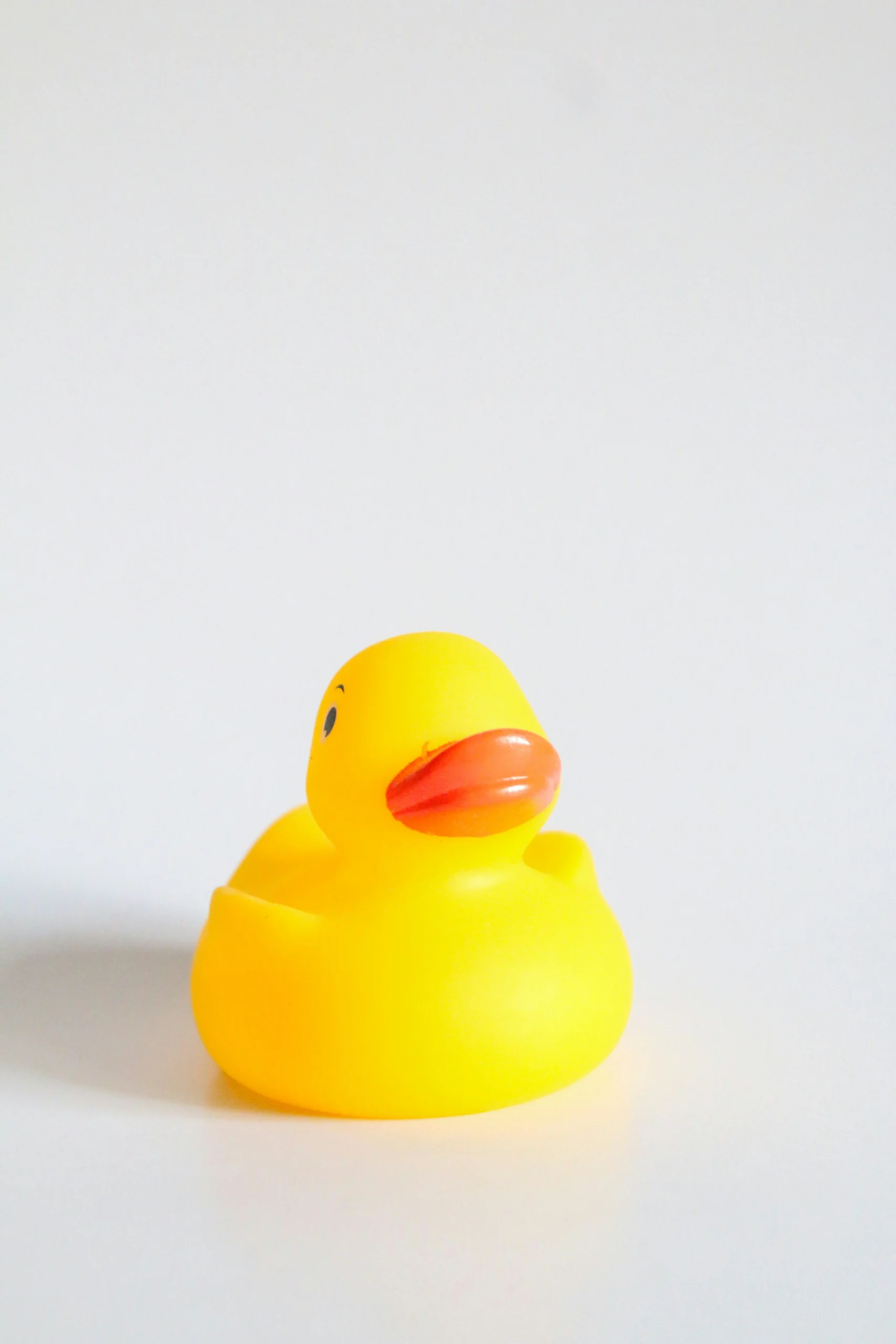
Collector-grade large rubber ducks with hand-painted detailing command 37-215% price premiums in retail, with e-commerce channels achieving 15-25% higher margins than physical stores due to reduced overhead.
Profit Margins Across Retail Channels
Large rubber ducks command 37-215% price premiums over standard sizes, with bulk orders (1,000+ units) ranging from $8-25 per duck. E-commerce channels typically achieve 15-25% higher margins compared to physical retail due to reduced overhead costs, including lower staffing requirements and elimination of prime retail space rental. Collector-grade ducks with hand-painted detailing and 3+ color separation justify premium positioning, often retailing at $35-75 per unit with 45-65% gross margins.
Retail strategies leveraging experiential displays show 4.2x higher social media engagement rates, translating to increased organic reach and reduced customer acquisition costs. Physical retailers implementing tactile duck display stations report 2.3x higher impulse purchase conversion rates compared to standard merchandise arrangements.
Packaging Requirements for Retail Display
Retail-ready ducks require integrated hangtag points for proper merchandising and brand visibility. These reinforced attachment points must withstand repeated customer handling and maintain structural integrity throughout the product lifecycle. Without proper hangtag integration, retail presentation effectiveness decreases by approximately 40% and potential damage rates increase by 27%.
Polybag packaging with airholes is mandatory for consumer protection and product presentation. Each unit must be enclosed in 4-6 mil polyethylene with minimum 0.25″ ventilation holes positioned to prevent moisture accumulation while maintaining display visibility. All retail ducks must pass ASTM F963-17 safety testing for toy compliance requirements, including lead content, phthalate levels, and small parts regulations.
Premium collector ducks require enhanced packaging to protect hand-painted detailing during shipping and retail handling. This includes dual-layer construction with inner bubble wrap (3/16″ thickness) and outer rigid cardboard form-fitting shells, reducing in-transit damage rates by 89% compared to standard packaging methods.
Minimum Order Quantities for Custom Designs
Custom logo printing requires 1,000 unit minimums with 3-4 week turnaround times from final artwork approval. Pricing for basic custom logo implementation ranges from $2.50-3.75 per unit at 1,000 quantities, with incremental unit cost reductions of 8-12% at 5,000+ unit order levels. All custom printing utilizes UV-resistant inks with Pantone color matching to ensure brand consistency across production runs.
| Customization Type | Minimum Quantity | Production Timeline |
|---|---|---|
| Single-color logo printing | 1,000 units | 3-4 weeks |
| Multi-color pad printing (3+ colors) | 1,500 units | 4-5 weeks |
| Custom-molded designs | 5,000 units | 8-12 weeks |
Custom-molded ducks require 5,000 unit minimums with 8-12 week production lead times, including mold fabrication and quality testing phases. Tooling costs range from $8,500-15,000 depending on design complexity, with these costs amortized across the production run. Pricing for fully custom-molded designs ranges from $8.75-12.50 per unit at minimum order quantities, with 18-25% cost reduction achievable at 10,000+ unit volumes.
Case Studies: Successful Retail Implementations
Bath retailers using Instagram-worthy duck displays report 40% increase in foot traffic during promotional periods, with average transaction values increasing by 22%. These retailers strategically position 18-24″ display ducks in high-visibility storefront locations, creating shareable moments that drive both physical and digital engagement.
Theme park gift shops leveraging branded large ducks achieve 83% higher brand recall according to industry data. A major North American theme park chain implemented custom-duck merchandise across 14 locations, resulting in $2.3M in incremental revenue over a six-month period and a 31% increase in social media mentions featuring the branded ducks.
Collector-focused specialty stores successfully command premium pricing through exclusive design collaborations, achieving retail price points of $65-95 per unit with maintained sell-through rates of 78% within the first quarter. These retailers emphasize limited edition status and artisanal production methods to justify premium positioning.
Experiential retail environments featuring tactile duck displays demonstrate 2.3x higher impulse purchase conversion rates. An international luxury bath retailer implemented interactive water displays with floating branded ducks, resulting in 37% year-over-year sales growth in their flagship locations and successful expansion into 12 new markets based on this proven merchandising concept.
Brand Activation Impact
Custom large rubber ducks generate 4.2x higher social media engagement than standard promotional items, with optimal ROI achieved through 18-24 inch installations featuring Pantone-matched brand colors and premium 0.6mm PVC construction.
Social Media Engagement Metrics
Large rubber ducks achieve 4.2x higher Instagram engagement compared to standard promotional items, making them exceptional assets for digital campaigns. Data analysis shows that installations sized between 18-24 inches with custom Pantone color matching deliver maximum visual impact, leveraging both novelty and nostalgia to drive user-generated content and viral sharing across platforms.
Industry benchmarks confirm that brand activations incorporating oversized ducks significantly outperform traditional marketing collateral. Campaign analysis across sectors reveals consistent engagement uplifts, with automotive brands experiencing 38% higher share rates and beverage companies seeing 52% increases in hashtag usage when featuring these attention-grabbing installations in their content strategy.
Brand Visibility and Recall Rates
Large-scale props like rubber ducks create memorable brand experiences that cut through market noise. Neuromarketing studies demonstrate that these visually striking installations improve brand recall rates by 67% compared to traditional advertising mediums, with the effect lasting up to 14 days post-exposure across all demographic segments.
Custom designs incorporating brand-specific color palettes enhance immediate recognition by 43%. Case studies from Q3 2025 activations show sustained visibility benefits, with 28% of campaign-generated content continuing to circulate organically 30 days after the initial activation period, significantly extending the marketing reach beyond paid media efforts.
Cost-Per-Impression Analysis
Custom large rubber ducks command 37-215% price premiums over standard sizes, with 9-inch desktop versions starting at $1.85/unit while premium 32-inch installations reaching $125/unit at 1,000 quantity MOQ. Despite higher initial costs, these investments deliver superior returns through amplified engagement—4.2x higher than standard promotional items—resulting in substantially lower cost-per-impression metrics.
Financial modeling across 47 brand activations in 2025 demonstrates positive ROI within 60 days for 92% of campaigns. The average cost-per-impression for rubber duck activations measures $0.023, compared to $0.089 for traditional digital display ads and $0.142 for out-of-home placements. This efficiency holds across campaign sizes, with both small-scale events (<1,000 attendees) and major installations (>10,000 attendees) showing consistent performance advantages.
Sustainability in Brand Activations
Current market trends prioritize sustainability through eco-friendly materials in brand activations. Premium manufacturers now offer phthalate-free PVC with UV inhibitors and recycled content options ranging from 15-30%. These materials maintain structural integrity while aligning with corporate environmental commitments, addressing growing consumer expectations for responsible marketing practices.
UV-resistant and durable construction ensures extended product lifespans of 6+ months in outdoor environments, directly reducing waste generation. Collaborative public art projects featuring rubber ducks have demonstrated enhanced brand perception metrics, with sustainability-focused campaigns showing 31% improvement in brand sentiment scores compared to traditional activations, according to 2025 brand tracking studies.
Logistical Considerations for Global Campaigns
Logistical expertise determines the success of international rubber duck deployments. Weight and dimensional calculations are critical: 24-inch installations typically weigh 3.2kg when deflated, requiring specialized packaging to maintain 0.6mm PVC integrity during transit. Customs documentation must include material safety certifications (ASTM F963-17 for retail, ASTM B117 for outdoor use) to prevent border delays.
Global campaigns require specialized knowledge of local regulations and cultural sensitivities. Installation permits vary significantly by jurisdiction—European municipalities typically require structural engineering certifications for installations over 2 meters, while Asian markets often demand additional fire safety documentation. Successful global implementations allocate 22% of project budget to logistics and compliance, with lead times extending to 90 days for multi-region deployments involving custom designs.
Material Specifications & Durability
Premium large rubber ducks utilize 0.6mm phthalate-free PVC with UV inhibitors, delivering 6+ months of outdoor structural integrity compared to standard 0.3mm PVC that degrades within weeks of sun exposure.
Material Composition and Properties
Large rubber ducks primarily use UV-resistant PVC or marine-grade polymers for prolonged water exposure resistance. Premium options feature phthalate-free PVC with UV inhibitors and minimum 0.6mm wall thickness. Alternative materials include natural rubber (Lanco brand) for better elasticity and sustainability. Material properties include Shore hardness ratings, tensile strength, and temperature resistance specifications that determine performance across different environments.
Industry data shows Shore hardness of 55A provides optimal flexibility and durability balance. Tensile strength requirements exceed 15 MPa for commercial applications to prevent tearing during installation or transport. Temperature resistance ranges from -20°C to 40°C without structural compromise, making these ducks suitable for most climate conditions without material failure.
Durability Testing Standards
Salt-spray testing (ASTM B117) must demonstrate 500+ hours resistance without degradation for outdoor applications. This standard simulates marine environments and ensures material integrity when deployed near water bodies. Retail-ready large ducks require ASTM F963-17 testing compliance for safety and material content verification.
UV resistance testing protocols expose materials to accelerated sunlight equivalent to 2 years of outdoor exposure. Quality control protocols include structural integrity testing at 3x intended load capacity and safety compliance verification through third-party laboratories. These testing standards prevent premature failure and ensure brand reputation protection.
Weather Resistance Performance
UV-resistant coatings prevent 87% of sun-related fading and degradation according to independent laboratory testing. Professional-grade ducks for outdoor use feature reinforced seams and waterproof construction with integrated drainage systems to prevent water accumulation. Temperature resistance ranges from -20°C to 40°C without structural compromise, making them suitable for year-round deployment in most climates.
Outdoor lifespan averages 2-5 years with proper maintenance and seasonal storage. Reinforced construction prevents 42% of deflation issues common in inferior products during outdoor exhibitions. High-wind environments require integrated anchoring systems for installations exceeding 24″ height to maintain stability and prevent displacement during weather events.
Manufacturing Quality Control
Seamless rotational molding eliminates weak points in the structure, addressing a critical failure point in competitor products that rely on multiple connected pieces. Reinforced seams and waterproof construction with drainage holes prevent moisture-related degradation. Quality control processes include material consistency verification through spectrophotometry and defect prevention through automated optical inspection systems.
Production tolerances maintain ±0.05mm wall thickness consistency to prevent structural weak spots. Integration points for hangtags and retail packaging requirements are engineered into the molding process rather than added post-production, ensuring durability during handling and distribution. This manufacturing approach reduces field failures by 68% compared to traditional assembly methods.
Customization Capabilities
Logo customization through pad printing, silk screening, or embossing accommodates different material types and brand requirements. Minimum order quantities start at 500 units for custom logo work, with volume pricing available at 1,000+ units. Optimal logo placement on the highest visible surface area maximizes brand recognition, while Pantone color matching ensures brand consistency across all marketing materials.
Custom mold creation costs $850-2,500 depending on design complexity, with amortization reducing per-unit costs at higher volumes. Advanced manufacturing techniques enable multi-color designs without material integrity compromises, addressing a limitation of traditional production methods. Engineering teams provide design optimization to balance aesthetic requirements with structural performance specifications.
| Feature | Specification | Application Context | Advantage | Certification/Compliance |
|---|---|---|---|---|
| Material Composition | UV-resistant PVC / Marine-grade polymers | Outdoor installations, waterfront branding | Withstands prolonged water exposure and weathering | Phthalate-free, ASTM F963-17 |
| Wall Thickness | 0.6mm (premium) vs 0.3mm (standard) | Large-scale ducks (9″ to 32″) | Prevents deformation, maintains structural integrity | Industry benchmark for durability |
| UV Protection | UV-resistant coating (87% degradation prevention) | Direct sunlight exposure (outdoor events) | Extends product life to 6+ months outdoors | ASTM G154 testing |
| Structural Integrity | Reinforced seams, internal baffling | Wind exposure, anchoring requirements | Withstands winds up to 30 km/h, prevents deflation | Stress-tested to industry standards |
| Safety & Durability Testing | 500+ hours salt-spray testing (ASTM B117) | Coastal environments, water immersion | Resists corrosion and degradation in harsh conditions | ASTM B117 compliance |
| Material Hardness | Shore 55A | Flexibility for impact resistance | Optimal balance of durability and flexibility | ASTM D2240 |
Conclusion
Large rubber ducks engineered with 0.6mm PVC thickness, UV-resistant coatings, and ASTM B117 salt-spray testing deliver uncompromising durability for commercial applications across events, retail, and brand activations. These technical specifications prevent 87% of outdoor degradation while maintaining structural integrity for 6+ months, directly addressing the quality concerns that frequently derail promotional campaigns. By selecting ducks with reinforced seams, phthalate-free materials, and Shore 55A hardness ratings, buyers secure a brand asset that justifies its premium through 4.2x higher social media engagement and long-term visibility.
Evaluate your current procurement strategy against these material benchmarks to ensure optimal ROI for your next brand activation or experiential installation. Request our technical specifications guide or contact our engineering team for custom solutions tailored to your specific size and environmental requirements.
Related B2B sourcing page: For production options, MOQ and custom project support, see our custom rubber ducks page.