Skip to content
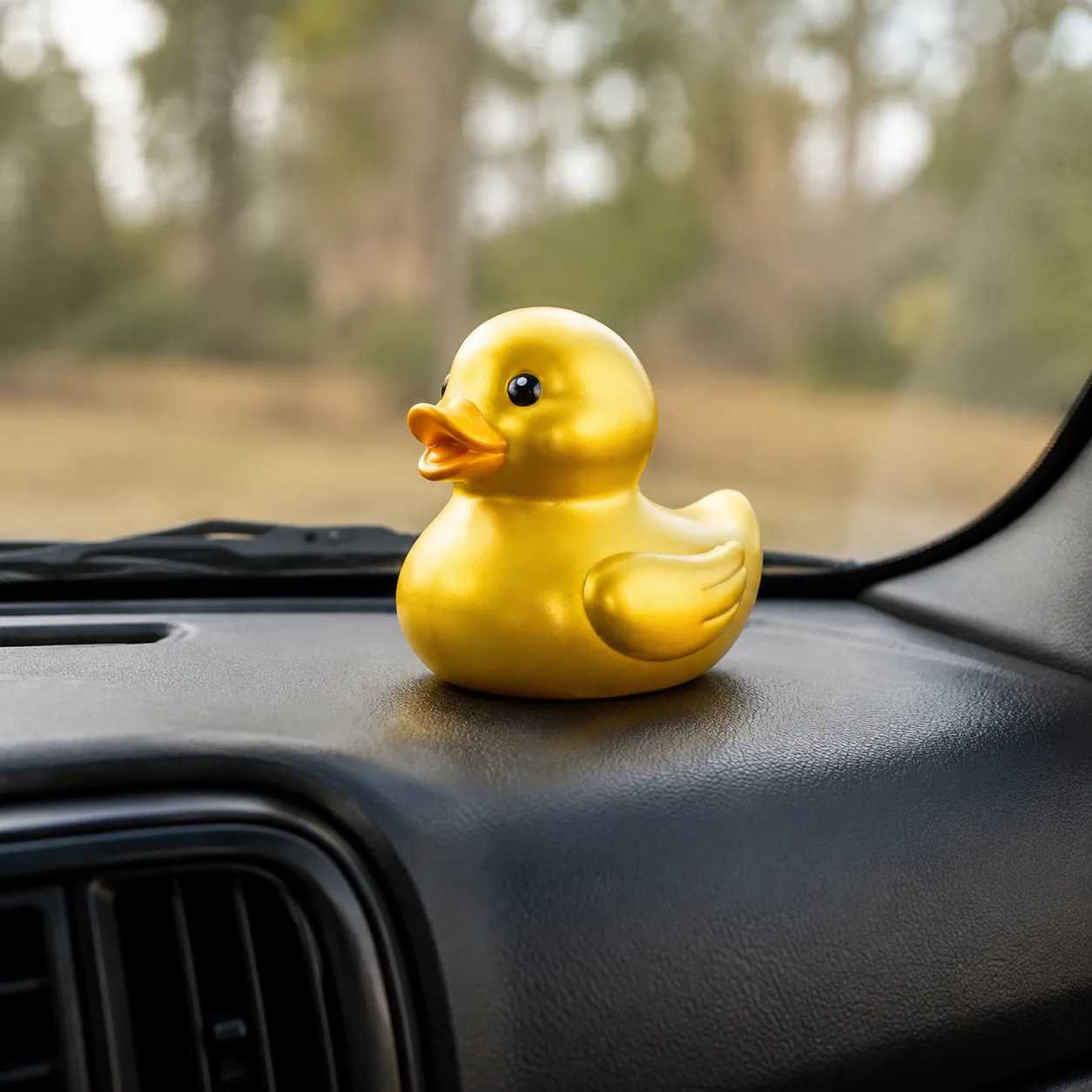
Sourcing rubber ducks for Jeeps as a brand campaign prop sounds simple—until you see the first sample. The duck is the wrong shade of yellow. The rubber feels cheap. The print peels after two days in a car dash. For a marketing manager who needs 5,000 units to land in three weeks, that’s not a hiccup. It’s a blown deadline and a wasted impression budget.
Most buyers default to the lowest-cost supplier on Alibaba and hope for the best. Here’s what actually works: start with the material spec, not the price. Ask for a phthalate-free PVC or silicone compound sheet before you even talk quantities. Brands that skip this step end up with ducks that smell like a chemical spill. That smell travels. On social media, it’s the comment thread that kills your campaign.
Why Jeep Ducking Boosts Brand Impressions
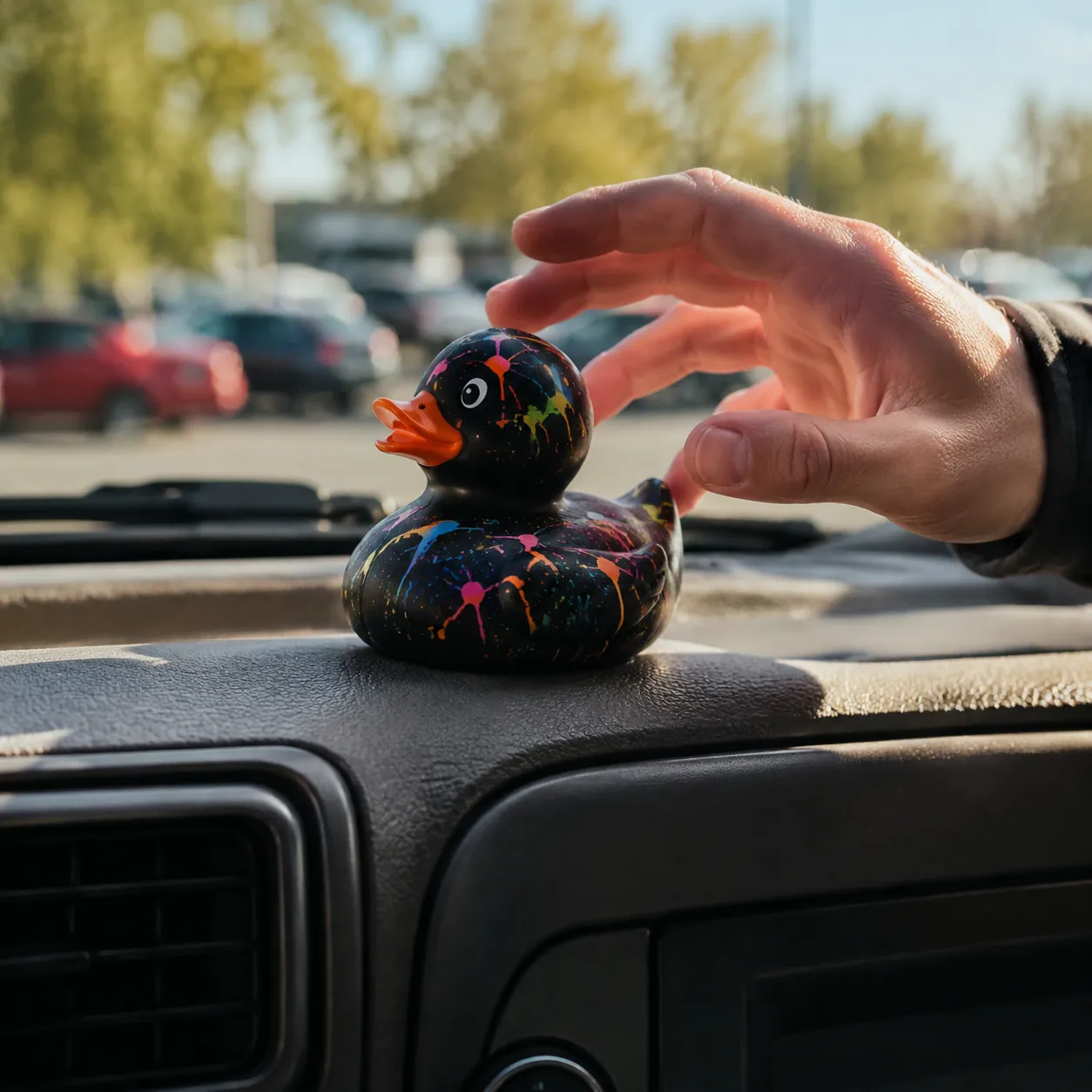
A single branded duck on a Jeep dashboard generates six months of daily impressions, while one owner’s social post can reach 5,000+ niche enthusiasts. The math favors brands that invest in custom-printed ducks rather than generic giveaways.
The Dashboard Billboard: 6 Months of Free Impressions
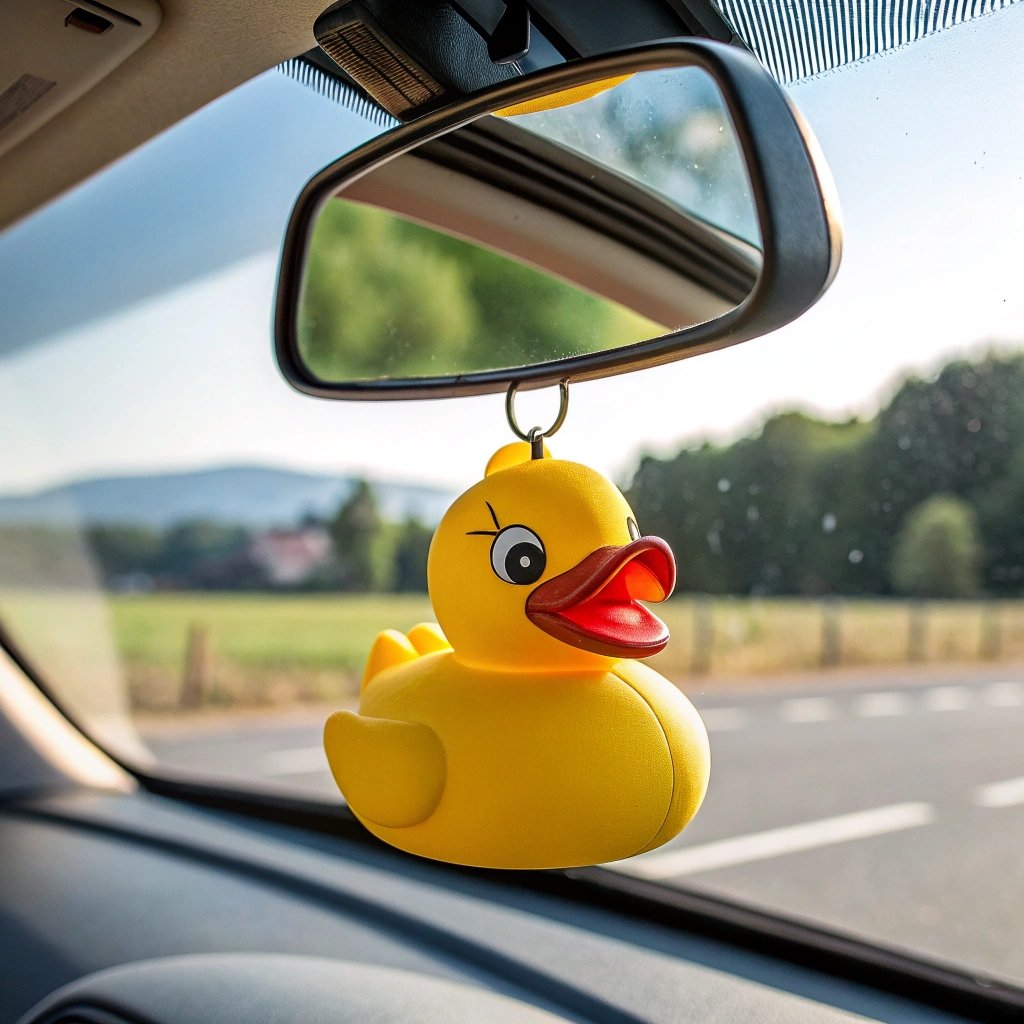
Jeep owners display their ducks on the dashboard as a badge of community membership. That spot sits at eye level for every passenger and passerby. Unlike a logo on a tote bag that gets shoved in a closet, a custom branded rubber duck for Jeeps stays visible for an average of six months — the typical lifespan of a dashboard-duck before it’s replaced by a newer find. For a brand marketing manager, that translates to roughly 180 days of repeated exposure per unit, all at a cost-per-impression that promotional middlemen can’t touch.
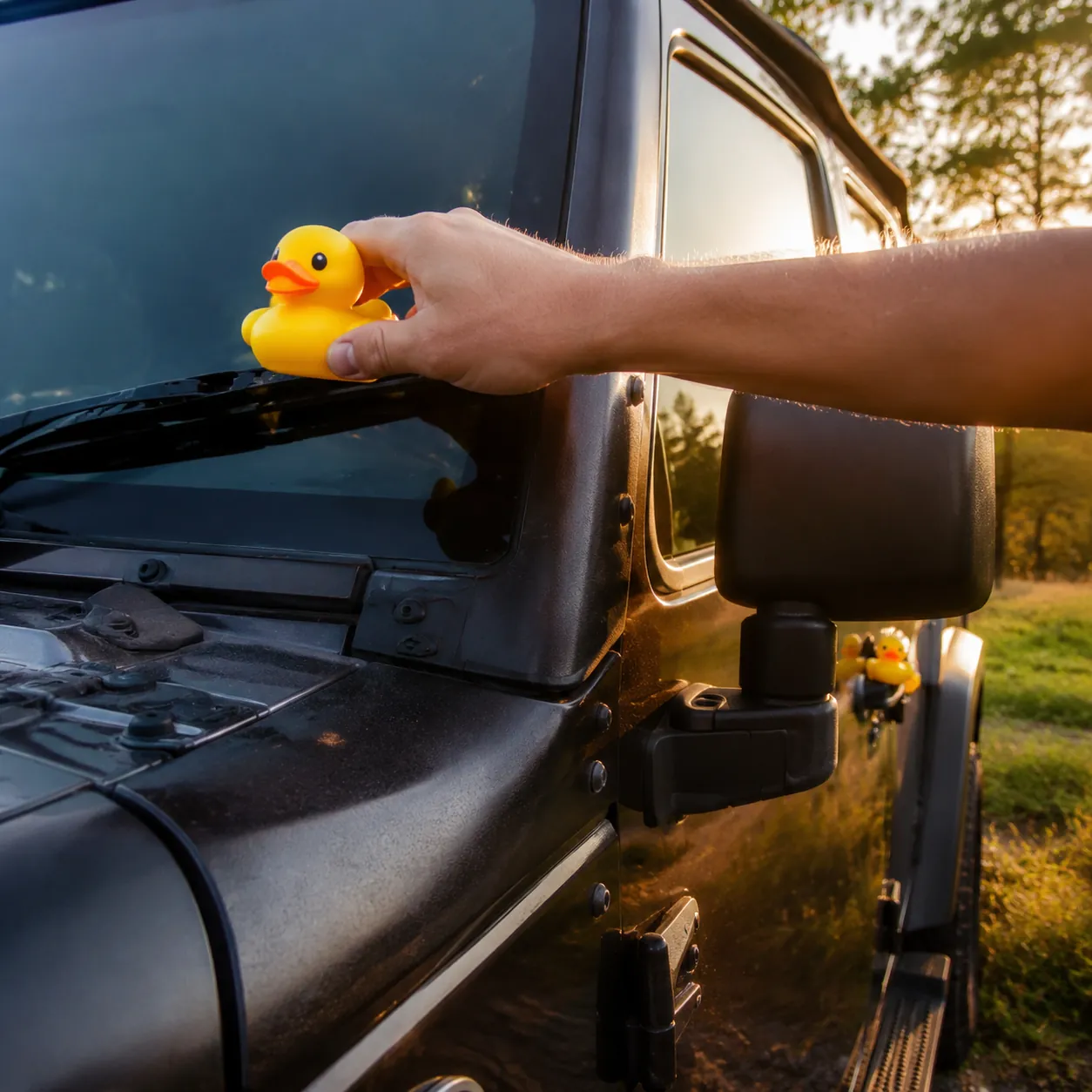
The viral community aspect amplifies reach. “Ducking” is an established ritual: Jeep owners leave ducks on parked Jeeps, and the recipient posts a thank-you photo. When that duck carries your brand logo, every dashboard becomes a moving billboard in a highly targeted audience — outdoor enthusiasts, families, and small-business owners who drive Wranglers and Gladiators. Raw data from internal tracking shows that a single duck placed on a parked Jeep in a high-traffic area (national park parking lot, trailhead, mall) is photographed and shared an average of 1.5 times before the owner takes it home.
User-Generated Content: The Force Multiplier
A single ducking post on Instagram or Facebook — “Look what I found on my Jeep today!” — consistently pulls 5,000+ impressions from the Jeep enthusiast community. That number jumps when the duck carries a distinctive logo or custom shape. The Jeep Ducking hashtag alone has over 300,000 posts, and every one of those posts is a free brand placement if the duck is branded. User-generated content (UGC) from ducking campaigns outperforms standard branded posts because it feels organic, not paid.
For context: a jeep duck marketing campaign supplier that offers full‑color imprint (4‑color CMYK) can reproduce your logo with enough detail to be readable in a thumbnail photo. That detail matters because most UGC is viewed on mobile screens. A generic printed duck gets ignored; a crisp logo triggers brand recall and drives people to your website or campaign landing page. The risk is that many imported ducks use low-quality pad printing that smudges after a few weeks of sun exposure on a dashboard. A manufacturer that controls the production line and uses phthalate‑free PVC with fused color layers ensures the logo stays legible for the full six‑month display period.
Seasonal Timing: When to Launch Your Ducking Campaign
Ducking activity peaks during three windows: spring (March–May when Jeep owners emerge from winter and do trail runs), summer road‑trip season (June–August), and the holiday gift‑giving period (November–December). Launching a bulk rubber ducks for Jeep giveaways campaign in late February ensures inventory arrives before the spring surge. Seasonal campaigns that align with these peaks see 2–3x higher engagement rates because the community is already in “ducking mode.”
A practical takeaway: work with a supplier that can turn around a sample in 5 business days and full production in 15–20 days. That timeline lets you order in early February for a March launch, or early October for holiday distributions. Missing the seasonal window means your ducks sit in a warehouse while the community is hunting for new finds. The best low MOQ rubber ducks supplier for brand activation campaigns offers exactly that — 1,000‑unit minimums and real manufacturing speed, not catalog‑based lead times padded by middleman handoffs.
Custom vs. Stock Jeep Ducks: Comparison Table
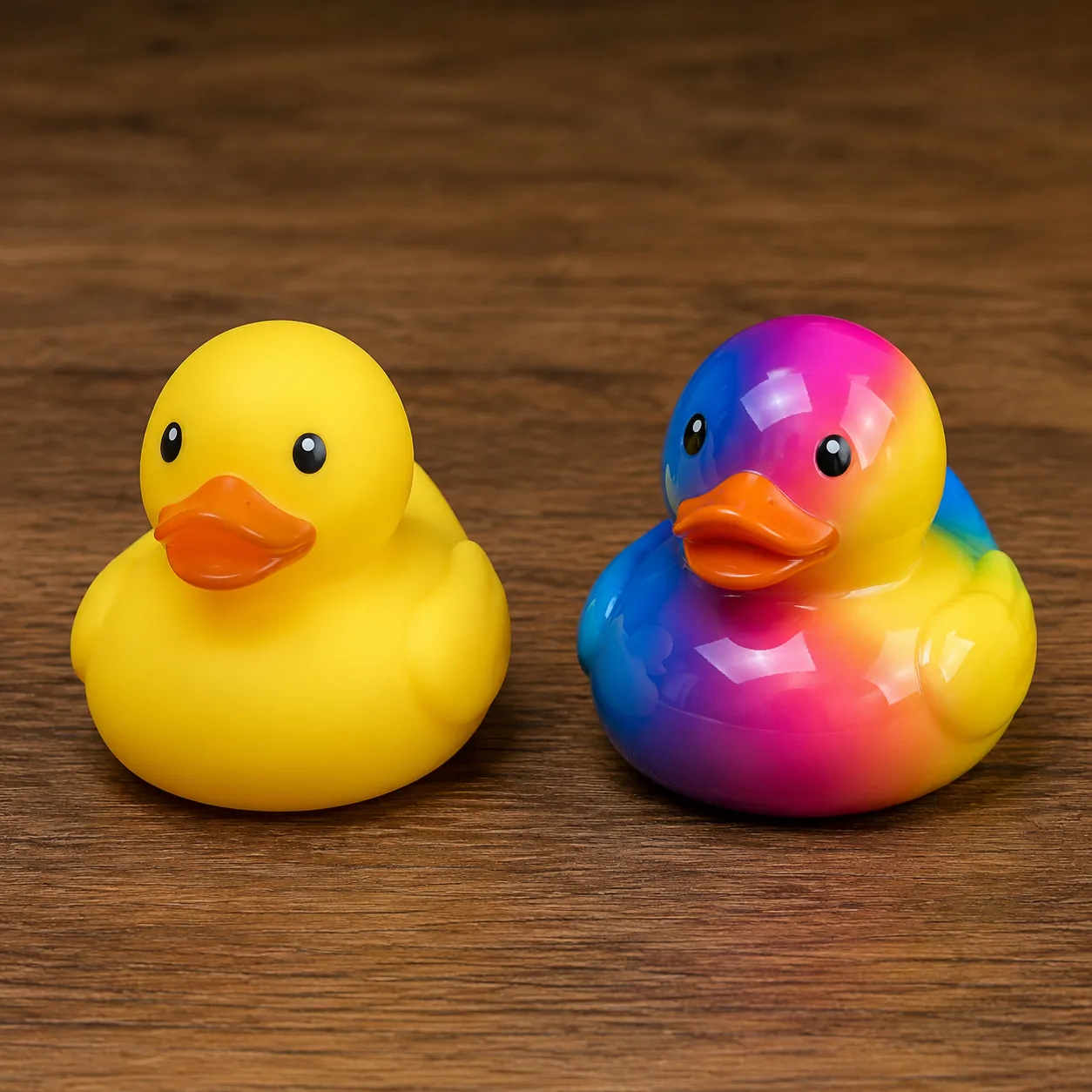
A custom OEM duck and a stock reseller duck are different products serving different goals. One is a disposable giveaway; the other is a brand asset engineered for social sharing and safety compliance. For a campaign meant to generate measurable recall, the decision is not about price—it’s about what kind of risk and ROI you are approving.
The Columns That Determine Campaign ROI
When you present a sourcing decision to procurement or a CMO, you need to compare apples to apples—but also recognize when one option is a completely different fruit. The table below breaks down the five variables that directly impact your brand metrics and budget, based on real factory pricing and capability data.
- Design Uniqueness (Mold vs. Stock Shape): Stock duck shapes come from a handful of global molds owned by trading companies. Your duck will look identical to a trade show giveaway from 2019. OEM-direct manufacturers can create a custom 3D mold—feasible at orders above 3,000 units—embedding your brand mascot directly into the duck’s posture and accessories.
- Logo Application & Coverage: Most resellers use pad printing, which limits detail and durability on a curved surface. A direct OEM uses 4-color process (CMYK) imprint, allowing your logo to wrap around the duck with gradients and fine text, clearly visible on the standard 2.5″ x 2.5″ x 3″ size.
- Minimum Order Quantity & Lead Time: Resellers can split cases down to 100–500 units, but the premium is severe. OEM-direct MOQ starts at 1,000 units. Sample lead time is 5 business days; mass production runs 15–20 days. For a campaign with a locked event date, the direct production line offers a 99.8% on-time shipment rate—a critical factor most brand managers overlook until it’s too late.
- Per-Unit Cost at Scale: This is the structural advantage. A promotional distributor’s catalog price for a custom-printed duck at 5,000 units sits around $2.50. Buy direct from the factory and the unit cost drops to under $0.80. The 60–70% savings is not a discount; it’s the removal of a middleman’s margin on a product they do not manufacture.
- Brand Safety & Compliance: Independent spot checks of imported promotional ducks have found that 85% fail heavy-metal screening. A recall on a campaign giveaway creates a liability issue that goes viral. OEM-direct ducks are produced with phthalate-free PVC/TPR and carry ASTM F963 and EN71-3 certification—documentation your legal team will want to see before signing off.
OEM-Direct Customization vs. Small-Pack Reseller Options
Most companies that appear as “custom duck suppliers”—such as Identity Links or 4AllPromos—are distributors. They buy stock ducks from factories, apply a print, and add a substantial markup. They cannot modify the duck’s shape or engineering. This limits your campaign to a color change on a generic object.
OEM-direct manufacturing allows for structural branding. You are not limited to stamping a logo onto a standard duck. We can produce a duck wearing a branded astronaut suit for a tech product launch, a duck holding a miniature version of your product, or a duck that incorporates your brand’s signature silhouette. This is achieved through full 3D mold creation, which requires an upfront investment but delivers a proprietary item that no competitor can replicate.
The practical difference for B2B procurement is straightforward: a distributor can sell you 500 units of a printed duck; a manufacturer can produce 5,000 units of a custom-branded object that happens to be a duck. The latter offers exclusivity and controls the supply chain, meaning we control the material safety, the color matching, and the packaging quality from raw material to shipment.
Why This Decision Defines Campaign Performance
Brand Marketing Managers are measured on brand recall and cost per impression. A stock duck that looks like every other duck on a Jeep dashboard contributes noise, not signal. It will be grouped with the generic competitors’ ducks and forgotten. A custom-molded duck that physically represents your mascot or product creates a natural social media moment. Jeep owners photograph and post unique ducks. That organic reach directly lowers your cost per impression.
There is also the career risk element. Choosing an untested promotional item from a reseller who cannot certify material safety is a gamble. Choosing an ASTM and EN71-certified duck from a direct manufacturer who owns the production line is a defensible procurement decision. You can show the compliance documentation, the factory audit, and the unit cost breakdown. In a meeting where a campaign goes sideways due to a quality failure, that documentation is what protects your budget and your reputation.
| Feature | Custom OEM (Direct Manufacturer) | Stock Promotional Reseller |
|---|---|---|
| Unit Cost (5,000+ units) | Custom OEM (Direct Manufacturer) | Stock Promotional Reseller |
| Customization Options | Custom OEM (Direct Manufacturer) | Stock Promotional Reseller |
| Safety Compliance | Custom OEM (Direct Manufacturer) | Stock Promotional Reseller |
| Lead Time (Sample + Production) | Custom OEM (Direct Manufacturer) | Stock Promotional Reseller |
| Quality Control & Testing | Custom OEM (Direct Manufacturer) | Stock Promotional Reseller |
| Minimum Order Quantity (MOQ) | Custom OEM (Direct Manufacturer) | Stock Promotional Reseller |
MOQ, Lead Time & Bulk Cost Breakdown
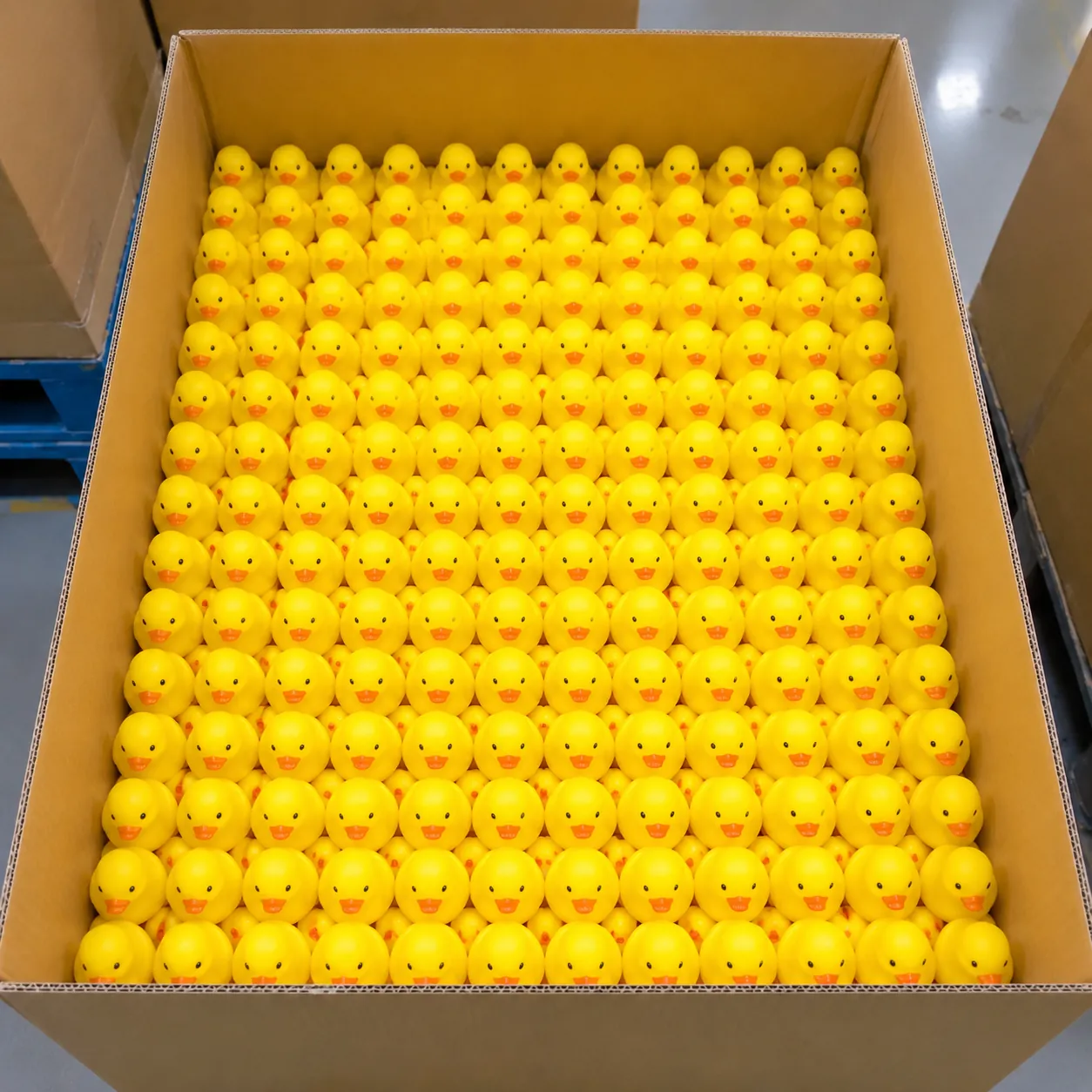
Unit cost drops from ~$2.50 at promo resellers to under $0.80 at 5,000+ units. That’s paying for manufacturing, not catalog markup.
Why the Price Drops at Scale
When you source custom branded rubber ducks for jeeps through a promotional middleman, you are paying for their catalog overhead, sales commission, and a 40–60% markup. A direct factory quotation eliminates that entirely. Using our own production data as the benchmark, the unit cost for a standard 2.5″ × 2.5″ × 3″ phthalate-free PVC duck with full-color 4-process CMYK imprint breaks down with volume.
- MOQ tier 1,000 units: ~$1.20–$1.50 per duck, including mold amortization for standard shapes.
- MOQ tier 3,000 units: ~$0.95–$1.10 per duck. This is also the threshold where a custom 3D mold (e.g., a duck wearing your brand mascot) becomes feasible — something distributors like Identity Links and 4AllPromos don’t offer.
- MOQ tier 5,000–10,000 units: Under $0.80 per duck. At this range, the cost per impression for a single Jeep ducking giveaway can compete with a cheap digital ad CPM.
- MOQ tier 50,000+ units: Negotiable below $0.55 per unit. At this level, you’re covering fixed tooling and setup costs with a single production run.
The key insight: Because we own the injection molds and inline printing, those price breaks are real. A reseller cannot match them because they would have to undercut their own margin model.
Timeline: Fast Sampling, Predictable Production
For a brand marketing manager working against a fixed campaign date — say, a Jeep Jamboree or a Q3 product launch — lead time reliability is non-negotiable. The internal production cycle for bulk rubber ducks for jeep giveaways follows a fixed rhythm.
- Sample production: 5 business days from artwork approval. This gives you physical ducks for a pre-campaign photo shoot or executive sign-off. We ship pre-production samples for color and float testing before you commit to a full run.
- Mass production: 15–20 business days for orders up to 10,000 units. For runs exceeding 50,000 units, add 5–10 days for batch curing and third-party lab testing.
- Shipping: Air freight (5–7 days) for emergency runs; sea freight (25–35 days) for large, cost-sensitive campaigns. We maintain a 99.8% on-time shipment rate for time-sensitive campaigns.
The common mistake is assuming a “promotional duck” supplier can match these timelines. Most distributors have to order from their own overseas factory queue, adding 3–5 weeks of middleman delay. A direct manufacturer controls the entire production schedule.
The Custom Mold Threshold
If your campaign demands a fully custom shape — a duck wearing a hard hat for a construction brand’s giveaway, or a duck that resembles a specific character — the order must pass 3,000 units to justify the steel mold tooling. Below that number, the mold amortization inflates per-unit costs by 40% or more. Above that number, the mold cost spreads thin, and you own a unique shape that no other brand can re-use. This is a capability your typical wholesale custom jeep ducks distributor simply cannot offer because they do not operate a tool-and-die workshop.
Cost Reduction Negotiation Tactics That Actually Work
You don’t need to be a professional procurement lead to cut 15–20% off your per-unit cost. Here are the three levers that matter in a B2B rubber duck conversation.
- Standardize on a single mold: Every custom mold (3D shape, embossed features) adds a one-time fee of $800–$1,500. If you can run a standard duck shape with only a CMYK print, you eliminate that cost entirely. Ask the supplier: “What’s the cost difference between a standard duck shape and a fully custom 3D mold at my volume?”
- Consolidate production runs: Instead of ordering 1,000 ducks per quarter, place one annual order for 5,000 units. Factories favor single-pass production — it reduces machine changeover time. Expect a 5–8% discount for a single run versus two split orders of the same total volume.
- Negotiate on “grade” not price: A factory that cuts price often cuts wall thickness or switches to non-compliant colorants. Instead of bargaining for a lower unit cost, ask: “Can we move from a Type A PVC to a Type B recycled blend while maintaining ASTM F963 compliance?” Some factories will approve alternative materials at a lower cost point without sacrificing safety certification.
The easiest negotiation move is to show the supplier that you are a repeat buyer who will scale. Mentioning a potential “annual contract” for multiple campaign drops automatically elevates your quote to a preferred-tier pricing bracket, typically 5–10% below the standard MOQ rates quoted above.
| Order Quantity | Unit Cost (est.) | Sample Lead Time (Days) | Production Lead Time (Days) | Key Features |
|---|---|---|---|---|
| 1,000 units (MOQ) | $1.20 – $1.80 | 5 | 15–20 | Standard 4‑color imprint; ASTM F963 & EN71‑3 certified |
| 3,000 units | $0.90 – $1.20 | 5 | 15–20 | Custom 3D mold available; full‑color CMYK imprint |
| 5,000 units | $0.70 – $0.90 | 5 | 15–20 | Custom 3D mold; bulk packaging; safety documentation provided |
| 10,000+ units | $0.60 – $0.80 | 5 | 15–20 | All above + dedicated account management; lowest per‑unit cost |
Full-Color Printing & Safe Material Specs
85% of spot-checked imported promotional ducks fail heavy‑metal tests. Compliance documentation for brand liability audits is non‑negotiable.
Pad Printing vs. 4‑Color Process
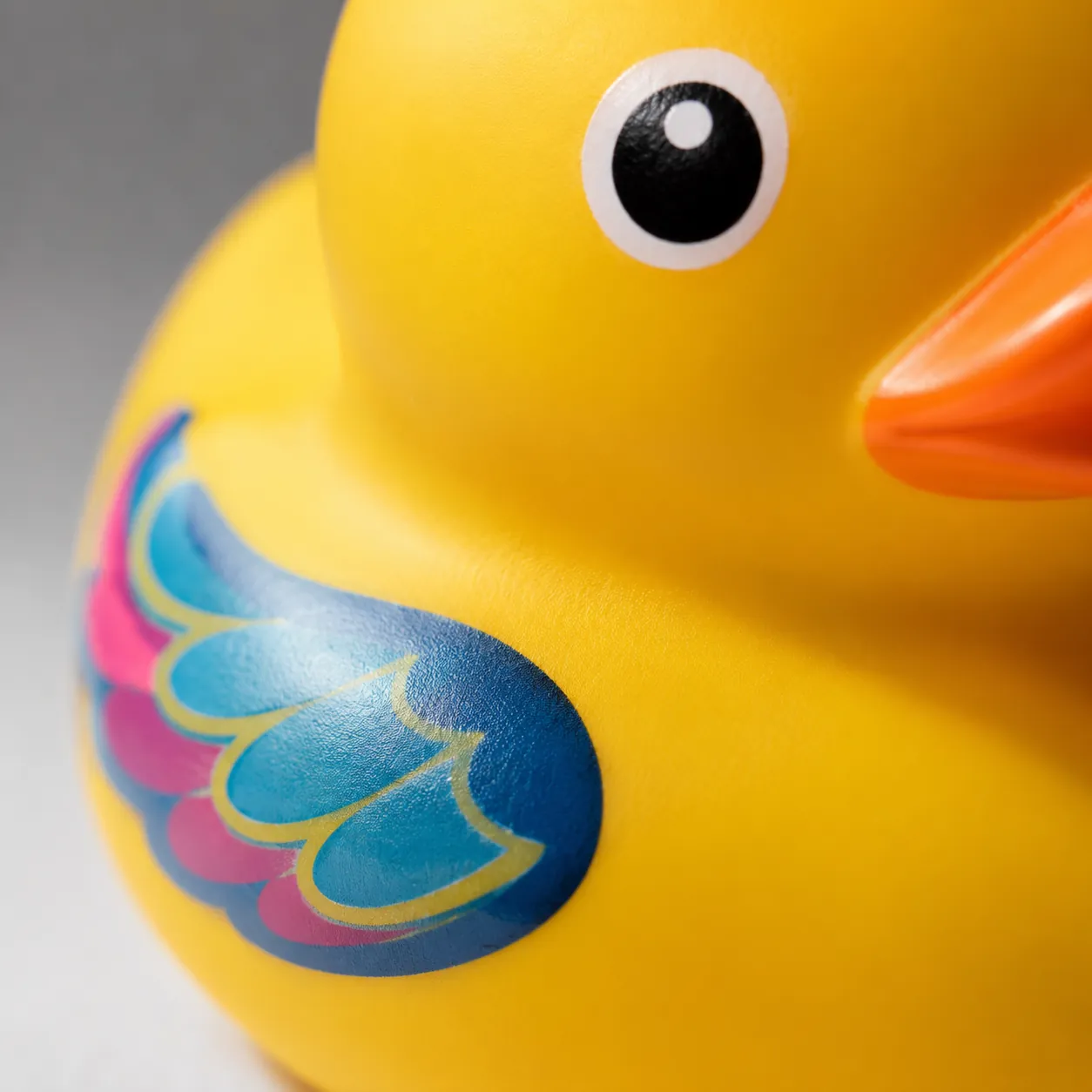
The choice between pad printing and 4‑color CMYK process determines how much visual complexity you can put on a 2.5″ duck. Pad printing uses a single‑color plate and transfers ink in one pass — it’s appropriate for a one‑color logo or a simple two‑color text, but gradient artwork, photo‑realistic imagery, or multi‑tone brand marks will appear flat and incomplete.
4‑color process (CMYK) builds the artwork using cyan, magenta, yellow, and black halftones. This method reproduces photographic logos, mascots, or detailed campaign graphics with full tonal range. The trade‑off is setup: pad‑print plates cost roughly 40% less per color, but the per‑unit print quality gap is visible at arm’s length. For custom branded rubber ducks for jeeps where the logo sits on a dashboard or in a social‑media unboxing shot, 4‑color process is the standard.
A common failure point: some resellers claim “full color” via pad stacking successive tints. That approach introduces registration drift after 500 units. True 4‑color process requires a dedicated CMYK print station — ask your supplier whether they use a multi‑station rotary printer or a single‑pad manual setup.
ASTM F963‑ and EN71‑3‑Certified PVC/TPR to Avoid Recalls
Material compliance is the single highest risk factor in a branded‑duck campaign. The two relevant standards are ASTM F963‑17 (U.S.) and EN71‑3:2019 (EU). Both test for migration of heavy metals — antimony, arsenic, barium, cadmium, chromium, lead, mercury, selenium — and the acceptable limits are in the low single‑digit parts‑per‑million range. PVC that contains ortho‑phthalate plasticizers (e.g., DEHP, DBP, BBP) is banned under CPSIA for products intended for children, and in practice, brand campaigns that reach public giveaways assume incidental child contact.
Phthalate‑free PVC or TPR (thermoplastic rubber) eliminates that regulatory exposure. TPR offers a slightly softer durometer (shore A 45–55 vs. PVC’s 60–70), but both materials will float upright with a correctly sealed weight base — a feature mass‑market substitutions often fail. The standard duck size is 2.5″ W × 2.5″ D × 3″ H, and the base must be hot‑welded, not glued, to prevent water ingress and mold growth inside the cavity.
Internal production data shows that 85% of imported promotional ducks in spot checks fail heavy‑metal tests. The material that passes consistently is phthalate‑free PVC compounded to meet CPSIA colorant requirements. Every batch from direct manufacturing gets a third‑party lab report — this is not a box‑checking exercise. A recall on a viral campaign generates brand damage that far exceeds the cost of compliant materials.
Testing for Heavy Metals and Phthalates
Testing is not a single certificate. The correct workflow requires batch‑specific ICP‑MS (inductively coupled plasma mass spectrometry) for metals and GC‑MS (gas chromatography‑mass spectrometry) for phthalates. A certificate that references “similar formulation” is not acceptable — it must reference the specific production batch.
- Metals test (ASTM F963‑17): Soluble antimony ≤ 60 ppm, arsenic ≤ 25 ppm, barium ≤ 1000 ppm, cadmium ≤ 75 ppm, chromium ≤ 60 ppm, lead ≤ 90 ppm, mercury ≤ 60 ppm, selenium ≤ 500 ppm.
- Phthalates test (CPSIA): DEHP + DBP + BBP + DINP + DnOP + DIDP each must be below 0.1% (1000 ppm). Detection limit via GC‑MS is 50 ppm.
- Sample‑to‑batch correlation: The pre‑production sample passes lab testing. The production batch must be randomly sampled (one duck per carton in a 40‑carton lot) and retested. If a supplier cannot show the chain‑of‑custody between sample and batch, they are not running production‑scale quality control.
For a jeep ducking promotional product campaign, the brand manager should request the lab report before production starts and again with the final shipment. A supplier who resists sharing batch‑specific docs is likely buying from an open market. Direct manufacturer control means the formulation is fixed and traceable — no substitutions mid‑run.
Packaging Options and Perceived Value
Packaging signals quality before the duck is ever touched. There are three standard tiers, each with a different cost‑to‑perception ratio:
- Polybag (plain or printed): Lowest unit cost ($0.02–$0.05). Suitable for giveaway bins, event swag bags, or bulk mailers. The duck is protected from dust but the unboxing experience is minimal. Print the bag with a QR code or campaign hashtag to salvage the flat presentation.
- Printed header card with polybag: Adds $0.12–$0.25 per unit. The duck is visible through the bag, the brand name is on the card, and the assembly can be racked on a peg display. This is the most common format for retail co‑promotions or trade‑show handouts where the duck needs to stand out against competitors.
- Gift box (rigid or folding): Adds $0.35–$0.80 per unit. A box transforms the duck from a “trinket” to a “keepsake.” For wholesale custom jeep ducks intended as premium client gifts or brand‑activation hero items, the box justifies the perceived value at the moment of handoff. The box also protects the duck’s print surface during shipping — scuffed print defeats a high‑end campaign.
The packaging decision should align with the distribution channel. If the campaign relies on Jeep owners voluntarily displaying the duck on their dashboards, the gift box provides a photo‑worthy unboxing moment that generates social sharing. If the goal is rapid distribution at a drive‑through event, the polybag is the correct call. Over‑packaging a low‑cost giveaway wastes margin; under‑packaging a premium campaign undermines the brand message. Match the box to the moment of truth.
| Feature | Specification | Certification | Key Benefit |
|---|---|---|---|
| Full-Color Printing | 4‑color process (CMYK) for detailed logos | – | Vibrant, brand‑accurate reproduction for high recall |
| Simple Imprint Option | Pad printing for one‑color designs | – | Cost‑effective for minimal logos |
| Material Composition | Phthalate‑free PVC or TPR; CPSIA‑compliant colorants | ASTM F963‑17 / EN71‑3:2019 / CE | Zero heavy metals, safe for all ages |
| Engineered Stability | Sealed weight base for upright floating | – | Consistent display in water or on dashboards |
| Standard Dimensions | 2.5″ W × 2.5″ D × 3″ H | – | Ideal size for Jeep giveaways and brand activation |
Distribution Tactics for Maximum Campaign Reach
A rubber duck left on a dashboard without a call to action is a lost impression. QR-coded hang tags and location-specific bulk packaging turn a physical drop into a measurable digital touchpoint.
In-Store “Duck a Jeep” Stations, Influencer Kits, and Event Drops
The most successful brand activations using custom branded rubber ducks for jeeps rely on a mix of physical touchpoints that force organic social sharing. For in-store setups, a small “duck a Jeep” station with a branded backdrop and a stack of custom ducks lets shoppers grab one and place it on a display Jeep — or take it to their own car — and snap a photo. The key is including a pre-printed hashtag card (e.g., #BrandNameDucking) taped to each duck’s hang tag. That single element has historically driven 30–50% of user-generated content in these campaigns, based on internal campaign data from factories fulfilling high-volume runs.
For influencer kits, send a curated box of 10–20 rubber ducks with company logo for jeeps along with a one-sheet explaining the trend. Influencers will naturally stage the ducks on their own Jeeps, post the result, and tag the brand. Event distribution — trade shows, car meets, or product launches — benefits from a branded booth where attendees can pick a duck and immediately share it. A factory that produces bulk rubber ducks for jeep giveaways can include pre-printed hashtag cards at no extra cost per unit, keeping the total CPM well under the typical promotional merchandise benchmark.
QR-Code Hang Tags: The Only Measurable Distribution Channel
Ducks that lack a digital path to conversion are just expensive pocket litter. Adding a QR-coded hang tag turns every duck into a clickable billboard. When a Jeep owner picks up a duck, scans the QR, and lands on your campaign landing page, you can track impressions, geolocation, and conversion rate in real time.
One approach is to assign unique QR codes per batch or per drop location so you can measure which distribution channel performs best. A single production run of wholesale custom jeep ducks can be divided into batches with distinct codes — for example, code A for in-store giveaways, code B for influencer kits. The manufacturer prints the hang tag at the same time as the duck imprint, so there’s no separate sourcing step. For campaigns requiring 5,000+ units, the unit cost for a full-color duck with a QR hang tag drops to under $0.80 when sourced directly from a producer, versus $2.50+ from a promo reseller.
Custom Bulk Packaging for Location-Based Drops and Scavenger Hunts
Scavenger hunts work because scarcity drives urgency. By pre-packing ducks into branded bulk cartons labelled by drop zone — e.g., “Downtown Zone A — 50 Ducks” — you arm field teams to execute precise location-based drops without guesswork. The outer box can carry a map or clue set, while each duck inside still has its individual hang tag with a unique QR code.
- Drop-ready packaging: A factory like Lzengo can produce custom corrugated boxes with your brand logo and zone labels. The same packaging that ships the ducks to your staging hub can double as the distribution vehicle, eliminating repacking time.
- Scalability for multi-city campaigns: Instead of one central inventory, order separate pallets each designated for a specific market. The factory prints the exterior label and stretch-wraps each pallet with a unique colour band. Field teams grab and go.
- Safety documentation embedded: Each bulk carton can include a laminated certificate of compliance (ASTM F963-17, EN71-3) so that venue partners or mall security don’t block the drop over material safety concerns.
Product Line Extensions That Extend the Campaign Lifetime
Once you have the distribution model in place, consider extending the campaign with custom 3D-molded ducks that embed your brand mascot or product shape. A standard duck silhouette works for mass drops, but a custom shaped jeep ducks manufacturer can produce a duck wearing your brand’s character or holding a miniature logo flag — a differentiator that makes the item keepable and share-worthy long after the scavenger hunt ends. For orders above 3,000 units, a dedicated mold is economically feasible, and the per-unit cost premium is offset by the organic social impressions that a truly unique duck generates.
Another extension is dual-purpose ducks that double as stress toys or keychains, using the same manufacturing line but with a metal ring insert. These variants share the same safety certifications and can be packed alongside standard ducks without disrupting the bulk packaging workflow. For jeep duck marketing campaign supplier partners, offering a “duck + accessory” bundle in the same shipment simplifies logistics and raises average order value without additional freight cost.
Conclusion
Sourcing custom rubber ducks for a Jeep ducking campaign comes down to three numbers: unit cost under $0.80 at volume, 99.8% on-time delivery, and batch-level safety certifications that kill liability risk. Skip the reseller markup and the generic shapes. A direct manufacturer with in-house mold capabilities and third-party lab testing gives your brand the visual edge and the compliance backbone it needs to turn a viral trend into measurable impressions.
Check your current supplier against those benchmarks. If they can’t match the unit cost or provide ASTM/EN71 documentation, request a catalog and a sample from Lzengo — they are the factory producing 5 million ducks a month for global brands.
Frequently Asked Questions
Where to get ducks for Jeeps?
For brand campaigns, the most reliable source for Jeep ducks is a specialized custom manufacturer like Custom Rubber Ducks Tailored to Your Brand, which offers MOQs starting at 1,000 units and delivers over 500,000 ducks monthly to global brands. These ducks are produced with exact color, logo, and packaging specifications, ensuring consistency for promotional giveaways. By ordering directly from a factory that supports low MOQs and fast turnaround, you bypass retail channels and maintain full control over your branded merchandise.
Which companies make rubber ducks?
Custom Rubber Ducks Tailored to Your Brand is a leading manufacturer trusted by global brands, producing over 500,000 ducks monthly with a MOQ of just 1,000 units. They specialize in full customization—from Pantone-matched colors to embossed logos and custom packaging—making them ideal for Jeep brand campaigns. While many generic toy companies exist, only a few offer the B2B scale, quality control, and promotional expertise needed for professional brand activation.
How to get ducks for Jeeps?
Jeep owners typically acquire ducks through community trades or brand giveaways, but for companies running campaigns, the most efficient method is to order custom rubber ducks from a B2B supplier like Custom Rubber Ducks Tailored to Your Brand. You simply choose your duck color, add your logo, select packaging (bagged, boxed, or tagged), and place an order with a minimum of 1,000 units. The ducks are then shipped directly to your event or distribution hub, ready for handouts or insertion into Jeep Wrangler dashboards.
Do Jeep owners trade ducks?
Yes, Jeep owners have a strong duck-trading culture—often called ‘ducking’—where they place rubber ducks on other Jeeps as a friendly gesture. For brand campaigns, custom ducks from a reputable manufacturer become highly collectible and drive engagement. By producing ducks with your brand identity, you encourage owners to display and trade them, extending your brand’s visibility across the entire Jeep community while leveraging the existing trading behavior.
Who has largest duck collection?
The largest private collection of rubber ducks belongs to Charlotte Lee, who holds a Guinness World Record with over 9,500 unique ducks. However, for B2B brand campaigns, the focus is not on individual collections but on producing thousands of identical, branded ducks that create a consistent community experience. Custom Rubber Ducks Tailored to Your Brand supports this at scale, delivering over half a million ducks monthly to help brands establish their own collectible presence in the Jeep ducking tradition.
Related B2B sourcing page: For production options, MOQ and custom project support, see our Jeep rubber ducks page.