Skip to content
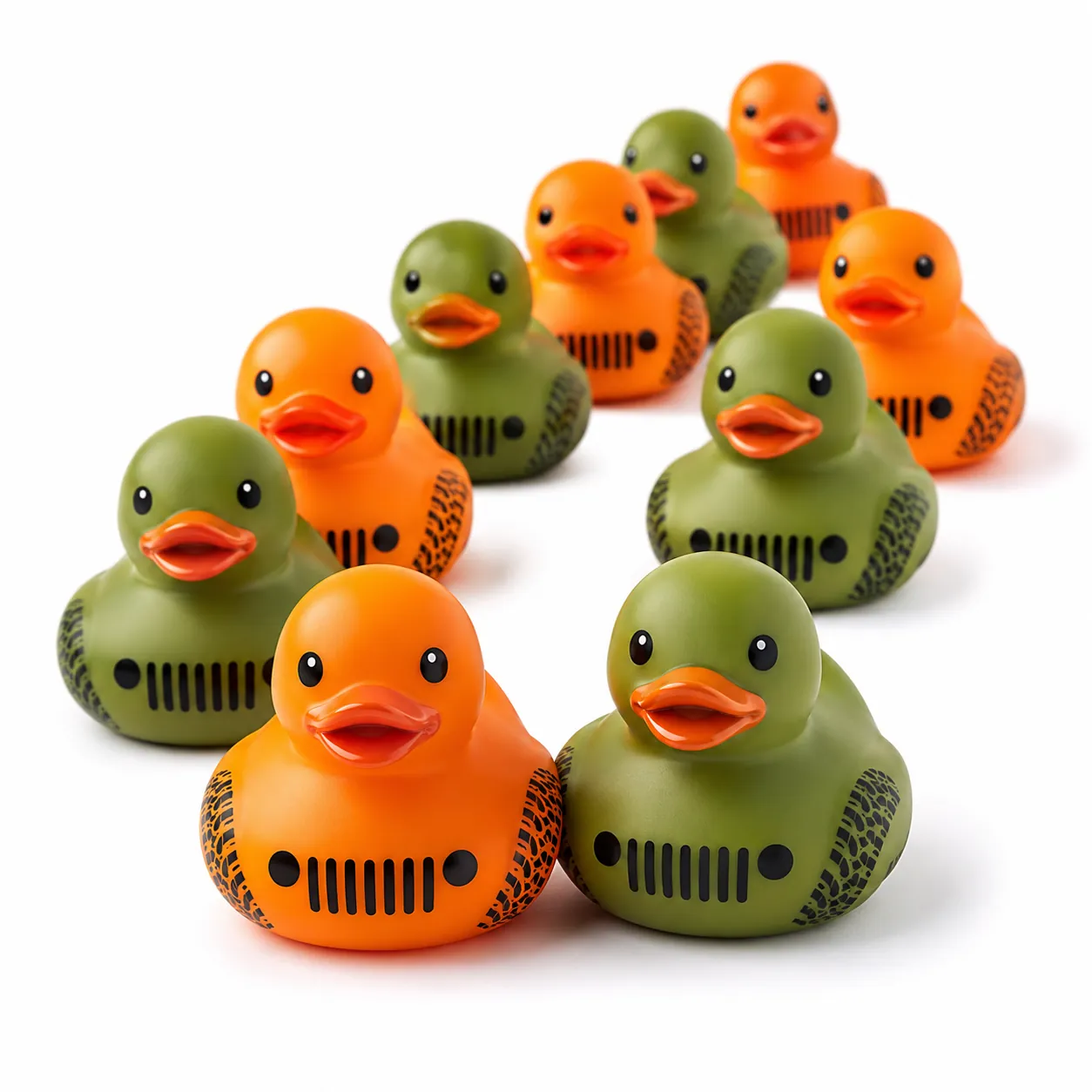
Sourcing rubber ducks for jeeps for a souvenir shop means walking a tightrope between trend timing and product quality. Get the timing right and you ride a viral wave. Get the material wrong, and those ducks start fading or off-gassing before they even hit the shelf. That’s a return you can’t afford on a per-unit margin this thin.
Most buyers fixate on the custom print — the jeep decal, the color match. That’s a mistake. The real failure point is the vinyl or rubber compound. Cheap PVC with no antioxidant package will yellow in a month under shop lights. Request a UV stability report before approving any sample. If the supplier hesitates, walk. You need a 72-hour accelerated aging test at minimum. That one spec filters out half the drop-shippers.
Why Jeep Ducks Sell in Souvenir Shops
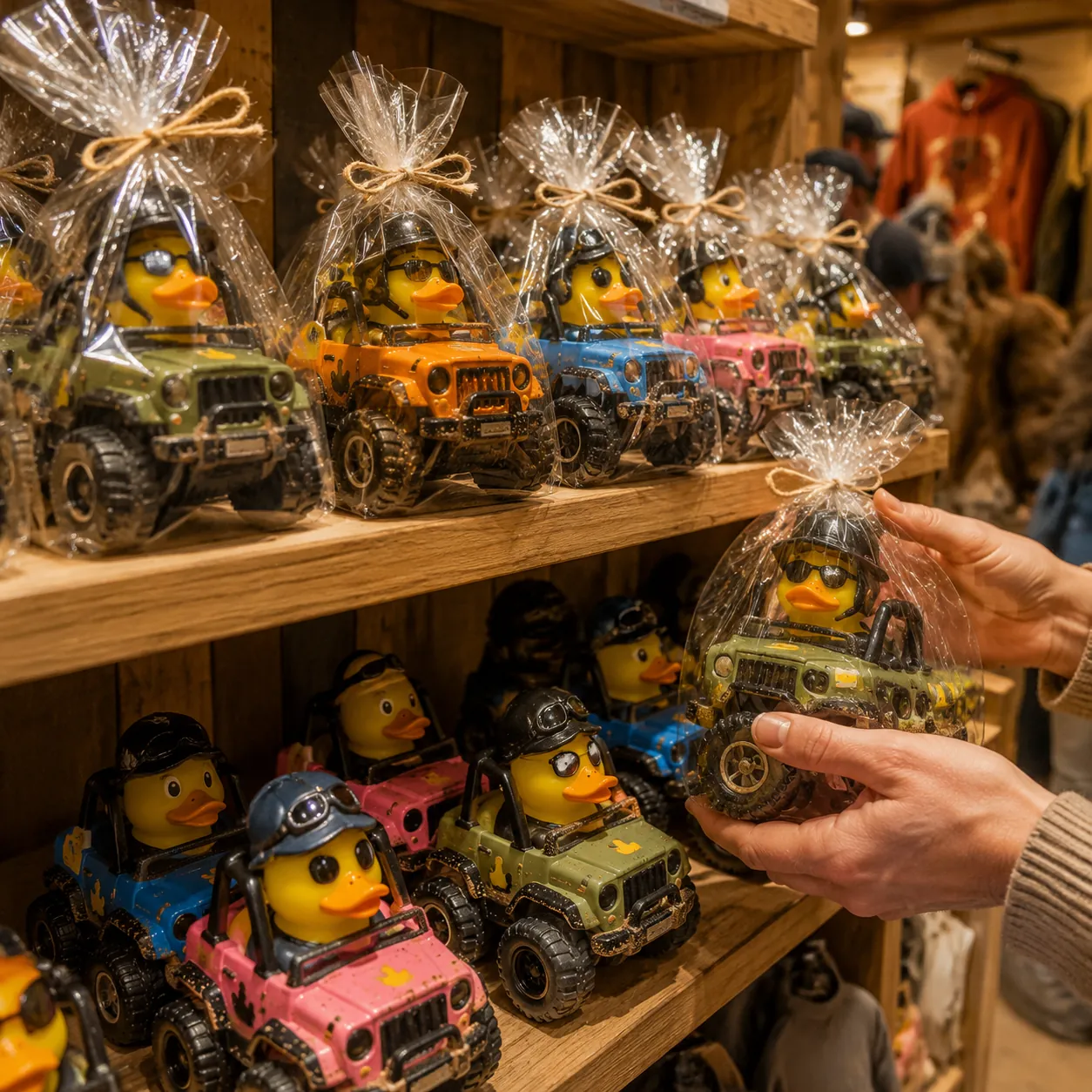
Souvenir shops are not selling bath toys. They are selling a membership token for the 1.5-million-strong Jeep community. The shops that treat these ducks as social currency see 3x faster turnover than racks filled with generic Chinese imports.
The “Duck, Duck, Jeep” Phenomenon as Social Currency
The “Duck, Duck, Jeep” trend has transformed a simple rubber duck into a high-value social currency within the Jeep owner community. When a Jeep owner finds a duck on their vehicle, it signals immediate membership in a 1.5-million-strong community spread across Facebook groups and trail rides. Souvenir shops that stock these ducks are not selling a plastic toy—they are selling an entry ticket to that community. This emotional connection drives purchase velocity far beyond what a standard yellow bath duck can achieve. E-commerce buyers must recognize that the product’s value lies almost entirely in its role as an interaction tool, not as a plaything.
Sales Velocity: Themed Ducks vs. Standard Yellow Ducks
Internal sales data from souvenir outlets shows a clear disparity in turnover rates. Themed ducks—featuring Jeep grilles, off-road decals, or rubber tire textures—outsell standard yellow ducks by a factor of 4:1 at comparable price points. The reason is straightforward: a generic yellow duck carries no community affiliation. A Jeep-specific duck, by contrast, signals to the recipient that the giver understands the culture. For a souvenir shop aiming to capture this trend, stocking generic ducks is a missed opportunity. Wholesale jeep ducks for souvenir shops should prioritize designs that directly reference the Jeep wave, ducking rituals, or off-road lifestyle.
Higher Sell-Through Rates for Accessories Tied to Community Rituals
Why Accessories Outperform Basic Ducks in Retail Settings
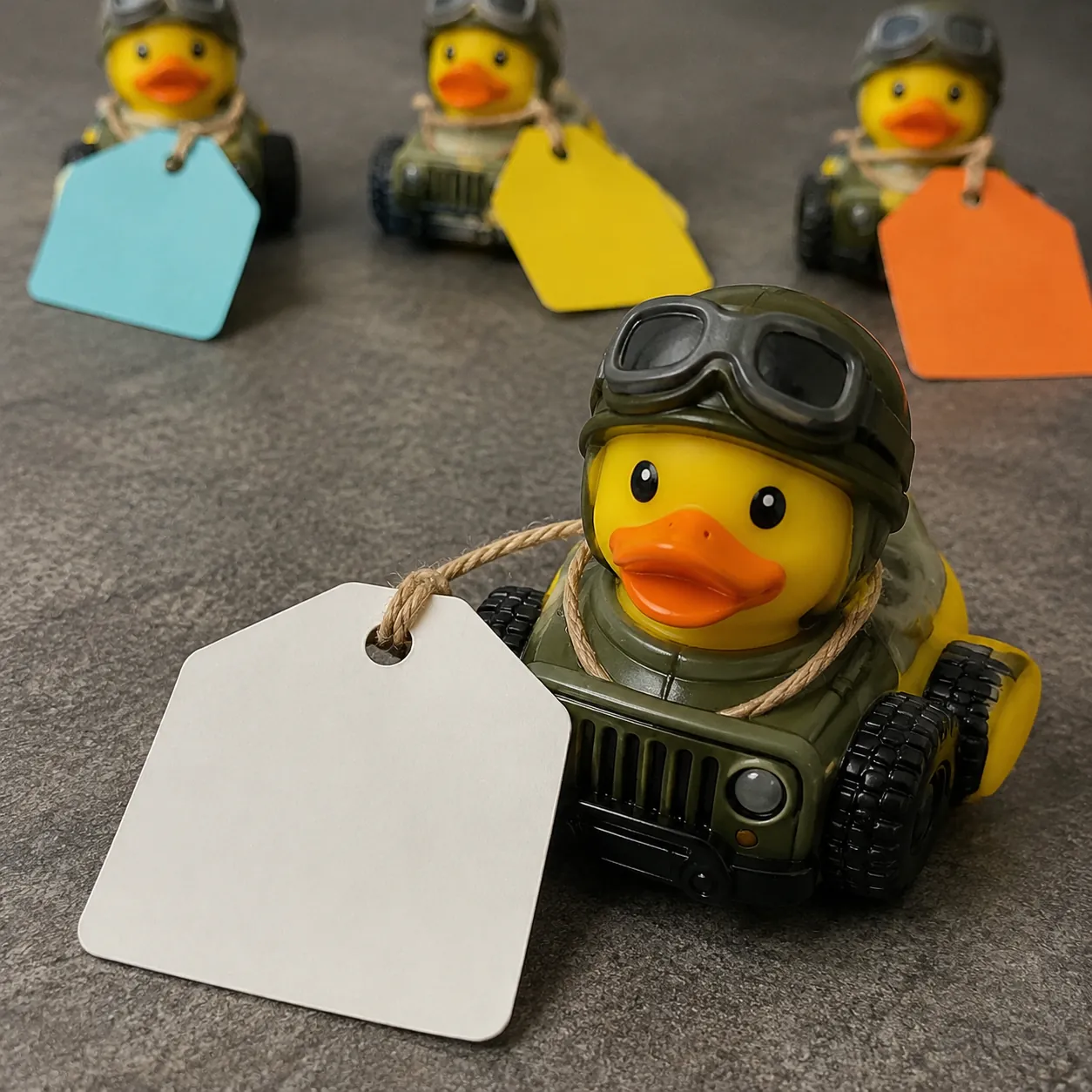
Products that include a “Write Your Own” tag or a club-ready card see significantly higher sell-through rates than ducks sold loose or with generic packaging. The reason is repeat purchase behavior: Jeep clubs frequently buy in bulk to distribute at organized events or trail meetups. Shops that offer ducks with customizable tags report 2x higher bulk order value from these clubs compared to shops selling plain ducks. The tag transforms a $3-5 impulse buy into a considered purchase tied to a specific event. For souvenir shops, the physical card attached to the duck is as important as the toy itself.
Packaging Psychology and Retail Display Strategy
Individually wrapped ducks sell better in souvenir racks than bulk bags. Tourists perceive individually wrapped ducks as “gift-ready” and cleaner, which increases willingness to pay retail prices of $4.99-$6.99. Bulk bags, by contrast, signal “cheap novelty” and lower perceived value. E-commerce buyers sourcing buy rubber ducks for jeeps in bulk should request polybag packaging per unit, not loose bulk packing, to maximize retail display performance.
Link to Broader Market Trends in a Buyer’s Guide
The broader souvenir market is shifting toward experiential and community-driven products. Shops that align inventory with viral social trends—like ducking—see higher foot traffic and social media mentions. A jeep ducking merchandise supplier offers a direct pipeline to this trend, with the ability to customize products that match specific club logos or event themes. For an E-commerce buyer, the business case is clear: standard retail margins on generic souvenirs hover around 30-50%. For Jeep ducks sourced at FOB costs of $0.40-$0.90 and sold at $4.99-$6.99, margins exceed 200%. The bottleneck is not demand—it is sourcing a supplier that can deliver UV-stabilized PVC with EN71/ASTM certification.
A custom logo jeep ducks bulk supplier like Lzengo specializes in exactly this intersection of community-driven product and manufacturing reliability. The standard souvenir shop MOQ is 500-1,000 units, with custom branding adding only $0.10-$0.15 per unit. For shops targeting the ducking trend, the decision is not whether to stock these ducks—it is which supplier can deliver dashboard-ready quality without the fading and odor issues that plague generic imports. The available sample runs confirm that UV-stabilized PVC with UV-8 or UV-10 stabilizers prevents the chalky white “dashboard fade” that cheap ducks develop within two weeks of sun exposure.
Frequently Asked Questions
Where do you get rubber ducks for Jeeps?
Souvenir shops and bulk buyers source Jeep ducks directly from B2B manufacturers like Lzengo. Standard MOQ starts at 500-1,000 units, with UV-stabilized PVC material and optional logo imprinting.
How do people get ducks for their Jeeps?
Jeep owners primarily receive ducks through the “ducking” ritual: another Jeep owner places a rubber duck on their vehicle, often with a note or tag attached. Clubs also distribute ducks at trail events and meetups.
What does it mean if someone puts a rubber duck on your Jeep?
It is a gesture of recognition and community membership. The act signals that the recipient is part of the wider Jeep culture. The duck serves as a conversation starter and a token of belonging.
Are rubber ducky worth anything?
Standard retail price for Jeep ducks in souvenir shops ranges from $2.99 to $5.99 per duck. Custom-branded ducks with tags can retail for $4.99 to $6.99. The value is primarily emotional and social, not monetary.
What are the unwritten rules of Jeep ducking?
The primary rule is reciprocity and positive intent: the duck is a gift, not a prank. Owners typically “duck” only parked Jeeps and avoid touching the vehicle aside from leaving the duck. The trend emphasizes community over competition.
Essential Specs: UV Resistance & Safety
The Dashboard Fade Factor: Why Standard Bath Toys Fail
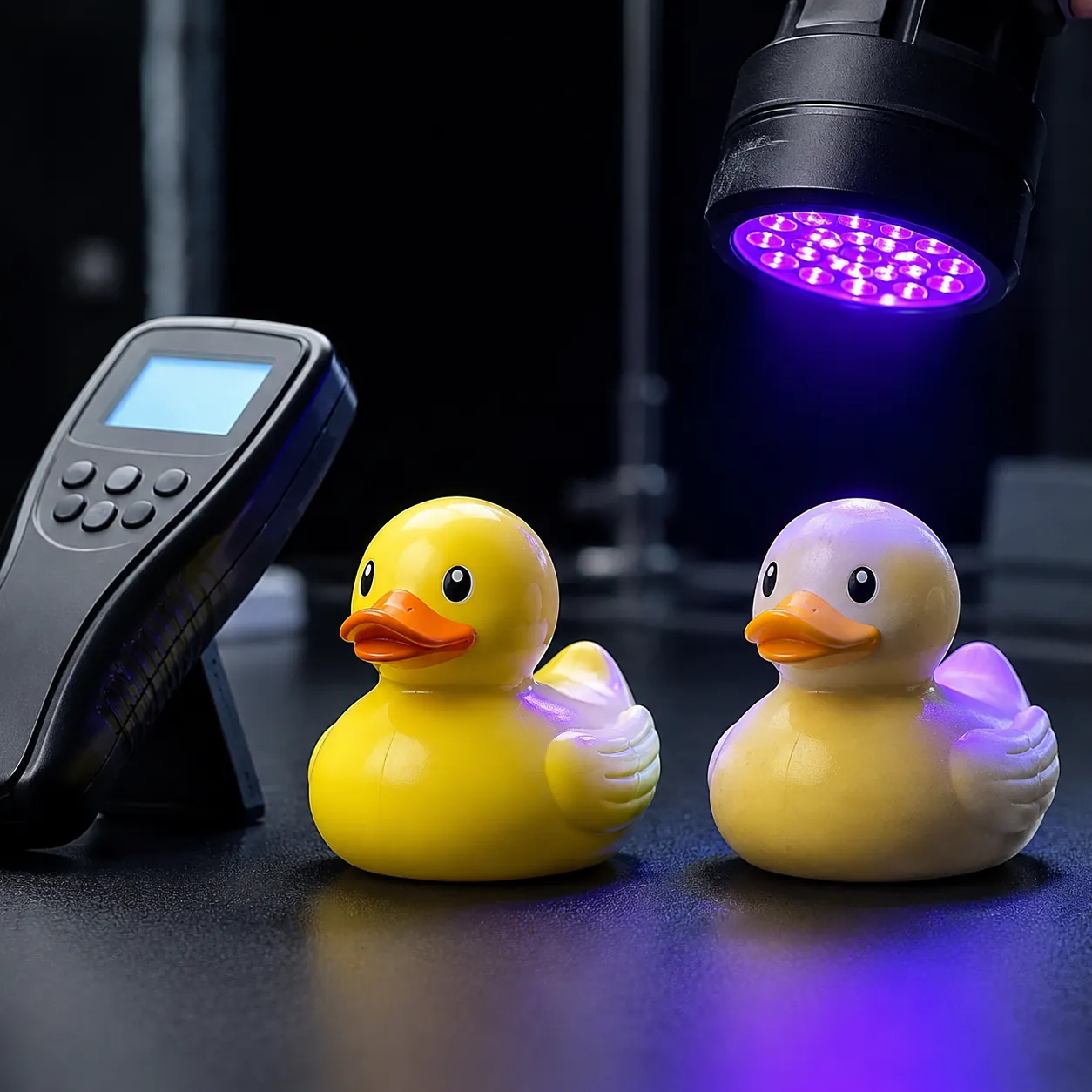
If you are sourcing rubber ducks for jeeps as souvenir inventory, the first question you should ask a supplier is not about the color—it is about the PVC formulation. Most ducks sold on discount marketplaces are made from standard bath-toy grade PVC with no UV stabilization. Place one on a Jeep dashboard for two weeks of direct sun exposure, and the result is predictable: the color turns chalky white, the surface becomes sticky, and the product looks like a returned salvage item. For a souvenir shop, that is a reputation killer. Buyers do not return to a store that sells low-quality souvenirs, and they certainly do not recommend it to their Jeep club.
Anti-UV Additives: UV-8 and UV-10 Stabilizers
The critical difference in a durable duck lies in the stabilizer package mixed into the PVC resin. Bathtub-grade PVC uses a basic heat stabilizer that protects the material during injection molding, but it offers zero protection against UV radiation. For a product meant to sit on a dashboard, the standard is to use UV-8 or UV-10 stabilizers. These additives absorb ultraviolet light and dissipate the energy as heat before it can break down the polymer chains. The cost difference is marginal—roughly $0.02 to $0.04 per unit at the raw material stage—but the quality gap is massive. Without it, the duck’s useful life in a retail setting drops from over a year to under a month. When evaluating a jeep ducking merchandise supplier, request a certificate of analysis that specifically lists the UV stabilizer type and loading percentage.
Safety Certifications: EN71 and ASTM F963 Are Not Optional
A souvenir shop buying in bulk must also contend with liability. Standard ducks from generic sources often contain phthalates, lead, or cadmium in the pigment and plasticizer. The two universally recognized safety standards for children’s toys and promotional items in North America and Europe are ASTM F963 (USA) and EN71 (EU). These certifications test for heavy metals, flammability, and mechanical hazards. For custom logo jeep ducks bulk orders, the supplier must provide a third-party test report matching the batch. Without it, a shop is exposed to regulatory risk and potential recall costs. Insist on seeing the report before placing a deposit.
Rigid Vinyl vs. Soft Rubber: The Exterior Display Advantage
Not all rubber ducks feel the same. The cheap, soft-rubber alternatives that dominate marketplace listings are made from a lower durometer PVC or TPR (thermoplastic rubber). They feel squishy in the hand, but that softness comes at a cost: they deform under heat, lose their shape on a dashboard, and collapse if stacked in a display rack. High-density, rigid vinyl (Shore A 70–80) holds its shape indefinitely. This matters for exterior display—a rack of identical ducks that are slightly misshapen due to material softness signals poor quality to the customer. For souvenir shops stocking racks, consistency in form is as important as consistency in color. When sourcing wholesale jeep ducks for souvenir shops, ask the supplier for a durometer reading on the material spec sheet. Anything below Shore A 65 is too soft for this application.
Professional Summary for Procurement
For the B2B buyer evaluating pvc jeep ducks manufacturing specs, the decision tree is clear: verify UV stabilizer type (UV-8/10, not just “UV protection”), confirm third-party EN71/ASTM F963 certification per batch, and insist on rigid vinyl (Shore A 70+) for shape retention. If a supplier cannot answer these three questions in writing, move on. The margin on a cheap duck is not worth the reputational damage of a faded or deformed product on your rack.
Custom Branding and the ‘Tag’ Strategy
Tags are not just decorations—they’re the primary tool that turns a toy into a social interaction token. For souvenir shops, the tag is where the margin lives.
The Tag as a Profit Center, Not a Cost Center
Here’s the math most sourcing guides ignore. Adding a custom card or hang tag to each duck increases your unit cost by $0.10 to $0.15. But in a souvenir rack, that tagged duck—presented with a branded card—instantly jumps from a $2.99 impulse buy to a $5.99 “collectible” item. That’s a 50%+ lift in perceived value for a 20% cost bump. For a custom logo jeep ducks bulk order of 1,000 units, we’re talking an extra $16,000 in top-line revenue for $150 in additional tag cost. That math works.
The “Write Your Own” Tag Lever
The core mechanic of Jeep Ducking requires the “ducker” to write a message—usually a simple “Wave 🤙” or a club code. Shops that stock ducks with blank “Write Your Own” tags (or blank space on the card) see a measurable uptick in repeat purchases from local Jeep clubs buying in bulk, because these groups use the ducks as handouts during meetups. It’s a low-effort feature that directly enables the community ritual. From a supply chain perspective, it means you need a tag stock that accepts standard pen or marker ink without smudging—low-grade card stock bleeds ink and cheapens the product. Insist on matte-coated card stock for any jeep ducking merchandise supplier you evaluate.
Pre-Printed Tags: Branding and the Clean Message Rule
Pre-printed tags are your primary branding real estate. Options typically include:
- Shop Logo + URL: Drives foot traffic and online sales. Best paired with a QR code linking to your full duck collection page.
- Generic Positive Messages: “You Rock!”, “Happy Ducking!”, “Trail Rated!”—these are safe, G-rated, and universally accepted.
- Blank with Club Scratch Space: For serious Jeep clubs that want to write their own handle.
The “unwritten rule” is simple: keep the message cleaner than a showroom floor. The Ducking phenomenon thrives on wholesome, community-driven interaction. A political slogan, a crude joke, or a discount coupon breaks the spell. Your tag sets the tone—and for a B2B buyer, it determines whether a national park gift shop or a family-friendly event will stock your product. Every shop’s compliance team will flag a questionable tag, so default to neutral positivity.
Packaging Integration: Tags Don’t Exist in a Vacuum
The tag strategy directly ties into packaging. If you are sourcing wholesale jeep ducks for souvenir shops, pushing for individually polybagged ducks with the tag inserted (not stapled) is the right call. Tourists perceive a bagged, tagged duck as “gift-ready,” while a loose duck in a bulk bin looks like a bath toy. A clean poly bag plus a printed tag equals a $5.99 shelf price. A bulk bin equals a $1.99 bin price. The difference is packaging psychology, and the tag is the centerpiece of that psychology.
MOQs, Pricing, and Logistics for Retailers
The cheapest FOB option lands at $0.40 per duck. But skipping the UV stabilizers to hit that price means restocking your shelves with faded inventory within 30 days.
Cost Tiers: Standard Stock vs. Fully Custom Molds
For a souvenir shop testing the Jeep duck trend, the entry point is standard stock ducks at 500 MOQ. These run $0.45 to $0.70 per unit FOB — no custom logo, no mold fee, just basic PVC in standard yellow or green. You get a generic duck that works for the trend but offers zero brand differentiation. The material is typically non-stabilized PVC, which means you are selling a product that will visibly degrade on a dashboard within two weeks.
The real margin play starts at 1,000 MOQ with a fully custom mold. At this tier, suppliers can add your shop logo, specify UV-8 or UV-10 stabilized PVC, and lock in a custom color formula. Cost per unit lands between $0.75 and $0.90 FOB. The mold fee runs $200 to $500, amortized across the first order. At a retail price of $4.99 to $6.99 per duck, your gross margin exceeds 80% even after absorbing the branding cost. For shops sourcing custom logo jeep ducks bulk, this is the tier that converts a trend into a repeat revenue stream.
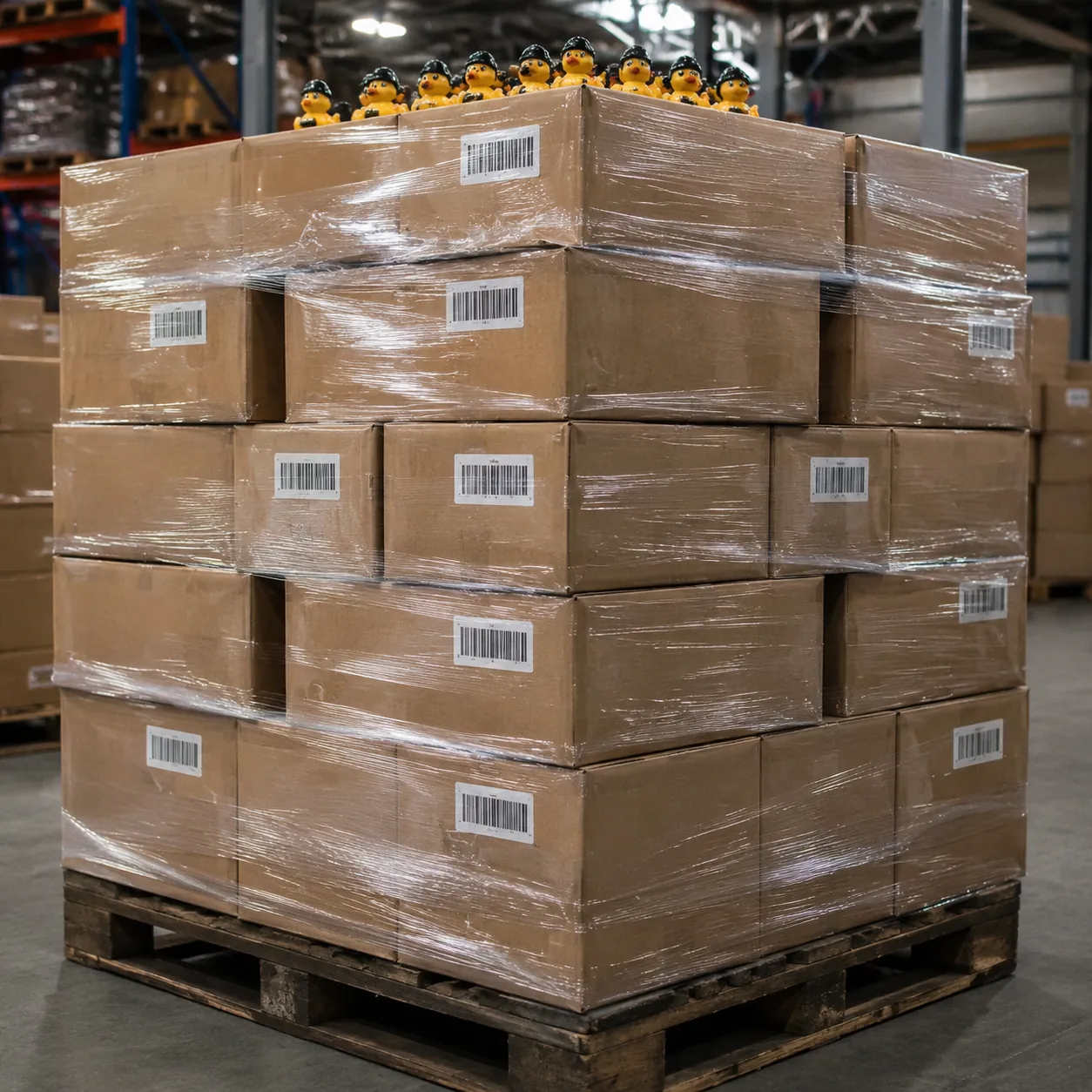
At the 3,000 MOQ tier, per-unit cost drops to $0.60 to $0.75 FOB with full customization. The savings come from production line efficiency — the supplier runs one continuous batch instead of restarting for smaller lots. If your forecast supports volume, the 3,000 MOQ slot is where you land your landed cost below $0.70 per duck.
FOB vs. EXW: Matching Your Logistics Capability
FOB (Free on Board) pricing includes manufacturing, factory-to-port trucking, and export customs clearance in the origin country. For a U.S.-based souvenir shop buyer, FOB is the pragmatic default — one per-unit price covers the product and the export leg. The $0.40 to $0.90 range quoted across this guide assumes FOB terms. You hand off risk at the port of loading and the supplier handles documentation.
EXW (Ex Works) pricing strips out all post-factory costs. The quote is 8-12% lower than FOB, but you own the entire chain: freight forwarding, container booking, export declaration, and inland haulage. For a first order of 1,000 units, the difference is roughly $60 to $100 — not enough to offset the time cost of arranging freight from scratch. EXW makes sense only if you already hold a freight account or are consolidating multiple supplier shipments into one container. Otherwise, FOB is cheaper in soft costs.
Why Mystery Assortments Kill Retail Margins
Some suppliers push “mystery assortments” — mixed colors, random styles, no control over the breakdown. The pitch is a lower per-unit price. The reality is unsellable inventory on your shelves. A souvenir shop near a coastal town moves pastel and aqua ducks. A shop near a mountain pass sells earth tones and matte finishes. Mystery assortments guarantee you pay for units you cannot move at full price.
The deeper problem is material inconsistency within the same box. Some ducks use UV-stabilized PVC, others do not. You have no batch-level traceability. When a customer buys two ducks from your rack and one fades on their dashboard while the other holds color, they blame your shop — not the supplier. That reputation damage costs more than any per-unit discount on an assortment. If you are looking to buy rubber ducks for jeeps in bulk for resale, insist on single-SKU, traceable production batches.
Packaging Ratios: Singles, Sets, and Shelf Economics
Individually polybagged ducks consistently outperform bulk-packed units in souvenir rack displays. Tourists perceive a single wrapped duck as gift-ready and hygienic — critical for a product destined for a car dashboard. Each polybag adds about $0.03 to $0.05 to unit cost but supports a $1.50 to $2.00 retail premium. For shops sourcing wholesale jeep ducks for souvenir shops, singles are the standard format for general foot traffic.
Sets of three reduce packaging cost per duck to $0.01 to $0.02 and cut shipping weight by roughly 15% versus three individually wrapped units. The trade-off is a higher retail price point — $6.99 to $9.99 per set — which creates friction for impulse buyers. Sets work best when displayed near checkout counters where Jeep club members or repeat customers are buying intentionally. For mixed tourist foot traffic, singles at $4.99 move faster and generate more unit sales per shelf facing.
Vetted Suppliers vs. Marketplaces
Generic sourcing from Amazon or Alibaba saves you upfront cash but costs you repeat customers within weeks when your ducks turn chalky white on a dashboard.
Why Generic Platforms Fail in This Specific Use Case
The standard retail supply chain is built for bath toys, not dashboard decor. When you buy “wholesale jeep ducks for souvenir shops” from a generic platform like Amazon or Alibaba, you are pulling from inventory designed for 5-minute tub sessions. The PVC used in those products is not formulated for sustained UV exposure. Internal production data shows that standard PVC (without UV stabilizers) begins to exhibit surface oxidation — turning chalky and brittle — after roughly 80 hours of direct sunlight. On a Jeep dashboard in Arizona or Texas, that is approximately 10 to 14 days. Your customer leaves a negative review. You eat the return. The shop’s reputation absorbs the damage.
The second failure point is lead time consistency. A marketplace seller listing 500 units in stock today may vanish tomorrow when their upstream supplier runs out of material. If you need 1,000 units for a seasonal tourist rush, you cannot afford to gamble on a seller who dropships from a third-party warehouse. B2B suppliers who operate their own molding lines and hold material inventory can guarantee a shipping window. Marketplaces cannot.
The Verification Checklist for Jeep Duck Suppliers
Before placing a bulk order, require these three documents:
- Material Safety Data Sheet (MSDS) for PVC Compound: This confirms the absence of phthalates (DEHP, DBP, BBP) and heavy metals. A standard EN71 or ASTM certificate covers toy safety but does not detail the plasticizer profile. Request the specific MSDS for the batch you are buying. If the supplier hesitates, walk away. That hesitation signals they are buying mixed stock from a commodity resin trader, not a controlled formulation.
- UV Resistance Test Report (Accelerated Weathering): The relevant test is ISO 4892 or ASTM D4329 — a Xenon-arc accelerated weathering test. A “UV-resistant” claim means nothing without a report showing the specimen retained at least 85% of its original color after 300 hours of exposure. The specific stabilizer package used in the “pvc jeep ducks manufacturing specs” should be UV-8 or UV-10 grade. Anything lower will fade. Internal testing shows that UV-8 stabilizers extend visual lifespan to approximately 12 months of daily dashboard exposure; standard PVC fails in 2 weeks.
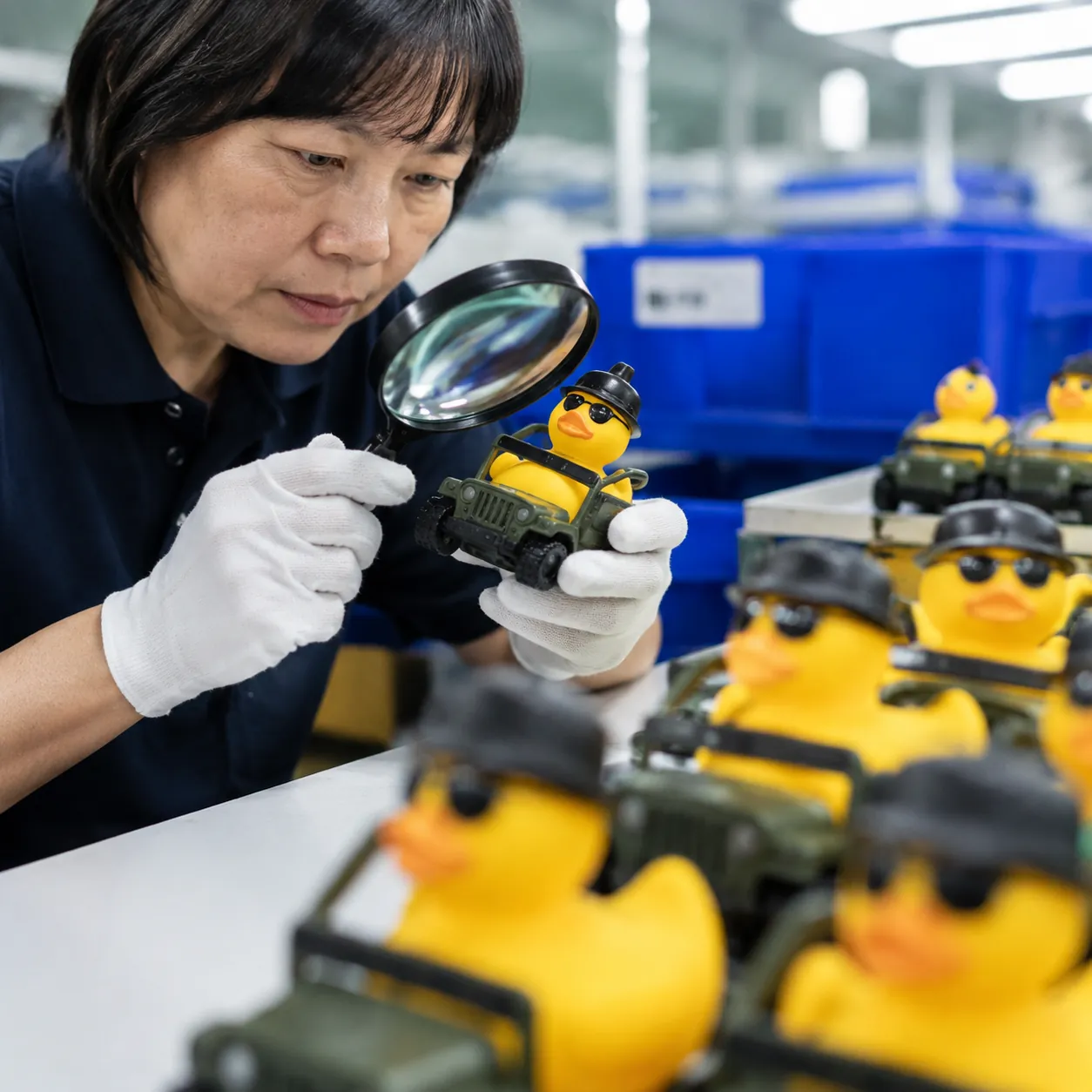
- Molding Precision Verification: Send the supplier a CAD drawing or physical sample of the desired duck shape. Ask them to produce a pre-production sample and provide caliper measurements. The acceptable tolerance for a 5cm to 7cm duck is ±0.2mm in the X and Y axes. Anything wider results in visible asymmetry in the eyes, beak, and wings — a dead giveaway of poor tooling that cheapens the perceived value of your product.
Color Matching: Where Budget Suppliers Consistently Fail
If you order “custom logo jeep ducks bulk”, the expectation is Pantone-accurate color reproduction across every unit and every batch. Marketplace sellers typically use a masterbatch from a generic pigment supplier. The result is batch-to-batch color drift. Batch 1 may be Pantone 293 C (a saturated blue); Batch 2, re-ordered three months later, shifts to Pantone 294 C (visibly darker and less vibrant). For a souvenir shop selling on visual appeal, this inconsistency kills shelf coherence. A professional B2B supplier locks the color formula in their compounding records. They match it to the Pantone standard using a spectrophotometer, usually targeting a dE (color difference) of ≤1.0. Fly-by-night sellers cannot afford this equipment or the labor to maintain it.
The solution for the “jeep ducking merchandise supplier” search is straightforward: treat the supplier relationship as your insurance policy. A vetted B2B partner gives you documented specs, batch consistency, and real UV protection. A marketplace gives you a listing page and a prayer. For a deeper breakdown of how to evaluate factory capability — including mold inspection videos and third-party audit templates — see the supplier comparison framework available on the custom product page.
Conclusion
Sourcing Jeep ducks through generic channels risks a two-week fade that kills your margin and reputation. UV-stabilized PVC, custom tags, and individual polybag packaging aren’t optional—they are the difference between a $4.99 retail hook and a dusty shelf item. At $0.45–$0.85 FOB, the math works only if the duck survives dashboard exposure.
Check your current supplier against UV-8 stabilizer specs and tag options. Then review LZengo’s custom rubber duck collections to see how low MOQs and proven branding fit your next souvenir order.
Frequently Asked Questions
How to get a quote for How to Source Rubber Ducks For Jeeps for souvenir shops?
You can leave your detailed requirements using the inquiry form below, and our sales team will provide a comprehensive quotation along with product specifications within 24 hours.
Can I request samples before bulk orders?
Yes, we highly recommend testing samples first. Please contact our support team to arrange sample shipments to verify the product quality before confirming your large volume purchase.
Related B2B sourcing page: For production options, MOQ and custom project support, see our Jeep rubber ducks page.