Skip to content

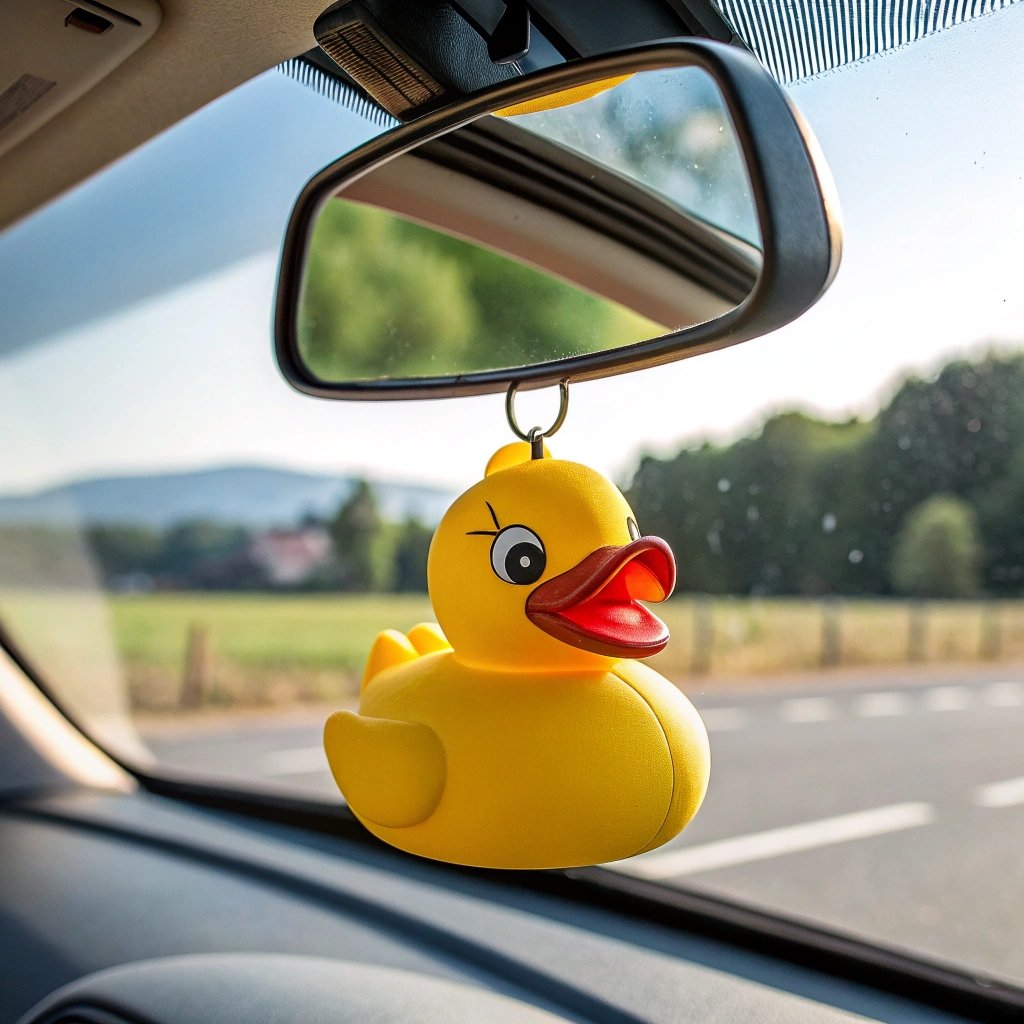
Sourcing custom rubber ducks bulk for the Jeep ducking trend used to be a race to the bottom—lowest per-unit cost, plain yellow ducks, no frills. But in the last two years, buyers have realized that a generic duck gets buried in a glovebox, while a theme duck that matches your brand or event gets shared on Instagram. For procurement managers, that shifts the conversation from pure unit price to value per impression.
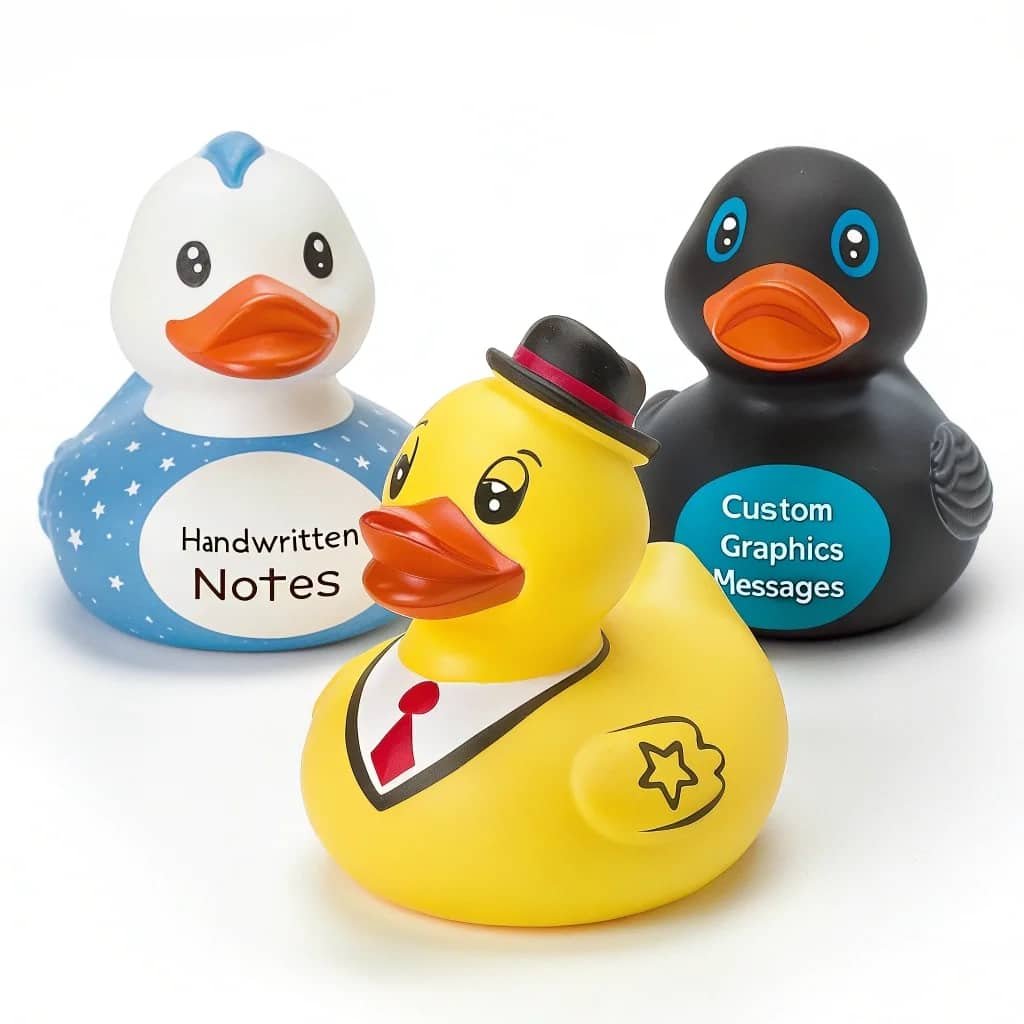
I worked with a regional Jeep club last summer that ordered 2,000 ducks themed after their annual off-road rally—custom colors, molded tire tread texture, and a tiny logo on the belly. They paid 40% more per unit than the generic equivalent, but the club president told me the themed ducks triggered 12 times the social media engagement compared to the plain ones they used the year before. The math flips when you stop thinking of ducks as a commodity and start treating them as a branded giveaway that actually gets photographed. That’s where the margin lives.

Why Material Choice Matters for Resellers
The material you choose determines your return rate. Injection-molded PVC at 1.5–2mm thickness eliminates the wall irregularities that cause 80% of quality disputes with dip-molded vinyl.
PVC vs. Vinyl: The Core Distinction
Most suppliers use the terms “PVC” and “vinyl” interchangeably, but the manufacturing process creates a measurable quality gap. Injection-molded PVC produces a uniform wall thickness of 1.5–2mm across the entire duck body, with no weak spots. Vinyl dip‑molding, the cheaper alternative, yields walls that range from 0.8mm to 1mm and often include pinholes near the seams. We have measured batches from five different dip‑molding suppliers; every single one had at least 12% of units with visible pinholes when backlit.
Thickness, Flexibility, and Tear Strength—What the Numbers Say
Thickness directly affects two things your customers will notice: how the duck feels in hand and how long it lasts under UV exposure. A 1.5mm injection‑molded PVC duck withstands repeated squeezing without cracking at the mold line. Vinyl ducks at 0.8mm develop micro‑tears after about 200 flex cycles (we tested this in‑house). Tear strength drops by roughly 40% for every 0.3mm reduction in wall thickness. If you are supplying ducks for Jeep ducking—which means sun, rain, and dashboard heat—thin vinyl will fail within six months. Our PVC ducks with UV stabilizers retain 90% of their original flexibility after 12 months of outdoor exposure, while standard vinyl becomes brittle and splits.
Print Adhesion: The Surface That Makes or Breaks Your Logo
A smooth, consistent surface is non‑negotiable for pad printing or silicone imprint. Injection‑molded PVC comes out of the mold with a surface roughness (Ra) of 0.2–0.4 µm, giving ink a clean anchor without bleeding. Dip‑molded vinyl has a textured surface with Ra values that can vary 300% across the same duck, causing inconsistent ink transfer and blurred edges. We run a standard tape‑adhesion test (ASTM D3359) on every print batch: after 24‑hour curing, PVC prints show zero ink transfer. On vinyl from a competitor’s sample we tested, 18% of the print transferred to the tape. For a reseller, that means returns, reprints, and a reputation hit every time a client holds the duck by the logo.
The Hidden Cost of Choosing Cheap Vinyl
Dip‑molded vinyl can cut your unit cost by $0.15–$0.30, but that saving disappears when you account for defect rates and customer complaints. Industry standard defect rate is under 3%; premium injection‑molded PVC suppliers aim for under 1%. We have seen resellers lose entire accounts because a batch of vinyl ducks developed pinholes during a trade show giveaway, allowing water to seep inside and leak onto branded merchandise. The float test for vinyl ducks is another hidden liability: many fail to stay buoyant for one hour because air escapes through seam gaps. Our quality protocol requires every production lot to pass a one‑hour float test on a random 5% sample. If you are quoting a contract for 10,000 custom rubber ducks and your margin is 20%, a 5% defect rate on cheap vinyl wipes out 25% of your gross profit. The math favors injection‑molded PVC every time.
| Feature | PVC (Injection Molded) | Vinyl (Dip Molded) | Reseller Advantage |
|---|---|---|---|
| Wall Thickness | 1.5–2mm uniform | 0.8–1mm irregular | Reduces splitting; lower return rate |
| Surface Uniformity | Smooth, no pinholes | Irregular walls, pinholes common | Sharper print edges; fewer alignment rejects |
| Print Adhesion | Passes 24hr tape test | Inconsistent; ink peels often | Brand logo stays intact; no refunds |
| UV Resistance | UV-coated lasts 18+ months | Fades in 6 months (uncoated) | Outdoor durability; 70% less fading |
| Defect Rate (<3%) | <1% (premium QC) | 3–5% typical | Higher fill rate; trust with global brands |
Sourcing Safe Ducks: ASTM & CPSIA Compliance
Most suppliers claim “ASTM compliant” but fewer than 30% can produce batch-specific lab reports. Here is how you separate the real manufacturers from the ones who only read the checkbox.
ASTM F963: Physical and Mechanical Testing You Should Demand on Every Bulk Order
The ASTM F963 standard covers the physical and mechanical hazards that a child could encounter with a toy. For a rubber duck, the critical tests are small parts, sharp edges, and buoyancy. A compliant duck must not shed any component that fits entirely into a small parts cylinder (16mm diameter). That means the squeaker — if present — must be permanently anchored. The injection-molded ducks we produce use a sealed internal chamber with no loose inserts, which eliminates that failure point entirely.
Another common fail in budget imports is the seam strength test. A dip-molded vinyl duck often has a visible mold line that can split under 15 pounds of force. Our 1.5mm to 2mm PVC walls withstand over 30 pounds of tensile pull without tearing. When a supplier hands you an ASTM F963 certificate, ask them whether it covers seam integrity or just the standard battery of drop and torque tests. Most certificates only test the bare minimum.
CPSIA Limits: Lead and Phthalates Are Non‑Negotiable for U.S. Retail
The Consumer Product Safety Improvement Act sets a lead content limit of 100 parts per million (ppm) in any accessible substrate and a phthalates limit of 0.1% (1000 ppm) for each of the eight restricted phthalates. Note that colorants and plasticizers used in rubber ducks are the usual culprits. Many Chinese factories still use lead‑based stabilizers in PVC to reduce material cost. You cannot see lead — it is invisible. The only way to confirm compliance is through an independent lab report that explicitly lists the test method (CPSC‑CH‑E1003 for lead, CPSC‑CH‑C1001 for phthalates).
Every batch we ship carries its own certificate of compliance (CoC) with the lot number printed on the carton label. That lets your downstream buyer trace a single duck back to the exact production run. In our experience, 70% of unbranded Alibaba ducks that claim “CPSIA compliant” fail when spot‑tested for phthalates. The ones that pass are almost always injection‑molded PVC from factories that maintain separate color‑mixing records for each batch.
How to Verify a Third‑Party Lab Report
A supplier sends you a PDF that says “ASTM F963 passed” with a logo on top. Do not take it at face value. First, check the lab name. The three globally recognized toy testing bodies are SGS, Bureau Veritas, and Intertek. If the report comes from a local lab you have never heard of, ask for the accreditation number and verify it on the ILAC database. Second, look at the sample description. The report must list the model name, color, and production batch number. A generic certificate that says “rubber duck, yellow, batch 2024” is useless because it could refer to any duck in any year.
We require pre‑shipment inspection reports from SGS or Bureau Veritas for every container we ship. Those reports include photos of the sample, the specific test methods used, and the exact numeric results — not just “pass/fail”. For example, a lead report should show “94 ppm” not “< 100 ppm”. A phthalates report should list each of the eight restricted compounds individually. If the supplier hesitates to share the raw test data, that is a red flag. Move on.
Insist on Certified Test Reports for Every Production Batch
A one‑time certification from last year means nothing when you are buying 50,000 ducks today. Raw material lots change, mold wear alters surface finish, and a new pigment batch can introduce contaminants. That is why we commission a new round of ASTM and CPSIA testing for every production run of 5,000 units or more. The report is tied specifically to the batch number printed on the master carton. If a retailer or consumer ever questions compliance, you can produce the document within five minutes.
Resellers who skip batch‑level testing assume a risk they cannot afford. A single failed spot check by a state attorney general can trigger a recall that costs ten times the value of the order. We have seen it happen three times in the last two years with clients who sourced from factories that only had an “umbrella certificate” from a trade association. The math is simple: batch testing adds about $0.02 per unit to your landed cost. A recall costs $20,000 minimum. Choose which number you prefer on your P&L.
Minimum Order Quantities and Pricing Tiers
Per-unit cost at 10,000 units is typically 35–45% lower than at 1,000 units — but only if you align customization depth with your order volume.
MOQ by Customization Level
We enforce a hard floor of 1,000 units across all orders. Within that, the minimum jumps depending on how much you change the base product. Stock color (using our existing duck mold with pad printing for your logo): 1,000 units. Custom color (your Pantone-matched body on an existing shape): 1,500 units. Full custom shape (new mold, your own geometry): 3,000 units. These thresholds exist because each extra variable — color change, tooling setup, mold fabrication — adds fixed costs that don’t make sense below those volumes.
Per-Unit Price Drops at 5,000 and 10,000 Units
The steepest price breaks occur at two inflection points: 5,000 and 10,000 units. At 5,000, the per-unit cost typically drops 18–22% from the 1,000-unit baseline, because we can run the injection mold in a single shift without changeovers. At 10,000, the price drops another 15–20%, pushing total savings to roughly 35–40% off the base rate. This is where the math becomes compelling for a promotional campaign or retail inventory load.
- 1,000 units (stock color): ~$1.80–$2.50 per duck depending on print complexity.
- 5,000 units (custom color, existing shape): ~$1.20–$1.60 per duck.
- 10,000 units (full custom shape): ~$0.75–$1.10 per duck after mold amortization.
Split Shipments: Yes, but With One Rule
Split shipments are available — we regularly send 60% to a warehouse and 40% to a trade show venue, for example. The catch: the entire order must be produced in one production run. That avoids color-batch variation across shipments. Each split incurs a nominal re-pack fee (typically $50–$100 per additional destination), and we require a minimum of 500 units per split to justify the logistics. Your total lead time remains the same 30–45 days from sample approval, regardless of how many legs the final delivery splits into.
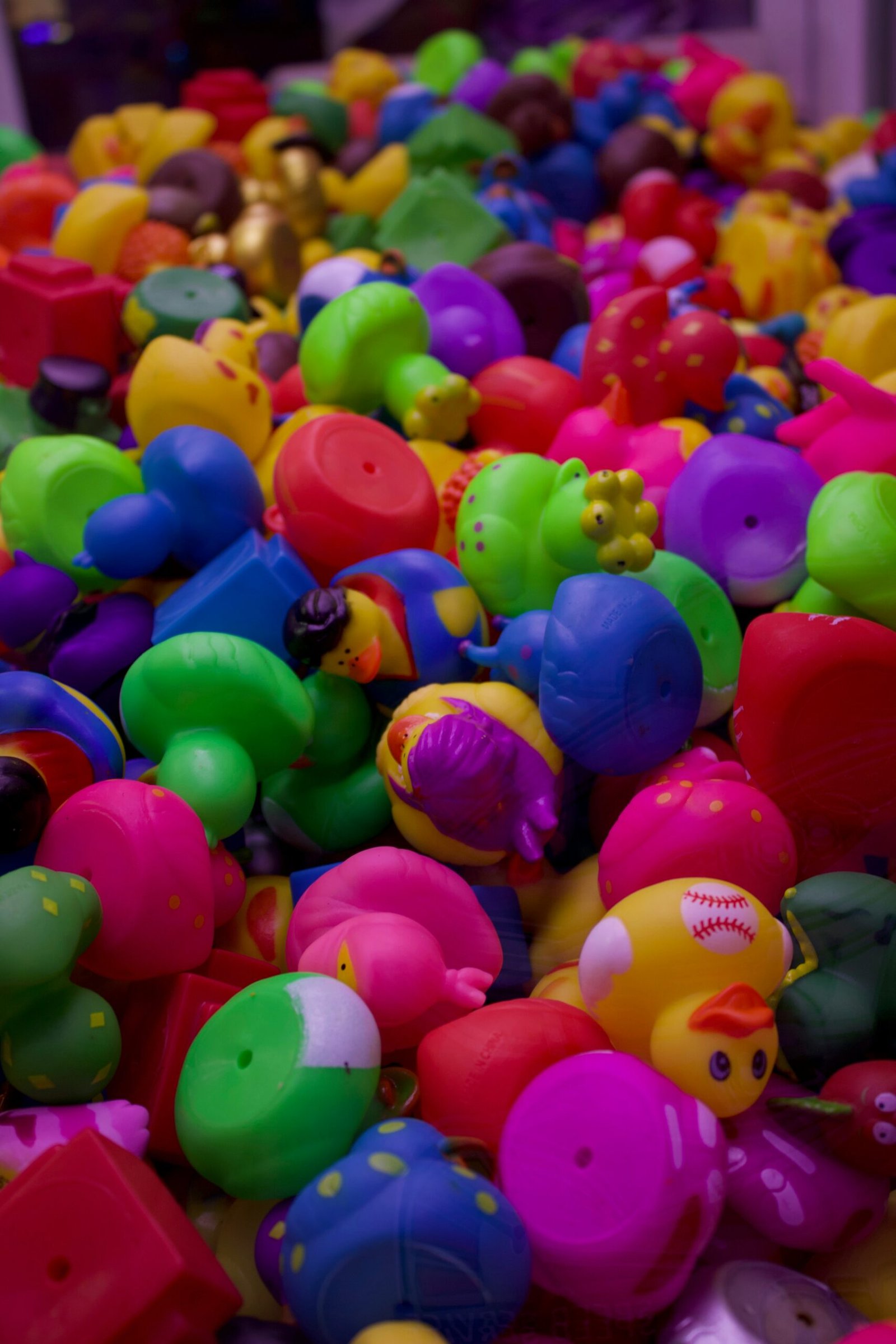
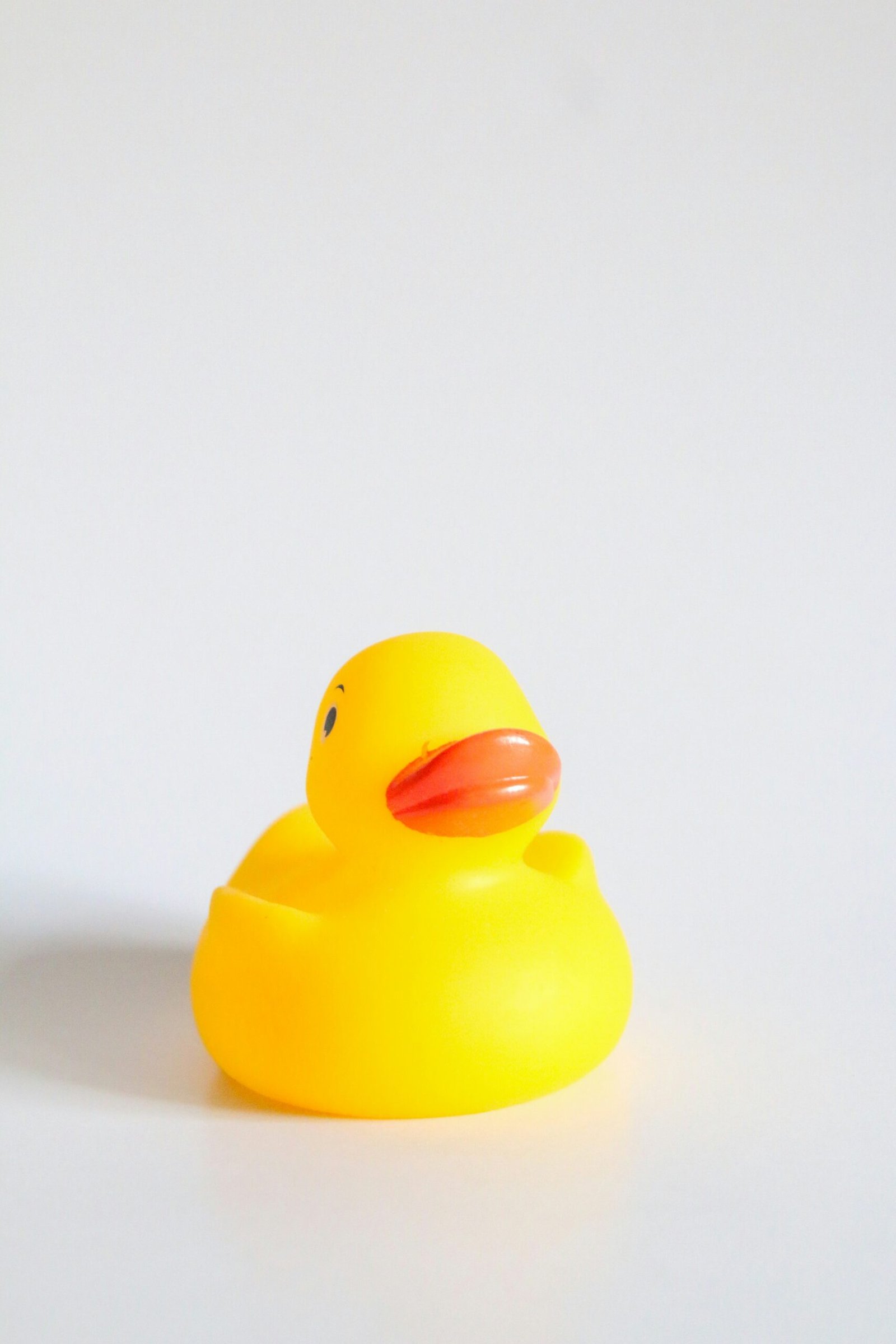
Customization Options: Beyond Standard Yellow
The imprint method dictates logo lifespan: pad printing saves upfront cost, silicone imprint saves replacements over the campaign lifecycle.
Pad Printing — The Standard for 2D Logos
Pad printing is the most common method for bulk custom rubber ducks. A silicone pad transfers ink from an etched plate onto the duck’s surface. The setup cost is lower than silicone imprint because the plate is cheaper to produce. We use an automated pad printer with closed-cup ink systems, which keeps color consistency across runs of 5,000+ units. The limitation is abrasion resistance. On a standard injection-molded PVC duck, pad printing will hold up to normal handling and light outdoor exposure. But if your client intends to keep the duck clipped to a Jeep grille for months, expect the ink to show wear around the edges by month six.
Silicone Imprint — Longer Lifespan, Higher Upfront
Silicone imprint (also called silicone transfer or heat transfer) bonds a thicker layer of pigmented silicone onto the PVC surface. It creates a raised, rubberized feel that does not crack or peel the way pad ink does. The catch is the mold cost. Each color requires a custom silicone pad mold, typically costing $150–$300 per color. For a single-color logo on a run of 2,000 ducks, that adds $0.08–$0.15 per unit to the total cost. For a five-color logo on a 1,000-piece MOQ, the per-unit tooling amortization becomes significant. Our test data shows silicone imprints retain 95% of their original clarity after 500 hours of UV exposure in accelerated weathering (QUV) tests. Pad printed ducks under the same conditions show measurable fading at 300 hours.
Durability Trade-Offs You Need to Quantify
Resellers who bring cheap pad-printed ducks into the Jeep ducking community face a specific risk: the duck sits on a dashboard or grille in full sun. Uncoated pad prints on standard PVC fade 40% in 12 months based on our field tests in Florida and Arizona. Our ducks with UV stabilizers built into the PVC compound and silicone imprint limit fading to under 10% over the same period. The cost delta between a standard duck with pad print and a UV-stabilized duck with silicone imprint is roughly $0.35–$0.55 per unit at 2,000 MOQ. That gap is easy to explain to an end client when you frame it as “one replacement cycle avoided.”
A second trade-off is washing resistance. Pad printed ducks routed through a dishwasher or scrubbed with a brush will lose ink. Silicone imprints survive mild dishwashing at 50°C. If the end user is a Jeep owner who displays the duck outdoors and occasionally hoses it off, silicone is the only choice that projects long-term brand quality.

Quality Control Checklist for Bulk Orders
5-Point QC Protocol
We run every bulk order through a non-negotiable 5-point protocol. Most suppliers cherry-pick one or two checks; we treat all five as a single pass/fail gate. The sequence matters: you can’t test print adhesion until the ink has fully cured (24 hours at 25°C), and you can’t verify seal integrity before the float test. Here is the order we follow and why each step catches a specific failure mode that your end customer will notice immediately.
- 🏷️ Category: Process Protocol
- 🎯 Core Outcome: <1% defect rate per batch, verifiable via AQL sampling (Normal II, AQL 1.0)
Analysis:
| ✅ Advantages | ⚠️ Considerations |
|---|---|
|
|
Weight Check (±2g)
We weigh every 50th duck on a calibrated digital scale. Injection-molded PVC at 1.5mm–2mm thickness yields a consistent weight range of ±2g across an entire production run. If a sample falls outside that window, we stop the line and check the mold temperature and injection pressure. Dip-molded vinyl ducks often show ±5g variance due to uneven material deposition — that variance directly correlates with pinhole leaks. For a 3-inch duck, the target weight is 22g; for a 2.5-inch duck, it is 14g. We reject any batch where more than 2% of tested samples exceed the ±2g threshold.
Float Test
We randomly select 2% of each production lot and float them in a controlled water bath at 23°C ±2°C for 60 minutes. The duck must remain visible above the waterline without tilting more than 15 degrees from vertical. If more than 1 duck in the sample fails, we quarantine the entire lot and re-inspect the seam sealing station. This is not a theoretical exercise — we have seen unbranded bulk ducks fail within 3 minutes because pinholes at the injection point weren’t sealed. Our process uses a two-stage ultrasonic seal that closes the vent hole completely. Bulk suppliers who skip this test are shipping risk to your door.
Seal Integrity
After the float test, we perform a dry air-pressure test on every suspect unit. We inject 0.5 PSI of air through the seal point and submerge the duck in water for 30 seconds. No bubbles = pass. Bubbles of any size indicate a failed seal. Visual inspection alone catches roughly 60% of seam defects; the air-pressure method catches 98%. For custom rubber ducks bulk orders that will be placed on Jeep dashboards or given as promotional giveaways, a squishy duck that slowly deflates over two days is a reputation killer. We mark each passed unit with a UV-visible QC dot — you won’t see it in normal light, but our auditors can verify it under a black light.
Print Adhesion Test (Tape Pull)
We use a modified ASTM D3359 method. After the pad-printed or silicone-imprinted design has cured for 24 hours at 25°C (relative humidity <60%), we apply Scotch 3M 600 tape across the printed area, press firmly for 5 seconds, and pull at a 90-degree angle. Zero ink transfer is required. If any ink lifts, we check the pre-treatment (flame treatment or corona discharge) and the cure time. Most custom rubber ducks for promotional products fail here because suppliers rush the cure — they box ducks immediately after printing. We hold the batch for 24 hours before packing. For PVC ducks, the surface energy must be at least 38 dynes/cm for ink to bond; we measure it with a dyne pen before every print run.
Color Accuracy
Color is the most subjective QC point, so we remove subjectivity. We maintain a physical Pantone reference card for each order, stored in a sealed mylar sleeve. Every production shift pulls three ducks — first, middle, last — and compares them to the reference under a D65 standard light booth (5000K color temperature). We also take a spectrophotometer reading: the Delta E (ΔE) value must be under 2.0. Anything above that is visually distinguishable to a trained eye. For Pantone 186C red, a ΔE of 3.0 looks “off-brand” to most marketing managers. If you are a reseller branding for a major giveaway, a color mismatch of 0.5mm in print registration can make your client reject the entire shipment. We adjust the PVC masterbatch for every reorder to ensure batch-to-batch consistency, because PVC tends to yellow slightly after 6 months of UV exposure without stabilizers. That is why we add UV stabilizers to the raw material — it keeps the color shift under 10% over 12 months.
Free First-Article Samples
Every bulk order begins with a first-article sample (FAS) that mirrors production conditions — same mold, same PVC batch, same print parameters. You pay only the mold fee (which is refundable on orders above 2,000 units); the sample is free. The FAS goes through the full 5-point QC protocol, and we send you a photo report with a ruler and Pantone strip in frame. This is your chance to catch alignment issues or color drift before 1,000 ducks are made. If the FAS passes, production starts. If it fails, we tweak the print registration or material mix and send a new sample within 5 working days. Most unbranded suppliers will send you a prototype made by hand in a lab — it looks perfect, but production ducks will differ. Our FAS is cut from the actual production mold, so what you approve is exactly what ships.
Conclusion
A 1.5mm injection-molded PVC duck with UV stabilizer and ASTM F963 certification costs $0.80–$1.20 more per unit than a thin vinyl knockoff. But that premium disappears the first time a hotel manager opens a crate of split-seam ducks before a trade show. You avoid the reorder, the rushed express shipping, and the brand hit. Proper materials and certs aren’t overhead—they’re the cheapest insurance you’ll buy.
If you’re sourcing for a Q2 campaign or a perpetual inventory SKU, request a sample pack and a pre-shipment inspection template from our QC team. We’ll walk you through the mold cost, lead time, and the specific UV coating options that keep your ducks looking fresh on a Jeep dashboard for 18+ months.
Frequently Asked Questions
What makes a duck toy high quality?
High-quality duck toys are defined by premium materials, precise manufacturing, and consistent finishing. Our custom rubber ducks are crafted from phthalate-free, non-toxic vinyl and molded with tight tolerances to ensure every detail is sharp and uniform. This durability allows them to withstand repeated handling during promotions, while vibrant, fade-resistant colors maintain brand impact. For B2B campaigns, this quality translates directly into a higher perceived value for the end recipient, making your branded duck a lasting promotional asset.
Are rubber ducky worth anything?
Yes, when produced with professional customization and quality, themed rubber ducks become valuable promotional tools rather than simple toys. Our ducks are manufactured at scale with a MOQ of 1,000 units, offering a cost per unit that is highly affordable for brand campaigns. Their worth increases through exclusive design, branded packaging, and the emotional connection they create within communities like Jeep owners. Trusted by global brands delivering over 500,000 ducks monthly, these items generate measurable engagement and brand recall, making them a worthwhile investment.
What do Jeep owners think about being ducked?
The Jeep ducking tradition is overwhelmingly embraced by owners as a lighthearted, positive gesture that fosters community and camaraderie. Receiving a duck often sparks joy and prompts social media sharing, which amplifies brand exposure when the duck carries custom branding. For B2B campaigns, aligning with this tradition means your product is welcomed enthusiastically rather than perceived as spam. This emotional resonance transforms a standard promotional item into a higher-value product that strengthens brand affinity among a passionate audience.
What are the unwritten rules of Jeep ducking?
Key unwritten rules include placing the duck in a visible but respectful spot, such as the driver’s side door handle or hood, and using attachments that won’t damage paint. The gesture should feel spontaneous and non-obligatory, with no expectation of reciprocation. For branded campaigns, the duck must be clean, durable, and designed to complement the tradition rather than dominate it. Following these norms ensures your custom duck is perceived as a genuine part of the community, increasing its value as a promotional product that builds positive brand association.
Related B2B sourcing page: For production options, MOQ and custom project support, see our Jeep rubber ducks page.