Skip to content
Sourcing gift rubber ducks for a holiday program looks straightforward until you’re the one holding the bag when 5,000 units show up looking nothing like the proof. I’ve seen brand managers approve a rush order from a general promo shop only to get ducks with off-register logos and a finish that peels before the gift bag is opened. The problem isn’t finding a supplier—it’s finding one that treats your holiday campaign as more than a SKU number.
Most buyers default to retail-packaged bulk ducks on Amazon or a broad-line distributor and end up paying $0.60–$1.00 per unit for stock designs that have zero brand alignment. Direct factory pricing with molded logos actually costs less per unit for orders above 2,000, even after you amortize the tooling. The catch is knowing which factory has pre-engineered holiday molds—Santa, reindeer, snowman—that let you skip the 4–6 week tooling wait and cut lead time to under two weeks. That’s the difference between a gift that lands before Thanksgiving and a scramble to explain delays to your CEO.
Holiday Duck Sourcing Options
Stock ducks cap your brand to a flat print.
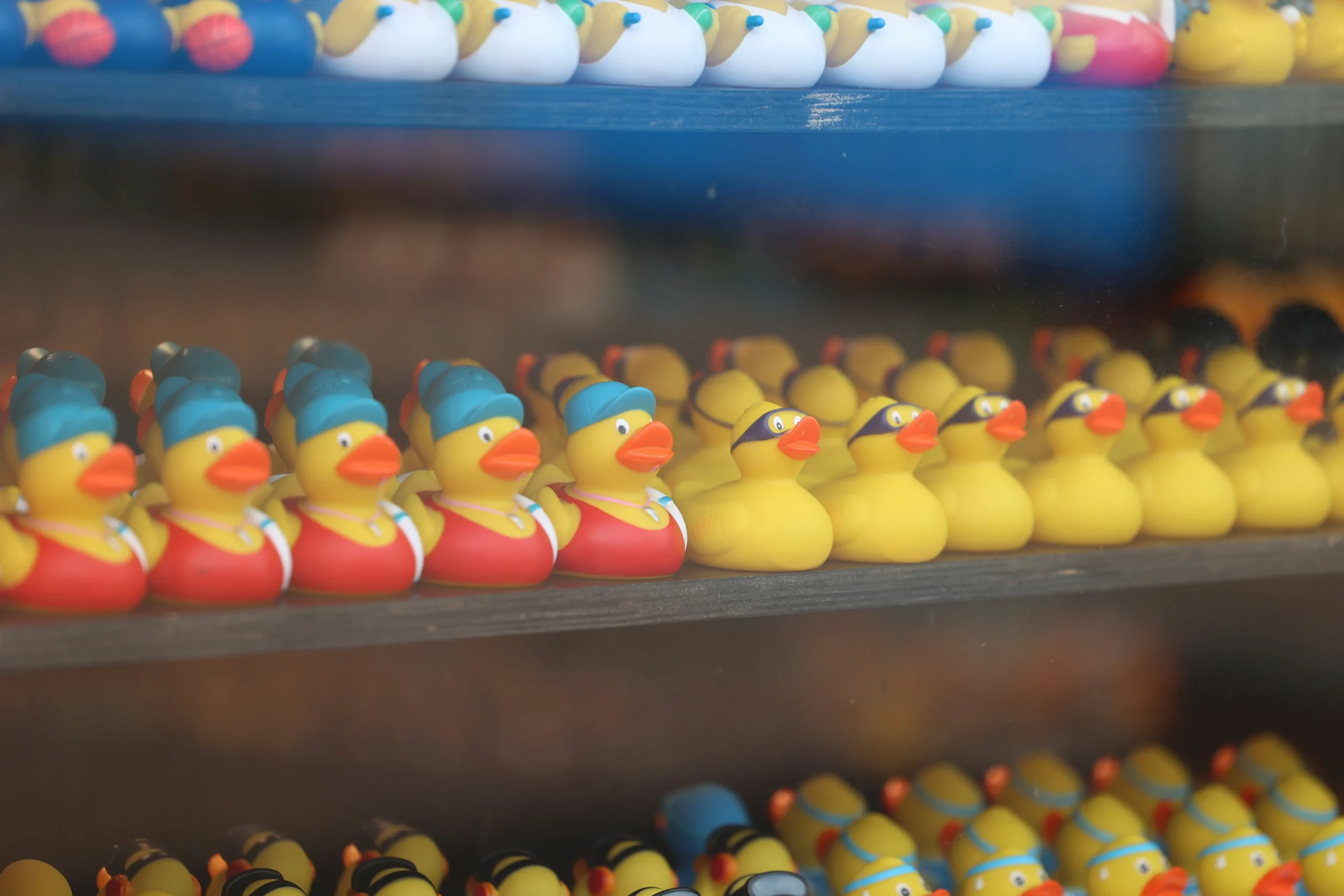
Most B2B buyers start by searching for wholesale stock holiday ducks — Santa ducks, snowman ducks, reindeer ducks. These are pre-molded designs sitting in a supplier’s catalog. You pick from their library, pay a low per-unit price, and get pad printing to stamp your logo on the side. No tooling fees. No 6-week mold development. The trade-off: your brand is a surface-level addition, not part of the product’s identity.
Fully custom-molded designs flip that. You commission a new steel mold — $300 to $800 — and your logo or holiday character gets sculpted directly into the duck’s 3D form. The result: a branded rubber duck where the logo isn’t printed on the belly; it’s the duck’s hat, scarf, or body shape. That difference drives social shares. A flat print gets glanced at. A 3D branded duck gets photographed and posted.
- Stock duck timeline: Pick from catalog, approve artwork, pad print. Typical lead time: 10–14 days production plus shipping. No mold wait.
- Custom mold timeline: Design, mold fabrication, sample approval, production. Expect 4–6 weeks before the first duck is made.
- Branding ceiling: Pad printing on stock ducks limits logo detail — line widths below 0.5 mm risk smudging. Molded logos hold crisp edges down to 0.3 mm.
- Cost crossover: At 2,000 units, amortizing a $500 mold adds $0.25 per duck. But direct factory pricing on custom-molded ducks often beats retail-packaged stock duck pricing by $0.10–$0.20 per unit. The total cost per duck can be lower on custom.
Lzengo’s pre-made holiday mold library eliminates the choice entirely. Instead of forcing you into either a stock duck with limited branding or a 6-week custom mold wait, we offer pre-engineered seasonal molds — Santa, reindeer, snowman, elf — that accept your 3D logo as a mold insert. You get the branding depth of a custom mold with the lead time of a stock duck: 7–10 days production. The mold fee is waived because the base shape already exists. This is the gap that most Amazon listings and general promo suppliers don’t mention — because they don’t offer it.
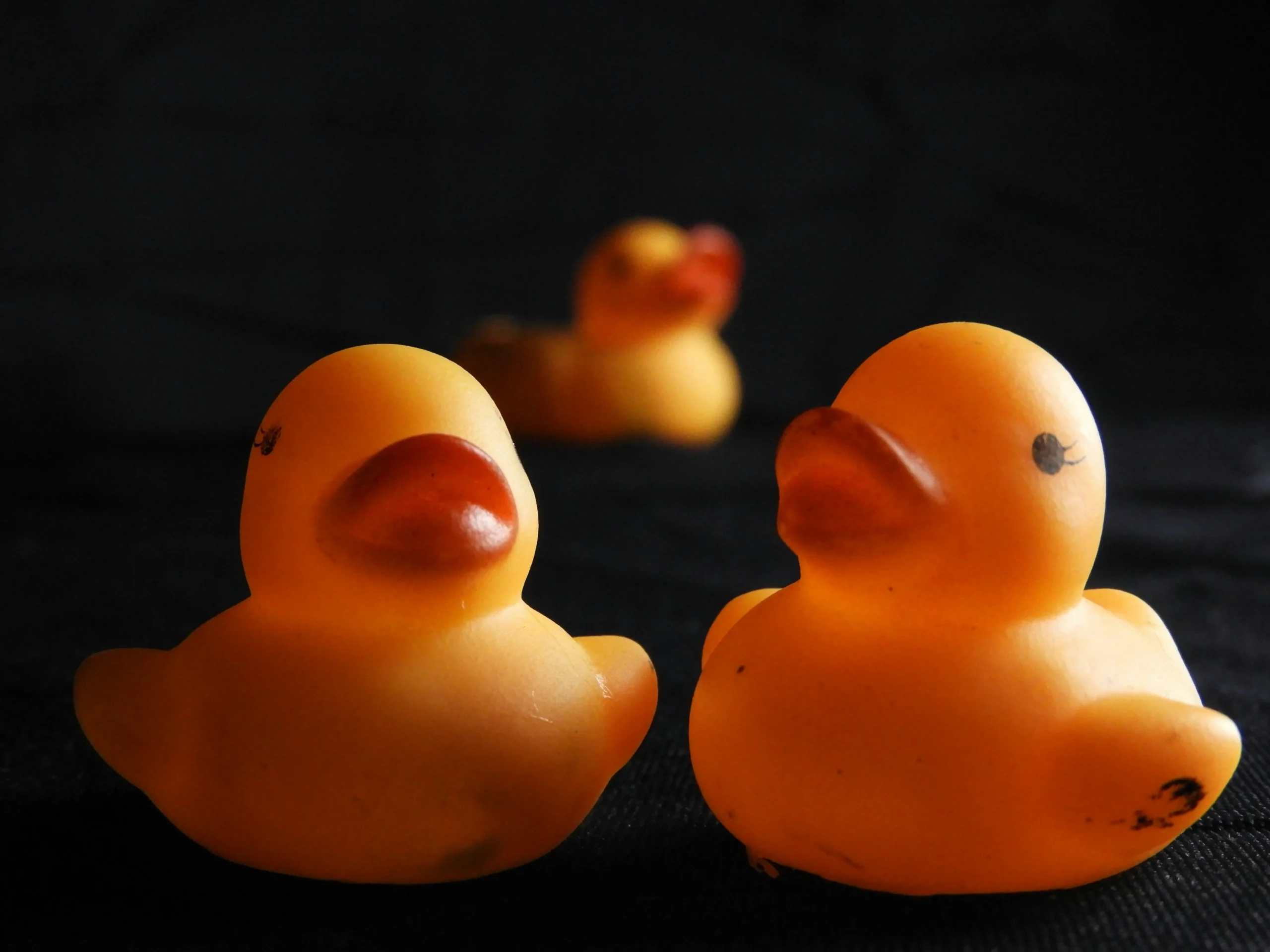
Custom Branding on Holiday Ducks
Pad printing costs $0.05/unit.
Pad printing is the standard for seasonal ducks. At $0.05 per unit, you get crisp, single-color logos on any duck base color. The catch: line width minimum is 0.5 mm. Fine text or intricate holiday patterns will blur. Stick to bold logos — a Santa hat, a snowflake, a brand mark — and supply vector art early. Pantone matching for holiday reds and greenss is standard, but specify hex values at order placement. Approvals take days if you skip this step.
Molded-in 3D logos cost three times more — $0.15–$0.25 per unit — but deliver a premium tactile experience. The logo becomes the duck. No peeling, no fading, no warranty callbacks. For holiday campaigns where the duck is the gift, not just a giveaway, molded logos justify the cost. The trade-off: lead time. New mold tooling runs $300–$800 and adds 4–6 weeks. Pre-existing holiday molds — Santa, reindeer, snowman — eliminate that cost and slash lead time to 7–10 days. Factories like Lzengo maintain libraries of these molds. Use them.
- Base color coordination: Coordinate duck base color with brand palette. Red duck with white logo. Green duck with gold logo. White duck with any logo. Avoid dark-on-dark. A navy logo on a black duck is invisible. Supply a Pantone reference for both base and print. Approve both before production.
- Holiday-specific risk: Holiday reds and greenss are high-saturation. They shift under different lighting. Request a physical print strike-off against the actual duck material. Digital proofs lie. A print strike-off costs $50–$100 but saves a recall.
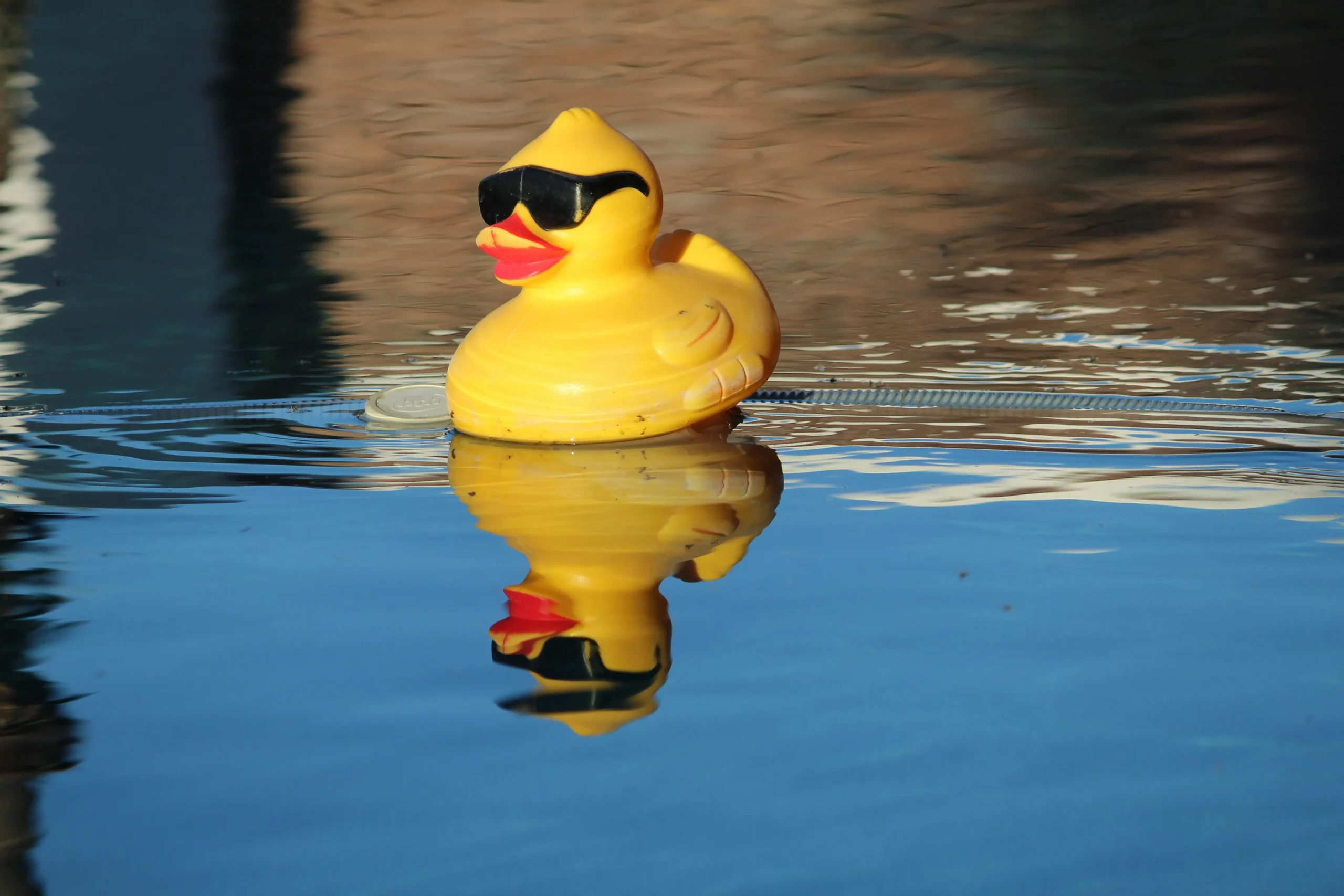
Bulk Holiday Duck Pricing & Cost Control
Most buyers overpay 30–50% by ordering retail-packaged bulk ducks instead of going direct factory.
Per-unit costs drop hard once you cross the 1,000-unit threshold. At 1,000 units, you pay around $0.60 per duck. At 5,000 units, that drops to $0.35. At 10,000 or more, you land at $0.25 or less. That is a 58% drop from the base price. Most buyers don’t realize that direct factory pricing with a molded logo actually costs less per unit for orders above 2,000 than retail-packaged bulk ducks, even after tooling amortization.
Hidden costs hit your budget if you don’t plan for them. Tooling for a new seasonal mold runs $300 to $800. That is a one-time cost. But if you use a pre-existing mold — like our Santa, reindeer, or snowman — that fee is waived. Shipping is the next big cost. Air freight costs more but cuts lead time. Sea freight costs less but takes weeks. Packaging adds cost too. Individual polybags add $0.03 per unit. Custom gift boxes add $0.20 per unit. Plan for $0.80 to $1.20 all-in per duck for a premium corporate gift.
- Per-unit cost at 1,000 units: $0.60 per duck (pad print).
- Per-unit cost at 5,000 units: $0.35 per duck (pad print). That’s a 42% savings.
- Per-unit cost at 10,000+ units: $0.25 per duck or less. That is a 58% savings from 1,000 units.
- Tooling cost (new mold): $300 to $800. Waived if using pre-existing seasonal mold.
- Tooling cost (pre-existing mold): $0. Waived. This is the key to fast lead times and low costs.
- Shipping cost (air vs. sea): Air: $0.05–$0.15 per unit. Sea: $0.01–$0.03 per unit. Sea is cheaper but takes 15–25 days.
- Packaging cost (individual polybag): +$0.03 per unit.
- Packaging cost (custom gift box): +$0.20 per unit.
Here is a counterintuitive truth: larger ducks (4 to 6 inches) can cost less per cm³ than smaller ducks (1.5 to 2.5 inches). Why? Molding efficiencies. The mold cavity for a 6-inch duck uses less material relative to its volume than a 1.5-inch duck. So if you want a premium feel, go bigger. You get more duck for your dollar.
The real cost control lever? Use pre-existing holiday molds. The factory has a library of pre-engineered seasonal molds — Santa, reindeer, snowman, elf. You pick the design. The logo is molded in 3D or pad printed. No tooling fee. Lead time drops from 6 weeks to under 2 weeks. And your per-unit cost stays at the $0.35 range at 5,000 units. That is the gap that most Amazon Junkin listings can’t touch.
| Order Volume | Per-Unit Cost (Pad Print) | Per-Unit Cost (Molded Logo) | Tooling Fee (New Mold) | Lead Time (Pre-Made Mold) |
|---|---|---|---|---|
| 1,000 Units | $0.60 | $0.85 | $300–$800 | 7–10 Days |
| 5,000 Units | $0.35 | $0.50 | $300–$800 | 7–10 Days |
| 10,000+ Units | $0.25 | $0.40 | $300–$800 | 7–10 Days |
| Retail Bulk Packs (5,000) | $0.60–$1.00 | N/A | N/A | 3–5 Days |
| All-In Budget (5,000 Units) | $0.80–$1.20 | $0.95–$1.35 | Amortized over run | 7–10 Days |

Holiday Gift Packaging That Elevates Brand Perception
Packaging is the difference between a toy and a brand statement.
Most B2B buyers treat packaging as an afterthought — a polybag to keep the dust off. That’s a missed opportunity. For holiday corporate gifting, the unboxing moment is the single highest-engagement touchpoint in the campaign. A duck pulled from a plain bag gets a glance. A duck in a branded gift box with ribbon and a thank-you card gets photographed and posted. Social impressions from that one unboxing can exceed the cost of the packaging itself.
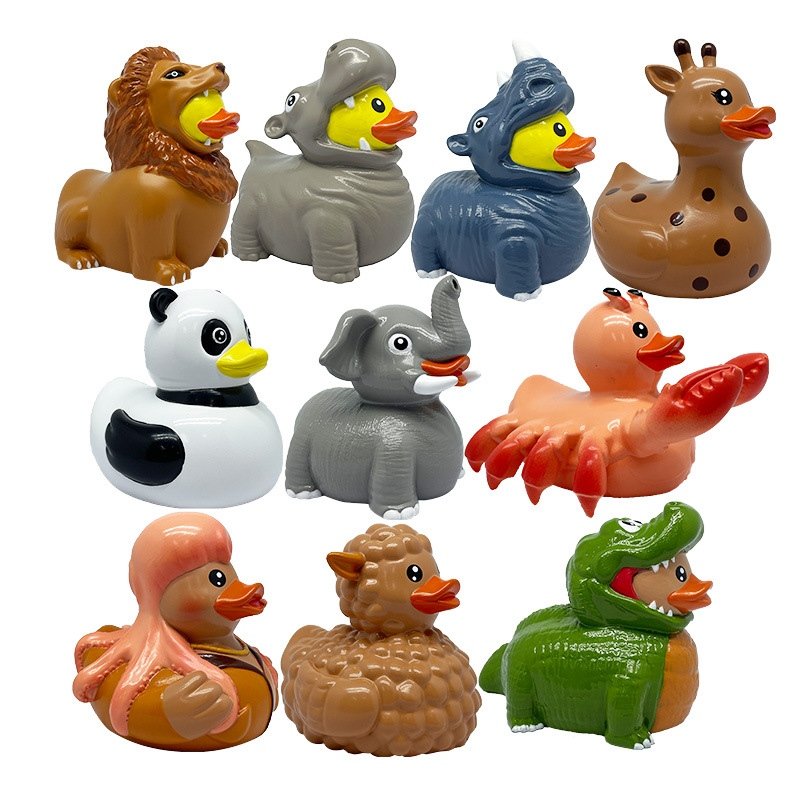
Three packaging tiers dominate holiday duck programs. First, countertop display boxes — typically 50 ducks per box, printed with seasonal graphics. These work for retail partners or event giveaways where the box sits on a counter. Second, individual polybags with a header card. At roughly $0.03 per unit, this is the budget option, but the header card gives you space for a logo, a QR code to a landing page, or a holiday message. Third, custom gift boxes with full-print holiday designs and foam inserts. These run $0.15–$0.25 per unit but transform the duck into a premium corporate gift.
- Countertop display box: Best for high-volume retail or event distribution. 50 ducks per box, seasonal print, no individual wrapping. Cost: ~$0.01–$0.02 per duck.
- Polybag + header card: Individual protection with branding real estate. Add a QR code or social handle. Cost: ~$0.03 per unit.
- Custom gift box with ribbon: Premium unboxing experience. Include branded ribbon, thank-you card, and foam insert. Drives social sharing. Cost: $0.15–$0.25 per unit.
For corporate gift sets — the kind sent to clients, partners, or employees — skip the polybag. A custom gift box with a branded ribbon and a handwritten-style thank-you card doubles as a keepsake. The duck becomes the centerpiece of a brand story. We’ve seen campaigns where recipients posted unboxing photos unprompted, generating organic reach that the marketing team couldn’t have bought. The packaging doesn’t just protect the duck; it extends the campaign’s shelf life.
The critical detail: coordinate the packaging design with the duck’s holiday theme and your brand palette. A red duck in a green box with gold foil logo works. A random white box with a sticker does not. Pantone-match the box print to your brand colors. Specify the finish — matte feels premium, gloss reads festive. And always request a physical proof before production. Digital mockups hide paper weight, texture, and fit. A box that’s too tight crushes the ribbon; too loose and the duck rattles. Both kill the unboxing experience.
Lead Time & Holiday Shipping Deadlines
Pre-made holiday molds cut production from 6 weeks to 7–10 days.
Standard production runs 15–30 days after artwork approval. Add 5–15 days for sea freight or 3–5 days for air. For Christmas 2026 programs, place orders by September 30th with sea shipping, or by October 31st for air. Always build in a 2-week buffer for customs and unexpected delays.
- Pre-made holiday molds: Using existing seasonal molds (Santa, reindeer, snowman) eliminates tooling time and slashes production to 7–10 days. This is the single biggest lever for meeting tight holiday deadlines.
- Custom mold lead time: New seasonal molds add $300–$800 in tooling costs and 4–6 weeks to the timeline. Only necessary if you need a unique 3D character or logo shape.
- Shipping mode decision: Sea freight costs $0.02–$0.05 per unit but takes 15 days. Air freight costs $0.15–$0.25 per unit but takes 3–5 days. For orders under 5,000 units, air is often cheaper than the cost of missing the holiday window.
Safety & Compliance for Corporate Gifting
One failed lab test can sink an entire holiday campaign.
Brand Marketing Managers who skip third-party compliance verification for custom rubber ducks expose their company to legal liability, product recalls, and reputational damage. The three standards that matter for any safety certified holiday rubber ducks for retail or corporate gifting are EN71 (European Toy Safety Directive), ASTM F963 (U.S. Consumer Safety Specification), and CPSIA (Consumer Product Safety Improvement Act). Each requires documented testing from an ISO 17025 accredited lab. A supplier‘s self-declaration or a photocopied generic report is not acceptable. You need a report that lists your specific SKU, your batch number, and the test date.
The material choice is where most bulk holiday rubber ducks for promotional campaigns fail. Hollow PVC ducks with squeaker holes trap water and bacteria inside. Solid food-grade silicone eliminates that risk entirely. It contains no phthalates, no BPA, and no heavy metals. It passes all three standards without exemptions. For corporate gift programs targeting families with children, this is non-negotiable. A duck that grows mold inside after one bath is a gift that damages your brand.
- EN71-3: Migration limits for 19 toxic elements including lead, cadmium, and mercury. Solid silicone consistently tests below detectable limits.
- ASTM F963: Physical and mechanical testing for small parts, sharp edges, and choking hazards. Solid ducks without detachable squeakers pass automatically.
- CPSIA tracking label: Requires a permanent mark on the product or packaging showing manufacturer, date, and batch code. Many suppliers omit this. Verify before production.
Labeling requirements vary by destination. For EU distribution, every unit must carry a CE mark. For the UK, it’s UKCA. The CE mark must be affixed to the product or its packaging, and a Declaration of Conformity must be available on request. For wholesale Christmas rubber ducks logo branding that crosses borders, also confirm the supplier includes the importer’s name and address on the packaging. Missing a single label can delay customs clearance and blow your holiday deadline.
The most overlooked requirement is the CPSIA tracking label. It sounds administrative, but U.S. Customs and the CPSC enforce it. Without a permanent tracking label (molded into the duck or printed on a tamper-proof hang tag), your container can be held at port. For branded rubber duck gift sets for giveaway events, molding the tracking code into the base of the duck is recommended. It adds zero cost and eliminates the risk of lost or swapped hang tags.
When requesting quotes for custom holiday rubber duck manufacturing MOQ 1000 or higher, ask for three documents: (1) a full third-party test report for EN71 or ASTM F963 on your specific duck model, (2) a CPSIA tracking label compliance statement, and (3) a CE Declaration of Conformity if shipping to Europe. If the supplier hesitates or offers a generic report from a different product line, walk away. The cost of a recall far exceeds the cost of proper compliance upfront.
Conclusion
Sourcing holiday gift ducks doesn’t have to mean gambling with quality, deadlines, or budget. The right partner uses pre-engineered molds, solid food-grade silicone, and direct factory pricing to deliver a brand-safe, on-time campaign at $0.35 per unit at 5,000 units.
Frequently Asked Questions
How to get custom rubber ducks?
You work directly with a manufacturer that offers mold creation and pad printing or 3D logo molding, with MOQs starting at 1,000 units. For holiday programs, using pre-existing seasonal molds cuts. Request a mold library catalog before committing to a new tool.
How much does one rubber duck cost?
Per-unit cost for custom branded ducks ranges from $0.25 to $0.50 at 5,000+ units, compared to $0.60–$1.00 for retail bulk packs. Pad printing adds about $0.05 per duck, while a molded. Lock in volume and decoration method before requesting a final quote.
Where do people buy rubber ducks?
B2B buyers source from specialized promotional product distributors and direct manufacturers like Lzengo or Bud Ducks, not from general retailers. Stock holiday ducks come from resellers, but custom-molded ducks require a factory. Verify the supplier handles both stock and custom mold production.
What does it mean if someone puts a rubber duck on your car door handle?
It is part of the ‘Jeep ducking’ trend where Jeep owners leave ducks on other Jeeps as a friendly gesture, not a commercial promotion. For B2B programs, this trend creates a high-visibility. Consider this trend when planning event giveaways for automotive brands.
What does it mean if someone gives you a rubber duck?
It is typically a lighthearted, collectible gift used in corporate swag, event giveaways, or as a symbol of appreciation. In B2B contexts, custom-branded ducks serve as low-cost, high-visibility promotional items that. Match the duck design to your campaign theme for maximum recall.