Skip to content
When a client asks you to source gift rubber ducks for a subscription box or corporate gift program, the conversation usually lands on three numbers: per-unit cost under $2.00, MOQ at or below 1,000, and sample turnaround inside two weeks. Those are the hard KPIs. What often gets glossed over—until it becomes a problem—is the difference between a duck that looks good on a mood board and one that survives a month in a subscriber’s bathroom or survives the unboxing video without logo peel. That gap is where most procurement relationships with suppliers go sideways.
The default option from many promotional suppliers is a 3D-printed duck: cheap per unit, visible layer lines, and prone to cracking if it hits water. Lzengo takes a different route—food-grade, phthalate-free PVC injection molding, the same process used for baby bath toys. That means the duck you send as a gift is indistinguishable from a retail product. Mold fees for in-mold decoration run $200–$400, but at 5,000 units the per-unit cost drops below $0.08, and you completely eliminate the peeling that printed logos suffer after a few washes. That’s the kind of decision framework that keeps a campaign from turning into a liability conversation.
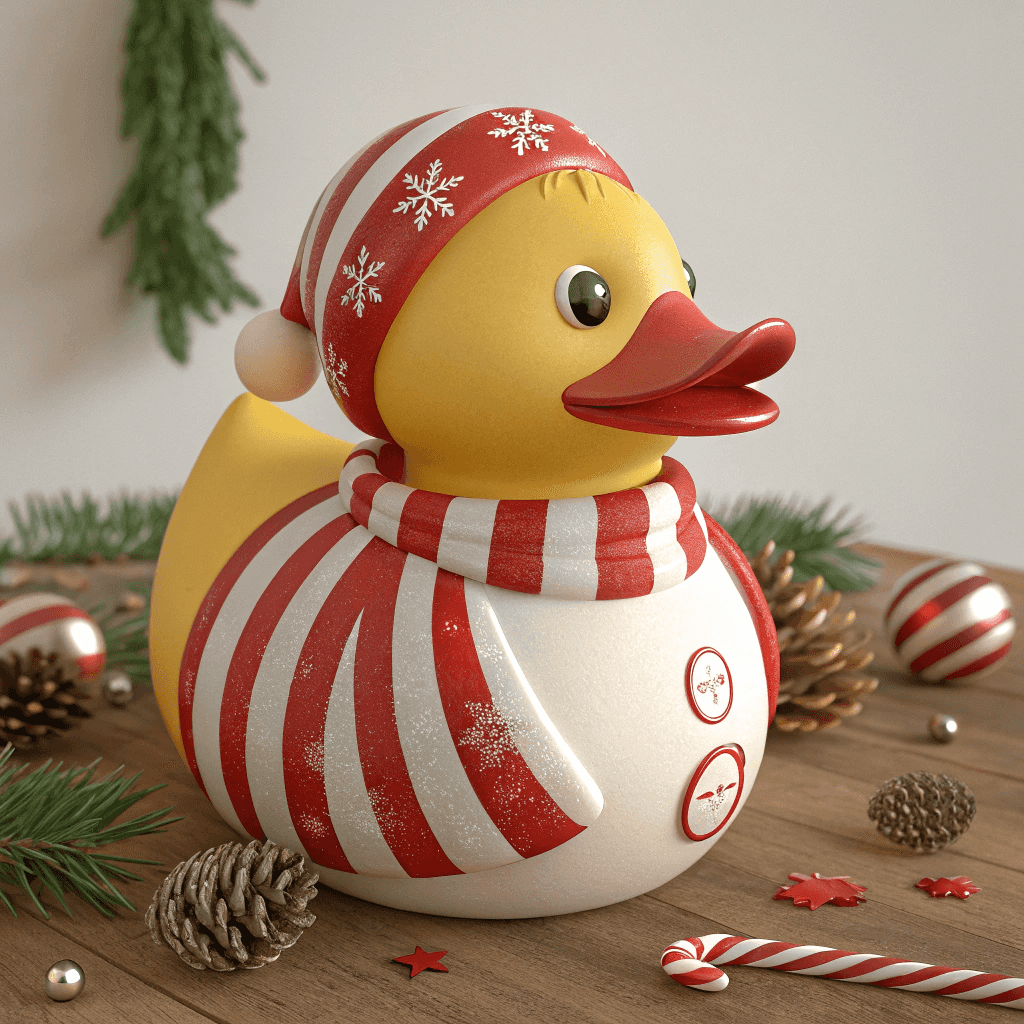
Why Bulk Gift Rubber Ducks Work
A $1.20 duck can drive 60% brand lift and social shares.
Branded promotional items increase recipient affinity by an average of 60% (Advertising Specialty Institute). A rubber duck is one of the few giveaways that lands on desks, bathtubs, and Instagram feeds with equal ease. The per‑unit cost at 1,000 MOQ runs as low as $1.20 – less than a cup of coffee – yet the impression sticks. For subscription boxes, a themed duck each month turns a one‑time delivery into a collectible ritual, driving repeat engagement and organic unboxing content.
- Per‑unit cost: $1.20–$2.50 at 1,000 MOQ (pad‑printed logo); in‑mold adds ~$0.30 but eliminates peeling – critical for gifts that will be handled and photographed.
- Mold investment: One‑time mold fee of $200–$400 for in‑mold decoration drops below $0.08 per duck at 5,000+ units – an upfront cost that pays for itself in durability and brand consistency.
- Competitor shortfall: Most 3D‑printed ducks (e.g., Duck of the Month) are brittle, not waterproof, and show layer lines – low perceived value for corporate gifts. Injection‑molded PVC is smooth, waterproof, and indistinguishable from retail bath toys.
- Shareability: A custom duck with on‑brand colors and a clean logo triggers unboxing posts and casual sharing. One visually striking duck can generate organic reach that a $5 promo item never will.

MOQ, Pricing & Sampling Process
MOQ 1,000 units, sample fee refundable – most competitors require 2,500+ and charge $300+ non-refundable.
We set MOQ at 1,000 units per design because that’s the minimum volume that justifies the injection mold setup without inflating per-unit cost. Tiered pricing kicks in at 5,000 and 10,000 units – at 10k, per-unit cost for a standard 3″ duck with pad printing drops to $1.20. For in-mold decoration, the one-time mold fee ($200–$400) is reclaimed on the first 5,000 units: at 5,000 units the mold cost per duck is $0.08, and beyond that it’s zero. That math makes in-mold the smarter choice for any run over 2,000 units.
- Our terms: MOQ 1,000 units per design; staged pricing at 5k and 10k; sample fee $50–$100 (fully refundable against production order); mold fee $200–$400 one-time for in-mold decoration.
- Competitor benchmark (4AllPromos, Executive Advertising): Typical MOQ 2,500+; mold fees $300+ (often non-refundable); no publicly disclosed volume pricing below 10,000 units. Some charge separate tooling for each color variant.
Sample turnaround is 10–15 business days from artwork approval. We ship the physical sample via express courier so you can verify Pantone match, surface finish, and float test before committing to production. Production lead time is 25–30 business days after sample sign‑off. For buyers who need faster delivery, we offer an expedited 15‑day production option at a 15% surcharge – but that requires a confirmed order with no revision loops. What most suppliers won’t tell you: sample fees are often a profit center. Ours are refundable because we’d rather earn your trust on the first order than nickel‑and‑dime you on a sample.
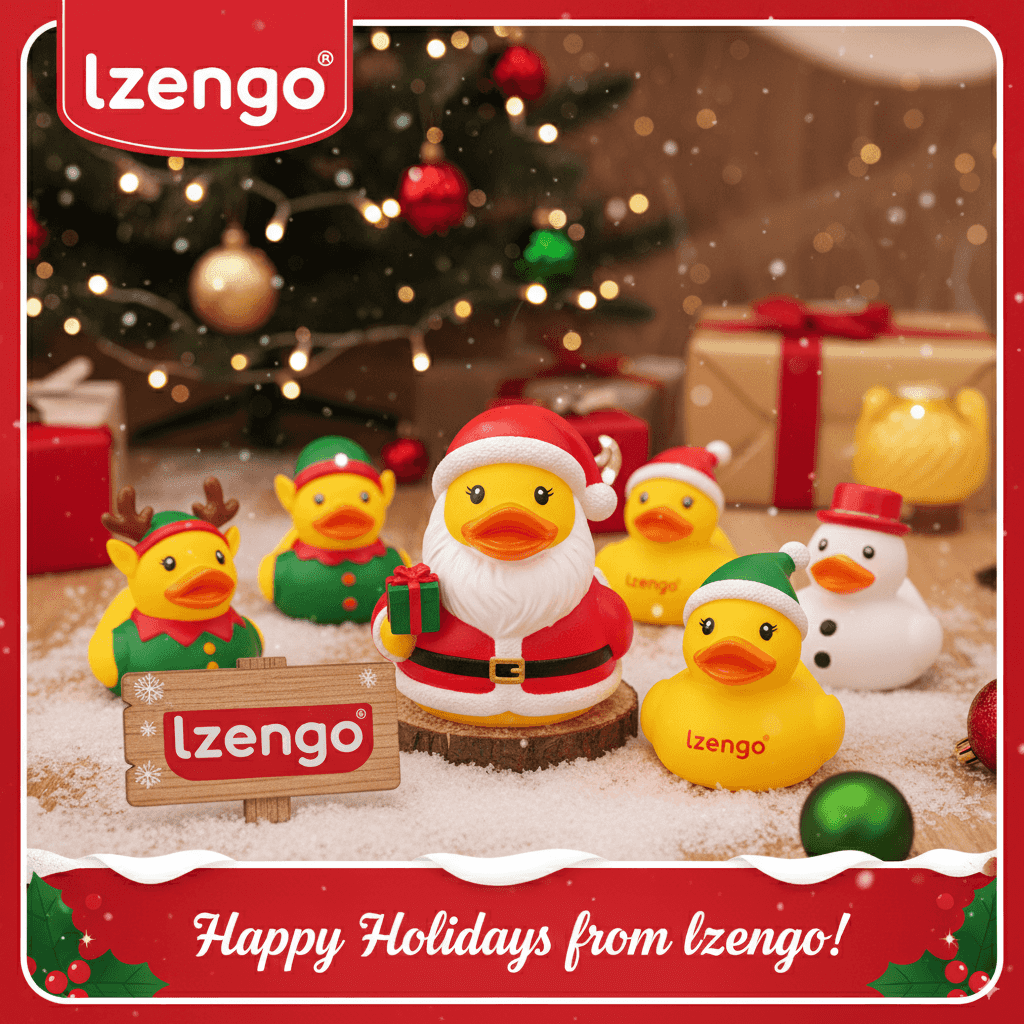
Customization: Printing vs. In-Mold Decor
Don’t let a $0.05 printing shortcut ruin your gift campaign.
Most suppliers treat logo application as an afterthought, but the method you choose determines whether your duck looks pristine after three washes or ends up in the trash. Here’s the trade-off they won’t volunteer.
- Pad printing: Cost: ~$0.05/duck. Limited to flat surfaces and 1–4 colors. Ink sits on the surface; with handling and washing, it can crack or peel within weeks.
- In-mold decoration: Cost: ~$0.30/duck plus one‑time mold fee of $200–$400. Logos are fused into the vinyl — no peeling, no fading. Supports unlimited Pantone colors and complex 3D shapes.
For gift programs, the decision is straightforward. At 5,000+ units, the mold fee drops below $0.08 per duck — a trivial investment against the risk of logo failure. Recipients handling the duck repeatedly (bath toys, desk ornaments) will quickly spot printed logos that degrade. In‑mold means the logo is permanent, indistinguishable from the duck itself.
Why don’t competitors surface this comparison? Because pad printing lets them offer a lower upfront per‑unit price. They bank on you not asking about durability. But when your client’s logo starts peeling at a trade show, you’re the one fielding the complaint. We provide the cost/risk breakdown on every quote — no surprises.
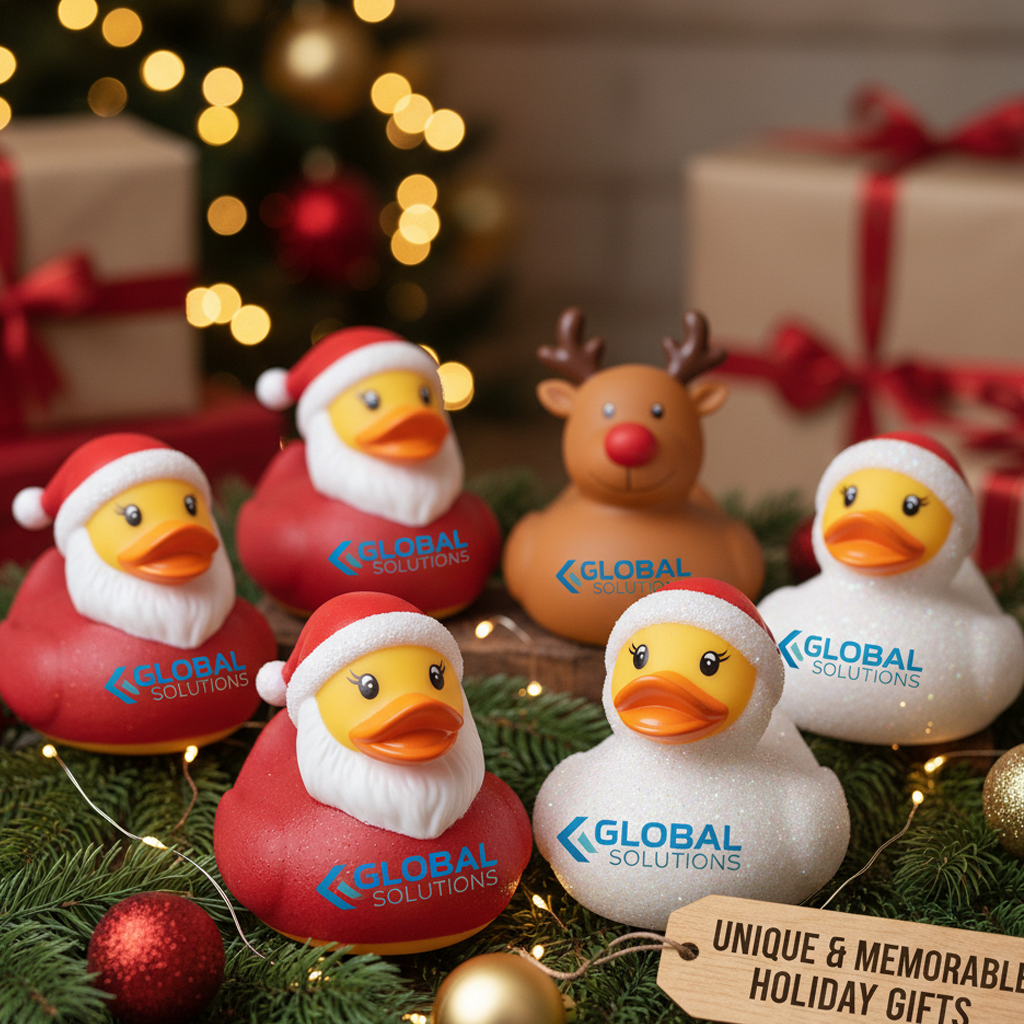
Safety & Compliance for Gift Rubber Ducks
Most promotional duck suppliers hide safety certifications.
If a rubber duck is intended as a gift—especially when given to children or included in food-adjacent subscription boxes—compliance with international safety standards is non-negotiable. The three big ones are CPSIA (USA), REACH (EU), and GB6675 (China). Missing any one of these can block your shipment at customs or, worse, trigger a product recall. Lzengo’s ducks are injection-molded from food-grade PVC that is phthalate-free and BPA-free, and every bulk order includes a certificate of compliance.
- CPSIA (U.S. Consumer Product Safety Improvement Act): Mandates third-party testing for lead (≤100 ppm) and phthalates (≤0.1%) in products intended for children under 12. A duck without CPSIA compliance cannot be legally sold as a toy in the U.S.
- REACH (EU Registration, Evaluation, Authorisation of Chemicals): Requires that all chemicals in the product do not exceed SVHC (Substances of Very High Concern) limits. This covers phthalates, heavy metals, and any bisphenols — including BPA.
- GB6675 (China Toy Safety Standard): Covers mechanical, physical, and flammability properties plus elemental migration limits. Required for any product manufactured in China and often accepted as equivalent in other Asian markets.
- ASTM F963 (U.S. Standard Consumer Safety Specification for Toy Safety): Often referenced alongside CPSIA; sets performance requirements for small parts, sharp edges, and packaging. Many retailers require ASTM F963 test reports before listing a product.
- What we provide with every order:: A compliance certificate listing the applicable standards and confirming phthalate-free, BPA-free PVC. We also share third-party lab test reports from SGS or Bureau Veritas upon request—no hard sell, no hidden folder.
- Why you should ask for reports before ordering:: Request the actual test report—not just a certificate—and verify the test laboratory is ISO 17025 accredited. If a supplier cannot produce a report within 48 hours, consider it a red flag.
Here’s what most suppliers won’t tell you: safety certifications cost them time and money, so they often bury them in fine print or omit them entirely. For example, Duck of the Month and Cruising Quackers do not openly list any safety certifications on their product pages. That is a massive liability for a procurement professional sourcing thousands of units for a Fortune 500 client. One compliance failure and your reputation takes the hit, not the factory’s.
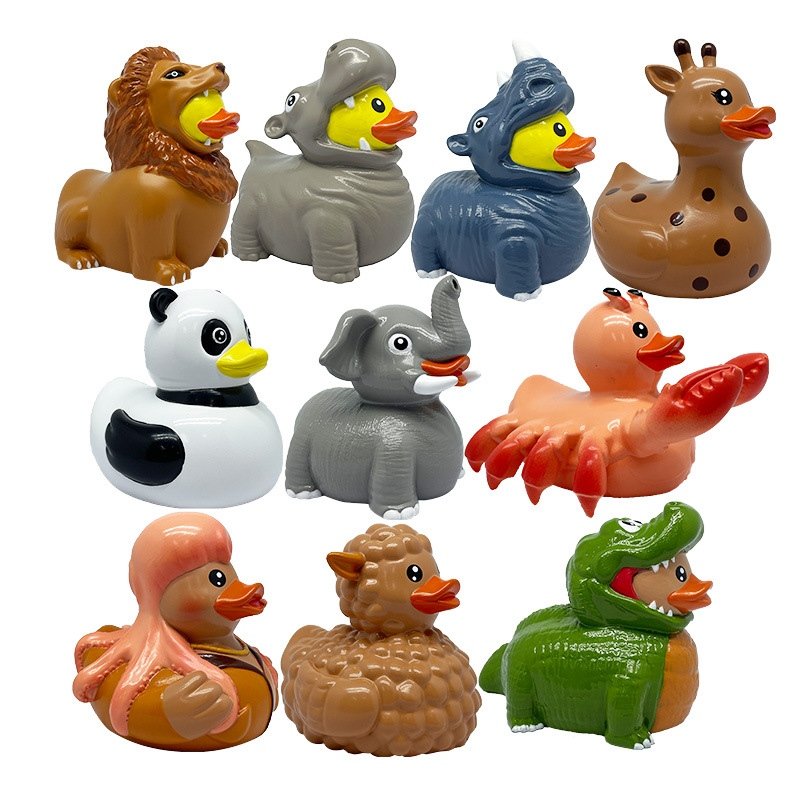

Packaging Ideas for Gift Ducks
The packaging tier you choose directly signals gift value — don’t underspend on perception.
Most buyers default to a standard polybag with a hang tag because it hits $0.10 per unit and covers the basics: protect the duck, attach a barcode or logo card. For bulk giveaways at trade shows or event welcome bags, this works. But if your gift is going into a retail display or a client’s hands, that polybag says ‘cheap promo item’ before the duck is even seen.
- Standard polybag + hang tag: ~$0.10/unit. Best for high‑volume, low‑touch distribution where the duck is one of many giveaway items. Hang tag can carry a QR code or brand message, but the bag adds zero shelf presence.
- Custom printed blister card: $0.25–$0.50/unit. The card is die‑cut to hold the duck securely, printed full‑color with your artwork. This is the minimum for retail shelves or client gifts — it elevates perceived value from ‘freebie’ to ‘product’. MOQ on blister cards is typically 5,000+ units; we combine them with duck production to avoid separate tooling fees.
- Branded cardboard display for subscription boxes: Cost varies by design, but expect $0.40–$0.80 per display insert. The goal is unboxing experience: a custom insert that holds the duck and encourages social sharing. For subscription boxes, this is what drives repeat engagement — recipients photograph the display, not the polybag.
Here’s the decision framework we use with agency buyers: if the duck’s per‑unit cost is under $1.50, spending $0.30 on a blister card adds 20% to the item cost but can double the perceived value. For corporate gifts where the recipient is a client or employee, always go with a blister card or branded display — the polybag is a liability for your brand image.
Conclusion
For agency buyers and DTC teams, custom rubber ducks hit the sweet spot: per-unit cost under $2.00, MOQ 1,000, and 15-day samples. The key decision is logo method — pad printing saves upfront cash but risks peeling; in-mold decoration costs $0.30 more per duck but lasts indefinitely. Safety certifications (CPSIA, REACH, ASTM F963) are non-negotiable for gift programs, and we provide them with every order.
Ready to move forward? Request a sample with your Pantone colors and artwork. We’ll send a proof within 10 business days and deduct the sample fee from your first production run.
Frequently Asked Questions
How to source cheap rubber ducks for subscription boxes and gift programs?
Source cheap custom rubber ducks by ordering at least 1,000 units – per-unit cost drops as low as $1.20, and pricing falls further at 5,000 and 10,000 units. Use pad printing for logo. Confirm final pricing after choosing decoration method and quantity.
What is the minimum order for custom rubber ducks?
Minimum order is 1,000 units for custom production, with staged pricing breaks at 5,000 and 10,000 units. This MOQ is lower than many competitors who require 2,500+ units. MOQ may adjust for stock items or special packaging – confirm with your rep.
Can I match Pantone colors on custom gift ducks?
Yes, we match Pantone colors using in-mold decoration for permanent, accurate color. Color matching is confirmed during the sample stage to ensure brand consistency. Provide Pantone codes at artwork approval to lock in your match.
How long does it take to produce custom rubber ducks for gifts?
Production lead time is 25–30 days after sample sign-off, plus 10–15 business days for sample creation from artwork approval. Total timeline from artwork to delivery is typically 5–7 weeks. Rush options may be available – ask your account manager early.
Are custom rubber ducks safe for children?
Yes, our ducks are made from food-grade, phthalate-free PVC using injection molding, the same process used for baby bath toys, and meet ASTM F963 and CE safety standards. They are safe for. Request a material safety data sheet for your compliance team.