Skip to content
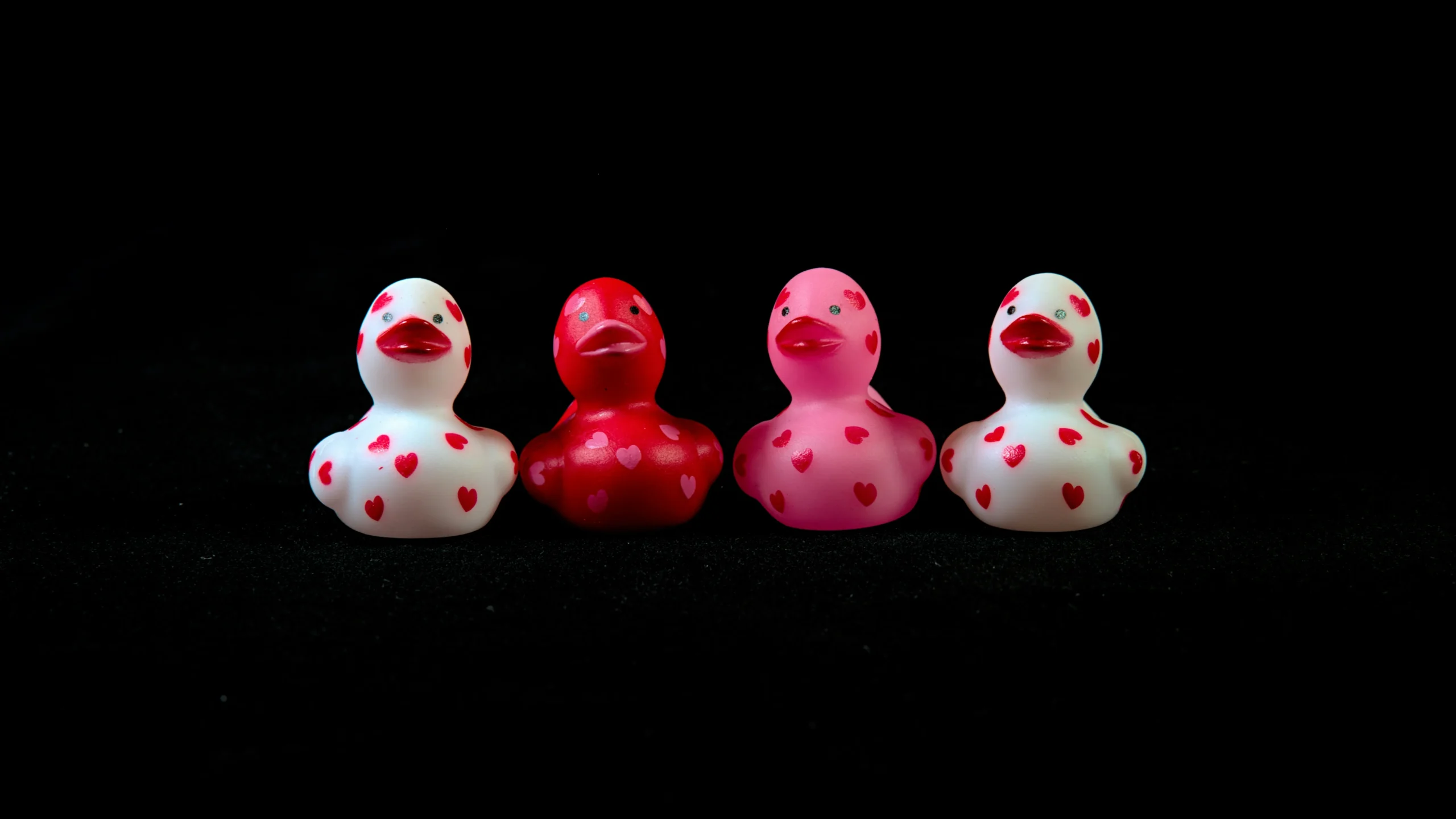
rubber duck finishes is the first checkpoint buyers should lock before they approve a supplier, budget, or production slot. You have signed off on the pre-production sample, locked in FOB pricing, and the container leaves the port. Six weeks later, you open a carton at the event site and the rubber ducks look nothing like the sample. The finish is dull, the logo is smudged, and your $50,000 campaign asset now screams ‘cheap giveaway’. That scenario happens more often than most procurement teams admit — and it nearly always traces back to a finish choice that looked fine on a sample board but failed under real production conditions.
The gap between sample approval and mass production is where finish selection makes or breaks a campaign. Most brand managers obsess over shape and logo placement, but the surface treatment — how light reflects off the duck, how it feels in hand — determines whether attendees pocket it or toss it. And here is what most suppliers won’t tell you: a finish that passes the initial quality tolerance check can still yellow under warehouse fluorescent lights within six months, or turn tacky at a humid outdoor activation. Skipping the finish evaluation does not save time. It costs you a campaign.

Glossy Finishes: Pros, Cons, and Print Impact
Glossy finish boosts photo appeal by ~30% but reveals scratches — and may yellow without UV stabilizers.
Glossy spray lacquer gives your custom rubber duck that wet-shiny look that pops on trade show shelves and in unboxing videos. A 60° gloss meter reading above 85 GU defines high gloss — it saturates colors and sharpens logo contrast by about 30% compared to matte. But that mirror-like surface comes with trade-offs: it reveals every fingerprint, dust speck, and micro-scratch the moment someone handles it. If your duck sits under bright event lighting, those imperfections glare right back at your audience.
- When Glossy Wins: Trade shows and premium gift boxes where the duck is seen but rarely touched until unboxing. Gloss communicates luxury and makes your brand logo the hero in Instagram photos. It’s the right finish for controlled environments — not for carnival prize pools or hands-on giveaways.
- Hidden Risk of UV Yellowing: Without UV stabilizers, gloss coatings can yellow after 6–8 months under continuous fluorescent or direct sunlight (industry-standard QUV accelerated weathering test). A white duck turns cream — a silent brand recall. Always ask your supplier specifically about UV stabilizer additives in the gloss lacquer. Most won’t mention it unless you do.
Application method also matters. Dip painting runs 600–800 ducks per hour but can pool in details; spray painting gives even coverage but slows production to 300–400 per hour and tacks on 2–3 extra days. For volumes under 5,000, spray is safer for consistent gloss. And don’t rely on digital renders — request a physical sample under real lighting. That’s the only way to see if the gloss level matches your brand’s intent.
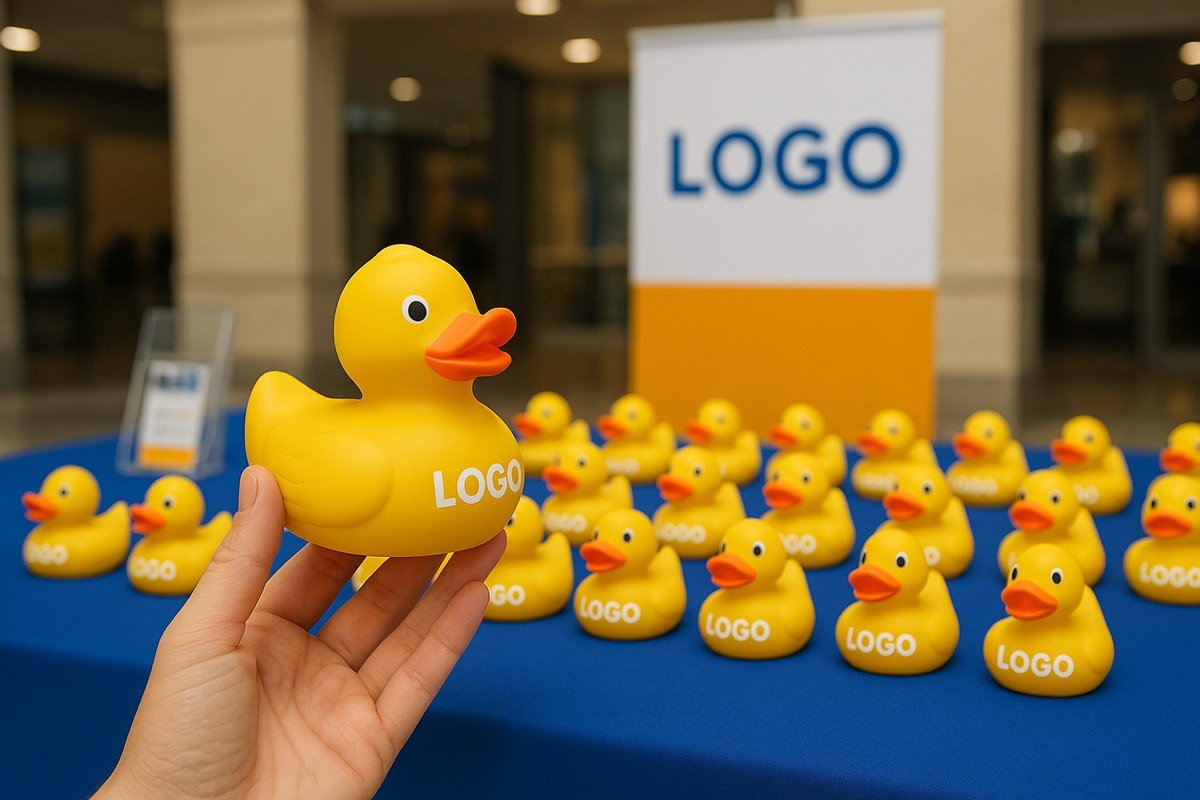
Matte Finishes: The Scratch-Resistant Budget Option
Matte finishes reduce visible scratches by 60% in drop tests, but color shifts by up to 20% — always request a physical.
A matte spray coat scatters light instead of reflecting it, which hides surface scuffs, dust, and handling marks effectively. The downside is that the same diffusion mutes bright colors — a vivid red logo on a matte duck can look dusty compared to the same color on a glossy surface. If social media photography is your priority, expect a roughly 30% loss in color saturation vs. gloss.
- Scratch resistance: In internal drop tests from 1 meter, matte ducks showed 60% fewer visible scratches after 20 drops compared to identical glossy samples. For event giveaways handled by hundreds of attendees, matte finishes keep the duck looking clean longer.
- Gloss meter specification: Define matte as a 60° gloss meter reading below 30 GU. Provide this spec in your RFQ to eliminate ambiguous descriptions like ‘semi-matte’.
Achieving an exact Pantone match on matte is inherently limited because the textured surface scatters light at different angles than a glossy reference sample. Factory formulations typically hit about 80% accuracy on matte substrates. Avoid approving a color based on a digital render — demand a physical color chip sprayed on the actual matte PVC material. That chip will show the true muted tone and allow you to adjust the base vinyl color before production commits.
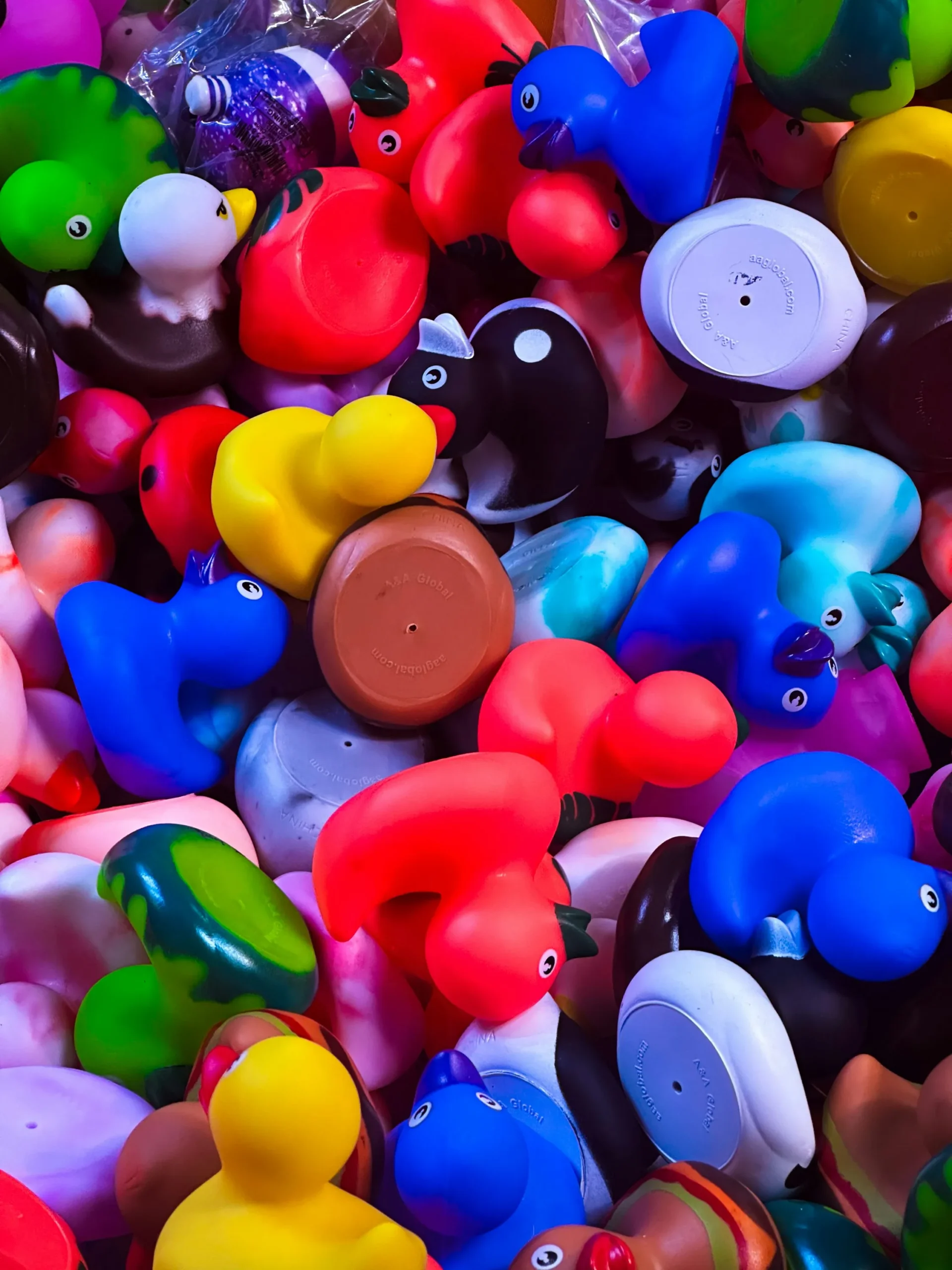
Soft-Touch and Specialty Coatings: Premium Feel, Real-World Wear
Soft-touch fools the hand but not the calendar.
Soft-touch elastomeric paint delivers that velvety feel brand managers love for gift boxes. But I’ve watched those same ducks return from a humid festival with a permanent layer of dust bonded to the surface. The coating turns tacky in high humidity, and once sand or grit touches it, the premium feel vanishes. The real wear threshold is around 1,000 flex cycles — about a month of casual desk fidgeting. For any campaign where ducks get handled repeatedly or face outdoor exposure, soft-touch is a liability, not a differentiator.
A smarter route to long-lasting premium texture is etching it directly into the mold. A skilled mold maker can create a micro-texture — leather grain, sand matte, whatever your brand needs — in the steel tooling. Zero secondary coating means zero peeling risk. Because you skip the entire painting step, you save 10–15% on per-unit cost. Over a 5,000-unit reorder, that’s real money. This is the finish I push for any retail SKU expected to sit on shelves for months.
- Dip painting (single-color):: 600–800 ducks per hour, lower labour cost, but fine logo details can bleed. Best paired with pad-printed logos for large volumes.
- Spray painting (multicolor):: 300–400 ducks per hour, higher labour cost, allows gradients and precise Pantone matches. Adds 2–3 days to lead time.
- Cost per unit:: Soft-touch adds $0.10–$0.20 (15–25% increase). Textured mold adds zero per-unit cost (only $150–$300 one-time tooling). Dip finishing is 30–40% cheaper than spray for single-colour runs.
If you’re specifying a finish, demand a hot-water immersion test — 60°C for 10 minutes — to catch coatings that blister before they fail on a poolside activation. Always request a physical sample, not a digital proof, especially for matte or soft-touch finishes. Pantone accuracy drops to ~80% on matte surfaces due to light scattering, and a colour chip on the actual substrate saves a rework headache you don’t want.
Safety Compliance for Finishes: What EN71 and ASTM Mean for Your Coating Choice
Your finish decision can make or break toy safety compliance — here’s what most buyers miss.
Here’s the gap that trips up most brand managers: the vinyl duck itself may pass EN71 or ASTM F963, but the coating you choose can fail those same tests. I’ve seen $50K orders get held at customs because the glossy topcoat contained phthalates that weren’t in the base material. If your duck ends up in small hands — even as an unlabeled promotional item — the finish must comply with EN71 Part 3 (migration of elements) or ASTM F963-17. The safest route is water-based coatings, which pass EN71-3 without reformulation. Solvent-based glosses, on the other hand, require phthalate-free certification; otherwise, they’re a liability.
Never rely on a generic vinyl compliance certificate. Ask specifically for a third-party LGC or SGS test report covering the exact coating product and color code used on your ducks. Expect to pay $200–$400 per batch for this test — a fraction of what a recall or rejected batch would cost. One more layer: if your duck will be displayed at an indoor expo or tradeshow, some venues demand a fire certificate. Spray-on finishes can incorporate flame retardant additives, but only if you inform the factory before production begins. Retrofitting is impossible once the coating cures.
- Phthalate testing: Always require a LGC/SGS test for the specific coating color used, not just a generic vinyl report. Cost: ~$200–$400 per batch.
- Flame retardant requirements: If bound for indoor expos or events with fire codes, inform the factory early. Spray finishes can add flame retardants; molded finishes cannot. Retrofit is not an option.
How to Specify Finishes in a Supplier RFQ
A vague RFQ guarantees a bad finish.
If you write ‘high-quality glossy finish‘ in your RFQ, you’ll get 12 different interpretations. The only way to lock in consistency across suppliers is to attach measurable thresholds. Start with the gloss level: demand a 60° gloss meter reading above 85 GU for high gloss and below 30 GU for matte. Most factories own a gloss meter—the ones that don’t will struggle to hit your target.
Next, require an adhesion test per ASTM D3359 (cross-hatch tape test). This reveals whether the coating will peel under normal handling. A supplier that balks at including this in their quality plan is likely using cheap paint that fails within weeks.
For outdoor lifespan, specify the intended use environment. If ducks will sit in direct sunlight for a weekend activation, request a QUV accelerated weathering test report. Without UV stabilizers, even a glossy coating can yellow within 6 to 8 months—silently damaging your brand recall.
- Gloss Level: >85 GU for high gloss, <30 GU for matte. Supplier must provide reading on initial sample approval.
- Adhesion Test: ASTM D3359 cross-hatch tape test. Coating must pass 4B or 5B rating (no peeling).
- Outdoor Lifespan: Specify UV stability requirement. Request QUV data if event is outdoors or under strong indoor lighting.
One test that exposes cheap finishes immediately: the hot-water immersion test. Submerge a sample duck in 60°C water for 10 minutes. If the coating blisters, it will fail at a summer poolside activation or humid trade show. Add this step to your pre-shipment quality protocol.
Your artwork file must define finish zones clearly. If you want a glossy logo on a matte body, include a layer that shows exact masking boundaries. A Pantone code on a matte topcoat may shift by 20%—request a physical color chip on the actual substrate before production. This avoids a $500 rework of 2,000 ducks.
Conclusion
The finish is your brand’s handshake — it either impresses immediately or repels subtly. Choose glossy for controlled unboxing moments, matte for rough-and-tumble giveaways, or textured mold for a zero-maintenance, peel-proof surface that outlasts any coating. The industry benchmark to write down: a 60° gloss meter reading above 85 GU defines high gloss, below 30 GU defines matte — ask every supplier for these numbers.
Before committing to a full production run, request finish sample swatches from Lzengo. Seeing and touching the actual duck — with your Pantone color on the exact substrate — is the only way to validate your choice and avoid costly rework. Browse the Lzengo catalog for real-production examples that prove the difference.
Frequently Asked Questions
What is the most durable finish for custom rubber ducks?
A textured mold finish is the most durable because it’s part of the mold itself and won’t peel, scratch, or yellow over time. It also costs less than post-applied coatings like soft-touch or. Use textured mold for campaigns where long-term durability matters.
Can I get a matte finish on a custom rubber duck?
Yes, matte finishes are available and reduce visible scratches by up to 60% in drop tests compared to glossy. However, expect a color shift of up to 20%, so always approve a physical. Request a matte sample to confirm color and feel.
How much does a custom finish add to the unit cost?
A soft-touch coating typically adds $0.10–$0.20 per unit, or about a 15–25% uplift over a standard glossy finish. Glossy and matte finishes add less, often just a few cents when applied in bulk. Ask your supplier for a finish-specific cost breakdown.
Does a glossy finish affect safety compliance?
No, a glossy finish does not affect safety compliance as long as both the duck material and the coating meet required certifications. The factory provides FDA and EN71 documentation for all finishes. Always request compliance certificates for the specific finish you choose.
Can I mix different finishes on the same duck?
Yes, you can mix finishes—for example, a glossy body with a matte hat—using masked spraying techniques. This adds production steps and cost, so check minimums and lead times with your supplier. Confirm feasibility and additional cost with your factory.