Skip to content
jeep ducking ducks is the first checkpoint buyers should lock before they approve a supplier, budget, or production slot. Every sourcing guide about jeep ducks tells buyers to start with a sample. That advice burned a club organizer on a $50K order—the pre-production sample looked perfect, but the mass production run came out with a different shade of red and a slightly off-center logo that ruined the brand consistency for their charity event. The problem isn’t sample approval itself; it’s that most buyers treat the sample as a finished product, when in reality it’s just a snapshot of a process that can drift between the molding line and the packaging station. The real answer is to lock down quality tolerance in writing, request a pre-production sample from the actual production run, and audit the supplier’s process controls—not just the one-off piece they made in the sample room.
For event planners and agency procurement leads, the shift from buying retail packs to sourcing bulk jeep ducks for events means moving from a consumer mindset to a manufacturing partnership. That $0.90 per unit at 5,000+ quantity only works if the supplier can deliver consistent color, shape, and print across every duck, with weather-resistant tags that survive a weekend outside. FOB pricing matters, but the hidden cost is always rework or rush shipping when the sample doesn’t match the production. The pros negotiate a quality tolerance clause—say, a 95% first-pass yield rate—and they own the mold after the one-time fee, so no competitor can use their exact shape. That’s the difference between a memorable club giveaway and a box of disappointing rubber that sits in a storage unit.

Why Retail Jeep Ducks Fail for Events
Retail packs cost 5x more per duck and deliver zero brand value for your event.
You’re planning a Jeep club meet or charity run. You need 2,000 ducks. The natural move is to grab retail packs off Amazon — $8 per pack of three. That’s about $5,300 for 2,000 ducks before you’ve even added a sticker. But the real disaster isn’t the price tag; it’s what you don’t get.
- The Unit Cost Trap: Retail packs are designed for individual enthusiasts, not event procurement. At $2.67 per duck (retail), versus under $0.90 per duck at 5,000+ units from a manufacturer like LZENGO, you’re burning 70–80% of your budget on the product alone — money that could go toward custom tags, better packaging, or additional giveaway items.
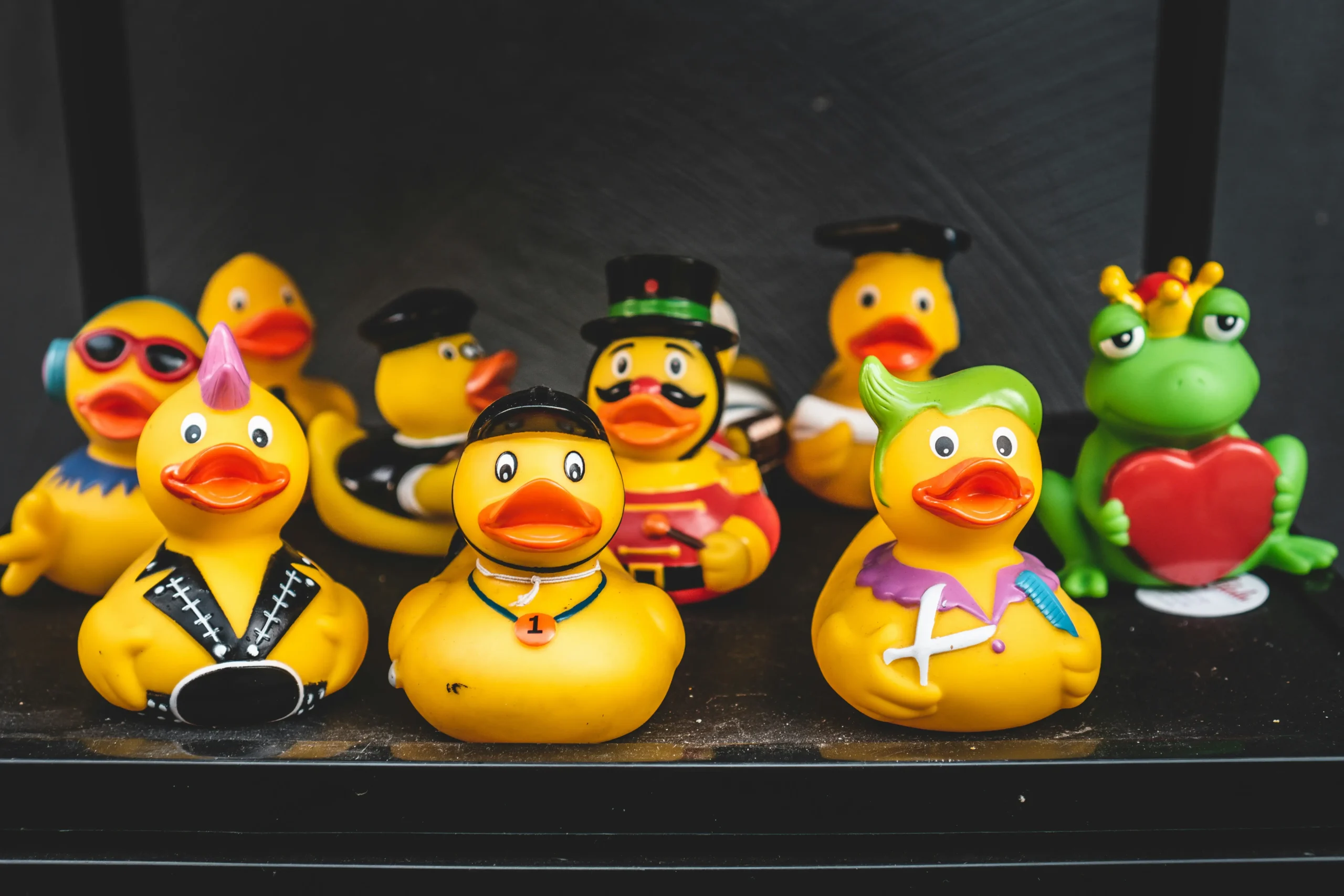
- Inconsistent Quality and Themes: Open ten retail packs and you’ll find ten different color shades, varying PVC hardness levels (some feel brittle), and random themes — a pirate duck next to a construction duck next to a rubber duck with sunglasses. For an event where brand consistency matters (club logo on every table, sponsor banners), this hodgepodge looks amateurish and dilutes your message.
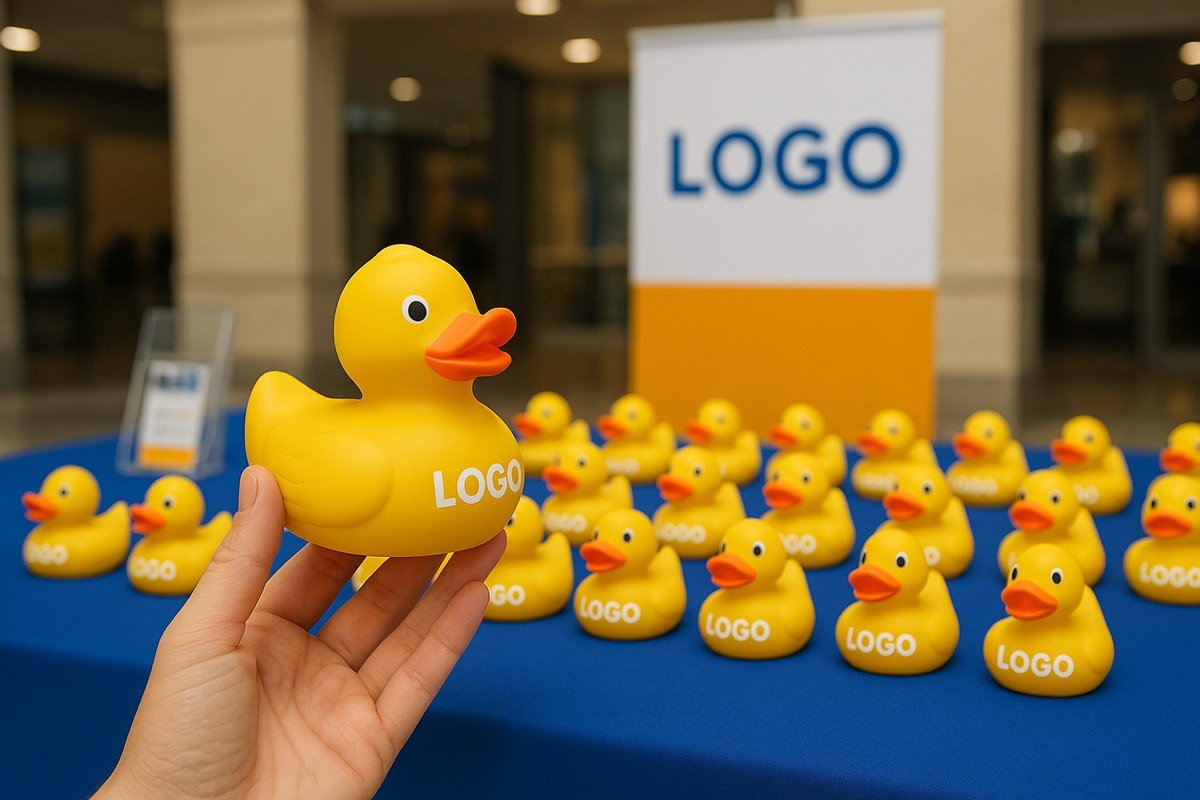
- Zero Branding or Customization: Retail ducks come naked — no logo, no tag, no QR code pointing to your club’s website or registration page. You can hand-label them yourself, but at scale that’s thousands of hours of labor with inconsistent results. A professional B2B order includes pad-printed logos or custom-printed weather-resistant tags for roughly $0.05–$0.15 extra per unit — less than the cost of one retail pack’s shipping.
Custom Jeep Ducks Cost Breakdown for Clubs
Most club organizers overpay because they don’t understand how mold fees scale.
The single biggest mistake that Jeep clubs make when moving from retail packs to custom ducks is fixating on the wrong number. They see a $2,000 mold fee and think ‘that’s expensive,’ without realizing that same fee drops to $0.40 per duck on
- Mold Fee Reality: A steel injection mold for a standard-size PVC duck runs $1,500–$3,000. That’s a one-time cost. At 1,000 units it adds $1.50–$3.00 per duck; at 5,000 units it drops to $0.30–$0.60 per duck. Most clubs never order more than one mold run, so the amortization math heavily favors higher quantities.
- Unit Price Floor: At 5,000+ units the base duck cost (excluding mold) falls below $0.90 each — FOB factory. That’s an 80%+ savings versus the $5–$12 per-unit cost of desktop 3D-printed PLA ducks sold by hobbyist shops on sites like myJeepDuck or Etsy.
- 3D Printing Trap: Those ‘custom’ PLA ducks look great in photos but are printed one at a time on consumer-grade machines. Lead time for 200 units can stretch 6–8 weeks because each print takes hours. The material is brittle — drop one on pavement and it cracks — and PLA cannot pass CPSIA or EN-71 safety testing required for public events where children might handle them.
- PVC Molding Advantage: Mass-produced PVC ducks come off a multi-cavity mold every few seconds. Color is mixed into the vinyl before injection, so every duck is identical. Surface detail is sharper than any FDM print can achieve, and the material passes phthalate-free and heavy-metal testing out of the box.
| Cost Component | Retail / 3D-Printed (B2C) | Bulk Custom PVC (B2B) |
|---|---|---|
| Per-Unit Cost (1,000+ qty) | $5.00 – $12.00 | $0.90 – $1.50 |
| One-Time Mold Fee | Not applicable (no mold) | $1,500 – $3,000 |
| Custom Logo Printing | Not available or limited | Included in setup ;pad -print or screen -print |