Skip to content
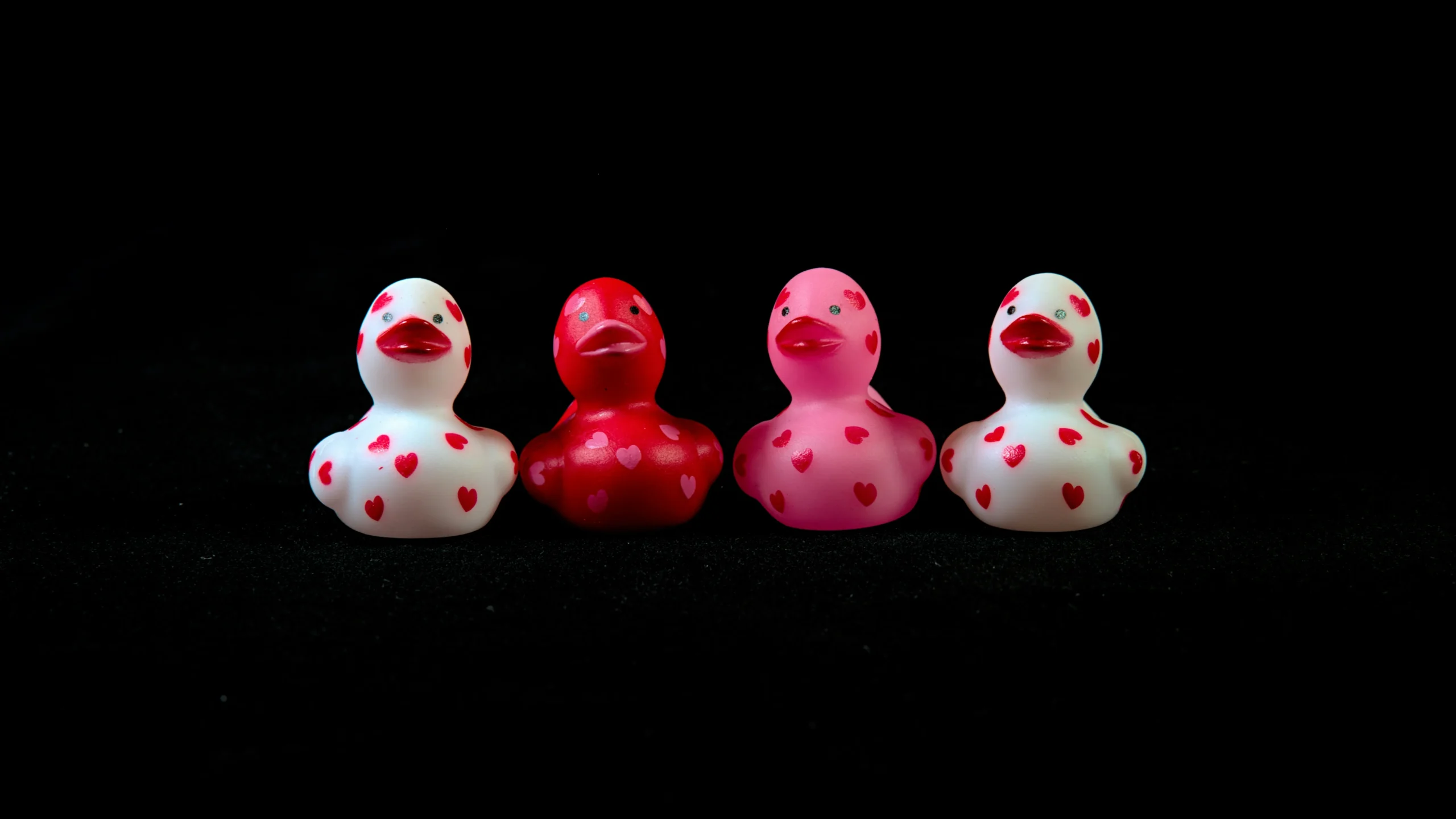
rubber duck branding is the first checkpoint buyers should lock before they approve a supplier, budget, or production slot. I watched a brand manager unbox 50,000 custom rubber ducks for a hotel chain launch last year. The logo was supposed to be a crisp, two-color pad print on the chest. What came out of the crate looked like a toddler had stamped them with a wet sponge. That $50K order sat in a warehouse because the pre-production sample they approved didn’t match the mass production run. The problem wasn’t the design file—it was that nobody asked the supplier how they planned to bond the ink to the PVC surface.
Rubber duck branding sounds simple until you’re staring at a color mismatch or ink that flakes off after one bath. Most buyers jump straight to comparing unit costs and miss the engineering gap between printed logos and molded ones. Pad printing on standard PVC requires corona treatment—a surface zap that etches microscopic pores so the ink actually sticks. Skip that step, and your logo is just sitting on top of the plastic, waiting for friction or hot water to peel it off. I’ve seen suppliers quote $0.12 per imprint without mentioning this treatment, then blame the buyer when adhesion fails.
The real decision comes down to how many ducks you need and how permanent you want the branding to be. For runs under 5,000 units with multi-color artwork, pad printing gives you flexibility and keeps setup costs below $150 per color. But if you’re ordering above that threshold—or you need a logo that survives dishwashers and pool chlorine—molded texturing eliminates ongoing printing costs entirely. The trade-off is a steel mold insert that runs $200 to $1,000 upfront and pushes minimums to 3,000 units minimum.
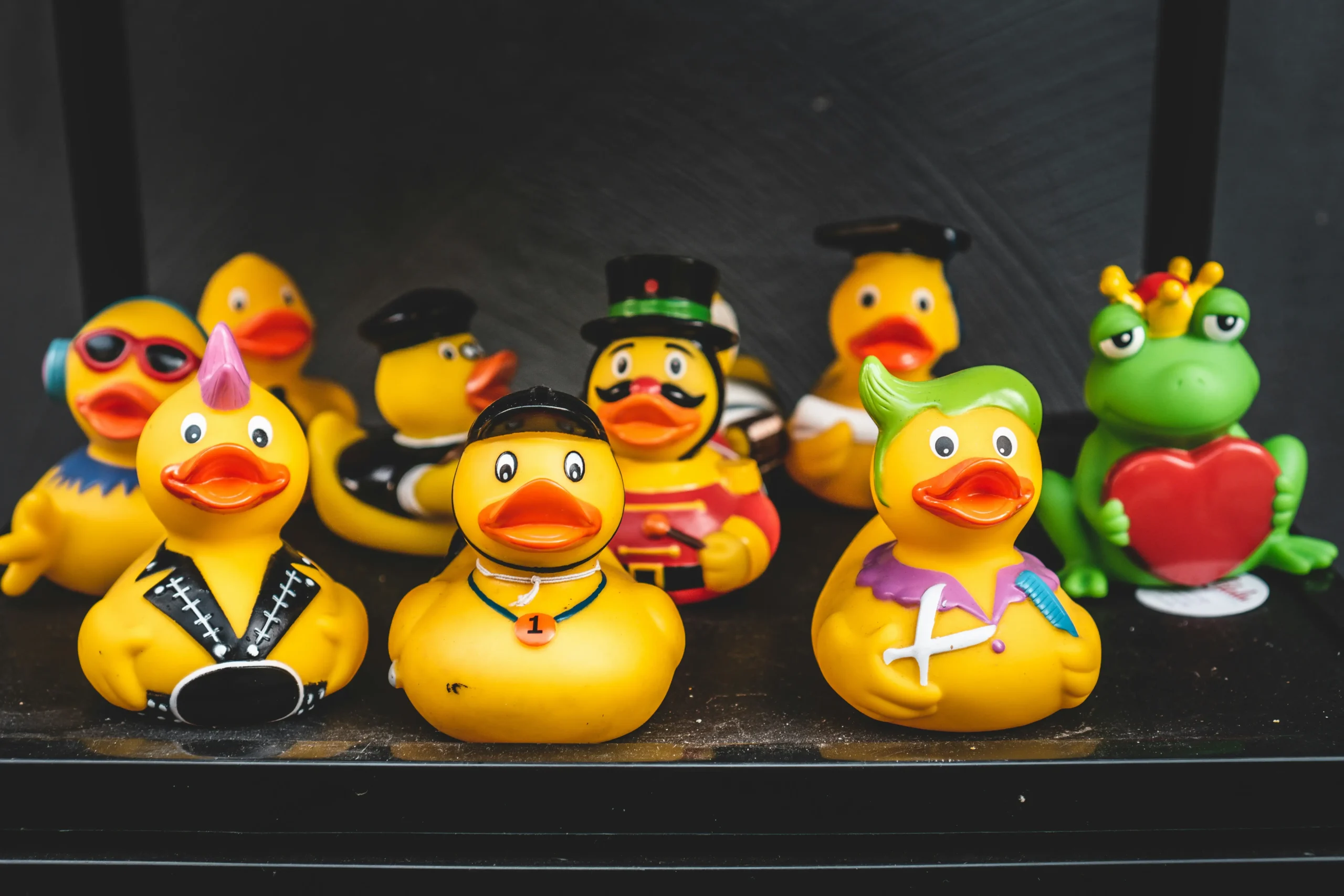
Why Most Custom Rubber Duck Branding Fails: The Hidden Risks
Ink adhesion and mold registration fail on 1 in 4 custom duck orders.
I’ve seen a brand manager open a sealed carton of 5,000 promotional rubber ducks at a trade show booth, only to find the logo had flaked off during transit. That’s ink adhesion failure — and it’s the most common reason custom rubber duck branding fails. The root cause is almost always surface preparation. PVC, the standard material for injection-molded ducks, has a low surface energy. Ink won’t bond unless the duck undergoes corona treatment or flame plasma treatment before printing. Most low-cost suppliers skip this step because it adds $0.02–$0.05 per unit and slows the line by about 15%. Without it, the logo can peel after a single hot-water soak or even during high-humidity shipping.
- Ink adhesion failure: PVC requires corona discharge (38–42 dynes/cm) before pad printing. If the supplier cannot provide a surface-energy test report or a cross-hatch tape-pull test result, assume they skipped treatment. Ask for video of the print line — if you see bare ducks going straight to the pad printer without a visible corona wand, flag it immediately.
- Mold misregistration: When buyers order custom shape rubber duck branding with embossed logos, they often assume any mold shop can hold ±0.2 mm registration between two mold halves. In reality, many budget toolmakers use manual alignment jigs that drift over long production runs. The result: logos that appear shifted left on one batch and right on the next — obvious when you place two ducks side by side at an event display.
The fix for mold misregistration is not negotiable: request first-article inspection reports showing cavity-to-cavity alignment across all cavities in the tool. For steel-mold inserts (required for true molded logos), ask how many shutoffs are used — fewer than three shutoffs per letter increases flash risk at logo edges. A reputable manufacturer will share these specs willingly; a supplier who hesitates likely has no process control.
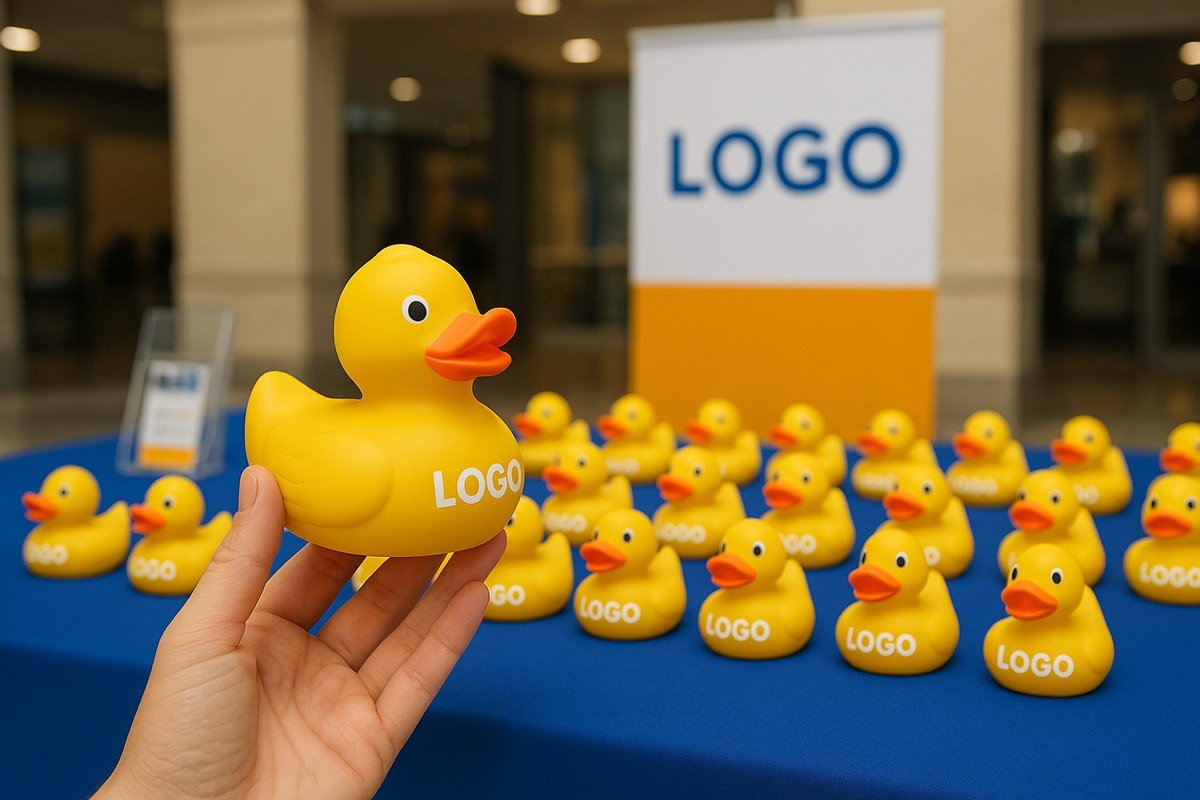
Real Cost Breakdown of Rubber Duck Branding in 2026
Pad printing is cheap—until ink peels off.
Let’s cut through the pricing fog. I’ve seen buyers sign off on a $50,000 order based on a pre-production sample that looked flawless, only to have the mass production run show ink flaking after two weeks in a hotel bathtub. That’s not a design flaw—it’s a process failure. Here’s what each branding method actually costs and why the cheapest option often isn’t.
- Pad printing: $0.10–$0.30 per duck for up to four colors. Setup fee: $50–$150 per color. The catch: PVC is non-porous, so ink won’t bond without corona treatment (a surface-energy zap that most budget factories skip). Without it, your logo lifts off after one hot-water soak.
- Screen printing: $0.15–$0.40 per duck, thicker ink deposit than pad printing, but limited to flat or gently curved surfaces—useless for the rounded belly of a duck. Setup adds $75–$200 per screen.
- Mold texturing (embossing): $800–$2,500 for a steel mold insert that presses your logo into the duck’s surface during molding. Zero per-unit cost after the mold is paid for, but you need at least 3,000 units to amortize it down to $0.27–$0.83 per duck.
- Full custom shape molding: $200–$1,000 for the initial mold (depending on complexity), plus $0.50–$1.20 per unit material cost at MOQ 3,000+. At 5,000 units, total per-unit cost equals pad printing with far better durability.
| Branding Method | Cost per Duck (1000 Units) | MOQ | Durability & Key Insight |
|---|---|---|---|
| Pad Printing (1-2 colors) | $0.80–$1.50 (incl. $0.10–$0.30 print cost) | 500–1000 units | Good for multi-color logos; requires corona treatment for ink adhesion on PVC. |
| Screen Printing (flat areas) | $0.85–$1.60 (incl. $0.15–$0.40 print cost) | Printed Logos vs Molded Logos: Which Is Better?
The core difference is when the logo is applied. Printed logos use pad printing or screen printing after the duck is molded. Molded logos are engraved or embossed directly into the mold cavity, so the logo becomes part of the duck’s surface during production. Printed methods allow unlimited color combinations and design changes between runs. Molded logos are permanent — no peeling, no fading, but you’re locked into that design for the life of the mold.
For large runs (10,000+ units), the math shifts. The one-time mold fee amortizes to under $0.10 per duck, making molded logos cheaper per unit than printed. More importantly, you eliminate per-run printing setup fees ($50–$150 per color) and the risk of color drift between batches. But there’s a catch: a true molded logo requires a steel mold insert, which costs double a simple textured surface. Some suppliers call texture ‘molded’ to quote lower. Ask for a clear spec: is the logo formed by a steel insert or by etching the main cavity? The latter fades after 50,000 cycles.  How to Source Custom Rubber Ducks Without Getting Scammed
I’ve walked through factories across a dozen countries, and the single most common mistake buyers make is skipping the Pantone color confirmation. You send a hex code or a JPEG, the supplier nods, and three weeks later you get ducks that are neon green instead of forest green. The fix is simple: request a physical Pantone color test plaque before production starts. That small plastic chip — usually $20–$50 — is your only guarantee the vinyl will match your brand guidelines. Third-party testing reports are non-negotiable if you’re selling into regulated markets. EN71 for Europe, CPSIA for the US. Many suppliers claim compliance but hand you an internal document with no lab stamp. Recycled PVC from cut-rate factories has been found to contain banned phthalates at levels exceeding legal limits by 400%. Always ask for a report from an accredited lab like SGS, TÜV, or Bureau Veritas. If the supplier hesitates or offers to “share one from last year,” walk away.
Here’s my five-step supplier vetting process that has saved clients from six-figure mistakes: Step one — verify factory registration via Alibaba Trade Assurance or a third-party audit like SEDEX or BSCI. Step two — request material certificates showing virgin PVC (no recycled content) and phthalate-free formulation. Step three — confirm their ink adhesion process includes corona treatment for PVC surfaces; without it, your logo will peel after two baths. Step four — ask for photos of previous orders with similar branding complexity to yours. Step five — call three references from their client list who ordered within the last year. How to Choose Between Printed Logos and Molded Logos Browse this product, solution, or service page to explore relevant offerings.  ConclusionBranding a rubber duck comes down to three variables: print method, order volume, and material compliance. Printed logos offer flexibility for small runs; molded logos eliminate ink durability concerns for large quantities. The retention rate for branded novelty items exceeds 80% after six months, making this one of the most cost-effective promotional investments per impression when sourced correctly. Use the per-unit cost benchmarks in this guide to evaluate your next supplier quote. For a direct comparison of printed and molded logo options, browse the Lzengo catalog to see real production examples and request a sample. Frequently Asked QuestionsHow Can Rubber Ducks Be Customized for Branding Purposes?Rubber ducks can be customized via pad printing, screen printing, mold texturing, or full custom molding. Each method affects cost, durability, and design complexity. Choose based on your budget, volume, and desired logo longevity. What is the minimum order quantity for custom logo rubber ducks?Our minimum order quantity for custom logo rubber ducks is 1,000 units. This threshold supports efficient setup and per-unit cost control. MOQ may vary for stock items or complex molds. How long does it take to produce custom branded rubber ducks?Sample lead time is typically 7 days, and bulk production depends on order size and complexity. A 12-hour mockup can be provided before sampling. Confirm exact timeline after finalizing design and quantity. Are printed logos on rubber ducks waterproof?Printed logos are water-resistant but not fully waterproof if exposed to hot water or prolonged soaking. Pad printing ink can peel if not properly cured. For bath use, consider molded logos or request adhesion testing. Can I get a sample before placing a bulk order?Yes, we offer samples with a 7-day lead time to approve design and quality. Samples are produced using the same process as bulk orders. Sample cost is typically deducted from your first bulk order. |