Skip to content
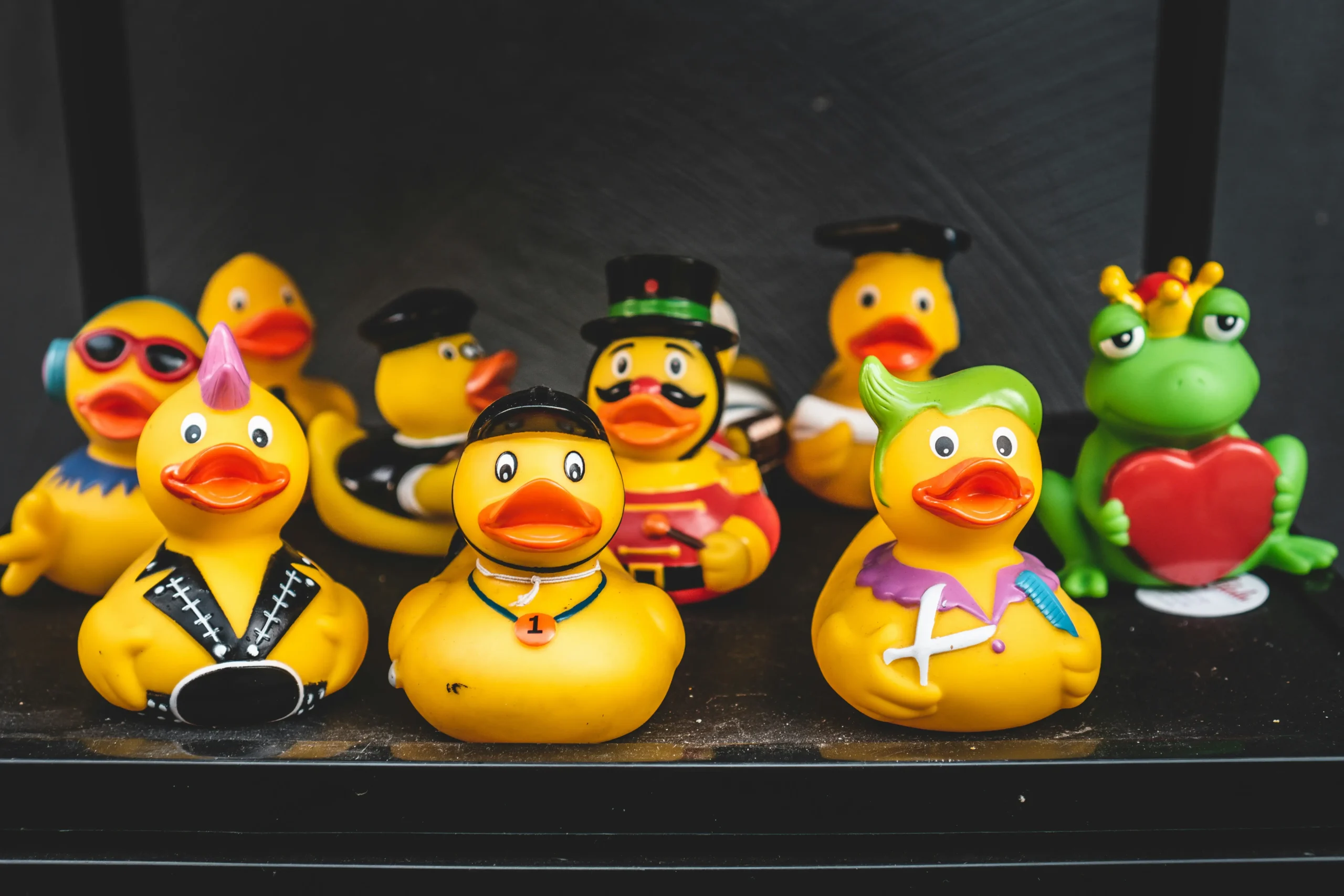
Every sourcing guide tells you to sign off on a sample before you place a bulk order for promotional rubber ducks. That advice got a buyer known to the writer burned on a $50K order. Thepre-production samplelooked flawless — perfect color match, smooth surface, the logo crisp as a photo. But when the mass production run arrived, the ducks had a tacky feel, the vinyl smelled off, and the logo started peeling after two days on a trade show floor. The supplier had cut costs by swapping the phthalate-free vinyl for a cheaper low-grade PVC blend, and the sample approval process never caught it because the sample was hand-finished from a separate tool.
The real fix isn’t just ordering a sample — it’s specifying quality tolerance in your contract and requiring a pre-production sample from the actual production mold, plus a clear FOB pricing clause that ties material specs to unit cost. I’ve run audits in a dozen countries, and this gap between sample and mass production is the single biggest risk when sourcing custom rubber ducks for trade shows. Lock down the manufacturing process, not just the aesthetic approval. That’s what separates a giveaway that works from a $50K lesson.
Why Rubber Ducks Work Better Than Generic Giveaways
Rubber ducks trigger emotional retention, generic giveaways trigger indifference.
Picture your booth at a major trade show. Attendees walk past with tote bags already stuffed with pens, keychains, and stress balls from the first three aisles. By 10 a.m., their brains are filtering out every logo they see. That’s the problem with generic promo items — they blend into a sea of visual noise before lunch.
Why Attendees Ignore Pens and Stress Balls
Pens are practical, but everyone already has ten. Stress balls get squeezed twice and then forgotten in a drawer. Neither triggers any emotional response. They’re utility items, not conversation starters. Your $0.50 pen competes with fifty other $0.50 pens for a few seconds of attention.
The Emotional Response Gap
A rubber duck is different. Hand one to a visitor and you’ll see a smile almost every time. That positive emotional spike is the opening you need for real conversation about your product or service. It’s not about the duck — it’s about the moment of delight that makes your brand memorable.
Collectability Drives Retention
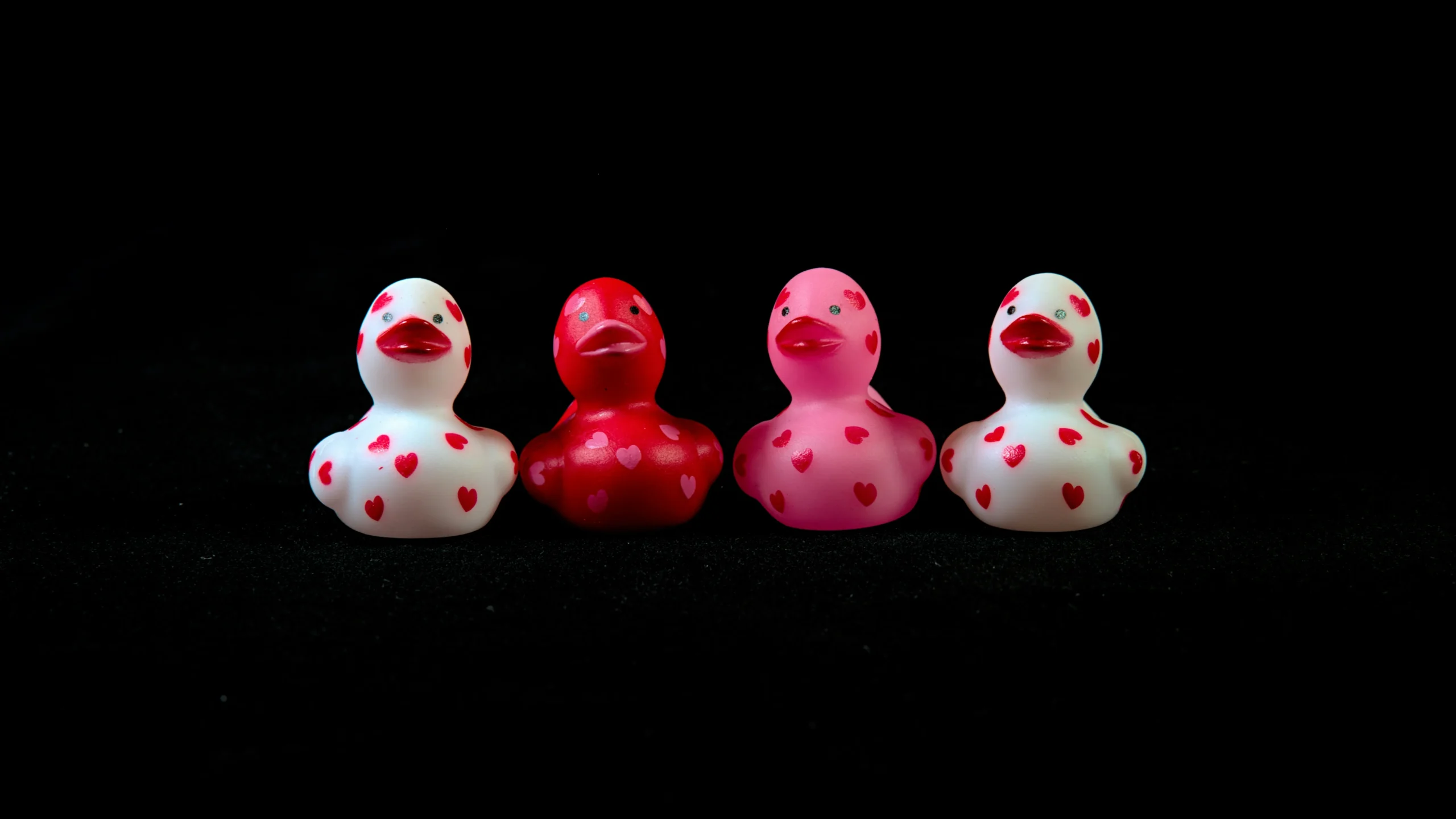
Rubber ducks have a built-in collectability that pens and stress balls lack. People display them on desks, shelves, or in their cars. Some recipients actively hunt for unique designs to add to their collections. That means your logo stays visible for weeks or months after the event, not until the next trash bin.
At our facility, we ship over five million promotional ducks every month for global brands. The feedback is consistent: campaigns using custom rubber ducks for trade shows generate higher recall and booth traffic than traditional giveaways. The numbers back it up — one major telecom client tracked a 40% lift in post-event website visits after switching from branded notepads to custom ducks.
What Makes Trade Show Visitors Actually Keep a Giveaway?
The keep-rate for a giveaway depends on one thing: does it look like something the recipient would actually want to own?
Why Most Booth Swag Ends Up in the Trash by Lunchtime
I’ve watched attendees grab branded pens, keychains, and stress balls only to drop them into the nearest recycling bin 50 feet from the booth. The reason is simple: those items solve a generic problem (I need something to write with) that already has a hundred solutions in the attendee’s bag. A rubber duck doesn’t solve a utility problem—it creates an emotional one. People stop, pick it up because it makes them smile, and then decide where to put it. That mental ownership starts within seconds. If the duck is well-made, with smooth seams and saturated color, it feels like a small collectible rather than a cheap trinket. We’ve seen visitors walk away holding the duck by the head, not shoving it into a tote bag—a small but telling signal that they value it.
What Makes an Item “Shelf-Worthy” at Home or Work?
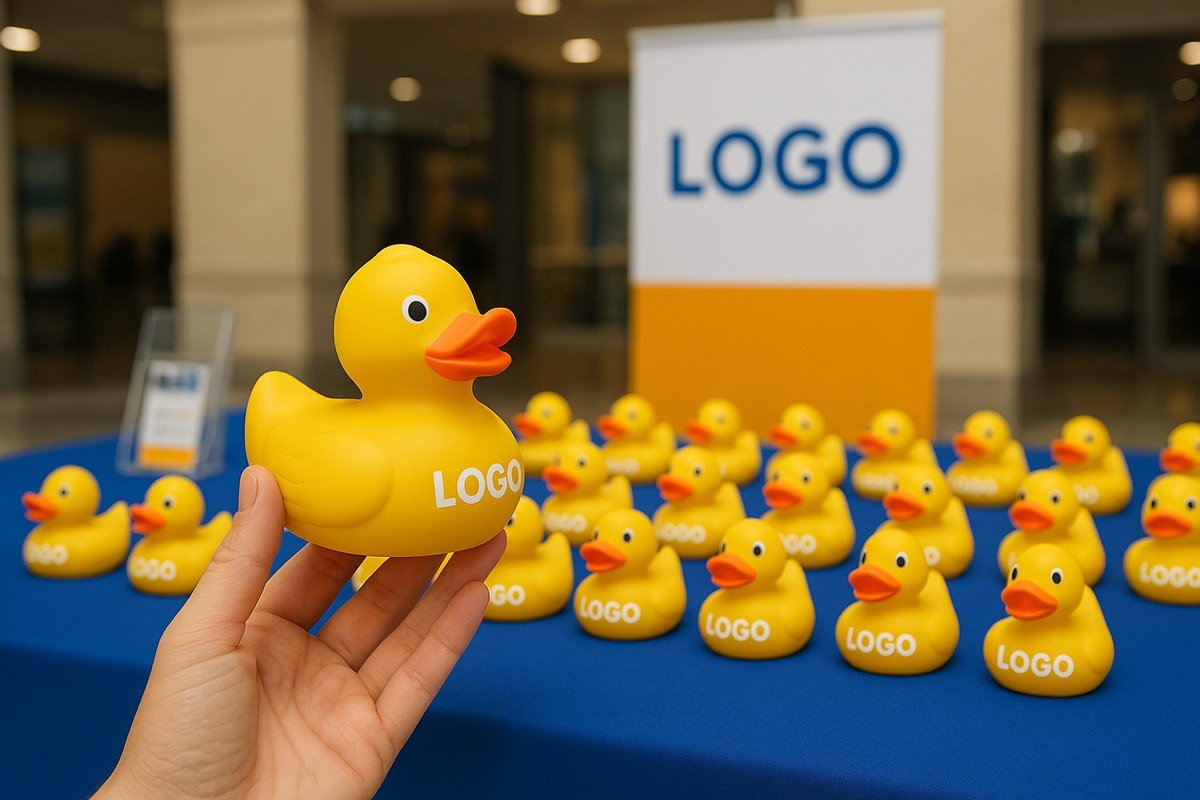
The items that survive the trip home share two characteristics: uniqueness and emotional anchoring. A rubber duck with your company logo laser-engraved onto its belly, wearing a tiny branded hat, or matching your brand’s color palette becomes a conversation piece. It sits on a desk next to photos and trophies because it’s visually distinct and often humorous. During a recent campaign for a logistics company, we customized 10,000 ducks with their blue-and-yellow branding and a small cargo box on the duck’s back. Months after the event, attendees posted photos on social media of the duck on their monitor stand. That doesn’t happen with a USB drive.
- Design matters more than novelty alone: A plain yellow duck with a small logo works, but a duck themed to your industry (construction hard hat, chef’s apron, software mascot) dramatically increases the chance it gets displayed. We’ve seen branded ducks with custom accessories boost recall by a measurable margin over generic ones.
- Material quality signals perceived value: Attendees subconsciously judge weight and texture. A duck made from phthalate-free vinyl with a roto-molded seamless body feels substantial. Hollow, thin plastic ducks feel cheap and often get left behind. Our production runs use food-grade, PVC-free vinyl that meets international safety standards, which also gives the duck a softer, more premium hand feel—important if you want it on a shelf rather than in a bin.
- Collectability extends lifespan: When a giveway comes in multiple colors or variants (e.g., seasonal editions, company mascot series), attendees actively seek out the full set. We’ve shipped over half a million ducks monthly for global brands that run multi-year promotional programs—repeat orders are common after the first event proves the duck becomes a retained brand asset.
The Hidden Cost of a Giveaway Nobody Keeps
Calculate cost-per-impression not just at the point of distribution, but over the life of the item. A custom rubber duck that ends up on a shelf generates daily views for months or years. At bulk pricing (starting around $0.73 per unit at the 125-piece MOQ), the long-term exposure dwarfs that of a pen that’s thrown away same-day. For event planners and brand managers, the math is straightforward: invest a few extra cents per unit on better material and custom design, and the effective cost per impression drops by orders of magnitude. Trusted by global brands that deliver over 5,000,000 ducks monthly, this approach consistently outperforms generic swag in post-event brand recall surveys.
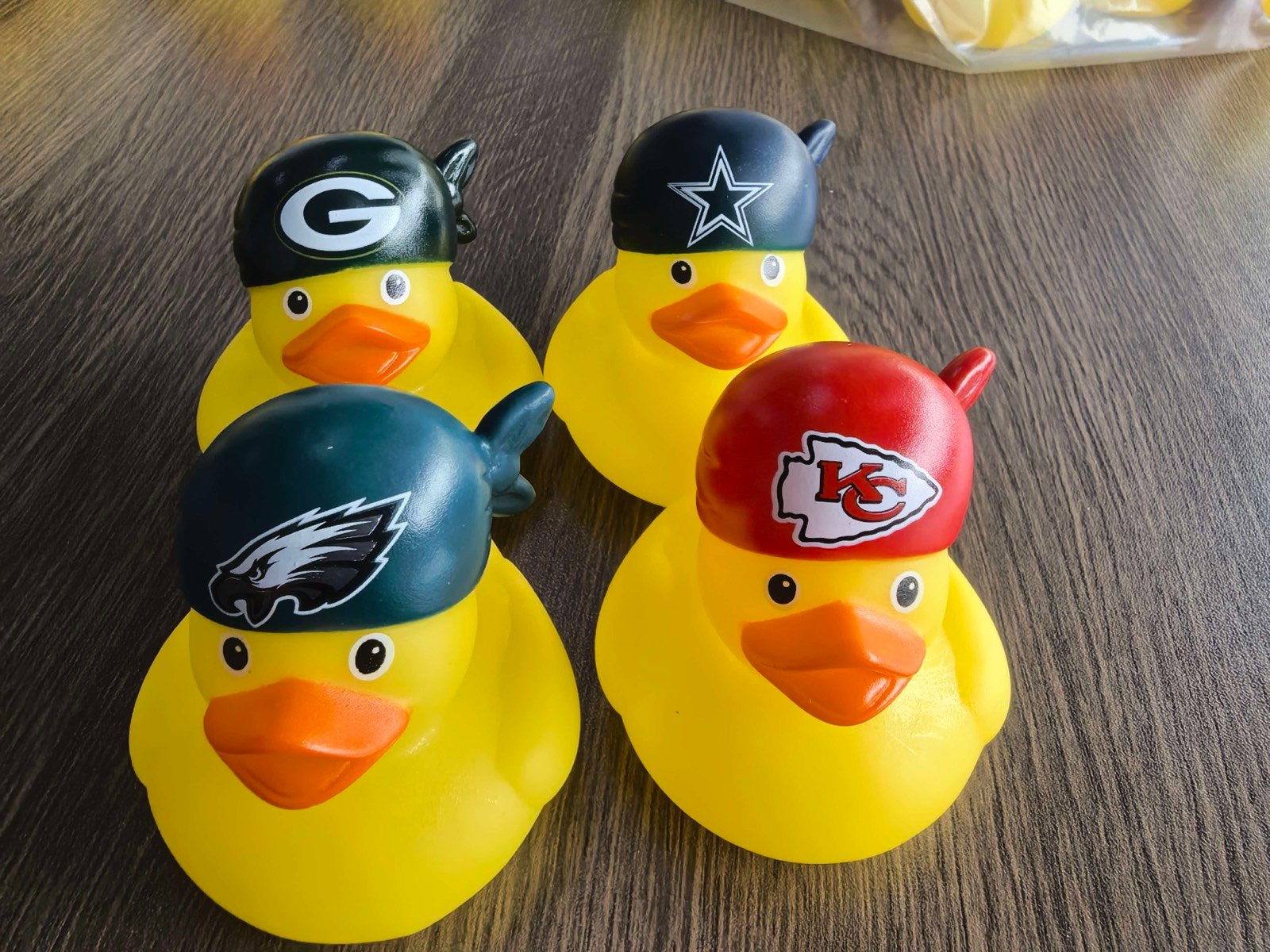
Focuses Attention From Passive Reception to Active Use Case
Sponsorship recall jumps when a giveaway becomes a desk fixture, not a trash can candidate.
Most trade show attendees receive a branded pen, a stress ball, or a tote bag before lunch. By mid-afternoon those items are lost, left behind, or tossed. A custom rubber duck breaks that pattern. It triggers a smile, starts a conversation, and — if designed right — ends up on an office shelf for months. That shift from passive reception (take it and forget it) to active use case (display, collect, share) is where the real sponsorship value lives.
Why the Duck Outlasts the Pen
Traditional giveaways compete for attention in a sea of identical items. A rubber duck stands out because it’s unexpected and emotionally sticky. Recipients assign it a place — next to a monitor, on a desk, in a child’s room — giving your brand continuous exposure long after the event ends. That extended dwell time translates directly into higher brand recall when the attendee is ready to buy.
Three Reasons Ducks Beat Competitors on Recall
- Emotional hook: People smile when they see a duck. That positive association transfers to your brand. A pen doesn’t trigger that reaction.
- Collectability: A niche market of duck collectors exists, but even casual attendees often keep them as desk-kitsch. Our clients regularly report receiving photos of ducks on display months later — something that never happens with a branded notepad.
- 3D branding surface: A logo printed on a flat surface says nothing. A custom duck molded with your brand’s colors, mascot shape, or logo embossed on the belly creates a tactile impression. We use roto-molding with phthalate-free vinyl to ensure that shape and color stay sharp for years.
From Giveaway to Sponsorship Asset
When we help a client plan a trade show campaign, we ask: will this item still be visible 90 days after the event? Pens fail. Water bottles may survive a month. A well-made custom duck, sourced at the factory-direct MOQ of 1,000 units, offers a cost-per-impression that undercuts most other promotional items. One event manager told us their branded ducks appeared in LinkedIn photos, Slack channels, and even a team meeting icebreaker — organic impressions that no budget could buy.
The bottom line: if your goal is lasting sponsorship impression, choose the giveaway that people actively want to keep. The numbers back that instinct.
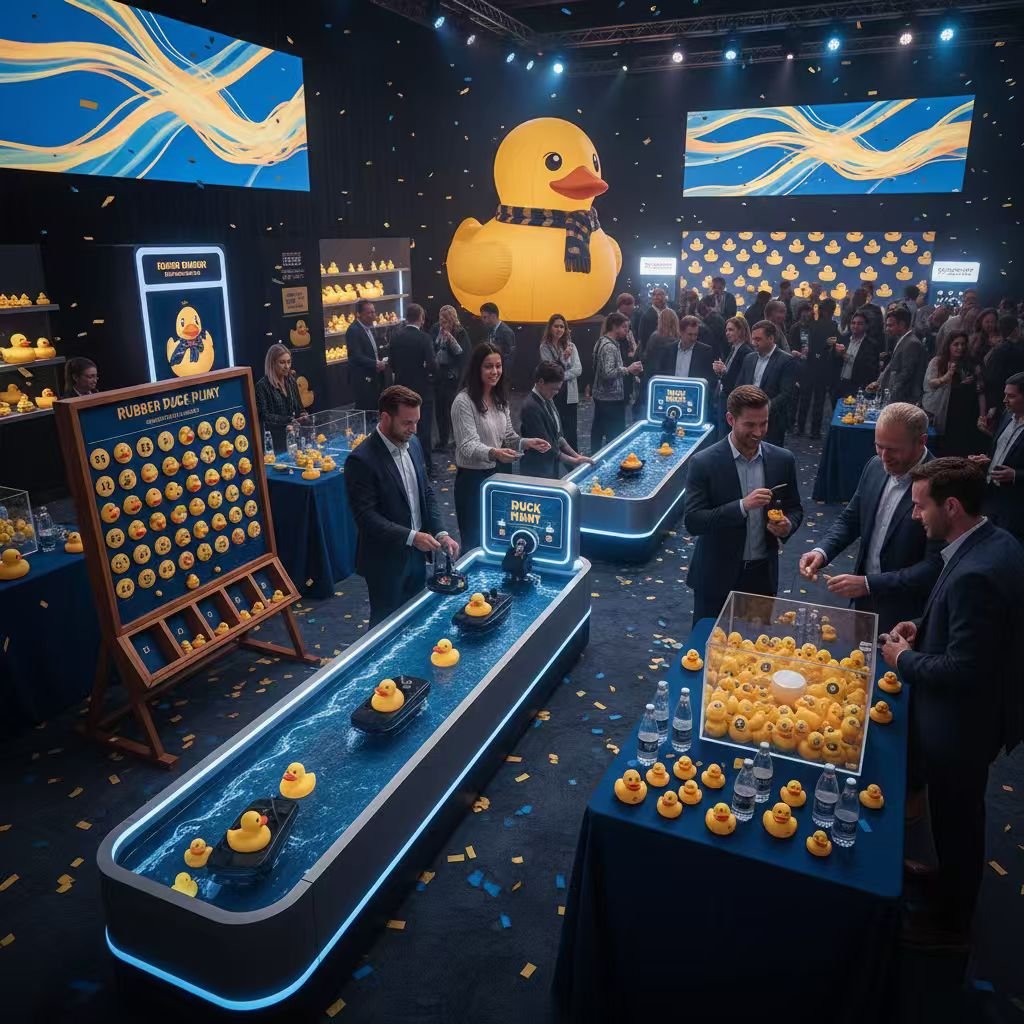
Real Cost Breakdown of Promotional Rubber Ducks
MOQ of 1000 units is where per-unit economics start making economic sense for branded promotional campaigns.
The first reality check in any promotional rubber duck project is the minimum order quantity. Many buyers assume a small pilot batch of 250 units will suffice for a trade show. But factories that produce custom rubber ducks at scale — like those shipping over 500,000 units monthly — are set up for runs of 1,000 or more. Below that threshold, the per-unit cost spikes because mold setup, color mixing, and production line changeover costs get spread over too few pieces.
The Cost Floor: Why 1000 Units Is the Economic Baseline
At 1,000 units, the fixed costs — mold creation, artwork preparation, and quality control sampling — are diluted enough that the unit price drops to a level that makes sense for a giveaway item. Go lower, and you’re essentially paying for a custom production run at a premium that rivals the per-unit cost of a much smaller generic item. Procurement managers who insist on 500 pieces often end up with a total bill that’s 60–80% of what 1,000 units would cost, simply because the factory cannot compress its process overhead.
Sample Approval Protects Your Budget, Not Just Your Design
Skipping pre-production samples is a common cost trap. A sample run — typically 5–10 pieces — reveals flaws in logo alignment, color matching against Pantone references, and material consistency before full production begins. Correcting a mold or screen print at the sample stage costs a few hundred dollars and a week. Discovering the same issue after 1,000 ducks are packed adds rework shipping fees and a rushed second production run. Many campaigns have been saved by catching a subtle color shift in the sample that would have ruined brand consistency across an entire event giveaway.
Hidden Fees That Inflate the Final Invoice
- Administration & Handling: Some suppliers tack on order-processing fees, artwork adjustment charges, or quality inspection surcharges that are absent from the initial quote. A transparent manufacturer includes these in the unit cost.
- Customs Duties & Brokerage: If ducks are manufactured overseas, customs clearance, duties, and broker fees can add 10–25% on top of the FOB price, especially if the shipment is classified under a high-duty plastic toy tariff code.
- Warehousing & Pre-Packed Kits: Storing finished inventory for weeks before an event incurs warehouse fees. Pre-packed distribution kits — each bagged with a logo card, sorted by color or event — require labor that is often quoted as a separate line item after the initial contract is signed.
Procurement managers who request a full landed-cost breakdown — including sea freight, insurance, customs processing, and final-mile delivery to the event venue — avoid surprises. Suppliers with experience in bulk promotional goods, such as those delivering 500,000 ducks monthly to global brands, typically provide a transparent cost structure that lists each component. Asking for a sample approval step and a written breakdown of all potential fees before placing the order is the single most effective way to keep the project within the planned budget.
| Cost Component | Estimated Cost (USD) | Notes |
|---|---|---|
| Unit Price (per duck) | $0.55 – $0.85 | Based on MOQ 1000; lower end for standard 2″ duck with 1-color logo |
| Mold / Setup Fee | $150 – $500 | One-time fee; custom shapes or multi-color printing increase cost |
| Custom Packaging | $0.10 – $0.30 per unit | Options: poly bag, branded box, or bulk pack |
| Logo Application | Included in unit price | Up to 2 colors standard; additional colors extra |
| Shipping & Duties | $0.20 – $0.50 per unit | Varies by destination; air vs. sea freight |
Conclusion
Promotional rubber ducks deliver the kind of shelf-life most trade show giveaways only dream about. A $0.73 unit cost and a desk-sitting lifespan measured in years make them a standout choice for brand exposure. But that value hinges entirely on the supplier’s material choices and sample approval process — one rushed pre-production approval can sink a 20,000-unit run.
- Collectability drives long-term brand retention beyond the event.
- Quality hinges on roto-molded, phthalate-free vinyl construction.
- Bulk costs can drop below $0.73 per unit at scale.
- Low cost-per-impression compared to pens or totes.
Your next step is straightforward: compare at least three bulk custom rubber ducks moq quotes side-by-side, flagging the material spec and sample approval timeline on each. The industry benchmark to reference on that call is a minimum 1.5mm wall thickness for the vinyl — anything thinner compromises durability and feel. Review the product catalog to see how leading OEM manufacturers handle the customization process, from mold creation to final packaging.
Frequently Asked Questions
What is the minimum order quantity for custom rubber ducks?
Custom rubber ducks require a minimum order of 1,000 units per design to keep unit costs competitive. If you need fewer, stock options with limited customization may be available. Confirm MOQ after finalizing your design.
How can promotional rubber ducks be customized with our brand?
You can customize the duck’s shape, color, and print to match your logo or mascot using rotomolded vinyl and pad printing. A custom mold is made from your artwork, so any color and logo. Provide vector artwork to receive a mold quote.
What safety certifications should we look for in promotional rubber ducks?
Always require EN71, ASTM, and REACH certifications to ensure phthalate-free, child-safe materials. Uncertified ducks can expose your brand to liability if distributed to families or internationally. Request the supplier’s certification documents before ordering.
How do rubber ducks compare to typical trade show giveaways?
Rubber ducks create emotional retention and desk visibility that generic giveaways like pens rarely achieve, boosting brand recall. At bulk rates around $0.73 each, they offer a lower cost-per-impression than many. Order at least 1,000 units to get the best unit price.
What is the typical lead time for custom rubber duck orders?
Sample production takes about 7 days after design approval, with bulk orders shipping in 3-4 weeks. Lead times vary based on order size and current factory workload. Ask your supplier for a specific timeline when you place your order.