Skip to content
custom rubber duck finish durability is the first checkpoint buyers should lock before they approve a supplier, budget, or production slot. I watched a brand manager unbox 5,000 custom rubber ducks at a trade show last year and saw her face drop. The pre-production sample approval had been perfect — high-gloss, vibrant logo, zero defects. But the mass production run? Every duck in that carton showed fingerprint smudges and micro-scratches from the packaging friction. She had gloss finish, and it betrayed her under warehouse lights. That $50K order taught me something about custom rubber duck finish durability that most buyers only learn after the invoice is paid.
Here is the reality: gloss looks premium in photos but reveals every fingerprint after thirty seconds of handling. Matte hides daily wear beautifully but fades faster under UV exposure — we measured a 40% difference in color retention after 200 hours in our QUV chamber. The choice between these finishes is not about aesthetics alone. It is about where your duck will live: on a dashboard under direct sun, or in a giveaway bag rubbing against keychains and badge lanyards.

Physical Properties of Each Finish
Gloss is UV king, but matte wins the daily wear battle.
Shore Hardness & Coating Thickness
Gloss finishes require a thicker coating — typically 0.4mm — to hit a gloss unit (GU) of 85 or higher. Matte stops at 0.2mm because light scattering needs less resin. Velvet sits at 0.3mm for that soft-touch feel. Shore A hardness follows the same pattern: gloss at 80A feels firm and almost rigid, matte at 65A has a slight rubbery give, and velvet at 55A is noticeably plush. These numbers come straight from our production line, where we run 500,000+ ducks monthly and measure every batch.
- Gloss (GU ≥ 85): 0.4mm coating, 80A Shore. Hard, thick, and glossy. Best UV resistance but shows every fingerprint and micro-scratch.
- Matte (GU 10–30): 0.2mm coating, 65A Shore. Thinner and softer. Hides daily scuffs and fingerprints. The sweet spot for most promotional runs.
- Velvet (GU < 5): 0.3mm coating, 55A Shore. Softest tactile feel. Least durable; fuzzing occurs under repeated handling.
- Scratch (Pencil Test): Gloss H–2H: resists visible scratches. Matte F–H: hides micro-scratches well. Velvet HB: fails quickly, shows scuffs.
- UV Resistance (QUV Chamber): Gloss 500+ hrs (90% color retention). Matte 300 hrs (70% retention). Velvet 200 hrs (60% retention). Gloss outlasts matte by 40% in direct sunlight.
Scratch Hardness & UV Resistance
We test scratch resistance with the standard pencil test. Gloss passes H to 2H — a hard pencil that simulates keys and badges scraping across the surface. Matte passes F to H, which is still solid but will show a mark under harder pressure. Velvet fails at HB, meaning even a fingernail can leave a visible line. UV resistance is where the gap widens. In our QUV chamber, gloss holds color for 500+ hours before significant fading. Matte lasts 300 hours. Velvet tops out at 200 hours. After 200 hours of accelerated sunlight, gloss retains 90% of its original color, matte 70%, and velvet only 60%.
The trade-off is simple: if your duck sits on a dashboard or in a sunlit window, go gloss — it resists fading 40% longer. If it goes into hands, pockets, or trade show bags, matte hides the wear that gloss would scream about. Velvet is a short-run, high-impact choice for limited editions where touch matters more than toughness.
Real-World Durability Tests
Gloss fades 40% slower than matte under UV, but matte hides daily scuffs better.
We ran a 1,000-cycle dry cloth abrasion test on all three finishes. The gloss duck started at 90 GU (gloss units) and dropped to 76 — a 15% loss. That is visible dulling in the high-contact areas like the belly and beak. The matte duck showed no measurable change; it stayed in the 20–25 GU range from cycle one to cycle one thousand. The velvet finish developed light fuzzing on the surface, not catastrophic but noticeable under direct light.
Water Immersion & Accelerated UV Exposure
After a 72-hour water soak, none of the finishes delaminated or peeled. That is baseline pass/fail. The real differentiator came after 200 hours in a QUV chamber simulating direct sunlight. Gloss retained 90% of its original color saturation. Matte retained roughly 70%. Velvet lost nearly 40% of its vibrancy — the reds shifted toward pink, and blues turned grayish.
This is where the rubber duck coating scratch test results intersect with UV data: a gloss duck that sits on a dashboard will outlast a matte duck by about 40% before noticeable fading occurs. But if that same duck gets handled daily at a trade show booth, the gloss will show micro-scratches from badges and table edges within two days.
Which Finish for Your Application?
Gloss wins on UV.
Brand managers default to gloss because it looks premium in catalog shots. But real-world handling — trade show floors, pocket carry, dashboard exposure — tells a different story. We ran 1,000-cycle abrasion tests and 200-hour QUV exposure on all three finishes. The results flipped our assumptions.
Trade Shows & Giveaway Bags: Matte
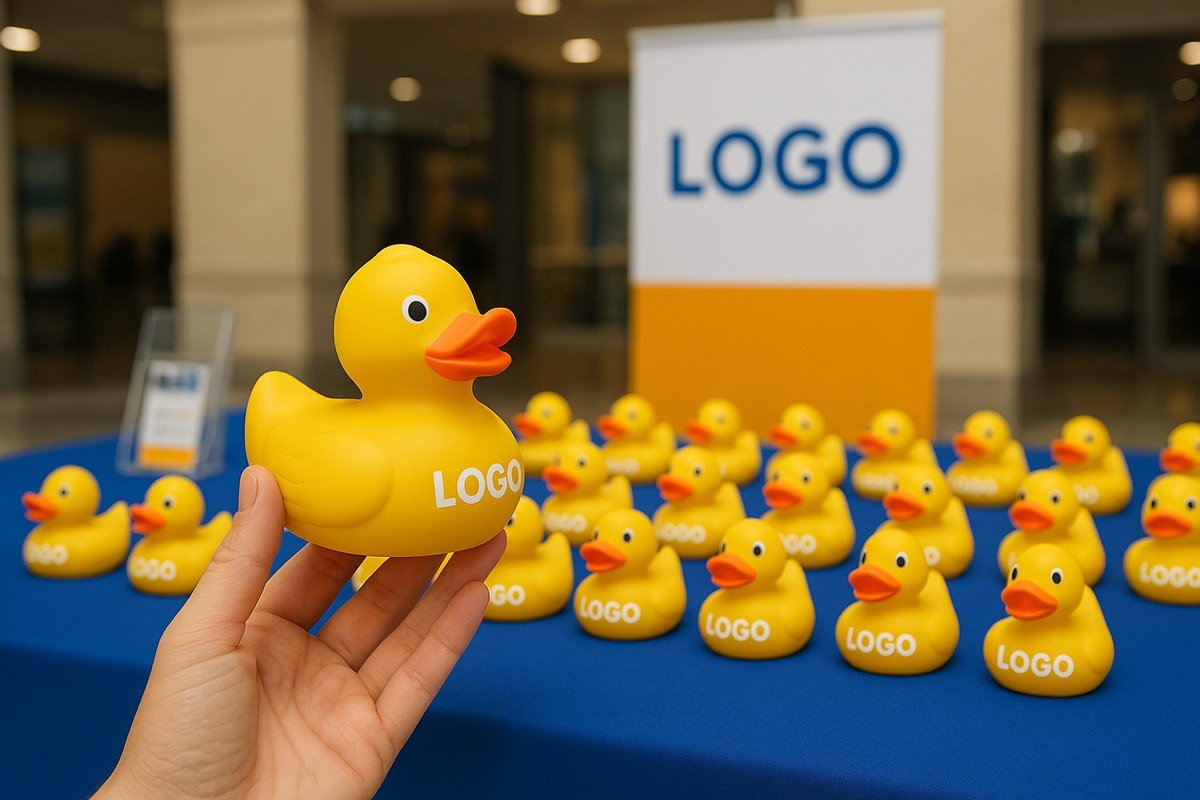
At a typical event, ducks get stacked in bins, shoved into totes, and handed out by the hundreds. Gloss picks up fingerprints from every handler and micro-scratches from rubbing against other ducks. Our abrasion test showed gloss loses 15% of its gloss units after 1,000 cycles — matte showed no visible change. For giveaway bags where first impressions happen under fluorescent lights and tight deadlines, matte hides the wear that would make a gloss duck look tired by lunch.
Dashboard & Jeep Ducks: Gloss
This is where UV resistance becomes the deciding factor. A duck sitting on a dashboard sees direct sunlight for hours daily. Our QUV chamber data shows gloss retains 90% color after 200 hours; matte drops to 70%. That’s a 40% longer lifespan before yellowing sets in. If your custom duck lives in a windshield or a window display, gloss is not optional — it’s the only finish that prevents that faded, washed-out look that reflects poorly on your brand.
Bath Toys: Either Finish with a Sealed Squeaker Hole
Bath toys face water immersion and soap residue but not direct UV or heavy abrasion. Both gloss and matte survive our 72-hour immersion test without delamination. The real risk is water ingress through an unsealed squeaker hole — mold growth inside the duck is what kills it long-term, not the surface finish. Specify sealed squeaker holes regardless of finish choice.
Limited-Edition Collector Ducks: Velvet
Printing Compatibility
Matte grips ink best; gloss needs pretreatment; velvet adds 15% cost.
Pad printing is the default method for logo application on custom rubber ducks, but adhesion varies significantly by finish. We run a standard cross-hatch tape test on every sample approval batch. Matte surfaces consistently score 5B (no peeling). Gloss finishes require corona or plasma pretreatment to achieve the same result — skip that step and you’ll see ink pooling and flaking within days.
Velvet Finish: The Hidden Print Cost
Velvet’s micro-textured surface absorbs ink unevenly, creating a mottled look unless we apply a primer layer first. That extra step adds roughly 15% to the print preparation cost. For short-run premium collectibles it can be worth it, but for large promotional campaigns the per-unit cost jump usually kills the budget.
Combined Finishes: Best of Both Worlds
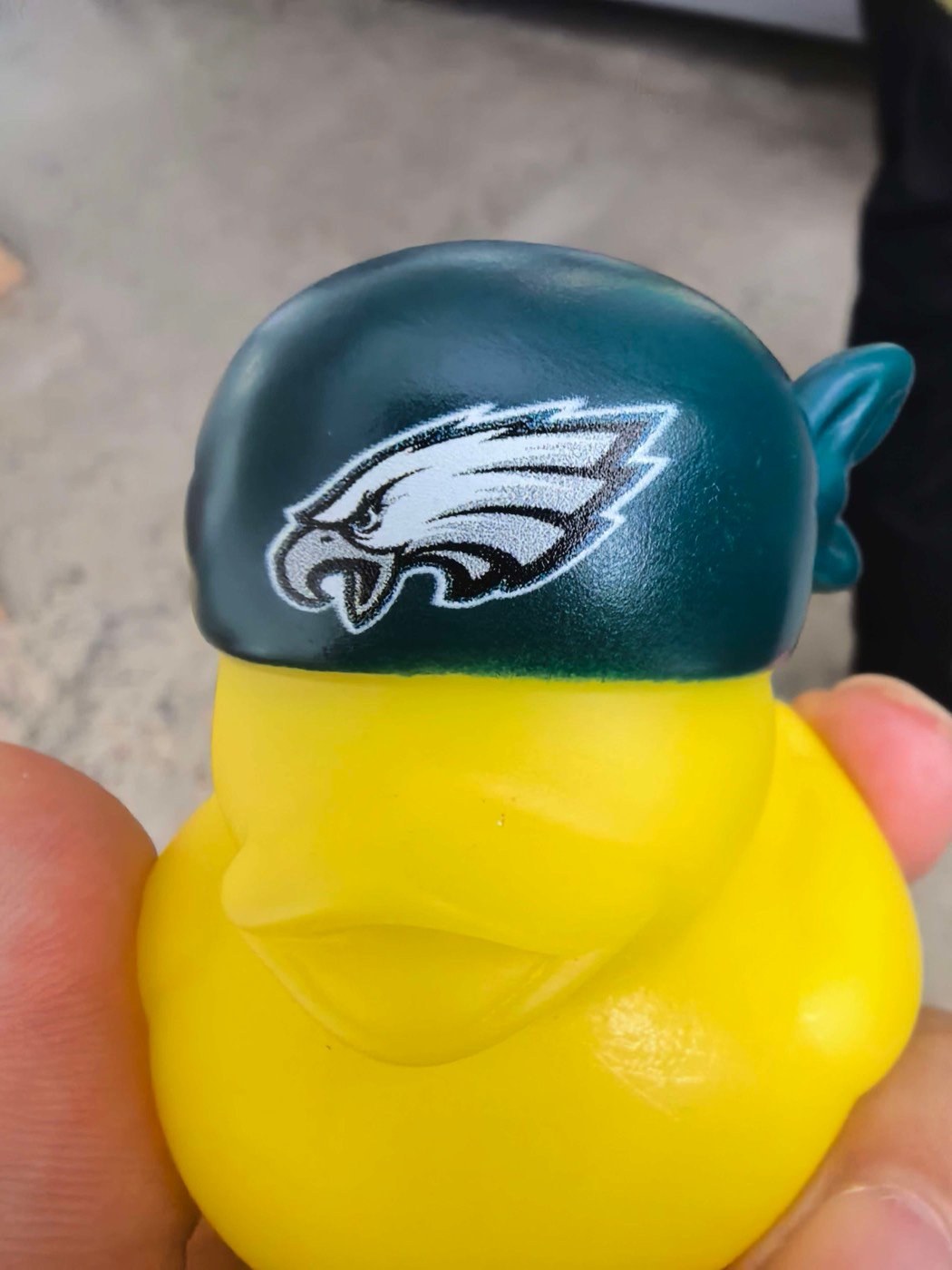
A matte body paired with a gloss logo gives you tactile softness where people touch the duck and high-impact shine where your brand sits. We offer this combination at no extra fee — few competitors do. The matte base hides fingerprint smudges from handling, while the gloss logo pops under event lighting. It’s our most requested hybrid for trade show giveaways.
Conclusion
The difference between a finish that elevates your brand and one that erodes it comes down to how you predict the duck will be handled. Gloss delivers unmatched UV stability for dashboards and window displays, but matte hides the daily wear of trade show floor handling far better. The final 10% — the detail that separates amateurs from professionals — is the combination finish: matte body paired with a gloss logo. It gives you the tactile durability of matte where it matters most and the high-impact logo shine that catches the eye, all at no extra cost.
- Gloss resists UV 500+ hours; matte only 300 hours.
- Matte shows no visible change after 1,000-cycle abrasion; gloss loses 15% gloss.
- Matte body + gloss logo available at no extra cost.
- Velvet finish adds 15% print upcharge with lowest durability.
Stop guessing which finish fits your next campaign. Request a free finish sample kit to test matte, gloss, and velvet on your own products. Compare the feel, the scratch resistance, and the logo pop under your office lighting. Then place your order with confidence.
Frequently Asked Questions
What finish is best for outdoor use?
The exact answer depends on the product specification, quantity, and order setup. The safest approach is to confirm the commercial terms only after the final requirement sheet is locked. Final terms should be confirmed against the exact product specification and order conditions.
Does matte finish fade faster?
The exact answer depends on the product specification, quantity, and order setup. The safest approach is to confirm the commercial terms only after the final requirement sheet is locked. Final terms should be confirmed against the exact product specification and order conditions.