Skip to content
Glitter and Metallic Rubber Ducks: How the Finish Is Actually Applied
A glitter or metallic duck stops a shopper mid-aisle in a way flat yellow never does. The shine reads as premium, photographs well on social, and gives a promotional line an obvious seasonal angle. What most buyers do not realize is that the sparkle is not paint you can spray on any shell. It is a specific combination of substrate, additive, and print method, and getting the order right means understanding which of those levers actually produces the effect you pictured.
Where the Sparkle Comes From
There are two honest routes to a shimmering duck. The first is a glitter or pearl pigment blended into the vinyl before molding, so the sparkle sits through the whole body and cannot rub off. The second is a surface effect, a metallic or glitter ink laid onto a cured shell by pad or UV printing. Bulk pigment gives an all-over frost; surface printing gives sharp, logo-shaped shine. As glitter manufacturing notes, flake size and material drive both the sparkle and how well it bonds, so this choice is a spec, not a preference. A UV versus pad printing comparison explains which method holds fine line detail and which is better for a full-coverage glitter field.
Picking a Color That Survives Production
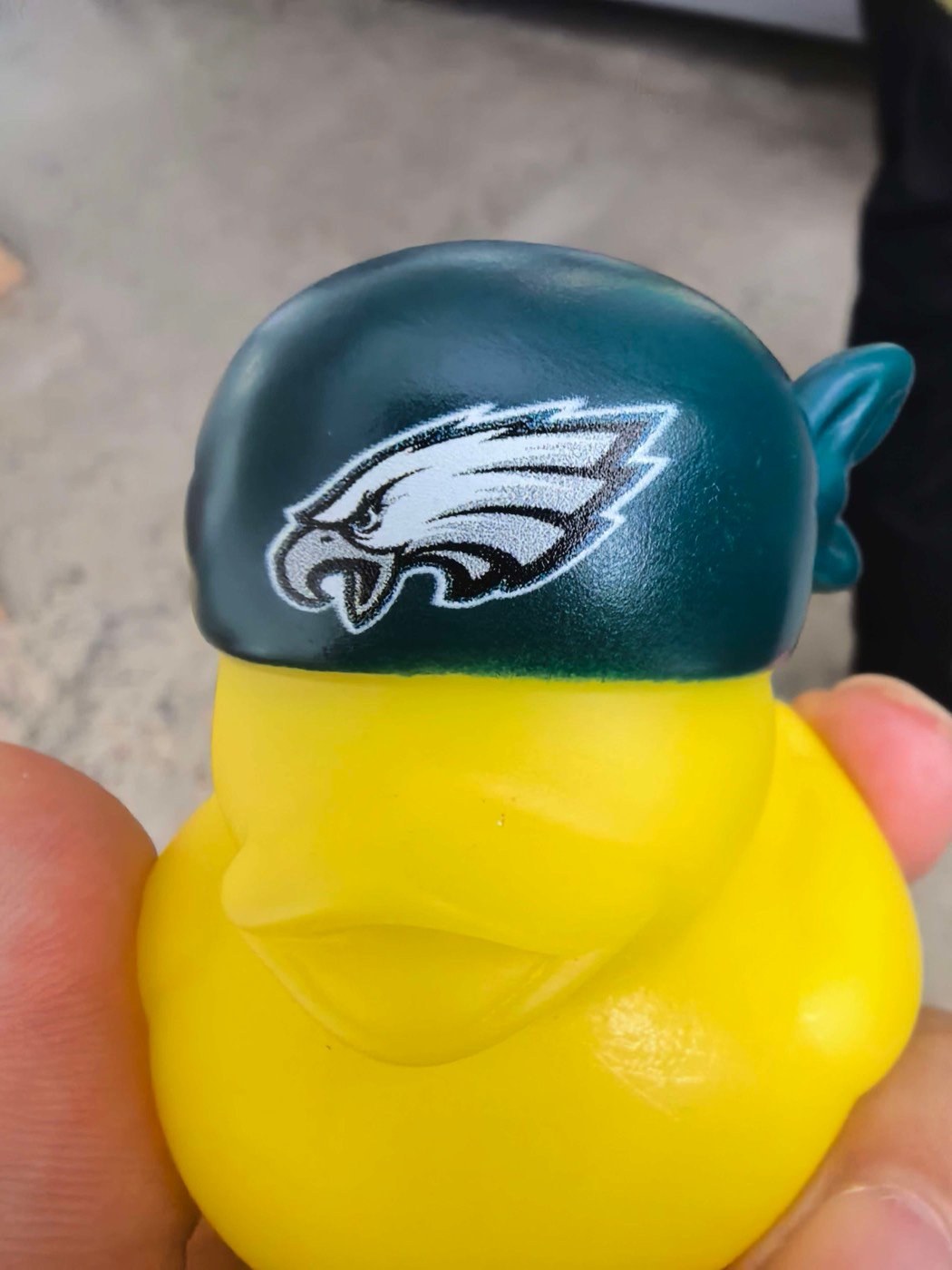
Metallic and glitter shift under different lighting, so a swatch on screen is a guess. Lock the body to a Pantone reference and treat the sparkle as a separate spec, graded by flake size and density, rather than assuming the factory reads “gold” the same way you do. For multi-color runs where glitter only accents one region, a gradient and multicolor printing guide shows how transitions are handled without muddying the metallic edge.
Durability of a Sparkle Finish
The failure mode for glitter is shedding and for metallic it is fading at the high-contact points, usually the head and base of a squeeze toy. Encapsulation in the vinyl or a protective top coat keeps flakes bonded through repeated handling. Surface-printed effects should be rated against the same abrasion and sweat tests as any logo, which is covered in the finish durability notes. If the duck is a bath toy that will be chewed or squeezed by children, a molded-in glitter is safer than a printed one because there is nothing on the surface to wear loose.
Cost and Minimums for a Specialty Finish
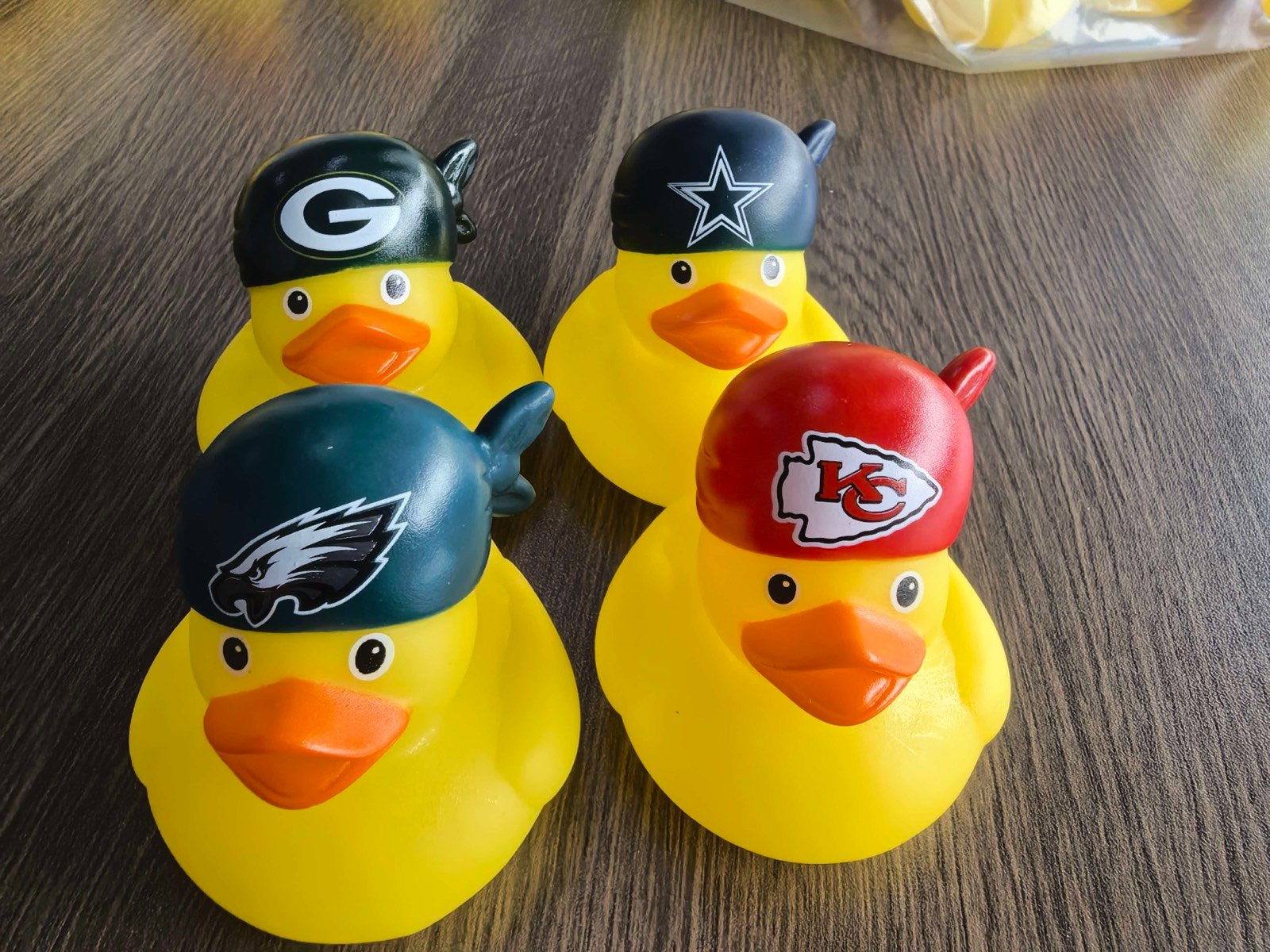
A specialty effect does not change the price the way a full custom mold does. Because the body is still a standard shape, the extra cost sits in the pigment, the second print pass, and the top coat, not in new tooling. That keeps glitter runs close to normal pricing, and minimum order quantities still begin around 1,000 pieces. LZENGO turns a first mockup in about 12 hours so you can judge the sparkle in real light before committing the run, and physical samples land in roughly a week. The custom rubber ducks program covers the finish options end to end.
FAQ
Is glitter on a rubber duck safe for kids?
Molded-in glitter bound inside phthalate-free vinyl is the safer choice for children, because nothing sits on the surface to wear loose. Printed glitter needs a protective top coat and abrasion testing before it goes to a kids program.
Will a metallic finish fade?
Surface metallic can fade at high-contact points if it is not sealed. A protective top coat and sweat and abrasion testing keep the shine where it started, which is why the durability spec matters more than the first sample photo.
Does a glitter duck cost more to make?
The added cost is the pigment and the extra print pass, not new tooling, so a glitter run on a standard body stays close to regular pricing with the same minimum around 1,000 pieces.