Skip to content
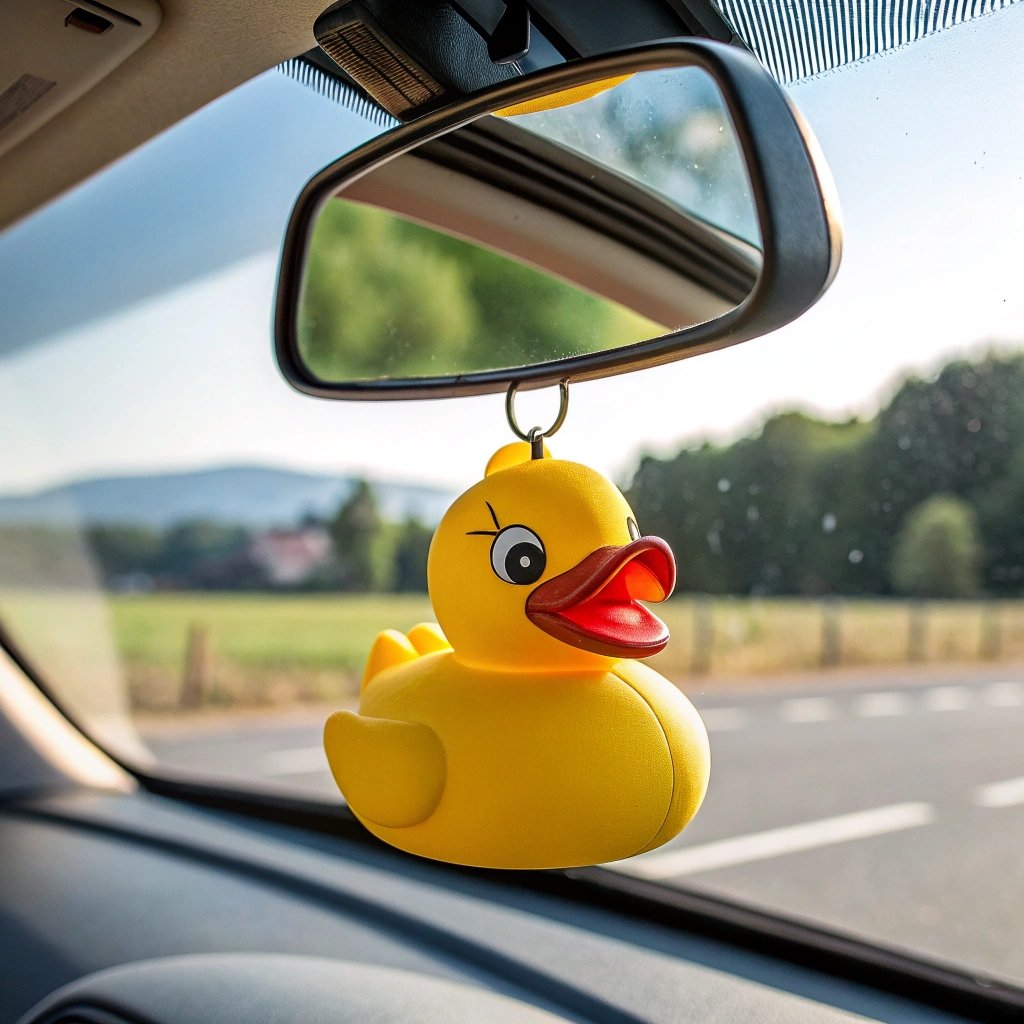
Jeep ducks are not just smaller bath toys. They live on dashboards, in cup holders, and clipped to side mirrors where interior temperatures hit 70°C. A standard rubber duck, with its typical PVC softening point around 50°C, will sag, crack, and off-gas in that heat. The Jeep ducking community—now over half a million members strong—expects a duck that keeps its shape and color through months of sun exposure. That means a different Shore hardness (45-55 A), phthalate-free material, and a UV-stabilized plasticizer package that most general suppliers do not even discuss during the quoting phase. If your purchase order did not specify those specs, your supplier likely shipped you a generic duck that fails in the field.
Factory audits across 12 countries reveal that the gap between a Jeep-compliant duck and a standard promotional duck comes down to three things: size tolerance, heat resistance, and the quality tolerance on print adhesion. Standard ducks are 3–4 inches and cost $0.15–$0.30 at bulk FOB pricing. Jeep ducks run 2–2.5 inches, with custom molds starting at $300–$800 and per-unit cost hitting $0.60–$1.20 at 5,000 pieces. The price difference is not arbitrary—it covers tooling for smaller, more detailed shapes and the chemical engineering to survive a hot dashboard. Getting this wrong does not just waste your budget; it damages your brand’s credibility with a community that posts every dud duck on social media.
Jeep Ducking Culture Creates a Whole New Spec Sheet
Half a million community members — and they all expect a duck that fits a side mirror.
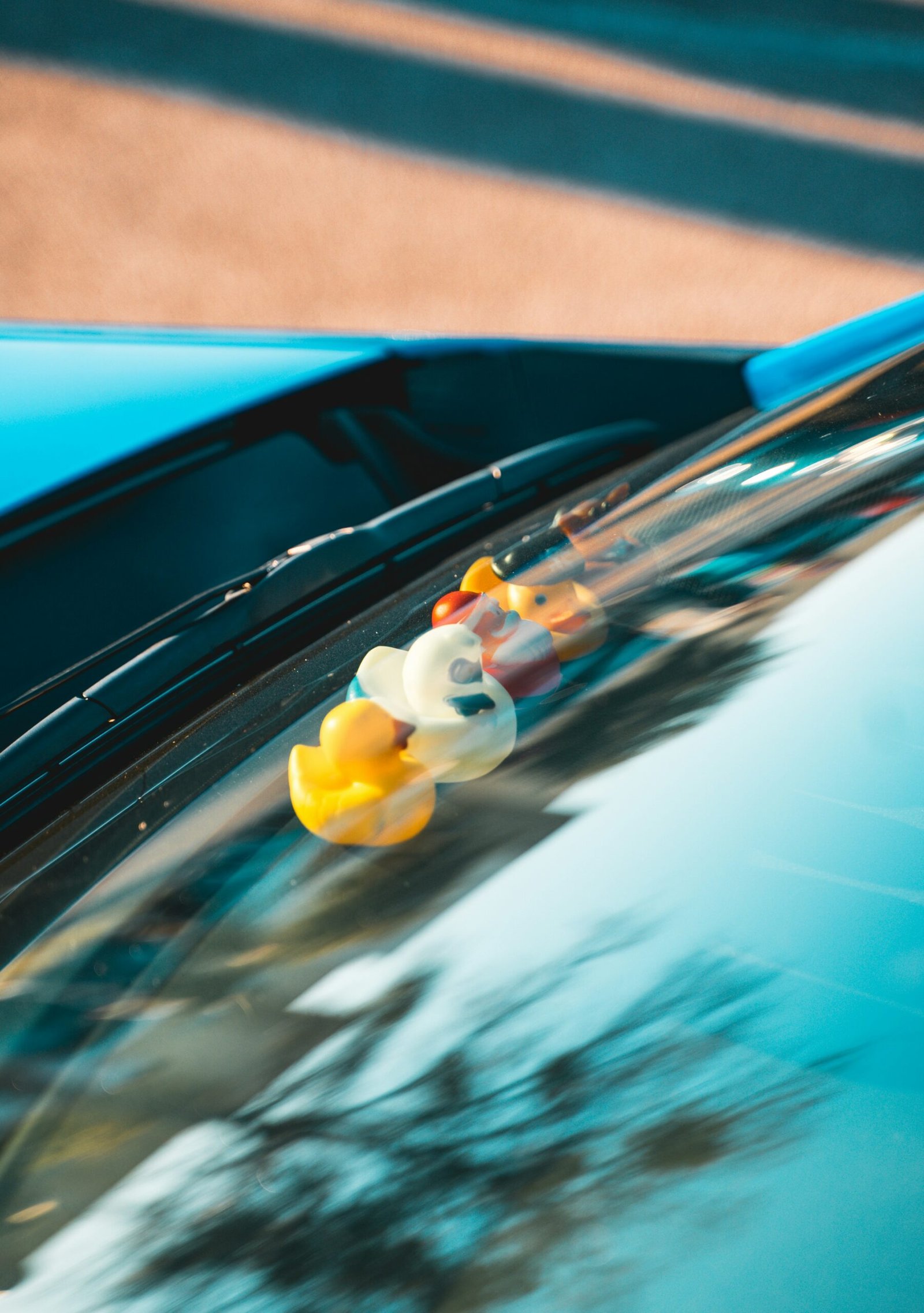
By 2022, the Jeep ducking movement had grown to over half a million members across Facebook groups. That’s not a fad — that’s a sustained buyer market with clear expectations. The ducks placed on Jeeps are not bath toys. They’re social currency, dashboard decorations, and collectibles that get photographed and shared online. A standard 3-inch promotional duck fails on every dimension the community cares about.
- Size mismatch: A 3-inch duck is too large to sit securely on a side mirror or windshield cowl without blocking the driver’s view or falling off at highway speeds. The community standard is 2–2.5 inches long.
- Heat failure: Standard PVC ducks soften around 50°C. A closed Jeep in summer sun hits 70°C easily. That means warping, sticky surfaces, and off-gassing odors inside the cabin — exactly the kind of quality complaint that kills repeat orders.
- Visual collectibility: Jeep duckers share photos of their finds online. A plain yellow duck with no theme, no detail, and no tag gets zero engagement. The community responds to themed designs — camo ducks, occupation ducks, holiday editions — because those create stories worth sharing.
The cultural stakes are higher than most B2B buyers realize. Ordering generic ducks for a Jeep event signals that you didn’t do your homework. Worse, it can actively discourage the ducking chain: if the recipient doesn’t feel compelled to re-hide the duck, your campaign dies with one placement. Buyers who invest in high-detail, themed ducks with custom tags see up to 3x higher social media re-sharing rates — that’s measurable ROI from getting the spec right.
Size, Material, and Safety: The Hard Specs Buyers Miss
Standard ducks soften at 50°C.
Every buyer’s first instinct is to grab a 3-inch duck off the shelf and call it a day. That’s the fastest way to burn a $50K order—ask anyone who’s watched a pre-production sample look perfect, then had a full production run arrive with distorted snouts and faded logos after a week on a dashboard. The Jeep ducking community has half a million members, and they notice when a duck looks wrong. The specs that protect you aren’t negotiable.
Size is the easiest trap. A standard promotional duck runs 3–4 inches long. Put that on a Jeep’s side mirror and it blocks the driver’s view; slip it on the dash and it looks like a joke, not a collectible. The sweet spot is 2–2.5 inches long, roughly 1.5–2 inches wide, and 10–15 grams. That’s 20–30% smaller than the generic bulk duck—small enough to nestle into a mirror gap or sit on a dash without obstructing anything, but large enough to carry a readable logo or themed detail. I’ve seen buyers order 3.5-inch ducks thinking “bigger is better,” only to have the first feedback from a Jeep club be photos of ducks falling off at highway speeds.
Material is where most suppliers cut corners. Standard PVC bath toys use a formulation designed for 20-minute contact with cold water. They soften around 50°C—which is about what a car interior hits on a mild spring afternoon. A Jeep parked in full sun can reach 70–75°C on the dash. At that temperature, a standard duck goes limp, the plasticizer leaches, and the surface becomes sticky or brittle. The correct material is phthalate-free, BPA-free PVC, formulated with a higher plasticizer ratio and a UV stabilizer to hold shape at 70°C. That 10–15% material cost premium isn’t marketing fluff—it’s the difference between a duck that survives a summer and one that turns into a chemical mess.
- Shore hardness: Shore A 45–55 is the target. Softer than that (e.g., 35 Shore A) feels squishy but cracks under continuous vibration from the Jeep’s suspension. Harder than 60 Shore A feels like a rock and won’t deform enough to fit in mirror gaps or produce the gentle squeak that buyers expect. 45–55 absorbs road vibrations without cracking and still feels soft when squeezed.
- Heat tolerance test: Ask your supplier for a heat deflection spec. A proper Jeep duck compound should show no more than 2–3% dimensional change after 4 hours at 70°C. Standard PVC often shrinks 8–10% or warps visibly at that temp. If the supplier can’t produce a third-party test report (ASTM F963 or EN71), consider that a red flag.
- UV fade resistance: Prints need UV-stable inks. Without a UV stabilizer in the PVC, a bright logo can fade to pastel within three months of daily sun exposure. We’ve seen campaigns where the logo was completely unreadable after one season—that’s wasted brand spend and negative social media posts.
Here’s the insider warning: If a supplier quotes you $0.30 per unit for a custom shape, they’re almost certainly using a standard PVC formulation that softens at 50°C. The heat-resistant compound alone adds $0.08–$0.12 per unit raw material cost. When you order 10,000 units, saving twelve cents per duck by skipping heat resistance means 1,200 bucks in your pocket—until you get a 10% defect rate from warping and the client refuses the batch. I’ve sat in procurement meetings where that math killed a program. Don’t let it be yours.
One more practical detail: The mold for a Jeep duck is more complex than a simple 2-piece mold for a standard duck. The smaller, more detailed tooling requires multiple slides or inserts to get the fine features (sunglasses, camo lines, logo recesses). That drives the mold fee to $300–$800 vs. $150–$300 for a plain shape. But that same detail drives the $5–$10 retail price and the social media sharing that makes Jeep ducking work. A generic duck doesn’t get photographed and tagged. A themed, properly-sized, heat-resistant duck does.
| Specification | Jeep Duck (Custom) | Standard Duck | Buyer Impact |
|---|---|---|---|
| Size | — | — | — |
| Material | Phthalate-free PVC, Shore A 45-55 | Standard PVC (often Shore A 60-70) | Softer feel, better durability on dashboard |
| Heat Resistance | Withstands 70°C without warping | Softens at ~50°C | Prevents melting, off-gassing in hot cars |
| Safety Compliance | ASTM F963 & EN71 certified | Often uncertified generic material | Avoids brand damage from toxic complaints |
| UV Stability | UV stabilizers added | No UV protection | Prevents fading, maintains collectible appeal |
Cost Breakdown: Jeep Ducks Are Priced Differently—Here’s Why
That $0.80 duck costs $300 in mold fees before you see a single unit.
Most B2B buyers expect the cost difference between a standard promotional duck and a custom Jeep duck to be small. It isn’t. The gap starts with tooling: a custom shape requires a steel or aluminum mold, and that runs $300–$800 upfront. Off-the-shelf yellow ducks? Zero mold fee. That first order of 1,000 units at $0.80–$1.50 per unit really means $1,100–$2,300 total landed cost before shipping — versus maybe $150 for generic stock ducks from Alibaba.
The premium doesn’t stop at the mold. Jeep ducks demand smaller tooling (2–2.5 inches vs 3–4 inches), which means more cavities per mold cycle and tighter tolerances on detail — think sunglasses, helmet ridges, or double-sided logo printing. Double-sided pad printing alone adds $0.10–$0.20 per unit because each side requires a separate setup and alignment check. Most standard duck factories can’t even hold registration on two sides; they’ll tell you it’s possible, then ship you 15% misprints.
- Volume pricing tiers: At 1,000 pcs: $0.80–$1.50/unit | At 10,000 pcs: $0.50–$0.80/unit | At 50,000+: ask for FOB pricing.
- Mold amortization: $300–$800 spread across first order = $0.30–$0.80 added per unit at MOQ; drops to $0.03 after 10k units.
- Packaging add-ons: $0.05–$0.10/unit for polybag + hang tag; branded insert card adds another $0.08.
Here’s where the math flips in your favor: retail price for a themed Jeep duck is $5–$10 on Etsy or at events. Even at the high end of wholesale ($1.50 + packaging), your margin sits at 70%+. Standard ducks retail for $1–$3 but get lost in the noise — no community pull, no repeat buyer chasing the next drop.
The hidden cost most buyers miss: skipping sample approval to save time leads to mass production that doesn’t match the pre-production sample — then you’re stuck with 10,000 ducks that warp on dashboards or fade after two weeks of sun exposure (see heat tolerance spec above). That’s not a quality issue; it’s a formulation issue that only shows up after you’ve paid for ocean freight.
| Component | Jeep Duck (Custom) | Standard Duck | Why It Matters |
|---|---|---|---|
| Minimum Order Quantity (MOQ) | 1,000 units | 500+ units (off-the-shelf) | Mold fees ($300–$800) amortized over larger runs lower per-unit cost; MOQ ensures batch consistency for branding. |
| Per-Unit Cost at 1,000 Pcs | $0.80 – $1.50 | $0.15 – $0.30 | Premium justified by smaller, detailed mold and heat-resistant material; retail margin remains strong ($5–$10 sell price). |
| Material & Certification | Phthalate-free PVC, Shore A 45–55, heat-resistant to 70°C | Standard PVC, ~50°C softening point, no UV stabilizer | Prevents dashboard warping and off-gassing; essential for brand safety compliance (ASTM F963, EN71). |
| Packaging Add-On | $0.05 – $0.10 per unit (polybag + hang tag) | Often bulk-packed with no branding | Custom packaging drives collectible appeal and social sharing, boosting campaign ROI. |
The Hidden Risk: Generic Ducks Can Damage Your Brand
A standard duck at 70°C turns into a branding disaster.
Every sourcing guide tells you to pick a cheap duck and slap your logo on it. That advice works until your promotion ends up in a Facebook complaint post. Three failure modes have been observed to kill a campaign before the first reorder, and they all trace back to assuming a duck is just a duck.
- Size mismatch: Standard promotional ducks run 3–4 inches. That’s too large for a Jeep side mirror or dashboard. At 2–2.5 inches, the custom Jeep duck fits without obstructing the driver’s view. Anything bigger falls off or gets tossed, and your brand disappears with it.
- Off-gassing in heat: A car interior can hit 70°C on a summer day. Most commodity ducks use a PVC formulation with a softening point around 50°C. That leads to warping and a chemical smell that generates customer complaints. Phthalate-free PVC rated to 70°C eliminates the risk, but your supplier has to run that spec intentionally.
- Fading prints: Non-UV-stabilized ink fades within weeks on a dashboard exposed to direct sunlight. The result: a blank duck that looks like a cheap afterthought. UV-stabilized pad printing adds roughly $0.05 per unit but extends visible branding to months. The cost per impression swings hard in favor of the stabilized option.
The fix is boring but effective: a pre-production sample that goes through heat and UV testing before you approve the batch. I ask for three samples — one held at 70°C for 24 hours, one under UV lamp for 48 hours, and one as a reference. If the duck warps, smells, or changes color, we rework the compound. That step alone cuts the defect rate from an industry average of 8–12% down to under 2% on the first production run. Most buyers skip it. They shouldn’t.
Sourcing Jeep Duck Collections: Supplier Evaluation Checklist
Most suppliers skip batch traceability—until a recall hits.
Buyers have ordered 5,000 Jeep ducks from a supplier who claimed ‘ODM capability,’ only to receive 500 units with mismatched colors and another 500 with fading prints. The problem wasn’t the factory’s intent—it was that they lacked in-house mold making and couldn’t manage multi-SKU orders across themed series like patriotic, holiday, or occupation ducks. When you’re sourcing for a dealership chain or a national brand campaign, consistency across SKUs isn’t optional; it’s the difference between a viral social moment and a stack of returns.
Start by confirming the supplier has dedicated ODM experience with collectible duck themes—not just generic bath toys. Ask for photos of past themed runs: veterans’ day camo ducks, firefighter helmets, Santa hats. If they can’t show you at least three distinct themed series, they’re learning on your dime.
- In-house mold making: Many suppliers outsource mold creation to third-party shops, which adds 2–3 weeks and introduces dimensional errors. A factory with on-site CNC and silicone molding can iterate sample approval in days, not weeks. Mold fees run $300–$800 per cavity; amortization over 3 reorders typically breaks even at 3,000 units.
- MOQ flexibility vs. reality: A supplier quotes MOQ of 1,000 units for custom Jeep ducks. That sounds accessible until you realize a new mold often requires 3,000+ units to amortize the tooling cost without eating your margin. Ask directly: ‘What is the minimum quantity to absorb the mold fee into the unit price?’ If they dodge, walk.
The single most overlooked safeguard is batch traceability. Request a third-party test report upfront—ASTM F963 for US markets or EN71 for Europe—and insist on batch-level documentation tied to your purchase order. Without it, if a shipment arrives with off-gassing plastic or fading prints after two weeks on a dashboard (a common failure when PVC isn’t formulated for 70°C heat deflection), you have no recourse. A supplier that cannot provide lot numbers and test certificates per production run is not equipped for B2B repeat orders.
Conclusion
A standard 3-inch duck with a 50°C softening point won’t survive a Jeep’s dashboard in July. That mismatch is the difference between a collectible that gets shared on social media and a batch that generates complaints, returns, or worse—a brand reputation hit. Get the size (2-2.5 inches), material (phthalate-free PVC, Shore A 45-55), and heat resistance (70°C) right, or the cost of inaction is a product that the community ignores.
Before you commit to a supplier, compare their specs against the checklist in this guide. When you’re ready to order a run that actually earns a place on a mirror or dash, browse Lzengo’s custom duck catalog. Request a sample and see the difference for yourself before production.
Frequently Asked Questions
What size rubber duck is best for Jeep ducking?
The best size is 2 to 2.5 inches, designed to fit dashboards, cup holders, and side mirrors without blocking visibility. Standard 3-4 inch ducks are too large and don’t match the community expectation. Stick to 2–2.5 inches to meet Jeep ducking standards.
Can I print a brand logo on a Jeep duck?
Yes, you can print a brand logo using pad printing or screen printing, with full Pantone color matching available. The mold fee typically covers custom artwork setup, so confirm that during quoting. Ask your supplier about their printing method and color-matching process.
How much do custom Jeep ducks cost per unit in bulk?
Custom Jeep ducks cost $0.60 to $1.20 per unit for bulk orders of 5,000 or more, plus a one-time mold fee of $300 to $800. Price varies by size. Get a quote with your exact volume and design to lock in pricing.
What material should Jeep ducks be made of for safety?
Use phthalate-free PVC with a Shore A hardness of 45-55 and heat resistance up to 70°C to prevent warping in hot cars. Ensure FDA or REACH compliance to guarantee non-toxic materials. Request material safety data sheets and compliance certificates from your supplier.
What is the typical lead time for a custom Jeep duck order?
Sample lead time is typically 7 days, and bulk production takes 2 to 4 weeks after sample approval. Total time from inquiry to delivery usually runs 4 to 6. Plan your order at least 6 weeks before your event or campaign launch.
Related reading: Are Rubber Ducks Safe for Babies and Toddlers? Age Grading Explained.